
 English
 中文简体
中文简体 Español
 English
 中文简体
中文简体 Español
Modern households increasingly want cooking appliances that save time, reduce oil consumption, and fit naturally into busy daily routines. The 5L square-texture air fryer is designed to meet these expectations with a practical cooking capacity, hot-air circulation technology, digital controls, and a compact yet distinctive appearance. It is positioned as a versatile small kitchen appliance for preparing fried, roasted, baked, and grilled foods with little or no added oil.
Unlike traditional frying methods, an air fryer does not depend on immersing food in a large volume of cooking oil. Instead, it circulates heated air around the food to create a browned and crisp exterior. This approach can help users reduce the amount of oil used in everyday cooking while retaining the appealing texture associated with fried foods. For households seeking convenient meal preparation without sacrificing flavor, a 5L air fryer offers a useful balance between capacity, performance, and countertop practicality.
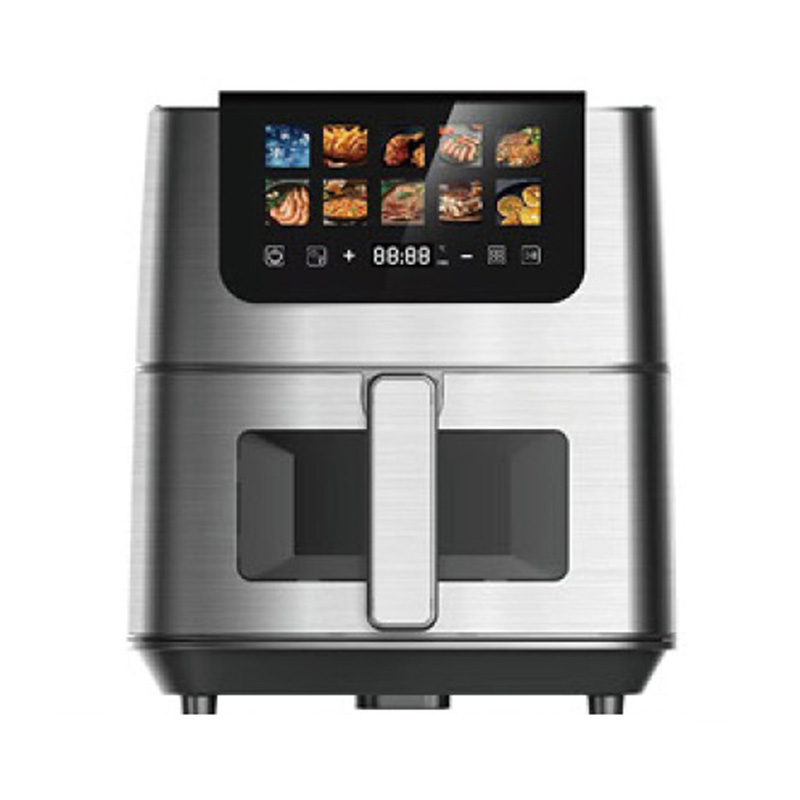
The product is identified as an air oven and has an item number of GSE037. It provides a rated power of 1500W and a capacity of 5 liters, making it suitable for individuals, couples, and small to medium-sized families. Its square-texture exterior gives the appliance a contemporary visual identity, while its transparent-model configuration is intended to provide a modern appearance and support convenient observation of the cooking process.
Product Overview
The 5L square-texture air fryer is an electric countertop appliance engineered for a broad range of everyday cooking tasks. It can be used to prepare foods such as French fries, chicken wings, vegetables, fish, sausages, pastries, reheated snacks, and other dishes that benefit from circulating heat. Its multi-function design allows one appliance to support several cooking methods, including frying, roasting, baking, and grilling.
The 5L capacity is one of the product’s most important practical features. A very small air fryer may be convenient for one person but can require several cooking cycles when preparing food for more than one user. Conversely, a very large appliance may occupy excessive counter space and consume more energy than necessary for ordinary household meals. A 5L chamber provides a useful middle ground, allowing users to prepare a meaningful portion while keeping the appliance appropriate for daily home use.
The product combines a digital control panel with automatic shut-off functionality. Users can set the cooking time and temperature according to the requirements of a specific recipe. Once the selected cooking cycle is complete, the automatic shut-off feature helps prevent unnecessary continued heating. This feature also supports a more convenient cooking experience for users who are managing multiple tasks in the kitchen.
A removable non-stick basket is included as part of the cooking system. The removable format makes it easier to place food inside the appliance, remove cooked food, and clean the cooking area after use. The non-stick surface is intended to reduce food adhesion and simplify routine maintenance, although users should always follow suitable cleaning practices and avoid tools that may damage the surface.
Core Specifications
| Specification | Product Information |
|---|---|
| Item number | GSE037 |
| Product name | Air Oven |
| Product category | Air Fryer |
| Rated power | 1500W |
| Capacity | 5L |
| Material specification | PP, PA, aluminum, ABS, and PC |
| Basket type | Removable non-stick basket |
| Control system | Digital control panel |
| Safety-related function | Automatic shut-off |
| Carton packing | 1 piece per carton |
| Delivery time | Approximately 45–60 days |
The supplied material description presents the external appearance as stainless steel with an opaque square texture and identifies the item as a transparent model. The technical material list specifies PP, PA, aluminum, ABS, and PC. These materials are commonly used in different sections of small kitchen appliances, where each material can serve a specific purpose. Aluminum may be used in heat-related internal structures, while engineering plastics such as PP, ABS, PA, and PC can support insulation, structural components, controls, handles, and transparent or semi-transparent elements.
Because a finished appliance can contain several material categories, the material specification should be interpreted as a component-level description rather than as a statement that every visible part is made from one material. For buyers, importers, and private-label customers, final material declarations, food-contact information, electrical ratings, and regional compliance documents should be confirmed during the product approval process.
Hot-Air Circulation for Lower-Oil Cooking
The central operating principle of the air fryer is hot-air circulation. During operation, a heating system raises the air temperature while an internal fan distributes the heated air around the cooking chamber. This moving air transfers heat to the food from multiple directions. The result is a cooking environment that can brown and crisp the outer surface of food without requiring the food to be submerged in oil.
Traditional deep frying can produce a crisp surface quickly, but it usually requires a substantial quantity of oil and creates additional handling, storage, and disposal considerations. The air fryer provides an alternative approach. Users can often achieve a crisp result with a light coating of oil or, depending on the food, no additional oil at all. The exact outcome depends on ingredients, moisture content, portion size, preparation method, and selected temperature and time.
Lower-oil cooking is a major selling point in the small kitchen appliance market. Consumers are increasingly interested in preparing familiar comfort foods in ways that may reduce added fat. The air fryer does not turn every food into a low-calorie food, and it does not eliminate the nutritional characteristics of the ingredients being cooked. However, it can reduce the need for large quantities of frying oil, which makes it an attractive tool for households focused on more controlled cooking methods.
Hot-air circulation also supports cooking flexibility. The same heating principle can be applied to reheating leftovers, roasting vegetables, baking small portions, and cooking frozen foods. This versatility can make the appliance more useful than a single-purpose fryer. Consumers may use it for breakfast, lunch, dinner, snacks, and small baking projects without switching between several separate appliances.
For consistent results, users should avoid overfilling the basket. Air must be able to move around the food. A crowded basket may reduce circulation, create uneven browning, and extend cooking time. Shaking or turning food during the cooking cycle can also help expose different surfaces to the circulating heat. These practices are simple, but they are important to achieving the performance expected from an air fryer.
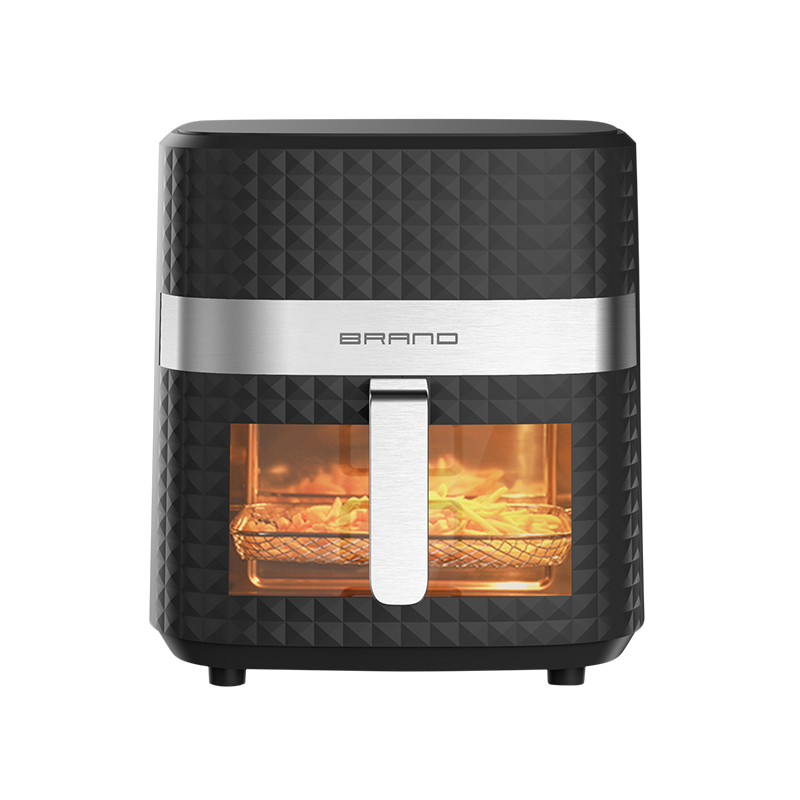
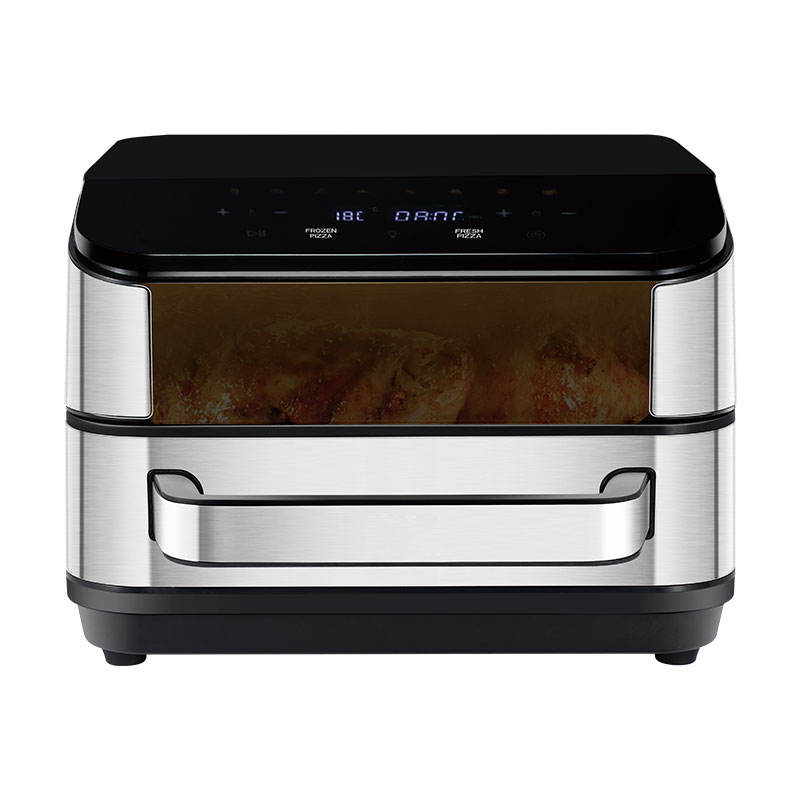
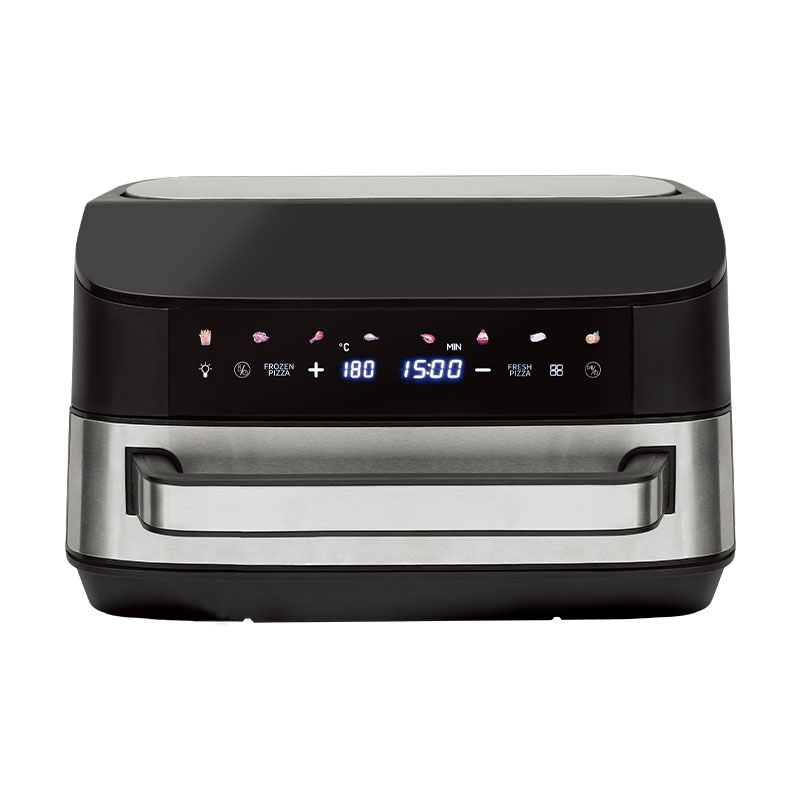
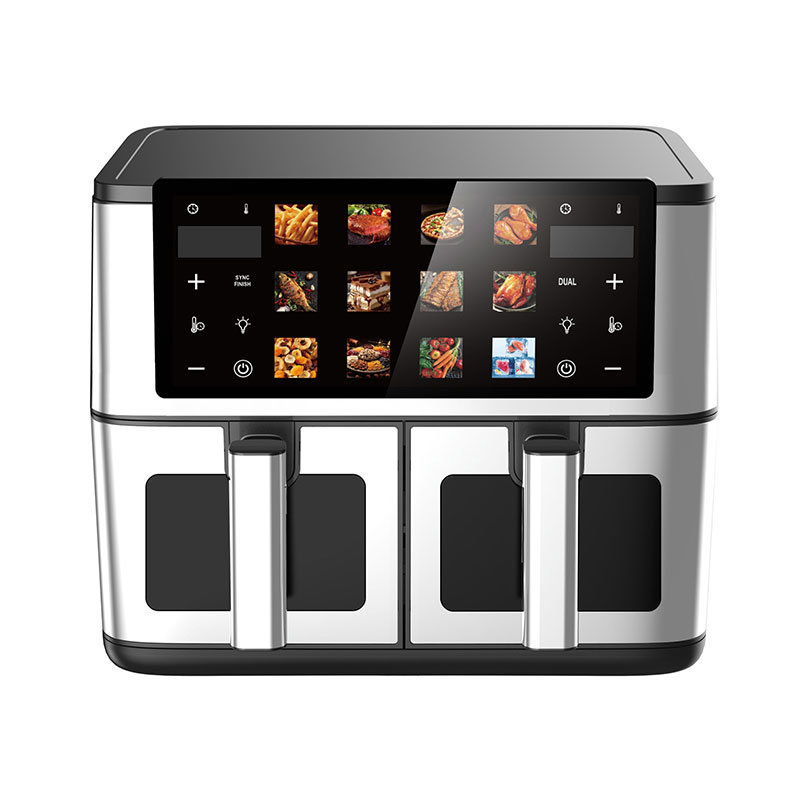
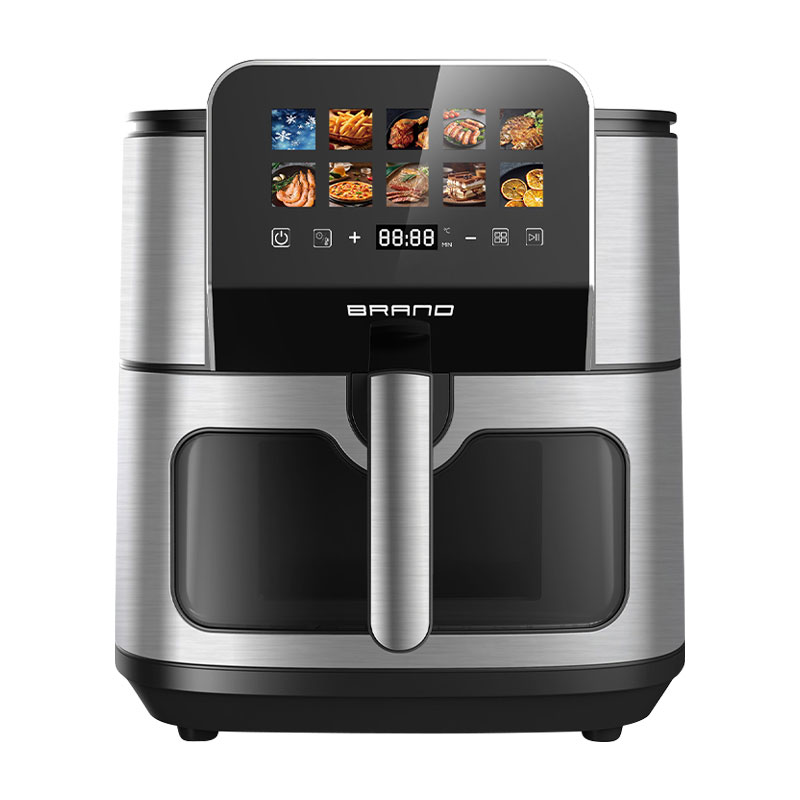
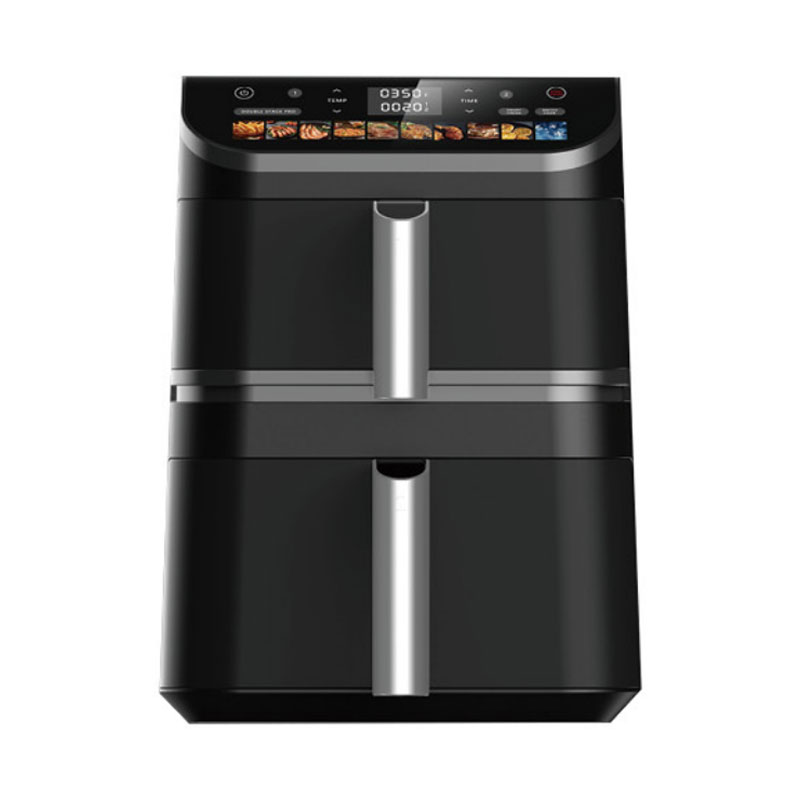
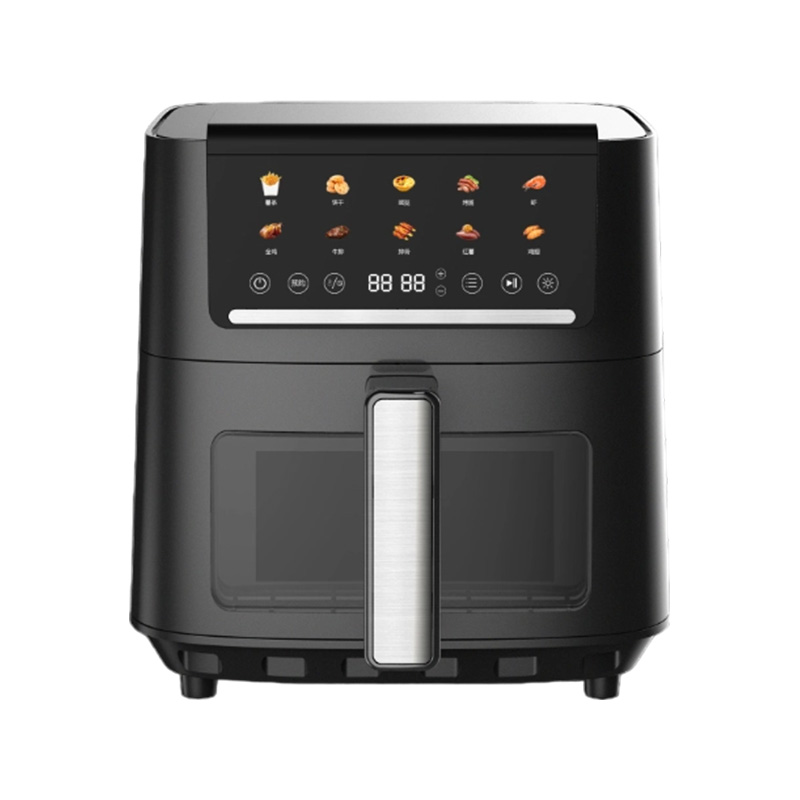
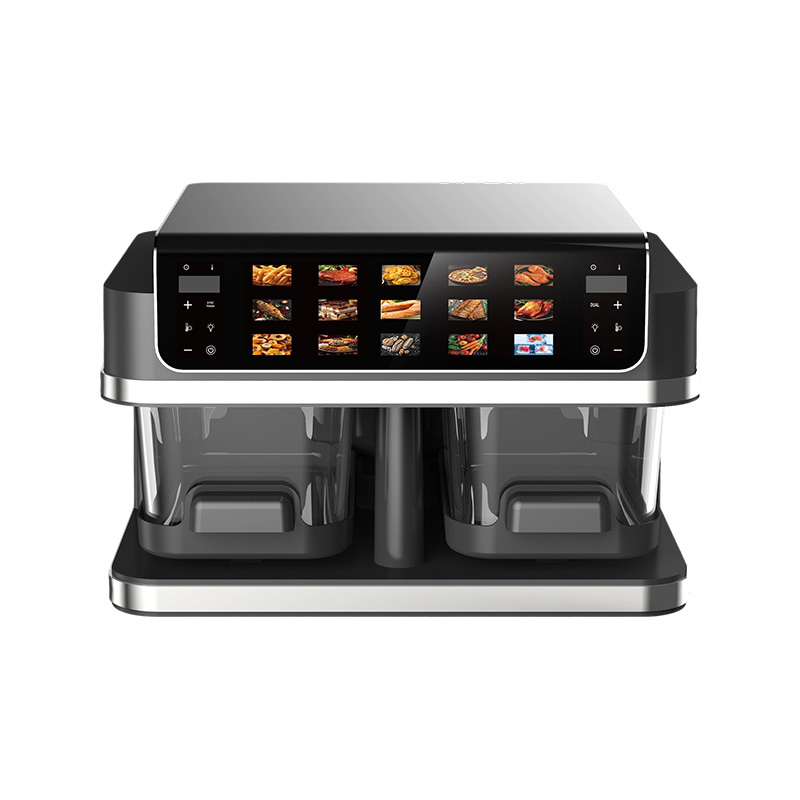
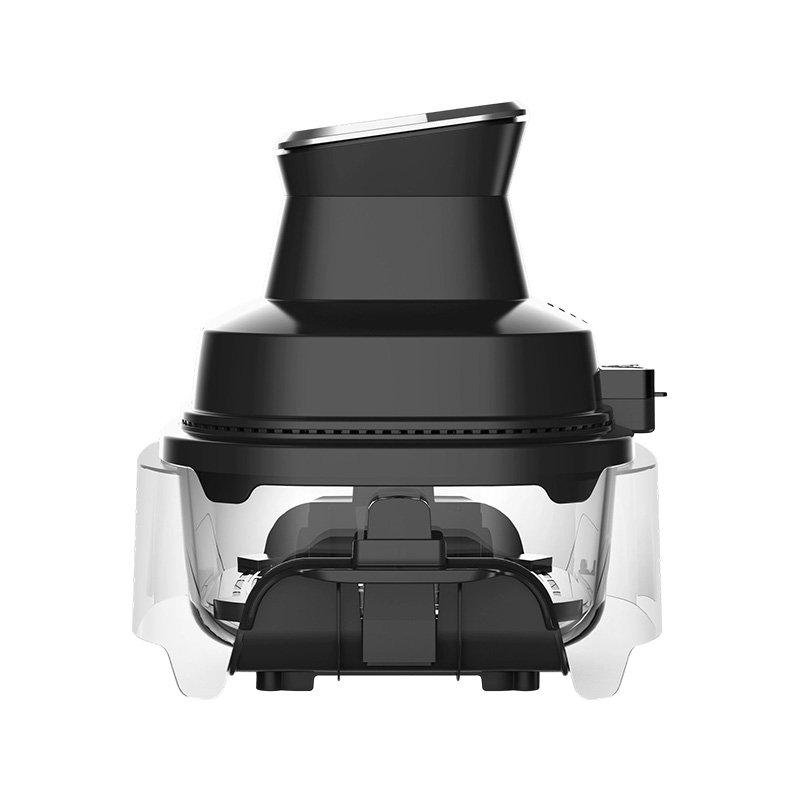
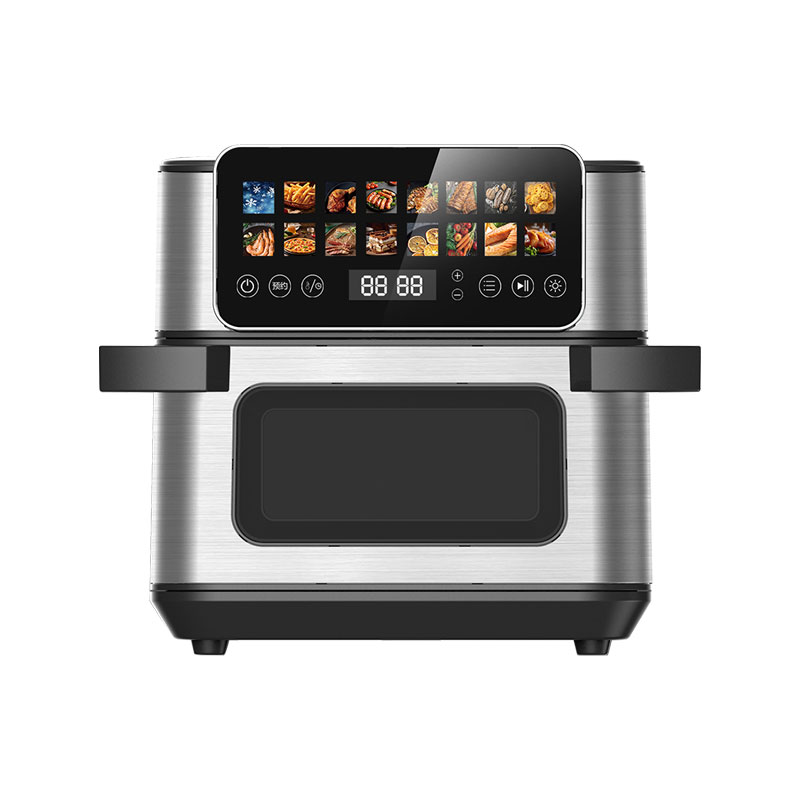
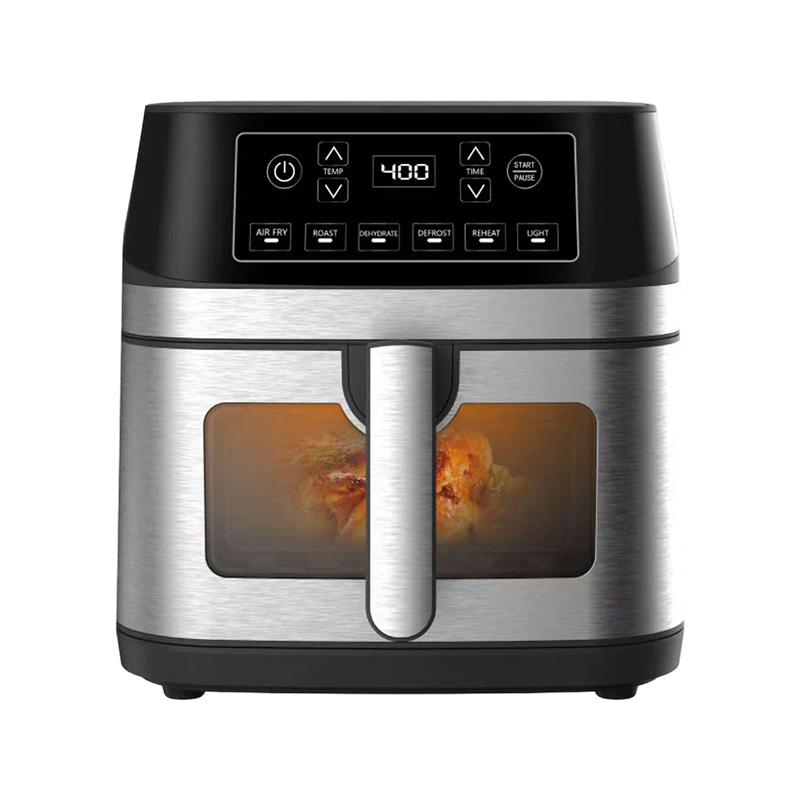
Stainless steel opaque 5L square texture air fryer-(transparent model)
Why a 5L Capacity Is Practical
Capacity strongly influences how an air fryer fits into a household. A 5L model offers more usable cooking space than compact personal units while remaining more manageable than oversized commercial-style appliances. This capacity is particularly suitable for small and medium-sized households that want to prepare several servings without committing to a large countertop footprint.
For one or two people, a 5L air fryer can provide enough room for a main dish and side ingredients, depending on the food type and arrangement. For a family, it can handle a practical batch of wings, potato products, vegetables, or similar foods. The precise serving size will vary because bulky foods require more space than thin or compact ingredients. Nevertheless, the capacity provides flexibility for a broad range of recipes.
The square form is also relevant to usable space. A square-texture design can support a visually balanced appliance profile and may help make practical use of the internal cooking area. Food placement remains important, but the shape can be appealing to consumers who prefer modern geometric styling over rounded or conventional appliance designs.
Retailers and distributors can also benefit from the 5L specification because it is easy for consumers to understand. It communicates that the product is larger than a personal snack appliance but still intended for normal household use. The capacity can be highlighted in product listings, packaging, demonstrations, and comparison charts without requiring complicated technical explanations.
Digital Control and Everyday Convenience
The digital control panel is designed to make operation straightforward. Users can select a cooking temperature and time rather than relying solely on mechanical dials or approximate manual control. Digital operation can contribute to repeatable cooking results because users are able to record settings that work well for particular foods and reproduce them during future cooking cycles.
Time and temperature are the two basic controls that determine most air-fryer recipes. Delicate foods may require a lower temperature, while dense or frozen foods may require more heat or a longer cooking duration. Digital control gives users the flexibility to adjust both settings for different ingredients. It also supports recipe development, since users can refine settings over several cooking attempts.
Automatic shut-off adds another layer of convenience. When the programmed cycle ends, the appliance stops heating rather than operating indefinitely. This helps reduce the possibility of overcooking caused by forgetting to switch off the unit. Users should still remain attentive while cooking, follow safety guidance, and avoid leaving a heating appliance unattended for extended periods.
A clear and responsive control interface can also improve the product’s appeal in retail environments. Consumers often compare appliances based on ease of operation as much as on heating performance. A digital panel communicates a modern product position and can make the air fryer attractive to users who prefer electronic controls, preset-style operation, or precise adjustment.
For wholesale and private-label customers, the control panel may also be an area for market adaptation. Depending on the approved product configuration, control markings, packaging language, operating instructions, and user-interface details can be reviewed for the destination market. Any changes should be evaluated by the manufacturer to ensure that they remain compatible with electrical, safety, and production requirements.
Removable Non-Stick Basket and Cleaning Considerations
Cleaning is a decisive factor in whether consumers continue using a kitchen appliance after the initial purchase. The removable basket helps address this concern by separating the main cooking container from the heating and control section. Food can be removed from the appliance more easily, and the basket can be cleaned without moving the entire unit to a sink.
The non-stick surface is intended to reduce the amount of residue that remains after cooking. This can make it easier to remove food particles and oil deposits. Users should allow the basket to cool before cleaning, use suitable soft cleaning tools, and avoid abrasive materials that might scratch the coating. Following the care instructions supplied with the finished product is essential for maintaining the basket’s performance.
A removable basket can also improve serving convenience. Cooked food may be transferred directly from the basket to a plate or serving bowl, while the exterior housing remains in place. This reduces unnecessary handling and supports a more efficient kitchen workflow.
From a product-development perspective, removable cooking components must be designed with attention to fit, stability, grip, heat exposure, and repeated use. The basket should be easy to insert and remove while remaining secure during operation. Handles and surrounding surfaces should be evaluated for user comfort and thermal behavior. These considerations are part of the engineering and quality-control process for a reliable air fryer.
Materials and Component Engineering
The product specification lists PP, PA, aluminum, ABS, and PC. Using several material types in a small appliance allows engineers to match each material to its functional role. Material selection can affect heat management, mechanical strength, appearance, insulation, weight, manufacturability, and user experience.
Aluminum is commonly valued for its thermal conductivity and may be used in internal structures associated with heat distribution. Engineering plastics can provide electrical insulation, impact resistance, dimensional stability, and design flexibility. ABS is widely used in appliance housings and control components because it can support a durable molded form with a consistent appearance. PP may be selected for suitable structural or food-adjacent components, while PA can be useful where strength and heat resistance are required. PC may support transparent or visually clear elements when the approved design calls for them.
The visible square texture is an important design detail. Texturing can provide visual depth, make the surface more distinctive, and help the product stand apart from plain smooth housings. It can also contribute to a premium appearance when combined with a stainless-steel-style finish or other carefully controlled surface treatment. The transparent-model designation adds another visual feature that may appeal to consumers who appreciate a clearer view or a more contemporary appliance style.
Material choices must always be reviewed together with intended use. Components that contact food, components exposed to high temperatures, electrical insulation parts, and external decorative sections may require different specifications. For commercial supply, documentation should identify the relevant material requirements and testing expectations for the destination market.
Advantages Compared with Conventional Frying
The most obvious advantage over conventional deep frying is the reduced dependence on oil. A traditional fryer requires oil to surround the food, while an air fryer uses heated air as the primary cooking medium. This can reduce oil purchasing, handling, splashing, storage, and disposal. It can also make the cooking process feel cleaner and less demanding for everyday users.
The air fryer can be more convenient for small batches. Heating a large pan or deep fryer full of oil may be unnecessary when a household wants to prepare only a modest quantity of food. The 5L unit offers enough space for useful portions while avoiding the need to manage a large volume of hot oil.
Another advantage is versatility. A conventional fryer is mainly intended for frying, whereas the air fryer can support roasting, baking, grilling-style cooking, reheating, and crisping. This range of functions can make the appliance more valuable in a kitchen with limited space. A consumer may use one countertop appliance for tasks that would otherwise require an oven, frying pan, toaster oven, or separate fryer.
Cleanup can also be simpler. The removable non-stick basket is designed to reduce the amount of cleaning required after cooking. There is no large quantity of used oil to filter, store, or dispose of after each session. While the appliance still requires regular cleaning, the process can be more manageable than cleaning equipment used for deep frying.
The digital controls and automatic shut-off feature provide a level of convenience that basic frying pans do not offer. A pan requires active monitoring, manual temperature management, and manual switching off. The air fryer allows the user to enter a cooking cycle and attend to other kitchen tasks while remaining responsible for safe operation.
Advantages Compared with Smaller Air Fryers
Small personal air fryers may have a lower purchase price and a smaller footprint, but their limited capacity can require repeated cooking cycles. This can be inconvenient when preparing food for more than one person. A 5L model reduces the likelihood that a family meal must be divided into many batches.
The larger capacity can also provide more flexibility when cooking different types of ingredients. Thin foods may be arranged in a single layer, while larger items may need additional space to cook effectively. A 5L basket gives users more room to organize food and maintain air circulation than many compact personal models.
At the same time, the product remains within the small-appliance category rather than moving into the scale of a large professional oven. This makes it suitable for household countertops, apartment kitchens, office kitchens, guest accommodation, and other settings where space and convenience matter.
For retailers, the 5L size can occupy a strong position in a product range. It can be marketed as a practical family-size or shared-use appliance without the complexity and higher space requirement of an extra-large model. This allows distributors to address consumers who have outgrown small personal units but do not want a bulky appliance.
Advantages Compared with Basic Mechanical Models
Mechanical air fryers often use simple rotary controls. These can be functional, but the selected setting may be less precise and more difficult to reproduce. The digital control system of this product supports more exact time and temperature selection and can create a more modern user experience.
Digital operation can be especially useful for consumers who follow recipes. Recipe instructions commonly specify a temperature and cooking duration. A digital panel makes it easier to apply those instructions directly. Users can also make small changes based on food quantity, personal preference, or previous results.
The automatic shut-off function distinguishes the product from basic appliances that continue operating until manually switched off. This feature contributes to convenience and helps limit unnecessary heating after the programmed cycle. It is not a substitute for responsible supervision, but it can improve the overall usability of the appliance.
The square-texture design also differentiates the product visually. Many entry-level appliances rely on plain black or smooth plastic housings. A textured surface and stainless-steel-style presentation can help the product appear more refined and suitable for modern kitchens. Appearance does not replace performance, but it can influence purchase decisions and support stronger shelf presentation.
Applications in Daily Cooking
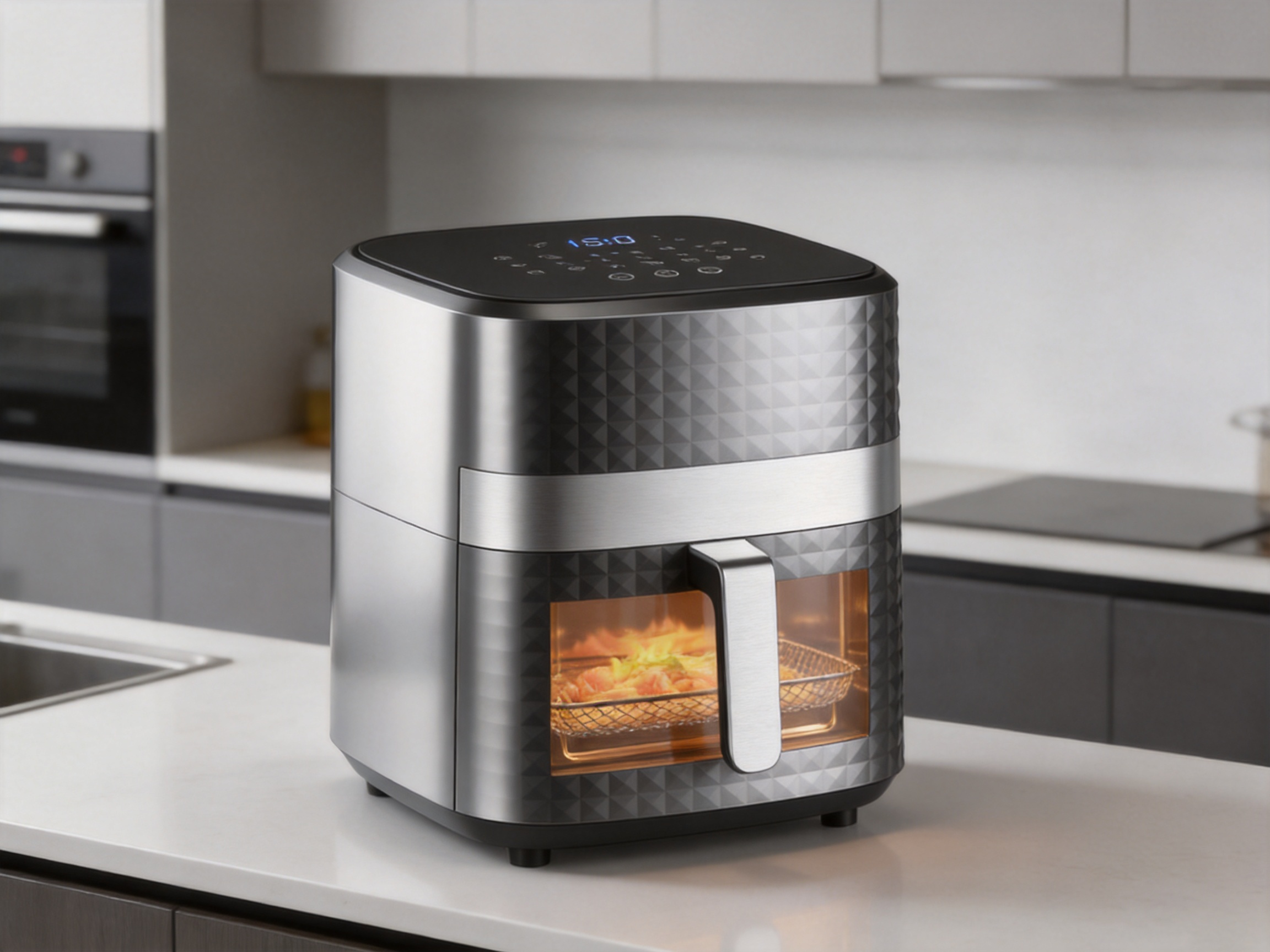
The product can be used for frozen foods such as fries, breaded snacks, fish portions, and prepared appetizers. These foods often benefit from dry circulating heat, which can help produce a crisp exterior. Cooking times and temperatures vary by product, so users should follow package guidance and check the food during the first use.
Fresh vegetables can also be roasted in the air fryer. Small pieces of potato, carrot, zucchini, broccoli, cauliflower, peppers, and similar ingredients can be lightly seasoned and cooked with a small quantity of oil. The air fryer can help produce browned edges while reducing the need to heat a full-size oven for a small portion.
Chicken wings, drumettes, sausages, and other suitable meat products can be prepared using circulating heat. The user should ensure that food reaches a safe internal temperature and should avoid relying only on surface color to judge doneness. A food thermometer may be used when appropriate.
The appliance can support reheating as well. Pizza slices, pastries, fried snacks, and other leftovers may regain a crisp texture that can be difficult to achieve in a microwave. Reheating settings should be selected carefully because smaller portions can heat quickly.
Small baking tasks are another possible use. Depending on the basket dimensions and recipe, the air fryer may be suitable for muffins, small cakes, biscuits, or other baked items. Users should ensure that baking containers are appropriate for the operating temperature and do not obstruct airflow.
Grilling-style applications can include skewered vegetables, seafood, and thin meat portions. The result will depend on the food’s thickness, moisture, seasoning, and arrangement. The product is best understood as a versatile hot-air cooking appliance rather than as a direct replacement for every type of outdoor grill or full-size oven.
Manufacturing and Product-Development Strengths
The manufacturer specializes in the design, development, and production of small electric kitchen appliances. Its product categories include blenders, slicers, choppers, food processors, smokeless grills, hot pots, air fryers, and air ovens. This range provides experience across several appliance types that use heating systems, motors, controls, food-contact parts, molded housings, and accessory components.
The company also produces equipment and utensils for bars, restaurants, and hotels, including ice buckets, beverage dispensers, pitchers, slicers, and graters. Experience across both household and hospitality-related products can support an understanding of different customer expectations, including durability, ease of use, appearance, packing, and repeat purchasing requirements.
According to the supplied company information, the business developed from a trading and sourcing background into a manufacturer focused on product design and development. This history is relevant because it combines market awareness with factory-based engineering and production capabilities. Understanding what retailers and end users require can help guide product selection, packaging decisions, cost management, and quality expectations.
The company reports a dedicated research and development team with engineers and a quality-control department. It also reports a factory with a substantial production area and an experienced workforce. These resources are important for appliances such as air fryers, where product performance depends on the coordination of heating elements, air channels, fans, electronic controls, thermal protection, molded parts, baskets, handles, and packaging.
Product development begins with identifying market demand and defining the intended use of the appliance. Engineers then evaluate the heating capacity, cooking chamber, airflow arrangement, control interface, housing structure, basket design, and safety-related functions. Prototype testing can be used to review cooking performance, heat distribution, ergonomics, appearance, and assembly.
For a square-texture model, tooling and surface consistency are especially important. The texture must be reproduced consistently across production units, and the external finish must remain compatible with the housing material and manufacturing process. The design must also allow practical assembly, cleaning, packaging, and transportation.
Engineering Coordination
Air-fryer performance depends on more than the rated power shown on the product label. The heating element must work with the fan, internal airflow paths, cooking chamber, basket, temperature sensor, and control board. Engineers need to consider how heat reaches different areas of the food and how the appliance responds when the basket is full or partially filled.
Component coordination is also important for user safety. The external housing, handle, basket, and control area should be designed with appropriate consideration for heat exposure. Electrical parts require suitable insulation and assembly methods. Automatic shut-off and temperature-control functions must work reliably within the intended operating range.
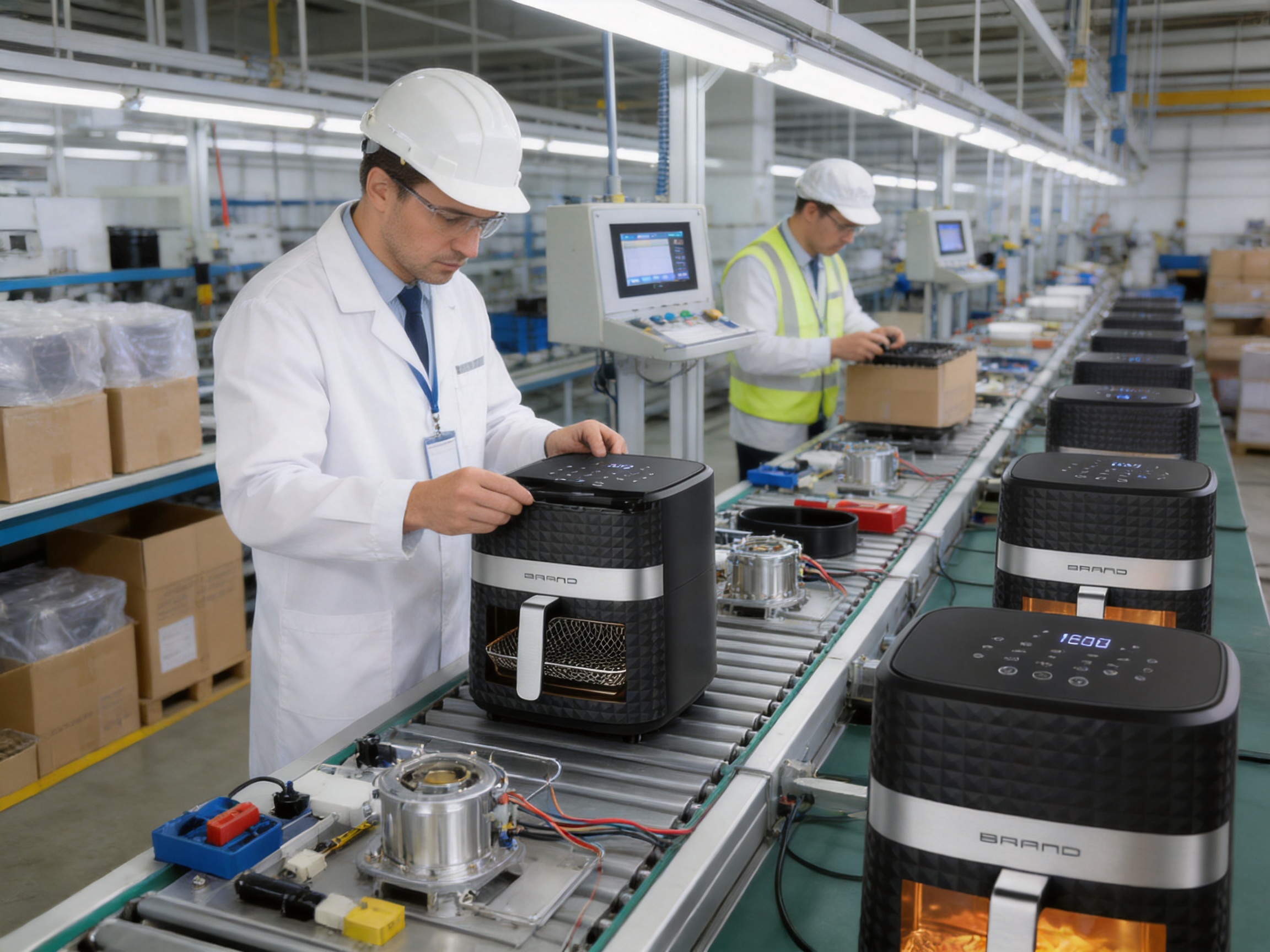
Manufacturing teams must translate the design into repeatable production steps. This can include injection molding, component preparation, surface finishing, electrical assembly, heating-system installation, basket assembly, functional testing, appearance inspection, and packaging. Consistent work instructions and inspection standards help reduce variation between units.
Quality-Control Focus
Quality control for an air fryer may cover incoming materials, molded components, electrical assemblies, heating performance, control-panel operation, basket fit, automatic shut-off, appearance, noise, packaging, and final product inspection. The precise inspection plan depends on the final model configuration and the requirements of the destination market.
Incoming inspection helps verify that supplied parts meet agreed specifications before they enter production. During assembly, operators and quality personnel can check wiring, component placement, fastening, insulation, and mechanical fit. Finished-product testing can confirm that the appliance powers on, responds to controls, heats appropriately, and completes the programmed cycle.
Appearance inspection is relevant to the square-texture design because uneven texture, scratches, discoloration, gaps, or inconsistent finishing can affect customer perception. Packaging inspection is equally important because air fryers contain molded plastic and electrical components that must be protected during handling and transportation.
The company’s reported QC resources and engineering staff provide a foundation for managing these activities. For wholesale customers, quality procedures should be documented through product specifications, approved samples, inspection standards, and agreed acceptance criteria. Clear communication before mass production helps ensure that the finished product matches the buyer’s expectations.
Production Process for a Small Electric Air Fryer
The production process generally starts with the preparation and inspection of raw materials and purchased components. Plastic resins, metal parts, heating components, electronic controls, fasteners, wires, baskets, handles, and packaging materials must be available in the correct specifications. Material verification at this stage helps prevent downstream assembly problems.
Plastic housing components may be formed using injection molding. The mold creates the required shape, openings, control-panel areas, ventilation features, and surface texture. Molding parameters such as temperature, pressure, cooling time, and cycle control influence dimensional accuracy and surface appearance.
Metal and aluminum components may be formed, cut, stamped, or otherwise processed according to their function. Components associated with heat transfer or internal support require suitable dimensions and surface condition. The basket and its coating must be checked for fit, smoothness, and resistance to ordinary use.
Electrical assembly can include the installation of the heating element, fan motor, control board, temperature-sensing parts, wiring, connectors, and protective components. Trained operators follow assembly instructions to maintain consistent routing and connection. Quality checks can be performed at various points to identify wiring errors or incomplete assembly before the final housing is closed.
The housing is assembled around the internal system while maintaining the correct position of controls, vents, basket guides, handles, and other external features. The transparent-model components, where included in the approved configuration, must be installed carefully to preserve appearance and fit.
After assembly, finished units may undergo electrical and functional testing. Operators can verify start-up, control response, time adjustment, temperature selection, fan operation, heating behavior, and automatic shut-off. Visual inspection checks the surface texture, housing alignment, labels, buttons, basket condition, and overall appearance.
Approved units are then packed into individual cartons. The listed packing configuration is one piece per carton. Carton design should provide suitable protection for the appliance during storage and transportation. Packaging may include molded inserts, protective films, bags, manuals, accessory placement, and external shipping marks as required by the buyer.
Supply and Wholesale Considerations
The product is suitable for importers, distributors, retailers, and private-label customers seeking a 5L air fryer with a modern design and practical functions. The manufacturer’s experience in small kitchen appliances can support discussions about product selection, technical specifications, packaging, delivery planning, and market positioning.
The stated delivery time is approximately 45–60 days. Actual timing may depend on order quantity, production scheduling, component availability, packaging approval, destination requirements, and shipping arrangements. Buyers should confirm the production schedule before placing an order and should allow sufficient time for sample approval, artwork preparation, inspection, and transportation.
The supplied carton information indicates one piece per carton. The listed carton-size entry should be verified before shipment because commercial packing dimensions must be consistent with the final approved packaging. Buyers should also request confirmed net weight, gross weight, container-loading quantity, minimum order quantity, and finalized carton measurements when preparing a purchasing plan.
For international markets, electrical compatibility is essential. Voltage, frequency, plug type, rated power, certification, labeling, user instructions, and packaging language may vary by destination. The 1500W rating should be reviewed together with the target market’s electrical system and regulatory requirements. A manufacturer and buyer should agree on the final configuration before production begins.
Private-label customers may also need to review logos, color schemes, control markings, manuals, cartons, labels, warranty information, and spare-part policies. Product customization should be evaluated for tooling impact, minimum order requirements, development time, and quality-control implications.
Positioning for Retail and E-Commerce
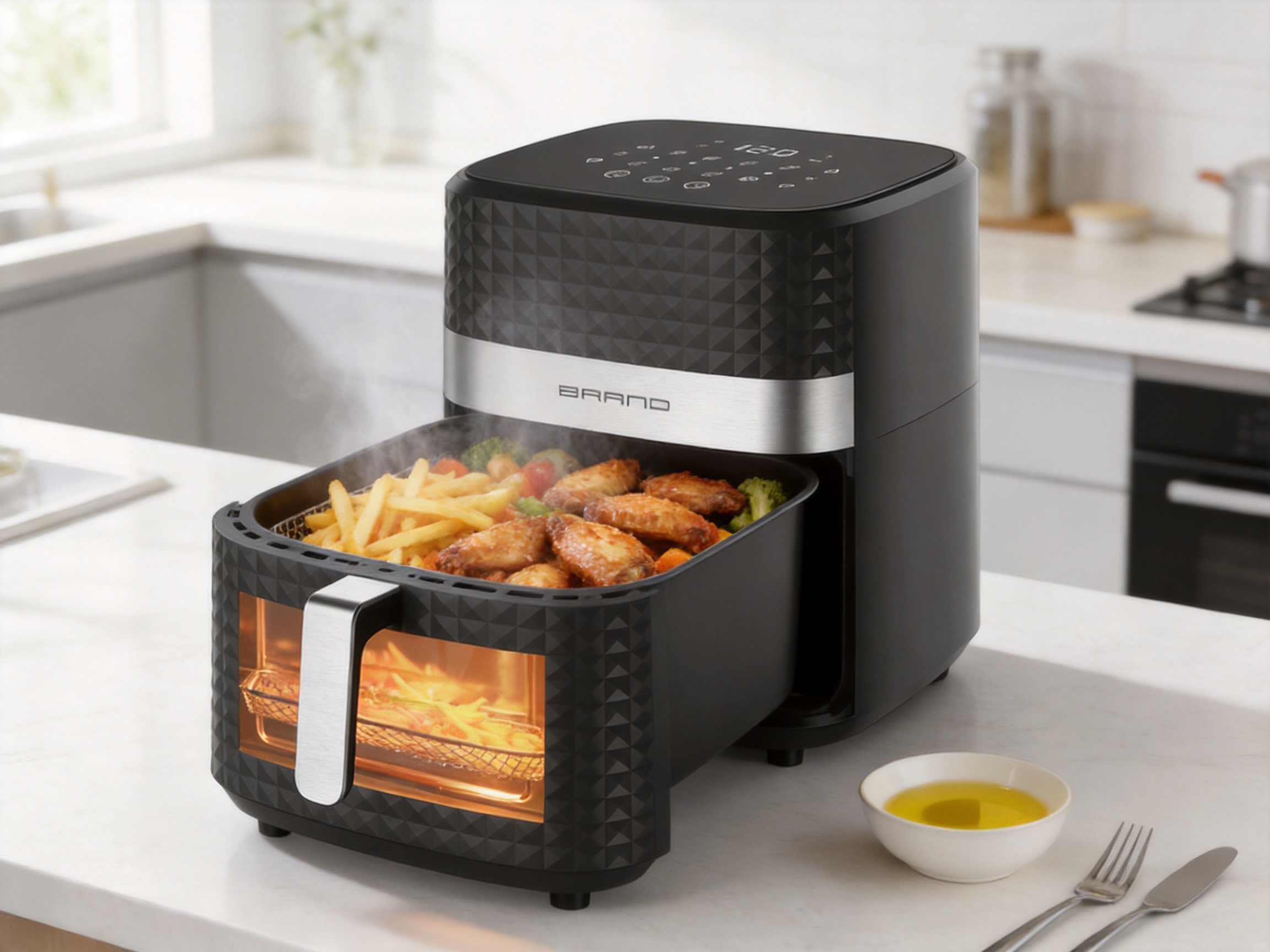
The product can be positioned as a versatile 5L household air fryer for consumers who want convenient lower-oil cooking. Its strongest retail messages include capacity, digital control, automatic shut-off, removable non-stick basket, multi-function cooking, and modern square-texture styling.
Product descriptions should explain that the appliance uses circulating hot air rather than large quantities of oil. At the same time, marketing claims should remain accurate and responsible. The air fryer can help reduce added cooking oil, but results depend on ingredients and preparation. Clear communication builds consumer trust and reduces unrealistic expectations.
Images and demonstrations can emphasize the appliance’s countertop design, basket capacity, control interface, and range of food applications. Retailers may show examples of fries, roasted vegetables, chicken, fish, snacks, and baked foods. Demonstrations should reflect realistic portions and operating instructions.
The transparent-model appearance may be useful for customers who prefer a more visually distinctive appliance. The square-texture exterior can complement modern kitchen interiors and create differentiation from basic smooth-surface models. A coordinated product family could use similar design language across other small appliances, helping retailers build a recognizable appliance collection.
For e-commerce, the most important technical information should be easy to find. Capacity, power, dimensions, basket type, control method, functions, cleaning guidance, and electrical configuration should be presented clearly. Buyers also benefit from knowing what is included in the carton and whether accessories are supplied.
Responsible Use and Maintenance
Users should place the air fryer on a stable, heat-resistant, level surface with sufficient clearance around ventilation openings. The appliance should be kept away from water, unstable edges, and materials that may be affected by heat. The power cord should be positioned to avoid contact with hot surfaces or areas where it can be pulled accidentally.
The basket should not be filled beyond the recommended level. Overloading can restrict airflow and lead to uneven cooking. Food should be arranged so that hot air can circulate around as much of the surface as possible. Shaking or turning food may improve browning and cooking consistency.
Users should handle the basket carefully because it and its contents can become hot. Protective gloves or suitable utensils may be required when removing cooked food. The appliance should be allowed to cool before cleaning, storage, or inspection.
Cleaning should be performed according to the operating instructions. Food residue should not be allowed to accumulate around the basket, vents, or internal cooking area. The electrical housing and control section should not be immersed in water. Abrasive cleaners and sharp tools should be avoided if they may damage the non-stick basket or external finish.
Regular inspection can help identify damage to the power cord, plug, basket, handle, housing, or control panel. If the appliance shows abnormal operation, smoke, unusual odor, or electrical damage, it should be disconnected and assessed by an appropriate service professional.
Environmental and Efficiency Considerations
An air fryer can be useful when a household wants to cook a small or medium portion without heating a full-size oven. Because the cooking chamber is smaller, preheating and cooking may be more localized. Actual energy consumption depends on cooking time, selected temperature, food quantity, and user habits.
Lower-oil cooking can also reduce the need to purchase and dispose of frying oil. This may simplify household routines and reduce waste associated with repeated deep frying. However, the appliance still consumes electricity, and responsible use involves selecting suitable cooking times and avoiding unnecessary operation.
Product durability is another important sustainability factor. A well-designed appliance that remains functional for a long period can reduce the need for frequent replacement. Manufacturing quality, component selection, basket coating performance, electrical reliability, user maintenance, and access to service information can all influence practical product life.
Packaging efficiency should also be considered in wholesale supply. Appropriate carton dimensions and protective materials help reduce transport damage. At the same time, packaging should avoid unnecessary material use where protection can be maintained through efficient structural design.
How the Product Supports Different Customer Needs
For families, the 5L capacity provides a useful option for preparing shared portions. For couples and individuals, it offers additional space for cooking a main food and side dish or for preparing a larger batch in one cycle. For apartment residents, the countertop format can provide oven-like versatility without requiring a full-size oven.
For retailers, the model offers a clear combination of consumer-friendly specifications. Capacity and power are easy to communicate, while digital controls and automatic shut-off enhance perceived value. The textured exterior provides visual differentiation that may help the model stand out in a crowded appliance category.
For distributors, the product can complement other small kitchen appliances. A portfolio may include food processors, blenders, grills, hot pots, slicers, and air ovens. A supplier with experience across these product categories can make it easier to develop a coordinated purchasing strategy.
For hospitality and food-service environments, the appliance may be useful for selected small-batch tasks, staff meals, testing, or light preparation, subject to the operating requirements of the specific establishment. Commercial users should confirm whether the product’s capacity, duty cycle, electrical configuration, and compliance documentation are appropriate for their intended use.
Q&A
What type of appliance is this product?
It is a 5L air fryer also identified in the product information as an air oven. It uses hot-air circulation to fry, roast, bake, grill, and reheat suitable foods with little or no added oil.
What is the rated power?
The listed rated power is 1500W. Buyers should confirm the final voltage, frequency, plug, and certification configuration for the target market before ordering.
How many people can a 5L air fryer serve?
The practical serving size depends on the food and the way it is arranged. In general, 5L is suitable for individuals, couples, and small to medium-sized families. Bulky foods may require more than one cooking cycle.
Does the air fryer require oil?
It is designed to cook with little or no added oil. Some foods benefit from a light coating of oil for browning or flavor, while other foods already contain sufficient fat. Cooking results vary according to the ingredients and recipe.
What controls does the appliance use?
The product has a digital control panel that allows users to set cooking time and temperature. The exact interface, display format, and available presets should be confirmed against the final approved sample.
Does it switch off automatically?
Yes. The supplied product description identifies an automatic shut-off feature that ends the cooking cycle when the programmed time is complete. Users should still operate the appliance responsibly and follow the safety instructions.
Is the basket removable?
Yes. The product includes a removable non-stick basket. Its removable design supports easier food handling and cleaning.
How should the non-stick basket be cleaned?
The basket should be allowed to cool before cleaning and should be washed according to the supplied instructions. Soft cleaning tools are generally preferable to abrasive materials that may damage the non-stick surface.
What materials are used?
The listed material specification includes PP, PA, aluminum, ABS, and PC. These materials may be used in different components of the appliance. Final material and food-contact details should be confirmed in the technical documentation for the approved configuration.
What makes the design different from basic air fryers?
The product combines a 5L capacity, digital controls, automatic shut-off, removable non-stick basket, and a square-texture exterior. The stainless-steel-style and transparent-model presentation also provide visual differentiation from plain conventional housings.
Can it replace a full-size oven?
It can handle many small-batch cooking tasks that might otherwise be performed in an oven, including roasting, baking, reheating, and crisping. It is not intended to replace the capacity of a full-size oven for large meals or oversized cookware.
What foods can be cooked in it?
Suitable foods may include fries, chicken wings, fish, vegetables, sausages, frozen snacks, pastries, and small baked items. Users should follow recipe instructions and ensure that meat and other foods reach safe internal temperatures.
What is the delivery time?
The supplied information lists an estimated delivery time of 45–60 days. The actual schedule should be confirmed according to order quantity, production planning, packaging approval, component availability, and shipping arrangements.
How is the product packed?
The listed packing arrangement is one piece per carton. Final carton dimensions, net weight, gross weight, and loading quantities should be confirmed before shipment because the supplied information leaves some of those fields blank or requires verification.
Can the product be customized for wholesale buyers?
Wholesale and private-label requirements can be discussed with the manufacturer. Potential areas may include packaging, labels, manuals, colors, branding, and market-specific electrical configurations. Customization should be confirmed before production, including any tooling, minimum-order, and schedule implications.
Conclusion
The 5L square-texture air fryer is a practical small kitchen appliance built around the growing demand for convenient, versatile, and lower-oil cooking. Its 1500W power, 5L capacity, hot-air circulation, digital controls, automatic shut-off, and removable non-stick basket combine to create a product suitable for a wide range of everyday meals.
Its main advantages over conventional frying include reduced reliance on large quantities of oil, easier cleanup, and the ability to roast, bake, grill, reheat, and crisp food in one appliance. Compared with smaller air fryers, the 5L capacity provides more useful cooking space for shared meals. Compared with basic mechanical models, the digital interface and automatic shut-off offer greater convenience and more repeatable operation.
The square-texture appearance and transparent-model presentation support a contemporary retail position, while the manufacturer’s reported experience in small electric kitchen appliances, product development, engineering, production, and quality control provides a foundation for wholesale cooperation. For importers and distributors, the most important next steps are to confirm the final technical configuration, electrical requirements, compliance documents, packaging specifications, order quantity, and production schedule.
With appropriate product documentation, responsible user instructions, consistent quality control, and suitable market positioning, this air fryer can serve as a competitive addition to a household kitchen appliance portfolio.
References
1. Supplied product specification for item GSE037, including capacity, rated power, materials, packing information, and delivery time.
2. Supplied product description for the 5L square-texture air fryer, including hot-air circulation, digital controls, automatic shut-off, and removable non-stick basket.
3. General principles of convection heating and hot-air cooking in countertop electric appliances.
4. General household guidance concerning safe food temperatures, appliance ventilation, cleaning, and responsible use of electrical kitchen equipment.
5. Supplied company information concerning small kitchen appliance design, development, manufacturing, research and development, production, and quality-control capabilities.