
 English
 中文简体
中文简体 Español
 English
 中文简体
中文简体 Español
Modern households increasingly need kitchen appliances that combine convenience, reliable performance, compact dimensions, and practical cooking capacity. The 6-liter mechanical air fryer described in this article is designed to meet those needs through a straightforward control system, high-temperature air circulation, a useful family-sized capacity, and a construction that balances appearance with everyday durability. Available in versions with or without a viewing window, the appliance is suitable for home kitchens, apartments, student accommodation, offices, guesthouses, and other environments where efficient cooking is important.
The product is identified by the model series GSE033-1, GSE033-1D, GSE033-1P, and GSE033-1PD. These models are presented as mechanical air fryers, with selected configurations offering a front viewing window. All versions are built around a 6-liter cooking capacity and a rated power of 1,500 watts at 220–240 volts and 50 hertz. The combination gives users enough space for common household portions while retaining a manageable external footprint.
Unlike complicated appliances that depend on touchscreens, mobile applications, or multiple electronic menus, a mechanical air fryer uses physical controls. This approach offers a familiar operating experience and can reduce the learning curve for new users. The user can set the temperature and cooking time directly, monitor the cooking process when using a windowed version, and remove the basket when the food is ready.
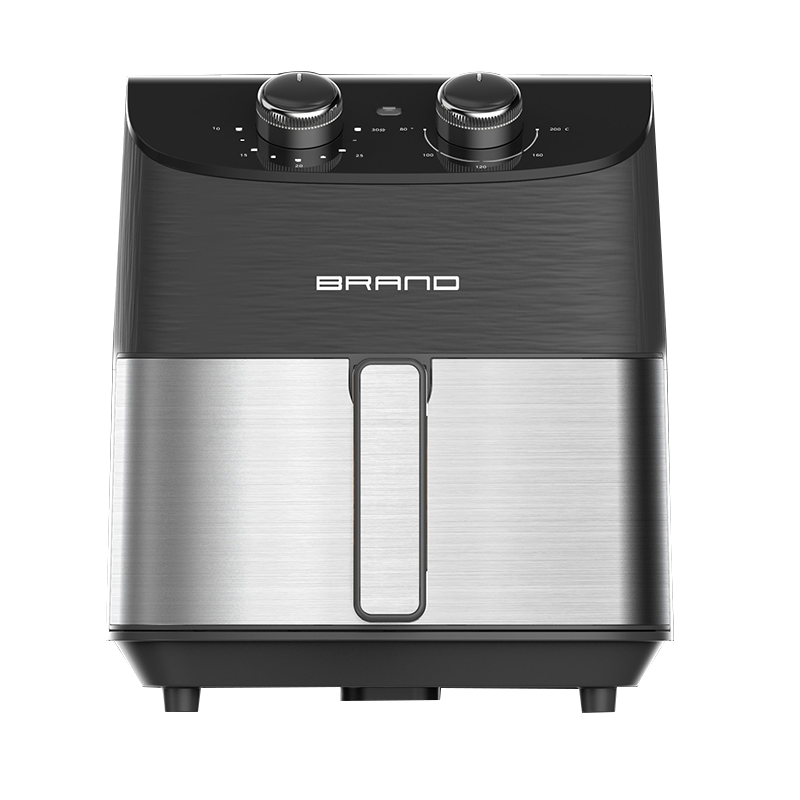
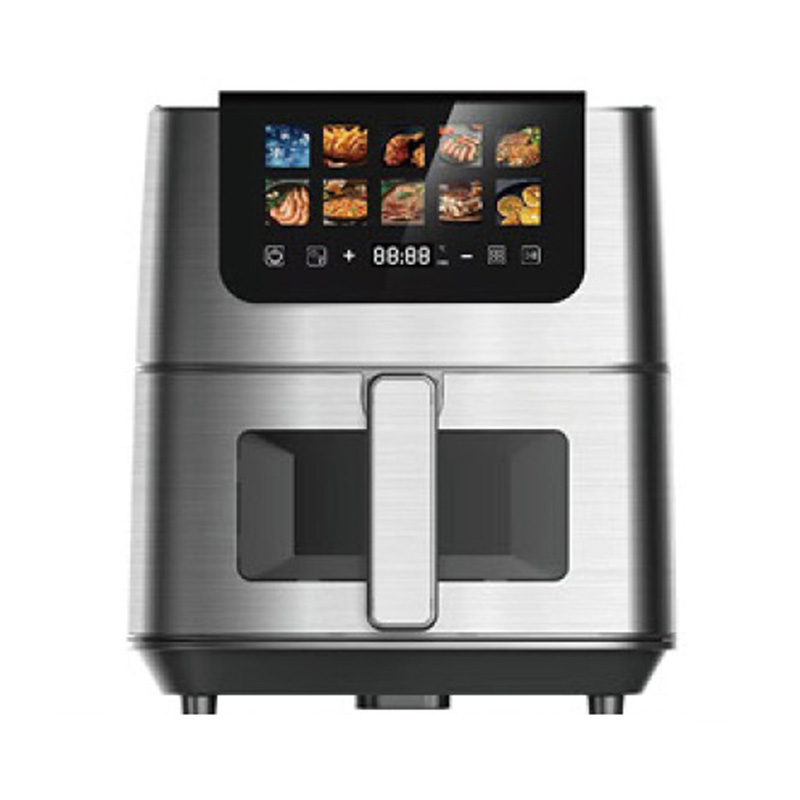
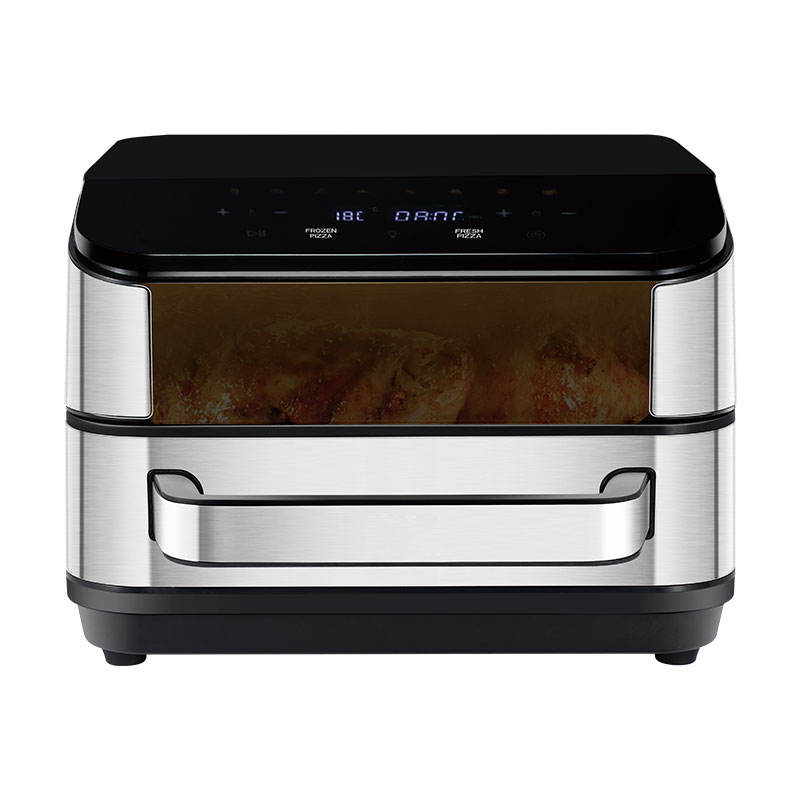
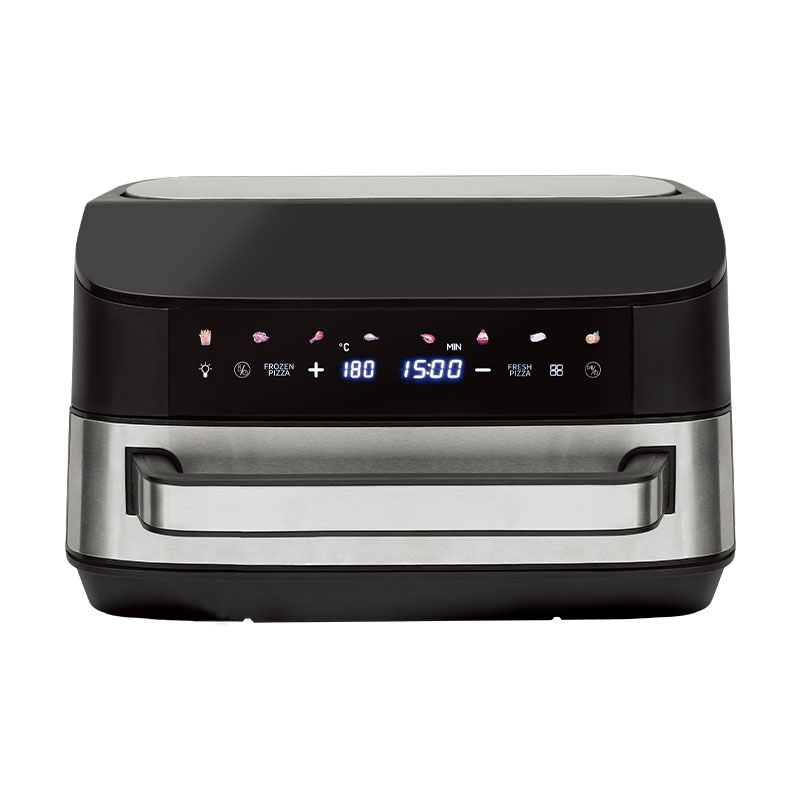
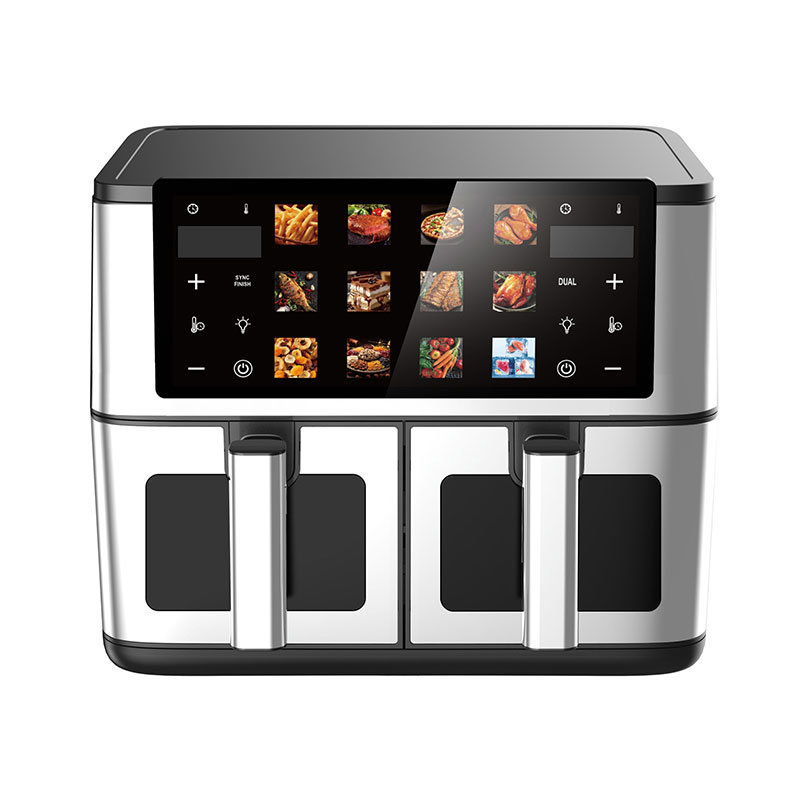
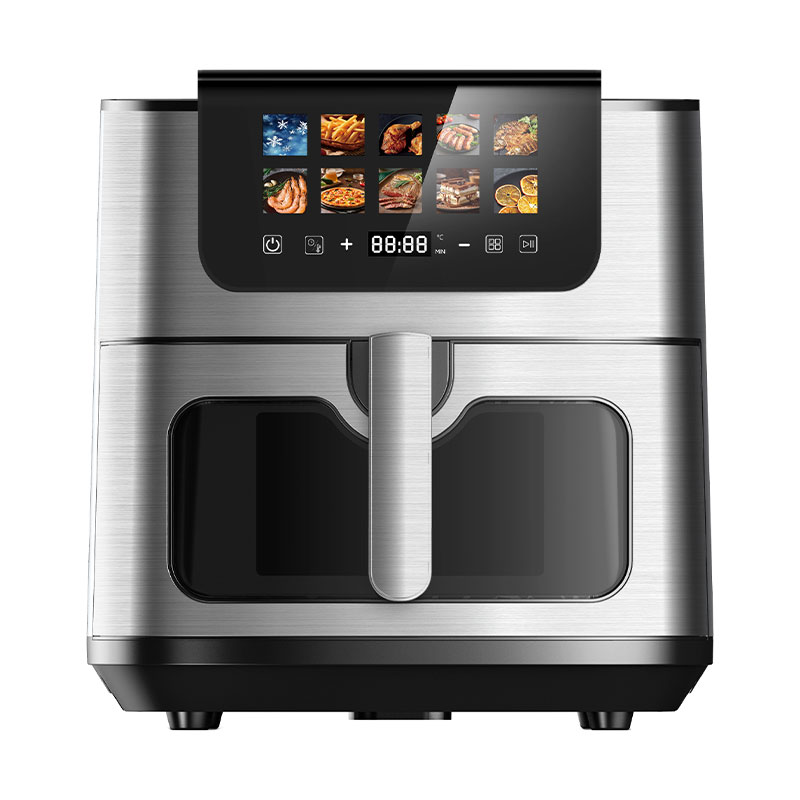
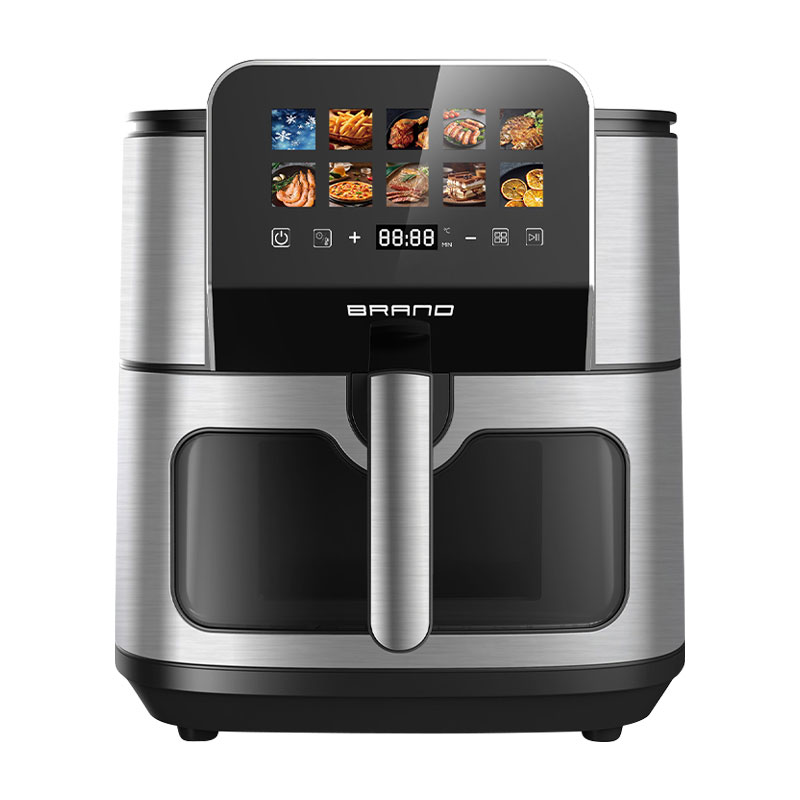
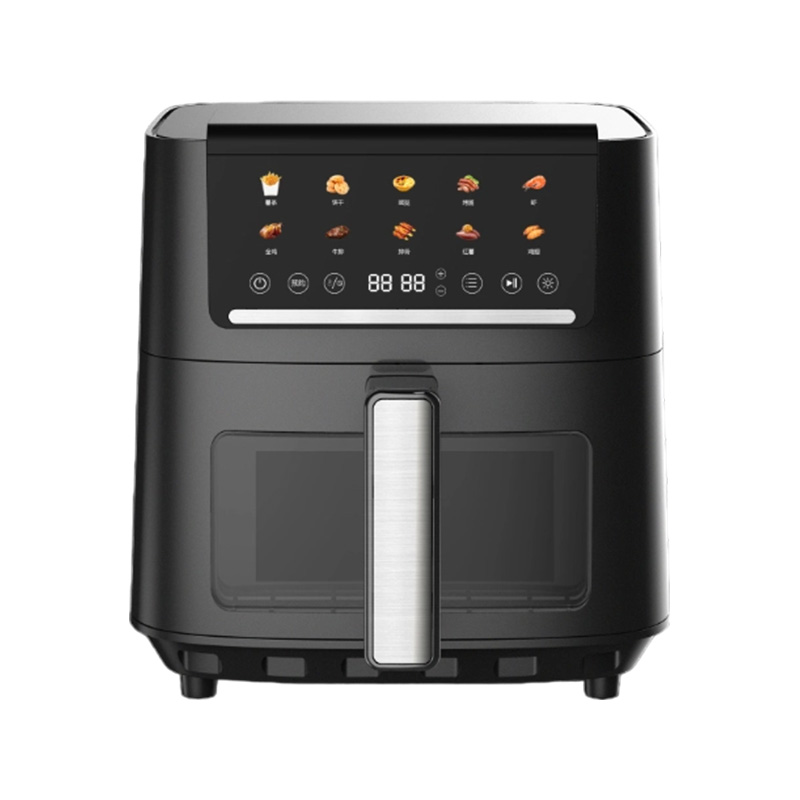
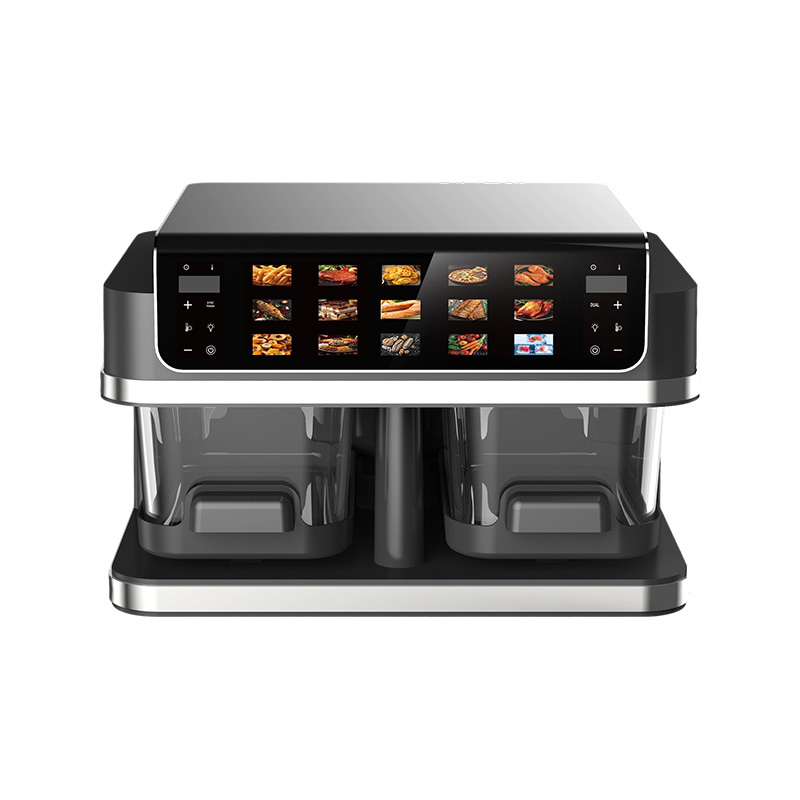
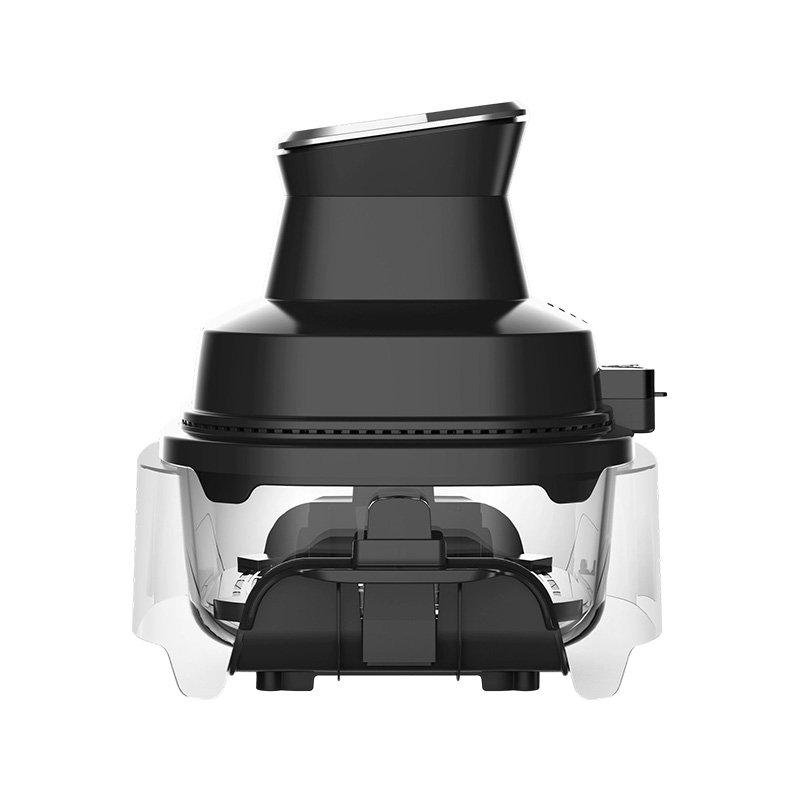
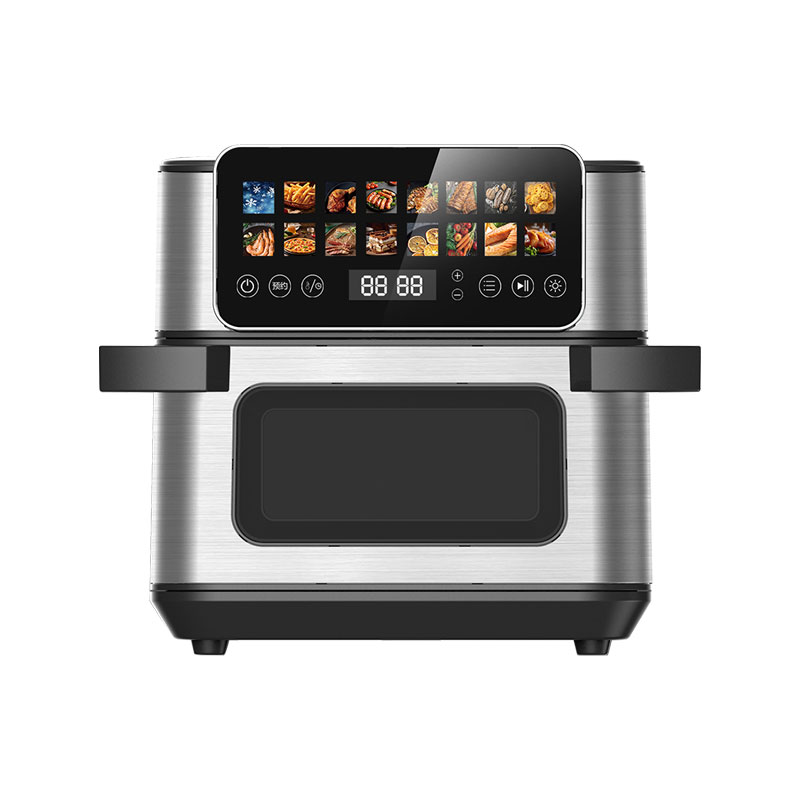
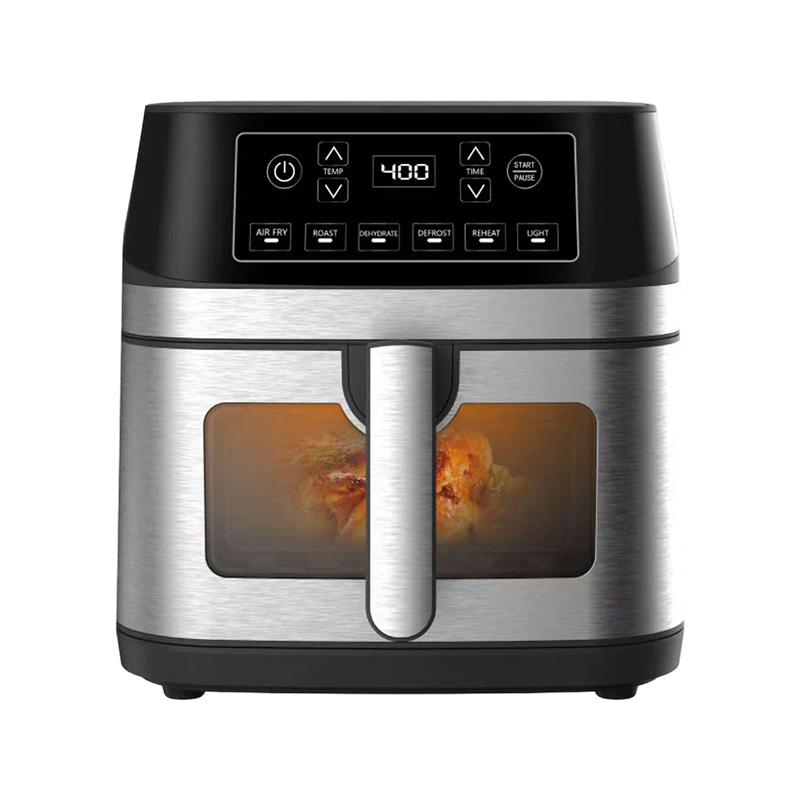
Air Fryer (Mechanic with window)/Air Fryer(Mechanic without window)
Product Overview and Main Applications
An air fryer is a countertop cooking appliance that prepares food through the rapid circulation of heated air. Instead of immersing food in a large quantity of oil, the appliance uses a heating element and an internal fan to move hot air around the cooking chamber. The result is a convenient way to prepare foods that are commonly fried, roasted, reheated, or baked.
The 6-liter capacity makes this model more versatile than very small personal air fryers. It can serve one person who prefers batch cooking, a couple preparing shared meals, or a small family preparing side dishes and main portions. Depending on the food type and preparation method, the cooking basket can accommodate items such as chicken pieces, vegetables, potato products, seafood, pastries, snacks, and reheated meals.
The appliance is especially suitable for users who want to reduce the amount of oil used in routine cooking. Foods can often be prepared with a light coating or spray of oil, although the correct amount depends on the recipe and ingredients. Air frying does not automatically make every food healthy, but it can provide an alternative to traditional deep-frying methods and may help simplify everyday meal preparation.
The product can be used in several practical settings:
• Household kitchens that need a second cooking appliance.
• Small apartments where counter space and cooking time are limited.
• Offices or staff rooms where simple meal preparation is required.
• Guesthouses, serviced apartments, and hospitality environments that provide cooking facilities.
• Retail programs seeking a private-label or wholesale kitchen appliance.
• Promotional and seasonal appliance collections for supermarkets and home-goods retailers.
Its mechanical design also makes it appropriate for users who prefer direct controls rather than digital interfaces. Elderly users, first-time air fryer owners, and customers who value simple operation may find the physical timer and temperature controls easier to understand.
Key Specifications
The product specifications provide a clear basis for evaluating the air fryer’s suitability for different markets and distribution channels. The main technical details are summarized below.
| Item numbers | GSE033-1 / GSE033-1D / GSE033-1P / GSE033-1PD |
| Product name | Mechanical air fryer with window / mechanical air fryer without window |
| Category | Air fryer |
| Materials | PP, PA, ABS, PC, and stainless steel |
| Rated voltage | 220–240 volts |
| Rated power | 1,500 watts |
| Frequency | 50 hertz |
| Cooking capacity | 6 liters |
| Product dimensions | 362 × 298 × 335 millimeters |
| Gift box dimensions | 397 × 333 × 374 millimeters |
| Carton dimensions | 412 × 348 × 392 millimeters |
| Packing quantity | 1 piece per carton |
| Gross and net weight | 6.6 kilograms gross / 5.5 kilograms net |
| Container loading reference | 1,200 pieces per 40-foot high-cube container |
| Minimum order quantity | 1,200 pieces |
| Listed certifications | CE, GS, CB, ETL, RoHS, LFGB, and FDA |
Specifications may vary by destination market, configuration, electrical plug, labeling requirement, or final production arrangement. Importers should confirm the applicable version and compliance documentation before placing an order.
Mechanical Control and User-Friendly Operation
One of the product’s principal advantages is its mechanical control system. Physical dials provide direct adjustment without requiring users to navigate menus or interpret digital symbols. This can be particularly useful in markets where customers prioritize durability, ease of use, and a familiar cooking experience.
A mechanical timer allows the user to select a cooking period according to the recipe. Once the set time has elapsed, the cooking cycle can stop or signal completion according to the product’s operating design. A separate temperature control allows the user to select the heat level appropriate for different ingredients. Lower settings may be suitable for gentle reheating or delicate foods, while higher settings can be selected for crisping and roasting.
Mechanical controls can also be advantageous in retail positioning. A simple interface is easy to demonstrate in packaging images, product videos, and in-store displays. Customers can quickly understand the core functions without needing to learn a digital program system. This clarity may help reduce purchase hesitation, especially when the appliance is sold to consumers who are buying an air fryer for the first time.
Another benefit is the reduced dependence on software-based features. A mechanical product does not require a wireless connection, application updates, account registration, or a smart device. It can begin operating immediately after the user has prepared the food and selected the desired settings. This gives the appliance a practical role in kitchens where straightforward functionality is more valuable than connectivity.
At the same time, users should follow the supplied operating instructions. Cooking times and temperatures vary according to food quantity, thickness, starting temperature, moisture content, and personal preference. The appliance should not be overfilled, and food should be arranged to allow hot air to circulate as freely as possible.
6-Liter Capacity for Flexible Meal Preparation
Capacity is one of the most important factors when comparing air fryers. A compact personal model may be convenient but can require several cooking cycles for a shared meal. A very large model may consume more counter and storage space than a small household requires. The 6-liter format occupies a practical middle position, offering useful cooking volume without the external scale of a large commercial appliance.
This capacity can be used for a broad range of food preparation tasks. Users may cook a batch of fries, prepare several portions of vegetables, roast chicken pieces, heat frozen snacks, or prepare small baked items. The actual quantity depends on the shape and density of the food, and the best results are generally achieved when the basket is not packed too tightly.
A 6-liter air fryer can also support meal planning. Ingredients can be prepared in advance and cooked in batches, allowing users to organize weekday meals more efficiently. It can be used alongside an oven or stovetop, freeing the main cooking equipment for other dishes. This is useful when several foods must be prepared at the same time.
For retailers and importers, the capacity offers a clear marketing message. It is large enough to be presented as a family or shared-use appliance, while the product dimensions remain suitable for ordinary household countertops. This balance can broaden the target market and support multiple sales channels, including kitchenware stores, online retailers, supermarket appliance sections, and hospitality suppliers.
Windowed and Non-Windowed Configurations
The model family includes air fryer versions with and without a viewing window. This gives buyers flexibility when developing a product range or selecting an item for a specific market segment.
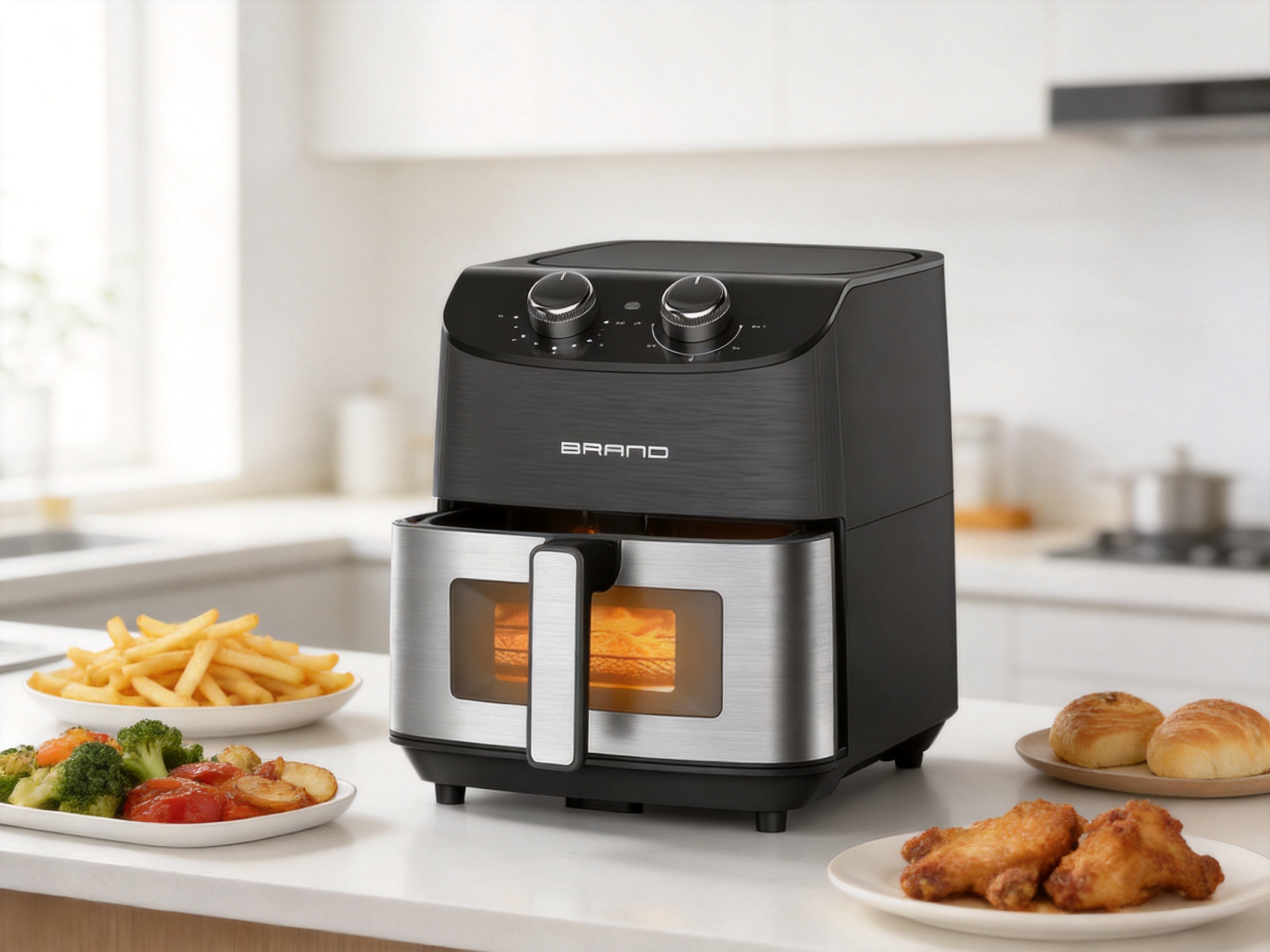
The viewing-window version allows users to observe the food during cooking without opening the drawer or basket. This can be helpful when checking browning, monitoring delicate foods, or deciding whether additional cooking time is needed. Keeping the cooking chamber closed can also help reduce unnecessary heat loss caused by repeated opening.
A window can provide an important visual selling point. Product images can show food inside the cooking chamber, making the function immediately understandable to shoppers. It may also appeal to customers who enjoy monitoring the cooking process or who want to check the appearance of food without interrupting the cycle.
The non-windowed version presents a simpler exterior configuration and may be preferred by buyers who focus on price, minimal styling, or a clean, uninterrupted front panel. It can also be positioned as an efficient basic model for high-volume retail programs. Offering both configurations enables distributors to address different price points without changing the core product category.
Although the presence of a window affects the exterior design, both versions are based on the same general cooking concept: a heated chamber, circulating hot air, a cooking basket, mechanical controls, and a high-power heating system. Buyers can therefore select between visual monitoring and simplified construction according to their sales strategy.
Materials and Construction
The listed material combination includes polypropylene, polyamide, acrylonitrile butadiene styrene, polycarbonate, and stainless steel. Each material can serve a different functional purpose within the product assembly.
Polypropylene is commonly used in appliance components that require a lightweight structure and resistance to everyday household handling. It may be applied to selected internal or external parts where appropriate. Polyamide can be used in areas that require a different balance of strength, heat resistance, or dimensional stability. ABS is widely used for molded housings and decorative structures because it can provide a practical combination of appearance, rigidity, and impact resistance.
Polycarbonate is particularly relevant to transparent or translucent components, such as a viewing-window assembly, when the final design requires a clear visual area. Stainless steel may be used in the cooking chamber, heating-related components, fasteners, or other areas where resistance to heat and food contact conditions is important.
The value of a multi-material construction is that the product can be engineered according to the role of each component. External housing materials can support appearance and handling, transparent components can support visibility, and stainless-steel elements can serve the cooking environment. Correct material selection must be combined with appropriate molding, assembly, temperature testing, and quality control.
For buyers, the material specification is also relevant to regulatory and market requirements. Food-contact components, coatings, plastics, and metal parts may be subject to different rules depending on the destination. The listed LFGB and FDA references indicate that food-contact compliance is part of the product’s certification and documentation positioning, but importers should verify the exact reports and scope for the final model.
Heating Performance and Air Circulation
The rated 1,500-watt power level is designed to provide the heating energy required for a 6-liter countertop air fryer operating on a 220–240-volt, 50-hertz electrical system. Power is an important factor in cooking performance because the appliance must heat the chamber, maintain the selected temperature, and recover heat after the basket is opened.
The air fryer’s operating principle depends on the interaction between the heating element, internal fan, cooking chamber, and basket. The heating element raises the air temperature, while the fan moves the heated air around the food. The basket allows air to contact multiple surfaces, supporting browning and crisping when the ingredients and settings are suitable.
Uniform air movement is important because stagnant areas can produce uneven cooking. Product development therefore needs to consider the position of the heating system, fan geometry, air channels, basket shape, and distance between the food and hot-air outlet. These elements are evaluated during product development and testing to achieve a practical balance between heating speed, energy use, surface browning, and cooking consistency.
The user also influences performance. Food should be distributed evenly, and thicker items may need to be turned or shaken during cooking. Frozen foods, fresh foods, breaded foods, and marinated ingredients can have different cooking characteristics. A manufacturer can design the appliance to support efficient circulation, but recipe results still depend on food preparation and operating habits.
Compared with traditional deep frying, air frying can reduce the need for a large volume of cooking oil. Compared with a conventional oven, it can offer a smaller cooking chamber and a focused countertop format for modest portions. These advantages make the appliance attractive to consumers who want faster daily cooking and simpler cleanup, although actual cooking time and energy use vary according to the food and procedure.
External Dimensions and Storage Convenience
The product measures approximately 362 millimeters in length, 298 millimeters in width, and 335 millimeters in height. These dimensions provide a useful reference for retailers, kitchen planners, logistics providers, and end users.
The appliance is compact enough for many kitchen counters while still providing a 6-liter cooking capacity. Users should place it on a stable, level, heat-resistant surface with sufficient clearance around ventilation areas. The appliance should not be pushed directly against a wall or placed beneath materials that could be damaged by heat or steam.
External dimensions also affect merchandising. The product can be displayed on a countertop, appliance shelf, or promotional island. Its gift box measures approximately 397 × 333 × 374 millimeters, while the shipping carton measures approximately 412 × 348 × 392 millimeters. These packaging measurements help distributors estimate warehouse requirements and plan pallet layouts.
The one-piece-per-carton packing format provides a clear unit structure for inventory control. Each carton contains one air fryer, which can simplify counting, picking, order fulfillment, and retail distribution. The listed gross weight is 6.6 kilograms and the net weight is 5.5 kilograms, allowing logistics teams to estimate handling requirements and freight costs.
Packaging and Wholesale Logistics
For international buyers, logistics efficiency is an important part of product competitiveness. The supplied loading reference indicates that up to 1,200 pieces can be loaded into a 40-foot high-cube container, subject to the final packing configuration and shipping conditions. The stated minimum order quantity is also 1,200 pieces, which corresponds to a full-container wholesale program.
The gift box is intended to protect and present the individual product, while the outer carton provides additional protection during warehouse handling and transport. Packaging development should consider shock, vibration, compression, moisture, stacking, and the movement of internal components. Appropriate protective materials and internal supports help reduce the risk of cosmetic damage or functional problems during distribution.
Retail packaging also serves an important communication function. It can present the capacity, mechanical operation, window option, power rating, cooking applications, and safety information in a format that customers can understand quickly. Clear packaging is particularly valuable for air fryers because consumers often compare capacity, power, controls, and included features before making a purchase.
Importers may request adjustments such as multilingual instructions, market-specific labels, customized cartons, barcode placement, plug standards, or promotional inserts. These requirements should be discussed before production because they may affect artwork approval, testing, material purchasing, and production scheduling.
Advantages Over Basic and Competing Air Fryers
The product’s competitive value comes from a combination of capacity, simplicity, configuration choice, physical construction, and wholesale readiness. No single feature defines the entire product. Instead, the model is positioned as a balanced appliance for buyers seeking practical functions without unnecessary complexity.
First, the 6-liter capacity gives it an advantage over very small personal air fryers. A larger cooking space can reduce the number of batches needed for shared meals and provide greater flexibility for different food shapes. This makes the appliance easier to position as a household product rather than a single-serving device.
Second, the 1,500-watt rating supports a practical relationship between cooking volume and heating power. A low-power appliance with a relatively large chamber could require longer heating or recovery periods, while an excessively high-power appliance could create different requirements for electrical design and energy management. The stated rating is suitable for the intended 220–240-volt market configuration.
Third, the mechanical control system offers a clear alternative to digital models. Touchscreens and smart functions can be attractive, but they may increase product complexity, cost, and dependence on electronic components. Physical controls provide immediate operation and are easy to explain in retail materials. They can also appeal to customers who value uncomplicated appliances.
Fourth, the availability of windowed and non-windowed configurations allows buyers to develop a more flexible product portfolio. A distributor can offer a visual-monitoring model for customers who prioritize convenience and a simplified version for price-sensitive or high-volume channels.
Fifth, the product uses a combination of engineered plastics, transparent material, and stainless steel to support different functional requirements. This approach can provide a practical balance between product weight, appearance, structural design, and cooking-area suitability.
Sixth, the appliance is supported by a wholesale-oriented specification package. The product has defined model numbers, packaging dimensions, carton quantity, loading information, minimum order quantity, and a list of certification references. Such information helps professional buyers evaluate the item for procurement and distribution more efficiently.
Finally, the product is suitable for private-label and international programs because the company behind it has experience in product development, factory production, quality control, and export-oriented cooperation. This is important for buyers seeking more than a catalog item and requiring communication with an engineering and manufacturing partner.
Manufacturing Expertise and Product Development Strengths
The manufacturer, CIXI GSTAR ELECTRIC APPLIANCE CO., LTD., focuses on the design, development, and production of small electric kitchen appliances. Its product range includes blenders, slicers, choppers, food processors, smokeless grills, hot pots, air fryers, air ovens, and other household or food-service-related products.
The company’s development history began with trading and sourcing experience before expanding into proprietary product development and electrical appliance manufacturing. This background can be valuable because it combines knowledge of customer requirements, market trends, supplier coordination, quality expectations, and factory production.
The company has described a transition from non-electric innovative products to electric appliances, followed by the development of a dedicated factory. It reports a factory area of approximately 15,000 square meters, a building area of approximately 18,000 square meters in one description, more than 200 experienced workers, engineering personnel, and quality-control staff. These resources support product design, tooling coordination, assembly, inspection, and production management.
A manufacturing partner with internal engineering capability can respond more effectively to product adjustments than a company that only resells finished goods. Engineering support may include product structure review, electrical design coordination, appearance development, material selection, packaging optimization, and production troubleshooting. For air fryers, these activities are especially important because the product combines heat, airflow, food contact, mechanical controls, electrical components, and molded plastic parts.
The company also reports experience supplying products to international supermarkets and retailers. This type of experience can help establish procedures for packaging compliance, inspection, delivery coordination, quality documentation, and customer communication. Large retail programs often require consistent output, accurate labeling, reliable packaging, and attention to pre-production approvals.

Advanced Manufacturing Process for the Air Fryer
The production of a countertop air fryer involves multiple connected processes. A strong manufacturing system controls each stage rather than relying only on final inspection. The following process represents the key areas that contribute to a consistent product.
Product Design and Engineering Review
Production begins with product design and engineering review. The development team evaluates the required capacity, external dimensions, control layout, basket structure, airflow path, heating arrangement, housing design, viewing window, handle, and safety features. The design must also account for assembly access, cleaning requirements, packaging, and service considerations.
Mechanical and electrical components are reviewed together. For example, the control layout must be compatible with the internal wiring and temperature-management system. The basket must fit correctly within the drawer or cooking chamber, and the housing must provide suitable support for the controls and heating assembly. A design that looks attractive but is difficult to assemble or inspect may create unnecessary production risks, so manufacturability is considered during development.
Material and Component Selection
Materials are selected according to their purpose, operating temperature, structural role, appearance, and compliance requirements. Plastic resin, stainless steel, transparent components, electrical parts, heating elements, fans, wires, terminals, fasteners, and packaging materials must be specified and controlled.
Incoming materials can be checked against approved specifications. This may involve visual inspection, dimensional checks, color comparison, certification review, and sampling. Consistent material control helps reduce variation in appearance and performance between production batches.
Molded Plastic Component Production
The external housing and selected internal parts are produced through controlled molding processes. Molding conditions influence dimensions, surface appearance, strength, and assembly fit. Production teams monitor factors such as material preparation, mold condition, injection settings, cooling, ejection, and surface defects.
Plastic components are inspected for short shots, flash, warping, sink marks, scratches, color differences, and dimensional deviation. Components that do not meet the approved standard are separated from qualified parts. This is important because even small dimensional problems can affect the fit of the cooking drawer, the alignment of the control panel, or the appearance of the finished product.
Metal and Cooking-Chamber Assembly
Stainless-steel parts and other metal components are formed, finished, and assembled according to the approved design. The cooking chamber must be correctly positioned and securely supported. Edges, seams, and contact surfaces require attention because the appliance is used in a heat-producing environment and may be cleaned regularly.
The basket and drawer assembly are checked for smooth movement, correct seating, and suitable engagement with the housing. The handle must be firmly attached and comfortable to operate. If the product includes a window, the transparent component must be fitted securely and inspected for clarity, scratches, cracks, and alignment.
Electrical Assembly
Electrical assembly includes the heating element, fan motor, control system, wiring, terminals, thermal protection, and power cord. Operators follow defined assembly instructions to ensure that wires are routed correctly, terminals are secure, insulation is undamaged, and electrical parts are positioned safely away from excessive heat or moving components.
Electrical safety depends on both component quality and assembly consistency. Manufacturing controls may include visual checks, continuity testing, insulation testing, grounding verification where applicable, power testing, and functional operation. The exact inspection program depends on the product design, destination market, and applicable standards.
Functional Testing
After assembly, the air fryer can undergo functional testing. Test operators verify that the mechanical controls operate correctly, the heating system responds to the selected settings, the fan operates, the timer behaves as intended, and the basket and drawer function properly.
Testing may also include temperature observation, abnormal noise checks, appearance inspection, control calibration review, and examination of the product after a heating cycle. These checks help identify problems that may not be visible during component inspection.
Final Inspection and Packing
Qualified units receive a final inspection before packing. Inspectors check the exterior finish, control markings, accessories, product labels, instruction materials, power cord, basket, window where applicable, and packaging contents. The product is then packed into the approved gift box and outer carton.
Carton identification should match the production order and shipping documents. Accurate model numbers, quantities, destination labels, and batch information support traceability and reduce warehouse errors. Finished cartons can be stored in a controlled area before shipment.
Quality Control and Compliance Considerations
Quality control is particularly important for air fryers because they operate with heat, electricity, moving air, plastic components, and food. A reliable quality system should cover incoming materials, production processes, assembly, testing, packaging, and shipment.
The listed certification references include CE, GS, CB, ETL, RoHS, LFGB, and FDA. These references represent different areas of market access, safety, electromagnetic or electrical requirements, restricted substances, and food-contact considerations. Their applicability depends on the target country, product version, and exact test scope. Buyers should request current certificates, test reports, declarations, and technical files relevant to the intended market.
CE marking requirements, for example, may involve more than one European Union directive or regulation, depending on the design and product classification. Electrical safety and electromagnetic compatibility should be addressed using appropriate standards. RoHS concerns restricted substances in electrical and electronic equipment. Food-contact references may apply to specific surfaces or components that come into contact with food.
Quality documentation should be matched to the final production model. If the windowed and non-windowed versions differ in construction, both versions may require appropriate review. Changes to heating elements, controls, plastics, power cords, or food-contact components can affect compliance and should be evaluated before production changes are approved.
For professional buyers, a factory audit or third-party inspection may be appropriate. Pre-production inspections can verify materials, approved samples, packaging artwork, and component availability. During-production inspections can identify assembly or process problems before the entire order is completed. Pre-shipment inspection can verify quantity, appearance, operation, packaging, and labeling.
Why Factory Experience Matters to Importers
Importers often need a supplier that can support the complete product cycle, from initial specification to shipment and after-sales communication. A company with experience in both product development and manufacturing can provide a more integrated service than a trading intermediary with limited control over production.
Factory-based engineering support can help customers adapt the product to different markets. Potential areas of cooperation may include plug and cord specifications, voltage requirements, language instructions, carton artwork, color, surface finish, control markings, labels, accessories, and retail packaging. Any adaptation must be reviewed for technical feasibility, minimum order quantity, cost, testing, and production timing.
Experience with international customers may also help the supplier understand the importance of consistent documentation and delivery schedules. Retailers and distributors generally need clear product information, accurate carton data, reliable quality standards, and prompt responses to technical questions. These factors influence the total cost and risk of a purchasing program, not just the unit price.
The company’s stated product history demonstrates experience across multiple kitchen categories. This broader knowledge can support component sourcing, production planning, and product expansion. A customer purchasing the air fryer may also be able to develop a coordinated range of small kitchen appliances through the same manufacturing partner, creating a consistent collection for retail presentation.
Cooking Convenience for Everyday Users
The air fryer is designed to simplify several routine kitchen tasks. Users can prepare food in a single countertop appliance without heating a large oven for a small portion. The enclosed cooking chamber helps contain splashes compared with open-pan frying, and the basket format can make portion handling straightforward.
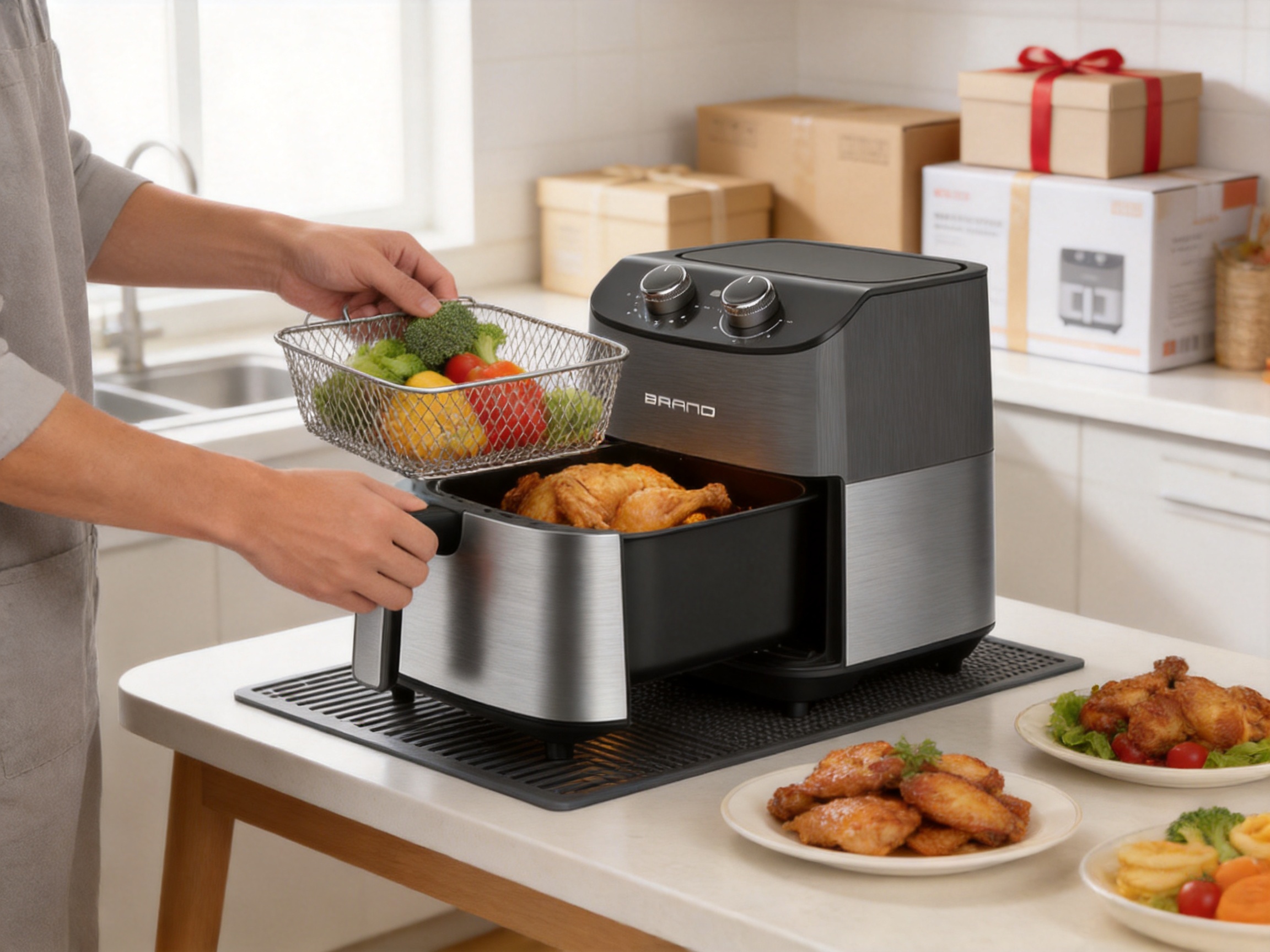
Mechanical operation keeps the process easy to understand. A user can prepare the ingredients, place them in the basket, select the temperature, and set the timer. Food may be checked or turned during the cycle when necessary. Once the cooking period is complete, the basket can be removed carefully using the handle.
The viewing-window version adds another layer of convenience by allowing users to observe progress. This is useful when preparing food with different browning preferences. The non-windowed version remains an efficient option for customers who prefer a simple product with fewer visible features.
Users should allow the appliance to cool before cleaning or storing it. Food residue should be removed according to the instruction manual, and abrasive tools or unsuitable chemicals should be avoided if they could damage the surface. The electrical base and power cord should not be immersed in water.
Energy and Space Efficiency in the Kitchen
A countertop air fryer can support efficient cooking for modest quantities because the heating area is smaller than that of a full-size oven. The 1,500-watt system is designed for the specified appliance format and electrical configuration. Actual energy consumption depends on cooking time, preheating behavior, selected temperature, food quantity, and how often the basket is opened.
Space efficiency is another reason consumers choose air fryers. The appliance can be used on a countertop and stored when not needed, although users should ensure that the product has cooled completely before moving it. The dimensions provide a practical reference for determining whether the appliance will fit beneath cabinets or on a particular shelf.
Retail buyers can also benefit from the product’s space-conscious format. It can be displayed alongside other small appliances without requiring the floor space associated with larger cooking equipment. The gift box and carton dimensions support planning for shelf display, warehouse storage, palletization, and container loading.
Recommended Market Positioning
The product can be positioned in several ways depending on the distributor’s objectives. The most direct position is a practical 6-liter household air fryer with mechanical controls. This message emphasizes capacity, ease of use, and everyday cooking.
A second position is a value-oriented alternative to more complicated digital air fryers. The mechanical design can be presented as an accessible solution for customers who do not need connectivity, preset programs, or touchscreen operation. This positioning may be suitable for supermarkets, discount retailers, home-goods stores, and entry-level appliance programs.
A third position is a choice-based product family. The windowed and non-windowed versions can be included in one product range, allowing the retailer to offer a feature-enhanced model and a basic model. Different colors, packaging styles, or retail channels may be developed subject to production approval.
A fourth position is a private-label or wholesale kitchen appliance for international distribution. The defined model series, factory support, packaging information, and listed compliance references can help professional buyers evaluate the product for larger procurement programs.
Purchasing and Customization Guidance
Before placing an order, buyers should confirm the exact model designation. The four listed item numbers may represent different combinations of window and non-window configurations or other product variations. The buyer should identify the desired version in the purchase order, approved sample, artwork, and inspection standard.
Electrical requirements should also be confirmed. The stated specification is 220–240 volts and 50 hertz. The destination plug, power cord, labeling, language, warranty terms, and regulatory requirements must match the target country. If the product is intended for a market with different electrical requirements, a separate technical evaluation is necessary.
Buyers should request a complete quotation that identifies the product configuration, packaging, accessories, delivery terms, payment conditions, production lead time, and order quantity. The stated minimum order quantity is 1,200 pieces, and the loading reference is 1,200 pieces per 40-foot high-cube container. Final freight planning should be based on the confirmed carton dimensions and the logistics provider’s loading plan.
Sample approval is recommended before mass production. The approved sample should represent the final materials, color, control markings, window design, basket construction, power cord, packaging, and instruction manual. A written quality standard can define acceptable cosmetic variation, functional requirements, carton condition, and labeling.
Customization may be possible for selected projects. Potential customization areas include private-label branding, product color, gift box design, outer carton artwork, instruction language, barcode, rating label, and promotional inserts. Customization can influence tooling, material minimums, artwork approval, certification, and delivery schedules, so it should be evaluated at the beginning of the project.
Care, Safety, and Responsible Use
Consumers should read the operating instructions before using the appliance. The air fryer should be placed on a stable, heat-resistant surface away from water, flammable materials, and areas where the power cord could be pulled or damaged.
The basket should not be filled beyond the recommended level. Overfilling can restrict airflow and may lead to uneven cooking. Ingredients should be prepared in a way that suits the appliance, and food should be turned or shaken when the recipe requires it.
The exterior and cooking components may become hot during operation. Users should handle the basket and drawer with care and keep children away from the appliance while it is operating or cooling. Steam may escape when the drawer is opened, so the opening should be directed away from the face and hands.
The appliance should be disconnected from the power supply before cleaning. Water should not enter the electrical housing, control area, or ventilation openings. The basket and other removable parts should be cleaned according to the manufacturer’s instructions, and all parts should be dry before reuse.
Retailers and distributors should communicate these safety points in the product manual, packaging, website content, and customer service materials. Clear instructions can improve user satisfaction and help reduce misuse.
Frequently Asked Questions
What is the capacity of the air fryer?
The cooking capacity is 6 liters. This format is suitable for individual users, couples, small families, and shared household cooking, although the practical food quantity depends on the ingredients and the need for air circulation.
What is the rated power?
The rated power is 1,500 watts. The specified electrical system is 220–240 volts at 50 hertz.
Does the product have a viewing window?
The model family includes both versions. The windowed configuration allows users to observe the food during cooking, while the non-windowed configuration provides a simpler exterior design.
Does the air fryer use digital controls?
No. The product is described as a mechanical air fryer. It uses physical controls for selecting cooking settings rather than a touchscreen or application-based interface.
What materials are used?
The listed material combination is PP, PA, ABS, PC, and stainless steel. Different materials are used for different structural, visual, heat-related, and cooking-area functions.
What are the product dimensions?
The product measures approximately 362 millimeters long, 298 millimeters wide, and 335 millimeters high.
How is the product packed?
The listed packing quantity is one piece per carton. The gift box measures approximately 397 × 333 × 374 millimeters, and the outer carton measures approximately 412 × 348 × 392 millimeters.
What is the minimum order quantity?
The stated minimum order quantity is 1,200 pieces. The listed container loading reference is 1,200 pieces in a 40-foot high-cube container.
What certifications are listed?
The supplied product information lists CE, GS, CB, ETL, RoHS, LFGB, and FDA. Buyers should confirm the current documentation and whether it applies to the exact model and destination market.
Can the product be customized?
Potential customization may include packaging, labeling, instructions, color, private-label presentation, and other project-specific details. The feasibility, cost, minimum quantity, testing, and lead time should be confirmed with the manufacturer before production.
Who manufactures the product?
The product is manufactured by CIXI GSTAR ELECTRIC APPLIANCE CO., LTD., a company focused on small electric kitchen appliances and related food-service products. The company reports factory, engineering, production, and quality-control capabilities.
What food can be prepared in the air fryer?
Typical applications include fries, chicken pieces, vegetables, seafood, snacks, pastries, frozen foods, and reheated meals. Users should follow recipe guidance and avoid overcrowding the basket.
Is an air fryer the same as a deep fryer?
No. A deep fryer cooks food in a larger quantity of hot oil, while an air fryer uses heated circulating air and usually requires little or no added oil depending on the recipe. The texture and cooking process may therefore differ.
How should the appliance be cleaned?
The appliance should be unplugged and allowed to cool before cleaning. Removable parts should be cleaned according to the supplied instructions, while the electrical housing should be protected from water and excessive moisture.
Conclusion
The 6-liter mechanical air fryer offers a balanced combination of capacity, direct operation, practical dimensions, and configuration flexibility. Its 1,500-watt heating system is matched to a 220–240-volt, 50-hertz electrical specification, while the choice between windowed and non-windowed designs allows distributors to address different customer preferences and price positions.
Its advantages over smaller or more complicated competitors include a useful shared-cooking capacity, simple physical controls, no dependence on applications or wireless connectivity, and a product structure that combines engineered plastics, transparent material, and stainless steel. The viewing-window option improves cooking visibility, while the non-windowed model supports a straightforward value-oriented presentation.
For professional buyers, the product is supported by detailed logistical information, including dimensions, carton data, gross and net weight, one-piece packing, a 1,200-piece minimum order quantity, and a container loading reference. The manufacturer’s experience in small kitchen appliances, product development, factory production, engineering, and quality control further strengthens its suitability for wholesale and international procurement programs.
As with any electrical cooking appliance, final performance and compliance depend on the exact model, production standard, destination requirements, correct use, and appropriate quality documentation. With proper specification confirmation and sample approval, this air fryer can serve as a practical addition to a household appliance portfolio and a competitive option for retailers seeking an easy-to-use countertop cooking product.
References
1. Product specification sheet for the GSE033-1, GSE033-1D, GSE033-1P, and GSE033-1PD mechanical air fryer series.
2. Manufacturer-provided materials and company profile for CIXI GSTAR ELECTRIC APPLIANCE CO., LTD.
3. General principles of hot-air circulation cooking and countertop air-fryer operation.
4. General guidance on electrical appliance quality control, food-contact materials, packaging, and international product compliance.
5. General household appliance safety principles concerning heat, electricity, ventilation, cleaning, and user handling.