
 English
 中文简体
中文简体 Español
 English
 中文简体
中文简体 Español
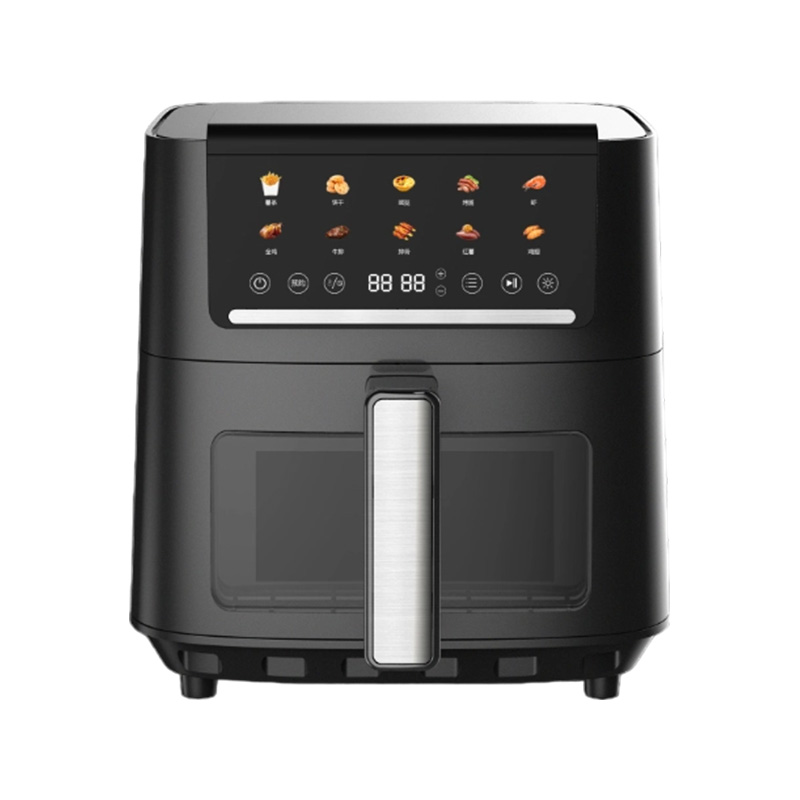
Introduction: A Practical Air Fryer Built for Everyday Cooking and Wholesale Growth
The GSE034P Air Fryer is designed for buyers, distributors, and household users who need a practical, powerful, and dependable small kitchen appliance for daily cooking. In the fast-growing air fryer market, customers are no longer satisfied with products that only look attractive on a shelf. They expect stable heating performance, user-friendly capacity, safe material selection, efficient packaging, reliable certification support, and consistent factory supply. This 6.5L single-pot air fryer answers those expectations with a strong specification profile and a manufacturing background built around small electric kitchen appliances.
As air fryers become a standard appliance in modern kitchens, the key purchasing question has changed from “What is an air fryer?” to “Which air fryer offers the best balance of performance, durability, capacity, and supply-chain value?” The GSE034P Air Fryer is positioned to meet that question directly. It combines a 6.5L single-pot cooking chamber, a wide operating temperature range of 80-200℃, and a strong power configuration of 1700+400W. These elements make it suitable for preparing fried-style foods with less oil, reheating convenience foods, roasting vegetables, cooking meat, baking selected snacks, and supporting busy family meal preparation.
For wholesale and private-label buyers, the product’s appeal goes beyond cooking performance. Its carton dimensions, gross and net weight, 40HQ loading quantity, and certification profile are clearly defined, helping professional buyers evaluate logistics, compliance, and retail readiness. A product can only succeed internationally when the appliance design and the production system behind it work together. This air fryer is supported by a manufacturer with experience in product development, kitchen appliance engineering, quality control, and international customer service.
The manufacturer behind this product, CIXI GSTAR ELECTRIC APPLIANCE CO., LTD., has developed a broad product range covering blenders, slicers, choppers, food processors, smokeless grills, hot pots, air fryers, air ovens, and related household and hospitality products. This background is important because the air fryer is not an isolated product; it is part of a larger kitchen appliance ecosystem. Experience across multiple appliance categories supports better knowledge of heating systems, food-contact materials, user safety, packaging design, and market expectations.
The GSE034P Air Fryer stands out as a product suitable for supermarkets, importers, e-commerce sellers, home appliance retailers, and promotional appliance channels. Its specification profile supports household cooking, while its defined shipping quantity of 1348 pieces per 40HQ container provides a clear basis for large-volume procurement. In a competitive market where many air fryers appear similar at first glance, the difference is found in details: material composition, stable heating, usable capacity, certified manufacturing, quality control, packaging efficiency, and the ability of the supplier to maintain long-term cooperation.
Product Overview: Core Positioning of the GSE034P Air Fryer
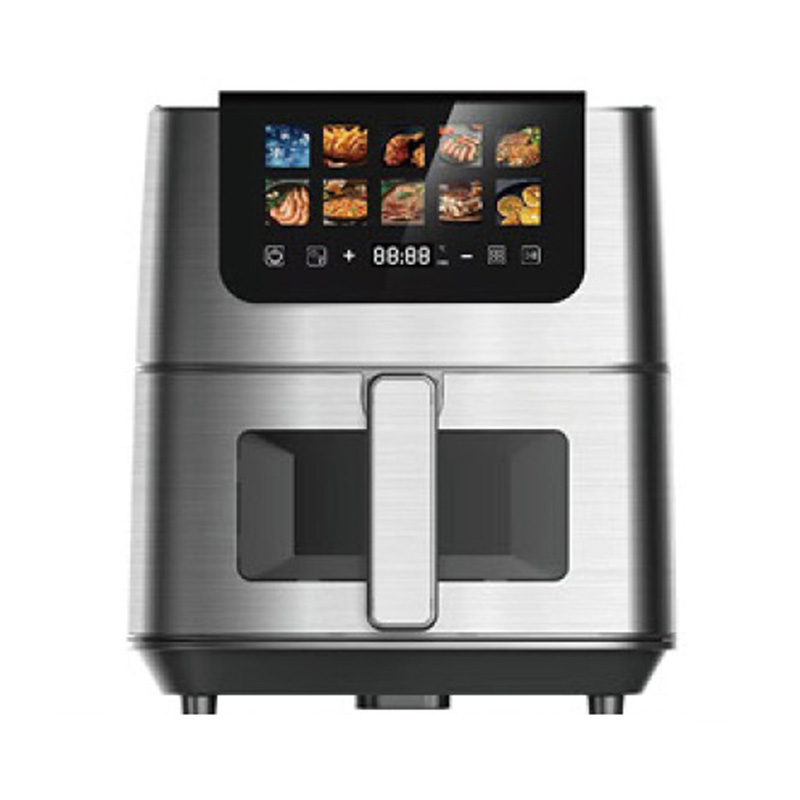
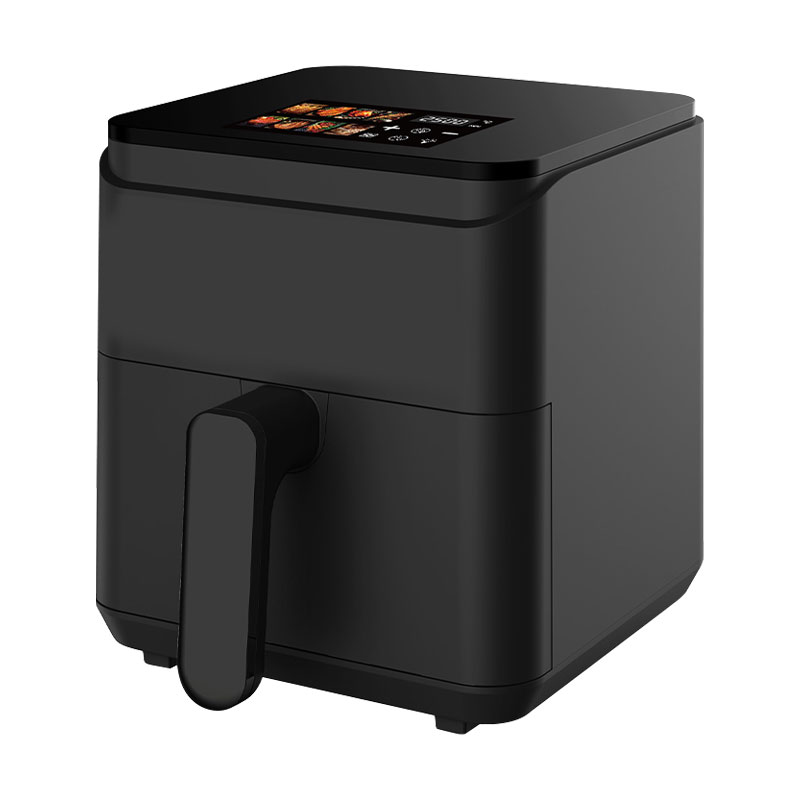
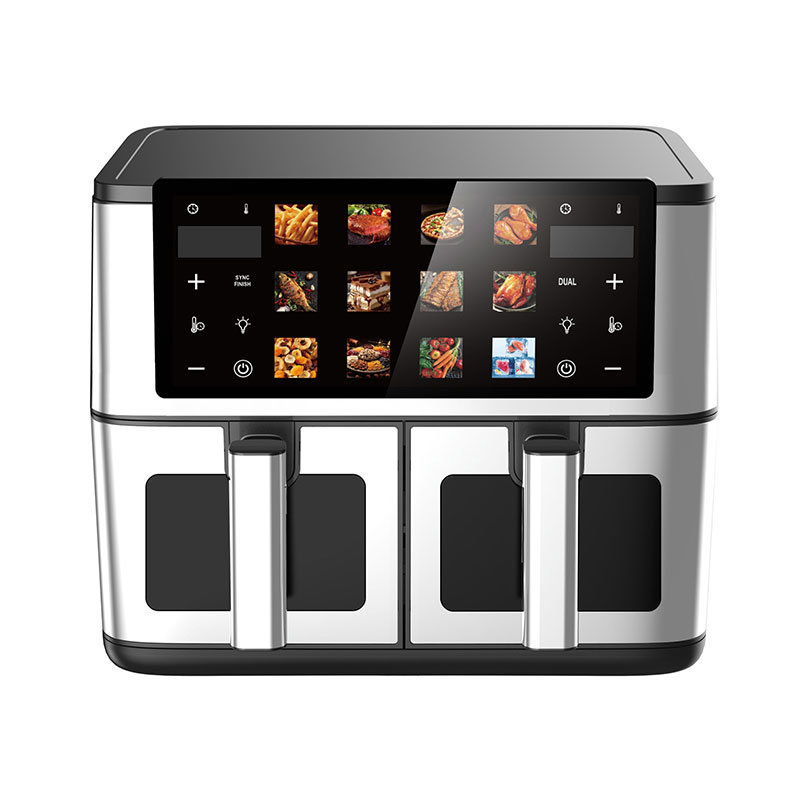
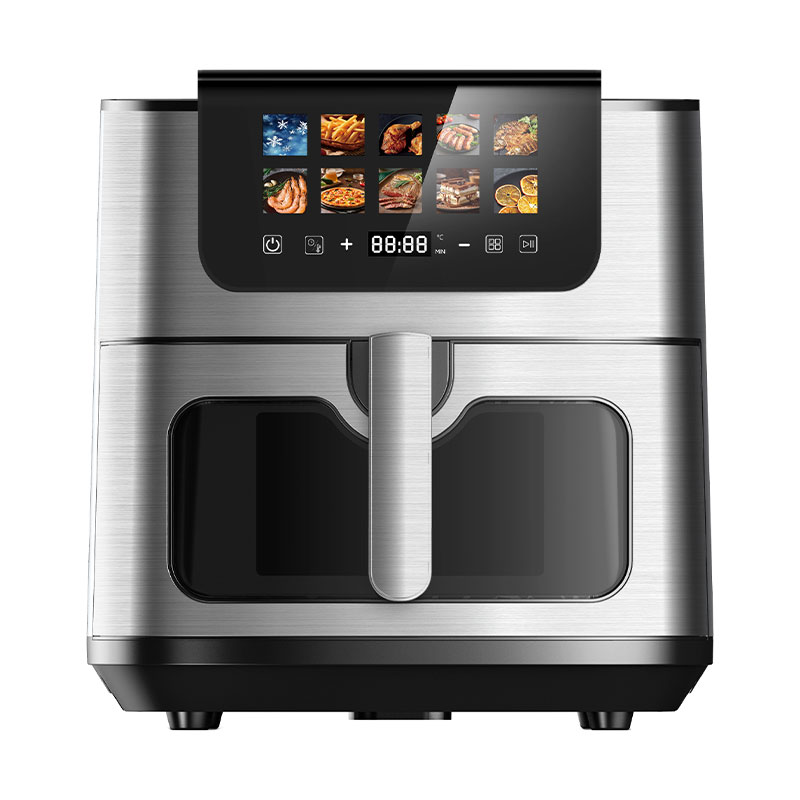
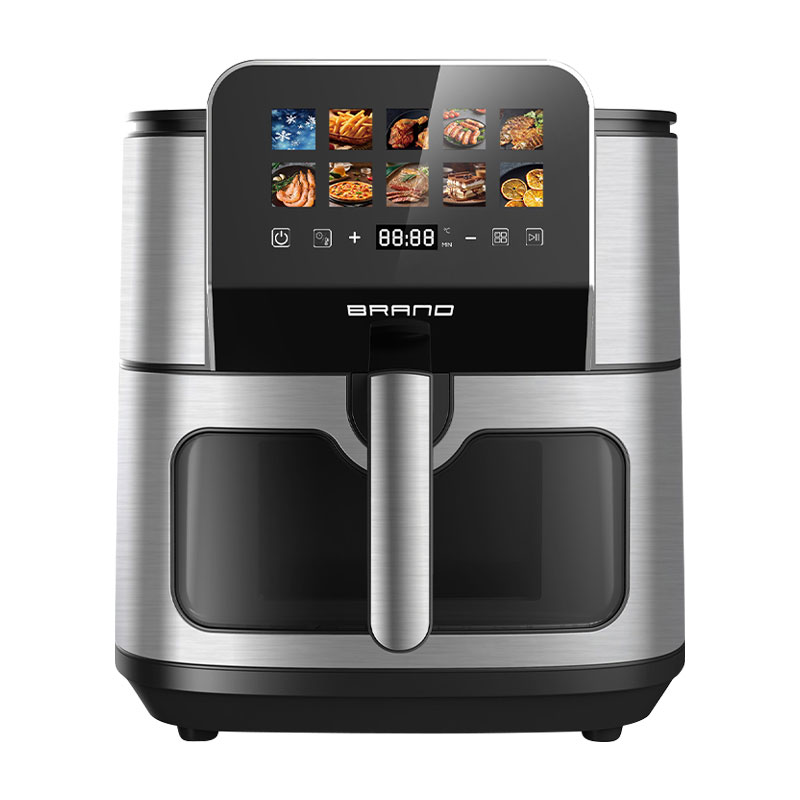
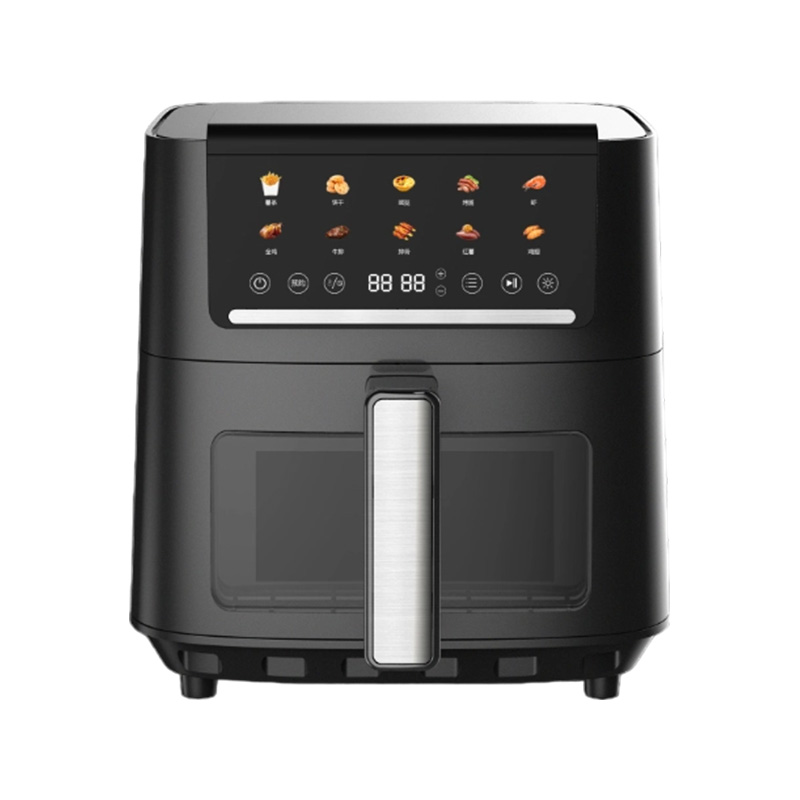
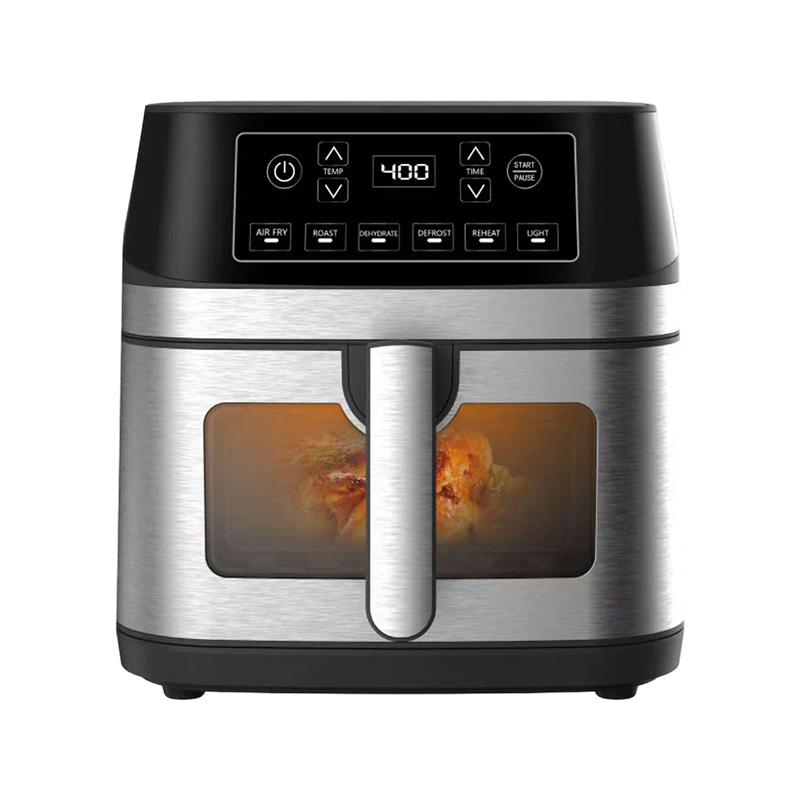
The GSE034P Air Fryer is a 6.5L single-pot air fryer designed for convenient household use. Its cooking capacity makes it practical for family meals, shared snacks, and everyday kitchen preparation. Smaller air fryers may be easier to place on a countertop, but they often require multiple batches for a family meal. Very large models may occupy excessive space and increase shipping costs. The 6.5L size gives the product a practical middle position: large enough for useful cooking volume, but compact enough for most kitchen environments.
The product size is L37 x W30 x H30 cm. This footprint supports countertop placement without making the unit feel oversized. The gift box size is L40 x W33 x H34.2 cm, while the carton size is L41.5 x W34.5 x H36 cm. These packaging dimensions are important for distributors and retailers because they affect warehouse planning, shipping cost, shelf presentation, and container utilization. With a loading quantity of 1348 pieces per 40HQ container, the air fryer is suitable for volume-based purchasing programs.
The material combination includes PP, PA, aluminum, ABS, PC, and SS430. This mix reflects the multi-functional requirements of an air fryer. Plastic components must support external structure, insulation, appearance, control areas, and user handling. Aluminum supports heat transfer and cooking performance. SS430 stainless steel contributes durability in appropriate structural or heating-adjacent areas. Food-contact and heat-exposed applications require careful material selection because customers expect safety, stability, and long service life.
The power rating of 1700+400W gives the product a strong heating foundation. In the air fryer category, power affects preheating speed, cooking efficiency, temperature recovery after food is inserted, and consistency during operation. A more powerful configuration can help users achieve better browning and crisping results, especially when cooking larger portions in a 6.5L basket. The air fryer operates at 50/60Hz, allowing it to support different electrical market requirements when properly configured for the target region.
The temperature range of 80-200℃ is broad enough for common air fryer cooking tasks. Lower temperatures support warming, gentle cooking, and dehydrating-style preparation for selected foods, while higher temperatures support crisping, roasting, and browning. A temperature ceiling of 200℃ is widely recognized as practical for air frying because it allows users to achieve the texture they expect from fried-style foods with less oil than traditional deep frying.
Key Specifications
Item Number |
GSE034P |
Product Name |
Air Fryer |
Material |
PP + PA + Aluminum + ABS + PC + SS430 |
Power |
1700+400W |
Frequency |
50/60Hz |
Capacity |
6.5L Single Pot |
Temperature Range |
80-200℃ |
Product Size |
L37 x W30 x H30 cm |
Gift Box Size |
L40 x W33 x H34.2 cm |
Carton Size |
L41.5 x W34.5 x H36 cm |
Packing Quantity |
1 piece per carton |
Gross Weight / Net Weight |
7.5 / 6.5 kg |
40HQ Loading Quantity |
1348 pieces per 40HQ |
MOQ |
1348 pieces per 40HQ |
Certification |
CE, CB, GS, RoHS, LFGB |
Cooking Advantages: Why a 6.5L Single-Pot Design Matters
Capacity is one of the most important factors in air fryer selection. A compact model may be suitable for one person, but many families quickly discover that a small basket requires repeated cooking cycles. Repeated cycles waste time and can lead to uneven meal timing, where one portion is ready while another is still cooking. The 6.5L capacity of the GSE034P Air Fryer helps reduce this problem by giving users more room for common household portions.
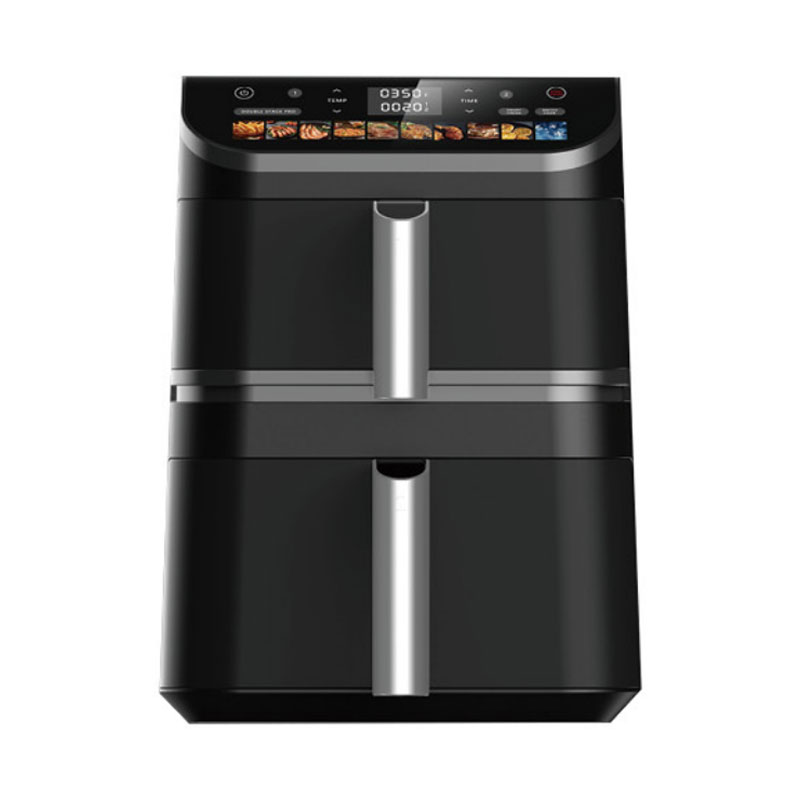
The single-pot design is also straightforward and easy to understand. Some competing appliances rely on complex multi-drawer systems, which can be useful in certain situations but may confuse first-time users or increase cleaning effort. A single-pot air fryer offers direct operation, easier loading, and simpler removal of food. This makes it especially practical for families, elderly users, student apartments, and customers who want convenience without overcomplicated controls or cooking zones.
A 6.5L cooking pot can support a broad range of foods, including fries, chicken wings, fish pieces, vegetables, frozen snacks, meat portions, and baked convenience foods. The size is large enough to make the appliance feel useful beyond occasional snacking. This matters in retail because customers are more likely to recommend, review positively, and continue using an appliance that becomes part of their regular kitchen routine.
Compared with many entry-level air fryers, this capacity also improves perceived value. A buyer who sees a 6.5L air fryer is more likely to consider it a serious cooking appliance rather than a small gadget. At the same time, the product’s countertop dimensions remain reasonable. The balance between usable cooking volume and physical footprint is one of the product’s strongest advantages.
The GSE034P Air Fryer also supports modern cooking preferences. Many consumers want foods with a crisp texture while reducing the amount of oil used in preparation. Air frying does not completely replace every traditional cooking method, but it offers a convenient alternative for daily meals. The appliance helps users simplify cooking while maintaining attractive textures, making it relevant for health-aware families, busy workers, and consumers who frequently prepare frozen foods.
Power and Temperature Performance
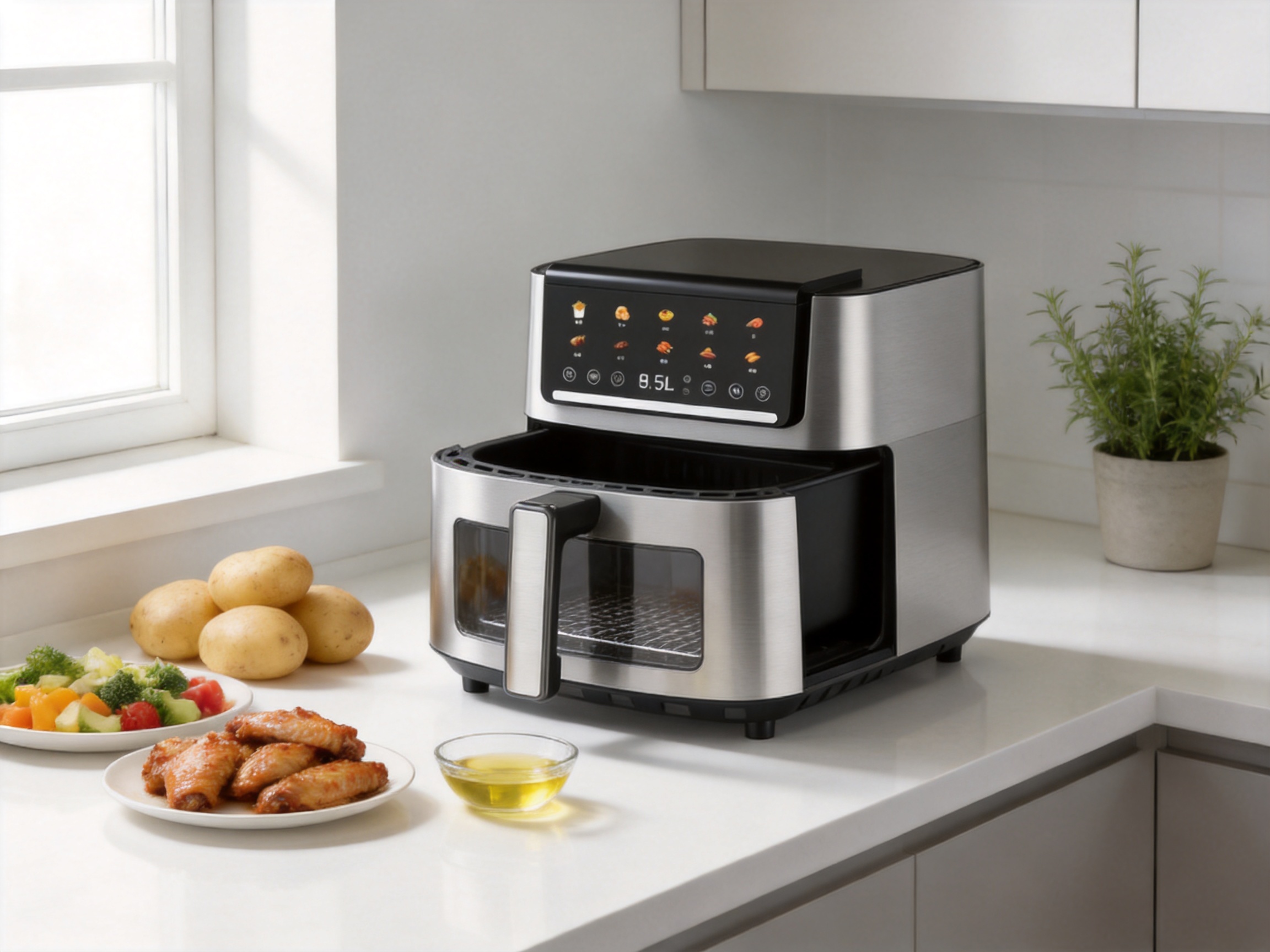
The power configuration of 1700+400W is a key technical advantage. In air fryer performance, wattage is not only a number on a specification sheet. It influences how quickly the appliance reaches cooking temperature, how well it maintains heat during cooking, and how effectively it can circulate hot air around food. A weak heating system may produce pale results, slow cooking, or inconsistent browning, especially when the basket is loaded with a larger quantity of food.
The GSE034P Air Fryer is designed for a 6.5L cooking space, and its power rating supports that capacity. When consumers use a larger air fryer, they expect the heating performance to match the volume. A mismatch between basket size and heating power can lead to disappointing user experience. This model’s stronger power profile helps address that concern and improves confidence in daily cooking results.
The 80-200℃ temperature range supports versatile cooking. At lower settings, users can warm food, cook delicate ingredients more gently, or prepare foods that require slower heating. At higher settings, users can crisp frozen snacks, brown chicken, roast vegetables, and achieve more satisfying outer textures. This range is practical for everyday recipes and aligns with common air fryer cooking guidance.
Compared with competing models that may provide limited temperature flexibility, this air fryer gives users more control over cooking outcomes. Temperature adjustability is especially important because not all foods respond well to one fixed setting. Frozen fries, fresh vegetables, fish, pastries, and meat all benefit from different temperature strategies. A wider range gives customers more opportunity to experiment and achieve better results.
Stable heating also affects customer satisfaction after purchase. In the air fryer market, negative reviews often come from undercooked food, inconsistent crispness, or unexpectedly long cooking times. While cooking results also depend on food type, quantity, and user technique, a strong heating design provides a better foundation. The GSE034P Air Fryer’s power and temperature specifications give it a competitive position for buyers who need a dependable household appliance.
Material Selection and Safety-Oriented Design
An air fryer is exposed to heat, repeated handling, food vapor, oil mist, and daily cleaning. Therefore, material selection is not a minor detail. The GSE034P Air Fryer uses PP, PA, aluminum, ABS, PC, and SS430. Each material contributes to different functions in the appliance. The combination reflects the need for exterior durability, thermal performance, structure, user comfort, and food-related safety.
PP and ABS are commonly used in appliance housings and structural parts because they can support molded shapes, consistent appearance, and practical impact resistance when selected correctly. PA can provide enhanced mechanical performance in suitable components. PC may be used where toughness or visibility-related functions are needed, depending on product structure. Aluminum is valuable in cooking appliances because of its heat transfer characteristics. SS430 stainless steel is often used in applications where stainless properties and heat-adjacent performance are useful.
Consumers may not always read a material list in detail, but they notice the results. A well-selected material system can support a more solid feel, better durability, improved heat management, and easier maintenance. A poorly selected material system may cause odor issues, deformation concerns, weak structure, or reduced customer confidence. For international buyers, material selection also affects testing, certification, and market acceptance.
The certification list, including CE, CB, GS, RoHS, and LFGB, is particularly relevant for buyers in regions with strict compliance requirements. CE relates to European market conformity requirements. CB supports international electrical product testing recognition. GS is associated with tested safety standards in relevant markets. RoHS concerns restricted hazardous substances. LFGB is important for food-contact compliance in the German and broader European context. Together, these certifications provide a stronger foundation for market entry and retailer confidence.
In a competitive environment, certification readiness can be a decisive advantage. Some low-cost appliances may appear attractive at first, but buyers later face delays, extra testing costs, or compliance uncertainty. A product with defined certification support reduces risk and helps professional buyers plan launch schedules more confidently.
Advantages Over Competing Air Fryers
The GSE034P Air Fryer competes in a crowded category, but it has several clear advantages. First, the 6.5L capacity offers a practical balance for household use. Many competitors in lower price segments offer smaller capacities, which may limit meal preparation. Larger premium models may cost more, occupy more space, or create shipping inefficiencies. This product provides a useful capacity without excessive size.
Second, the 1700+400W power configuration supports stronger cooking performance. Air fryer customers often judge the appliance by the texture of fries, chicken wings, and roasted foods. If the heating system is underpowered, the customer experience suffers. Stronger heating improves the product’s ability to deliver the crisp, evenly cooked results that consumers expect.
Third, the temperature range of 80-200℃ gives the product flexibility across different cooking styles. Competitors with limited control may only perform well for a few foods. This model supports a broader cooking range, helping users adapt recipes and prepare different meal types.
Fourth, the product has a clear and professional logistics profile. The gift box size, carton size, weight, packing quantity, 40HQ loading quantity, and MOQ are specified. This makes it easier for importers and retailers to calculate shipping, warehousing, and order planning. In wholesale trade, clarity is an advantage because it reduces communication delays and purchasing uncertainty.
Fifth, the certification profile strengthens the product’s competitiveness in international markets. CE, CB, GS, RoHS, and LFGB support market confidence and demonstrate attention to safety and material requirements. Buyers who serve supermarkets, chain stores, and regulated markets often need this type of documentation before they can proceed.
Sixth, the manufacturer has experience across many small kitchen appliance categories. This matters because air fryer quality is not only about one product design. It depends on engineering knowledge, supply-chain control, tooling experience, assembly capability, testing procedures, and after-sales responsiveness. A factory that has developed multiple appliance lines is better positioned to solve technical details and support customer customization.
Seventh, the product is supported by an export-oriented production system. The company has experience with well-known supermarkets and international markets, and its history includes product development for TV shopping, supermarket channels, and electric appliance categories. This background helps the factory understand retail expectations, packaging requirements, mass production schedules, and the importance of stable quality.
Manufacturing Strength: From Product Development to Mass Production
A strong appliance begins with engineering and manufacturing discipline. The GSE034P Air Fryer is supported by a manufacturing organization that designs, develops, and produces small electric kitchen appliances. This includes experience with heating appliances, food preparation devices, and products for household and hospitality use. Such experience is valuable because air fryer manufacturing requires both electrical appliance knowledge and food-use product awareness.
The company’s development history shows a move from non-electric innovative products into electric kitchen appliances, with an emphasis on product design and market-driven innovation. This transition is important because it reflects learning across different product types. Non-electric kitchen products require knowledge of usability, cleaning, ergonomics, and retail packaging. Electric appliances add requirements for motors, heating elements, wiring, safety systems, and certification. Together, these experiences support a more complete approach to product development.
The factory has a production area of approximately 15,000 square meters and more than 200 experienced workers. It also has an R&D team and a QC team. These resources support new product development, process control, inspection, and continuous improvement. For wholesale buyers, factory scale and team structure are important because they indicate whether the supplier can handle repeat orders, production changes, quality feedback, and delivery commitments.
In air fryer manufacturing, process control begins before assembly. Materials must be selected, inspected, and matched to design requirements. Plastic parts require molding control to maintain fit, finish, and dimensional accuracy. Metal parts must meet structural and heat-related requirements. Electrical components must be suitable for the intended voltage, frequency, and safety standards. Packaging must protect the appliance during transport while remaining efficient for container loading.
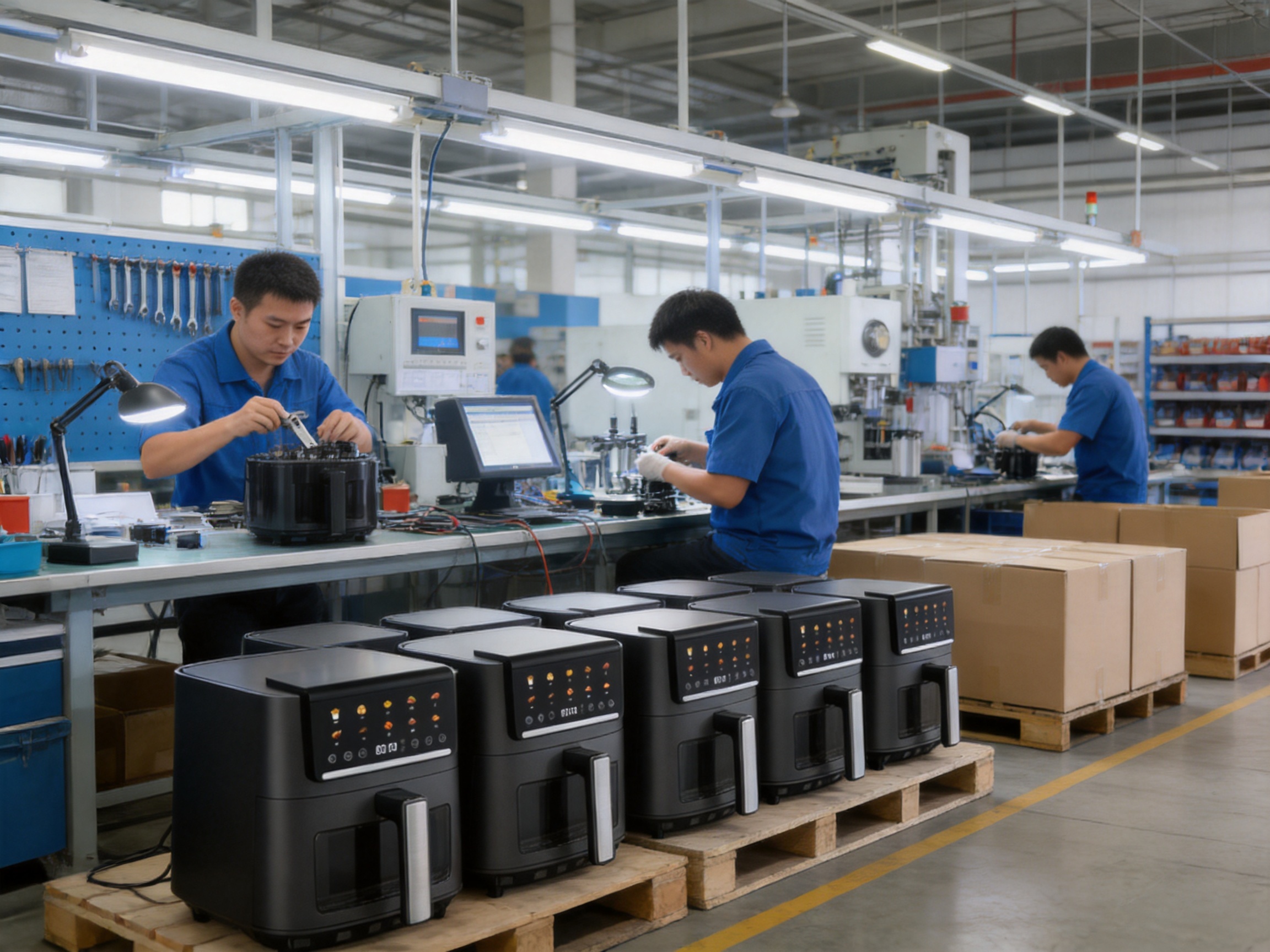
During production, assembly accuracy affects final product performance. Heating components, air circulation structures, housing parts, pot alignment, handle assembly, insulation, control systems, and wiring must all be assembled correctly. Even small deviations can affect user experience. A misaligned basket can feel poor in operation. Weak fastening can reduce durability. Inconsistent wiring or heating assembly can create safety concerns. Therefore, disciplined assembly is essential.
Quality control also plays a central role. A professional QC team can inspect incoming materials, monitor production, test finished units, and support corrective action when needed. This reduces the risk of defects reaching customers and protects the reputation of distributors and retailers. For a product shipped internationally, quality control must also consider long transport conditions, carton strength, labeling accuracy, and documentation.
Advanced Production Practices Supporting Product Reliability
Advanced manufacturing does not always mean a single machine or one impressive production line. In appliance manufacturing, it means the coordinated use of design review, process standardization, supplier management, inspection, testing, documentation, and continuous improvement. The manufacturing strength behind the GSE034P Air Fryer comes from combining these elements into a repeatable production system.
The first stage is design and engineering review. Engineers examine the appliance structure, component arrangement, heating layout, usability, and manufacturability. A product must not only perform well in a prototype; it must also be practical to produce at scale. Design for manufacturing helps reduce assembly errors, improve consistency, and control production cost. This is one of the reasons experienced factories can offer more competitive pricing without simply reducing quality.
The second stage is material and supplier control. For an air fryer, materials must be suitable for heat, food-related use, structural strength, and external appearance. Electrical components must satisfy technical requirements. Reliable manufacturing requires stable suppliers and inspection standards. By controlling incoming materials, the factory reduces defects before they enter the assembly line.
The third stage is molding and component preparation. Plastic housings, handles, panels, and related components must match the intended product design. Good molding control supports smooth assembly and improves the final appearance. In retail markets, appearance matters because customers judge quality before they even use the appliance. Clean seams, proper fit, and a stable structure contribute to a premium impression.
The fourth stage is assembly process control. Workers follow defined procedures to assemble the air fryer. In a mature production system, each process step has a purpose, and inspection points are used to detect problems early. This helps prevent rework and improves production efficiency. Efficient assembly also supports competitive pricing and quick delivery, both of which are part of the manufacturer’s business philosophy.
The fifth stage is performance and safety testing. Finished appliances should be checked for function, heating behavior, electrical safety, appearance, and packaging condition according to relevant standards and buyer requirements. Air fryers are electrical heating products, so testing is especially important. A professional production system treats testing as a core requirement rather than an optional final step.
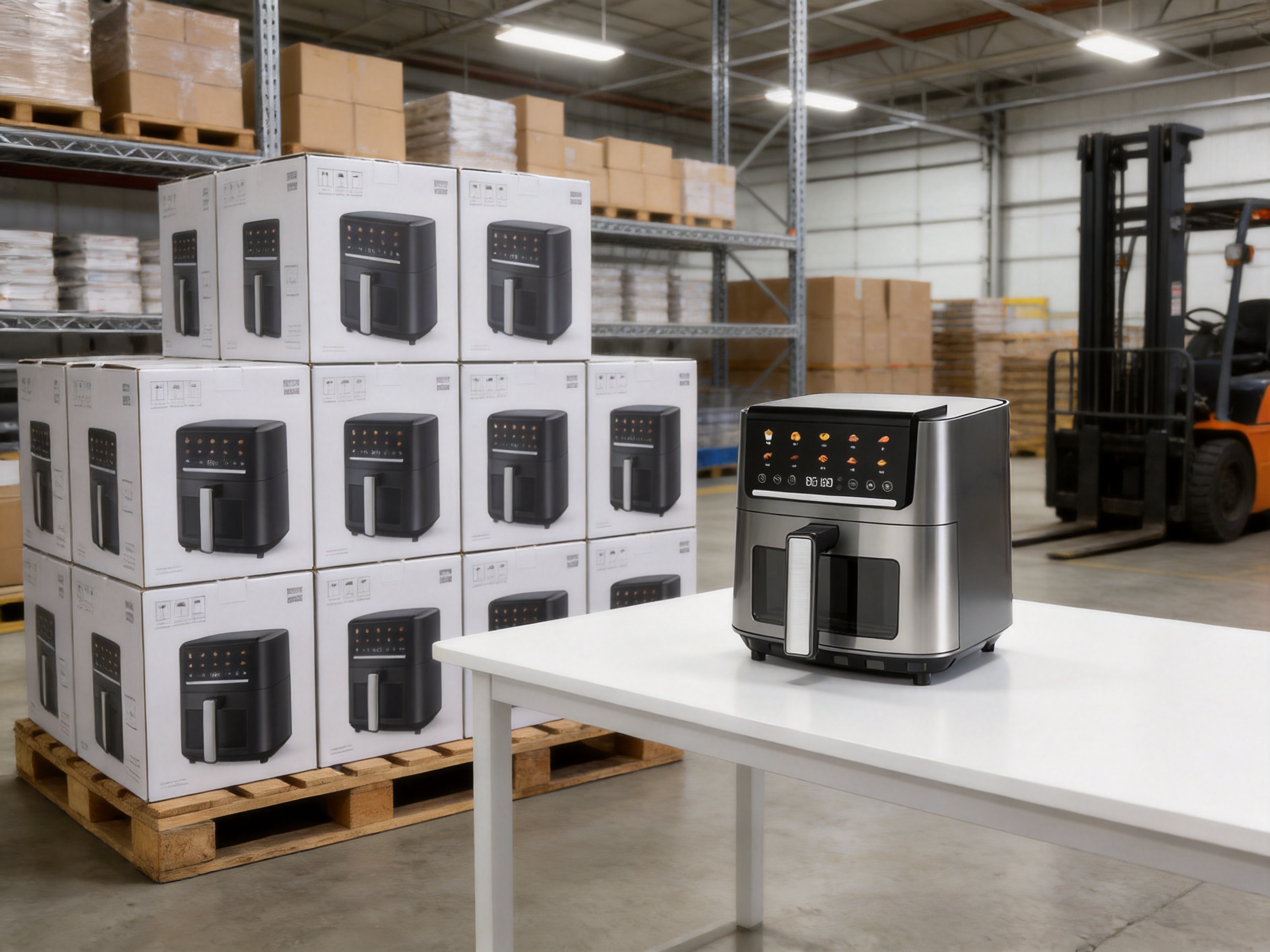
The sixth stage is packaging and logistics preparation. The GSE034P Air Fryer is packed one piece per carton, with clearly specified carton dimensions and weight. Packaging must protect the appliance from vibration, compression, and handling during export shipment. Efficient carton design also supports container loading, with 1348 pieces per 40HQ container. For importers, this supports accurate cost planning and reduces the risk of unexpected logistics inefficiencies.
Research and Development Capability
The manufacturer’s R&D capability is one of its important strengths. The company has experience designing and developing innovative products rather than relying only on copied market designs. This matters because the small appliance market changes quickly. Consumers demand better usability, improved capacity, modern appearance, and safer operation. Retailers demand products that can stand out while still meeting cost targets. A capable R&D team can translate these market needs into practical product development.
With engineers dedicated to research and development, the factory can evaluate product structure, improve user handling, support customization, and respond to buyer feedback. This is valuable for distributors who want to adapt a product for different markets. Market requirements may vary by region, including plug type, voltage, labeling, packaging language, appearance preference, and certification documentation. A supplier with engineering support can respond more effectively than a basic trading company or low-capability workshop.
The company’s history of working with TV shopping products, supermarkets, and international customers has also shaped its product development mindset. TV shopping products must communicate value quickly and deliver visible convenience. Supermarket products must be price-competitive, reliable, easy to display, and suitable for high-volume distribution. International appliance products must meet compliance requirements and after-sales expectations. These combined experiences strengthen the development process behind products such as the GSE034P Air Fryer.
R&D also supports long-term improvement. Once a product enters the market, customer feedback can reveal opportunities for refinement. This may involve packaging adjustments, component optimization, production efficiency improvements, or user-experience changes. A manufacturer with internal development capability is better prepared to support product life-cycle management and future upgrades.
Quality Control and Certification Support
Quality control is a decisive factor in air fryer procurement. A distributor may sell thousands of units, but even a small defect rate can create costly returns, negative reviews, and customer service pressure. Therefore, product quality must be controlled through the entire production cycle. The GSE034P Air Fryer is supported by a factory structure that includes a QC department, helping ensure inspection and quality management are part of regular production.
Incoming material inspection helps identify problems before assembly begins. This may include checking plastic parts, metal parts, electrical components, heating elements, packaging materials, and labels. During production, process inspections help confirm that assembly steps are completed correctly. Final inspections help verify product appearance, function, and packing before shipment.
The certification profile is another key quality signal. CE, CB, GS, RoHS, and LFGB certifications are highly relevant for international distribution. For buyers, these certifications reduce uncertainty and support smoother market entry. They also show that the product has been developed with safety and compliance requirements in mind. In competitive bidding or retail selection, certification can separate professional suppliers from lower-standard alternatives.
RoHS compliance is especially important because it relates to restrictions on hazardous substances in electrical and electronic equipment. LFGB is important for food-contact confidence. CE and GS support safety recognition in European-related markets, while CB can support broader international acceptance. Together, these certifications make the air fryer more attractive to buyers who cannot afford compliance risk.
Quality control is also connected to after-sales service. A factory committed to quality will work closely with customers to understand issues, improve processes, and maintain long-term cooperation. The company’s stated business principle emphasizes high-quality innovative products, competitive pricing, quick delivery, and high-quality after service. This approach is important for building trust with importers and retailers.
Packaging, Logistics, and Wholesale Value
For consumers, packaging may simply be the box around the product. For professional buyers, packaging is part of the business model. The GSE034P Air Fryer has a gift box size of L40 x W33 x H34.2 cm and a carton size of L41.5 x W34.5 x H36 cm. The packing quantity is one piece per carton. Gross weight is 7.5 kg, and net weight is 6.5 kg. These figures help buyers calculate warehouse space, container utilization, freight cost, handling labor, and retail distribution planning.
The 40HQ loading quantity of 1348 pieces is particularly useful for wholesale planning. Since the MOQ is also listed as 1348 pieces per 40HQ, buyers can plan full-container orders efficiently. Full-container shipment often provides better freight economy and reduces handling complexity compared with smaller mixed shipments. This is valuable for high-volume importers, supermarket programs, seasonal promotions, and appliance distributors.
A well-defined logistics profile also makes quotation and negotiation more efficient. Buyers can compare landed cost more accurately when they know the product size, carton size, weight, and container loading quantity. In international trade, unclear packaging data can lead to cost surprises. By providing defined data, the supplier supports professional purchasing decisions.
Retailers also benefit from gift box dimensions that are manageable for display and storage. A 6.5L air fryer must look substantial enough to communicate value, but not so bulky that it becomes difficult to place in retail environments. The GSE034P Air Fryer’s packaging dimensions support this balance.
Packaging quality also protects brand reputation. Appliances may travel long distances by truck, container vessel, warehouse conveyor, and local delivery networks. If packaging is weak, products can arrive damaged even when the appliance itself is well made. Professional export packaging helps reduce damage risk and supports customer satisfaction upon delivery.
Market Applications and Customer Groups
The GSE034P Air Fryer is suitable for multiple market channels. For household appliance retailers, it provides a practical capacity and strong specification story. Sales staff can explain the 6.5L single-pot design, 1700+400W power, 80-200℃ temperature range, and certification support. These details help the product compete against generic low-capacity models.
For supermarkets and hypermarkets, the product offers mass-market appeal. Air fryers are popular because they are easy to demonstrate, easy to understand, and relevant to daily cooking. A 6.5L model can be promoted for family meals, quick snacks, and reduced-oil cooking. The full-container MOQ and clear logistics data support promotional planning.
For e-commerce sellers, the product has several advantages. The specifications are easy to present online, and the size category is attractive to customers comparing household air fryers. E-commerce buyers often compare capacity, power, temperature range, materials, and certifications. This model provides strong answers in each category. Its carton size and weight also help sellers evaluate fulfillment requirements.
For private-label buyers, the manufacturer’s appliance development experience and production capability are important. Private-label programs require consistency, packaging adaptation, documentation support, and reliable delivery. A factory with R&D, QC, and established production capacity can better support these needs.
For hospitality-related buyers or small food-service support environments, the air fryer can be used for light-duty preparation where appropriate. While it is primarily a household kitchen appliance, its capacity and power may also appeal to offices, staff kitchens, small guesthouse settings, and similar environments where convenient cooking is valued.
Company Strength Behind the Product
CIXI GSTAR ELECTRIC APPLIANCE CO., LTD. is located in Cixi, Ningbo, China, an area known for manufacturing and export activity. The company designs, develops, and manufactures small electric kitchen appliances and daily-use products. Its product range includes blenders, slicers, choppers, food processors, smokeless grills, hot pots, air fryers, air ovens, ice buckets, beverage dispensers, pitchers, slicers, and graters. This broad range gives the company practical experience in both electric and non-electric kitchen products.
The company’s development path is closely connected to international trade and product innovation. Its founder gained experience in export sales, TV shopping products, buying agency work, supermarket sourcing, and quality control before establishing the factory. This background shaped a supplier culture focused on market demand, competitive pricing, quality control, and customer trust. Experience with customers and retail channels helps the company understand not only how to make products, but also how products are selected, promoted, shipped, and supported.
In 2009, the factory was founded with a focus on innovative products, including patented non-electric kitchen items. The products were sold to international markets and major retail channels. In 2018, the company moved into its own new factory, expanding its manufacturing foundation and increasing its ability to develop electric products. Since then, its electric appliance products have gained reception in multiple markets. Air ovens and air fryers became strong categories, especially in Europe and South America.
The company has production space, experienced workers, engineers in the R&D department, and a QC team. This structure supports product development, manufacturing, inspection, and customer service. For buyers, this means the supplier is not simply offering a catalog item; it has the ability to support production, engineering communication, and quality management.
The company’s business principle emphasizes high-quality innovative products, competitive prices, quick delivery, and high-quality after-sales service. This principle aligns well with the needs of international appliance buyers. In the small appliance market, success depends on more than one purchase order. Long-term success requires repeatable quality, responsive communication, timely delivery, and the ability to improve products over time.
How the Product Supports Retail Differentiation
Retail differentiation is critical in the air fryer category because many products appear similar at first glance. Buyers need features that can be communicated clearly and convincingly. The GSE034P Air Fryer provides several retail talking points. The first is its 6.5L capacity, which immediately communicates family suitability and everyday usefulness. The second is its 1700+400W power, which supports strong cooking performance. The third is its 80-200℃ temperature range, which shows versatility.
The material composition and certification profile also support differentiation. Consumers may not fully understand every certification, but retailers and importers do. Certifications help build confidence before the product reaches the shelf. In online listings, certification information can also reassure customers who are concerned about safety and compliance.
The product’s compact but useful size can be presented as another advantage. It offers a larger cooking capacity without becoming an excessively large appliance. This matters for apartment users, family kitchens, and customers with limited countertop space. The balance between size and capacity can be a strong selling point in both physical retail and e-commerce.
Another differentiation point is supplier reliability. Retailers may not promote factory details directly to consumers, but they care deeply about supply stability. A product that sells well must be replenished on schedule. A supplier with established production capability and international experience is better positioned to support repeat orders, seasonal demand, and promotional programs.
Practical User Experience
The user experience of an air fryer is shaped by daily convenience. Customers want to load food easily, set a suitable temperature, remove cooked food safely, and clean the appliance without difficulty. A single-pot air fryer supports this routine because it avoids unnecessary complexity. The 6.5L capacity reduces the need for repeated cooking cycles and allows the user to prepare more food at once.
The temperature range makes the appliance useful for different types of food. A user can cook frozen snacks at higher temperatures, warm prepared foods at lower temperatures, and roast fresh ingredients at medium to high settings. This versatility increases the chance that the appliance will remain on the countertop and be used frequently rather than stored away.
Air frying also supports modern lifestyle needs. Many consumers have limited time for cooking but still want meals with appealing texture. The air fryer can help prepare food more conveniently than traditional oven preheating or pan frying. It can also reduce oil usage compared with deep frying, which appeals to health-conscious customers.
A reliable air fryer can become a daily appliance. It can assist with breakfast items, lunch snacks, dinner side dishes, and reheating leftovers. The GSE034P Air Fryer’s capacity and power make it suitable for this type of frequent household use. For distributors, this is important because products used frequently create stronger customer satisfaction and better word-of-mouth recommendations.
Procurement Benefits for Importers and Distributors
Importers and distributors evaluate products differently from end users. They need to know whether the product can be sourced reliably, whether it meets market requirements, whether logistics are efficient, and whether the supplier can support documentation and after-sales needs. The GSE034P Air Fryer provides a strong procurement profile because its specifications, packaging, certification, and production background are clearly defined.
The MOQ of 1348 pieces per 40HQ is suitable for buyers planning full-container shipments. This quantity allows buyers to build a focused purchase plan around one product model. The carton and weight data support freight calculation. The certification list supports compliance evaluation. The manufacturer’s appliance background supports confidence in production capability.
Another procurement benefit is category relevance. Air fryers remain popular in many markets because they align with cooking convenience, healthier eating trends, and modern kitchen appliance demand. A 6.5L model can target a wide consumer base, from families to young professionals. This makes it easier for distributors to position the product in multiple sales channels.
Competitive pricing is also part of the manufacturer’s stated business principle. While price is not listed in the provided product data, the company emphasizes offering competitive prices together with quality and quick delivery. This balance is important because buyers do not only seek the lowest cost; they seek a reliable cost-performance ratio that protects margin while reducing quality risk.
Q&A Section
What is the capacity of the GSE034P Air Fryer?
The air fryer has a 6.5L single-pot capacity. This size is suitable for family cooking, shared snacks, and everyday meal preparation while still maintaining a practical countertop footprint.
What is the power rating of this air fryer?
The product has a power configuration of 1700+400W. This supports strong heating performance, faster temperature recovery, and better cooking consistency for a 6.5L cooking chamber.
What temperature range does the appliance support?
The air fryer supports a temperature range of 80-200℃. This range allows users to warm food, cook gently, roast, brown, and crisp a wide variety of ingredients.
What materials are used in the product?
The product uses PP, PA, aluminum, ABS, PC, and SS430. These materials support structure, appearance, heat transfer, durability, and appliance performance when applied in suitable components.
Which certifications are available?
The product is listed with CE, CB, GS, RoHS, and LFGB certifications. These certifications support international market confidence, electrical safety expectations, hazardous substance control, and food-contact compliance requirements.
Why is the 6.5L single-pot design useful?
The 6.5L single-pot design provides enough room for common household cooking while keeping operation simple. It reduces the need for multiple cooking batches and avoids the complexity of multi-drawer systems.
How many units can fit in a 40HQ container?
The listed 40HQ loading quantity is 1348 pieces. The MOQ is also listed as 1348 pieces per 40HQ, which supports full-container wholesale purchasing.
What are the product and carton dimensions?
The product size is L37 x W30 x H30 cm. The gift box size is L40 x W33 x H34.2 cm. The carton size is L41.5 x W34.5 x H36 cm.
What makes this air fryer competitive?
Its competitive strengths include 6.5L capacity, strong 1700+400W power, 80-200℃ temperature range, professional material selection, international certification support, clear logistics data, and manufacturing backing from an experienced small appliance factory.
Who is this product suitable for?
The air fryer is suitable for household users, appliance retailers, supermarkets, e-commerce sellers, importers, distributors, and private-label buyers looking for a practical and marketable kitchen appliance.
Conclusion: A Strong Air Fryer Solution for Modern Appliance Markets
The GSE034P Air Fryer is a practical and competitive product in the modern small kitchen appliance market. Its 6.5L single-pot capacity gives it strong everyday usefulness, while its 1700+400W power supports effective cooking performance. The 80-200℃ temperature range provides flexibility for different foods and cooking styles. Its material composition, certification profile, and clearly defined packaging data make it suitable not only for consumers, but also for professional buyers who need reliable wholesale planning.
Compared with many competing air fryers, this model offers a well-balanced combination of capacity, power, size, compliance, and logistics value. It avoids the limitations of small-capacity appliances while remaining more practical than oversized models. It offers strong heating specifications and market-relevant certifications, both of which matter in international retail and distribution.
The manufacturing strength behind the product further increases its value. CIXI GSTAR ELECTRIC APPLIANCE CO., LTD. brings experience in small electric kitchen appliances, product development, quality control, and export-oriented production. Its factory resources, R&D team, QC capability, and international market experience support consistent supply and long-term cooperation. For buyers seeking an air fryer with reliable specifications and a professional manufacturing foundation, the GSE034P Air Fryer is a strong candidate.
In a market where customers expect convenience, healthier cooking options, and dependable appliance performance, this 6.5L air fryer provides a clear value proposition. It is designed for daily kitchen use, supported by practical engineering, and prepared for wholesale distribution. For retailers, importers, and distributors, it offers not only a product to sell, but a supply solution backed by manufacturing experience and category knowledge.
References
European Committee for Electrotechnical Standardization. Household and Similar Electrical Appliances Safety Standards.
International Electrotechnical Commission. CB Scheme Guidelines for Electrical and Electronic Product Testing.
European Union. Restriction of Hazardous Substances Directive Technical Guidance.
German Food and Feed Code. LFGB Food Contact Material Compliance Principles.
Small Kitchen Appliance Market Review. Consumer Trends in Air Fryers and Countertop Cooking Appliances.
Appliance Manufacturing Quality Control Handbook. Process Inspection, Final Testing, and Export Packaging Practices.