
 English
 中文简体
中文简体 Español
 English
 中文简体
中文简体 Español
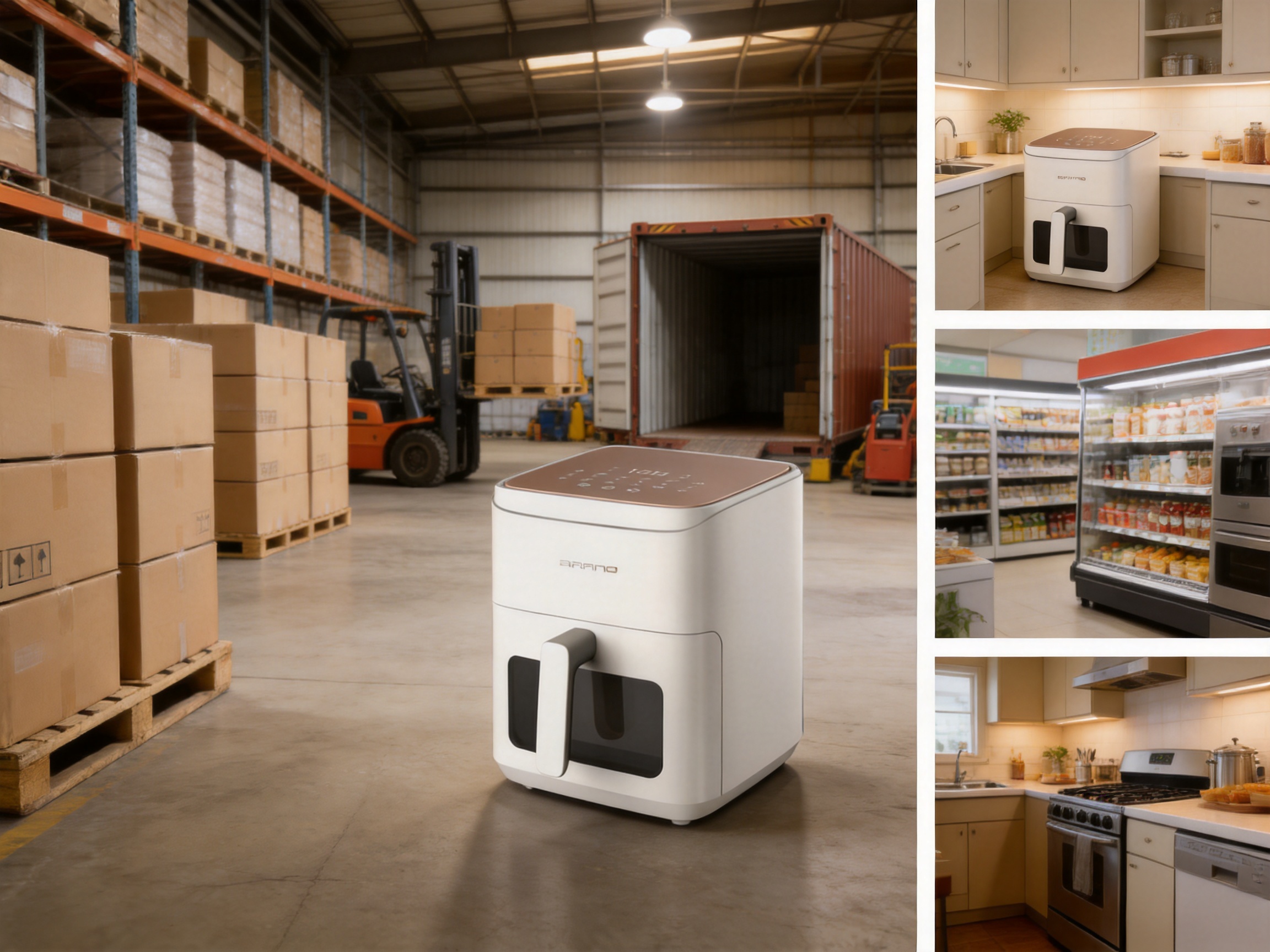
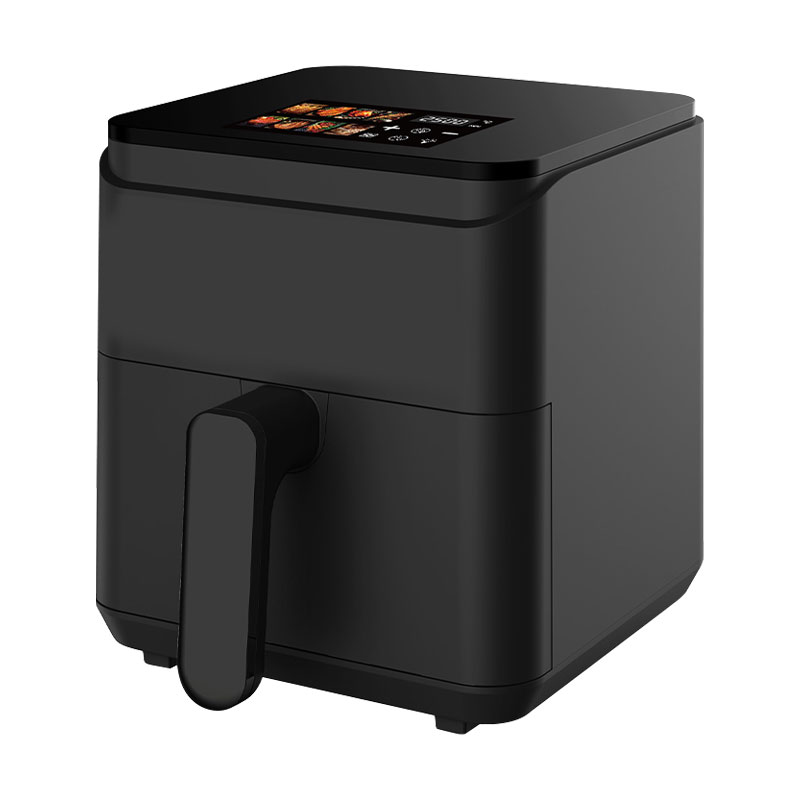
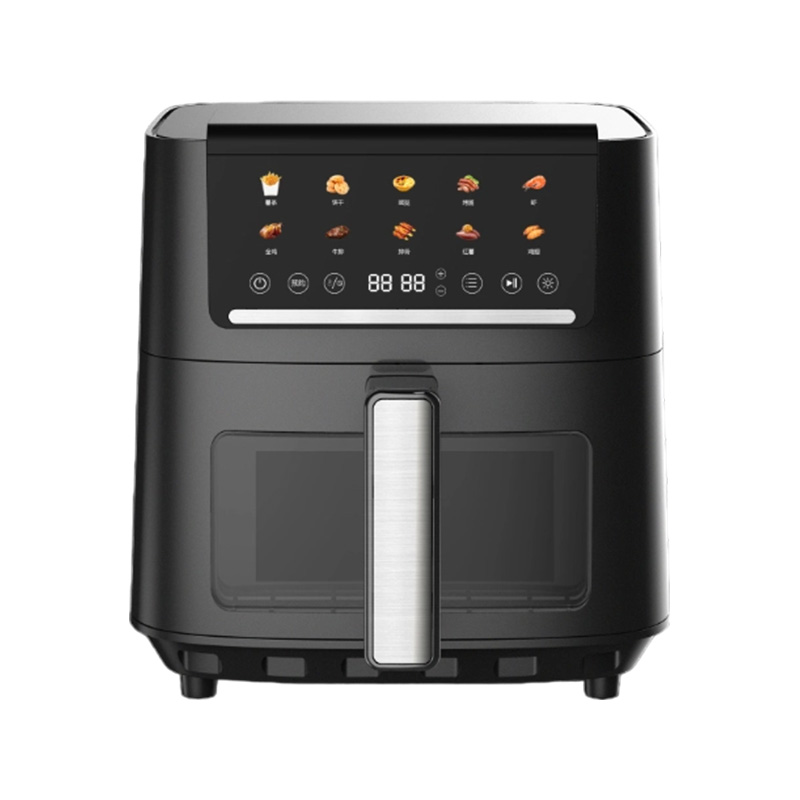
The GSE030 Air Fryer is a compact electric kitchen appliance designed for households, food-service environments, retailers, and distributors seeking a practical alternative to conventional deep frying. With a 4-liter capacity, 1400W heating power, and a streamlined construction using PP, ABS, PA, and PC materials, it combines everyday cooking convenience with a commercially suitable configuration.
Air fryers have become an important category within the small electric kitchen appliance market. Consumers increasingly want crisp, satisfying food while reducing the amount of oil used in preparation. Retailers, meanwhile, need products that are easy to position, easy to explain, and suitable for a broad range of customers. The GSE030 addresses these requirements through a balanced combination of capacity, power, compact packaging, and straightforward product positioning.
Manufactured by CIXI GSTAR ELECTRIC APPLIANCE CO., LTD., the GSE030 forms part of a wider product development program covering air fryers, air ovens, blenders, slicers, choppers, food processors, hot pots, smokeless grills, and other kitchen and hospitality products. The company’s experience in product development, engineering cooperation, quality control, and international supply provides a foundation for serving wholesalers, importers, supermarket groups, and brand customers.
This article examines the GSE030 Air Fryer in detail, including its technical specifications, cooking value, market advantages, manufacturing strengths, quality considerations, logistics, and possible applications.

GSE030 Air Fryer
Product Overview
The GSE030 is a 4-liter air fryer with a rated power of 1400W. Its size is positioned between small personal air fryers and larger family or commercial countertop models. This makes it suitable for buyers who want useful cooking capacity without occupying the space required by a full-size oven or a larger multi-basket appliance.
The product is identified by item number GSE030 and is categorized as an AIR FRYER within the electrical home appliance and daily necessities product series. Its core function is to circulate heated air around food so that the exterior can become browned and crisp with little or no added oil, depending on the recipe and the desired result.
A 4-liter basket or cooking chamber can support a wide range of daily meals. Typical uses may include cooking frozen snacks, potato products, chicken portions, vegetables, fish, sausages, pastries, and reheating prepared foods. The capacity can also support smaller households, couples, individual users who prepare several portions, and families that prefer cooking side dishes in batches.
The 1400W power rating provides a useful balance between heating performance and household energy requirements. Power must always be considered together with basket size, insulation, airflow design, food quantity, and cooking settings. In this product class, 1400W is a practical specification for a 4-liter appliance because it can provide strong heating capability while keeping the unit within a familiar home-appliance power range.
Key Technical Specifications
| Specification | GSE030 Details |
|---|---|
| Item number | GSE030 |
| Product name | Air Fryer |
| Category | Air Fryer |
| Rated power | 1400W |
| Capacity | 4 liters |
| Materials | PP + ABS + PA + PC |
| Carton quantity | 1 piece per carton |
| Carton size | 33.5 × 33.5 × 35.5 cm |
| Net weight | 5 kg |
| Gross weight | 6 kg |
| 20-foot container loading | 784 pieces |
| 40-foot high-cube container loading | 1,728 pieces |
| Stated MOQ | 1,728 pieces |
| Certifications and compliance marks listed | CE, GS, CB, ETL, RoHS, LFGB, FDA |
The specification profile is commercially useful because it gives buyers the main information required for initial product assessment, quotation preparation, retail planning, and shipment calculation. The single-piece carton configuration also makes unit-level handling relatively straightforward for warehouse operations and distribution partners.
Why 4-Liter Capacity Is Practical
Capacity is one of the most important considerations when comparing air fryers. Smaller personal models may be compact, but they can require repeated cooking cycles for ordinary meals. Larger models may provide more space but can also take up more countertop area, require more packaging material, and appeal to a narrower group of consumers.
The 4-liter format offers a middle position. It provides more flexibility than many compact personal units while remaining more approachable than large family or commercial appliances. For a retailer, this makes the GSE030 easier to present as an everyday kitchen appliance rather than a specialist product.
Consumers can use the capacity for a variety of cooking patterns. One user may prepare a single meal portion with enough room to avoid excessive crowding. A couple may prepare a complete side dish or several snack portions. A small family may use the unit for vegetables, potatoes, chicken pieces, or reheating while the main oven is occupied.
Capacity also affects purchasing decisions in online and offline retail. A clearly stated 4-liter size gives customers a simple reference point. It can be compared with competing products without requiring extensive technical knowledge. The specification is large enough to communicate practical utility while still supporting a compact-appliance positioning.
1400W Heating Power and Everyday Cooking
The GSE030 uses a 1400W electrical rating. A higher wattage can contribute to faster heating and stronger recovery when food is added, although actual cooking performance depends on the complete thermal system. Air circulation, heating-element placement, basket construction, temperature control, insulation, and food loading all influence the final result.
For a 4-liter air fryer, 1400W is a balanced rating. It avoids positioning the product as an underpowered personal gadget while remaining within a familiar range for household electrical outlets in many markets. Buyers should always confirm voltage, frequency, plug configuration, and market-specific electrical requirements before placing an order.
Effective hot-air cooking depends on circulation. Heated air must move around the food to promote browning and surface dehydration. Users may achieve improved results by avoiding excessive overcrowding, turning or shaking food when appropriate, and selecting suitable cooking times for different ingredients. The product’s value is therefore not only the heating wattage but the interaction between the heater, airflow path, basket, and control system.
Compared with traditional deep frying, air frying can reduce the need for large quantities of cooking oil. This may simplify preparation, reduce handling of hot oil, and make cleanup more manageable. It also allows users to cook frozen foods and prepared ingredients with less equipment than a conventional oven or frying station.
Material Selection and Product Construction
The listed materials for the GSE030 are PP, ABS, PA, and PC. Using a combination of engineering and appliance plastics allows different components to be matched with suitable material characteristics. The exact application of each material depends on the component design, production specification, and applicable safety requirements.
Polypropylene, commonly known as PP, is widely used in appliance components because of its light weight and practical resistance to many household conditions. ABS is frequently used for rigid external parts and housings where appearance, dimensional stability, and impact performance are important. Polyamide, or PA, may be selected for components that require particular mechanical or thermal properties. Polycarbonate, or PC, is commonly used where strength, transparency, or heat resistance is required.
A multi-material design can support a more refined product structure than relying on one plastic for every component. It may help the manufacturer balance appearance, strength, weight, insulation, assembly requirements, and cost. For buyers, this is relevant because the outer body and internal structural elements must work together in an appliance exposed to heat, repeated handling, and regular cleaning.
Material selection is only one part of product quality. Correct molding parameters, dimensional control, component inspection, assembly accuracy, electrical testing, and final functional checks are equally important. A reliable manufacturer must control the full process rather than treating material choice as the only quality factor.

Advantages Compared with Conventional Frying
The GSE030 is designed around the convenience of hot-air cooking. Traditional deep frying generally requires a larger quantity of oil, a separate pan or fryer, careful monitoring, and more extensive cleanup. An air fryer can simplify this process by combining the heating and cooking chamber in one countertop appliance.
Reduced oil use is one of the main reasons consumers choose air fryers. Food can often be cooked with a light coating of oil or without additional oil, depending on the ingredient. This supports consumer interest in lighter cooking methods and gives retailers a clear benefit to communicate.
Air frying can also be more convenient for small portions. Heating a large oven for a limited quantity of food may be inefficient from a practical perspective, while using a frying pan can require more attention. A 4-liter air fryer gives users an intermediate solution for quick snacks, side dishes, and reheating.
The enclosed cooking structure can help keep oil splashes and food particles more contained than open-pan frying. This does not eliminate the need for cleaning, but it can make the cooking area easier to manage. The appliance format also reduces the need to store a separate deep-frying vessel.
Another advantage is menu flexibility. The GSE030 can be positioned for cooking rather than for a single food category. It may be used for potatoes, chicken, vegetables, seafood, baked snacks, and reheating. This broadens its appeal compared with narrowly specialized kitchen tools.
Advantages Compared with Smaller Personal Air Fryers
Personal air fryers can be attractive because of their small footprint, but limited capacity may require multiple batches. For users preparing food for more than one person, this can reduce convenience and make meal preparation slower.
The GSE030’s 4-liter capacity provides additional flexibility while retaining the general benefits of a countertop appliance. It can help users prepare larger quantities in one cycle than many small personal units, subject to the food type and recommended loading level.
For retailers, the 4-liter category can be easier to market because it represents a clear upgrade from entry-level models. The product can appeal to customers who have outgrown a small air fryer or who want a practical first appliance with more usable space.
The 1400W rating also supports this middle-market position. It gives the product a stronger specification profile than very small, low-powered units without moving it into a high-capacity category that may require more space or higher operating demands.
Advantages Compared with Larger Countertop Models
Larger air fryers can be suitable for high-volume family cooking, but their size may create disadvantages for small kitchens, apartments, dormitories, offices, and compact hospitality spaces. They may also involve higher packaging volume and greater shelf-space requirements.
The GSE030 offers a more compact alternative for customers who do not need the capacity of a large family model. Its carton dimensions of 33.5 × 33.5 × 35.5 cm provide a defined logistics footprint for storage, transportation, and retail planning.
A compact product can also be easier to place on a kitchen counter. Users may be more likely to keep the appliance accessible when it does not dominate the work surface. Convenient access can encourage more frequent use, which is important for customer satisfaction and long-term product value.
From a distribution perspective, a smaller air fryer may permit broader placement across retail formats. It can be included in home-appliance stores, kitchenware departments, online marketplaces, supermarket seasonal promotions, and general household product catalogs.
Product Positioning for Retail and Wholesale Markets
The GSE030 is suitable for several business models. Importers may purchase it as a standard appliance for local distribution. Wholesalers may offer it to independent retailers, online sellers, and regional appliance dealers. Supermarket groups may include it in promotional campaigns around cooking, home organization, or seasonal meal preparation.
The product can also support private-label and brand-development programs, subject to agreement regarding customization, packaging, labeling, compliance documentation, and order quantities. The manufacturer’s engineering and production capabilities may allow customers to discuss product adjustments or market-specific requirements.
A clear product story is important in a competitive category. The GSE030 can be presented through several simple messages: 4-liter capacity, 1400W power, hot-air cooking, compact countertop format, broad cooking applications, and internationally recognized certification references. These features provide a foundation for catalog descriptions, product pages, packaging copy, and sales presentations.
Retailers should avoid presenting technical specifications in isolation. Consumers want to know what the product can do in daily life. Product communication can connect the 4-liter capacity with practical meal preparation, the 1400W rating with heating capability, and the compact body with countertop convenience.
For wholesale buyers, shipment information is equally important. The stated loading quantities of 784 pieces for a 20-foot container and 1,728 pieces for a 40-foot high-cube container support initial freight planning. The stated MOQ of 1,728 pieces indicates that the product is especially suited to organized import programs, established distributors, and customers with sufficient market coverage.
Manufacturing Background and Product Development Experience
CIXI GSTAR ELECTRIC APPLIANCE CO., LTD. develops and manufactures small electric kitchen appliances. Its product range includes blenders, slicers, choppers, food processors, smokeless grills, hot pots, air fryers, and air ovens. The company also supplies products for bars, restaurants, and hotels, including ice buckets, beverage dispensers, pitchers, slicers, and graters.
This product diversity is valuable because it exposes the organization to different appliance structures, user requirements, packaging formats, and quality expectations. Experience with multiple product categories can help engineering teams understand how to balance usability, manufacturing cost, reliability, and market presentation.
The company’s development history began with sourcing and sales experience in electric appliances and consumer products. It later moved into buying-agent activities, factory sourcing, quality control, and product development. This background contributed to an understanding of both factory operations and buyer expectations.
The company subsequently developed non-electric innovative products and expanded its work with supermarkets and international customers. Later, it moved into electric products, including air ovens and air fryers. This progression is relevant to the GSE030 because successful electrical-appliance manufacturing requires more than basic assembly. It requires coordinated design, tooling, electrical engineering, testing, certification support, production management, and after-sales cooperation.
The company reports a dedicated research and development team, engineering personnel, quality-control staff, experienced production workers, and a substantial manufacturing facility. These resources support the development of products from concept through mass production and help the factory respond to customer requirements.
Advanced Manufacturing Processes
Product Research and Industrial Design
The manufacturing process begins before the first production unit is assembled. Product research considers consumer preferences, market price points, cooking habits, expected capacity, appearance, controls, packaging, and regulatory requirements. The objective is to create a product that is both commercially attractive and technically practical.
For an air fryer, industrial design must account for external appearance, handle ergonomics, basket access, countertop stability, airflow, heat management, serviceability, and cleanability. These requirements interact with one another. A visually attractive body must also provide adequate internal space for the heating and airflow system. A compact shape must not compromise safe thermal separation or user access.
Engineering Development
Engineering development translates the product concept into functional components and production drawings. Engineers evaluate the heating system, fan or airflow arrangement, control components, housing, basket, thermal insulation, electrical connections, and safety features.
Engineering teams also consider how components will be assembled. A product with a well-designed assembly process can achieve more consistent quality and more efficient production. Correct fastener selection, component alignment, wire routing, and inspection access all contribute to the final result.
The GSE030’s combination of PP, ABS, PA, and PC indicates a structured approach to selecting materials for different parts of the appliance. Material decisions should be supported by testing and production validation to ensure that parts maintain their intended performance during repeated use.
Mold and Plastic-Part Production
Plastic housings and structural components are generally produced through injection molding. This process requires accurate tooling, appropriate material preparation, controlled injection parameters, and inspection of molded parts.
Important quality factors include dimensional consistency, surface finish, color uniformity, absence of visible defects, correct fit between parts, and stability after cooling. Molding conditions must be controlled so that the parts can be assembled smoothly and maintain their designed shape.
For a consumer appliance, exterior appearance has direct commercial importance. Uneven seams, poor surface finish, inconsistent color, or deformation can negatively affect the customer’s perception even when the appliance operates correctly. A capable manufacturing process therefore treats cosmetic inspection as an essential part of product quality.
Electrical and Thermal Assembly
The electrical and thermal systems are assembled according to product specifications and applicable safety requirements. This may include installation of the heating element, motor or fan assembly, control system, wiring, connectors, thermal protection, and related components.
Electrical assembly requires attention to wire routing, insulation, connection security, grounding where applicable, and separation from hot areas. Thermal management requires suitable spacing and protection around heat-generating components. These details are essential for safe operation and long-term reliability.
During production, assembly workers and quality personnel should verify that key components are correctly installed and that no loose connections, damaged wires, missing fasteners, or incorrect parts remain in the unit. Standardized work instructions and process checks help reduce variation between production batches.
Final Assembly and Functional Testing
After the main components are assembled, the appliance undergoes final integration. The housing, control interface, cooking basket, handle, and other external parts are checked for proper fit and operation.
Functional testing may include power-on verification, heating operation, airflow operation, control response, abnormal noise checks, appearance inspection, and safety-related tests required by the applicable market. The scope of testing should be determined by the product specification, certification requirements, customer agreement, and internal quality procedures.
Testing is especially important for appliances that combine electricity, heat, moving air, and consumer handling. A consistent testing program helps identify production issues before products are packed and shipped. It also gives buyers greater confidence that the factory is managing quality systematically rather than relying only on visual inspection.

Quality Control and Compliance Support
The GSE030 is listed with CE, GS, CB, ETL, RoHS, LFGB, and FDA certification or compliance references. These marks and standards relate to different market, electrical, material, food-contact, or safety requirements. The exact applicability depends on the destination country, product configuration, testing scope, and current documentation.
Buyers should request and verify the relevant certificates, reports, declarations, labels, and technical files before finalizing a purchase. Certification names should not be treated as interchangeable, because different markets may impose different requirements for electrical safety, electromagnetic compatibility, restricted substances, food-contact materials, energy information, labeling, and packaging.
The manufacturer’s quality-control structure is an important strength. The company reports dedicated QC personnel and experience with pre-production and in-production quality control. These activities can include incoming-material inspection, first-article approval, production-line checks, assembly verification, functional testing, packaging inspection, and final random inspection.
Pre-production quality control helps ensure that the approved sample, production drawings, materials, color, components, and packaging are correctly prepared before mass production begins. During-production inspection helps identify deviations while corrective action is still possible. Final inspection verifies that finished products meet the agreed requirements before shipment.
For international buyers, quality control should be documented through inspection criteria and acceptance standards. Important points may include product appearance, dimensions, power rating, capacity, accessory completeness, carton markings, barcode accuracy, user manual language, plug type, and certification labels.
Factory Resources and Engineering Strengths
The company reports a large production facility, more than 200 experienced workers, an R&D department with engineers, and a QC team. These resources provide a meaningful foundation for serving customers that require stable production and coordinated product development.
An experienced workforce can support repeatable assembly, component handling, packaging, and inspection. Engineering personnel can help evaluate design adjustments, troubleshoot production issues, and communicate with customers about technical requirements. QC staff can establish inspection routines and monitor quality across different stages.
The company also reports experience supplying products to international supermarkets and large retail organizations. Although each customer has unique requirements, this background suggests familiarity with structured purchasing processes, product approvals, packaging expectations, shipment coordination, and quality communication.
Its manufacturing scope includes both electric and non-electric products. This allows the organization to draw on experience in mechanical design, plastic processing, kitchen usability, and consumer product development. For buyers building a broader kitchen-appliance range, a supplier with multiple related categories may simplify sourcing and product coordination.
Production Scalability and International Supply
The GSE030 is supplied in one-piece cartons, with stated container loading quantities of 784 pieces in a 20-foot container and 1,728 pieces in a 40-foot high-cube container. These figures help importers estimate purchase volume, freight requirements, warehouse capacity, and landed cost.
A 40-foot high-cube loading quantity of 1,728 pieces corresponds with the stated MOQ. This structure may be efficient for buyers who are ready to launch a full distribution program or replenish established sales channels. Customers should confirm the final loading plan because actual quantities can be affected by packaging revisions, pallet use, container regulations, and shipping arrangements.
Efficient production is not only about producing a high number of units. It also involves maintaining consistency from the first carton to the last carton. Stable molds, documented assembly procedures, controlled component purchasing, and repeatable testing are necessary when large quantities are produced for international markets.
The company’s history of supplying different product categories and international customers supports its ability to work with export-oriented orders. Buyers can discuss shipment schedules, packaging specifications, inspection arrangements, documentation, and market-specific labeling during the order-planning stage.
Packaging and Warehouse Considerations
The stated carton size is 33.5 × 33.5 × 35.5 cm, with one unit per carton. This format can simplify warehouse counting and individual order fulfillment. It may also be suitable for ecommerce distribution, where each retail unit needs to be picked, labeled, and shipped separately.
A gross weight of 6 kg provides a useful reference for warehouse handling and freight calculations. Because the net weight is listed as 5 kg, the remaining weight accounts for packaging materials and associated packing components. Buyers should confirm whether the carton includes manuals, accessories, protective inserts, and any market-specific retail packaging.
Packaging should protect the air fryer from vibration, compression, and impact during inland transportation, port handling, container movement, and final delivery. The product’s plastic housing, control area, basket, and handle should be adequately secured inside the carton.
Retail packaging can also contribute to sales performance. The box should communicate the product name, capacity, power, main cooking benefits, compliance information where appropriate, and handling instructions. For different markets, packaging may require translated text, recycling symbols, importer information, barcode formats, warning statements, and local regulatory details.
Applications in Different Customer Segments
Household Kitchens
The primary application for the GSE030 is household cooking. Its 4-liter capacity is appropriate for everyday meals, snacks, side dishes, reheating, and small-batch cooking. It can be used in apartments, family homes, rental properties, and compact kitchens.
Student and Apartment Living
Students and apartment residents often value appliances that provide multiple cooking functions without requiring a large kitchen. The GSE030 can provide an alternative to using a full oven or multiple pans, subject to local electrical and housing requirements.
Office and Break-Room Use
In suitable environments, the appliance may be used in office break rooms, staff kitchens, or shared accommodation. Clear operating procedures and cleaning responsibilities should be established wherever an appliance is shared by multiple users.
Hospitality and Light Food-Service Applications
Small restaurants, cafés, guesthouses, and hotels may consider 4-liter air fryers for limited-volume cooking, staff meals, breakfast items, snack preparation, or supplementary cooking. Buyers in hospitality should assess expected duty cycle, local commercial regulations, ventilation requirements, and warranty arrangements before using a household-oriented model in a professional setting.
Recommended Buyer Evaluation Process
Importers should begin by confirming the target market and applicable electrical requirements. Voltage, frequency, plug type, language, certification, labeling, and food-contact documentation should be reviewed before production.
The next step is sample evaluation. Buyers should inspect the physical appearance, body fit, basket movement, handle strength, control operation, heating performance, airflow, noise, cleaning convenience, and packaging. Testing should be performed with representative food loads rather than relying only on an empty-unit test.
Buyers should also review the user manual. Instructions should explain safe placement, preheating if applicable, loading, cooking, cleaning, maintenance, and warnings. Clear instructions reduce misuse and can contribute to better customer reviews and lower after-sales complaints.
For larger orders, buyers may arrange pre-production approval and third-party inspection. A written specification should define acceptable appearance standards, electrical parameters, accessories, carton markings, and sampling procedures. This creates a common reference for both the buyer and the factory.
Finally, the buyer should confirm production lead time, payment terms, shipping arrangements, spare-part policy, warranty process, and communication procedures. Good commercial preparation is as important as technical evaluation when establishing a long-term supply relationship.
How the GSE030 Supports Long-Term Product Value
A successful kitchen appliance must provide value beyond its initial purchase price. Customers want an appliance that is useful across many meals, simple to operate, visually acceptable, and reliable in ordinary household use.
The GSE030 supports this value proposition through its broad cooking purpose and practical capacity. It is not limited to one recipe or one type of food. This increases the likelihood that the appliance will remain part of the user’s regular kitchen routine.
For distributors, the product can also support a broader category strategy. It may be sold alongside blenders, food processors, hot pots, grills, and other small appliances. A supplier capable of manufacturing several related categories can help buyers create a coordinated kitchen-appliance portfolio.
For private-label customers, long-term value may include the ability to discuss packaging, market positioning, product documentation, and future product development with an engineering-oriented manufacturer. Such cooperation can help a brand distinguish itself in a crowded category.
Cleaning, Maintenance, and User Guidance
Users should allow the appliance to cool before cleaning and should follow the instructions supplied with the specific product configuration. Food residues should be removed after use so that they do not accumulate around the basket or cooking chamber.
The external housing should be cleaned with a suitable soft cloth. Electrical components should not be immersed in water. Abrasive tools and harsh chemicals should be avoided unless specifically approved by the manufacturer. The basket and other removable parts should be handled carefully to protect their surface and structural condition.
Users should place the appliance on a stable, heat-resistant surface with sufficient clearance around ventilation areas. Airflow openings should not be blocked. The power cord should be kept away from hot surfaces, and the appliance should not be operated if the cord, plug, or housing is damaged.
Food should be loaded in a way that allows heated air to circulate. Overfilling can reduce cooking consistency and may extend cooking time. Different foods require different settings, and users should follow recipe guidance and monitor food until they become familiar with the appliance.
Q&A
What is the capacity of the GSE030 Air Fryer?
The GSE030 has a stated capacity of 4 liters. This places it in a practical middle-capacity category for household cooking, snacks, side dishes, reheating, and small-batch meals.
How much power does the air fryer use?
The rated power is 1400W. Buyers should confirm the required voltage, frequency, and plug configuration for the destination market before ordering.
What materials are used in the product?
The listed materials are PP, ABS, PA, and PC. These plastics are used in different appliance components according to the product design and manufacturing specification.
Is the GSE030 suitable for families?
The 4-liter capacity can be suitable for small families and households that want to prepare moderate quantities of food. The appropriate serving size depends on the recipe, food type, and loading method.
Can the GSE030 replace a conventional oven?
An air fryer can perform many cooking and reheating tasks, but it should not automatically be considered a complete replacement for every oven. The GSE030 is best positioned as a compact supplementary or alternative cooking appliance for suitable foods and quantities.
What are the main advantages over deep frying?
The main advantages include reduced dependence on large quantities of oil, a contained countertop format, easier preparation for small portions, and flexibility across snacks, vegetables, meat, seafood, and reheated foods.
What is the carton size?
The stated carton size is 33.5 × 33.5 × 35.5 cm. Each carton contains one piece.
How many units can be loaded into a container?
The stated loading quantities are 784 pieces in a 20-foot container and 1,728 pieces in a 40-foot high-cube container. Final loading should be confirmed with the supplier because packaging and shipping arrangements may affect the actual quantity.
What is the stated MOQ?
The stated minimum order quantity is 1,728 pieces. This corresponds to the listed 40-foot high-cube loading quantity and is suitable for organized wholesale or distribution programs.
Which certifications or compliance references are listed?
The product information lists CE, GS, CB, ETL, RoHS, LFGB, and FDA. Buyers should request the applicable documentation and confirm that it covers the exact product version and destination market.
Can buyers discuss customized requirements?
Buyers can discuss packaging, labeling, documentation, plug configuration, and other commercial or technical requirements with the manufacturer. Any customization should be confirmed in writing before production.
Does the manufacturer produce other appliances?
Yes. The company’s product range includes blenders, slicers, choppers, food processors, smokeless grills, hot pots, air ovens, air fryers, and products for bars, restaurants, and hotels.
What should buyers check before placing an order?
Buyers should check samples, electrical specifications, certification documents, packaging, user manuals, product dimensions, capacity, quality standards, inspection procedures, warranty terms, production timing, and shipping details.
Conclusion
The GSE030 Air Fryer is a practical 4-liter countertop appliance built around the growing demand for convenient hot-air cooking. Its 1400W power rating, balanced capacity, multi-material construction, one-piece carton packaging, and broad certification references create a commercially relevant specification profile.
Compared with smaller personal air fryers, it provides more usable cooking space. Compared with larger countertop models, it offers a more compact and approachable format. Compared with conventional deep frying, it can simplify cooking and reduce the need for large quantities of oil.
Its commercial value is supported by the manufacturing capabilities of CIXI GSTAR ELECTRIC APPLIANCE CO., LTD. The company combines product development, engineering, plastic-component production, assembly, quality control, export experience, and a wider portfolio of kitchen appliances. These strengths are relevant to importers, wholesalers, supermarket buyers, hospitality purchasers, and private-label customers.
For the best results, buyers should evaluate the product against their target market’s electrical, regulatory, packaging, and performance requirements. With suitable market preparation and clear quality agreements, the GSE030 can serve as a strong addition to a modern small-kitchen-appliance portfolio.
References
1. Product specification sheet for GSE030 Air Fryer, including power, capacity, materials, carton data, loading information, and listed certifications.
2. Manufacturer-provided company profile for CIXI GSTAR ELECTRIC APPLIANCE CO., LTD., including product categories, production resources, engineering capabilities, and company history.
3. General principles of hot-air cooking and countertop air-fryer operation based on standard small-appliance product usage guidance.
4. General international appliance quality-control practices covering incoming inspection, production inspection, final testing, packaging inspection, and compliance-document review.