
 English
 中文简体
中文简体 Español
 English
 中文简体
中文简体 Español
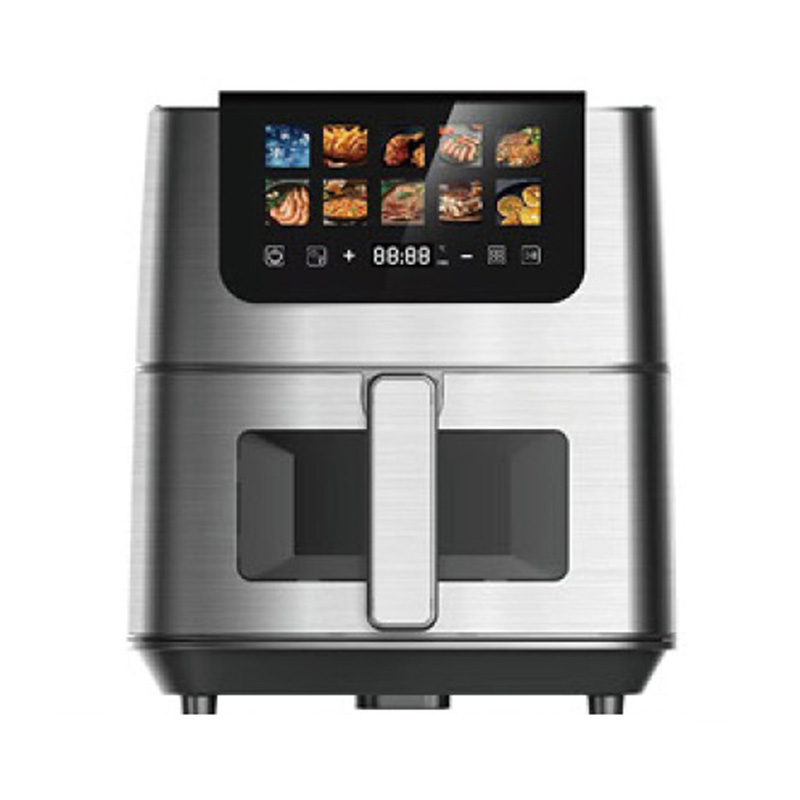
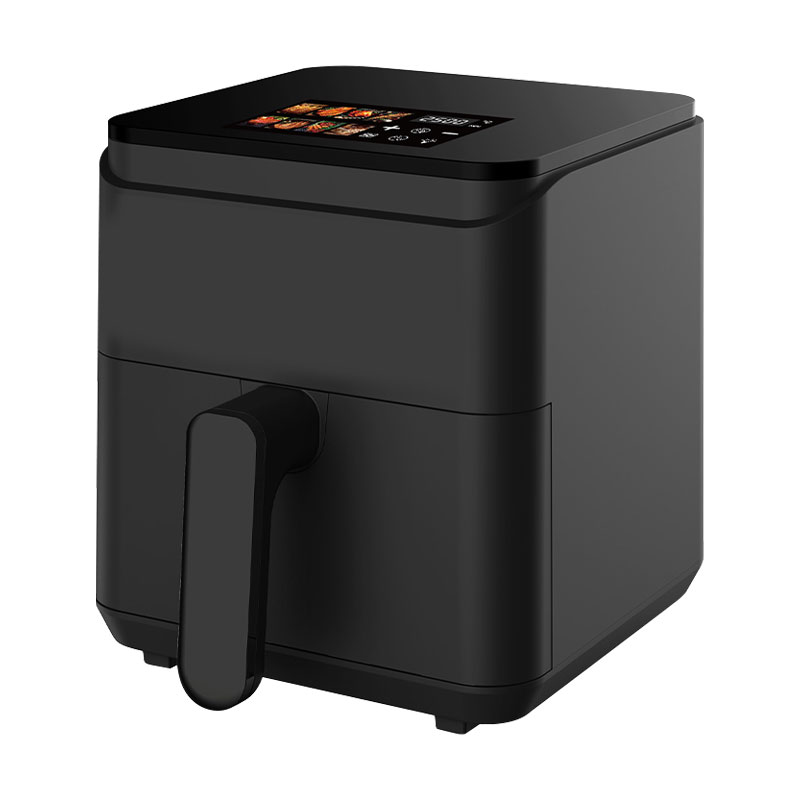
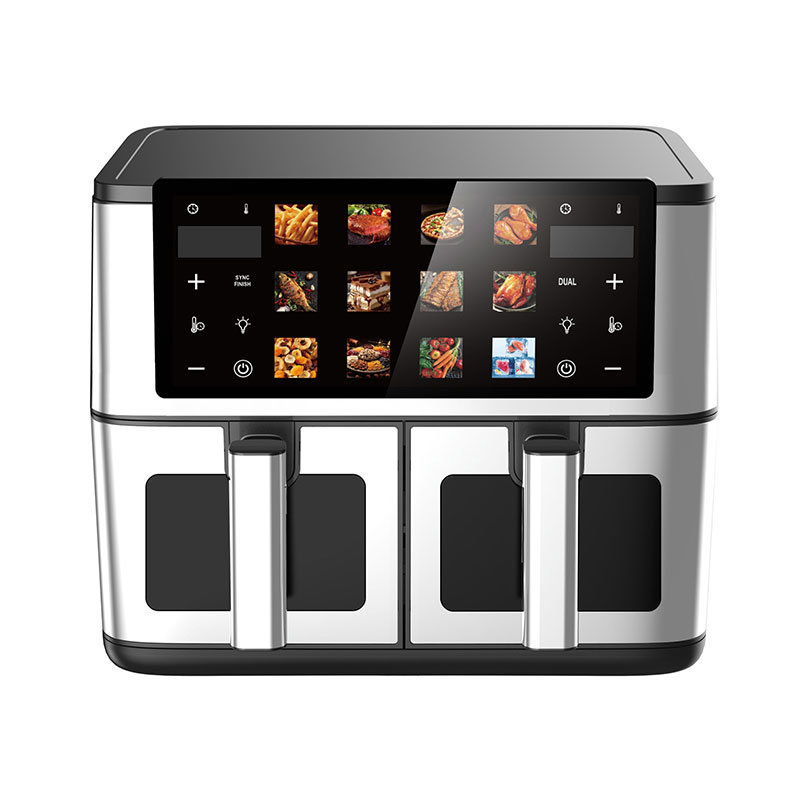
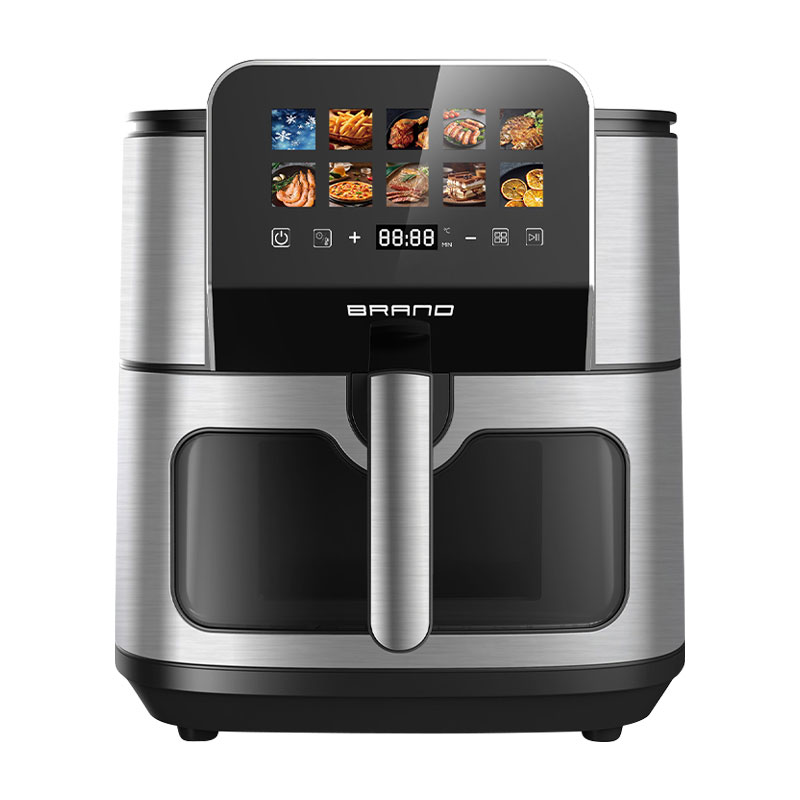
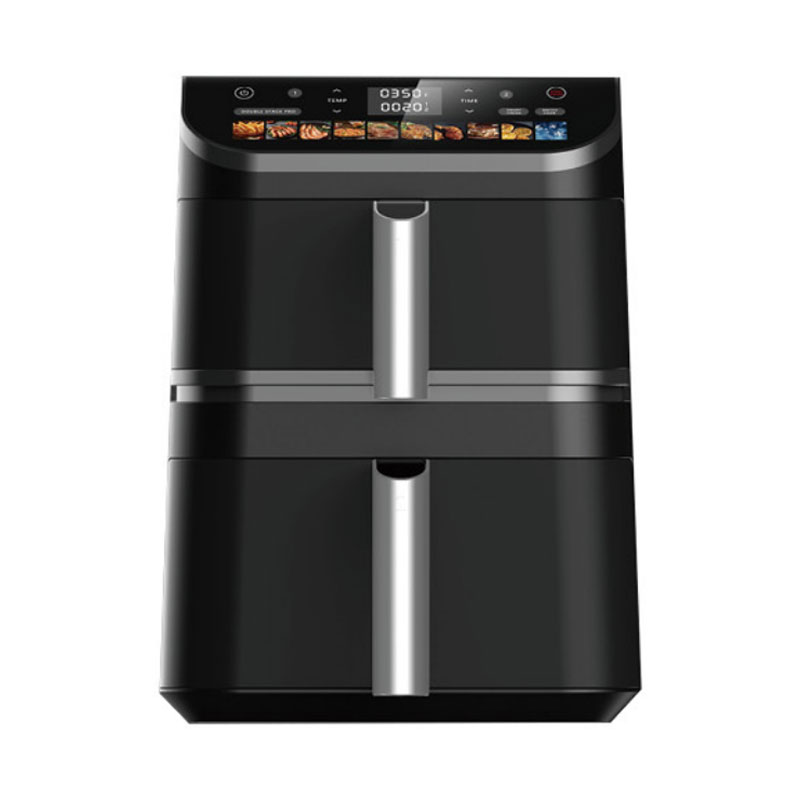
Modern households and professional food-service operators are looking for cooking appliances that combine speed, convenience, energy-conscious operation, and dependable performance. An air fryer can answer many of these needs by using rapidly circulating hot air to create a crisp surface with little or no added oil. However, not every air fryer offers the same cooking capacity, temperature flexibility, safety protection, or manufacturing reliability. The GSE102FT is designed to address these requirements with a large 11-litre metal inner chamber, high-power heating, 360-degree hot-air circulation, a smart colour touchscreen, and a practical range of temperature and timer settings.
This model belongs to a category of small electric kitchen appliances developed for everyday cooking. It is suitable for large families, users who prepare several portions at once, and small catering operations that need compact equipment without giving up useful capacity. Its configuration also makes it a strong option for importers, distributors, retailers, hospitality suppliers, and private-label buyers seeking a versatile air fryer platform.
Beyond the appliance itself, the product reflects the capabilities of CIXI GSTAR ELECTRIC APPLIANCE CO., LTD., a Chinese manufacturer focused on the design, development, and production of small kitchen appliances. The company’s product experience includes air fryers, air ovens, blenders, slicers, choppers, food processors, smokeless grills, hot pots, and other equipment for household and commercial use. Its reported engineering, quality-control, production, and product-development resources provide a foundation for supporting customers from initial concept through manufacturing and delivery.
Product Overview
The GSE102FT is an electric air fryer with an 11-litre inner pot and a rated power configuration of 1800 W/2300 W. It operates on 220–240 V and supports both 50 Hz and 60 Hz power frequencies. This electrical range makes the model suitable for many international markets, subject to the applicable local plug, labeling, testing, and certification requirements.
The appliance is intended to provide a practical alternative to conventional frying and, in many situations, a faster alternative to using a large oven. Food is placed in the frying basket or inner cooking area, after which heated air is circulated around the ingredients. The result is a browned and crisp exterior while the food remains tender inside when the correct time and temperature are selected.
Its 11-litre capacity is one of its most important selling points. Compact air fryers may be convenient for one or two people, but they can require several cooking cycles when used by a family or small food business. The GSE102FT is designed to reduce this limitation by accommodating a whole chicken or multiple portions of food in one cycle, depending on the food’s size and preparation method.
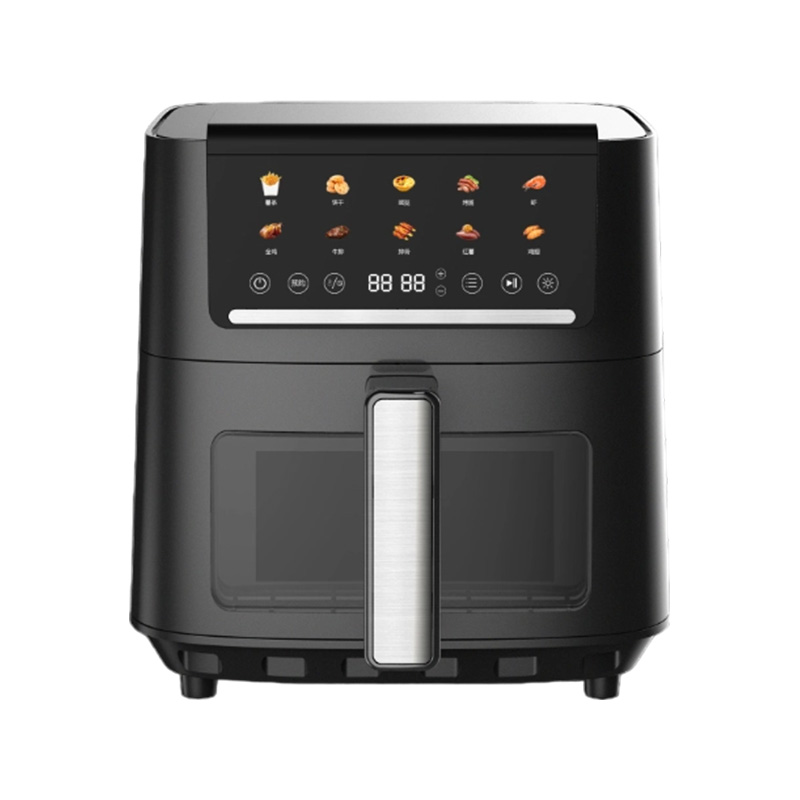
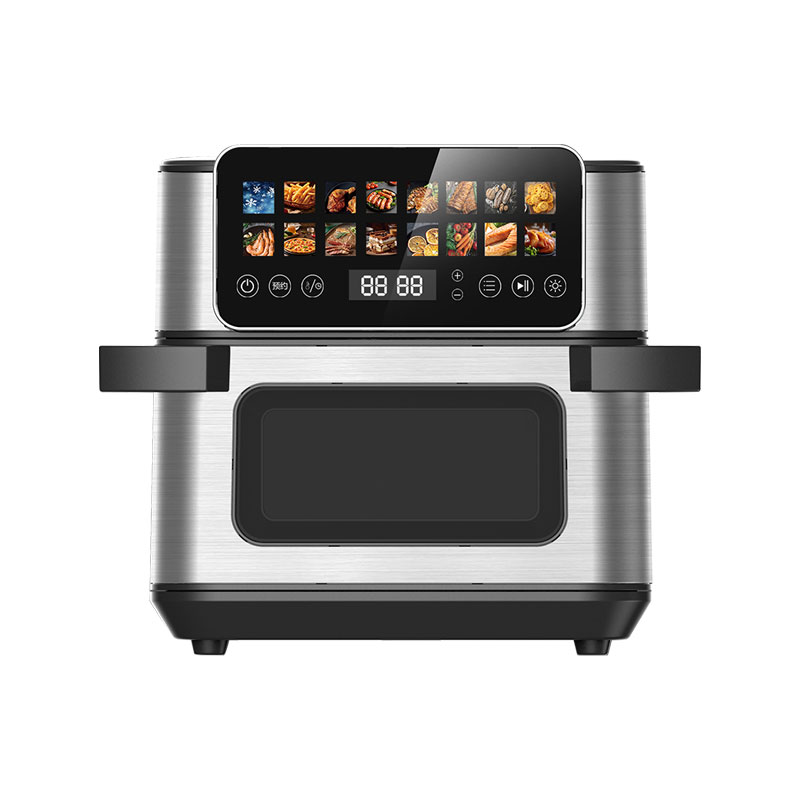
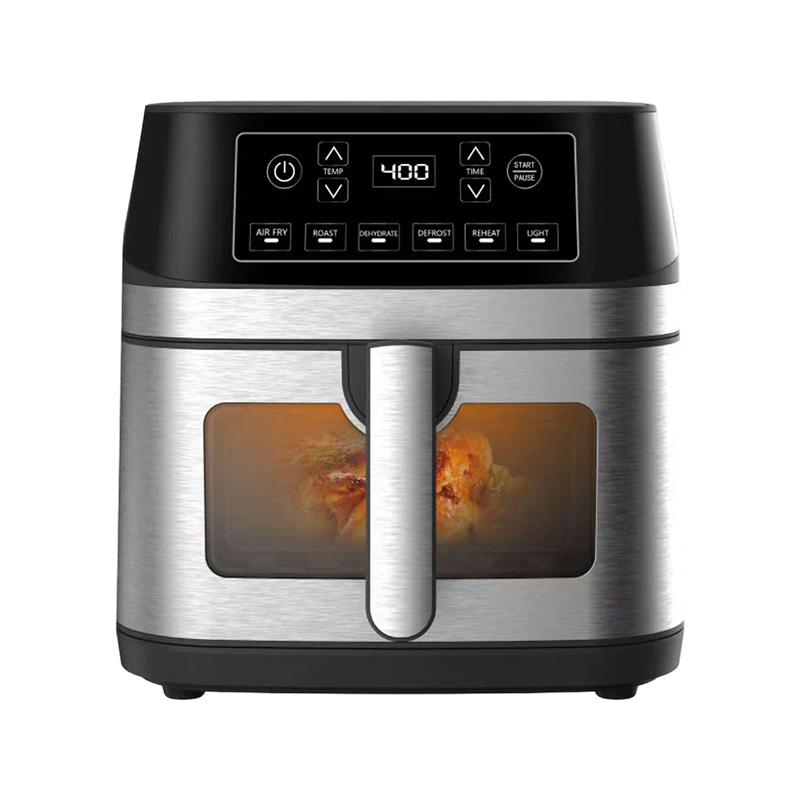
The model combines manual controls with preset cooking menus. Its colour touchscreen is intended to make operation clear and approachable, especially for users who are unfamiliar with air-fryer cooking. Presets can help simplify common tasks such as preparing chips, chicken wings, and baked foods, while manual temperature and timer adjustments provide greater control for recipes that do not match a preset program.
Core Technical Specifications
| Specification | Product Detail | Practical Benefit |
|---|---|---|
| Model | GSE102FT | Identifies the product platform for purchasing, distribution, and service |
| Product type | Digital air fryer | Supports hot-air cooking with electronic control |
| Rated voltage | 220–240 V | Suitable for many regional power systems within this voltage range |
| Rated frequency | 50/60 Hz | Supports use across a broad range of international markets |
| Rated power | 1800 W/2300 W | Provides high heating output for faster cooking and recovery |
| Capacity | 11 litres | Appropriate for large portions, whole chicken, and family cooking |
| Timer | 1–60 minutes | Offers flexible control for short snacks and longer recipes |
| Temperature range | 80–200 °C | Supports warming, baking, roasting, and crisping applications |
| Power cord length | 75 cm | Provides a practical connection length for countertop use |
| Inner pot | Metal | Resists high cooking temperatures and supports convenient cleaning |
| Safety function | Microswitch power-off protection | Automatically interrupts operation when the basket is pulled out |
The combination of a large cooking chamber and a 60-minute timer gives the product flexibility beyond simple snack preparation. Users can prepare chips, wings, vegetables, fish, meat, pastries, and other foods according to recipe requirements. The temperature range begins at 80 °C, which is useful for lower-temperature heating and warming, and extends to 200 °C for browning and crisping.
Large 11-Litre Capacity for More Efficient Meal Preparation
Capacity is a major difference between air-fryer categories. Small personal models can be useful for limited portions, but they often require users to divide a family meal into several batches. Multiple batches increase preparation time, create additional cleanup, and may produce inconsistent results because the appliance is used repeatedly under changing conditions.
The GSE102FT’s 11-litre inner pot is designed for larger cooking tasks. It can accommodate a whole chicken or several portions of food, depending on the shape, weight, and arrangement of the ingredients. For a family of five or more, this capacity can make the appliance more practical for daily use. Instead of treating an air fryer as a device only for snacks, users can use it as a central countertop cooking appliance.
The large interior is also useful for small catering businesses, cafés, snack counters, serviced apartments, guesthouses, and office kitchens. Such users may need to prepare moderate quantities without investing in a full-size commercial fryer or oven. The air fryer’s relatively compact countertop format can help conserve working space while still providing a larger batch size than many household models.
Large capacity does not automatically guarantee uniform cooking. Internal air movement, heating power, basket design, and food placement all influence results. The GSE102FT addresses this requirement through high-power heating and 360-degree hot-air circulation. Users should still avoid overcrowding the cooking space, because excessive loading can restrict air movement and reduce crisping performance.
For distributors, the 11-litre size creates a clear market position. It is larger than many personal air fryers but remains within the small-appliance category. This allows retailers to present it as a family-size or light-commercial product rather than competing only in the crowded entry-level segment.
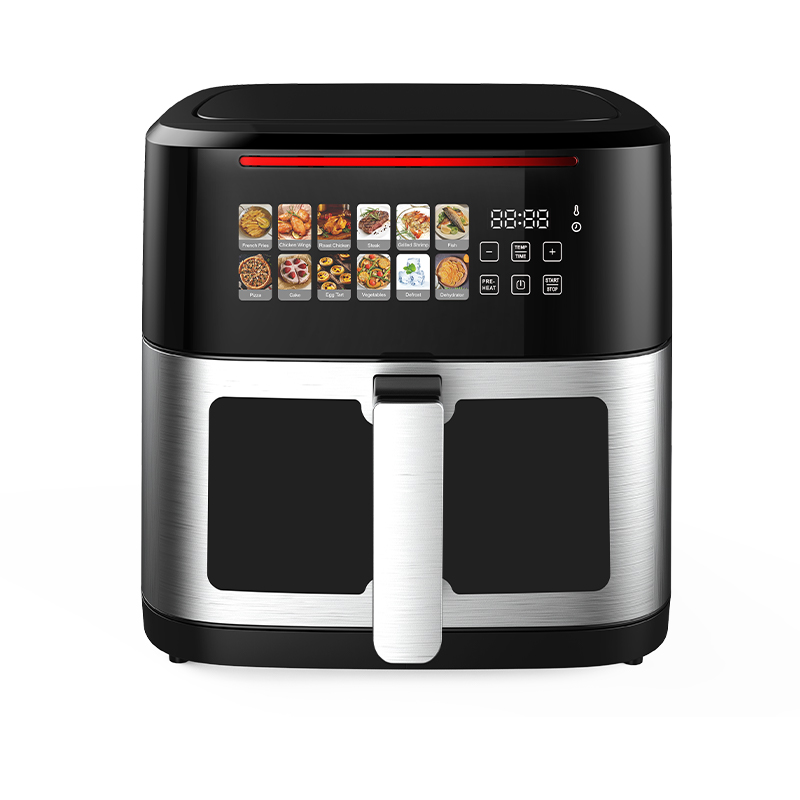
GSE102FT
High-Power Heating and 360-Degree Air Circulation
The GSE102FT is specified with a rated power of 1800 W/2300 W. High power can be valuable in an air fryer because the appliance must heat the cooking chamber and maintain temperature after cold or room-temperature food is added. Adequate heating output supports faster preheating, improved temperature recovery, and more consistent cooking during larger batches.
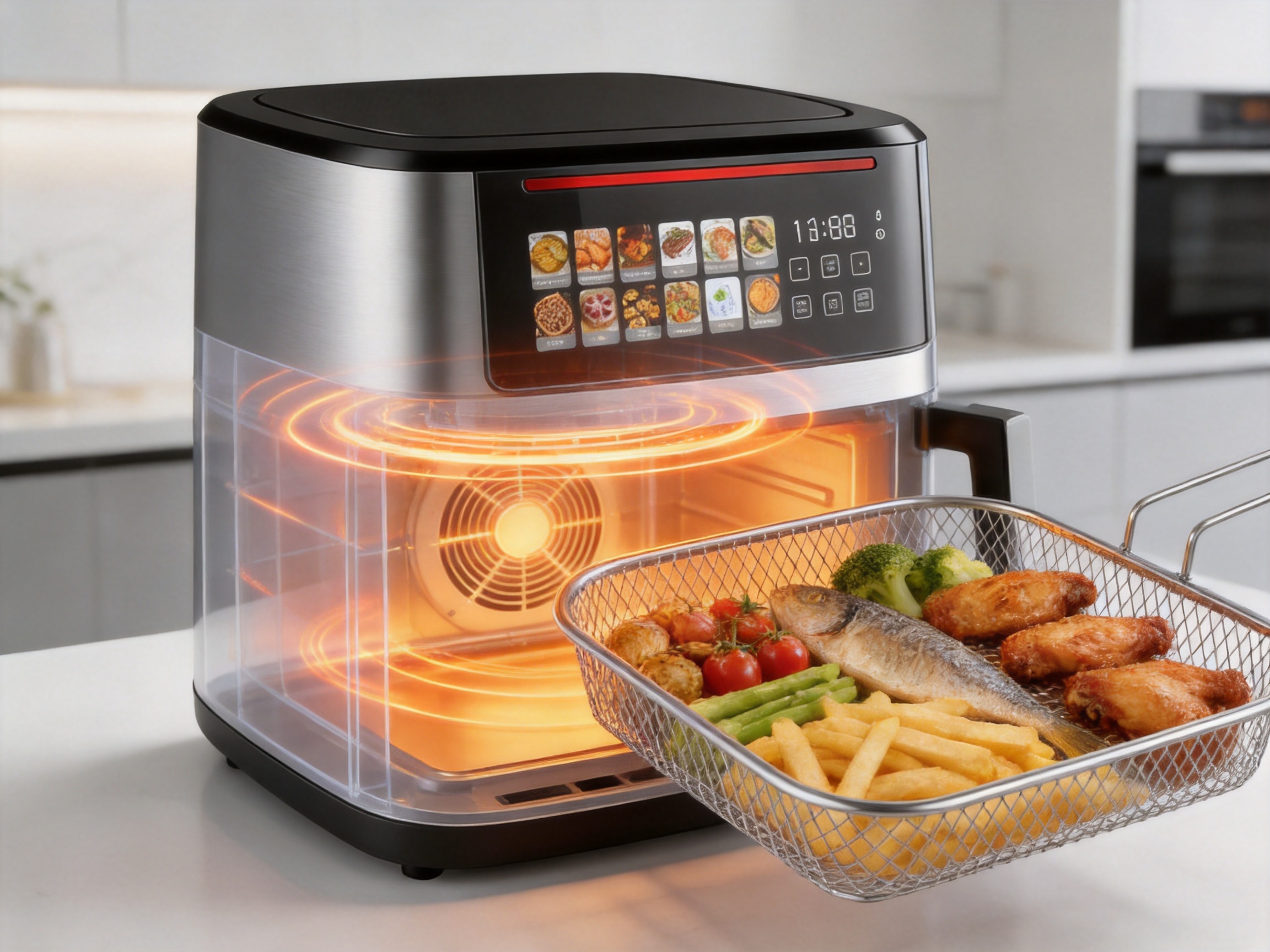
The model also uses 360-degree hot-air circulation technology. In practical terms, the heating system and internal airflow are designed to distribute hot air around the food rather than concentrating heat in a single area. Good circulation can help expose more of the food surface to heated air, supporting browning and crisping while reducing the need for frequent turning.
Users should understand that hot-air cooking is influenced by food size, moisture, coating, basket loading, and the distance between pieces. Even with strong circulation, thick food may need to be turned or checked during cooking. Nevertheless, a well-designed circulation system can make the process more forgiving and reduce manual intervention compared with less efficient heating arrangements.
Compared with a conventional deep fryer, an air fryer does not require a large quantity of oil for immersion. This can make preparation cleaner and reduce the handling of hot oil. Compared with a basic countertop oven, the concentrated cooking chamber and forced hot-air movement can support faster cooking for smaller portions. The GSE102FT is therefore positioned between traditional frying equipment and general-purpose oven appliances, offering a convenient combination of speed, crisping, and reduced oil use.
The 1800 W/2300 W power configuration may also provide flexibility for different market versions or electrical requirements. Final power selection, plug configuration, testing, and labeling should be confirmed with the manufacturer for the intended destination market. For wholesale buyers, this is important because electrical specifications must match local regulations and product documentation.
Precise Temperature and Time Adjustment
Cooking performance depends on control as much as heating power. The GSE102FT provides a temperature range from 80 °C to 200 °C and a timer range from 1 to 60 minutes. This gives users the ability to select lower settings for warming and gentle cooking or higher settings for roasting and crisping.
The 1–60-minute timer is suitable for many common air-fryer applications. Shorter settings can be used for reheating small snacks, while longer settings are appropriate for meat, poultry, vegetables, baked foods, and frozen products. A controllable timer also helps users avoid relying on memory, which can be useful when preparing multiple dishes or completing other kitchen tasks.
Temperature adjustment is valuable because different ingredients require different cooking conditions. Frozen chips may need a relatively high temperature to develop a crisp surface. Delicate pastries may require a lower setting to prevent excessive browning. Chicken, fish, vegetables, and reheated foods each benefit from different combinations of heat and time. Manual adjustment allows users to adapt the appliance to recipes beyond the built-in menu options.
The digital control system can also make the user experience more repeatable. Once a preferred setting has been identified, users can apply similar time and temperature values in future cooking cycles. This is particularly helpful in small food businesses where staff need simple, repeatable procedures.
Actual cooking time will vary according to ingredient quantity, starting temperature, moisture content, food thickness, and basket arrangement. Product instructions should provide appropriate guidance, and users should verify that foods such as poultry and meat reach safe internal temperatures. The air fryer provides the control platform, while proper food handling remains the responsibility of the operator.
Smart Touchscreen Operation
The colour touchscreen gives the GSE102FT a modern user interface and supports straightforward operation. A clear touch panel can be easier to understand than multiple mechanical knobs, particularly when the appliance includes preset programs and adjustable cooking parameters.
Preset menus are designed for common foods such as chips, chicken wings, and baked items. These programs can help beginners select a starting point without first learning the relationship between temperature, cooking time, and food type. Presets may also improve convenience in busy homes, dormitories, offices, hospitality rooms, and small commercial kitchens.
Preset menus should be regarded as convenient starting settings rather than universal rules. Food quantity and preparation style differ from one user to another. A full basket may require more time than a lightly loaded basket, while fresh ingredients may cook differently from frozen products. The touchscreen allows the operator to make adjustments when necessary.
The interface also supports product differentiation in retail environments. A large-capacity air fryer with a colour touchscreen can appear more advanced than a basic analog model. For private-label and wholesale customers, the control-panel design may provide an opportunity to create packaging, user-interface, and marketing materials aimed at specific consumer groups, subject to agreed production specifications.
Safety Power-Off Protection
Safety is a fundamental consideration for any appliance that combines high electrical power with hot air, hot surfaces, and heated food. The GSE102FT includes a built-in microswitch safety power-off function. When the frying basket is pulled out, the microswitch automatically cuts off the power.
This function is intended to reduce the risk of continued heating while the basket is removed. It can also help prevent accidental operation during loading, inspection, or food removal. Users may pull out the basket to check browning, shake ingredients, add seasoning, or rearrange food, and the automatic interruption provides an additional layer of protection during these actions.
A microswitch is a practical mechanical safety component because it is linked directly to the movement or position of the basket assembly. Its effectiveness depends on correct design, installation, inspection, and maintenance. Users should ensure that the basket is correctly seated before continuing operation and should not bypass or modify the safety mechanism.
The safety power-off feature does not eliminate the need for safe handling. The basket, inner pot, and cooked food may remain very hot after power is interrupted. Operators should use suitable handles, keep children away from the appliance during operation, place the product on a stable heat-resistant surface, and follow the manufacturer’s cleaning and operating instructions.
Metal Inner Chamber for Durability and Cleaning
The GSE102FT uses a metal inner pot rather than a plastic inner chamber. Metal is well suited to high-temperature cooking environments and can provide a solid internal structure for repeated heating and cooling cycles. It also gives the product a more substantial construction profile, which can be important for users who expect an appliance to withstand regular household or light-commercial use.
A metal inner chamber can be easier to clean when its surfaces are properly finished and when food residue is removed promptly. Grease and crumbs should not be allowed to accumulate around heating and airflow areas. The basket and removable cooking components should be cleaned according to the product instructions, and abrasive tools should be avoided if they may damage a protective coating or surface finish.
The use of metal also responds to consumer concerns about the suitability of plastic near high heat. The provided product information identifies the metal inner pot as a safer and easier-to-clean option than a plastic alternative and notes that it is less likely to release unwanted substances under cooking conditions. Product safety, however, depends on the complete construction, material selection, coatings, assembly quality, and compliance testing of the finished appliance.
For buyers evaluating competing products, the inner chamber material is worth examining alongside capacity and power. A low-cost model may have an attractive exterior but use materials that are less appropriate for long-term high-temperature cooking. The GSE102FT’s metal inner-pot configuration provides a clear functional feature that can be communicated to retailers and end users.
Everyday Cooking Applications
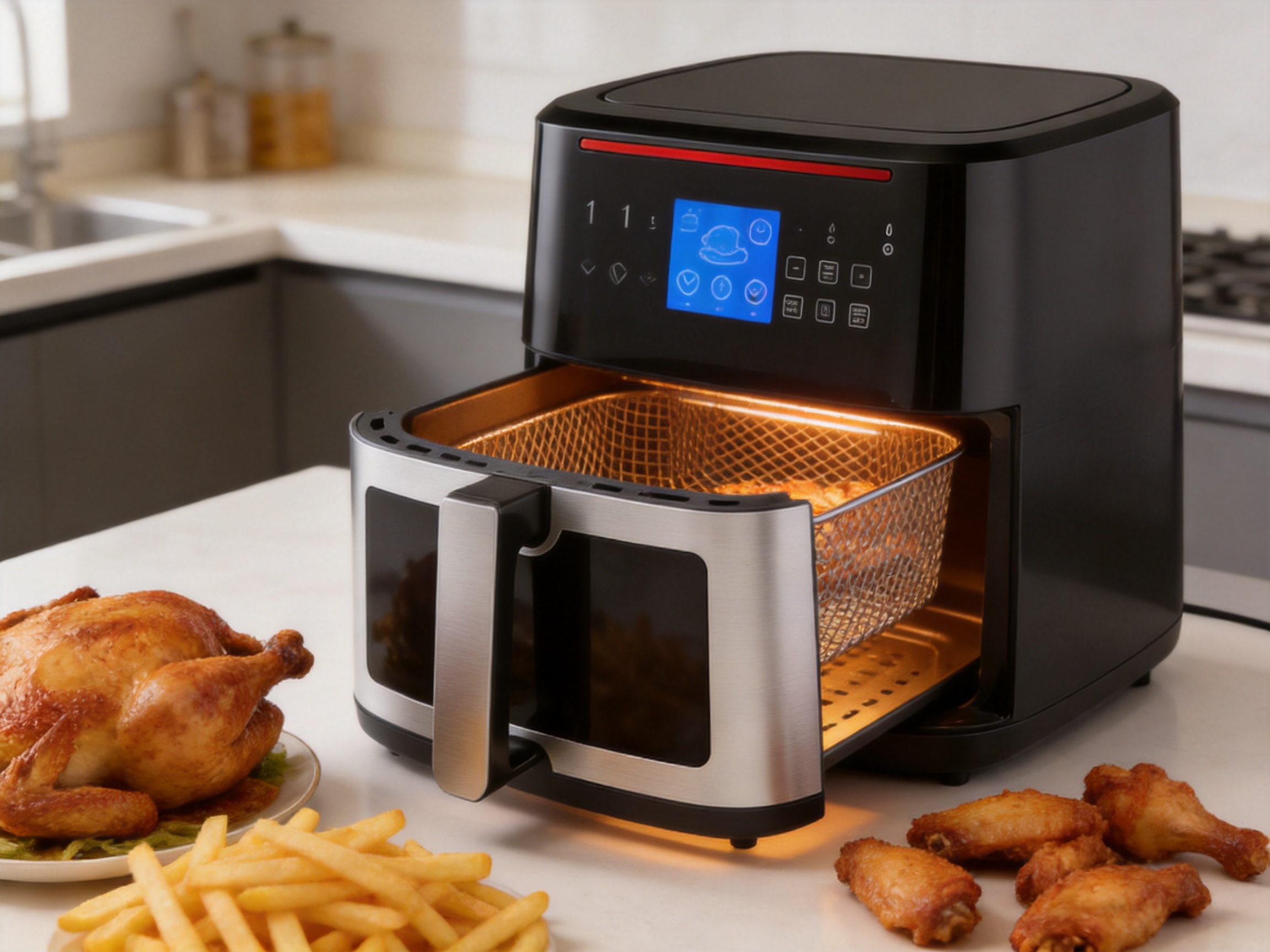
The appliance is suitable for a broad range of foods. Chips and other potato products can be cooked with hot air to create a crisp outer texture. Chicken wings can be prepared with a browned surface, while the circulating heat helps cook the meat evenly. Baked foods, vegetables, fish, sausages, and reheated snacks can also be prepared using suitable settings.
Its large volume is useful when cooking a whole chicken or multiple portions. The operator should select food sizes that fit comfortably inside the cooking area and leave enough space for air circulation. Arranging food in a single layer where practical can improve exposure to the circulating air.
The temperature range also enables different cooking styles. At lower settings, the appliance can warm previously prepared foods or gently heat ingredients. At higher settings, it can roast and crisp. The timer allows users to match the duration to the ingredient and recipe. This versatility may reduce the need for several separate countertop appliances.
In a family kitchen, the GSE102FT can support weekday meals, weekend entertaining, and batch preparation. In a small hospitality setting, it can be used for breakfast items, side dishes, snacks, and reheating. In a retail demonstration environment, common foods such as chips and chicken wings can clearly show the product’s capacity and hot-air cooking performance.
The appliance may also appeal to consumers who want to reduce the quantity of oil used in cooking. Air frying generally uses circulating heated air rather than immersing food in oil. The amount of oil required depends on the recipe, ingredients, and desired result. Users can apply a small quantity of oil when appropriate, but the appliance does not depend on a deep bath of cooking oil.
Advantages Compared with Smaller or Basic Air Fryers
The GSE102FT offers several characteristics that distinguish it from smaller or more basic air fryers. The first is its 11-litre capacity. A compact personal model may be easier to store, but it is less efficient for a large family or business that needs several portions. The GSE102FT provides a more suitable balance for users who need meaningful volume without moving to a large commercial oven.
The second advantage is the combination of high power and large capacity. A large cooking chamber requires sufficient heating output to reach and maintain the selected temperature. The 1800 W/2300 W rating gives the appliance a stronger performance profile than low-power entry-level models, although actual results will depend on design, loading, ambient conditions, and electrical supply.
The third advantage is control flexibility. Some basic air fryers offer limited temperature and time adjustment or rely mainly on a single control dial. The GSE102FT combines a 1–60-minute timer, an 80–200 °C temperature range, preset menus, and a colour touchscreen. This supports both beginner-friendly operation and more experienced manual cooking.
The fourth advantage is the metal inner pot. Material selection can affect durability, cleaning, heat resistance, and perceived product quality. The metal interior gives distributors a tangible feature to emphasize when comparing the appliance with products that rely more heavily on plastic internal construction.
The fifth advantage is safety integration. The microswitch power-off function is designed to cut power when the basket is removed. This is especially useful for a large appliance, because users may frequently pull out the basket to inspect or rearrange a larger quantity of food.
These features do not mean that the product is appropriate for every user. A consumer living alone with very limited counter space may prefer a smaller model. However, for family-size cooking, batch preparation, and light commercial use, the GSE102FT presents a stronger practical proposition than many personal-capacity appliances.
Manufacturing Experience and Product Development
The product is manufactured by CIXI GSTAR ELECTRIC APPLIANCE CO., LTD., a company whose business history includes the development of both electric and non-electric household products. According to the supplied company information, Gstar began with innovative non-electric products and later expanded its focus into electric appliances. This progression is relevant because successful appliance development requires more than assembling components; it also involves understanding consumer habits, product usability, sourcing, quality control, packaging, and international market expectations.
The company reports experience in designing and manufacturing blenders, slicers, choppers, food processors, smokeless grills, hot pots, air fryers, air ovens, ice buckets, beverage dispensers, pitchers, and related products for households, bars, restaurants, and hotels. This range suggests familiarity with different appliance structures, heating systems, motors, blades, containers, control panels, and food-contact components.
Gstar’s company information states that the business moved into its own new factory in 2018. The supplied materials describe a facility with approximately 10,000 square metres of land and an 18,000-square-metre building area, and also refer to a wholly owned production plant with a production area of 15,000 square metres and more than 200 experienced workers. Because the figures are presented in different sections of the company information, buyers should confirm the current factory area, workforce, and production capacity directly during commercial discussions.
The company also reports engineering and quality-control resources, including an R&D department and QC personnel. These functions are important for air-fryer production. Product development must address airflow, heating performance, control accuracy, basket movement, heat resistance, insulation, safety switching, electrical connections, and ease of cleaning. Quality control must then verify that production units consistently meet the approved design.
An experienced manufacturer can contribute at several stages. During design, engineers can help optimize the relationship between chamber volume, heating power, fan performance, and control logic. During sampling, the manufacturer can evaluate cooking results and identify problems such as uneven browning, excessive noise, difficult basket removal, or insufficient temperature recovery. During mass production, quality personnel can monitor incoming components, assembly processes, electrical safety, appearance, and functional performance.
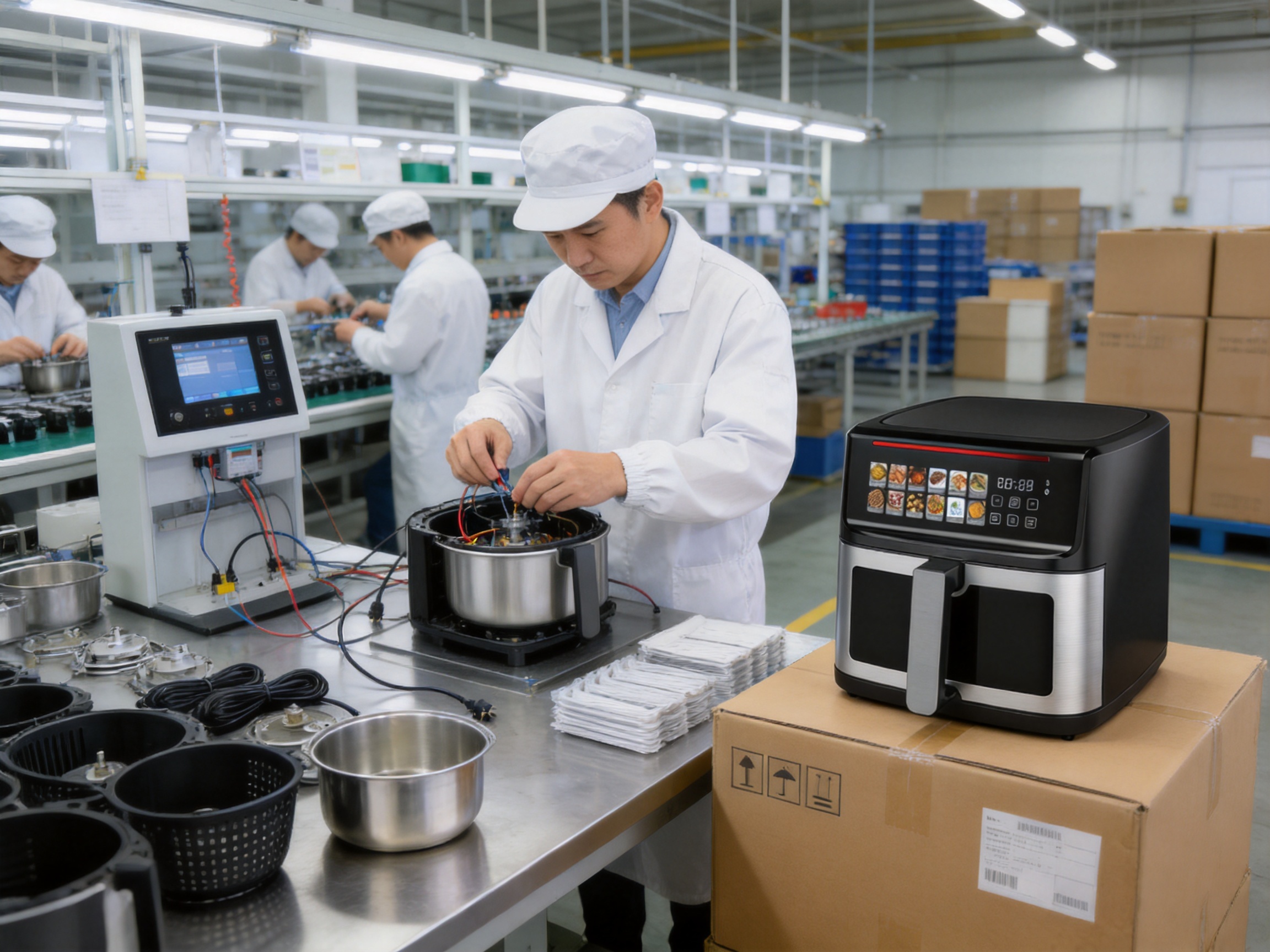
Advanced Manufacturing Process for an Air Fryer
A dependable air fryer requires a coordinated manufacturing process rather than a single production step. The process normally begins with product engineering and sample approval. The appearance, dimensions, control panel, basket structure, metal inner pot, heating assembly, wiring, electronic board, safety switch, and packaging are specified before mass production begins.
Design and Engineering Preparation
Engineering preparation establishes the product’s functional targets. For the GSE102FT, these targets include an 11-litre cooking capacity, a 220–240 V electrical system, 50/60 Hz frequency compatibility, 1800 W/2300 W power options, 80–200 °C temperature control, a 1–60-minute timer, touchscreen operation, and microswitch protection.
Design engineers must consider how these specifications interact. Increasing capacity may require an appropriate fan, heating element, airflow path, and enclosure structure. Higher power requires suitable wiring, connectors, insulation, thermal protection, and control components. A digital touchscreen requires a compatible user interface, electronic control board, and software or control logic that responds correctly to user commands.
Engineering review should also consider assembly efficiency. Components that are easy to position and secure can reduce production variation. Clear wire routing can improve serviceability and reduce the risk of interference with hot areas or moving parts. A basket and inner pot that fit consistently can support both user satisfaction and correct operation of the safety microswitch.
Material and Component Control
Material control is especially important for appliances used at high temperatures. The metal inner pot, heating components, plastic housing, insulation materials, wiring, connectors, touchscreen, fan, electronic board, and fasteners must be selected for their intended functions. Incoming inspection can verify dimensions, appearance, quantity, and basic conformity before components enter production.
For food-contact or food-adjacent components, buyers should request the applicable material documentation and test reports required for their target markets. Requirements vary by country and product configuration. A responsible sourcing process should confirm that the selected materials, coatings, and finishes are suitable for their intended use.
Component consistency also affects final performance. A fan with inconsistent output may change airflow. A heating element with variation in resistance may affect power and temperature behavior. A touchscreen or control board with unstable response may create user complaints. Incoming quality checks therefore form an important foundation for stable mass production.
Metal Inner-Pot Production
The metal inner pot must be formed, finished, and checked so that it fits correctly within the appliance structure. Dimensional accuracy matters because the inner pot influences the available cooking volume, airflow space, basket alignment, and cleaning experience. Surface condition also matters because rough edges, burrs, or inconsistent finishing can affect safety and perceived quality.
Depending on the approved construction, metal components may undergo forming, trimming, surface finishing, cleaning, and inspection. Production personnel should verify that edges are safe, the component is free of visible defects, and the finished part matches the approved sample. Any coating or surface treatment should be applied consistently and checked according to the buyer’s requirements.
Heating and Airflow Assembly
The heating and airflow system is central to the product’s cooking performance. Assembly may include positioning the heating element, installing the fan and motor, securing thermal barriers, connecting wiring, and fitting protective components. The design must maintain appropriate clearances around hot parts and moving components.
Production checks can include visual inspection, connection verification, fan operation, power consumption, temperature behavior, and abnormal-noise checks. These tests help identify loose wires, incorrect assembly, blocked airflow, damaged insulation, or mechanical interference. Because the product is designed for 360-degree hot-air circulation, airflow-related assembly accuracy should be treated as a critical quality characteristic.
Electronic Control and Touchscreen Installation
The digital control system provides the interface between the user and the cooking functions. The colour touchscreen and control board must be installed in a way that protects the electronics from heat, vibration, and accidental damage during normal use. The assembly process should verify that the display is correctly aligned, responsive, and free of visible defects.
Functional checks can confirm that the touchscreen responds to menu selection, temperature adjustment, timer adjustment, start and stop commands, and preset operation. The display should remain legible under normal indoor lighting, and the control panel should respond consistently across repeated operations.
For export customers, the control interface may need to be reviewed for language, symbols, menu descriptions, user instructions, and regional expectations. Any customization should be agreed during product development so that the user interface, packaging, manual, and factory production files remain synchronized.
Microswitch and Safety Verification
The microswitch power-off function requires careful assembly and testing. The switch must respond when the basket is pulled out and allow normal operation when the basket is correctly installed. The position of the switch, the basket guide, and the related mechanical parts should be controlled so that operation remains reliable after repeated use.
Safety verification may include repeated basket insertion and removal, power-interruption checks, abnormal-operation assessment, insulation tests, grounding or leakage checks where applicable, and inspection of thermal protection. Exact testing requirements depend on the destination market and the applicable standards. Buyers should confirm the planned testing program with the manufacturer and their compliance advisors.
Final Assembly and Appearance Inspection
At final assembly, the exterior housing, control panel, inner chamber, basket, handle, cord, labels, and accessories are brought together. Workers should inspect screw fastening, gaps, surface appearance, panel alignment, handle stability, cord routing, and the overall fit of removable components.
Appearance inspection is important in retail products because consumers often associate clean assembly with reliability. Scratches, uneven gaps, misaligned labels, fingerprints, or inconsistent colors can reduce the perceived value of an otherwise functional appliance. A defined approved sample and clear inspection criteria help align the factory and buyer.
Functional Testing and Packing
Each finished unit or an agreed sampling quantity should undergo functional testing. The test plan may include power-on behavior, touchscreen response, preset menu operation, temperature selection, timer operation, fan rotation, heating response, basket safety interruption, and abnormal sound inspection.
Packaging must protect the appliance during storage and transport. The large-capacity structure, touchscreen, basket, metal inner pot, and exterior surfaces should be secured against impact and movement. Packaging design should also provide sufficient product information, operating instructions, safety warnings, model identification, electrical ratings, and importer or distributor details required by the destination market.
For wholesale projects, packaging can be developed for different retail channels. A standard export carton may be appropriate for traditional distribution, while stronger protective packaging may be preferred for e-commerce fulfillment. The final packaging specification should be validated through transport testing or an agreed shipping simulation whenever possible.
Quality-Control Strengths
Quality control for an air fryer should cover the complete product lifecycle, from incoming components to final shipment. A manufacturer with dedicated QC personnel can establish checkpoints throughout production rather than relying only on a final visual inspection.
Incoming quality control checks whether critical parts match the approved specification. In-process quality control monitors assembly steps such as wiring, heating-element installation, fan placement, touchscreen fitting, and microswitch positioning. Final quality control evaluates finished products for function, safety, appearance, accessories, documentation, and packaging.
For the GSE102FT, particular attention should be given to the following areas:
First, electrical input and power behavior should be checked against the approved 220–240 V and 50/60 Hz configuration. Second, the heating system should be evaluated for appropriate operation and temperature response. Third, airflow should be checked for fan function and abnormal noise. Fourth, the touchscreen should be tested for response and menu accuracy. Fifth, the timer and temperature controls should be verified. Sixth, the basket microswitch should interrupt power when the basket is removed. Finally, the metal inner pot, basket, handle, housing, cord, and labels should be inspected for defects.
Quality control is most effective when inspection standards are measurable. Instead of using only general descriptions such as “good appearance” or “normal sound,” a buyer and manufacturer can agree on reference samples, allowable tolerances, testing methods, and defect classifications. This creates a clearer basis for production approval and after-sales analysis.
Support for Wholesale, OEM, and Private-Label Buyers
The product can serve as a platform for businesses that want to offer a family-size digital air fryer under their own distribution strategy. Importers and retailers may require adjustments to the exterior color, logo, packaging, instruction manual, plug, language, barcode, carton markings, and preset-menu presentation. Any such customization should be evaluated for minimum order quantity, tooling, lead time, testing, and cost before confirmation.
A manufacturer with in-house product-development experience can help buyers evaluate whether a requested change affects safety, performance, assembly, or compliance. For example, a change in exterior material may affect heat resistance. A different control panel may require a revised electronic board or user interface. A new plug or electrical rating may require updated testing and documentation. Engineering support can help prevent changes that appear simple but create unexpected technical consequences.
Gstar’s reported history of working with international supermarkets and customers in different regions indicates experience with export-oriented product development. The company information also identifies customers and markets across Europe, South America, Korea, Southeast Asia, and other international destinations. Specific customer arrangements and current market coverage should be verified directly, but this background suggests familiarity with international supply-chain expectations.
For a buyer, the value of a factory relationship is not limited to the first shipment. Ongoing support may include replacement parts, troubleshooting, packaging updates, product revisions, quality feedback, and coordination for subsequent orders. A supplier that treats customers as engineering partners can be better positioned to respond when market feedback identifies a need for improvement.
Why Manufacturer Capability Matters to Product Performance
An air fryer’s retail appearance is visible to consumers, but many of the factors that determine satisfaction are hidden inside the product. Heating consistency depends on the relationship between the element, fan, chamber, and controls. Safety depends on correct wiring, insulation, thermal protection, and mechanical switching. Durability depends on materials, fastening, component quality, and assembly accuracy. Cleaning convenience depends on surface treatment, part geometry, and the way food residue is managed.
Manufacturing capability connects these factors. A factory that only focuses on exterior assembly may struggle to optimize airflow or correct repeated functional problems. A manufacturer with design, engineering, production, and QC resources can analyze the complete system. This is particularly important for a large-capacity appliance, because increasing volume can affect heating speed, air distribution, and structural requirements.
Gstar’s product range provides experience across several categories of small appliances. Developing blenders and food processors requires attention to motors, rotating components, containers, blades, and safety interlocks. Developing hot pots, grills, air ovens, and air fryers requires knowledge of heating, thermal management, controls, and food-related use conditions. This cross-category experience can support practical design decisions when developing or improving a product.
The company’s reported R&D and QC organization also supports a more structured development process. Engineering teams can work on new designs, samples, and improvements, while QC teams can translate the approved design into measurable inspection procedures. Production workers then carry out controlled assembly and testing. The effectiveness of these systems depends on actual implementation, so buyers should request current factory information, audit results, sample test records, and quality agreements as appropriate.
Energy, Convenience, and User Experience
Air fryers are popular because they make familiar foods easier to prepare. The user does not need to fill a deep pan with oil or supervise a stovetop frying process in the same way. The digital controls help streamline operation, and the timer can reduce the need for constant monitoring. The GSE102FT adds the benefit of a larger capacity, allowing this convenience to extend to family-size portions.
Compared with heating a large conventional oven for a small quantity of food, a countertop air fryer may provide a more focused cooking space. The appropriate energy comparison depends on cooking time, selected power, food quantity, local electricity rates, and the efficiency of the alternative appliance. It is therefore better to describe the product as a convenient and potentially efficient option for suitable portions rather than make universal energy-saving claims.
The reduced need for large quantities of oil can simplify kitchen preparation and cleanup. It may also appeal to consumers who want to explore lighter cooking methods. At the same time, the food’s nutritional result depends on the ingredients, coatings, sauces, and total recipe. The product supports a cooking method; it does not by itself determine the nutritional quality of a meal.
For older users or beginners, the touchscreen and preset menus may reduce the learning curve. For experienced cooks, manual adjustment provides the flexibility needed to adapt recipes. This combination of simplicity and control is an important aspect of the product’s user experience.
Operation and Care Considerations
Before use, the appliance should be placed on a stable, level, heat-resistant surface with adequate clearance around ventilation areas. The power supply should match the product rating, and the cord should be positioned away from hot surfaces, water, and areas where it may be pulled or damaged.
Food should be arranged so that hot air can circulate. Overfilling the basket may increase cooking time and reduce crisping. Large pieces should be checked for doneness, and food should be turned or shaken when the recipe requires it. The basket should be handled by its designated handle, and users should avoid touching hot internal surfaces.
After cooking, the appliance should be allowed to cool according to the operating instructions before cleaning. Removable parts should be cleaned using suitable methods. Grease, crumbs, and food residue should be removed regularly, while the electronic control panel and main electrical housing should not be immersed in water.
Maintenance is also relevant to long-term performance. Blocked airflow openings, accumulated grease, damaged cords, loose handles, or a basket that no longer seats correctly should be addressed before continued use. The microswitch safety function should never be bypassed. If the appliance shows abnormal smoke, smell, noise, or electrical behavior, it should be disconnected and inspected by qualified personnel.
Product Positioning for Different Markets
For household retail, the main message can focus on family capacity, touchscreen convenience, preset menus, and the ability to cook a whole chicken or several portions. Packaging can show the 11-litre size as a practical response to the limitations of smaller personal air fryers.
For hospitality and light-commercial channels, the focus can shift toward batch preparation, high-power heating, adjustable controls, metal inner construction, and the compact countertop format. The product should be positioned appropriately as a small appliance for suitable applications rather than as a replacement for every type of commercial cooking equipment.
For online retail, specification clarity is particularly important. Buyers should be able to see the capacity, power, voltage, frequency, temperature range, timer range, safety function, and included components. Images should communicate the product design and control panel clearly, while the product description should explain how capacity and airflow affect everyday cooking.
For private-label programs, the manufacturer and buyer can develop a consistent message around large-capacity hot-air cooking and easy digital operation. The branding, packaging, manual, accessories, and after-sales information should all use the same model data. Clear documentation helps reduce returns caused by misunderstanding the product’s size, electrical requirements, or operating method.
Q&A
What is the capacity of the GSE102FT?
The GSE102FT has an 11-litre inner pot. This capacity is designed for large portions, a whole chicken, or multiple servings, depending on the food’s dimensions and how it is arranged inside the cooking chamber.
Is the product suitable for a large family?
Yes. The large capacity is intended to suit families of five or more and users who prefer to prepare several portions in one cooking cycle. Actual capacity depends on the size and shape of the food, and the basket should not be overloaded.
What voltage and frequency does the air fryer use?
The rated specification is 220–240 V and 50/60 Hz. Buyers should confirm the exact electrical version, plug, labeling, and compliance requirements for the destination market before placing an order.
How powerful is the appliance?
The listed rated power is 1800 W/2300 W. The applicable power version may depend on the market or approved product configuration. High power supports rapid heating and temperature recovery, especially when cooking larger quantities.
What temperature range is available?
The temperature range is 80–200 °C. This range supports lower-temperature warming and a variety of higher-temperature cooking, roasting, baking, and crisping applications.
How long can the timer be set?
The timer can be set from 1 to 60 minutes. Users can select shorter times for small snacks and reheating or longer times for foods that require extended cooking.
Does it have preset cooking programs?
Yes. The smart colour touchscreen includes preset menus for common foods such as chips, chicken wings, and baking. These programs are convenient starting points, while manual adjustment remains available for different recipes and quantities.
How does the safety power-off function work?
A built-in microswitch automatically interrupts power when the frying basket is pulled out. This helps reduce the risk of continued heating during food inspection or removal. The basket and internal components may still be hot, so users must handle them carefully.
What is the inner chamber made from?
The product uses a metal inner pot. Metal provides a high-temperature-resistant internal structure and can support durability and cleaning when the appliance is maintained according to its instructions.
Does the air fryer require deep-frying oil?
No. The appliance is designed to cook with circulating hot air rather than immersing food in oil. Some recipes may use a small amount of oil for flavor or texture, but the amount depends on the ingredients and desired result.
Can the appliance cook a whole chicken?
The 11-litre capacity can accommodate a whole chicken when its size and shape are suitable for the cooking area. The chicken should fit without obstructing the basket or airflow, and the operator should follow safe poultry-cooking practices.
Is the product intended for commercial use?
It can be suitable for small catering establishments, cafés, hospitality settings, and other light-commercial applications that need countertop batch cooking. Buyers should evaluate expected duty cycle, local commercial requirements, cleaning procedures, and applicable compliance obligations before using it in a professional environment.
What should wholesale buyers confirm before ordering?
Wholesale buyers should confirm the electrical version, plug, packaging, language, labeling, manuals, accessories, minimum order quantity, lead time, inspection procedure, warranty terms, spare parts, testing documents, and any requested logo or private-label customization.
What manufacturing resources does the supplier report?
The supplied company information describes a manufacturer with product-development experience, an R&D department, QC personnel, experienced production workers, and a wholly owned factory. It also reports experience serving international customers and producing a broad range of small kitchen appliances. Current figures and documentation should be verified directly for each project.
Conclusion
The GSE102FT is a large-capacity digital air fryer designed for consumers and businesses that need more than a personal snack appliance. Its 11-litre inner pot supports whole-chicken cooking and multi-portion meal preparation. The 1800 W/2300 W power configuration and 360-degree hot-air circulation are designed to provide rapid and even heating, while the 80–200 °C temperature range and 1–60-minute timer offer useful recipe flexibility.
The colour touchscreen and preset menus make the appliance accessible to beginners, while manual adjustment gives experienced users greater control. The metal inner pot provides a high-temperature-resistant internal structure, and the microswitch power-off function adds an important layer of protection when the basket is removed.
For distributors, the model has a clear market position between small personal air fryers and larger commercial cooking equipment. It offers family-size capacity, digital operation, high-power heating, and a practical countertop format. For wholesale and private-label customers, its value is strengthened by the supplier’s reported experience in product design, engineering, manufacturing, quality control, and international appliance distribution.
As with any electrical kitchen appliance, final performance and market suitability depend on correct use, appropriate maintenance, production consistency, and compliance with destination-market requirements. When these factors are managed carefully, the GSE102FT provides a strong platform for convenient hot-air cooking and a competitive addition to a small-appliance product portfolio.
References
1. Product specification sheet for the GSE102FT digital air fryer, including rated voltage, frequency, power, capacity, timer, temperature range, cord length, safety function, and inner-pot material.
2. Product feature information supplied for the GSE102FT, including touchscreen operation, preset menus, high-power heating, 360-degree hot-air circulation, metal inner chamber, and microswitch protection.
3. Company profile and manufacturing history supplied by CIXI GSTAR ELECTRIC APPLIANCE CO., LTD.
4. General appliance engineering principles concerning forced-air heating, temperature control, thermal protection, mechanical interlocks, and production quality control.
5. General food-safety guidance concerning the handling and cooking of poultry, meat, fish, and other temperature-sensitive foods.