
 English
 中文简体
中文简体 Español
 English
 中文简体
中文简体 Español
Modern consumers increasingly want kitchen appliances that combine speed, convenience, healthier cooking, and flexible performance in a single compact unit. The GSE049 Pizza Air Fryer is designed to answer these needs with a practical 4-litre capacity, high-temperature operation, adjustable cooking time, and a dual-power configuration intended for fast heating and stable cooking. Although it is developed with pizza preparation in mind, its capabilities extend to air frying, baking, roasting, reheating, and everyday meal preparation.
For importers, retailers, hospitality buyers, and private-label customers, the product offers a balanced combination of consumer-friendly functions and commercially relevant specifications. It is compact enough for domestic kitchens, yet its power structure, temperature range, certification portfolio, and production support make it suitable for small catering environments, hospitality applications, demonstration kitchens, and retail programs.
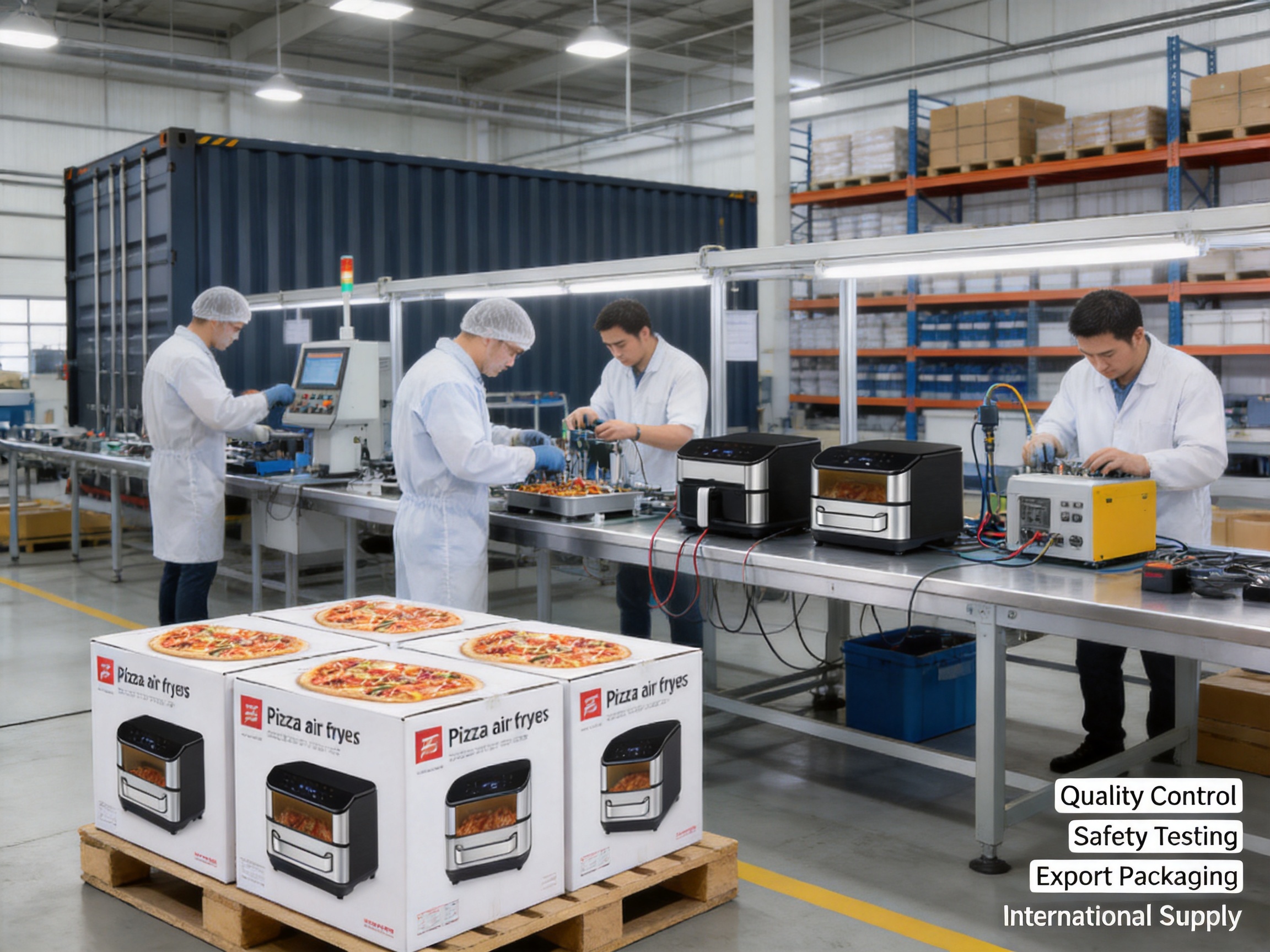
At the same time, the product is supported by an experienced appliance manufacturer with capabilities in product design, engineering development, quality control, manufacturing, packaging, and international supply. The manufacturer has developed a broad portfolio of small kitchen appliances, including air fryers, air ovens, food processors, blenders, choppers, slicers, hot pots, smokeless grills, beverage dispensers, and related household and commercial products.
This article examines the main advantages of the GSE049 Pizza Air Fryer, its operating concept, product specifications, manufacturing strengths, quality considerations, commercial value, and suitability for different markets.
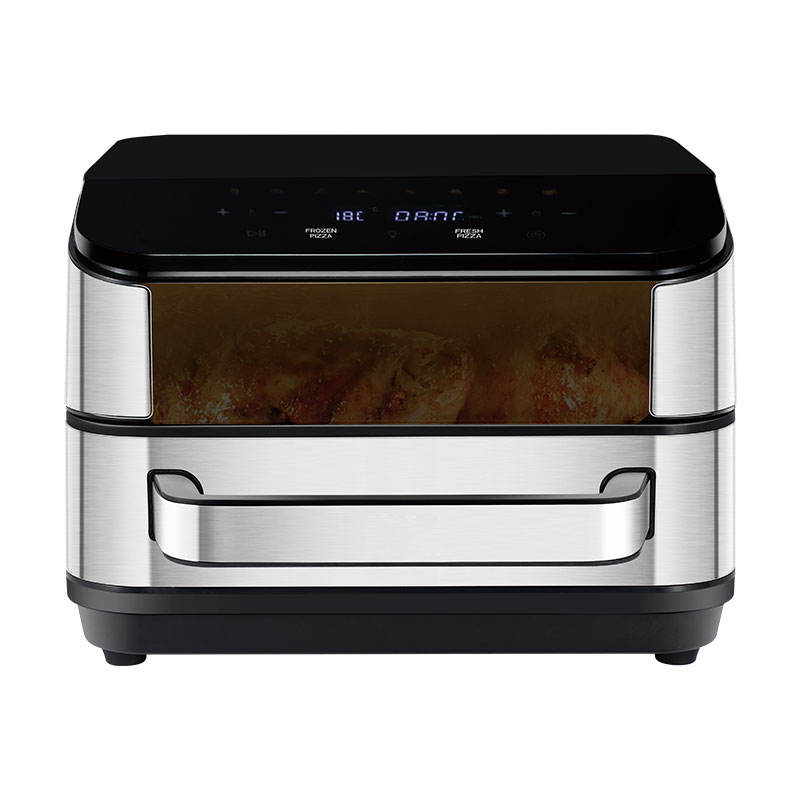
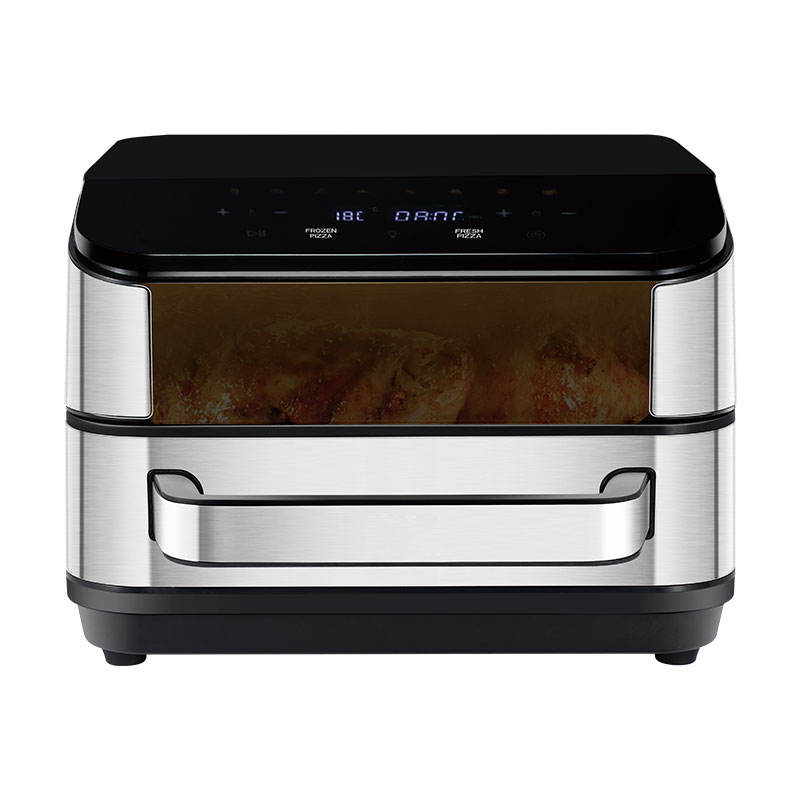
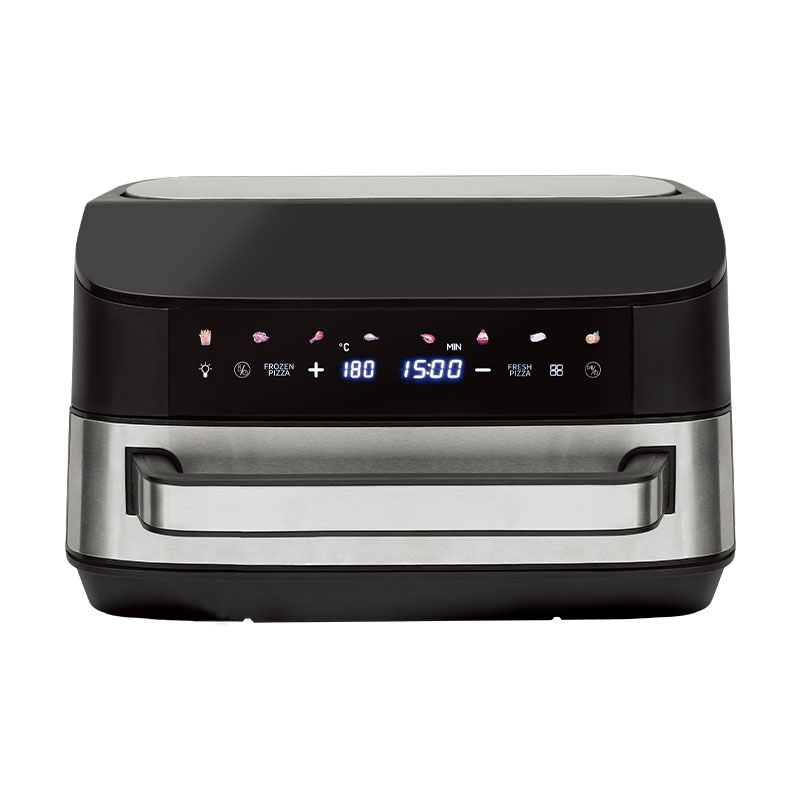
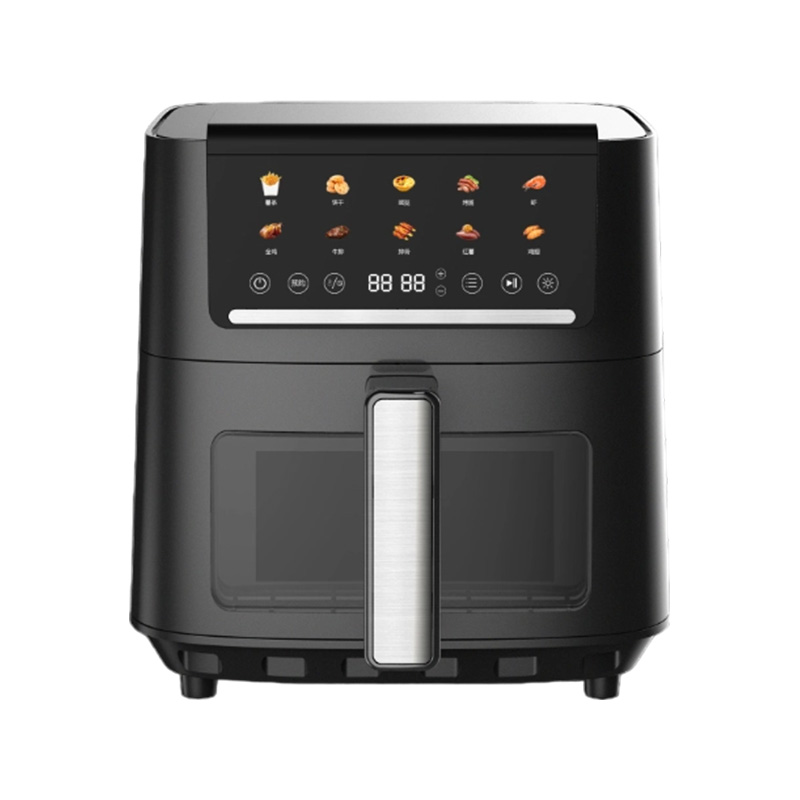
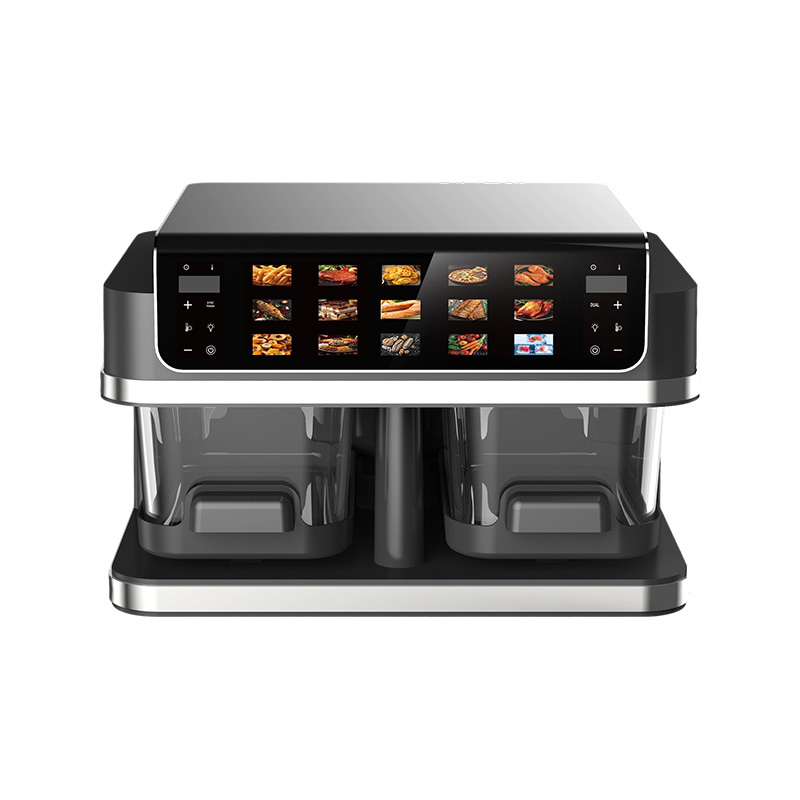
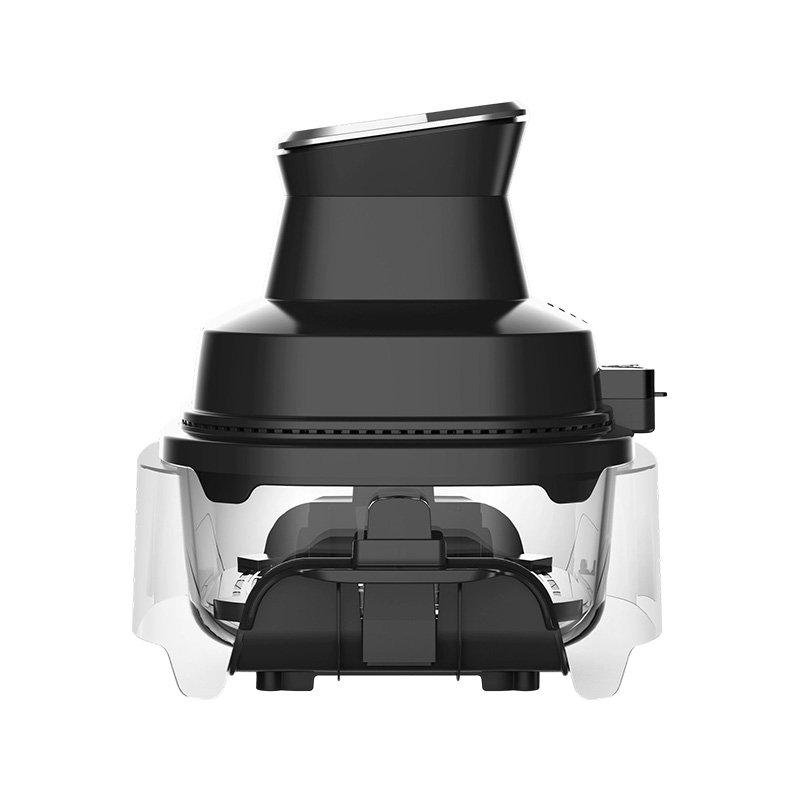
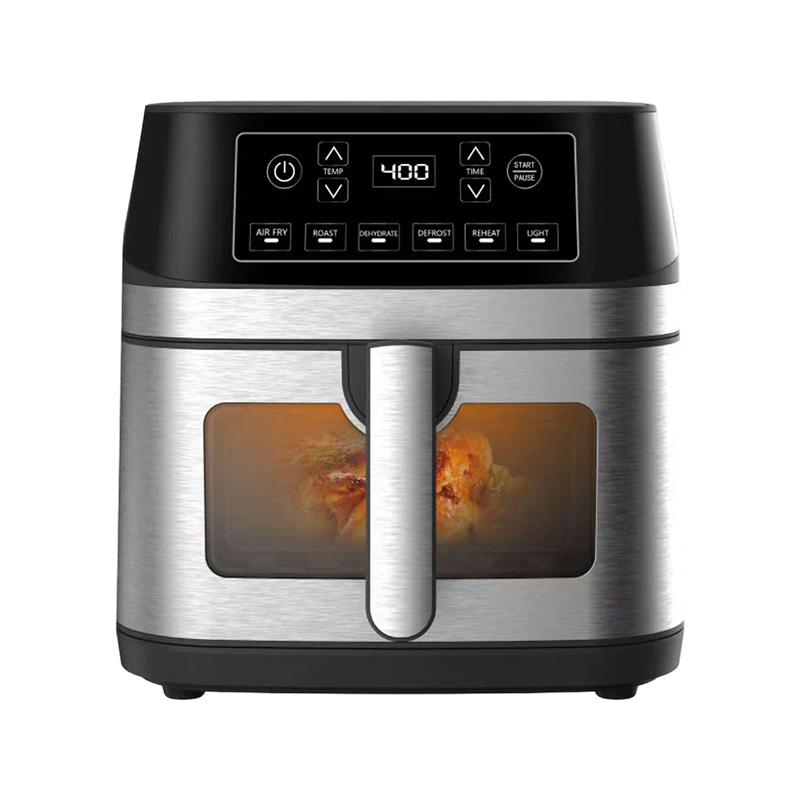
GSE049 Pizza air fryer
1. A Product Designed Around Practical Cooking Needs
The GSE049 is a pizza air fryer that uses high-speed hot air circulation to cook food with reduced dependence on oil. Instead of relying primarily on direct contact with a large amount of heated oil, the appliance circulates heated air around the food chamber. This cooking method helps create a browned and crisp outer surface while retaining moisture inside many foods.
The product is particularly suitable for pizza because its 4-litre chamber can accommodate a pizza up to 10 inches in diameter. This size is large enough for many family meals, individual pizzas, snack portions, and small food-service servings, while remaining more compact than a full-size oven. The appliance can be placed on a kitchen countertop, in a small café preparation area, or in a hospitality setting where space is limited.
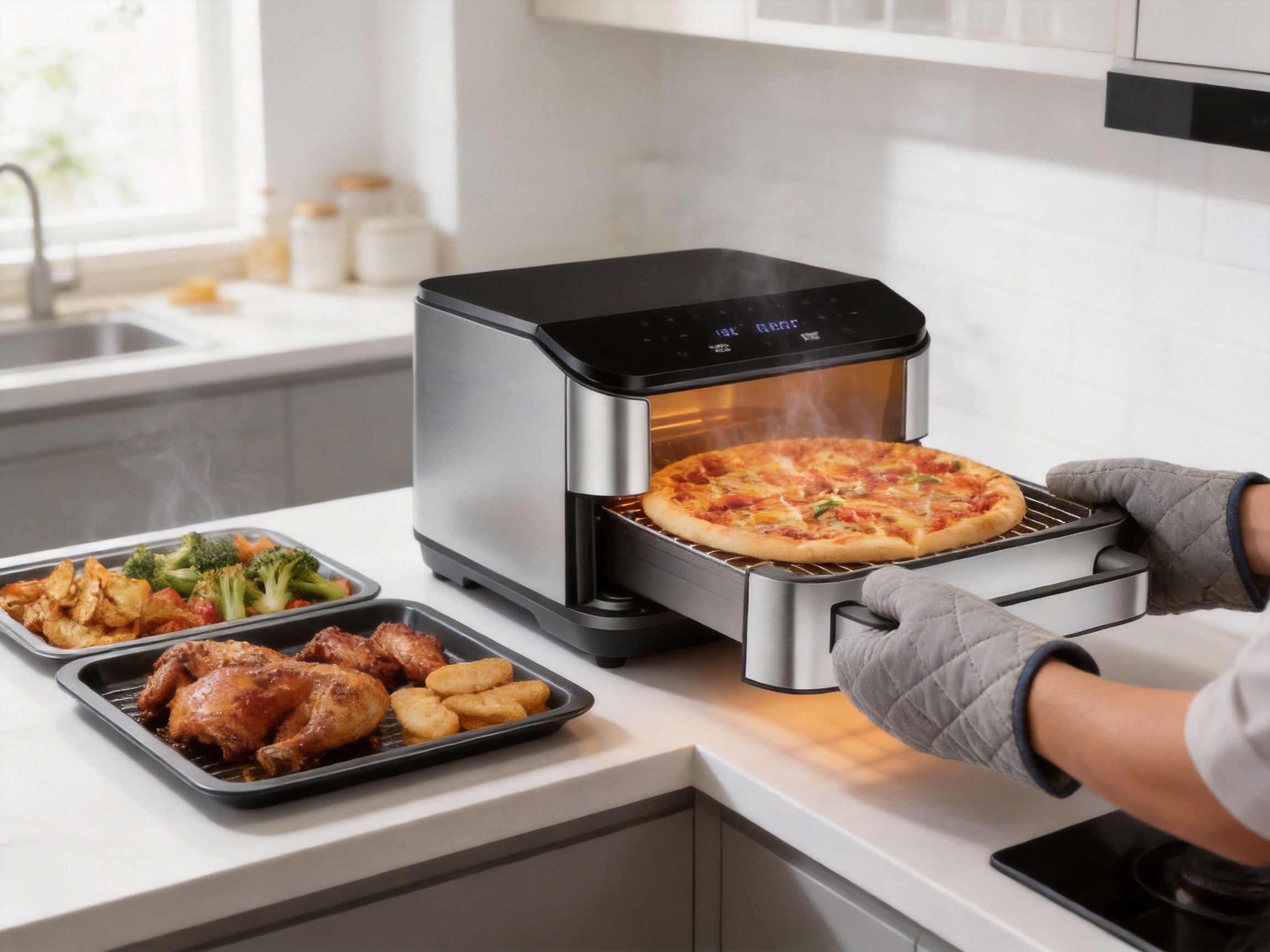
Its design also supports cooking beyond pizza. Users can prepare chicken pieces, vegetables, frozen snacks, breaded foods, pastries, toast-style products, reheated meals, and other oven-compatible dishes. This versatility is important because consumers generally prefer appliances that can perform several functions rather than products that are limited to one recipe or food category.
The combination of air-frying and pizza-baking functions gives the product a broader market appeal than a conventional single-purpose pizza maker. Retailers can position it as a compact multi-use kitchen appliance, while food-service buyers can use it as a secondary cooking device for snacks, side dishes, small orders, or display preparation.
2. Even Heating Through High-Speed Air Circulation
One of the most important performance factors in an air fryer is the consistency of heat distribution. If hot air is not circulated effectively, food may cook unevenly, leaving some areas pale or undercooked while other areas become overly browned. The GSE049 addresses this challenge with an air circulation heating system designed to distribute hot air around the cooking chamber.
The stated 360-degree heating approach is intended to create more uniform exposure to heat. Continuous high-speed airflow moves heated air around the food, helping to reduce cold spots and improve surface browning. For pizza, this can support a more consistent crust and topping finish. For air-fried foods, it can help produce a crisp exterior without requiring excessive oil.
The motor specification is listed as 6120 at 3,000 revolutions per minute. This motor configuration supports the circulation fan and contributes to the high-speed airflow required by the heating system. A stable motor is essential not only for cooking performance but also for repeatability. Consumers expect the same cooking result each time they prepare a familiar food, while commercial users need predictable operation during repeated cooking cycles.
Compared with basic countertop ovens that use static heating or limited air movement, a forced-air cooking system can offer faster heat transfer and more even cooking. Compared with traditional deep frying, the air-frying method can reduce oil usage and simplify cleaning. These differences provide the product with several practical advantages over conventional cooking equipment.
Benefits of Circulated Hot Air
High-speed hot air circulation can provide several functional benefits:
• Faster heat transfer to the food surface.
• More even browning across the cooking area.
• Reduced need for added oil in many recipes.
• A crisp texture for suitable frozen, breaded, and baked foods.
• Greater versatility than a basic pizza-only appliance.
• Improved suitability for reheating foods without using a large oven.
These benefits help explain why air fryers have become popular in domestic kitchens and why compact air-cooking appliances continue to attract interest from retailers and food-service operators.
3. Dual-Power Performance for Different Cooking Stages
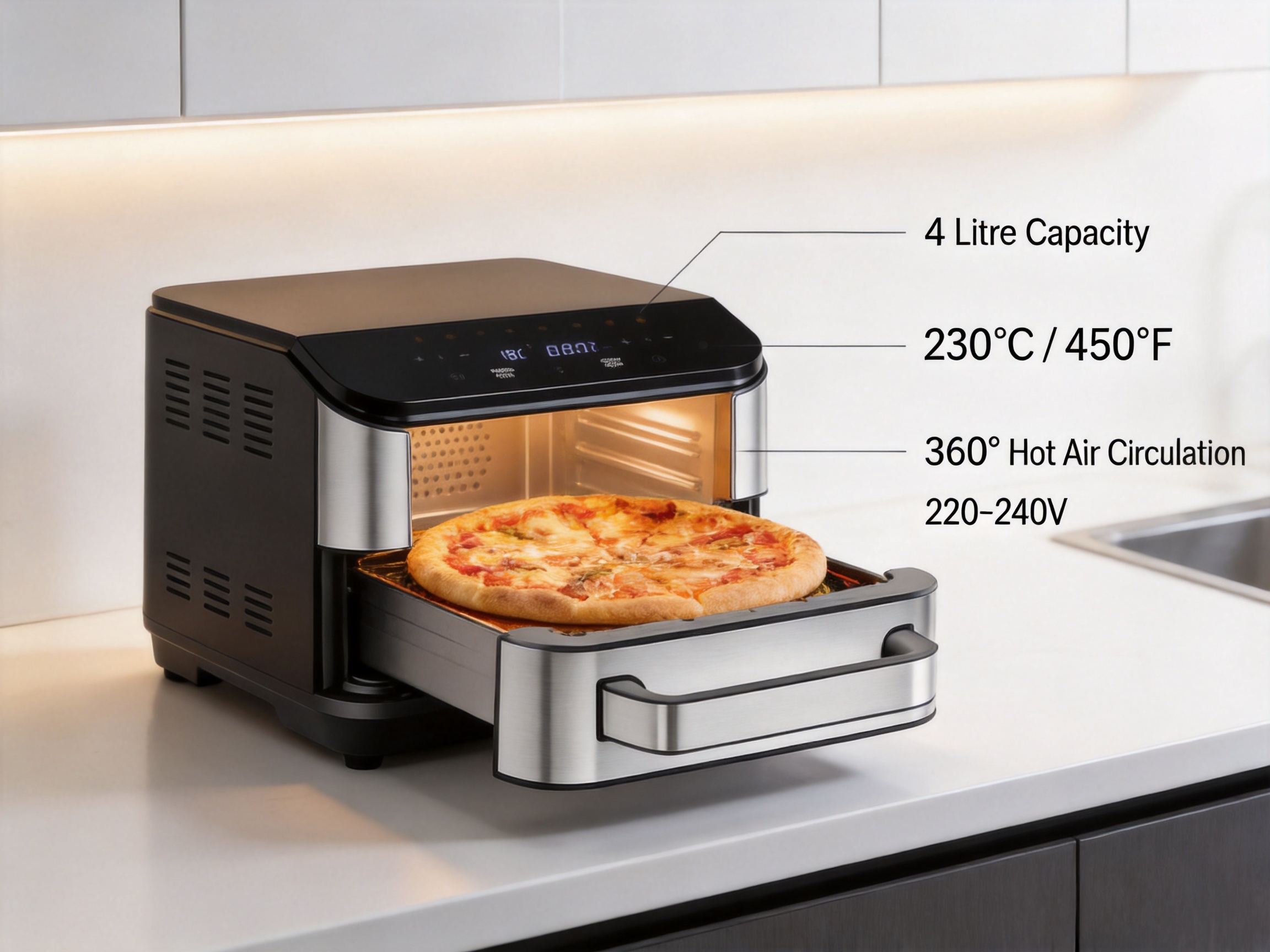
The GSE049 uses a 220–240V power configuration rated at 1,300W plus 900W. This dual-power arrangement is a significant feature because it allows the appliance to support different heating requirements during operation. High-power operation can be used for rapid preheating and high-temperature baking, while a lower or combined operating pattern can support more stable heating and energy-conscious cooking.
In a conventional appliance with a single fixed heating mode, the heater may operate in the same way regardless of whether the user is preheating, baking, reheating, or maintaining temperature. A multi-stage power approach offers greater flexibility. The appliance can deliver strong heat when it is needed and moderate heat when excessive output is unnecessary.
For pizza preparation, rapid heating is valuable because a hot cooking chamber helps the crust develop more quickly. During later stages, controlled heating can help prevent excessive browning of the toppings while allowing the base to finish. For reheating or warming, lower energy use may be preferable to continuous maximum-power operation.
For commercial buyers, this power structure may also contribute to better workflow management. A restaurant, café, hotel, or snack counter can preheat the unit quickly during busy periods and then use lower or more stable heating for subsequent batches. This can support efficient service without requiring a full-size commercial oven for every small order.
| Performance Area | GSE049 Feature | Practical Benefit |
|---|---|---|
| Heating power | 1,300W + 900W configuration | Supports high-output heating and more controlled cooking stages |
| Voltage range | 220–240V | Suitable for many European, Asian, African, Middle Eastern, and other compatible markets |
| Frequency | 50–60Hz | Compatible with common electrical frequency standards, subject to market approval |
| Maximum temperature | 230°C / 450°F | Suitable for pizza, roasting, baking, and high-temperature air frying |
| Capacity | 4 litres | Compact cooking volume with space for a pizza up to 10 inches |
| Timer | Adjustable from 0 to 12 hours | Provides flexibility for short cooking cycles and extended low-temperature applications |
The power system should always be matched with the electrical requirements, plug configuration, safety instructions, and regulatory conditions of the destination market. However, the listed electrical specifications provide a strong foundation for international product adaptation.
4. A 4-Litre Capacity That Balances Space and Usability
Capacity is one of the most important purchasing considerations for countertop appliances. A product that is too small may limit meal preparation, while an oversized appliance may consume excessive counter space and energy. The GSE049 occupies a practical middle position with a 4-litre cooking capacity.
The stated capacity is designed to accommodate a pizza up to 10 inches in diameter. This makes it suitable for individual pizzas, small family portions, snack foods, side dishes, and moderate quantities of air-fried ingredients. The capacity is also appropriate for users who want a dedicated countertop appliance without installing a large oven.
The product size is listed as 33 by 40.7 by 24 centimetres. This relatively compact footprint can help the appliance fit into apartments, smaller kitchens, dormitory-style accommodation, office kitchens, guest rooms, and retail demonstration areas. For hospitality businesses, compact dimensions make it easier to add the appliance to a preparation line without significantly changing the layout.
Its capacity also supports a more accessible price and product positioning than larger professional ovens. Retailers can present it as an affordable upgrade for consumers who want more cooking flexibility but do not need a full-size oven. Meanwhile, private-label customers can use the same platform for multiple market segments by adjusting packaging, user instructions, accessories, and visual identity.
Suitable User Groups
The GSE049 can serve a broad range of users:
• Families seeking a compact appliance for pizza and quick meals.
• Students and apartment residents with limited kitchen space.
• Small cafés and snack counters preparing modest portions.
• Hotels and guest facilities providing convenient in-room or shared-kitchen cooking.
• Retailers looking for a versatile countertop appliance.
• Food demonstrators and showroom kitchens requiring a compact display unit.
• Private-label brands seeking a differentiated air-fryer product.
5. Temperature and Time Flexibility
The GSE049 reaches a maximum temperature of 230°C, equivalent to 450°F. This high-temperature range is important for pizza and baked foods because it supports fast surface browning and crust development. It also gives users greater flexibility when preparing foods that require stronger heat than standard low-temperature reheating.
Temperature control is central to cooking consistency. Different ingredients require different thermal conditions. Frozen snacks may need strong heat for crispness, while pastries may require more moderate heating to avoid burning. Pizza may benefit from a high initial temperature and a controlled finishing period. By supporting a broad temperature range up to 230°C, the product can be used for multiple cooking styles rather than a narrow group of recipes.
The timer is listed as adjustable from 0 to 12 hours. For normal air frying and pizza baking, most cooking programs will be much shorter than this maximum. However, an extended time range can provide additional flexibility for low-temperature applications, warming, drying, slow cooking, or other approved uses. Users should follow the product manual and recommended recipes when selecting longer operating periods.
A practical time and temperature system also reduces the need for constant supervision. Once the desired settings are selected, the appliance can run for the programmed period, helping consumers manage other kitchen tasks. In commercial settings, repeatable timing can support more organized preparation and reduce variation between batches.
6. Materials Selected for Appliance Durability
The listed product materials include PP, PA, SS430, ABS, and PC. These materials are commonly used in small electric appliances because they provide a balance of structural strength, heat resistance, insulation, appearance, and manufacturability.
Polypropylene, or PP, may be used for suitable structural or internal components where its properties meet the design requirements. Polyamide, or PA, can contribute strength and dimensional stability in selected parts. Stainless steel 430 is often used in areas that require a metallic surface, practical corrosion resistance, and a clean appearance. ABS and polycarbonate can be used for external housings, control areas, transparent components, or other parts where impact resistance and design flexibility are important.
The cooking pot is specified as aluminized steel, with a water-based coating. Aluminized steel combines a steel base with an aluminum surface layer, supporting heat transfer and resistance to the conditions associated with cooking. A water-based coating can help provide a functional food-contact surface while supporting a lower-solvent coating approach. The final performance depends on the coating formulation, application process, curing conditions, usage instructions, and cleaning practices.
Material selection is not only a question of appearance. It directly affects product safety, service life, thermal stability, ease of cleaning, and manufacturing consistency. A well-designed appliance must ensure that materials are appropriate for their location and operating environment, especially around heating components, airflow passages, handles, cooking containers, and electrical parts.
Material and Design Considerations
The combination of engineering plastics and stainless steel allows the product to balance several competing requirements. Plastic components can help reduce weight and provide design freedom. Stainless steel can provide a durable and visually appealing surface. The cooking vessel must withstand repeated heating and cooling cycles, while external components must remain comfortable and stable during normal use.
For importers and distributors, the material specification also provides useful information for product documentation, compliance review, packaging development, and after-sales support. Clear maintenance instructions should explain which components can be removed, how they should be cleaned, and which cleaning materials should be avoided.
7. Advantages Over Conventional Cooking Alternatives
The GSE049 competes with several categories of cooking equipment, including traditional deep fryers, basic toaster ovens, conventional pizza makers, and larger built-in ovens. Its competitive position comes from combining functions that are often separated among these alternatives.
Compared with Traditional Deep Fryers
Traditional deep fryers require a relatively large volume of cooking oil and can create additional handling, storage, and cleaning requirements. The GSE049 uses circulated hot air, allowing users to prepare many foods with little or no added oil. This can make everyday cooking simpler and may appeal to consumers who are trying to reduce oil consumption.
Air frying also eliminates the need to manage a large container of hot oil during normal operation. This does not remove all safety considerations, but it changes the cooking process and can make the appliance more convenient for home users.
Compared with Basic Toaster Ovens
A basic toaster oven may provide a larger open chamber, but it may not circulate air as aggressively or deliver the same air-frying effect. The GSE049 is built around high-speed airflow, which can support faster and more even cooking for suitable foods. Its compact chamber can also heat rapidly, reducing the time required to reach operating temperature.
Compared with Single-Purpose Pizza Appliances
A single-purpose pizza appliance may be optimized for one product category but offer limited value for other meals. The GSE049 can bake pizza while also supporting air frying, roasting, reheating, and other everyday tasks. This broader function improves appliance utilization and may make the product more attractive to consumers with limited storage space.
Compared with Large Ovens
A full-size oven is useful for large meals and multiple trays, but it may require more energy and a longer preheating period for small portions. A compact 4-litre appliance is more efficient for individual or small-batch cooking. It can be used independently without heating an entire large oven, which is particularly useful for quick snacks, breakfast foods, reheated portions, and single pizzas.
8. Manufacturing Experience and Product Development Strength
The product is manufactured by CIXI GSTAR ELECTRIC APPLIANCE CO., LTD., a company focused on the design, development, and production of small electric kitchen appliances and related household products. Its product portfolio includes blenders, slicers, choppers, food processors, smokeless grills, hot pots, air fryers, air ovens, ice buckets, beverage dispensers, pitchers, graters, and other kitchen and hospitality products.
This broad product range is valuable because it gives the manufacturer experience across different types of motors, heating systems, controls, food-contact components, housings, blades, containers, and product assemblies. Knowledge developed in one product category can support improvement in another. For example, expertise in airflow management can benefit both air fryers and air ovens, while experience with food processors can contribute to motor reliability and user-oriented design.
The company’s history also reflects a transition from product sourcing and trading activities to in-house design and manufacturing. According to the supplied company information, the business was established as a factory in 2009 and later expanded into electric product development. The company moved into its own new factory in 2018, with a reported site area of approximately 10,000 square metres and a building area of approximately 18,000 square metres at that stage.
The supplied information also reports a workforce including experienced production personnel, engineers in research and development, and dedicated quality-control staff. More recent company information describes a wholly owned plant with a production area of approximately 15,000 square metres and more than 200 experienced workers. These resources support product engineering, manufacturing coordination, inspection, and customer communication.
9. Engineering and Research Capability
Successful small-appliance production requires more than assembly capacity. A competitive manufacturer must understand electrical systems, heating performance, airflow, thermal insulation, mechanical structure, user safety, packaging, compliance, and manufacturing repeatability. The manufacturer’s reported engineering and research team supports these requirements.
Product development begins with identifying consumer needs and commercial opportunities. For the GSE049, those needs include fast cooking, pizza compatibility, reduced-oil preparation, compact dimensions, adjustable timing, high-temperature operation, and flexible use. Engineers then translate these requirements into a product structure involving heating elements, fan circulation, motor performance, control systems, cooking-pot geometry, insulation, housing materials, and user interfaces.
Testing during development is important because the performance of an air fryer depends on the relationship between several components. Heater output must match airflow. The motor must circulate air effectively without creating unacceptable noise or vibration. The cooking chamber must retain heat while allowing efficient airflow. The coating must tolerate normal temperature cycles. External materials must remain stable during operation.
A manufacturer with experience in multiple small appliance categories can also respond more effectively to customization requests. Buyers may require different plug types, labels, packaging languages, color schemes, accessory combinations, control markings, or market-specific documentation. A structured engineering team can help manage these changes while preserving the core performance of the product.
10. Quality Control from Components to Finished Goods
Quality control is a central part of appliance manufacturing because product reliability depends on many interconnected parts. A heating appliance must be checked for electrical safety, thermal performance, structural integrity, mechanical operation, control accuracy, and packaging protection.
Incoming material inspection helps verify that plastics, metals, electrical components, coatings, motors, fasteners, and packaging materials meet the required specifications. During production, workers and quality personnel can inspect component installation, wire routing, heater placement, fan assembly, housing fit, cooking-pot dimensions, and surface finish.
Finished-product testing may include power checks, operating tests, heating tests, airflow verification, timer function, temperature performance, noise observation, visual inspection, and safety-related checks. The exact inspection plan can vary according to customer requirements, product revision, certification needs, and destination-market regulations.
Quality control is especially important for products sold under private labels. Retailers and brand owners need confidence that each production batch matches approved samples. Consistent color, logo placement, packaging, accessories, electrical configuration, and user documentation can influence customer satisfaction as much as the core cooking performance.
The manufacturer’s reported dedicated quality-control personnel and experience with international customers provide a foundation for handling these requirements. Buyers should still agree on detailed specifications, inspection standards, sample approval procedures, testing documents, and corrective-action processes before mass production.
11. Certifications and International Market Readiness
The product information lists CE, CB, GS, RoHS, LFGB, ERP, and ETL certifications or compliance references. These standards and marks are associated with different aspects of product safety, environmental restrictions, energy-related requirements, food-contact suitability, or market access.
Certification requirements can differ by country, product version, electrical configuration, and sales channel. A buyer should confirm which certificates apply to the exact model, factory, voltage version, plug type, components, and destination market. Certification documents should be reviewed before purchase orders are finalized, particularly when a product is intended for multiple regions.
The presence of a broad certification portfolio can simplify market preparation. It demonstrates that the product has been developed with international compliance considerations in mind. It may also support retailer onboarding, customs documentation, technical file preparation, and distributor confidence.
RoHS-related requirements are relevant to restrictions on certain hazardous substances in electrical and electronic products. Food-contact requirements such as LFGB are important for parts that come into contact with food. Energy-related requirements such as ERP may apply depending on the product category and market. CE, CB, GS, and ETL references may relate to different regional or certification frameworks.
Because regulatory obligations can change, responsible buyers should request current certificates, test reports, declarations, and product-specific compliance documentation. The product should not be marketed in a particular jurisdiction solely on the basis of a general certification list without confirming the applicable local rules.
12. Packaging, Logistics, and Supply Planning
The GSE049 is supplied with a gift box measuring 44.7 by 38 by 28.1 centimetres. The carton size is listed as 78 by 46.2 by 29.9 centimetres, with a packing quantity of two pieces per carton. The gross and net weights are listed as 14.0 and 11.5 kilograms respectively.
These specifications are important for importers because they affect warehouse planning, container loading, freight calculation, palletization, handling, and retail distribution. A two-piece carton can provide a practical balance between carton strength and handling weight. The gift-box format may also support direct retail presentation, provided that the packaging is adapted to the buyer’s branding and market-language requirements.
The listed loading quantities are 600 pieces for a 20-foot container and 1,200 pieces for a 40-foot high-cube container. The information also states a minimum order quantity of 1,200 pieces. Buyers should confirm the final loading plan because actual quantities can change according to packaging revisions, pallet use, protective materials, container restrictions, and shipping conditions.
| Logistics Item | Listed Specification | Why It Matters |
|---|---|---|
| Product dimensions | 33 × 40.7 × 24 cm | Supports countertop placement and retail planning |
| Gift-box dimensions | 44.7 × 38 × 28.1 cm | Useful for shelf, warehouse, and packaging calculations |
| Carton dimensions | 78 × 46.2 × 29.9 cm | Supports freight and container-load planning |
| Carton quantity | 2 pieces per carton | Provides manageable master-carton handling |
| Gross/net weight | 14.0 / 11.5 kg | Important for transport cost and lifting considerations |
| Minimum order quantity | 1,200 pieces | Suitable for larger wholesale or private-label programs |
Effective packaging should protect the appliance from impact, vibration, moisture, and compression during transport. The packaging should also secure removable components and prevent the cooking pot, housing, and control area from rubbing against one another. Product manuals, safety labels, warranty information, and accessories should be placed so they remain identifiable during receiving and inspection.
13. Private-Label and Wholesale Potential
The GSE049 is suitable for wholesale and private-label business models because it combines a clear product concept with specifications that can be communicated easily to end customers. A retailer can position it as a pizza air fryer, a compact air oven, or a multi-function countertop cooker, depending on the market strategy.
Private-label buyers can potentially develop different sales packages around the same core platform. One package may emphasize family pizza nights and healthier air frying. Another may focus on small apartments and quick meals. A hospitality package may highlight compact dimensions, repeatable cooking, and supplementary food preparation. Product positioning can be adjusted through packaging, recipe content, accessories, photography, and retail-channel messaging.
The manufacturer’s experience with international customers and supermarket-oriented product development can be useful for buyers that require consistent large-volume supply. The company information states that earlier products reached major international retail and wholesale channels and that its electric appliance portfolio has gained acceptance in Europe, South America, and other markets.
Large-volume orders also allow buyers to plan marketing campaigns, regional launches, promotional bundles, and seasonal sales. Pizza and air-frying products can be particularly suitable for holiday promotions, back-to-school campaigns, new-home sales, wedding-gift programs, and food-focused retail events.
14. Commercial Applications
Although the GSE049 is compact, it can support several light-commercial uses. A café may use it for small pizzas, pastries, appetizers, or reheated snacks. A hotel may place it in a shared kitchen or use it for selected guest-service requirements. A convenience store or food kiosk may use it for limited-volume preparation where a full-size oven is unnecessary.
In a demonstration kitchen, the appliance can show consumers how air circulation produces crisp results with reduced oil. Retail staff can use it for cooking demonstrations, recipe testing, and product comparisons. Online sellers can use the pizza function as a simple visual selling point while also presenting the wider range of foods the product can prepare.
For commercial operators, the product should be evaluated according to expected duty cycles. A countertop appliance designed primarily for household or light-commercial use may not be appropriate for continuous heavy-duty production. Buyers should assess service frequency, cooking batch size, ventilation, cleaning schedules, electrical supply, operator training, and warranty expectations before using it in demanding environments.
15. User Experience and Everyday Convenience
The strongest small appliances are not only technically capable; they are also easy to understand and convenient to use. The GSE049’s value is supported by a straightforward product concept: place suitable food in the cooking chamber, select the desired temperature and time, and allow the hot-air system to perform the cooking process.
Users can benefit from reduced cooking complexity compared with traditional frying or large-oven preparation. The compact form means the appliance can be stored or positioned close to the main food-preparation area. A 10-inch pizza capacity gives the product a clear practical reference, while the broader air-frying function supports everyday use.
Cleaning and maintenance are also important to user satisfaction. Food residues should be removed after cooling, and the cooking pot and other removable parts should be cleaned according to the instruction manual. Abrasive tools, unsuitable detergents, immersion of electrical components, and improper handling should be avoided. Clear instructions from the brand owner or distributor can help preserve the coating and extend product life.
Retailers can enhance the user experience by including recipe suggestions, cooking charts, food-safety guidance, storage advice, and cleaning instructions. These materials help consumers understand that the product is more than a pizza appliance and can encourage repeat usage.
16. Design and Production Advantages of the Manufacturer
The manufacturer’s main strengths are not limited to the production of one air-fryer model. Its reported capabilities include product innovation, engineering development, manufacturing management, quality control, international customer service, and cooperation with customers as an engineering partner.
The company’s development history includes experience with non-electric household products before expanding into electric appliances. This background can be beneficial because it combines knowledge of consumer product design, plastic and metal components, retail packaging, and kitchen usage patterns. The later expansion into electric products added experience with motors, heaters, controls, wiring, and certification requirements.
The reported factory resources also support product scalability. A dedicated plant, experienced workers, engineering personnel, and quality-control staff can help coordinate large purchase orders, product revisions, inspections, and delivery schedules. These capabilities are particularly important when customers require stable supply over several seasons rather than a single trial shipment.
The manufacturer’s stated business principles include high-quality innovative products, competitive pricing, quick delivery, and after-sales service. These objectives are aligned with the needs of importers and distributors, although each customer should establish measurable service levels, production schedules, inspection procedures, and warranty terms in the commercial agreement.
17. Product Specifications at a Glance
| Specification | Details |
|---|---|
| Item number | GSE049 |
| Product name | Pizza air fryer |
| Product category | Air fryer |
| Materials | PP, PA, SS430, ABS, and PC |
| Electrical rating | 220–240V / 1,300W + 900W |
| Frequency | 50–60Hz |
| Capacity | 4 litres |
| Pizza capacity | Up to 10 inches |
| Timer range | 0–12 hours adjustable |
| Motor | 6120, 3,000 rpm/min |
| Maximum temperature | 230°C / 450°F |
| Pot material | Aluminized steel |
| Coating | Water-based coating |
| Product dimensions | 33 × 40.7 × 24 cm |
| Gift-box dimensions | 44.7 × 38 × 28.1 cm |
| Carton dimensions | 78 × 46.2 × 29.9 cm |
| Carton packing | 2 pieces per carton |
| Gross/net weight | 14.0 / 11.5 kg |
| Container loading reference | 600 pieces per 20-foot container; 1,200 pieces per 40-foot high-cube container |
| Minimum order quantity | 1,200 pieces |
| Listed certifications | CE, CB, GS, RoHS, LFGB, ERP, and ETL |
Specifications should be confirmed against the final production version, especially if the product is customized for a specific market or private-label program. Electrical components, accessories, packaging, labels, and software or control settings may vary by order.
18. How the Product Can Be Positioned in the Market
The product can be marketed through several complementary messages. The first is convenience: a compact countertop appliance that cooks pizza and other foods without requiring a large oven. The second is cooking versatility: air frying, baking, roasting, reheating, and snack preparation in one unit. The third is performance: high-speed hot air circulation, a maximum temperature of 230°C, and a dual-power heating configuration.
The fourth message is lifestyle value. Consumers are increasingly interested in preparing meals at home, reducing cooking time, managing oil use, and controlling portions. A compact air fryer can support these habits while occupying less space than many traditional appliances.
The fifth message is product confidence. Certification references, material specifications, an established manufacturing base, and professional quality-control capabilities can reassure distributors and retailers. These attributes are particularly relevant for buyers that must evaluate supplier reliability before listing a product nationally or internationally.
Marketing claims should remain accurate and supported by the final product documentation. The appliance can be described as supporting low-oil cooking, but it should not be presented as automatically producing healthier food under every condition. Similarly, cooking results depend on ingredients, food quantity, placement, temperature, time, and user technique.
19. Buyer Considerations Before Mass Ordering
Wholesale buyers should confirm the exact electrical version required for their destination market. The listed rating is 220–240V and 50–60Hz, but plug type, power cord length, labeling, language, warranty terms, and local certification may need to be customized.
Buyers should also review the cooking chamber, removable parts, accessories, user interface, control markings, packaging artwork, and product manual. If a private label is required, artwork approval should take place before production. A golden sample or approved pre-production sample can help control visual and functional consistency.
Inspection requirements should be agreed in advance. These may include appearance, dimensions, power consumption, heating performance, timer operation, fan operation, temperature testing, coating condition, packaging integrity, and quantity verification. A documented inspection process can reduce disputes and support smoother shipment acceptance.
After-sales arrangements should include spare-part availability, technical support, return procedures, warranty duration, and responsibility for quality issues. Small appliances may require replacement cooking pots, handles, trays, knobs, fans, heating components, or other parts during their service life. A supplier that can provide structured support offers additional value beyond the initial product price.
20. Sustainability and Energy-Conscious Use
The GSE049’s compact cooking chamber can help users avoid heating a larger oven for small quantities of food. The dual-power design also provides an opportunity for more controlled energy use, since maximum power is not necessarily required for every cooking stage. Energy consumption will depend on cooking temperature, duration, ambient conditions, food quantity, and operating mode.
The reduced-oil cooking method may also simplify the handling and disposal of used oil compared with traditional deep frying. A water-based coating is another feature that may support a more environmentally considerate product-development approach, subject to the exact formulation and manufacturing process.
Long product life is one of the most important sustainability factors in consumer appliances. Durable materials, reliable motors, stable heating components, protective packaging, clear maintenance instructions, and available after-sales support can all help reduce premature replacement. Manufacturers and brands can contribute further by providing accurate repair and disposal guidance.
21. Recommended Operating Approach
Before first use, the appliance should be placed on a stable, heat-resistant surface with sufficient clearance around ventilation areas. Users should inspect the power cord, cooking pot, housing, and accessories for visible damage. The appliance should be operated only with the electrical supply specified in the instructions.
Food should be arranged so that air can circulate effectively. Overfilling the chamber may reduce airflow and lead to uneven cooking. Pizza size and thickness should be compatible with the stated 10-inch capacity, and toppings should be distributed evenly to support consistent results.
Preheating may be useful for pizza and foods that benefit from rapid exposure to high heat. Cooking time and temperature should be adjusted according to the food type and quantity. Users should monitor new recipes until they understand how the appliance performs with particular ingredients.
After cooking, the appliance should be allowed to cool before cleaning. Food residues should be removed with suitable tools and detergents. The electrical body, motor area, and power connection should not be immersed in water. Regular cleaning can help maintain airflow, reduce odors, preserve the cooking surface, and support reliable operation.
22. Questions and Answers
Q1: What is the main function of the GSE049?
The GSE049 is a countertop pizza air fryer designed for pizza baking, air frying, baking, roasting, reheating, and related cooking applications. Its hot-air circulation system supports crisp cooking with little or no added oil for many suitable foods.
Q2: What size pizza can it accommodate?
The 4-litre cooking chamber is specified to accommodate a pizza up to 10 inches in diameter. Actual compatibility may depend on pizza thickness, toppings, cookware, and the usable internal cooking area.
Q3: What is the maximum operating temperature?
The listed maximum temperature is 230°C, or 450°F. This range supports high-temperature pizza baking, roasting, air frying, and other cooking tasks that require strong heat.
Q4: What voltage does the appliance use?
The listed electrical rating is 220–240V at 50–60Hz. Buyers should confirm the plug, cord, labeling, and certification configuration for the intended sales market.
Q5: Why is the power listed as 1,300W plus 900W?
The dual-power configuration is intended to support different cooking stages. High-power operation can assist rapid heating and high-temperature baking, while more controlled operation can support stable cooking, warming, or energy-conscious use.
Q6: Is the product suitable only for pizza?
No. Pizza is a key application, but the appliance can also be used for many air-frying, baking, roasting, reheating, and snack-preparation tasks, provided that the food and cookware are suitable for the appliance.
Q7: What materials are used in the product?
The listed materials include PP, PA, SS430, ABS, and PC. The cooking pot is made from aluminized steel and uses a water-based coating. Buyers should request the final material and food-contact documentation for the production version.
Q8: Is the product suitable for commercial use?
It is suitable for home use, small catering settings, commercial display kitchens, and light-commercial applications. Businesses requiring continuous heavy-duty operation should evaluate the expected workload and confirm suitability with the manufacturer before ordering.
Q9: What certifications are listed?
The product information lists CE, CB, GS, RoHS, LFGB, ERP, and ETL. Certification applicability should be verified for the exact model, voltage version, factory, components, and destination country.
Q10: What is the minimum order quantity?
The listed minimum order quantity is 1,200 pieces. This makes the product especially relevant to wholesalers, distributors, supermarket programs, and private-label customers planning larger-volume purchases.
Q11: Can the product be customized?
Potential customization may include packaging, labeling, manuals, plug configuration, color, accessories, and branding. The exact options, minimum quantities, tooling requirements, and lead times should be confirmed with the manufacturer during project planning.
Q12: What makes the manufacturer a suitable supply partner?
The manufacturer offers experience in small electric kitchen appliances, in-house product development, engineering resources, production facilities, quality-control personnel, international product experience, and a broad product portfolio. These capabilities can support both standard orders and structured private-label programs.
23. Overall Assessment
The GSE049 Pizza Air Fryer is a versatile countertop appliance built around the practical advantages of circulating hot air. Its 4-litre capacity and 10-inch pizza compatibility give it a clear product identity, while its ability to air fry, bake, roast, and reheat broadens its everyday usefulness.
The 230°C maximum temperature supports high-temperature cooking, and the 1,300W plus 900W power configuration provides flexibility between rapid heating and more controlled operation. The 220–240V, 50–60Hz electrical specification makes the product relevant to many international markets, subject to local approval and plug requirements.
From a commercial perspective, the appliance offers an attractive balance of compact dimensions, recognizable consumer benefits, multi-function performance, and wholesale supply potential. Its materials, aluminized-steel cooking pot, water-based coating, packaging format, certification references, and manufacturer support further strengthen its position as a practical product for international distribution.
The manufacturing partner adds value through experience across many kitchen-appliance categories, product-development capability, dedicated engineering and quality resources, and a production base designed to support international customers. These strengths can help buyers develop reliable product programs, manage customization, and maintain consistent supply.
For consumers, the GSE049 offers a convenient way to prepare pizza and other foods in a compact appliance. For distributors and private-label brands, it represents a flexible platform that can be positioned around convenience, reduced-oil cooking, countertop efficiency, and multi-purpose performance. With appropriate market verification, quality planning, packaging development, and after-sales support, it can serve as a competitive addition to the modern small-kitchen-appliance category.
References
1. GSE049 Pizza Air Fryer Product Specification Sheet, supplied product information.
2. GSE049 Product Material, Electrical, Capacity, Packaging, and Certification Data, supplied technical information.
3. Manufacturer Profile and Company History of CIXI GSTAR ELECTRIC APPLIANCE CO., LTD., supplied company information.
4. General Principles of Hot-Air Circulation Cooking and Countertop Appliance Design, technical background reference.
5. General Guidance for Electrical Appliance Quality Control, Food-Contact Materials, and International Market Compliance.