
 English
 中文简体
中文简体 Español
 English
 中文简体
中文简体 Español
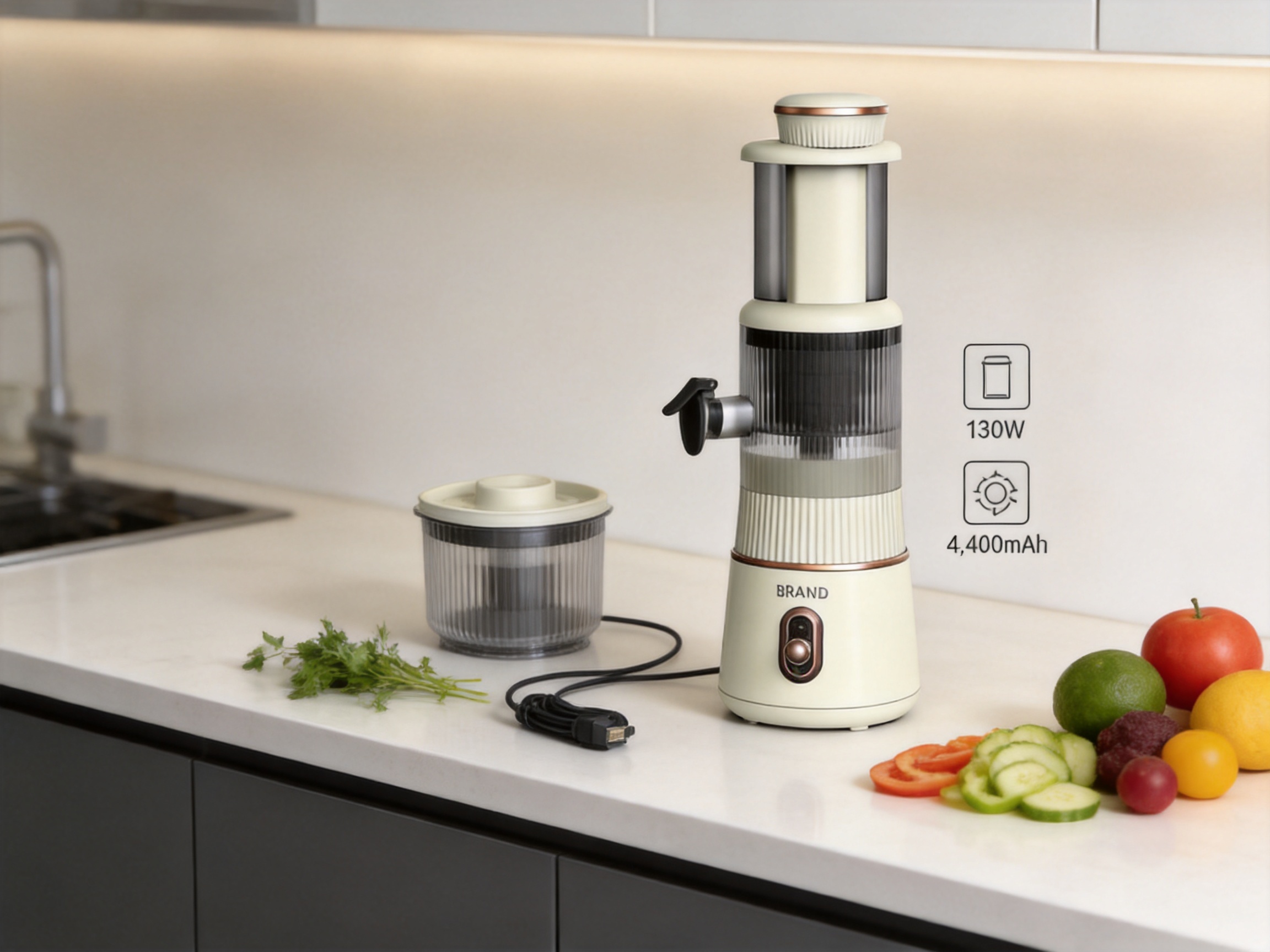
The GSE016 Original Machine is a compact electric kitchen appliance developed for modern food preparation environments, household kitchens, and selected commercial applications. With a rated power of 130W, a 4,400mAh battery, ABS, PP, TPE, and silicone construction, and a 220V electrical specification, the product is positioned as a practical solution for customers seeking convenient food-processing support in a compact format.
Small kitchen appliances are increasingly expected to combine convenience, reliable performance, easy cleaning, efficient storage, and attractive wholesale economics. Buyers no longer judge a product only by its motor rating or appearance. They also consider material selection, production consistency, packaging efficiency, supply-chain reliability, quality control, delivery capability, and the manufacturer’s ability to develop products for different markets. The GSE016 is therefore best evaluated as part of a complete product and manufacturing system rather than as an isolated appliance.
This article examines the product’s specifications, potential applications, competitive advantages, materials, production considerations, packaging data, quality expectations, and the manufacturing capabilities behind it. It also explains why an experienced small-appliance supplier can be important for importers, distributors, retailers, hospitality buyers, and private-label customers.
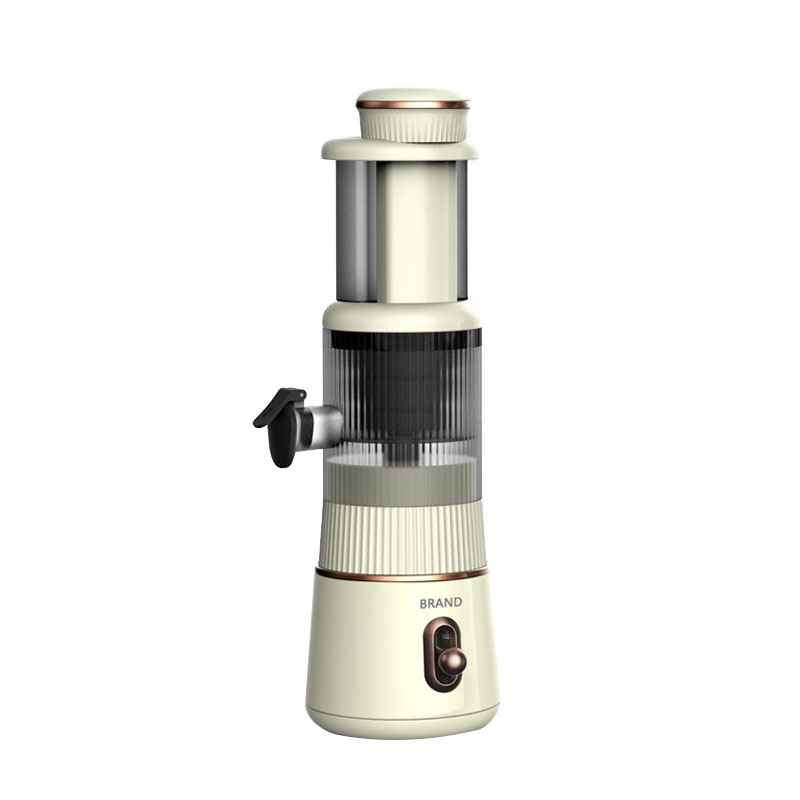
Original Machine
1. Product Overview
The GSE016 Original Machine belongs to the Electrical Home Appliance Series and is associated with daily household necessities. Its listed product description is concise, but the technical details provide a useful foundation for evaluating its commercial role. The appliance has a 130W power rating, a 4,400mAh battery, a 220V voltage specification, and a housing made from ABS, PP, TPE, and silicone.
These characteristics indicate an appliance designed around compact utility rather than excessive power consumption. A 130W motor or electrical system can be suitable for light and moderate kitchen preparation tasks, depending on the internal mechanism, working container, blade or accessory configuration, duty cycle, and ingredients being processed. Buyers should confirm the precise function, accessories, operating time, charging method, safety features, and intended food types with the manufacturer before placing a final order.
The combination of a rechargeable battery and a 220V specification is especially important for international buyers. A battery-powered design can improve portability and reduce dependence on a fixed outlet during short preparation tasks. At the same time, the 220V specification suggests that the charging or power system must be matched carefully to the destination market. Importers should verify plug type, charger configuration, charging certification, operating voltage, frequency, and regional compliance requirements before shipment.
The materials listed for the product are widely used in consumer appliances. ABS can provide a rigid and impact-resistant outer structure. PP is commonly used for lightweight food-contact or non-food-contact components, depending on grade and certification. TPE can offer a soft-touch grip or flexible interface, while silicone may be used for seals, feet, covers, or other flexible components. The performance of these materials depends on their grade, formulation, processing temperature, mold condition, and compliance documentation.
2. Why Compact Kitchen Appliances Continue to Attract Buyers
Compact food-preparation appliances meet several strong market needs. Many consumers live in smaller homes and prefer products that can be stored in a cabinet or placed on a countertop without occupying excessive space. Others want a dedicated appliance for quick preparation instead of operating a large food processor for small quantities. The result is a growing demand for products that are easy to understand, quick to operate, and simple to clean.
Portability is another significant advantage. A rechargeable appliance can be useful in kitchens where moving between work areas is common. It may also be appropriate for travel, outdoor food preparation, temporary accommodation, small offices, or hospitality environments where a compact tool is more convenient than a full-size machine. The usefulness of this feature depends on battery capacity, charging time, runtime, and the weight of the finished product.
Retailers also value compact appliances because they can often be displayed efficiently. Small cartons require less shelf space and may support attractive point-of-sale presentations. For e-commerce sellers, a manageable product size can help control fulfillment costs, although the battery and electrical components require careful transportation planning. For wholesalers, the balance between product dimensions, carton quantity, and shipping capacity can have a direct effect on landed cost.
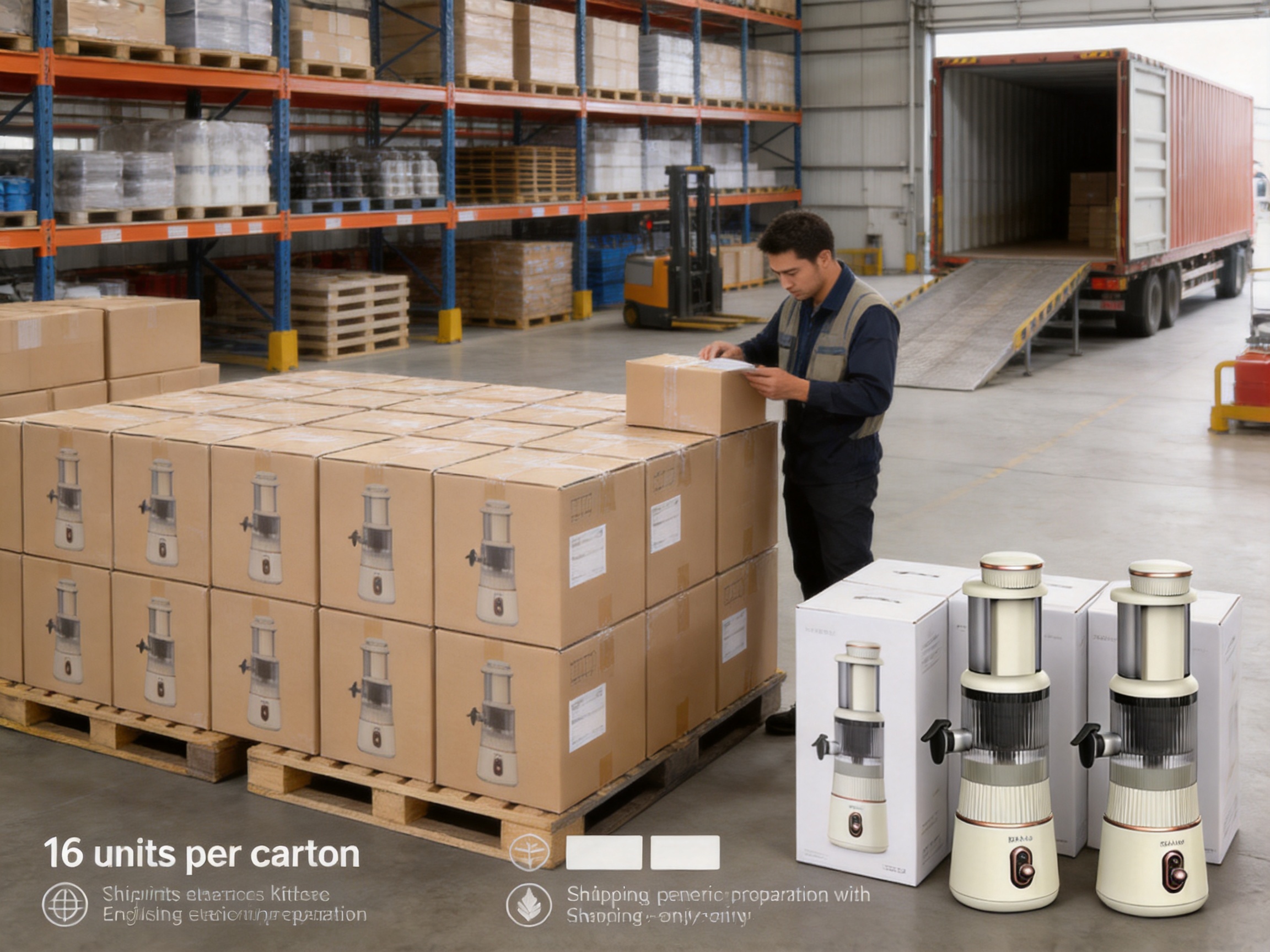
The GSE016 is supplied with a carton quantity of 16 pieces. The listed carton size is 49.5 by 40.5 by 27 centimeters. This creates a practical shipping configuration for distributors that want to purchase in moderate case quantities. The stated loading figures of 8,000 pieces for a 20-foot container and 19,680 pieces for a 40-foot high-cube container provide a starting point for logistics planning, but final quantities should always be confirmed according to actual packaging, palletization, container loading rules, and dangerous-goods requirements related to the battery.
3. Key Technical Specifications
| Specification | Listed Information | Commercial Significance |
|---|---|---|
| Item number | GSE016 | Supports product identification, ordering, and documentation. |
| Product name | Original Machine | Used for catalog, quotation, and product-reference purposes. |
| Product series | Electrical Home Appliance Series | Places the appliance within the supplier’s household electrical range. |
| Rated power | 130W | Indicates a compact power class suitable for light or moderate preparation tasks. |
| Battery | 4,400mAh | Supports cordless use; runtime and charging time require confirmation. |
| Voltage | 220V | Requires verification of charger and regional electrical compatibility. |
| Materials | ABS, PP, TPE, and silicone | Combines rigid, lightweight, flexible, and sealing materials. |
| Carton quantity | 16 pieces per carton | Useful for wholesale order and warehouse planning. |
| Carton size | 49.5 x 40.5 x 27 cm | Supports freight calculation and storage planning. |
| Delivery time | 40–65 days | Provides a general production and shipment planning range. |
The specification table should be treated as a commercial reference rather than a replacement for a full technical datasheet. Professional buyers should request details such as net product dimensions, product weight, battery type, battery energy rating, charging current, charging time, no-load speed, working capacity, noise level, protection functions, and warranty policy.
There is also an apparent inconsistency in the supplied carton weight information: the listed gross weight is 8 kilograms while the listed net weight is 9 kilograms. Normally, gross weight should be equal to or higher than net weight because it includes the product, packaging, and carton. This discrepancy should be corrected in the final packing list, quotation, shipping documents, and customs paperwork. Confirming such details before mass shipment is an important part of professional supply-chain management.
4. Competitive Advantages of the GSE016
4.1 Compact power with practical energy use
The 130W rating places the appliance in a compact power category. Compared with larger kitchen machines that may consume several hundred watts or more, a lower-power design can be attractive to users who need short, everyday preparation tasks. Lower electrical demand may also support more efficient battery management, although actual runtime depends on motor efficiency, load, operating mode, blade resistance, and battery-control programming.
A compact power system can make the product easier to position for apartments, small kitchens, dormitories, offices, and travel-oriented retail channels. It may also appeal to consumers who prefer a smaller appliance for occasional use instead of purchasing a larger multifunction machine. The key competitive benefit is not simply low power; it is the combination of adequate performance, manageable size, and convenient operation.
4.2 Rechargeable convenience
The 4,400mAh battery is one of the product’s most notable differentiators. Cordless operation may reduce the inconvenience of locating an outlet and can make short preparation jobs more flexible. A rechargeable design can also create a cleaner countertop appearance by reducing the number of permanently connected cords and adapters.
For the battery feature to create genuine customer value, the complete electrical system must be engineered carefully. Battery cells, protection circuitry, charging control, thermal management, connectors, and housing ventilation all affect safety and performance. A responsible buyer should request battery test reports, transport documentation, charging instructions, and information about overcharge, over-discharge, short-circuit, and overheating protection.
4.3 Multi-material product construction
Using several materials allows the product to be designed around different functional requirements. ABS may support a durable external shell, PP may reduce weight and cost in suitable structural components, TPE can improve grip and handling, and silicone can help create flexible sealing or anti-slip elements. This is more sophisticated than relying on one material for every component.
Material diversity also enables manufacturers to improve user perception. A rigid shell can convey stability, while soft-touch surfaces can make the product more comfortable to hold. Silicone seals can reduce leakage risks when correctly designed and assembled. However, these benefits depend on appropriate material grades and accurate molding. The manufacturer should be able to provide material specifications and food-contact compliance documents where applicable.
4.4 Wholesale-friendly shipping configuration
Sixteen pieces per carton offers a useful balance for many distributors. The quantity is large enough to support efficient case handling while remaining manageable for smaller importers and regional wholesalers. The stated carton dimensions allow buyers to estimate warehouse requirements, freight volume, and container utilization.
Efficient packaging can provide a competitive advantage beyond freight savings. Proper internal protection reduces the risk of cosmetic damage, cracked plastic, loose accessories, or charger impact during transportation. A well-designed carton can also simplify counting, palletizing, and receiving operations. Retail packaging should be assessed together with export packaging because the two formats serve different purposes.
4.5 Support from an experienced product-development organization
The supplier’s history indicates long-term experience in developing both non-electric innovative products and electric kitchen appliances. Its product portfolio includes blenders, slicers, choppers, food processors, smokeless grills, hot pots, air fryers, air ovens, ice buckets, beverage dispensers, pitchers, graters, and related household or hospitality items.
This breadth can benefit buyers that want to build a coordinated product range rather than source one appliance at a time. A supplier with experience across several categories may understand shared component design, packaging systems, accessory development, mold investment, and retail presentation. It may also be better positioned to recommend complementary products for supermarkets, online stores, hospitality distributors, and private-label programs.
5. Manufacturing Strengths Behind the Product
5.1 Product design and engineering development
The company’s development history describes a transition from innovative non-electric products to electric appliances. This background is important because successful appliance development requires more than assembling a motor and a plastic shell. Product engineers must consider ergonomics, operating controls, assembly sequence, electrical safety, sealing, vibration, heat generation, noise, cleaning, packaging, and regulatory documentation.
A strong engineering process begins with a product brief. The brief defines the target user, intended functions, operating environment, price level, appearance, materials, performance expectations, and destination markets. Engineers then create concepts, evaluate mechanisms, prepare prototypes, perform functional tests, and revise the design before tooling and mass production.
The supplier reports an R&D department with ten engineers and a QC department with ten personnel. These resources suggest an organizational structure capable of supporting product development and inspection activities across multiple categories. Buyers should nevertheless ask for project-specific evidence, including drawings, sample approval procedures, test records, engineering-change controls, and pre-production inspection plans.
5.2 Injection molding and material control
ABS and PP components are commonly produced through injection molding. The process begins with carefully prepared molds and controlled plastic pellets. Material drying, barrel temperature, injection pressure, cooling time, and mold temperature influence the finished part’s dimensions, strength, surface appearance, and consistency.
For a compact appliance, dimensional accuracy is particularly important. Housing pieces must align correctly around the motor, battery, switches, connectors, seals, and internal supports. Poor molding control can lead to gaps, rattling, difficult assembly, uneven surfaces, or leakage. Advanced production control therefore includes incoming material checks, mold maintenance, first-piece approval, process-parameter monitoring, and sampling of dimensions during production.
TPE and silicone components require their own process controls. Soft materials must be matched to the rigid components they contact. The hardness, elasticity, compression recovery, color stability, and resistance to oils or cleaning agents can all affect service performance. If a silicone seal is too hard, it may not seal effectively. If it is too soft or dimensionally unstable, it may deform during assembly or use.
5.3 Motor, battery, and electrical assembly
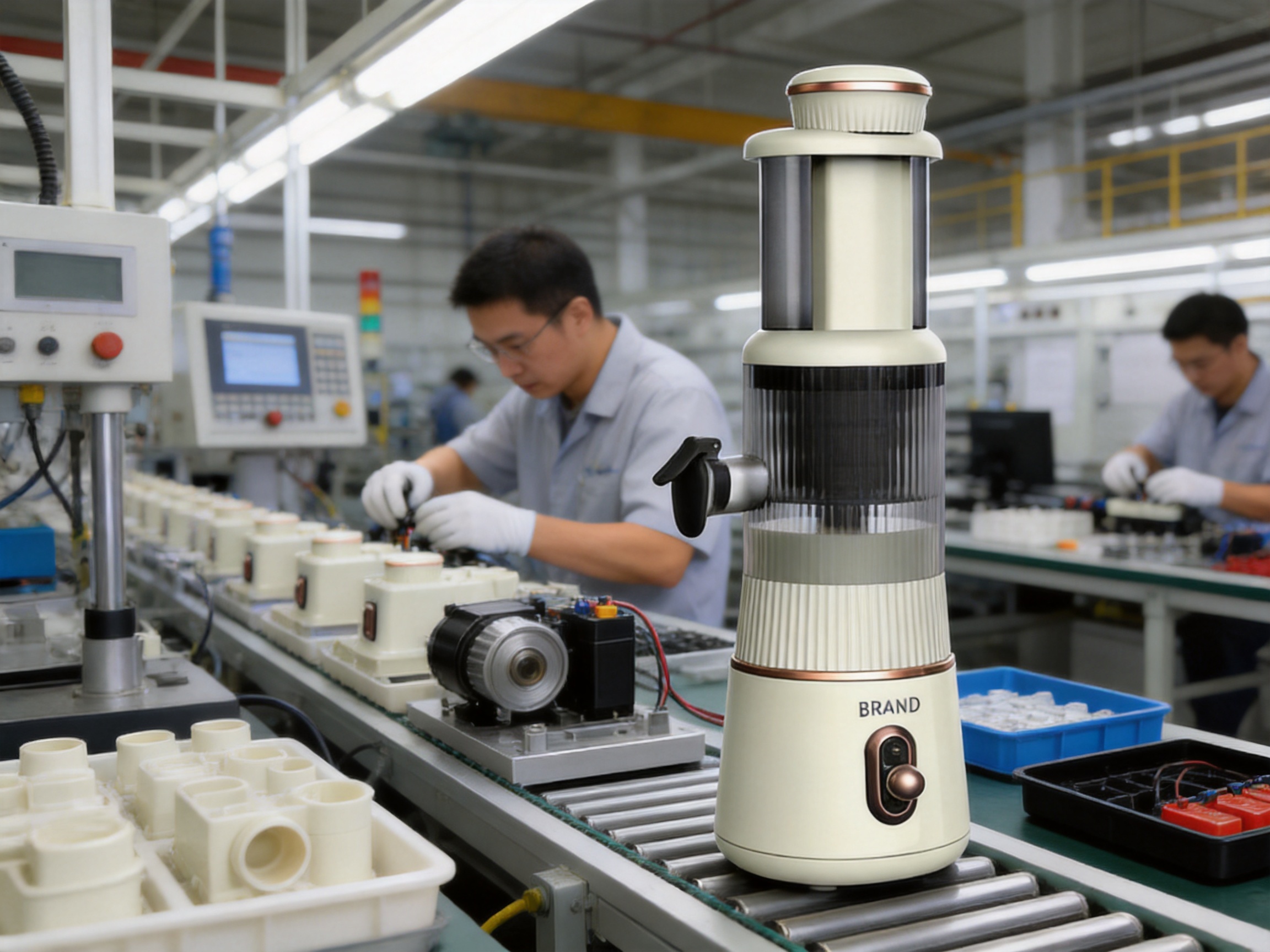
The electrical assembly stage is central to product reliability. The motor, circuit board, battery, charging components, switch, wiring, and protective structures must be installed consistently. Workers need clear assembly instructions, controlled torque requirements, correct wire routing, and inspection checkpoints.
Battery-powered appliances require special attention because the energy-storage system introduces additional safety considerations. The battery should be protected against abnormal charging and discharging conditions. Electrical connections should be secure and insulated. The housing should prevent accidental contact with conductive parts. Charging behavior should be tested under normal and selected abnormal conditions.
Production testing may include power-on inspection, charging verification, operating-current measurement, noise or vibration observation, switch-function testing, and a short-duration run test. The exact procedure depends on the final design and applicable market standards. A mature manufacturer should maintain test equipment calibration records and retain inspection results for traceability.
5.4 Assembly-line consistency
Assembly-line efficiency is not simply a matter of speed. The objective is to produce each unit according to the approved specification while minimizing variation. A well-organized line separates component preparation, mechanical assembly, electrical assembly, functional testing, cleaning, labeling, and packing.
Work instructions should show the correct order of operations and identify critical points. Visual aids can reduce assembly errors. Fixtures may help workers position parts accurately. Torque-controlled tools can improve screw consistency. Barcode or batch identification can support traceability from finished goods back to production date, component lot, or workstation.
For overseas customers, consistency is especially valuable because product returns and field repairs can be expensive. A defect discovered after a container reaches another country may involve reverse logistics, replacement shipments, lost retail opportunity, and damage to the buyer’s reputation. Effective factory quality systems reduce these risks before products leave the plant.
5.5 Quality-control organization
The company information identifies a dedicated quality-control team. Quality control should operate throughout the entire production cycle rather than only at the final packing table. Incoming inspection verifies materials and components. During-production inspection checks assembly and appearance. Final inspection confirms product function, labeling, packing, and shipment quantity.
Typical quality checkpoints for a product such as the GSE016 may include plastic color and surface inspection, dimensional sampling, seal verification, battery and charger checks, switch operation, operating-current measurement, abnormal-noise observation, short-duration endurance testing, carton-drop evaluation, and label verification.
The final inspection standard should be agreed with the buyer. This may include acceptable quality limits for cosmetic defects, functional failures, missing components, incorrect labels, carton damage, and quantity discrepancies. A clear inspection plan is especially important for private-label orders because the buyer may have specific branding, barcode, manual, and packaging requirements.
6. Design Considerations for Different Markets
The same appliance may be sold through different channels, but each channel has different expectations. Supermarkets usually require reliable packaging, clear shelf information, barcode accuracy, competitive retail presentation, and dependable replenishment. E-commerce sellers prioritize product photography, protective shipping packaging, concise instructions, and low return rates.
Hospitality buyers may focus on durability, cleaning, staff training, serviceability, and the ability to process repeated small batches. Household consumers often prioritize ease of use, appearance, noise, compact storage, and perceived safety. Importers should define the primary market before finalizing product configuration, because accessories, packaging language, certifications, and warranty requirements can vary significantly.
Regional electrical requirements must also be evaluated. A product listed at 220V may be suitable for some countries but not for markets that use different voltage systems. The charger, plug, frequency, battery labeling, and instruction manual may require changes. The buyer should request a compliance review for each destination rather than assuming that one configuration is universally acceptable.
6.1 Packaging and documentation
Packaging should protect the appliance while presenting its main benefits clearly. A retail package may include product photographs, operating highlights, technical specifications, safety warnings, barcode information, importer details, and multilingual instructions. Export cartons should include item number, quantity, gross and net weight, carton dimensions, handling marks, and destination information where required.
Because the listed product contains a rechargeable battery, transportation documentation deserves particular attention. The supplier and buyer should confirm the battery chemistry, watt-hour rating, packaging method, applicable transport classification, test documentation, and carrier requirements. Accurate information reduces the likelihood of shipping delays or rejected cargo.
6.2 Private-label opportunities
Manufacturers with product-development and tooling experience can often support private-label projects. Potential customization areas include color, surface finish, logo placement, control markings, retail box design, instruction manuals, accessory combinations, and regional electrical configurations.
Customization should be managed through formal approvals. The buyer should approve artwork, color samples, pre-production samples, packaging prototypes, and final inspection standards. Changes made after tooling or mass production begins may affect cost and delivery time, so the development schedule should identify approval deadlines clearly.
7. Manufacturing Infrastructure and Company Experience
The supplied company history describes a factory established in 2009 after several years of experience in sales, sourcing, buying-agent services, and product development. This commercial background can be valuable because manufacturing decisions are closely connected to market requirements. A company that understands retail buyers, supermarket programs, and international customers may be more familiar with packaging standards, price targets, shipment schedules, and quality expectations.
The company also reports moving into a new factory in 2018, with a stated site area of approximately 10,000 square meters and building area of approximately 18,000 square meters at that stage. The supplied information further describes a wholly owned plant with a production area of approximately 15,000 square meters and more than 200 experienced workers. Since the figures refer to different points in the company’s development, buyers should confirm the current factory area and workforce during supplier qualification.
The reported customer experience includes international supermarkets and well-known retail organizations. Such experience can indicate familiarity with large-volume orders, product audits, packaging approvals, delivery coordination, and documentation. It does not replace product-specific due diligence, but it can be a positive indicator when evaluating a supplier for recurring business.
The company states that one three-in-one food processor program achieved sales of approximately 800,000 pieces in Korean and Southeast Asian markets in 2021. It also identifies air ovens and air fryers as important products in 2022, with demand in Europe and South America. These examples demonstrate exposure to high-volume electric kitchen appliance programs and suggest that the organization has experience coordinating product development with international market demand.
8. Supply-Chain Benefits for Wholesale Buyers
Wholesale buyers need more than a competitive unit price. They need predictable delivery, stable quality, responsive communication, accurate documentation, and practical after-sales support. A supplier with in-house or closely managed development and manufacturing capabilities may reduce the number of handoffs between design, production, quality control, and shipment.
The stated delivery time for the GSE016 is 40 to 65 days. This range should be divided into specific stages when preparing a purchasing schedule. The stages may include order confirmation, deposit receipt, artwork approval, material procurement, production, inspection, packing, booking, and shipment. If the order involves new colors, custom packaging, or tooling changes, additional time may be required.
Buyers should also ask whether the quoted lead time applies to repeat orders or first orders. A repeat order using existing tooling and approved packaging may be faster than a new project. Seasonal demand can affect capacity as well. Orders for air fryers, air ovens, food processors, and other popular appliances may compete for production resources during peak periods.
After-sales support is another important consideration. A professional supplier should be able to provide operating manuals, spare-part recommendations, troubleshooting guidance, warranty terms, and procedures for handling confirmed defects. For importers, the best support system is preventive: accurate instructions, reliable packaging, controlled production, and clear inspection before shipment.
9. Recommended Buyer Verification Process
9.1 Confirm the product function
The name “Original Machine” does not fully explain the appliance’s precise application. Before purchasing, the buyer should request a complete product presentation showing the operating method, included accessories, working capacity, suitable ingredients, cleaning procedure, and intended use. Product videos, samples, user manuals, and technical drawings can help eliminate uncertainty.
9.2 Evaluate a physical sample
A physical sample should be tested under realistic conditions. The buyer should assess assembly, controls, grip, stability, noise, vibration, charging behavior, operating time, cleaning, and storage. Testing should cover both light and more demanding workloads, while avoiding ingredients or conditions outside the manufacturer’s recommended use.
9.3 Review compliance documents
Documentation may include electrical safety reports, battery transport documents, material declarations, food-contact declarations, electromagnetic compatibility information, and market-specific certifications. The exact requirements depend on the product design and destination country. Documents should match the actual model, battery, charger, and factory configuration.
9.4 Approve packaging and labels
Packaging approval should include retail artwork, export carton markings, barcode details, warning labels, manuals, and language requirements. The item number GSE016 should be consistent across quotations, cartons, manuals, invoices, packing lists, and inspection reports. Any mismatch can create receiving or customs problems.
9.5 Establish inspection criteria
Before mass production, the buyer and supplier should agree on inspection criteria. These may cover appearance, color, dimensions, function, battery charging, operating noise, accessory completeness, label accuracy, carton condition, and quantity. Defining criteria early creates a shared understanding of acceptable quality.
10. Sustainability and Responsible Product Development
Compact appliances can support more responsible consumption when they are designed for appropriate use, long service life, and efficient packaging. Smaller products generally require fewer raw materials than large machines, although the total environmental effect also depends on battery production, shipping, energy use, replacement rate, and end-of-life treatment.
Material selection should consider durability as well as appearance. A housing that resists cracking and maintains its fit can help extend product life. Seals should resist premature deformation. Controls and charging components should be designed for repeated normal use. Durable packaging can reduce transit damage and the environmental cost associated with replacements.
Manufacturers can also improve sustainability through process control. Reducing molding defects lowers material waste. Optimizing carton dimensions can reduce unused shipping volume. Separating production scrap for recycling may improve material efficiency where technically and legally appropriate. Buyers should ask the supplier about material recycling, energy management, packaging reduction, and waste-control practices if these factors are important to their market positioning.
11. Positioning Against Competing Products
The GSE016 should not be compared with every kitchen appliance on the market because product categories differ widely. A large food processor may provide greater capacity and power, while a basic manual tool may cost less and require no battery. The most relevant comparison is with compact rechargeable appliances that target quick, convenient food preparation.
Against corded compact appliances, the GSE016’s rechargeable design may offer greater mobility and a less cluttered workspace. Against very low-cost rechargeable products, the combination of a 4,400mAh battery, multi-material housing, structured factory production, and established quality-control resources may offer a stronger basis for reliability. Against large multifunction machines, the product may compete through simpler storage, lower power demand, and easier everyday handling.
Competitive performance must still be proven through testing. Buyers should compare runtime, charging time, operating speed, working capacity, noise, durability, safety features, accessory range, warranty, and landed cost. A product is competitive when it provides a convincing balance of user value and commercial practicality, not merely when one specification appears attractive.
12. Practical Retail and Marketing Messages
Retail communication should focus on benefits that can be demonstrated and supported by the technical specification. Suitable themes may include compact kitchen convenience, cordless preparation, rechargeable operation, easy storage, practical daily use, and a durable multi-material construction. Claims should be written carefully and should not promise performance beyond the approved product tests.
Retailers may present the appliance as a useful option for consumers who prepare small quantities or want a convenient tool for quick kitchen tasks. The 130W rating can be explained as part of a compact appliance design, while the 4,400mAh battery can be presented as a feature supporting cordless operation. Exact runtime should not be advertised until it has been measured under defined test conditions.
For business buyers, the marketing message can emphasize the supplier’s broader manufacturing capabilities. Product development, injection-molded component production, assembly, quality inspection, export packaging, and international order coordination are relevant advantages for distributors that want a dependable long-term partner.
13. Frequently Asked Questions
Q1: What is the GSE016 Original Machine?
The GSE016 is a compact electrical home appliance listed under a small kitchen appliance product series. Its supplied specifications include 130W power, a 4,400mAh battery, 220V voltage, and ABS, PP, TPE, and silicone materials. The exact operating function and accessories should be confirmed with the supplier before ordering.
Q2: Is the appliance cordless?
The listed 4,400mAh battery indicates rechargeable operation, but buyers should confirm whether the appliance operates entirely cordless, whether it can operate while charging, and how long a full charge lasts under different workloads.
Q3: What does the 130W rating mean?
The 130W rating identifies the product’s electrical power class. It suggests a compact design intended for light or moderate tasks, but actual capability depends on the motor, mechanism, working capacity, ingredients, and operating instructions.
Q4: Is the GSE016 suitable for every country using 220V electricity?
Not automatically. Buyers must confirm frequency, plug style, charger configuration, electrical certifications, battery documentation, and local compliance requirements for the intended destination market.
Q5: What materials are used?
The listed materials are ABS, PP, TPE, and silicone. These materials may serve different roles, including structural housing, lightweight components, soft-touch areas, seals, or anti-slip parts. The supplier should confirm the grade and intended application of each material.
Q6: How many units are packed in one carton?
The supplied information lists 16 pieces per carton. The carton size is stated as 49.5 by 40.5 by 27 centimeters. Buyers should confirm the final carton configuration after retail packaging and accessories are approved.
Q7: What is the delivery time?
The listed delivery time is 40 to 65 days. The actual schedule may depend on order quantity, packaging customization, material availability, production capacity, inspection, and shipment arrangements.
Q8: Can the product be customized?
Potential customization may include color, logo, packaging, manual language, labels, and accessory combinations. Each request should be reviewed with the supplier because customization can affect tooling, minimum order quantity, cost, compliance, and lead time.
Q9: Is the stated carton weight information consistent?
No. The supplied information lists gross weight as 8 kilograms and net weight as 9 kilograms, although gross weight is normally higher than net weight. This should be checked and corrected before shipping documents are issued.
Q10: What should importers request before placing an order?
Importers should request a complete technical datasheet, sample, user manual, packaging artwork, battery information, compliance documents, quotation, lead-time confirmation, warranty terms, inspection standard, and corrected packing details.
Q11: What makes the manufacturer suitable for wholesale cooperation?
The company reports experience in product design, electric kitchen appliances, non-electric household products, international retail programs, research and development, quality control, factory production, and export coordination. These capabilities can support both standard products and selected private-label projects.
Q12: Can the GSE016 replace a full-size food processor?
It should not be assumed to replace a full-size food processor. The product is a compact appliance with a 130W rating, and its appropriate use depends on the final mechanism and working capacity. Buyers should follow the manufacturer’s approved operating instructions.
14. Conclusion
The GSE016 Original Machine presents a practical combination of compact electrical performance, rechargeable convenience, multi-material construction, and wholesale-friendly packaging. Its 130W rating and 4,400mAh battery make it relevant to buyers seeking a portable appliance for everyday kitchen tasks, while the ABS, PP, TPE, and silicone construction supports a balance of structure, comfort, flexibility, and sealing potential.
Its commercial value is strengthened by the manufacturing organization behind it. The supplier reports experience in product development, electric kitchen appliances, international retail programs, injection-molded products, engineering, quality control, and export production. A reported workforce of engineers, quality personnel, and experienced factory workers provides a foundation for consistent manufacturing, although buyers should always verify current facilities, records, certifications, and model-specific testing.
For distributors and importers, the product offers several possible advantages over competing compact appliances: cordless usability, a useful battery capacity, manageable carton quantities, compact logistics, and access to an established appliance-development partner. The strongest purchasing decision will come from combining these advantages with careful verification of runtime, function, electrical compatibility, battery safety, packaging, compliance, and final shipping data.
When properly evaluated and presented, the GSE016 can serve as a flexible addition to a household appliance portfolio. Its success in different markets will depend on accurate positioning, reliable production, suitable packaging, clear instructions, and a supply partnership capable of maintaining quality from prototype approval through repeat shipment.
References
1. Product specification information supplied for Electrical Home Appliance Series item GSE016, including power, battery, voltage, materials, packaging, carton quantity, and delivery data.
2. Company profile and manufacturing history supplied for the producer of the GSE016 product, including product-development experience, factory development, engineering resources, quality-control organization, and international market experience.
3. General principles of injection molding, polymer selection, assembly-line control, and quality inspection for small electrical household appliances.
4. General guidance on rechargeable-battery handling, electrical compatibility, transport documentation, and destination-market compliance for consumer appliances.
5. General wholesale purchasing practices covering sampling, packaging approval, pre-shipment inspection, carton verification, lead-time planning, and private-label product development.