
 English
 中文简体
中文简体 Español
 English
 中文简体
中文简体 Español
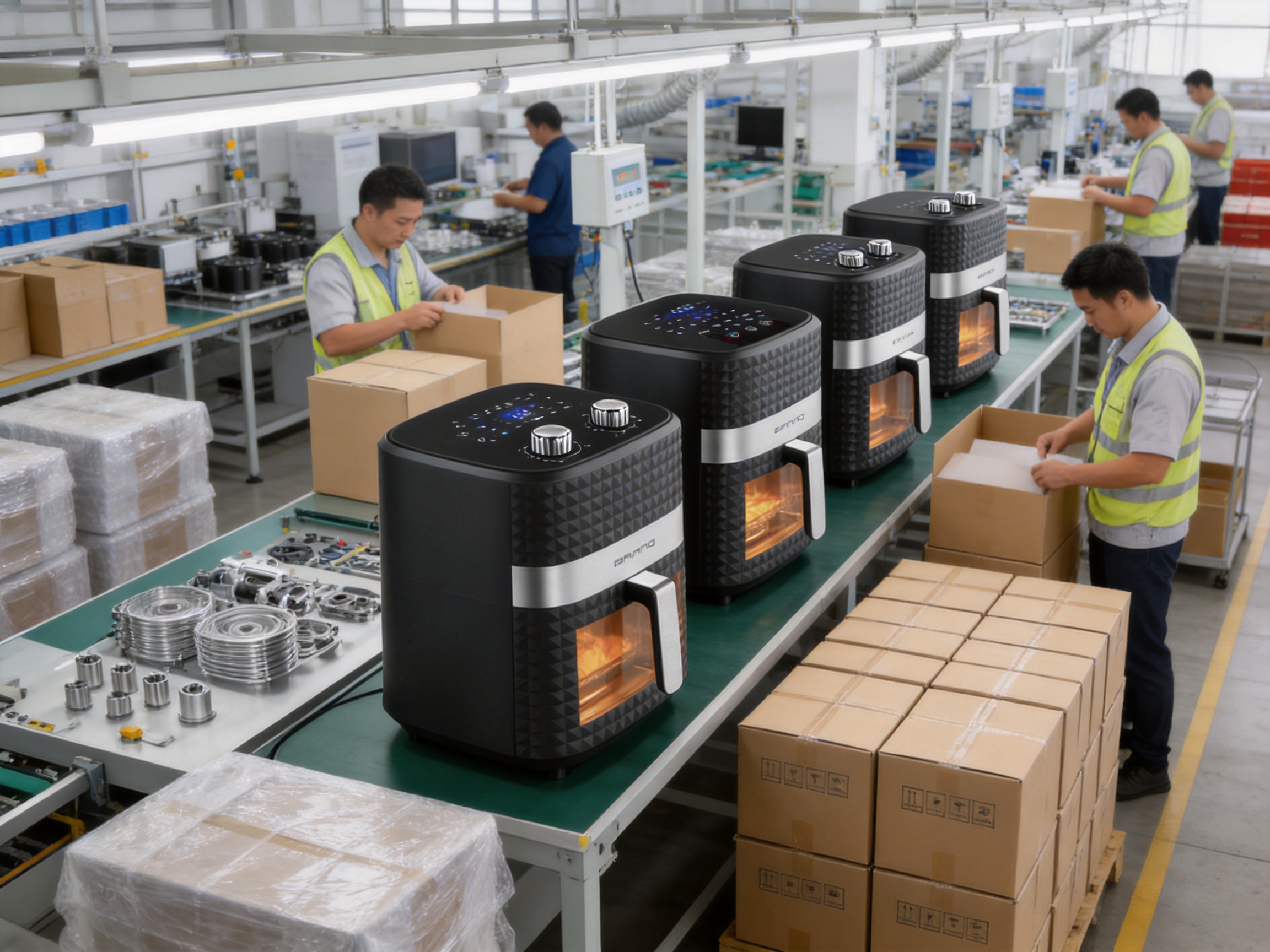
Modern kitchens increasingly demand appliances that combine practical performance, intuitive operation, attractive design, and efficient use of space. The 5L Multifunctional Air Fryer with Dual Knob and Touchscreen LCD Control is designed to meet these expectations with a balanced combination of digital convenience and familiar mechanical adjustment. Developed for daily household cooking, this black air fryer provides a versatile way to prepare crisp, flavorful meals while reducing the need for excessive cooking oil.
With a rated power of 1500W, a 5-liter cooking capacity, a large visual display, and a dual-knob control system, the appliance is positioned as a practical solution for households, retailers, hospitality buyers, and distributors seeking a dependable small kitchen appliance. Its design emphasizes ease of use: the display supports clear visual operation, while the control knobs provide direct adjustment for users who prefer a tactile interface rather than a completely touch-operated control panel.
The product is identified as GSE036 and GSE036-1. It is manufactured by CIXI GSTAR ELECTRIC APPLIANCE CO., LTD., a Chinese small-appliance producer with experience in product development, engineering, quality control, and international supply. The company’s product portfolio includes air fryers, air ovens, blenders, slicers, choppers, food processors, hot pots, smokeless grills, and other equipment for homes, bars, restaurants, and hotels.
Product Overview
This air fryer is built around a 5-liter cooking chamber, making it suitable for everyday meals, side dishes, snacks, and family portions. The capacity is large enough to offer useful cooking flexibility without requiring the footprint of a commercial countertop oven. It can support cooking tasks such as preparing vegetables, poultry, seafood, frozen foods, potatoes, pastries, and reheated meals.
The product uses a 1500W heating system. This power level is appropriate for an appliance in the 5-liter category because it supports efficient heating and practical cooking times while remaining suitable for standard household use in compatible electrical markets. The air fryer is designed to circulate heated air around the food, helping create a browned and crisp exterior with less oil than conventional deep frying.
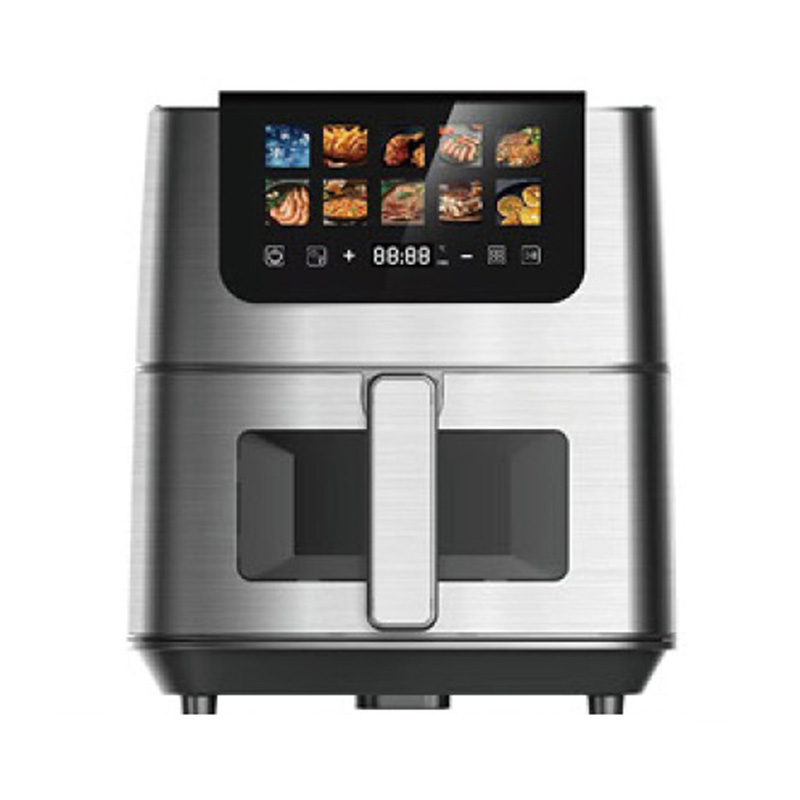
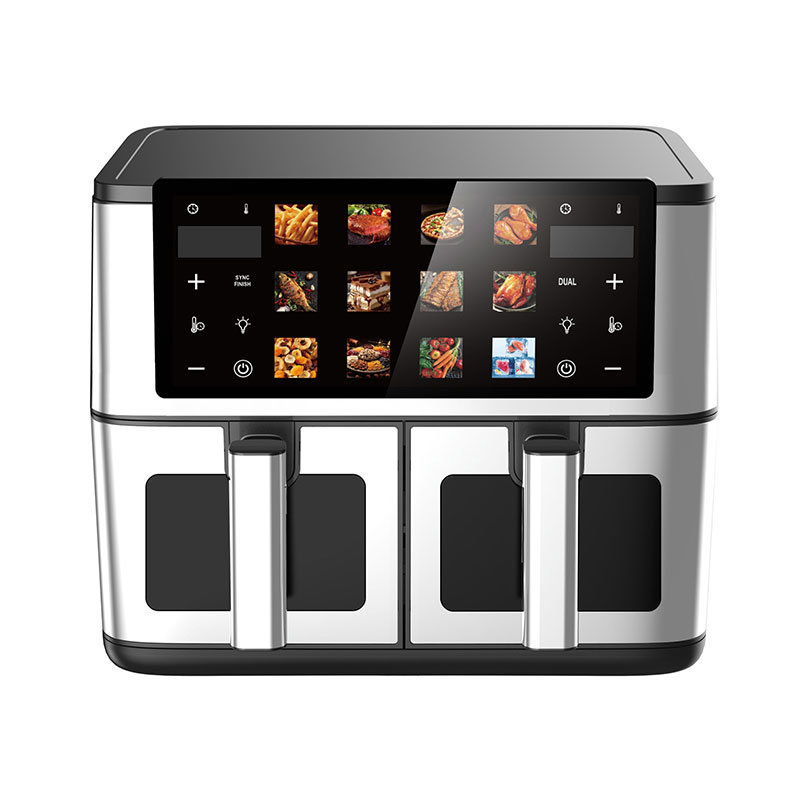
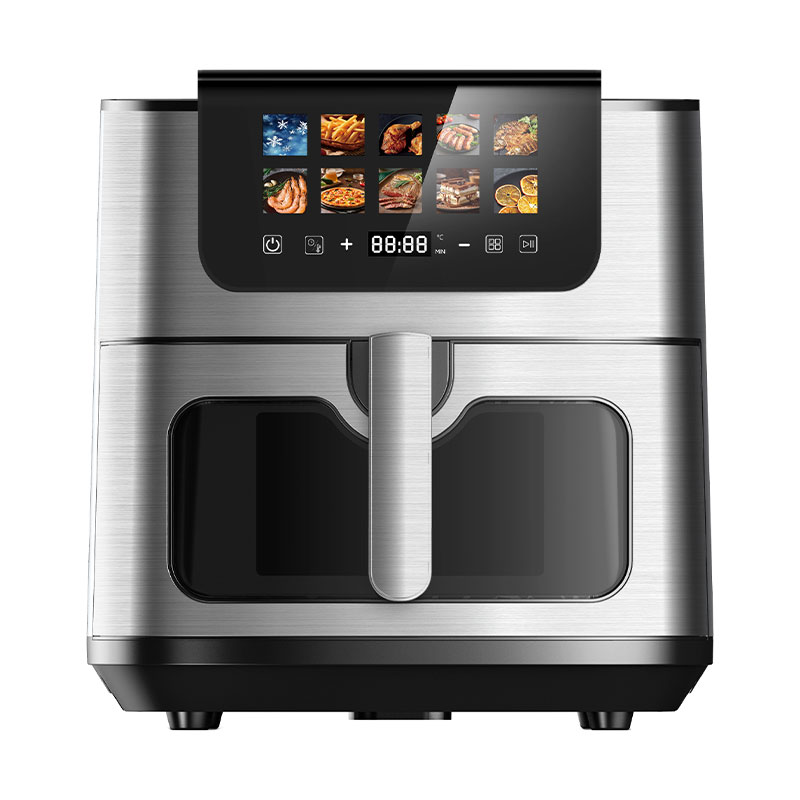
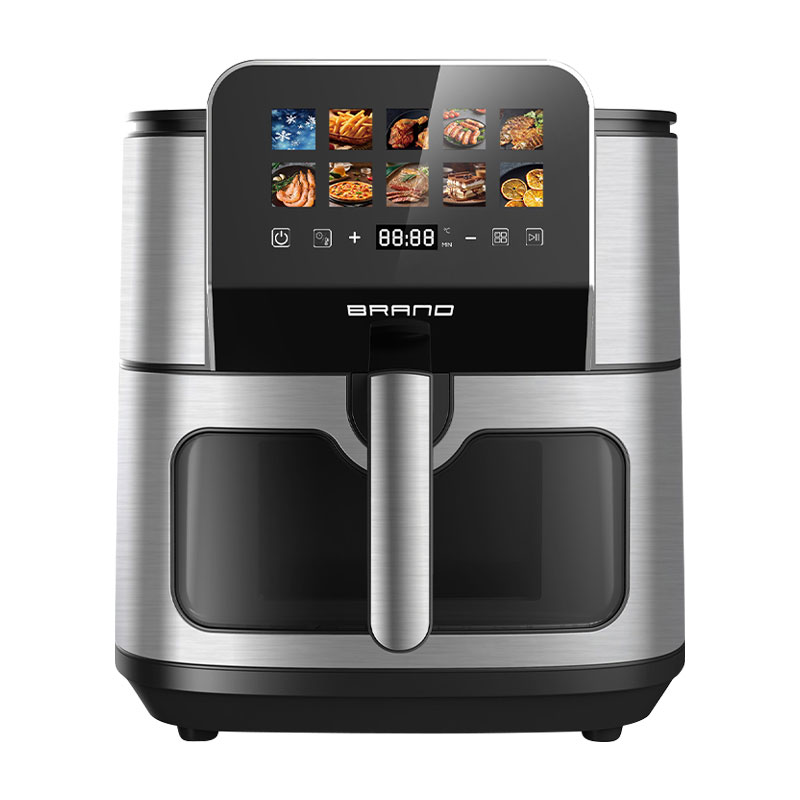
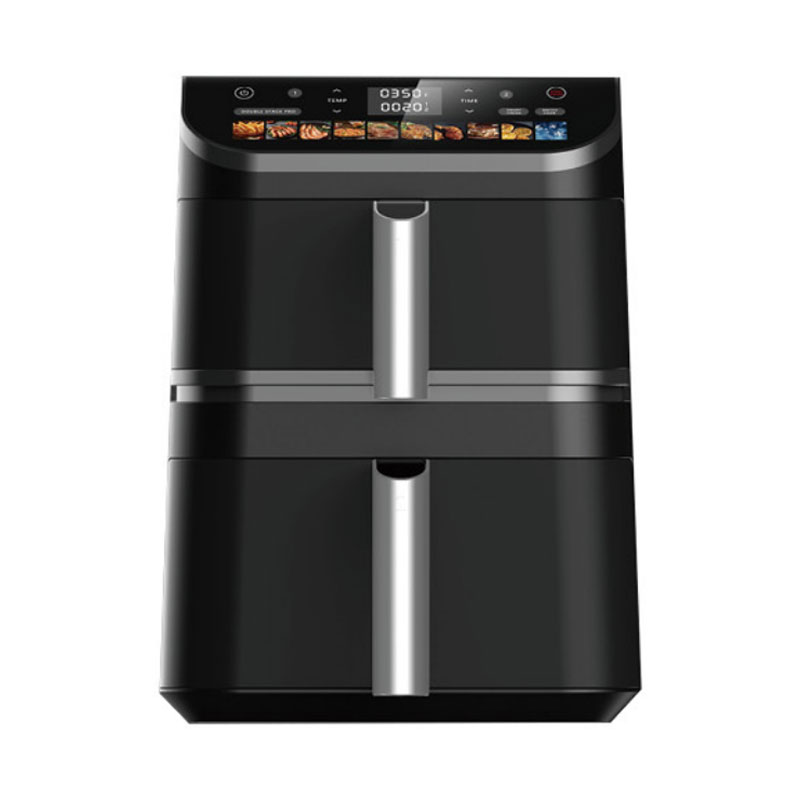
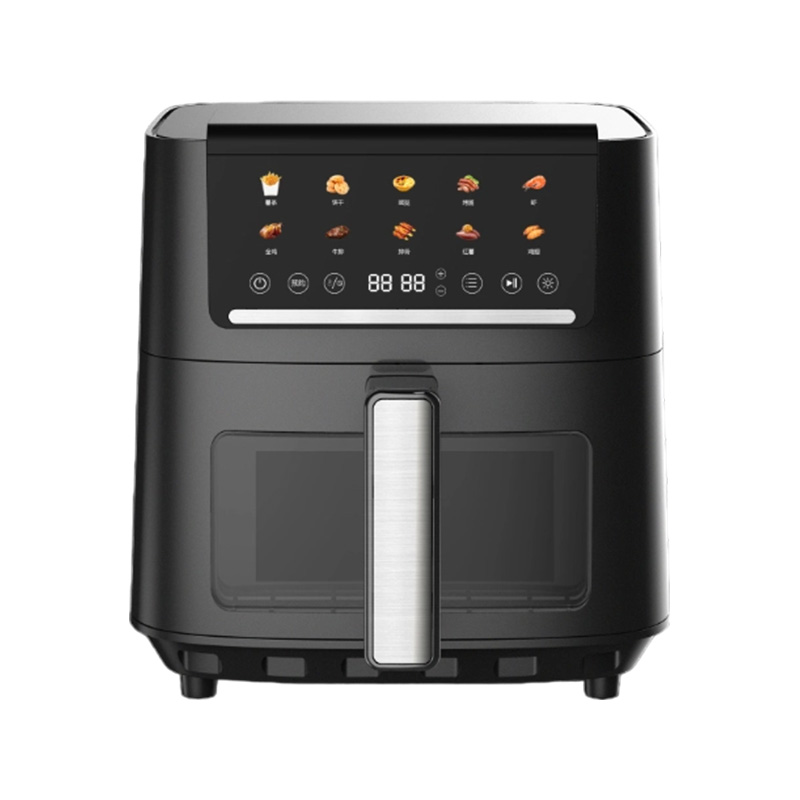
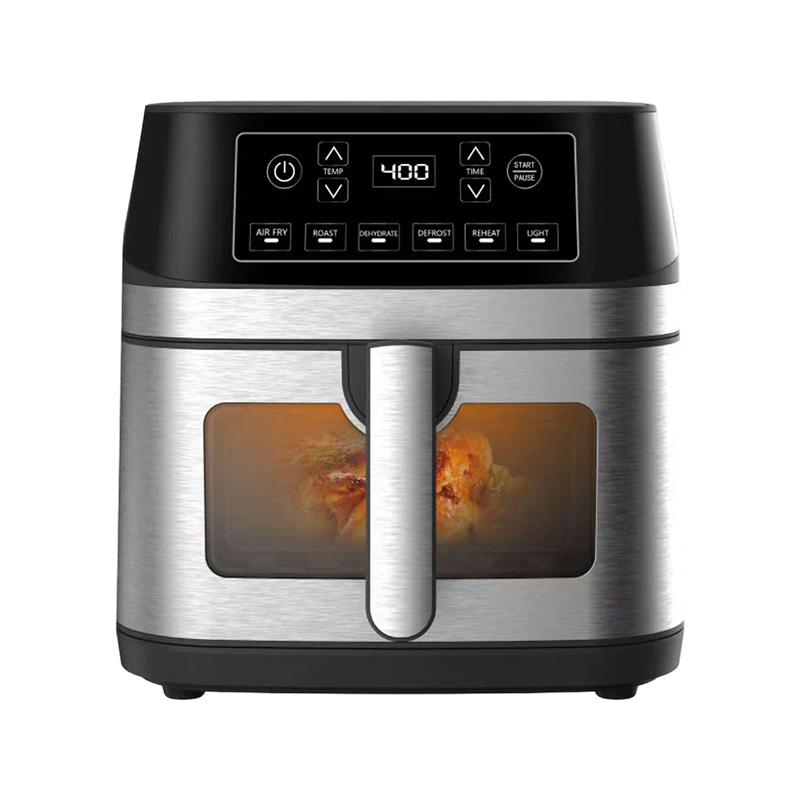
The external finish is black, giving the appliance a contemporary appearance that can coordinate with modern kitchen interiors. Its visual design is supported by a large LCD display and two control knobs. The combination allows the user to view settings clearly and make adjustments directly. This approach is different from air fryers that rely exclusively on small touch buttons or complicated menus.
The main specifications are summarized below.
| Specification | Details |
|---|---|
| Product Name | Air Fryer |
| Model | GSE036 / GSE036-1 |
| Cooking Capacity | 5 liters |
| Rated Power | 1500W |
| Control System | Dual knob adjustment with touchscreen LCD display |
| Color | Black |
| Material Composition | PP, PA, aluminum, ABS, and PC |
| Packaging | 1 piece per carton |
| Carton Dimensions | 40.9 × 35.7 × 38.8 cm |
| Net Weight | 5.0 kg |
| Gross Weight | 6.0 kg |
| Estimated 20-Foot Container Quantity | 438 pieces |
| Estimated 40-Foot High-Cube Container Quantity | 1,192 pieces |
| Minimum Order Quantity | 1,192 pieces |
| Estimated Delivery Time | 45–60 days |
Dual Knob and Touchscreen Operation
One of the defining features of this model is its hybrid control arrangement. The touchscreen LCD display provides a modern interface, while the dual knobs add physical control. This is valuable because different users have different preferences when operating kitchen appliances. Some users appreciate touch controls for their clean appearance and visual feedback, while others prefer knobs because they can be turned quickly and adjusted without repeatedly tapping a small area.
The dual-knob arrangement can make temperature and time adjustments more direct. Instead of navigating several digital menus, the user can make a visible adjustment by turning the appropriate control. This can be especially useful during busy meal preparation, when simple operation is more convenient than a complex interface. The display helps users confirm their selected settings and monitor the cooking process.
A physical knob may also provide a more familiar experience for users who have previously operated conventional ovens, cookers, or other rotary-control appliances. The combination of digital display and tactile adjustment therefore creates a balance between traditional usability and contemporary appearance.
The visual LCD screen contributes to product differentiation in a competitive air fryer market. Many entry-level models use basic dials, while some touchscreen models may provide limited tactile feedback. This product brings both concepts together. For retailers, the design can be presented as a clear selling point because it is easy to explain and immediately visible in product photography or showroom demonstrations.
Control design is important not only for convenience but also for perceived product quality. A responsive interface, clear display, and well-positioned control knobs can make a small appliance feel more refined. The product’s control layout is therefore an important part of its overall market appeal.
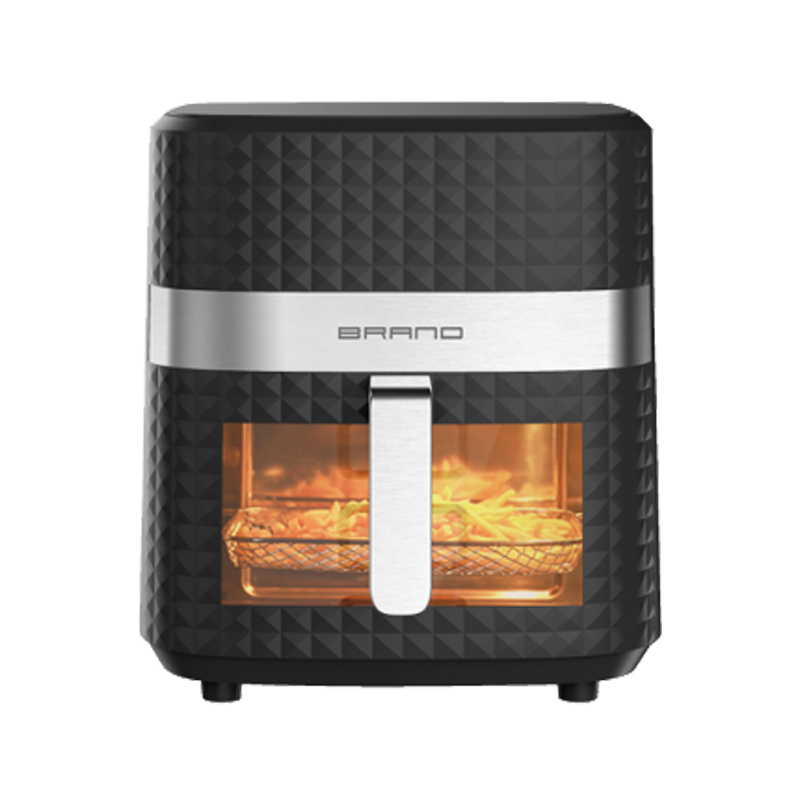
Double Knob Touch Screen Control Knob Adjustment LCD Display Visual Large Capacity Multifunctional Black Air Fryer
5-Liter Capacity for Everyday Cooking
A 5-liter capacity offers a useful middle ground between compact personal air fryers and much larger family or commercial-style units. Smaller models may be convenient for one person but can require multiple cooking cycles for a household. Larger models can occupy more counter space and may be less suitable for customers with limited kitchen areas. A 5-liter model can provide meaningful meal capacity while preserving a relatively practical countertop format.
The capacity is suitable for a range of cooking occasions. A household can use it to prepare a main dish, a side dish, or a snack without switching to a full-size oven. It can also support batch preparation of frozen foods, roasted vegetables, chicken portions, fish, and other common ingredients. The exact quantity depends on the food type and arrangement inside the basket, but the size provides useful flexibility for daily cooking.
For distributors and retailers, the 5-liter category is commercially attractive because it is broad enough to serve many household segments. It can appeal to first-time air fryer buyers, families looking for a secondary cooking appliance, apartment residents, students, and consumers interested in faster meal preparation. The model may also be appropriate for office kitchens, guest accommodation, and small food-service environments where a compact appliance is useful.
The product’s capacity should be considered together with its external packaging dimensions. The carton measures 40.9 by 35.7 by 38.8 centimeters and contains one appliance. This allows buyers to plan warehousing, palletization, container loading, retail distribution, and delivery requirements with greater accuracy.
1500W Heating Performance
The 1500W power rating supports the heating requirements of a 5-liter air fryer. Air fryers depend on rapid heat generation and the circulation of hot air to cook food efficiently. A properly matched power level helps the appliance reach cooking temperature within a practical period and maintain heat as food is placed into the cooking chamber.
The heating system is intended to support the characteristic air-frying process. Heated air moves around the food, transferring energy across the exposed surfaces. This can produce a roasted or fried texture with less oil than traditional immersion frying. The cooking result depends on the recipe, food quantity, food moisture, starting temperature, and arrangement in the basket, but the appliance is designed for versatile everyday preparation.
The 1500W rating also gives the product a clear specification for international buyers to review during sourcing. Electrical compatibility remains essential, and buyers should confirm voltage, frequency, plug configuration, certification requirements, and target-market regulations before placing an order. Manufacturers and importers can discuss market-specific electrical configurations and compliance documentation as part of the product development and purchasing process.
For consumers, the power rating is one factor in overall performance, but it should not be considered in isolation. Airflow design, heating element placement, chamber geometry, temperature control, insulation, and user loading habits also influence results. The value of this model lies in the combination of its heating power, capacity, control system, and practical construction.
Materials and Product Construction
The product uses a combination of PP, PA, aluminum, ABS, and PC materials. Each material can serve a different functional purpose within the appliance. Polypropylene is commonly used in suitable appliance components because of its light weight and practical molding characteristics. Polyamide can be selected for components where strength and heat resistance are important. Aluminum is useful in heat-related structures because of its thermal properties.
ABS is widely used for rigid exterior parts and housing components, while polycarbonate can support transparent or display-related parts where clarity and impact resistance are valuable. The precise application of each material depends on the final engineering structure, component requirements, and production specifications.
Using a multi-material construction allows engineers to balance strength, appearance, thermal performance, weight, and manufacturing efficiency. A successful air fryer design must account for repeated heating cycles, handling, cleaning, assembly, and transportation. Material selection therefore has a direct relationship with durability and user satisfaction.
The 5.0-kilogram net weight indicates that the appliance is substantial enough for stable countertop use while remaining manageable for normal household handling. The 6.0-kilogram gross weight includes packaging and protective materials. This difference is relevant for logistics planning, shipping quotations, warehouse handling, and online fulfillment.
Advantages Over Basic Entry-Level Air Fryers
The product offers several advantages compared with basic air fryers that use only simple mechanical timers or limited control interfaces. First, its touchscreen LCD display gives it a more contemporary visual identity. This can improve the user’s ability to confirm settings and can increase the product’s appeal in retail displays.
Second, the dual-knob arrangement provides a tactile alternative to fully touch-operated systems. Customers who find small touch icons difficult to operate may prefer a physical adjustment method. Knobs can also make the product easier to demonstrate because the user can immediately see how the controls respond.
Third, the 5-liter capacity is more versatile than the cooking chamber of many compact personal air fryers. It can support larger portions and reduce the need for repeated batches. This feature is especially relevant for family households and customers who want to prepare complete meals rather than only small snacks.
Fourth, the 1500W rating is aligned with practical cooking requirements for this capacity class. It gives the model a clear performance profile for buyers comparing appliances by power and volume.
Fifth, the black housing and integrated display provide a modern appearance that can help the product compete in online marketplaces and physical retail environments. In a crowded category, visual presentation matters. A product that combines a familiar silhouette with distinctive controls can stand out without relying on overly complicated external styling.
Finally, the appliance is supported by a manufacturer with experience across several categories of small electric kitchen appliances. This matters to wholesale customers because product sourcing involves more than the specifications of one appliance. Buyers also need confidence in engineering communication, quality procedures, production coordination, packaging, delivery planning, and after-sales cooperation.
Cooking Versatility
An air fryer is valuable because it can perform several common cooking functions in one countertop unit. The GSE036 model can be positioned for roasting, baking-style preparation, reheating, crisping, and air frying. Users can prepare foods such as potato products, chicken wings, fish portions, vegetables, sausages, pastries, and snacks, subject to appropriate recipes and cooking instructions.
Air frying can also be useful for reheating foods that may lose texture in a microwave. The circulation of hot air can help restore crispness to selected foods. This makes the appliance useful beyond raw ingredient cooking. It can become a daily tool for breakfast, lunch, dinner, snacks, and reheating leftovers.
The product’s visual control system can support repeatability. When users can clearly see their selected time and temperature, it becomes easier to repeat successful recipes. Over time, households may develop preferred settings for different foods. This contributes to a more consistent cooking experience and helps users make full use of the appliance.
Buyers should always follow the final user manual for recommended temperatures, cooking times, loading instructions, cleaning procedures, and safety requirements. Food should be arranged appropriately to allow air circulation, and users should avoid overfilling the cooking basket because overcrowding can affect cooking uniformity.
Design for the Modern Kitchen
The appliance is designed as a countertop product, meaning that its appearance and dimensions are important. The black exterior presents a neutral color that can work with a variety of kitchen styles. It can coordinate with stainless steel, black, white, or dark-colored kitchen equipment.
The large display creates a focal point on the front panel. It communicates that the product offers more than a basic dial-operated cooking device. At the same time, the knobs help prevent the front panel from becoming visually dependent on small touch icons. This combination may appeal to consumers who want modern technology without sacrificing straightforward operation.
Countertop appliances also need to be easy to position and move. With a net weight of approximately 5 kilograms, this air fryer is suitable for regular kitchen placement and occasional relocation. Users can store it when not in use or move it to a more convenient area depending on kitchen space.
For retail buyers, the visual characteristics support product photography, catalog presentation, and merchandising. The product name clearly identifies its major features: dual knobs, touchscreen control, LCD display, visual operation, large capacity, multifunctional use, and black styling. These characteristics can be incorporated into sales materials while remaining understandable to consumers.
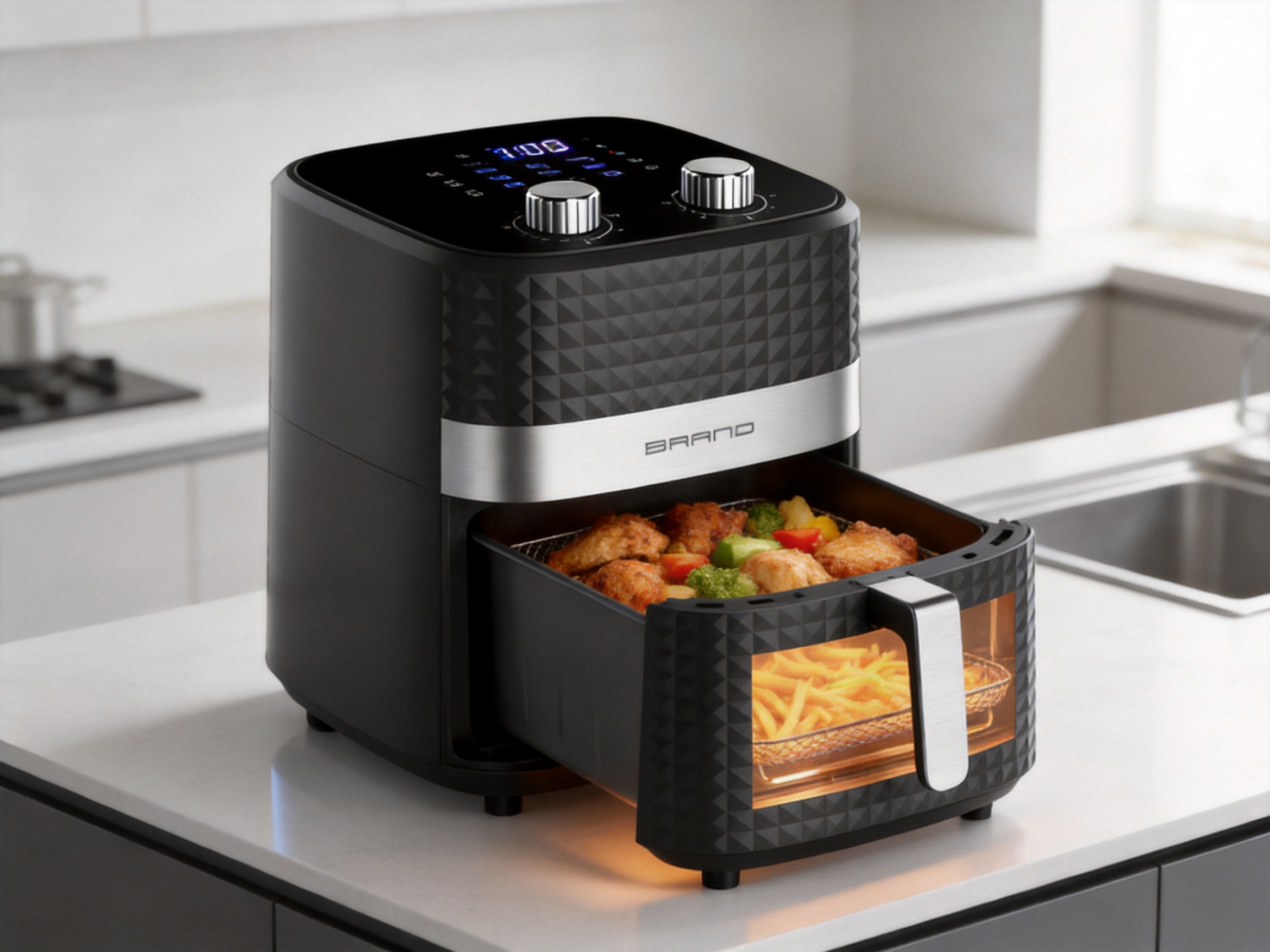
Manufacturing Capability and Product Development
CIXI GSTAR ELECTRIC APPLIANCE CO., LTD. focuses on the design, development, and manufacture of small electric kitchen appliances. Its product range includes blenders, slicers, choppers, food processors, smokeless grills, hot pots, air fryers, and air ovens. The company also produces selected equipment for bars, restaurants, and hotels, including ice buckets, beverage dispensers, pitchers, slicers, and graters.
The company’s history reflects a progression from product sourcing and trading experience toward independent product design and manufacturing. This background can be important because successful appliance manufacturing requires an understanding of both factory operations and market expectations. Knowledge of customer requirements, retail standards, pricing pressures, packaging needs, and international distribution can help guide product development decisions.
The company established its own factory after several years of experience in product sales, sourcing, and development. It later moved into a new factory facility with substantial production and building space. The company information identifies a production area of approximately 15,000 square meters and a building area of approximately 18,000 square meters, while also describing a wholly owned plant and an experienced workforce of more than 200 workers.
The company reports engineering and quality-control resources, including research and development engineers and QC personnel. These functions are important in the development of air fryers because the product requires coordinated work across mechanical design, electrical systems, thermal performance, plastics, user interfaces, packaging, and regulatory considerations.
Advanced Manufacturing Process
The manufacturing process for an air fryer begins before the first production unit is assembled. Product development generally involves market research, feature definition, industrial design, mechanical engineering, electrical planning, component selection, prototype evaluation, and production validation. For a model with a touchscreen LCD display and dual knobs, the design team must coordinate the housing, control panel, display position, wiring, control board, user interface, and thermal structure.
Industrial design establishes the product’s external appearance and user interaction. Engineers then evaluate the available internal space, component placement, airflow paths, heating element position, cooking chamber dimensions, and structural supports. The result must be visually appealing while also being practical to assemble and service.
Tooling and injection molding are important manufacturing stages for plastic housings and internal parts. The PP, PA, ABS, and PC materials listed for the product require appropriate material handling, mold design, processing temperatures, cooling conditions, and dimensional control. Proper tooling can support consistent shape, surface finish, assembly fit, and repeatable production.
Aluminum components may be manufactured or processed for heat-related applications within the appliance. Their dimensions and placement must be controlled because the heating system and airflow path depend on reliable thermal structure. Engineers must also consider insulation and separation between hot areas and exterior surfaces.
Electrical assembly is another central stage. Heating elements, control boards, wiring, sensors, displays, knobs, and safety-related components must be installed according to the approved design. Assembly instructions and workstation controls help ensure that wires are routed correctly, connectors are secure, and parts are fitted consistently.
Functional testing can include power-on checks, display verification, knob response, heating operation, timer operation, temperature control, abnormal-condition checks, and visual inspection. The exact test program depends on the product design, customer requirements, and applicable standards. Testing is valuable because it can identify assembly or component issues before products are packed for shipment.
Packaging development is also part of the manufacturing process. A countertop appliance must be protected against vibration, impact, compression, and handling during transportation. The one-piece-per-carton configuration allows each unit to be individually identified and distributed. Carton dimensions and gross weight are used to plan container loading and warehouse operations.
Research and Development Strengths
The company’s engineering team supports the development of electric products and the adaptation of designs for different markets. Research and development work may include appearance modification, control-interface refinement, capacity adjustments, component optimization, electrical changes, packaging updates, and customer-specific requirements.
R&D capability is particularly valuable when buyers require private-label or customized products. A wholesale customer may need a different logo, color, plug, voltage, language setting, carton design, manual, or control program. Whether a requested change is possible depends on technical and commercial factors, but a manufacturer with internal engineering resources is better positioned to evaluate these requirements efficiently.
Product development also helps the manufacturer respond to market trends. The air fryer category has moved from simple analog devices toward digital interfaces, larger capacities, multiple cooking functions, and more distinctive styling. A dual-knob LCD model reflects the need to combine modern features with practical usability.
Quality Control and Production Management
Quality control extends across incoming materials, production processes, assembly, finished products, and packaging. Incoming inspection may verify plastic parts, electrical components, heating elements, display modules, fasteners, and other materials against approved specifications. Process inspection can focus on assembly accuracy, wire routing, fit, appearance, and operating consistency.
Finished-product inspection gives the factory an opportunity to verify that each appliance meets defined requirements before shipment. Typical checks for a product of this type may include visual appearance, control operation, heating response, display function, timer behavior, noise observation, electrical safety checks, and packaging condition. The final inspection plan should be agreed upon with the buyer where specific standards or sampling requirements apply.
Quality management is also connected to traceability. Production records, inspection results, batch information, and corrective-action procedures can help identify the source of problems and support continuous improvement. For international buyers, the ability to communicate clearly about quality issues is an important part of long-term supplier cooperation.
Efficiency in Wholesale Supply
The product is supplied at one piece per carton, with a stated minimum order quantity of 1,192 pieces. This quantity corresponds to the listed estimated loading capacity for one 40-foot high-cube container. Wholesale buyers can use this information for preliminary purchasing calculations, though final quantities may vary depending on loading methods, packaging revisions, container specifications, and shipping conditions.
The estimated delivery time is 45 to 60 days. Delivery schedules may depend on order confirmation, payment terms, component availability, production planning, testing, packaging approval, and shipping arrangements. Buyers should confirm the final schedule with the manufacturer before placing a purchase order.
Container-loading information is useful for importers planning landed cost. The listed estimate is 438 pieces for a 20-foot container and 1,192 pieces for a 40-foot high-cube container. These figures can assist in preparing freight budgets, warehouse capacity plans, customs documentation, and sales forecasts.
For distributors, a 5-liter air fryer can fit into a broader small-appliance portfolio. It may be sold as a standalone product or combined with complementary kitchen appliances such as blenders, food processors, hot pots, and air ovens. A supplier with a wider product range can simplify sourcing and create opportunities for coordinated retail programs.
Commercial Advantages for Importers and Retailers
Retail competition in the air fryer category is influenced by price, appearance, capacity, controls, packaging, availability, and perceived reliability. This model provides several points that can support a commercial product presentation. Its 5-liter size is easy for consumers to understand, its 1500W rating provides a clear performance reference, and its dual-knob touchscreen LCD interface offers an immediately visible differentiator.
The product can be presented to customers who want the convenience of air frying but do not want an overly complicated appliance. The knobs can communicate simplicity, while the LCD display communicates modern functionality. This positioning can help retailers address multiple customer preferences with one product design.
The appliance also has potential for private-label sales. The final availability of branding, packaging, color, plug, voltage, language, and software changes must be confirmed with the manufacturer. However, the company’s stated design, development, production, and engineering capabilities create a foundation for discussing OEM and ODM requirements.
Reliable supply depends on more than production volume. It requires communication, sample approval, clear specifications, testing procedures, packaging confirmation, and shipment coordination. A manufacturer that can work closely with customers as an engineering partner may provide greater value than a supplier focused only on basic order fulfillment.
Safety, Maintenance, and User Experience
Safe use begins with reading the final instruction manual and following the electrical requirements for the destination market. The appliance should be placed on a stable, level, heat-resistant surface with sufficient clearance around ventilation areas. Users should keep the air fryer away from water sources and should not immerse the electrical body in water.
The cooking basket and related removable components should be handled according to the manufacturer’s instructions. Food residues should be removed after use, and suitable cleaning methods should be followed to protect the surfaces and components. Abrasive tools or unsuitable chemicals may damage finishes or non-stick surfaces if they are not approved for use.
Users should avoid blocking the airflow path or filling the basket beyond the recommended level. Air circulation is essential to the cooking process. When food is overcrowded, hot air may not reach all surfaces evenly, which can affect browning and cooking consistency.
Regular cleaning can support hygiene, performance, and product longevity. The exterior control area should be cleaned carefully with an appropriate cloth rather than exposed directly to water. Any unusual smell, smoke, electrical behavior, or control malfunction should be addressed according to the manual and relevant service procedures.
For commercial buyers, clear user documentation is especially important. Retailers may request manuals, warning labels, quick-start guides, recipes, and packaging information in specific languages. These materials should be reviewed during the order approval process to ensure that they match the target market.
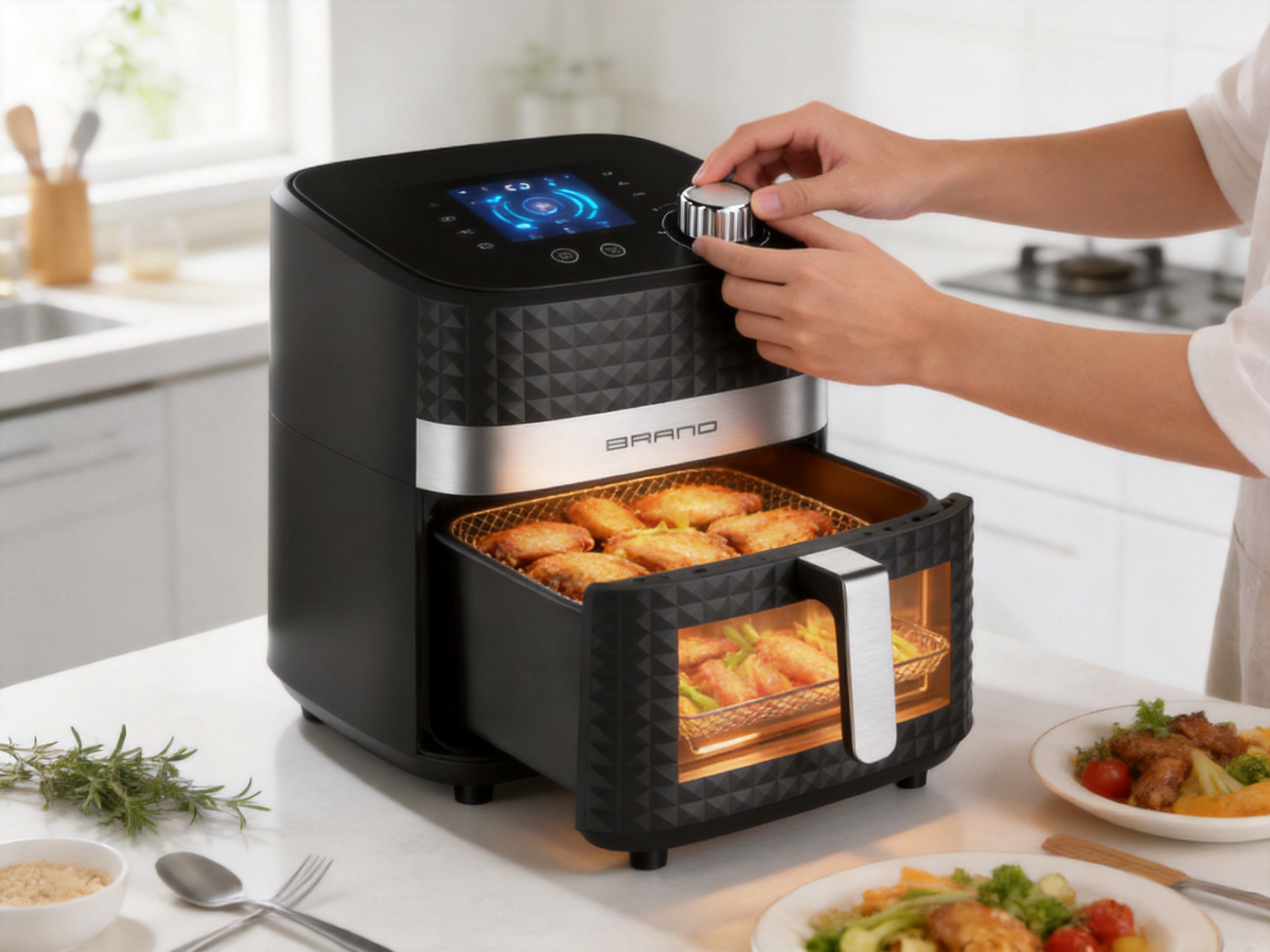
Comparison with Conventional Cooking Methods
Traditional deep frying generally requires a larger quantity of cooking oil and a separate pot or fryer. It can also create more cleanup work and may produce stronger cooking odors. An air fryer uses heated air as the primary cooking medium, allowing many foods to be prepared with little or no added oil, depending on the recipe.
A conventional oven can offer greater overall capacity, but it usually requires more space and may take longer to preheat for small portions. A 5-liter air fryer is convenient when the user wants to prepare a modest quantity without heating a large oven. This can be useful for smaller households, quick meals, and reheating.
A microwave is fast for warming certain foods, but it does not generally provide the same crisping effect as circulating hot air. The air fryer can therefore complement a microwave rather than replace it. Each appliance serves different cooking needs, and the air fryer’s value comes from its ability to provide a compact hot-air cooking method.
Compared with a basic toaster oven, the air fryer’s cooking chamber and airflow design can be more focused on rapid circulation around food. The best choice depends on the consumer’s cooking habits, available space, and desired capacity. The GSE036 model is designed for users who want dedicated air-frying functionality with modern controls.
Environmental and Economic Considerations
Consumers are increasingly interested in appliances that can support efficient daily cooking. An air fryer may help users prepare smaller meals without operating a large oven for every cooking task. The actual energy use depends on cooking duration, selected temperature, food quantity, and local electricity rates, but the compact format can be practical for specific meal occasions.
Reducing the amount of oil used in cooking may also reduce the cost of oil purchases and simplify disposal. The product should not be marketed with unsupported health promises, because dietary outcomes depend on ingredients, preparation methods, and overall eating patterns. Nevertheless, the ability to cook with less added oil is a recognized reason many consumers consider air fryers.
From a manufacturing perspective, efficient production planning, material control, quality inspection, and packaging design can reduce waste and avoid unnecessary rework. A stable production process supports better use of components and helps manufacturers deliver consistent products to customers.
Importers can also consider the product’s serviceability and expected lifespan when evaluating total cost. A product that is properly specified, tested, packaged, and supported may offer better commercial value than an appliance selected solely on the lowest unit price.
Global Market Potential
Air fryers have become popular across many international markets because they address several common consumer needs: quick meal preparation, reduced oil use, compact countertop cooking, and multifunctional convenience. The product information indicates that the manufacturer has supplied electric appliances to customers in different regions and that its air ovens and air fryers have achieved strong sales in Europe and South America.
Market requirements differ by country. Importers should verify voltage, frequency, plug type, language, labeling, energy information, safety standards, electromagnetic compatibility requirements, food-contact requirements, packaging rules, and recycling obligations. Product documentation should be adapted to the destination market rather than used without review.
The model can be relevant to both mature appliance markets and developing retail channels. In mature markets, the dual-control design may appeal to consumers looking for an alternative to highly automated touch-only models. In developing channels, the combination of understandable capacity, modern appearance, and practical controls can support accessible product positioning.
Online retail also creates opportunities for visually distinctive appliances. Product images can show the black finish, LCD display, knob arrangement, basket capacity, and countertop format. Clear specification pages can help customers compare the model with competing products and understand its intended use.
How Buyers Can Evaluate the Product
Wholesale buyers should begin by confirming the exact model, product version, electrical configuration, color, control functions, and packaging contents. The two item numbers, GSE036 and GSE036-1, should be clarified during quotation and sample approval so that the buyer understands whether the versions differ in appearance, control programming, market configuration, or other details.
Buyers should request a product sample or approved reference unit before mass production. Sample evaluation can cover appearance, display readability, knob movement, basket operation, cooking performance, noise, temperature behavior, cleaning convenience, and packaging protection.
Commercial evaluation should also include target retail price, landed cost, container utilization, minimum order quantity, lead time, warranty expectations, spare-part availability, service arrangements, and documentation. A detailed purchase specification helps reduce misunderstandings between buyer and factory.
Testing requirements should be agreed upon in advance. These may include electrical safety testing, temperature testing, endurance checks, drop testing for packaging, materials verification, and market-specific certification. The manufacturer and buyer should identify which tests are factory-controlled and which require third-party laboratories or destination-market approval.
Finally, buyers should assess communication quality. Timely responses, accurate production updates, clear corrective actions, and organized documentation are valuable indicators of supplier professionalism. These factors become increasingly important when orders involve customization or long-term cooperation.
Company Manufacturing Background
CIXI GSTAR ELECTRIC APPLIANCE CO., LTD. began with experience in sales, sourcing, buying-agent services, and product development before expanding its own manufacturing operations. This background gave the company exposure to international customers, retail channels, supplier evaluation, quality control, and market-oriented product selection.
The company later developed its own innovative non-electric products and supplied items to major international retail and wholesale channels. Its subsequent move into electric appliances expanded its manufacturing scope and led to the development of products such as food processors, air ovens, and air fryers.
The company describes a workforce that includes experienced production employees, engineering staff, and quality-control personnel. It also reports a factory and production infrastructure designed to support product development and larger-scale manufacturing. These resources are relevant to buyers seeking a supplier capable of handling product engineering, production organization, quality supervision, and export orders.
Gstar’s stated business philosophy emphasizes innovative products, competitive pricing, quick delivery, after-sales support, and close cooperation with customers. For the air fryer category, these principles translate into a focus on practical features, current market styling, manufacturing consistency, and support for wholesale partnerships.
Why This Model Is a Strong Product Choice
The strongest advantage of this air fryer is the way several practical features are combined in one product. The 5-liter capacity supports everyday household cooking. The 1500W heating system is matched to the product category. The dual knobs provide direct tactile adjustment. The touchscreen LCD display adds visual clarity and modern appeal. The black exterior offers broad aesthetic compatibility.
These features create a product profile that is easy to understand and easy to market. Consumers can recognize the main benefits without needing extensive technical knowledge. Retailers can communicate the product through capacity, power, controls, appearance, and multifunctional use.
The model is also supported by a manufacturer whose capabilities extend beyond assembly. Engineering, product development, tooling coordination, material management, quality control, packaging, and international order planning are all important when supplying small electric appliances at scale.
Compared with a low-cost air fryer that offers only simple controls and limited capacity, this model can provide a more complete user experience. Compared with a highly complex appliance, it can retain the simplicity of direct knob adjustment. This balanced approach may give it broad appeal across different consumer groups.
Q&A
What is the cooking capacity of this air fryer?
The cooking capacity is 5 liters. This size is suitable for everyday household meals, snacks, side dishes, and moderate family portions, depending on the type and arrangement of food.
How much power does the air fryer use?
The rated power is 1500W. Buyers should confirm the voltage and frequency configuration for their destination market before ordering.
What type of controls does the product use?
The air fryer uses two adjustment knobs together with a touchscreen LCD display. This hybrid arrangement combines tactile control with digital visual feedback.
What foods can be prepared in the air fryer?
The appliance can be used for air frying, roasting-style cooking, reheating, crisping, and baking-style preparation of suitable foods. Common examples include potatoes, chicken, fish, vegetables, snacks, sausages, and pastries. Users should follow the final manual for specific cooking guidance.
What materials are used in the product?
The listed material composition includes PP, PA, aluminum, ABS, and PC. Different materials may be used for the housing, structural parts, heat-related components, control areas, and other assemblies.
How is the product packaged?
The listed packaging configuration is one piece per carton. The carton size is 40.9 by 35.7 by 38.8 centimeters, with a net product weight of 5.0 kilograms and a gross weight of 6.0 kilograms.
What is the minimum order quantity?
The stated minimum order quantity is 1,192 pieces. This quantity corresponds to the listed estimated loading quantity for one 40-foot high-cube container.
How long is the delivery time?
The stated delivery time is 45 to 60 days. The final schedule should be confirmed according to order details, production capacity, component availability, approvals, and shipping arrangements.
Can the product be customized?
Customization possibilities should be discussed directly with the manufacturer. Potential topics may include branding, packaging, color, plug type, voltage, language, labels, manuals, and other market-specific requirements. Technical feasibility, minimum order quantities, tooling, and approval procedures should be confirmed before ordering.
What should importers verify before purchasing?
Importers should verify the exact model version, electrical specifications, certifications, labeling, packaging, user documentation, warranty terms, quality requirements, shipping schedule, and destination-market regulations. A production sample and approved specification sheet are recommended before mass production.
How should the air fryer be cleaned?
The appliance should be cleaned according to the final user manual. Removable cooking components should be handled as instructed, while the electrical body and control area should be kept away from direct water exposure. Users should avoid abrasive cleaning methods that may damage surfaces.
What makes the product different from a basic air fryer?
Its main points of differentiation are the 5-liter capacity, 1500W power rating, dual adjustment knobs, touchscreen LCD display, multifunctional positioning, and modern black design. The combination offers both tactile simplicity and digital visual control.
Conclusion
The 5L Multifunctional Air Fryer with Dual Knob and Touchscreen LCD Control is designed for consumers who want convenient hot-air cooking in a practical countertop format. Its 5-liter capacity supports a broad range of daily cooking tasks, while the 1500W heating system provides a clear performance specification for household and wholesale evaluation.
The dual-knob interface and LCD display are central to the product’s appeal. They combine the directness of physical controls with the modern appearance and visual confirmation of a digital interface. This balanced design can help the model compete with both basic dial-operated air fryers and fully touch-controlled appliances.
For distributors and importers, the product also benefits from the manufacturing resources of CIXI GSTAR ELECTRIC APPLIANCE CO., LTD. The company’s experience in small kitchen appliances, product development, engineering, production, quality control, packaging, and international supply provides a foundation for wholesale cooperation.
With a clear feature set, useful capacity, contemporary styling, and a manufacturer focused on customer cooperation, this air fryer can serve as a competitive addition to household appliance portfolios. Final purchasing decisions should be based on approved samples, complete technical documentation, market compliance, agreed quality standards, and confirmed commercial terms.
References
1. Product specification sheet for Air Fryer model GSE036/GSE036-1, including power, capacity, materials, packaging, logistics, and delivery information.
2. Manufacturer-provided company profile for CIXI GSTAR ELECTRIC APPLIANCE CO., LTD., including product categories, factory development, engineering resources, quality-control organization, and international market experience.
3. General principles of hot-air cooking appliance design, including heating, airflow circulation, temperature control, cooking-chamber capacity, and user-interface considerations.
4. General guidance for household electrical-appliance safety, cleaning, labeling, packaging, transportation, and destination-market compliance.
5. General sourcing and quality-management practices for small electric kitchen appliances, including sample approval, incoming inspection, process control, finished-product testing, and shipment verification.
Manufacturer contact information: CIXI GSTAR ELECTRIC APPLIANCE CO., LTD., No. 111 Jing Qi Road, Chongshou Town, Cixi, Ningbo, China. Telephone: +86-57463271135. Sales contact: +86-13884446300. Email: [email protected].