
 English
 中文简体
中文简体 Español
 English
 中文简体
中文简体 Español
Fresh citrus juice is one of the simplest ways to bring flavor, nutrition, aroma, and visual appeal into daily life. Whether used at breakfast, in family meals, in restaurants, in hotel beverage service, or in small food preparation areas, a dedicated citrus juicer can turn oranges, lemons, limes, grapefruits, and similar fruits into clean, refreshing juice with far less effort than hand squeezing. The Citrus Juicer GSE017 and GSE018 models are designed for this practical need: compact electric juicing, straightforward operation, dependable output, and efficient production for wholesale, retail, and private-label supply.
The product belongs to the citrus juicer category within the broader field of small electric kitchen appliances and daily household necessities. It is suitable for buyers looking for simple, accessible, and market-ready appliances that combine attractive pricing, daily usability, and export-ready certification support. With two model options, different power ratings, different capacities, and different carton configurations, the GSE017 and GSE018 allow distributors, supermarket buyers, brand owners, and appliance importers to choose the version that best matches their target market, shelf positioning, and logistics requirements.
Behind the product is CIXI GSTAR ELECTRIC APPLIANCE CO., LTD., a manufacturer with experience in designing, developing, and producing small electric kitchen appliances as well as practical home and food-service products. The company’s product background includes blenders, slicers, choppers, food processors, smokeless grills, hot pots, air fryers, air ovens, beverage dispensers, pitchers, graters, ice buckets, and other household or hospitality products. This broad manufacturing experience gives the company a practical understanding of plastics, motors, appliance structure, usability, quality control, packaging, and international market expectations.
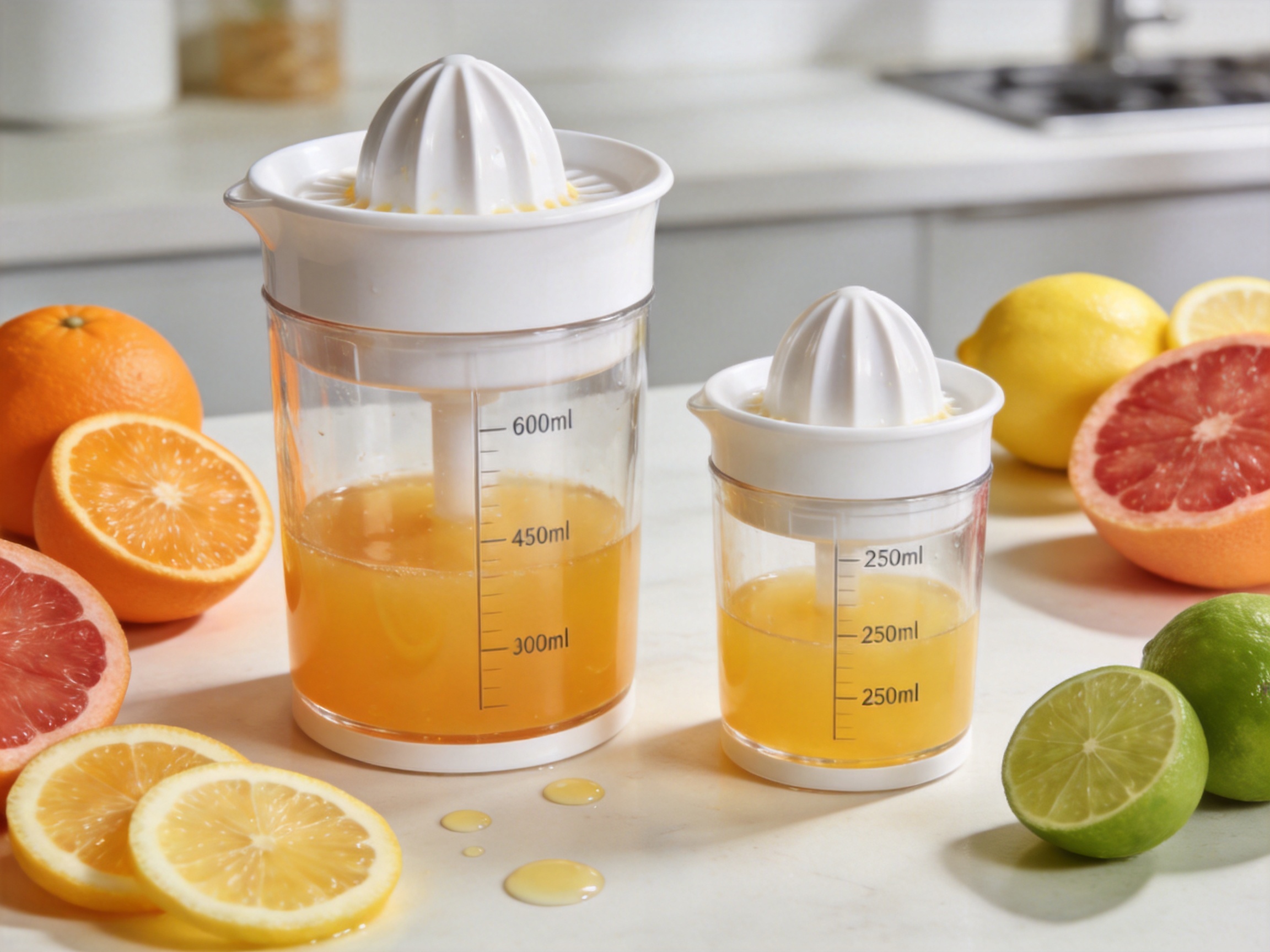
Product Overview: Two Practical Citrus Juicer Options
The Citrus Juicer GSE017 and GSE018 are compact electric citrus juicers developed to make citrus extraction easier, cleaner, and more consistent than manual squeezing. Both models are intended for everyday users who want a convenient appliance with a simple working principle: cut the fruit, press it onto the juicing cone, collect the juice, and serve. Their design philosophy is not excessive complexity, but dependable function, cost-effective production, and ease of use for consumers.
The GSE017 is a 30-watt citrus juicer with a 500 ml capacity and a carton packing configuration suitable for high-volume distribution. It uses PP and AS materials, which are widely used in household appliance components because they support practical forming, lightweight structure, and suitable contact surfaces when correctly specified for food-use applications. The 500 ml capacity makes this model especially attractive for family breakfast use or for users who prepare several servings at once.
The GSE018 is a 45-watt citrus juicer with a 250 ml capacity. It uses a more varied material combination including PP, PA, ABS, AS, POM, copper, and PC components, according to the provided specification. With higher power and a smaller capacity, this model can appeal to users who value compactness and stronger motor performance in a smaller collection format. Its carton packing configuration of 12 pieces per carton may also suit buyers who prefer lower carton counts, easier warehouse handling, or more robust individual packing approaches depending on final packaging design.
The availability of two related models gives commercial buyers useful flexibility. A buyer targeting family-size use, promotional retail, or larger juice collection may prefer the GSE017. A buyer targeting compact kitchens, single-serving use, or a higher-power specification may prefer the GSE018. This dual-model strategy helps wholesalers and retailers segment their product range without having to move away from the same supplier and product category.
Key Product Specifications
The following table summarizes the main specifications of the two citrus juicer models based on the available product information. Some commercial labels have been adjusted for clarity so that capacity and carton quantity are easier to understand.
| Specification | GSE017 | GSE018 |
| Product Type | Electric Citrus Juicer | Electric Citrus Juicer |
| Power | 30 W | 45 W |
| Capacity | 500 ml | 250 ml |
| Main Materials | PP and AS | PP, PA, ABS, AS, POM, copper, ABS, and PC |
| Pieces per Carton | 24 pieces per carton | 12 pieces per carton |
| Carton Size | 69.5 x 42.5 x 56.7 cm | 43.5 x 29.5 x 57 cm |
| Net Weight per Carton | 14.2 kg | 12.4 kg |
| Gross Weight per Carton | 20.0 kg | 13.0 kg |
| 20-Foot Container Loading | 3624 pieces | 4200 pieces |
| 40-Foot High-Cube Container Loading | 7548 pieces | 10080 pieces |
| Minimum Order Quantity | 2000 pieces | 4200 pieces |
| Certification Support | CE, GS, CB, RoHS, LFGB, FDA | CE, GS, CB, RoHS, LFGB, FDA |
Why an Electric Citrus Juicer Still Matters in Modern Kitchens
Many modern kitchens already contain multipurpose appliances, such as blenders, food processors, and high-speed juicing machines. However, a citrus juicer remains relevant because citrus fruit has its own extraction requirements. Oranges, lemons, limes, and grapefruits are soft, segmented fruits with aromatic juice that can be released efficiently by pressure and rotation. A dedicated citrus juicer is often easier to clean and simpler to operate than a large multifunction appliance.
For consumers, this means less preparation time and less cleanup. There is no need to peel the fruit fully, cut it into small pieces, push it through a complex feed tube, or wash a large set of blades and filters. A citrus juicer typically uses a cone, a collecting container, and a small number of removable parts. This simple structure is a major selling point, especially for users who want fresh juice frequently but do not want the inconvenience of a larger machine.
For retailers, this product category is attractive because citrus juicers are understandable at first glance. Customers can quickly understand what the appliance does, how it benefits them, and where it fits in the kitchen. This lowers the need for extensive sales education. It also makes the product suitable for supermarkets, online marketplaces, home appliance stores, department stores, promotional campaigns, and seasonal displays related to health, breakfast, summer beverages, or home cooking.
For hospitality and light commercial environments, citrus juicers can support beverage preparation in breakfast service, bar garnishing, small café menus, and restaurant kitchens. While these models are primarily positioned as small electric kitchen appliances, their straightforward structure and practical capacity choices make them relevant for controlled, moderate-volume use where fresh citrus flavor is needed without investing in heavy commercial machinery.
Advantages Over Competing Citrus Juicers
Balanced Power for Everyday Extraction
One of the key competitive points of the GSE017 and GSE018 is the availability of two power levels. The 30-watt GSE017 offers a practical power rating for standard household citrus juicing. It is suitable for users who value energy efficiency, simple operation, and moderate everyday use. The 45-watt GSE018 provides a higher power option, which can be appealing in markets where shoppers compare motor ratings and want a stronger specification in a compact appliance.
Some competing low-cost citrus juicers may provide only one option, forcing buyers to accept a single specification for all market segments. By offering both 30 W and 45 W models, the product line supports differentiated positioning. Retailers can present one model as a family-capacity option and the other as a compact higher-power option. Importers can also select the most suitable model according to local consumer expectations and price points.
Capacity Choice for Different User Habits
The GSE017 offers 500 ml capacity, which is well suited for family use or for preparing multiple servings. This can be a meaningful advantage over very small juicers that require frequent emptying. A larger container can improve convenience during breakfast preparation, weekend brunch, or when preparing juice for recipes, marinades, salad dressings, desserts, or cocktails.
The GSE018 offers 250 ml capacity, which is appropriate for compact kitchens and single-serving preparation. Many households increasingly value appliances that occupy less space and match smaller daily portions. A smaller container can also encourage quick use and quick cleaning. This makes the GSE018 especially suitable for users living in apartments, dormitories, small homes, or urban kitchens where storage space is important.
Export-Ready Certification Range
The listed certifications include CE, GS, CB, RoHS, LFGB, and FDA. This certification range is highly important for international buyers. It indicates that the product line is developed with attention to electrical safety, food-contact considerations, chemical restrictions, and market compliance expectations. While final import requirements may vary by country and by customer specification, having such certification support can shorten the product evaluation process for buyers.
Many competing suppliers may compete primarily on price but may lack complete documentation, test support, or experience with certification requirements. For professional buyers, compliance is not optional. A product that cannot pass market entry requirements can create costly delays, inventory risk, and legal exposure. The GSE017 and GSE018 therefore stand out not only as appliances, but as commercially prepared products for organized supply chains.
Efficient Container Loading for Wholesale Distribution
For importers and distributors, carton and container loading data are essential. The GSE017 can load approximately 3624 pieces in a 20-foot container and 7548 pieces in a 40-foot high-cube container. The GSE018 can load approximately 4200 pieces in a 20-foot container and 10080 pieces in a 40-foot high-cube container. These figures help buyers calculate landed cost, warehouse planning, retail distribution, and promotional order quantities.
The GSE018 is particularly strong in container loading efficiency due to its compact capacity and carton configuration. For buyers running large retail programs or e-commerce supply, higher loading quantity can reduce per-unit freight allocation. The GSE017, with its larger capacity, provides strong consumer value while still maintaining organized carton logistics. This gives buyers the ability to choose between capacity emphasis and loading-density emphasis.
Material Selection for Function and Durability
The use of PP and AS in the GSE017 provides a practical material solution for a lightweight and user-friendly appliance. PP is widely valued for its toughness, chemical resistance, and suitability in many food-related plastic components. AS can provide clarity and rigidity in appropriate parts, helping consumers see juice volume and maintain a clean visual impression.
The GSE018 includes a broader material combination, including PP, PA, ABS, AS, POM, copper, and PC components. Each material can play a different role in appliance construction. PA and POM are often used in functional parts requiring toughness or wear resistance. ABS can support housing strength and surface finish. Copper is associated with electrical conductivity in motor or wiring-related elements. PC can provide impact resistance and clarity in selected components. This kind of material allocation reflects a more engineered structure than a simple single-plastic product.
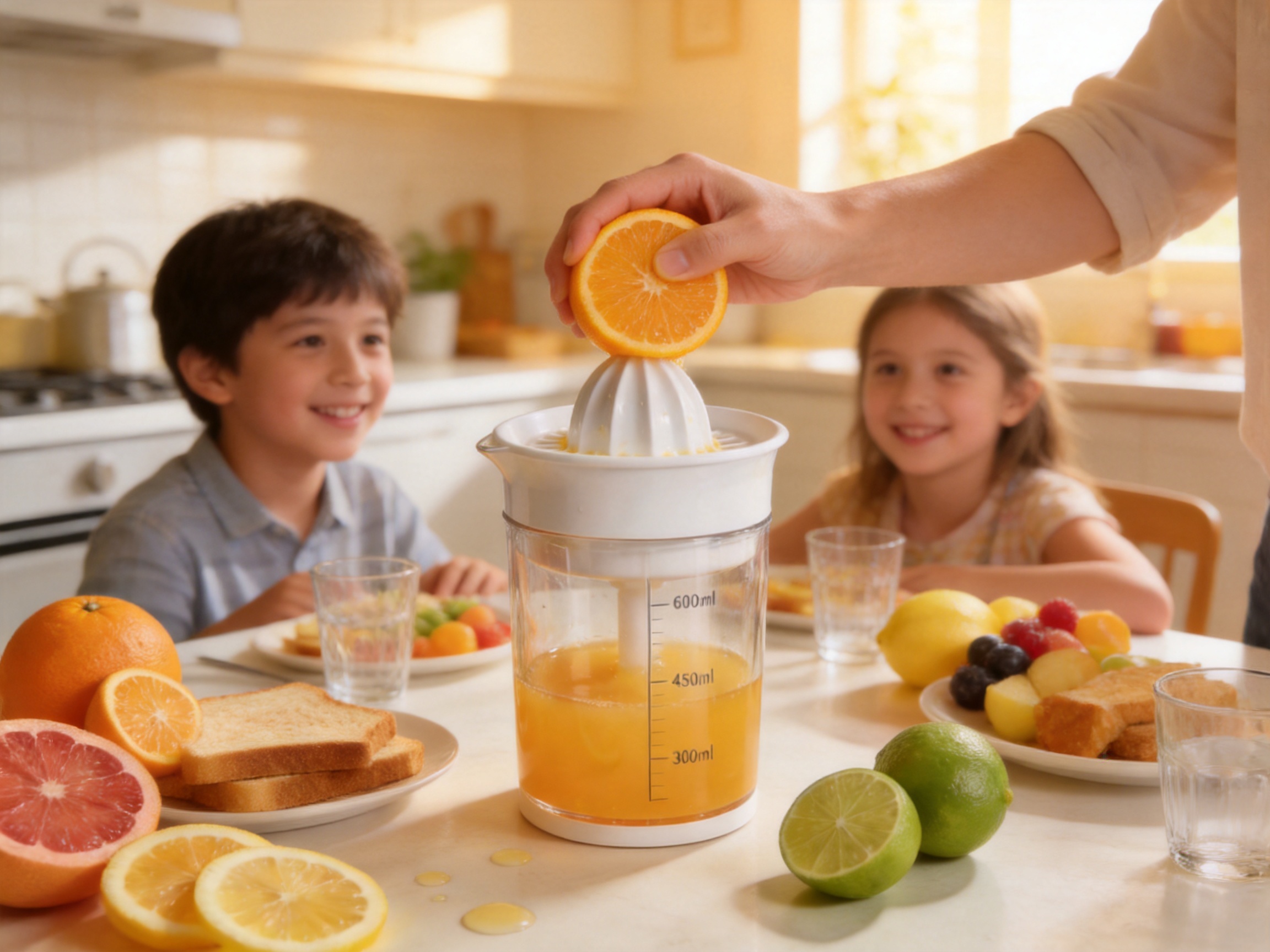
User Experience: Simple, Clean, and Convenient
A successful small kitchen appliance must not only look good on a shelf; it must also be easy to use repeatedly. The main advantage of a citrus juicer is that it reduces the effort needed to extract juice. Manual squeezing can be tiring, inconsistent, and messy. Seeds may fall into the juice, pulp may scatter, and juice may drip across the counter. An electric citrus juicer provides a controlled surface for pressing the fruit and a dedicated collection area for the juice.
Users can prepare citrus juice with minimal learning. They cut the fruit in half, place it on the cone, press gently, and allow the motorized action to assist extraction. The container collects juice directly. After use, removable parts can be rinsed. This simple routine is a core reason why citrus juicers remain popular even in households that own larger appliances.
For health-conscious consumers, the product supports fresh preparation. Fresh citrus juice can be consumed without added sugar, artificial flavor, or preservatives. It can also be used as an ingredient in cooking. Lemon juice brightens fish, chicken, salads, and sauces. Lime juice is useful for beverages, desserts, and marinades. Orange juice is a breakfast staple and can also be used in glazes, dressings, and baked goods. Grapefruit juice appeals to users who prefer a slightly bitter and aromatic flavor.
The appliance also supports portion control. With clear capacity options, users can prepare the quantity they need instead of opening a large packaged beverage. This reduces waste and allows a fresher taste. In the case of GSE017, the larger capacity is suited to shared servings. In the case of GSE018, the smaller capacity supports quick individual use.
Design Value for Retail and Private-Label Buyers
Private-label buyers and distributors often need more than a working product. They need a product that can be adapted to packaging, branding, instruction manuals, certification documents, and market positioning. The GSE017 and GSE018 are suitable for this type of commercial development because they are straightforward appliances with clear specifications, recognized use cases, and common consumer appeal.
A citrus juicer can be positioned in several ways. It can be sold as an affordable daily kitchen appliance, a healthy lifestyle product, a breakfast accessory, a compact apartment appliance, a holiday gift, or a seasonal summer beverage tool. This flexibility helps retailers run different campaigns without changing the product category. It can be placed near fruit displays, breakfast appliances, beverage accessories, or general household goods.
Packaging can emphasize freshness, ease of use, compact design, and efficient extraction. For the GSE017, packaging may highlight the 500 ml capacity and family convenience. For the GSE018, packaging may highlight the 45 W power and compact 250 ml format. Depending on the target market, visual presentation can be adjusted toward modern minimalism, colorful family use, practical value, or premium compact appliance styling.
Compared with complex appliances, a citrus juicer also has a lower barrier for customer acceptance. It does not require extensive recipe education or complicated demonstrations. A simple product image showing citrus fruit and fresh juice can communicate the benefit immediately. This makes it especially useful for promotional retail programs and online listings where consumers make quick decisions based on visible utility.
Manufacturing Strength Behind the Product
The competitive value of the GSE017 and GSE018 is strengthened by the manufacturing background of CIXI GSTAR ELECTRIC APPLIANCE CO., LTD. The company has developed from trading and sourcing experience into product design, development, and manufacturing. This history is important because it combines an understanding of customer requirements, international market price sensitivity, product innovation, and factory execution.
The company’s founder gained early experience in export sales, product sourcing, factory selection, quality control, and television shopping products. These experiences helped build an understanding of what makes a product commercially successful: practical function, attractive price, reliable quality, and marketable features. Later, the company shifted toward designing and developing its own products, including patented and innovative household items. This background supports the development of appliances that are not merely copied, but adapted to real customer needs.
The company operates its own production facilities and has expanded into electric products. The manufacturing site includes a significant production area and an experienced workforce. The provided company information states that the factory has occupied a large modern facility and has grown with experienced workers, research and development engineers, and quality control personnel. This structure supports stable production, product improvement, and order execution for international buyers.
Having in-house manufacturing strength matters greatly in small appliance supply. A supplier that controls production can manage tooling, injection molding, assembly, inspection, packing, and shipment coordination more effectively than a purely trading company. It can also respond more directly to technical issues, customer feedback, and customization requests. For buyers of citrus juicers, this means a more reliable partnership from sample development to mass shipment.
Advanced Manufacturing Processes and Quality Control
Product Development and Engineering
Small electric appliances require coordination between mechanical design, electrical design, materials, safety, ergonomics, and production cost. The development process begins with product purpose: what the appliance should do, how users will interact with it, what capacity is required, what motor rating is appropriate, and how the product can be manufactured efficiently. For the GSE017 and GSE018, the goal is clear: convenient citrus extraction in compact formats.
Engineering teams consider part geometry, assembly sequence, motor placement, stability, container structure, and user cleaning. The design must allow juice to flow properly, parts to fit securely, and the unit to remain easy to operate. Because the appliance is intended for repeated kitchen use, contact surfaces, plastic strength, and user handling must be considered carefully.
Material Processing and Component Production
The product uses a variety of plastic materials selected according to functional requirements. In manufacturing, plastic parts are typically formed through injection molding. This process allows consistent shape, repeatable dimensions, and efficient mass production. For an appliance such as a citrus juicer, molded parts may include housing, juice container, cone, lid, filter, and internal supports depending on the specific design.
Injection molding quality depends on mold precision, material control, temperature management, cycle time, and part inspection. A well-managed molding process helps reduce defects such as warping, sink marks, flash, weak edges, or poor fit. For a juicer, accurate fit is especially important because removable parts must assemble smoothly and juice-contact components should be easy to clean.
Motor and Electrical Assembly
Electric citrus juicers rely on a small motor system to rotate or assist the juicing cone. Assembly must ensure that electrical components are correctly installed, wires are positioned safely, and the motor operates as intended. Power ratings of 30 W and 45 W allow the two models to serve different performance expectations while remaining in the category of compact household appliances.
Electrical assembly must follow safety principles such as insulation, secure connections, correct switch action, and protection against improper contact. Testing during production may include power-on checks, rotation checks, noise checks, and visual inspection. For export markets, attention to electrical standards is essential because buyers require products that can pass certification and customer audits.
Assembly Line Control
After components are produced, they are assembled into finished products. A controlled assembly line improves efficiency and consistency. Workers follow standard procedures to install internal parts, attach housings, fit containers, check removable accessories, and prepare products for packaging. Clear work instructions help reduce variation between units.
In appliance manufacturing, small mistakes can create customer dissatisfaction. A misaligned part may affect rotation. A loose component may create noise. A poor fit may make cleaning difficult. Therefore, assembly control is a major part of product quality. The company’s experience with a wide range of kitchen appliances supports this type of production discipline.
Inspection and Reliability Checks
Quality control is not only a final step; it is a system throughout production. Incoming material inspection helps verify that plastics and components meet requirements. In-process inspection checks molded parts and assembly quality. Final inspection confirms appearance, function, packaging, and accessories. For citrus juicers, important inspection points may include motor operation, stability, surface appearance, container fit, power performance, and labeling accuracy.
The company’s quality control team helps support international buyer confidence. Buyers who import thousands of units need consistency across cartons and shipments. A strong QC process reduces after-sales complaints, returns, and brand risk. It also helps maintain long-term cooperation between manufacturer and buyer.
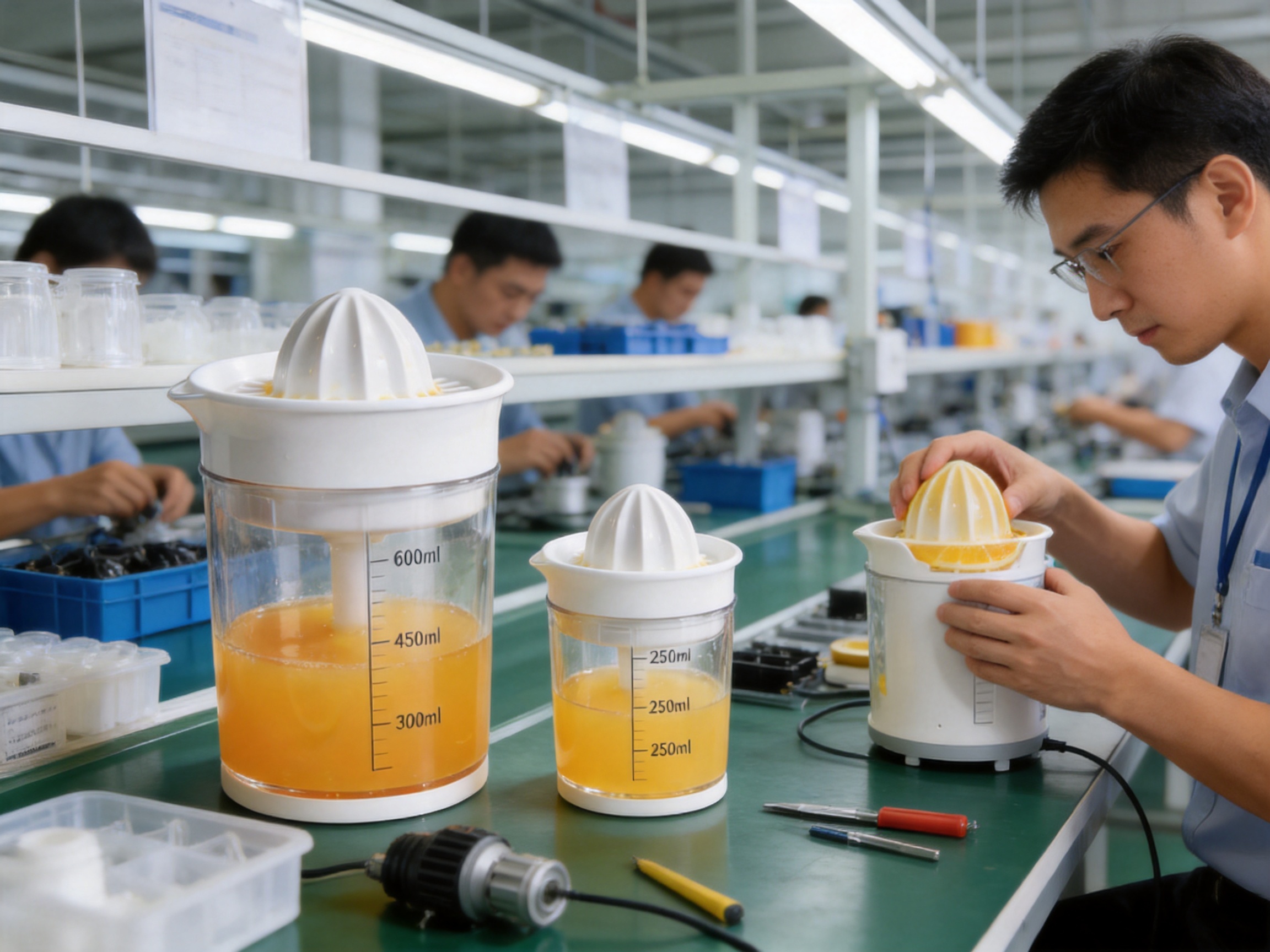
Company Capabilities Supporting Global Buyers
CIXI GSTAR ELECTRIC APPLIANCE CO., LTD. is located in Cixi, Ningbo, China, an area known for manufacturing and export activity. Its position supports access to supply chains, logistics services, component suppliers, and international shipping resources. For overseas buyers, supplier location can influence communication, lead time, cost control, and shipping efficiency.
The company’s product range demonstrates experience across both electric and non-electric household categories. It has developed and manufactured small kitchen appliances such as blenders, slicers, choppers, food processors, smokeless grills, hot pots, air fryers, and air ovens. It also has experience with products for bars, restaurants, and hotels, including beverage dispensers, pitchers, ice buckets, slicers, and graters. This broad experience provides useful knowledge of food-contact products, consumer use patterns, packaging requirements, and export documentation.
The company has served demanding retail and international markets, including well-known supermarket and retail channels mentioned in its background. Experience with large buyers can help a manufacturer understand the importance of stable production, cost transparency, inspection procedures, packaging strength, barcode accuracy, instruction manual quality, and delivery timing. These are all important when supplying a product such as the GSE017 or GSE018 citrus juicer.
The company emphasizes high-quality innovative products, competitive pricing, quick delivery, and after-sales service. For global buyers, these four points are central to supplier selection. High quality protects the buyer’s brand. Competitive price supports retail margin. Quick delivery helps meet seasonal campaigns. After-sales service supports long-term cooperation when questions, improvements, or spare part needs arise.
Application Scenarios
Home Breakfast Use
The most obvious application is home breakfast preparation. Consumers can quickly prepare orange juice or mixed citrus juice without relying on packaged drinks. The GSE017 is especially suitable for families because of its 500 ml capacity. Parents can prepare juice for children, couples can make shared drinks, and users can prepare juice for breakfast tables with reduced effort.
Cooking and Food Preparation
Citrus juice is widely used in cooking. Lemon juice can balance rich sauces, prevent fruit browning, and brighten seafood dishes. Lime juice is common in marinades and fresh salads. Orange juice can be used in desserts, glazes, and beverages. A dedicated citrus juicer encourages users to prepare fresh juice as an ingredient rather than relying on bottled alternatives.
Small Apartments and Urban Kitchens
The GSE018 is well matched to smaller kitchens. Its 250 ml capacity and compact positioning make it suitable for users who do not want large appliances occupying counter or cabinet space. In urban markets, compact appliance design is increasingly important because many consumers live in apartments where every kitchen item must justify its space.
Hotels, Cafés, and Light Hospitality
For light-duty hospitality settings, citrus juicers can support breakfast stations, small cafés, guest rooms, beverage counters, and back-of-house preparation. While heavy commercial equipment may be required for continuous high-volume operation, compact electric citrus juicers remain useful in settings where moderate fresh citrus preparation is needed.
Retail Promotions and Gift Programs
Citrus juicers are suitable for seasonal promotions, holiday gift bundles, wellness campaigns, and home appliance sales. Their function is easy to communicate, and their price positioning can be attractive for impulse purchase. The two-model structure supports different retail strategies, from value family capacity to compact higher-power positioning.
How the Product Supports Healthy and Practical Living
Consumers increasingly seek products that make healthy routines easier. A citrus juicer supports this trend by making fresh juice preparation accessible. Freshly squeezed citrus juice offers flavor and aroma that packaged juice often cannot match. It also allows users to avoid unnecessary sweeteners or additives. While moderation is still important in any diet, freshly prepared juice can be part of a balanced lifestyle.
The product also supports mindful consumption. Users can squeeze only what they need. This can reduce waste from large beverage containers and allow the use of fresh fruit that might otherwise remain unused. A lemon or orange nearing full ripeness can quickly become useful juice for drinking, cooking, or baking.
Practical living is not only about health; it is also about saving time. An appliance that is easy to use and clean is more likely to become part of daily habits. Large appliances often remain unused because setup and cleanup are inconvenient. A citrus juicer avoids much of that friction. It can be placed on the counter, used quickly, rinsed, and stored.
Commercial Benefits for Importers and Distributors
Importers and distributors must consider the entire commercial lifecycle of a product, not only its technical function. The GSE017 and GSE018 offer several benefits in this regard. First, the products belong to a stable and easily understood category. Citrus juicers are not a short-lived novelty; they serve a recurring kitchen need. Second, the two-model range helps buyers target multiple price and capacity segments. Third, the certification support improves readiness for international sale.
Minimum order quantities are clearly defined: 2000 pieces for the GSE017 and 4200 pieces for the GSE018. This allows buyers to plan sourcing budgets and promotional campaigns. Container loading data also allow more accurate landed-cost calculation. For large retail programs, the ability to estimate freight allocation and warehouse volume before ordering is a practical advantage.
Because the manufacturer has experience with many appliance categories, buyers may also develop broader cooperation beyond citrus juicers. A distributor may source citrus juicers together with food processors, choppers, air fryers, or other small kitchen appliances. Consolidating product development with a capable manufacturer can reduce communication complexity and support long-term category planning.
Comparison with Typical Market Alternatives
In the market, citrus juicers vary widely. Some are manual tools with no motor. They are inexpensive but require more effort and may produce inconsistent results. Some are large high-end appliances with advanced features but higher cost and larger size. Others are low-cost electric models that may lack strong certification support or consistent production quality.
The GSE017 and GSE018 occupy a practical middle ground. They provide electric operation without excessive complexity. They offer specifications that are easy for consumers and retailers to understand. They are supported by export certifications and by a manufacturer experienced in international appliance supply. This balance makes them suitable for volume retail and private-label programs where reliability, cost, and usability must work together.
Compared with manual squeezers, the electric function reduces user effort and improves convenience. Compared with complex juicing machines, these models are easier to clean and more specialized for citrus. Compared with unverified low-cost products, the certification support and manufacturing background provide a stronger commercial foundation. Compared with single-model suppliers, the availability of both 30 W and 45 W options gives buyers more flexibility.
Packaging, Logistics, and Supply Chain Considerations
Packaging is critical for small appliances. It must protect the product during transport, present the product attractively at retail, and communicate important information to consumers. The carton sizes and gross weights provided for the GSE017 and GSE018 help buyers plan warehousing and distribution. For the GSE017, the carton size is 69.5 x 42.5 x 56.7 cm with 24 pieces per carton. For the GSE018, the carton size is 43.5 x 29.5 x 57 cm with 12 pieces per carton.
These carton configurations reflect different product and packing strategies. A 24-piece carton for the GSE017 can support efficient bulk handling. A 12-piece carton for the GSE018 may be easier for some warehouse teams to move and manage due to lower gross weight. Buyers can evaluate which carton format best fits their supply chain.
Container loading quantities are also important. The GSE018’s higher 40-foot high-cube loading quantity of 10080 pieces can be highly attractive for large-scale distribution. The GSE017’s 7548 pieces in a 40-foot high-cube container remains suitable for larger-capacity positioning. Freight costs can fluctuate significantly, so loading efficiency is a real competitive factor.
In addition, a manufacturer with export experience can help coordinate packaging marks, instruction manuals, label requirements, plug specifications where applicable, and customer inspection processes. These details often determine whether an order runs smoothly. A product may be well designed, but if shipping marks, manuals, or packaging are not handled correctly, buyers may face delays. Experienced suppliers reduce such risks.
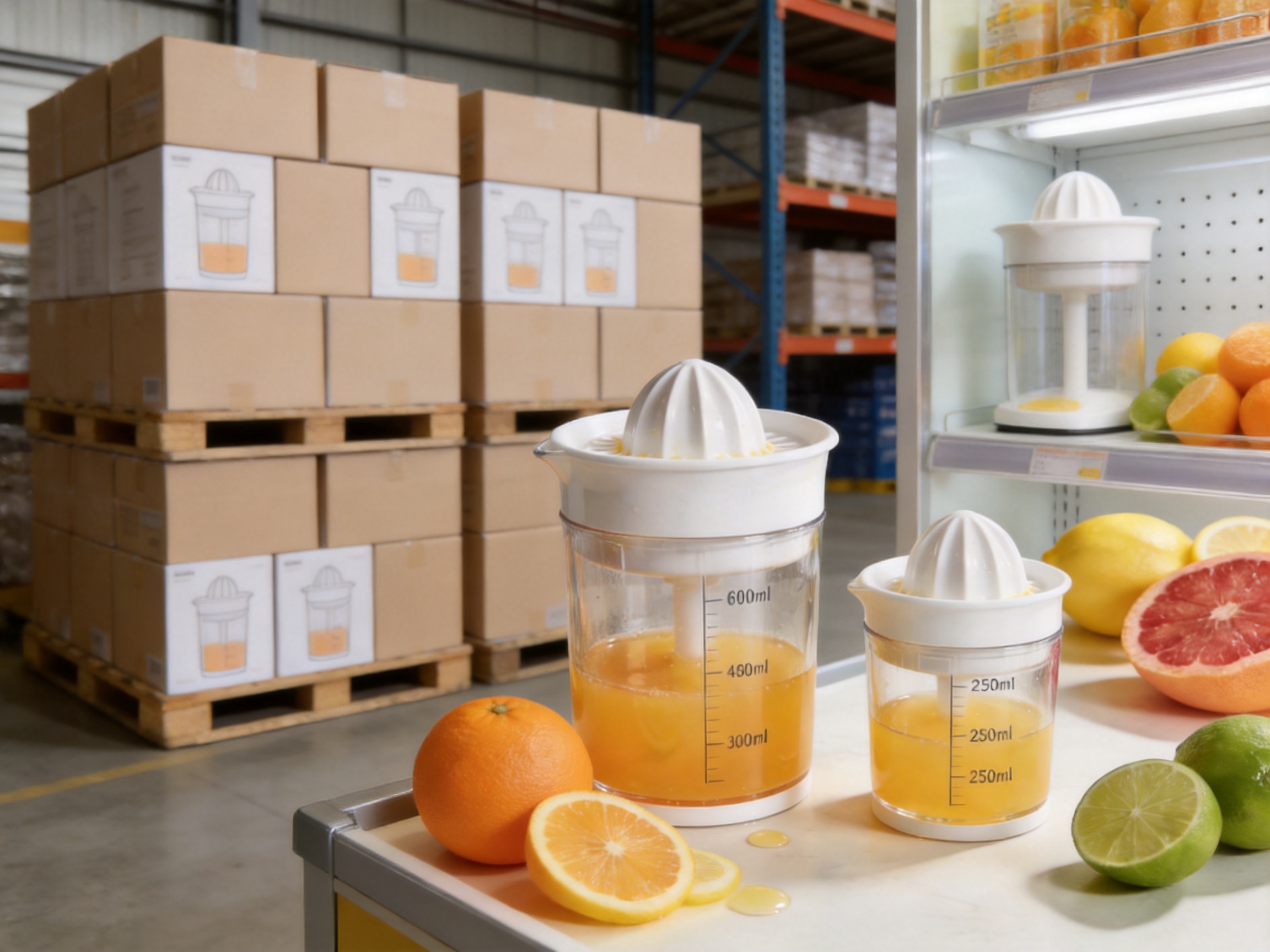
Quality, Safety, and Compliance Value
Electrical appliances that come into contact with food-related use require careful safety and compliance management. The listed certifications of CE, GS, CB, RoHS, LFGB, and FDA show that the product line is aligned with major buyer concerns. CE relates to European conformity requirements. GS is recognized for tested safety in certain markets. CB supports international electrical safety recognition. RoHS addresses restrictions on hazardous substances. LFGB and FDA are relevant to food-contact considerations in European and United States contexts.
For buyers, certification support reduces risk. It can make product approval easier with retailers, customs, and internal compliance departments. It also supports consumer trust, especially in markets where shoppers and regulators pay close attention to electrical and food-contact safety. Compliance is not merely paperwork; it reflects design discipline, material control, and production consistency.
Safety also includes user-friendly operation. A good citrus juicer should be stable during use, easy to assemble correctly, and simple to clean. Parts that contact juice should be suitable for the intended use. Electrical parts should be protected from normal kitchen conditions. While consumers may not see internal design details, they experience the result through smooth operation and reliable performance.
Why Manufacturer Experience Matters
Many buyers underestimate the importance of supplier history. A citrus juicer may appear simple, but mass-producing thousands of consistent units requires manufacturing discipline. The company’s experience from non-electric innovative products to modern electric appliances has built a foundation in product development, tooling, plastic processing, assembly, and quality control.
The company’s growth into air ovens, air fryers, food processors, and other electric appliances indicates the ability to handle more complex product categories. This benefits even a compact citrus juicer because the same factory culture of testing, assembly control, and export management applies. A manufacturer that understands motors, heating appliances, and multifunction kitchen products is well positioned to produce simpler electric appliances with consistency.
Research and development capability is another advantage. Markets change quickly. Buyers may request color changes, packaging updates, plug variants, manual language changes, or design improvements. A manufacturer with engineering support can evaluate these requests more effectively. It can help buyers adjust products for local markets while maintaining safety and cost control.
The company’s quality control team also supports buyer confidence. QC personnel can monitor production, inspect components, and maintain standards across batches. For retailers, after-sales issues can be expensive and damaging. Strong factory QC helps reduce defect rates and supports better consumer reviews.
Market Positioning Recommendations
For the GSE017
The GSE017 can be positioned as a family-friendly citrus juicer with a useful 500 ml capacity. Marketing messages can emphasize fresh breakfast juice, easy operation, convenient serving size, and practical household value. It is suitable for retail channels that target families, home cooks, and consumers who want a simple appliance for everyday use.
Its 30 W power rating can be presented as suitable for efficient household citrus extraction. The larger capacity is the main selling point. Packaging can show a pitcher of fresh orange juice, family breakfast scenes, or citrus ingredients for cooking. Because it packs 24 pieces per carton, it can support promotional programs and high-volume retail display planning.
For the GSE018
The GSE018 can be positioned as a compact higher-power citrus juicer. Its 45 W rating can be highlighted for stronger performance, while the 250 ml capacity can be framed as ideal for single servings, compact kitchens, and quick daily use. This model may be particularly attractive to urban consumers, students, office pantry users, or smaller households.
Its efficient container loading quantity is valuable for importers. A 40-foot high-cube container loading of 10080 pieces can support large distribution programs. Retailers can market it as a space-saving fresh juice solution, especially for customers who want convenience without bulky appliances.
After-Sales and Long-Term Partnership Value
Small appliance buyers need suppliers who remain responsive after shipment. Questions may arise about spare parts, instruction manuals, certification documents, packaging improvements, product feedback, or future orders. A company that emphasizes after-sales service can help protect the buyer’s reputation and support repeat business.
Long-term cooperation is especially important in private-label programs. Once a retailer has established packaging, listing content, and customer recognition, changing suppliers can be costly. A dependable manufacturer helps maintain continuity. If improvements are needed, the supplier can adjust tooling, materials, packing, or inspection procedures based on buyer feedback.
The company’s stated business principles include high-quality innovative products, competitive price, quick delivery, and high-quality after-sales service. These principles align with the needs of importers and retailers. The citrus juicer product line benefits from this broader company approach because it is not treated as a one-time item, but as part of a professional appliance supply relationship.
Sustainability and Responsible Use Considerations
Modern buyers increasingly consider sustainability. While citrus juicers are made with plastics and electrical components, responsible product design can still support sustainability in several ways. A durable appliance that functions reliably over time helps reduce premature disposal. Efficient carton loading can reduce freight impact per unit. Clear instructions can help users operate and clean the product correctly, extending service life.
Fresh citrus preparation may also reduce reliance on single-use beverage packaging. When consumers make juice at home, they may purchase whole fruit instead of packaged juice bottles or cartons. This is not a complete sustainability solution, but it can be part of more mindful consumption habits. The appliance supports users who prefer fresh preparation and reduced dependence on processed beverages.
For buyers, sustainability can also mean responsible compliance. RoHS support helps address hazardous substance restrictions. Food-contact certifications such as LFGB and FDA support safer material selection. These factors contribute to more responsible product supply and help retailers meet consumer expectations.
Q&A Section
Q1: What are the main differences between the GSE017 and GSE018 citrus juicers?
The GSE017 has a 30 W power rating and a 500 ml capacity, making it suitable for family use and larger servings. The GSE018 has a 45 W power rating and a 250 ml capacity, making it suitable for compact kitchens, single servings, and buyers who prefer a higher power specification in a smaller format.
Q2: Which model is better for family breakfast preparation?
The GSE017 is generally better for family breakfast preparation because its 500 ml capacity allows users to collect more juice before emptying the container. This is convenient when preparing multiple servings.
Q3: Which model is better for compact kitchens?
The GSE018 is a strong choice for compact kitchens because it has a smaller 250 ml capacity and a compact product positioning. It is suitable for apartments, dormitories, and users who prepare one serving at a time.
Q4: What certifications are available for these citrus juicers?
The listed certification support includes CE, GS, CB, RoHS, LFGB, and FDA. These certifications help support electrical safety, hazardous substance control, and food-contact compliance requirements for international markets.
Q5: Why should buyers choose these models instead of manual citrus squeezers?
Electric citrus juicers reduce the physical effort of squeezing fruit by hand. They provide a more convenient and controlled way to extract juice, collect it, and serve it. They are especially useful for users who prepare citrus juice frequently.
Q6: Why should buyers choose these models instead of large multifunction juicers?
Large multifunction juicers can be more expensive, more difficult to clean, and less convenient for simple citrus extraction. The GSE017 and GSE018 focus specifically on citrus fruit, making them easier to use for daily orange, lemon, lime, or grapefruit juice preparation.
Q7: Are these products suitable for private-label projects?
Yes. The models are suitable for private-label projects because they have clear specifications, recognized consumer appeal, export certification support, and a manufacturer with experience in international appliance supply. Packaging, positioning, and documentation can be planned according to buyer needs.
Q8: What are the logistics advantages of these products?
The products provide clear carton sizes, carton quantities, weights, and container loading data. The GSE017 loads approximately 7548 pieces in a 40-foot high-cube container, while the GSE018 loads approximately 10080 pieces. These figures help buyers plan freight costs and distribution programs.
Q9: What materials are used in the citrus juicers?
The GSE017 uses PP and AS. The GSE018 uses PP, PA, ABS, AS, POM, copper, ABS, and PC components according to the provided specification. These materials are selected for different structural, functional, and appearance-related roles in the appliance.
Q10: What manufacturing strengths support the product?
The product is supported by a manufacturer with experience in small electric kitchen appliances, research and development capability, quality control personnel, plastic processing knowledge, assembly experience, and international export service. These strengths help ensure stable production and buyer support.
Conclusion
The Citrus Juicer GSE017 and GSE018 models offer a practical balance of everyday function, commercial flexibility, and manufacturing reliability. They are simple enough for consumers to understand immediately, yet professionally specified for wholesale and export programs. The GSE017 provides a larger 500 ml capacity and a 30 W power rating for family-oriented use. The GSE018 provides a compact 250 ml capacity and a 45 W power rating for smaller kitchens and stronger performance positioning.
The product line stands out from competitors through its dual-model flexibility, certification support, clear logistics data, practical materials, and backing by an experienced manufacturer. For retailers, importers, and private-label buyers, these advantages matter because they reduce sourcing risk and support successful market introduction. For consumers, the benefits are equally clear: easier fresh juice preparation, reduced manual effort, compact storage, and convenient cleaning.
CIXI GSTAR ELECTRIC APPLIANCE CO., LTD. brings manufacturing experience, product development capability, quality control, and export knowledge to the citrus juicer category. Its background in small kitchen appliances and household products supports reliable production and long-term cooperation. For buyers seeking a compact electric citrus juicer that combines usability, competitive positioning, and factory strength, the GSE017 and GSE018 represent a strong and practical choice.
References
European Committee for Electrotechnical Standardization. Household and Similar Electrical Appliances Safety Standards.
International Electrotechnical Commission. CB Scheme Principles for Electrical Product Testing and Certification.
European Union. Restriction of Hazardous Substances Directive Guidance for Electrical and Electronic Equipment.
German Food and Feed Code. LFGB Requirements for Food-Contact Materials.
United States Food and Drug Administration. Food-Contact Materials and Consumer Product Guidance.
Small Appliance Industry Reports. Market Trends in Compact Kitchen Appliances and Home Food Preparation.