
 English
 中文简体
中文简体 Español
 English
 中文简体
中文简体 Español
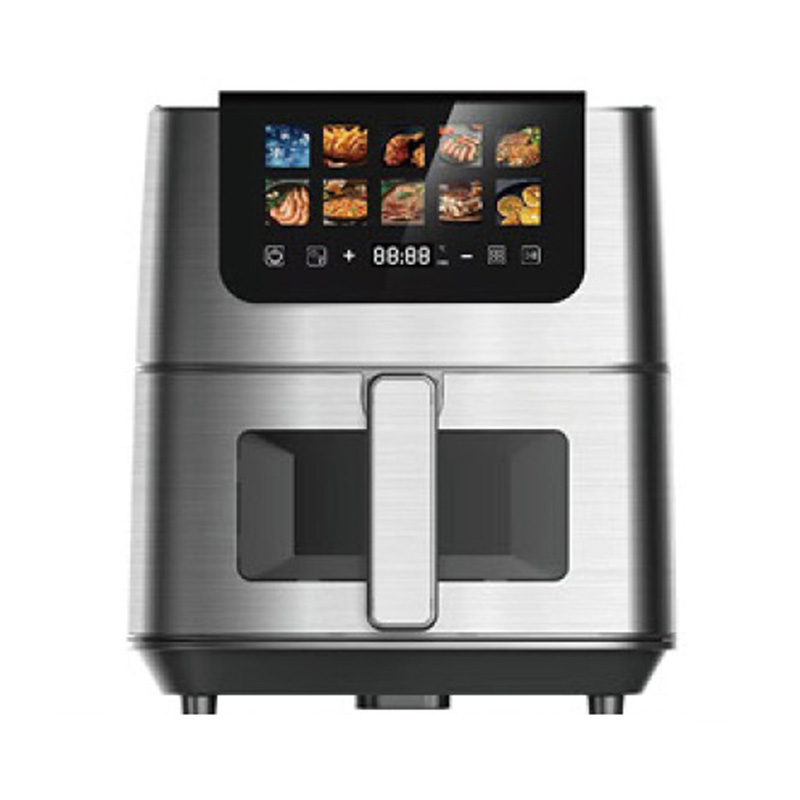
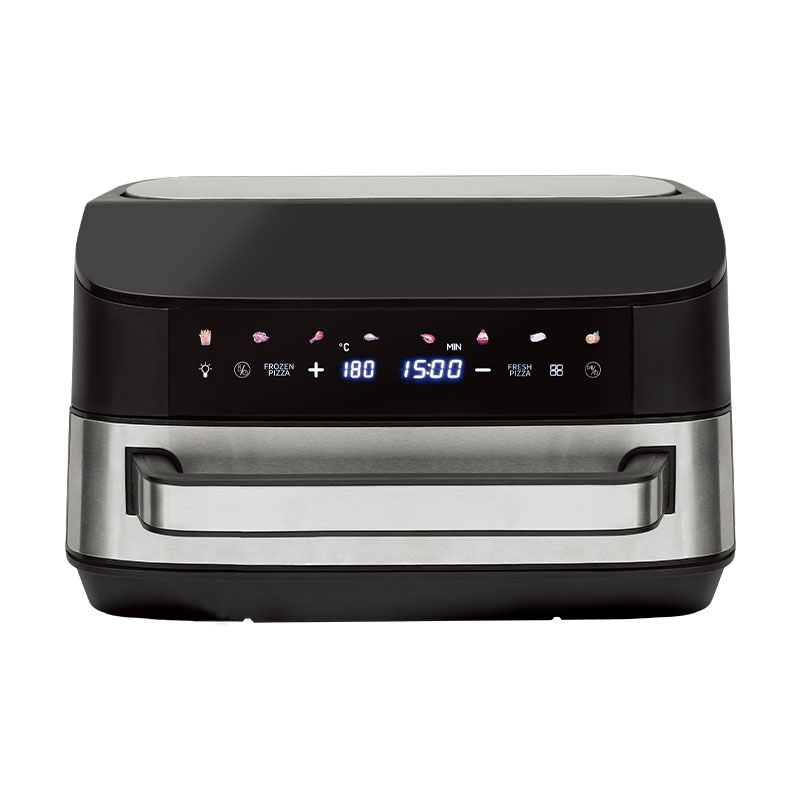
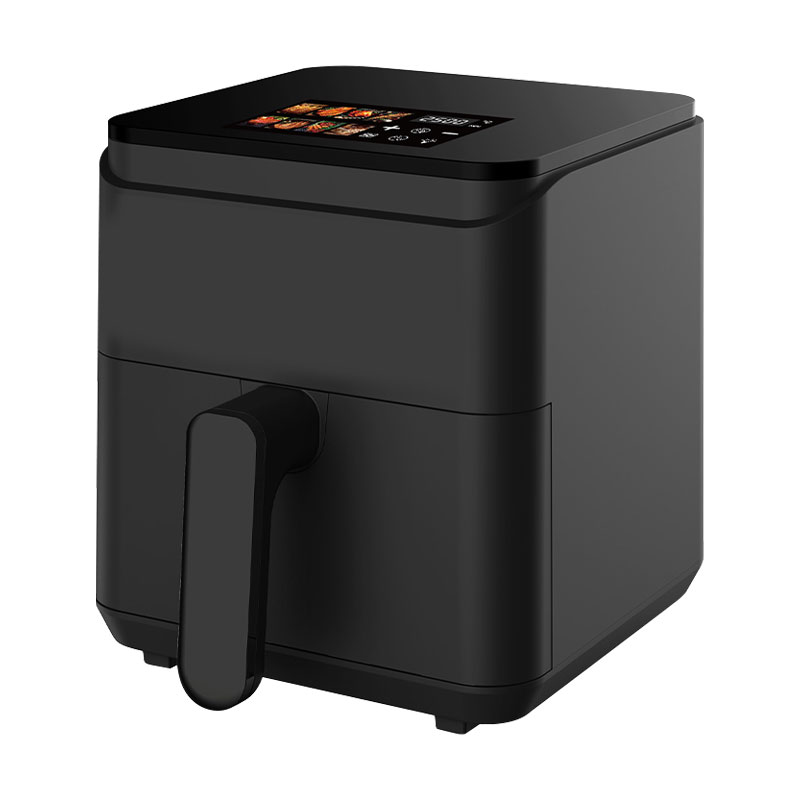
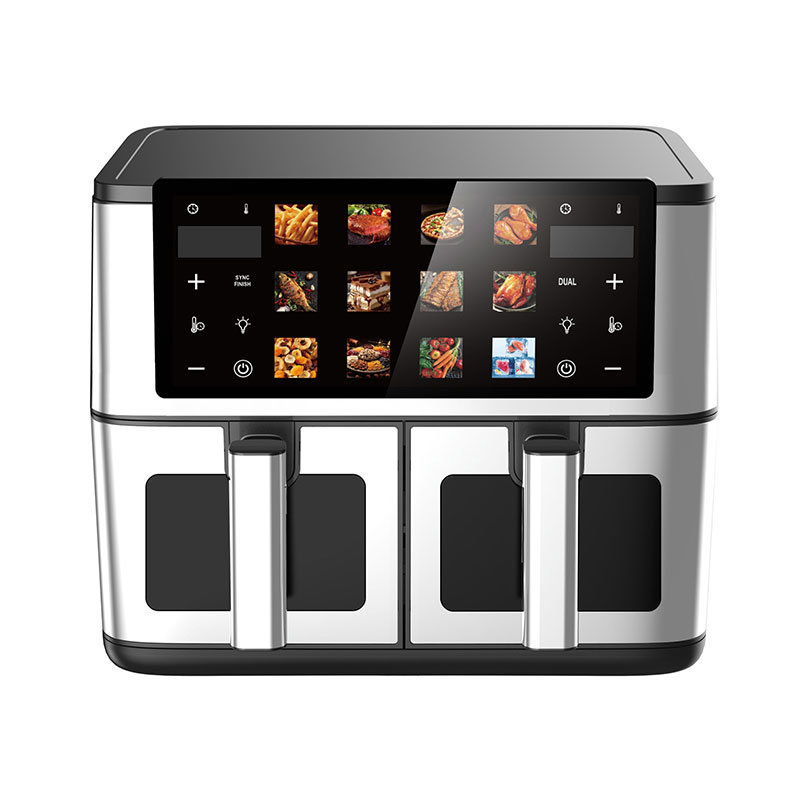
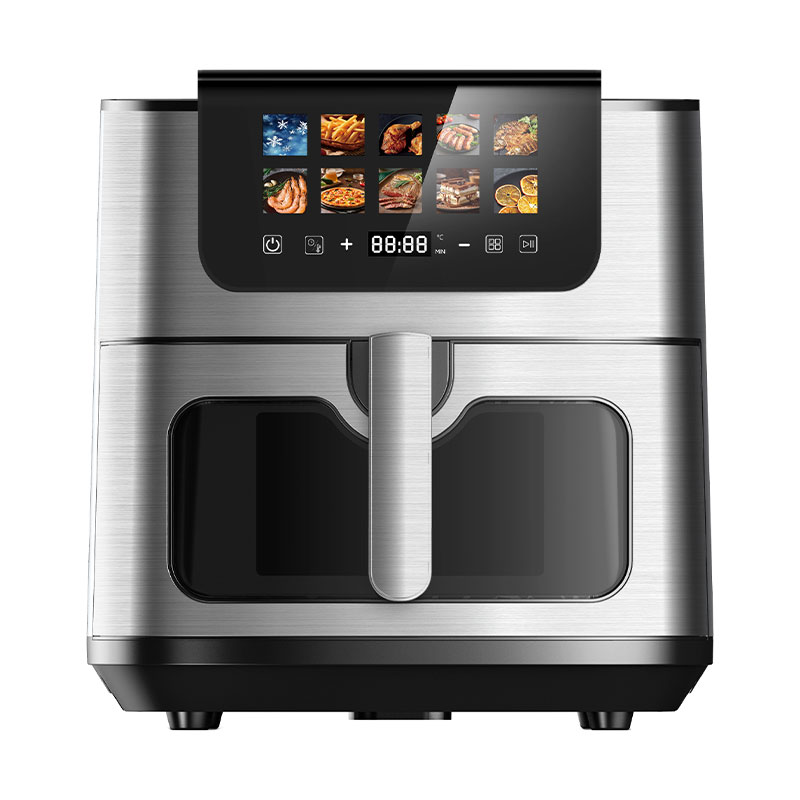
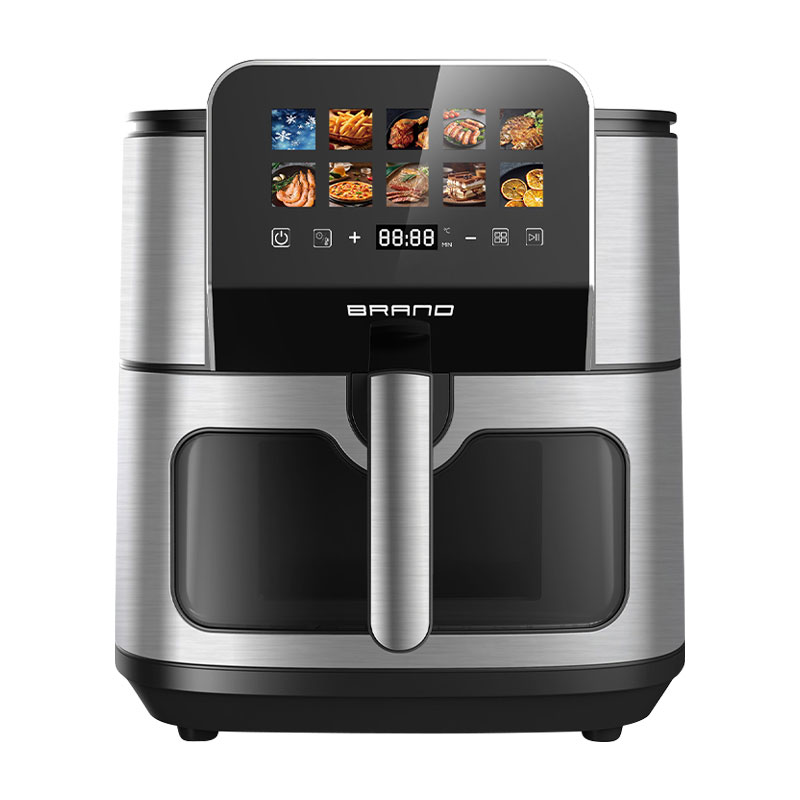
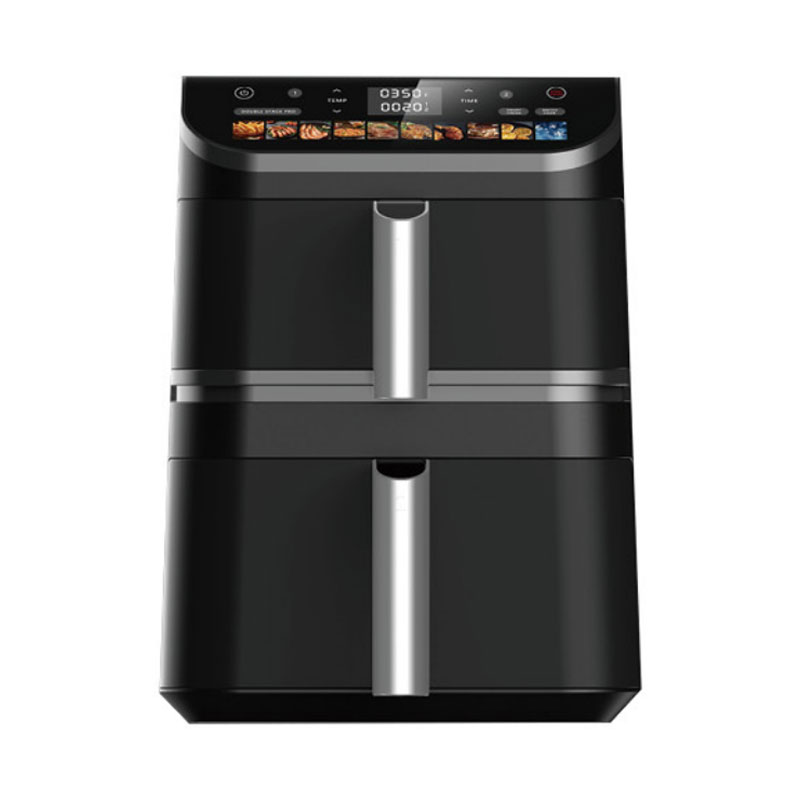
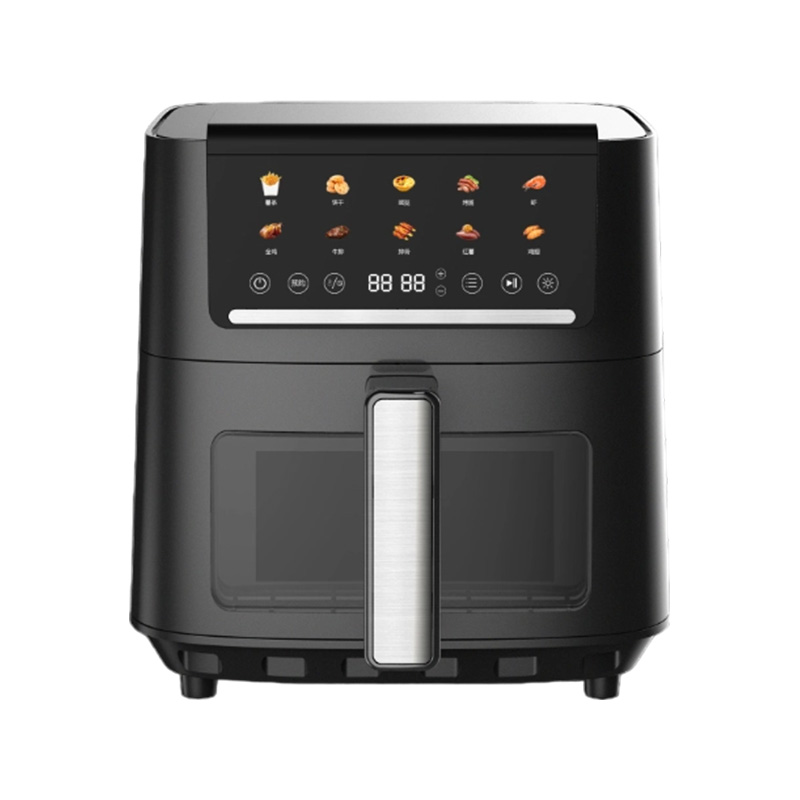
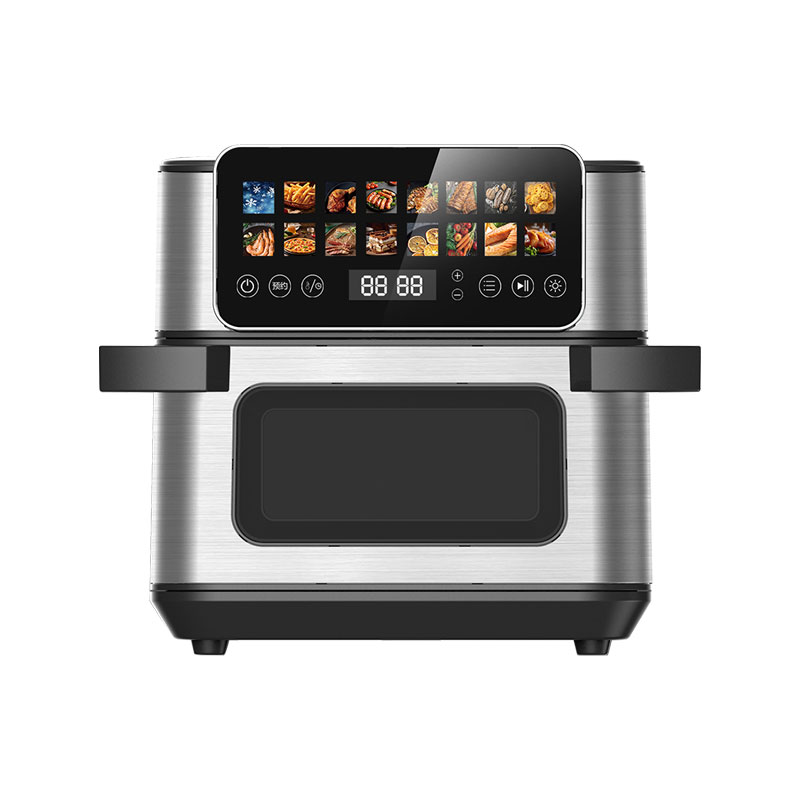
In the fast-growing market for small electric kitchen appliances, the 8L mechanical air fryer represented by models GSE042-1, GSE042-1S, GSE042-1B, and GSE042-1 SB stands out as a practical, high-capacity, and export-ready solution for households, retailers, supermarkets, distributors, and private-label appliance programs. Designed for convenient oil-reduced cooking, this air fryer combines an 8L single-pot capacity, 1700W heating power, durable multi-material construction, and optional configurations with or without a viewing window. Its mechanical control style makes it especially attractive for users who value simple operation, reliable performance, and direct control without unnecessary complexity.
The product is positioned for modern kitchens where consumers want fast cooking, easy cleaning, generous food capacity, and healthier preparation methods. As air fryers continue to replace or supplement conventional ovens, deep fryers, toaster ovens, and reheating appliances, buyers increasingly look for models that can serve family-sized meals while remaining compact enough for countertop use. This 8L air fryer answers that demand with a product size of L405 x W305 x H360 mm, making it spacious internally while still manageable in ordinary home kitchens.
CIXI GSTAR ELECTRIC APPLIANCE CO., LTD. manufactures and develops a broad range of small electric kitchen appliances, including blenders, slicers, choppers, food processors, grills, hot pots, air fryers, and air ovens. The company’s experience in both electric and non-electric kitchen products supports a practical product-development approach: appliances should be useful, easy to understand, cost-effective, and dependable in mass-market retail channels. This philosophy is visible in the 8L mechanical air fryer, where capacity, material selection, power, packing efficiency, certification readiness, and user-friendly operation are integrated into a product suitable for international distribution.
GSE042-1 /GSE042-1S/GSE042-1B/GSE042-1 SB Air Fiyer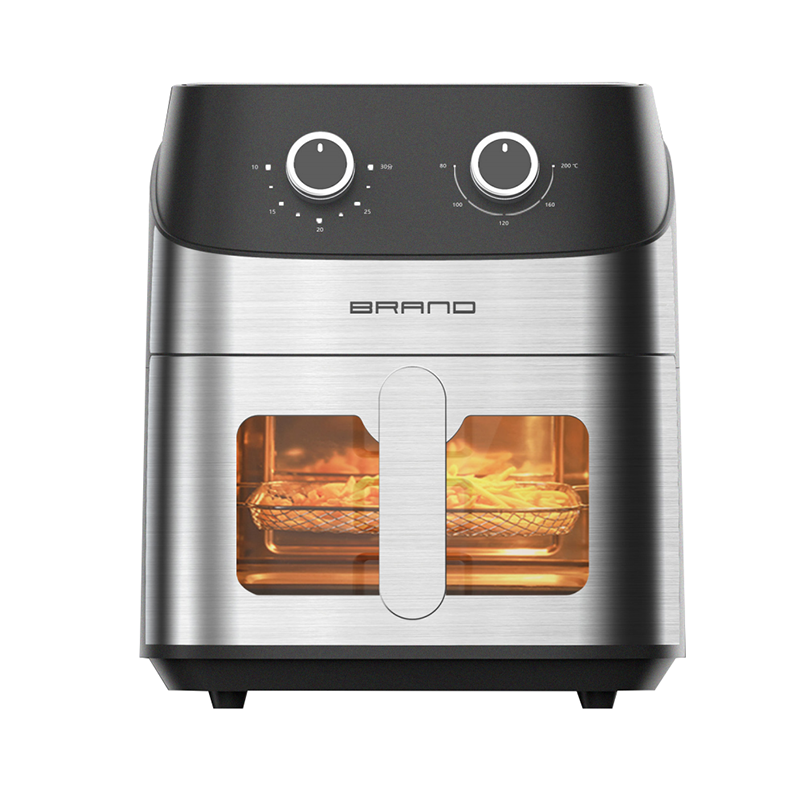
Product Overview
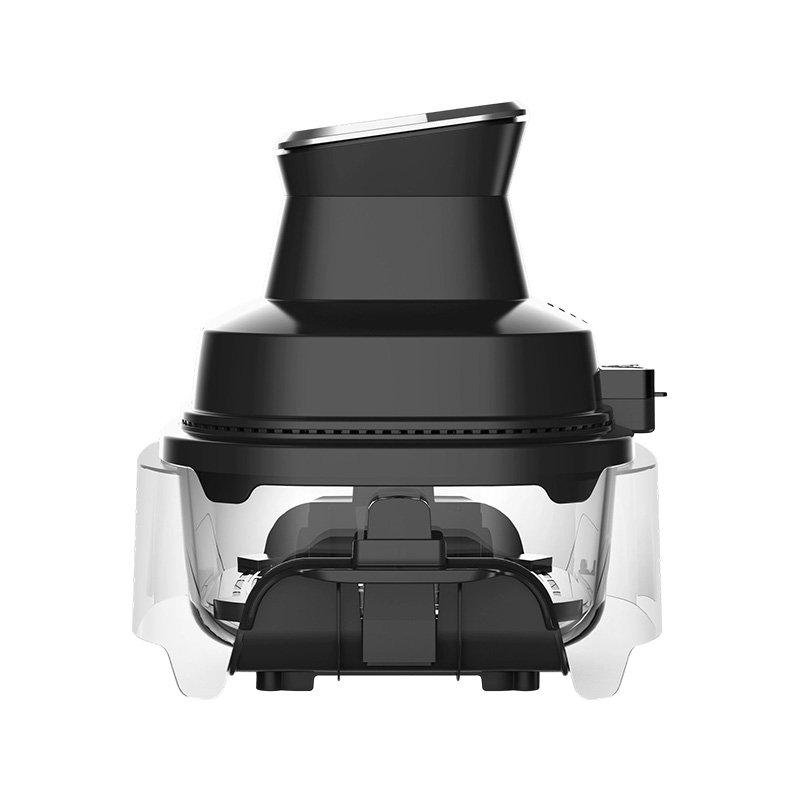
The 8L mechanical air fryer is designed as a single-pot countertop appliance for frying, roasting, baking, reheating, and crisping food with significantly less oil than traditional deep frying. The available model codes include GSE042-1, GSE042-1S, GSE042-1B, and GSE042-1 SB. These versions allow buyers to select configurations that suit their target market, including mechanical control options with a window or without a window. This flexibility supports different consumer preferences and price points while keeping the core product platform consistent.
The product uses PP, PA, ABS, and PC materials. These materials are commonly selected in kitchen appliances for structural strength, heat resistance, impact resistance, insulation, and visual design flexibility. The 1700W power rating helps the appliance reach effective cooking temperatures efficiently, while the 50-60Hz compatibility supports use in many international markets. The 8L single-pot design is particularly valuable for families, meal-prep users, and customers who frequently cook larger portions such as chicken wings, fries, vegetables, seafood, cutlets, pastries, or reheated leftovers.
One of the most important competitive advantages of this model is its balance of capacity and simplicity. Many large-capacity air fryers become complicated through excessive digital menus, touch panels, or delicate interface components. While digital models have their place, a mechanical air fryer can offer clear value in markets where durability, lower service complexity, straightforward training, and affordability are major buying factors. Mechanical controls are easy to understand, especially for first-time air fryer users, elderly consumers, hospitality settings, rental properties, and retail channels that emphasize practical household appliances.
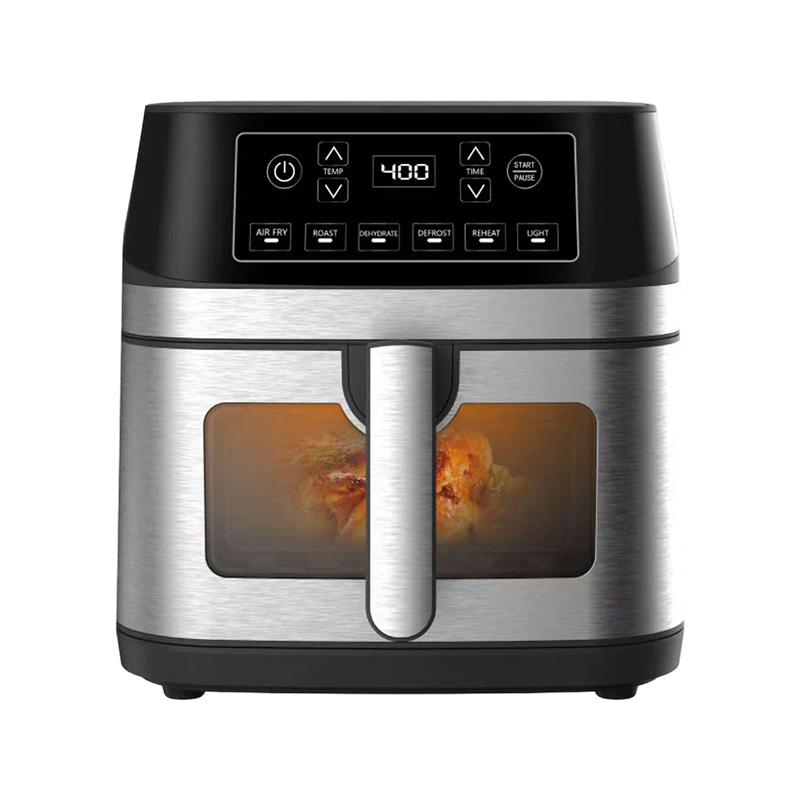
The optional viewing window is another key advantage. Consumers increasingly prefer to check food visually without opening the basket, because opening the drawer can interrupt heat circulation and affect cooking consistency. A mechanical air fryer with a window gives users a more confident cooking experience. For buyers seeking a lower-cost or more classic appearance, the non-window version remains available. This dual configuration enables importers and retailers to cover multiple market segments using one product family.
Key Product Specifications
Item |
Specification |
Model Numbers |
GSE042-1, GSE042-1S, GSE042-1B, GSE042-1 SB |
Product Type |
Mechanical air fryer with optional viewing window or without window |
Material |
PP, PA, ABS, PC |
Power |
1700W |
Frequency |
50-60Hz |
Capacity |
8L single pot |
Product Size |
L405 x W305 x H360 mm |
Giftbox Size |
L460 x W360 x H417 mm |
Carton Size |
L475 x W375 x H435 mm |
Packing Quantity |
1 piece per carton |
Gross Weight and Net Weight |
7.5 kg / 6.5 kg |
Loading Quantity |
1050 pieces per 40HQ container |
MOQ |
1050 pieces |
Certifications |
CE, GS, CB, ETL, RoHS, LFGB, FDA |
Why an 8L Capacity Matters
Capacity is one of the first features consumers compare when selecting an air fryer. Small models may be suitable for single-person households, but they often require multiple cooking batches for families. Multiple batches consume more time, create inconsistent results, and reduce convenience. An 8L single-pot air fryer gives users the flexibility to cook larger meals in one cycle, which is especially useful for families of three to six people, shared apartments, office pantries, and small hospitality environments.
The 8L capacity also helps consumers diversify their cooking. Instead of being limited to fries or small snacks, users can prepare chicken pieces, fish fillets, roasted vegetables, stuffed pastries, frozen convenience foods, and reheated baked items with better spacing. Food in an air fryer benefits from air circulation. When there is enough internal volume, ingredients can be arranged more evenly, helping hot air move around the food surface. This supports crispness, browning, and more uniform cooking.
Compared with many smaller competitors, this model offers a more practical family-cooking experience. A 3L or 4L air fryer may look compact on a shelf, but consumers often discover that the usable cooking area is insufficient. An 8L model reduces that frustration. It also increases perceived value at retail because shoppers can immediately see that the appliance is built for larger portions. For wholesale buyers, capacity is a strong selling point in online product listings, catalog pages, supermarket displays, and promotional campaigns.
The single-pot structure is another advantage. Some dual-basket air fryers are popular, but they can divide the cooking volume into smaller compartments. While dual baskets are useful for cooking separate items, many users still need one large chamber for whole portions. A single 8L pot is more convenient for larger ingredients, easier to load, and often simpler to clean. For customers who want uncomplicated high-capacity cooking, the single-pot design provides clear benefits.
Mechanical Controls and Everyday Reliability
The air fryer’s mechanical control system is a practical feature that differentiates it from many highly digitalized competitors. Mechanical controls are intuitive. Users can turn knobs, set cooking time and temperature, and begin cooking without navigating menus or interpreting icons. This makes the appliance accessible to a wide range of users, including older adults, students, new cooks, and families that want an appliance with minimal learning time.
From a retail and service perspective, mechanical controls can also reduce complexity. Touch panels, screens, and electronic interfaces may increase the perceived technology level of a product, but they can also increase cost, sensitivity to moisture, and potential repair issues. Mechanical controls are familiar, robust, and easy to explain. For importers and distributors, this simplicity can be a major advantage in markets where consumers want dependable appliances at competitive prices.
Mechanical design does not mean outdated design. In fact, many successful kitchen appliances use mechanical controls because they are direct and satisfying. A well-designed knob gives the user confidence. It can also improve the appliance’s aesthetic by creating a clean, functional front panel. For air fryers used frequently, simple control matters. A product that is easy to operate is more likely to become part of daily cooking routines, which increases customer satisfaction and repeat brand trust.
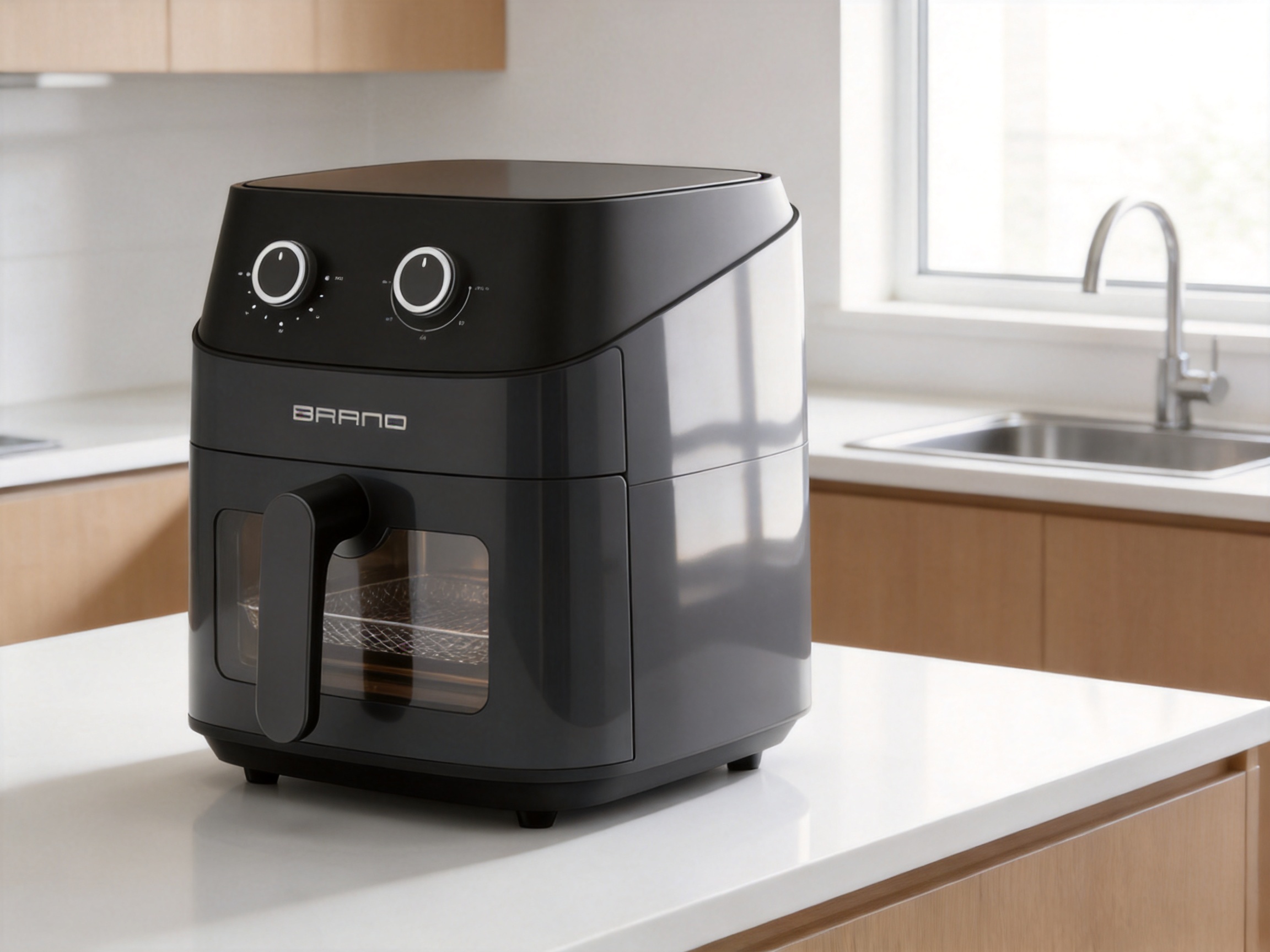
This model’s mechanical configuration with optional viewing window adds another layer of user convenience. The window version allows users to observe the cooking process without opening the pot. This can reduce heat loss and support better cooking consistency. The non-window version is suitable for markets that prefer a simpler appearance or a more cost-sensitive product option. By offering both choices, the product family provides flexible market positioning while maintaining common technical strengths.
Power and Cooking Performance
The 1700W power rating is an important performance indicator. Air fryers rely on rapid hot-air circulation to cook and crisp food. A power level that is too low may lead to slow preheating, uneven browning, and longer cooking times. With 1700W, this 8L air fryer is designed to support efficient heating for a large cooking chamber. This helps the appliance meet consumer expectations for speed and convenience.
Fast cooking is one of the main reasons consumers buy air fryers. Compared with conventional ovens, an air fryer often preheats more quickly and uses a more compact cooking space, which can help reduce waiting time. Compared with deep frying, it avoids the need to heat a large pot of oil. For busy households, this combination of speed and reduced oil use creates strong daily value.
The 50-60Hz frequency compatibility supports broader market adaptation. International appliance buyers often require products that can fit the electrical standards of different regions. While voltage details must always be configured according to buyer requirements and local regulations, 50-60Hz compatibility is useful for export planning. Combined with certifications such as CE, GS, CB, ETL, RoHS, LFGB, and FDA, the product is positioned for international compliance pathways.
Cooking performance also depends on the relationship between heating elements, airflow design, basket structure, insulation, and chamber geometry. A large 8L air fryer must distribute heat effectively to avoid cold spots. The manufacturer’s experience in air ovens and air fryers provides a strong foundation for developing products with practical airflow behavior. Although consumers may focus on simple specifications such as wattage and capacity, the real quality of an air fryer is demonstrated in daily results: crisp fries, evenly cooked poultry, browned vegetables, and reheated food that tastes fresh instead of soggy.
Material Selection and Product Durability
The use of PP, PA, ABS, and PC reflects a material strategy suitable for household electrical appliances. Polypropylene can provide good chemical resistance and is widely used in appliance components. Polyamide can contribute strength and heat resistance in selected parts. ABS is valued for impact resistance and stable appearance, while polycarbonate can be used where clarity, toughness, or higher mechanical performance is required. The combination of these materials allows the product structure to balance safety, durability, cost, and appearance.
In air fryer design, material selection must consider heat, repeated handling, cleaning, food contact, and long-term exposure to kitchen environments. Users pull out the pot, load ingredients, adjust controls, and wipe surfaces repeatedly. The housing must feel stable; the handle must inspire confidence; the controls must withstand frequent operation; and internal food-contact areas must meet regulatory expectations. Certifications such as LFGB and FDA are especially relevant for food-contact confidence, while RoHS supports restricted-substance compliance for electrical and electronic products.
Competitor products sometimes reduce material quality to achieve lower prices. This can result in weak handles, unstable drawers, unpleasant odors, poor surface finish, or deformation under heat. A strong manufacturing approach emphasizes suitable materials, controlled processing, and quality inspection. For wholesale buyers, material reliability is not just a technical issue; it directly affects customer reviews, return rates, after-sales workload, and long-term retail reputation.
The net weight of 6.5 kg suggests a solid product structure for an 8L appliance, while the gross weight of 7.5 kg reflects practical packaging for export. A product that feels too light may appear less durable to consumers, especially in the large-capacity category. At the same time, the appliance must remain manageable enough for everyday movement and countertop placement. This model’s dimensions and weight place it in a practical range for family kitchens.
Advantages Over Competing Air Fryers
One advantage of this 8L mechanical air fryer is its combination of generous capacity and accessible operation. Many competing air fryers focus heavily on digital interfaces, preset cooking programs, or decorative styling. While these features can be appealing, they do not always improve the core cooking experience. Consumers ultimately want food that cooks well, a basket that holds enough ingredients, controls that are simple, and a product that lasts. This model focuses on these fundamentals.
Another advantage is its model flexibility. The availability of versions with and without a viewing window allows retailers to segment their product range. A window model can be positioned as a more premium or convenience-focused version, while the non-window version can compete more aggressively on price. This is useful for supermarket programs, online marketplaces, regional distributors, and private-label buyers who need multiple SKUs without developing entirely separate product platforms.
The 8L single-pot design also competes effectively against smaller air fryers. In many markets, consumers are upgrading from compact models after realizing they need more cooking space. A family-sized air fryer can become the main countertop cooking tool rather than a snack appliance. For retailers, this supports higher average selling prices and stronger promotional messages. “Large capacity,” “family size,” and “8L cooking space” are easy benefits for consumers to understand.
Compared with deep fryers, this product offers a cleaner and more convenient cooking experience. Traditional deep frying requires large quantities of oil, creates odors, increases cleanup time, and can be intimidating for safety-conscious users. An air fryer reduces the oil burden and supports crisp textures through hot air. While the exact oil reduction depends on the food and recipe, the general consumer benefit is clear: users can enjoy fried-style foods with less mess and less dependence on oil.
Compared with conventional ovens, this air fryer offers faster everyday cooking in a smaller chamber. A full-size oven remains useful for very large meals, but it is often inefficient for reheating snacks, cooking frozen foods, or preparing quick dinners. The air fryer’s countertop convenience makes it more likely to be used daily. For customers with small apartments, limited kitchen space, or high energy awareness, this practical efficiency is especially attractive.
Manufacturing Strength Behind the Product
CIXI GSTAR ELECTRIC APPLIANCE CO., LTD. has grown through years of product design, sourcing experience, manufacturing development, and market feedback. The company’s background includes experience with television shopping products, supermarket supply, buying-agent work, non-electric patented kitchen products, and later electric kitchen appliances. This history matters because it gives the company insight into what international buyers need: attractive products, stable quality, competitive pricing, reliable delivery, and responsive after-sales service.
The company operates a production base with significant manufacturing space and an experienced workforce. Its development includes a factory area reported at approximately 15,000 square meters, with more than 200 experienced workers, as well as dedicated engineering and quality control personnel. Such a structure supports both product development and volume production. For an appliance like the 8L air fryer, manufacturing strength is essential because consistent assembly, heat-related safety, electrical reliability, and packaging performance all determine whether the product succeeds in export markets.
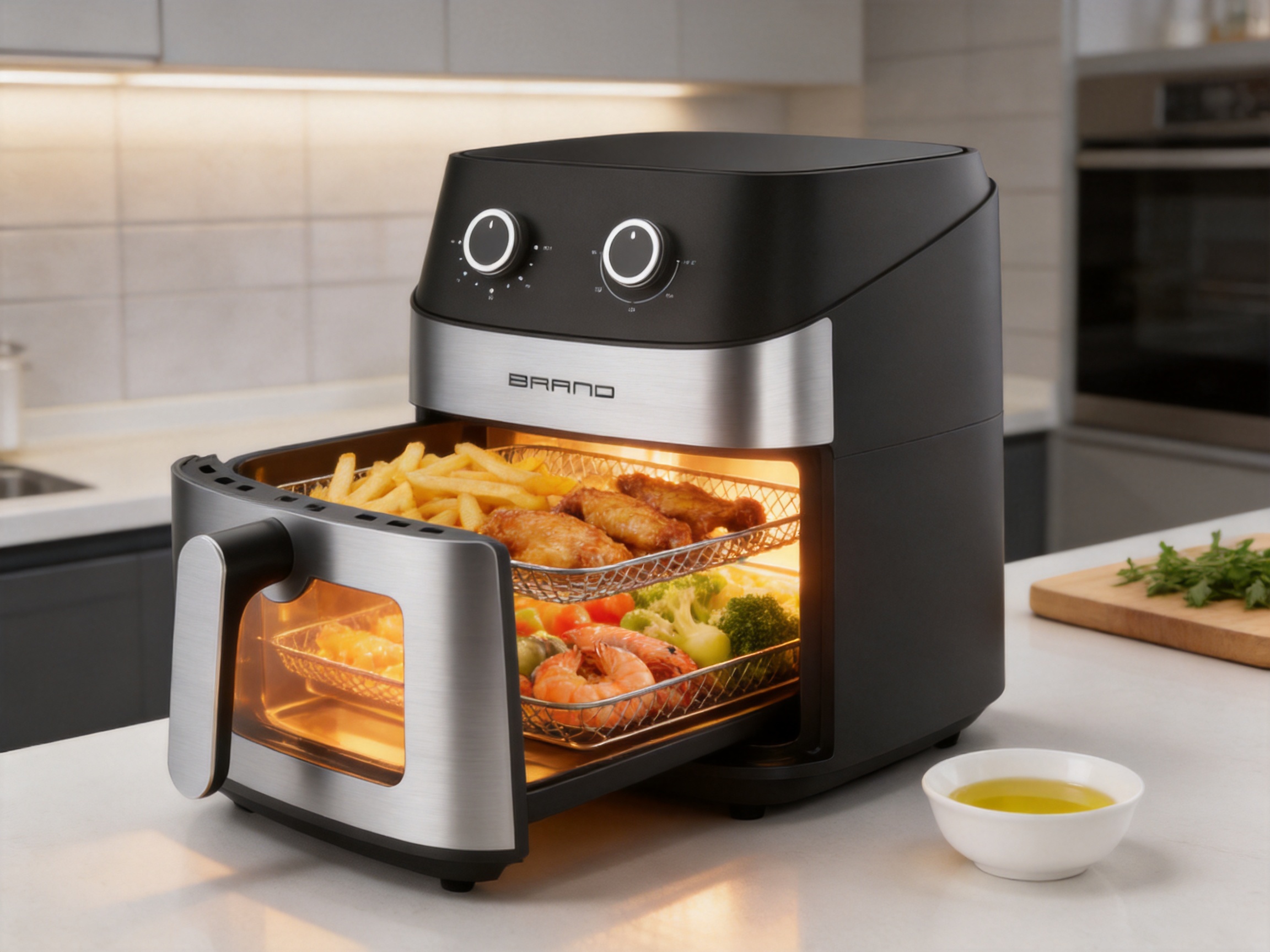
Advanced manufacturing is not only about machines; it is also about process control. For air fryer production, the process typically involves material preparation, plastic injection molding, component inspection, heating-system assembly, wiring, thermostat or control installation, pot and basket fitting, housing assembly, functional testing, safety checks, appearance inspection, packaging, and final carton loading. Each stage requires clear standards. A minor error in fit, wiring, insulation, or packaging can affect consumer experience or logistics performance.
The company’s R&D capacity is another strength. With engineers focused on product development, Gstar can respond to buyer feedback, refine structures, support customization, and create new appliance designs. Air fryers are highly competitive, so manufacturers must continuously improve airflow, usability, cleaning convenience, appearance, packaging, and cost structure. A factory with in-house engineering capability can work more closely with customers than a simple trading operation. It can evaluate technical requests, support private-label modifications, and improve product platforms for different markets.
Quality control personnel also play a crucial role. Appliances require more rigorous inspection than many ordinary household goods because they involve electrical heating, food contact, and frequent consumer use. Quality control can include incoming material inspection, production-line inspection, electrical performance testing, high-voltage or insulation testing where applicable, temperature checks, stability assessment, mechanical control verification, and final random inspection. These processes help reduce defect rates and protect the reputation of both manufacturer and buyer.
Export Readiness and Certification Value
The listed certifications CE, GS, CB, ETL, RoHS, LFGB, and FDA are important indicators for international market readiness. Different markets require different compliance frameworks. CE is central for European market access for many electrical products. GS is valued in Germany and other markets as a mark related to safety testing. CB supports international certification recognition through the IECEE system. ETL is relevant for North American electrical safety acceptance. RoHS addresses hazardous substance restrictions. LFGB and FDA are significant for materials associated with food contact.
For importers, certification support reduces barriers to market entry. It can shorten the approval process, increase retailer confidence, and support consumer trust. Large retail chains and supermarkets often require documentation before listing electrical appliances. A product with broad certification readiness is easier to present to purchasing teams and compliance departments.
Certification value also supports brand reputation. Consumers may not understand every certification mark, but retailers, distributors, and regulators do. In competitive appliance categories, compliance documentation can be a decisive factor. A low-cost product without proper certification may appear attractive initially but can create serious risk through customs delays, sales restrictions, recalls, or customer complaints. A properly certified product provides a stronger foundation for stable long-term business.
The product’s MOQ and container loading details also show export planning. With 1050 pieces per 40HQ container and an MOQ of 1050 pieces, the ordering structure aligns with full-container shipment efficiency. For wholesale buyers, this helps simplify cost calculation, freight planning, and inventory forecasting. One piece per carton packaging supports safe handling and retail distribution, while the giftbox size and carton size are clearly defined for logistics planning.
Packaging, Logistics, and Retail Presentation
Packaging is a critical part of appliance success. The giftbox size of L460 x W360 x H417 mm and carton size of L475 x W375 x H435 mm are designed for one piece per carton. This approach helps protect the appliance during transport while supporting retail-ready presentation. Air fryers include plastic housings, heating systems, removable pots, and handles, so good packaging must resist compression, vibration, and impact during international shipping.
For retailers, giftbox design can influence consumer purchase decisions. A large-capacity air fryer should communicate its benefits clearly: 8L capacity, 1700W power, mechanical ease of use, optional viewing window, and family cooking suitability. The box should also be easy for warehouse teams to handle and stack. Clear carton dimensions help buyers calculate container loads, warehouse space, and pallet planning.
The loading quantity of 1050 pieces per 40HQ container is a practical detail for importers. Full-container shipment can improve cost efficiency compared with mixed or partial shipments. When MOQ matches container loading quantity, buyers can plan promotions around one complete container and reduce fragmented logistics. This is particularly useful for seasonal retail campaigns, online marketplace replenishment, and supermarket special buys.
Good packaging also reduces after-sales costs. Even a well-made appliance can arrive damaged if packaging is weak. Scratches, cracked housings, loose handles, or deformed baskets can create returns before the product is ever used. A manufacturer experienced in export markets understands that packaging engineering is part of product quality. The carton, internal supports, plastic protection, manuals, and labeling all contribute to the final customer experience.
How the Product Supports Health-Conscious Cooking
Air fryers became popular largely because they support crispy cooking with less oil than conventional deep frying. The 8L mechanical air fryer is suitable for consumers who want familiar fried textures while reducing oil usage in daily meals. It can prepare frozen fries, chicken nuggets, fish, vegetables, tofu, pastries, and other foods with hot-air circulation. Users can add a small amount of oil when desired, but they do not need to submerge food in oil.
Health-conscious cooking is not only about oil reduction. It is also about convenience. When healthier cooking is too difficult, consumers often return to takeout or highly processed meals. An air fryer makes home cooking easier by reducing cooking time and cleanup. Vegetables can be roasted quickly; leftovers can be reheated with better texture; and proteins can be cooked without using a frying pan full of oil. This convenience helps consumers maintain better routines.
The large 8L capacity further supports balanced meals. Users can cook a mix of vegetables and proteins in one batch, depending on recipe and spacing. Families can prepare enough food for everyone without repeating cycles. Meal-prep users can cook multiple portions for the next day. In this way, capacity becomes part of healthier lifestyle support, because it makes practical cooking easier.
Compared with deep frying, the reduced oil process also simplifies cleaning. There is no large container of used oil to filter, store, or discard. Kitchen odors may be reduced, and countertops remain cleaner. For many households, these practical benefits are as important as nutrition. A cooking appliance succeeds when it makes better habits easier, and this air fryer is designed to do exactly that.
User Experience in Daily Kitchens
A strong air fryer must fit naturally into daily kitchen routines. This model’s countertop dimensions allow it to sit in a visible and accessible location without requiring installation. Users can pull out the pot, add food, set the controls, and begin cooking. The mechanical interface avoids unnecessary steps. This directness is important because appliances that are difficult to use often remain in cabinets rather than becoming daily tools.
The optional viewing window improves the cooking experience for users who like visual confirmation. Foods such as fries, pastries, chicken wings, and roasted vegetables can change color quickly near the end of cooking. A window allows users to monitor browning without interrupting airflow. This is especially helpful for beginners who are still learning cooking times. It can also reduce the temptation to repeatedly open the pot.
The 8L single pot is well suited for family-style meals. Instead of preparing several small batches, users can cook larger quantities at once. This improves convenience during busy mornings, school nights, gatherings, and weekend meals. Frozen foods can be prepared quickly, but the appliance is also suitable for fresh ingredients. As consumers become more familiar with air frying, they often expand from snacks to full meals.
Cleaning convenience is another key part of user experience. While specific cleaning instructions depend on the final pot and coating configuration, air fryers generally require less cleanup than deep frying. The removable pot format helps users access the cooking area. Simple mechanical surfaces can also be easier to wipe than complicated touch panels with many grooves or display edges.
Private Label and Wholesale Opportunities
This air fryer is well suited for wholesale and private-label programs. Its specifications are clear, its capacity is marketable, and its certification range supports multiple regions. Buyers can position it as a family-size mechanical air fryer, a value-oriented large-capacity model, or a window-equipped convenience model. The product family can support different color or appearance concepts depending on manufacturing arrangements and buyer requirements.
Private-label buyers often need a dependable platform rather than an experimental design. A proven product structure helps reduce development time and launch risk. The listed MOQ of 1050 pieces aligns with container shipment, making it suitable for importers who want efficient volume purchasing. Supermarket chains, home appliance distributors, e-commerce sellers, and promotional product buyers can all benefit from a model that combines capacity, simplicity, and certification readiness.
The manufacturer’s background in serving international supermarkets and retail channels is important. Supplying large retail customers requires more than producing a sample. It requires consistency, delivery discipline, quality control, packaging accuracy, and communication. Gstar’s history includes sales to well-known supermarket and retail environments for other product categories, giving the company practical understanding of retailer expectations.
For online sellers, the product’s advantages translate into strong listing content. Keywords such as “8L air fryer,” “mechanical air fryer,” “large capacity air fryer,” “air fryer with window,” “1700W air fryer,” and “family air fryer” are easy to communicate. Product images can show the large pot, control panel, window option, and cooked food applications. The simple feature set reduces confusion and supports clear consumer decision-making.
Design Philosophy: Practical Innovation
The product reflects a design philosophy centered on practical innovation. Innovation does not always mean adding more screens, buttons, or complex programs. In kitchen appliances, meaningful innovation often means solving everyday problems: not enough capacity, difficult controls, slow cooking, messy cleanup, weak construction, or limited market compliance. This 8L mechanical air fryer focuses on these real concerns.
The optional window is a practical innovation because it improves confidence during cooking. The large single pot is practical because it serves family meals. Mechanical controls are practical because they make operation simple and reliable. The 1700W power rating is practical because it supports efficient cooking performance. The certification range is practical because it supports export buyers. Each feature is connected to actual use rather than decoration alone.
This approach is consistent with the company’s development history. Gstar began with market-sensitive products and learned from customer demand across different regions. The company’s tenet emphasizes high-quality innovative products, competitive prices, quick delivery, and after-sales service. For the air fryer category, those principles translate into a product that can compete not only on appearance but also on usability, manufacturability, logistics, and compliance.
A successful kitchen appliance must satisfy multiple stakeholders. Consumers want good cooking results and easy operation. Retailers want attractive packaging, low return rates, and clear selling points. Importers want certification support, stable supply, and competitive pricing. Manufacturers need efficient production and controlled quality. This air fryer is designed to meet those overlapping expectations.
Recommended Cooking Applications
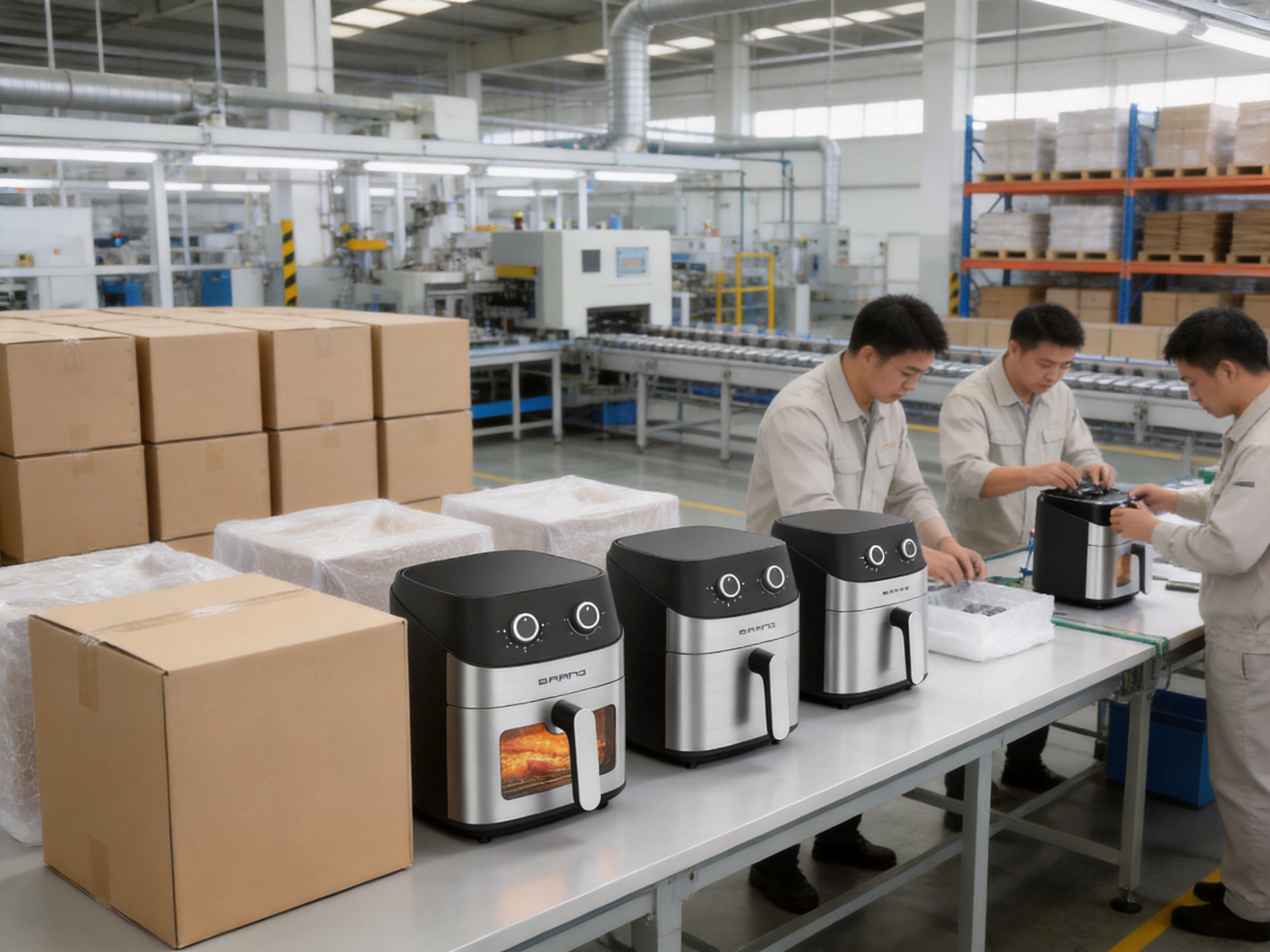
The 8L mechanical air fryer can be used for a wide variety of foods. For frozen convenience foods, it can crisp fries, nuggets, spring rolls, fish sticks, and similar items without deep frying. For fresh ingredients, it can roast vegetables, cook chicken pieces, crisp tofu, heat sausages, prepare shrimp, and bake small pastries. For leftovers, it can restore texture to pizza, breaded foods, roasted potatoes, and baked snacks more effectively than many microwave reheating methods.
Families can use the appliance for quick weeknight meals. For example, chicken wings and vegetables can be prepared with seasoning and a small amount of oil. Frozen fries can be cooked for children’s meals. Fish fillets can be cooked with herbs and breadcrumbs. Vegetables such as broccoli, carrots, cauliflower, potatoes, and peppers can be roasted quickly. The large pot allows users to prepare enough food for several people.
Meal-prep users can cook larger batches of proteins or vegetables for future meals. Students and apartment dwellers can use the appliance as a versatile countertop cooker. Small offices can use it for reheating lunches. Hospitality environments may use it for light-duty snack preparation, depending on local requirements and usage patterns. The product is primarily a household appliance, but its simplicity and capacity make it attractive in many practical environments.
As with all air fryers, users should avoid overcrowding the basket if they want maximum crispness. The 8L capacity gives more room, but airflow still matters. Shaking or turning food during cooking may improve results for some recipes. The viewing window version helps users judge progress visually. Mechanical controls make it easy to add time if needed.
Safety and Compliance Considerations
Electrical heating appliances must be designed and used with safety in mind. The certification list associated with this air fryer indicates attention to major safety and compliance expectations. CE, GS, CB, and ETL relate to safety and market access in different regions, while RoHS, LFGB, and FDA support material and restricted-substance considerations. Buyers should always confirm final documentation, voltage configuration, plug type, labeling, and test reports according to their target market.
For consumers, safe use includes placing the appliance on a stable heat-resistant surface, allowing ventilation space, not immersing electrical parts in water, avoiding overfilling, and following the user manual. The mechanical controls should be used according to recommended cooking settings. Users should handle the pot carefully after cooking because hot surfaces and steam may be present.
From a manufacturing standpoint, safety depends on controlled assembly. Heating elements, wiring, insulation, housing fit, control accuracy, and thermal management must all be checked. A quality-focused factory uses inspection procedures to confirm that each unit meets expected standards. This reduces the risk of failures and supports buyer confidence.
Retailers and importers benefit when safety information is clear. User manuals, warning labels, packaging marks, and certification documents should be prepared carefully. Good documentation reduces misuse and helps consumers understand the appliance. It also supports compliance review by retailers and authorities.
Company Capability and Long-Term Partnership Value
CIXI GSTAR ELECTRIC APPLIANCE CO., LTD. is based in Cixi, Ningbo, China, an area with strong manufacturing and export resources. The company designs, develops, and manufactures numerous small electric kitchen appliances and household items. Its product range includes blenders, slicers, choppers, food processors, smokeless grills, hot pots, air fryers, air ovens, ice buckets, beverage dispensers, pitchers, slicers, and graters. This broad portfolio gives the company a wide technical and market perspective.
The company’s development path shows adaptability. It moved from trading and market exploration to product development and manufacturing. Experience with TV shopping products taught the importance of consumer appeal and demonstration value. Experience as a buying agent for supermarket customers strengthened understanding of factory selection, pricing, quality control, and customer trust. Later, the company developed patented non-electric products and then expanded into electric appliances. This accumulated experience supports the company’s ability to serve international appliance buyers today.
In 2018, the company moved into its own new factory, strengthening production capability. It has continued to develop electric products, with air ovens and air fryers becoming strong sales items in Europe, South America, and other markets. The company has engineering and quality control personnel, experienced workers, and a manufacturing facility suitable for volume production. These strengths are important for buyers seeking stable supply rather than one-time transactions.
Long-term partnership value comes from communication, reliability, and continuous improvement. A capable manufacturer can help customers refine products, improve packaging, manage delivery schedules, and respond to market feedback. In highly competitive appliance categories, buyers need suppliers who understand cost pressure but do not ignore quality. The 8L mechanical air fryer demonstrates this balance through its practical specifications, certification readiness, and family-oriented design.
Market Positioning Strategy
The 8L mechanical air fryer can be positioned in several ways depending on the sales channel. In supermarket and discount retail channels, it can be promoted as a large-capacity family air fryer with simple controls and strong value. In appliance specialty stores, the optional window version can be presented as a convenience upgrade. In online marketplaces, the product can compete through keywords related to capacity, power, mechanical reliability, and easy cooking.
For entry-level consumers, the mechanical controls reduce intimidation. Many people want to try air frying but do not want to manage complicated digital programs. A simple knob-based product can be more welcoming. For experienced users upgrading from smaller models, the 8L capacity is the main attraction. For buyers focused on durability, mechanical operation and solid material construction support confidence.
Retailers can also create promotional themes around healthier cooking, family meals, quick dinners, and reduced-oil recipes. The air fryer category performs well when consumers can imagine specific uses. Packaging and marketing materials should show fries, chicken, vegetables, seafood, and baked snacks. The viewing window version can be promoted as allowing users to watch food crisp and brown.
Because the product supports 1050 pieces per 40HQ container, it is suitable for seasonal campaigns and bulk promotions. Air fryers are popular during holiday cooking seasons, back-to-school periods, home improvement promotions, and health-focused New Year campaigns. A product with clear loading and MOQ details helps buyers prepare inventory in advance.
Q&A Section
What is the main advantage of this 8L mechanical air fryer?
The main advantage is its combination of large 8L capacity, simple mechanical operation, 1700W heating power, and optional viewing window. It is designed for family-size cooking while remaining easy to use and practical for daily meals.
Which model numbers are included in this product series?
The product series includes GSE042-1, GSE042-1S, GSE042-1B, and GSE042-1 SB. These versions support different market preferences, including configurations with or without a viewing window.
Why choose a mechanical air fryer instead of a digital one?
A mechanical air fryer is easy to operate, familiar to many users, and can reduce interface complexity. It is suitable for consumers who prefer direct knob control and for buyers who value practical reliability, competitive cost, and simple after-sales support.
Is the 8L capacity suitable for family cooking?
Yes. The 8L single-pot capacity is suitable for preparing larger portions in one batch. It can help families cook fries, chicken, vegetables, seafood, snacks, and reheated foods more conveniently than smaller air fryers.
What is the benefit of the optional viewing window?
The viewing window allows users to monitor food during cooking without opening the pot. This helps reduce heat loss, supports better cooking consistency, and gives users more confidence when checking browning and crispness.
What certifications are associated with the product?
The product is listed with CE, GS, CB, ETL, RoHS, LFGB, and FDA certifications. These certifications support safety, food-contact, restricted-substance, and international market compliance needs, depending on the target region.
What materials are used in the air fryer?
The appliance uses PP, PA, ABS, and PC materials. These materials are selected to support durability, heat-related performance, impact resistance, appearance, and practical appliance construction.
How many units fit in a 40HQ container?
The listed loading quantity is 1050 pieces per 40HQ container. The MOQ is also 1050 pieces, which aligns with efficient full-container export planning.
Who is this air fryer best suited for?
It is suitable for families, home cooks, apartment users, meal-prep users, retailers, distributors, supermarket programs, and private-label buyers seeking a large-capacity, user-friendly air fryer.
What makes the manufacturer a strong supplier for this product?
The manufacturer has experience in small electric kitchen appliances, an established production facility, engineering and quality control teams, export market knowledge, and a product-development history focused on practical innovation, competitive pricing, quick delivery, and after-sales service.
Conclusion
The 8L mechanical air fryer represented by models GSE042-1, GSE042-1S, GSE042-1B, and GSE042-1 SB is a strong product for today’s high-demand kitchen appliance market. It offers the features consumers understand immediately: large family capacity, efficient 1700W heating, simple mechanical control, optional viewing window, and convenient countertop use. At the same time, it addresses the needs of importers and retailers through clear packing specifications, container loading efficiency, certification readiness, and a practical product platform suitable for wholesale and private-label programs.
Its advantages over competitors are rooted in usefulness rather than unnecessary complexity. The 8L single pot provides real cooking space. Mechanical controls support direct and reliable operation. The window option gives consumers a modern convenience feature. Durable material selection and structured manufacturing processes help support product quality. Certifications such as CE, GS, CB, ETL, RoHS, LFGB, and FDA increase market confidence and compliance value.
Behind the appliance is a manufacturer with broad experience in kitchen products, appliance development, export markets, engineering, and quality control. CIXI GSTAR ELECTRIC APPLIANCE CO., LTD. has built its capabilities through years of market learning and manufacturing growth. For buyers seeking a dependable large-capacity air fryer, this product offers a compelling balance of performance, simplicity, compliance, and commercial practicality.
References
1. International Electrotechnical Commission. Household and Similar Electrical Appliances Safety Standards.
2. European Committee for Standardization. General Requirements for Food Contact Materials and Kitchen Appliances.
3. U.S. Food and Drug Administration. Food Contact Substance Guidance and Compliance Principles.
4. European Union. Restriction of Hazardous Substances Directive Guidance for Electrical and Electronic Equipment.
5. Industry Research Reports on Global Small Kitchen Appliance and Air Fryer Market Trends.
6. Manufacturer Product Specification Sheet for 8L Mechanical Air Fryer Models GSE042-1, GSE042-1S, GSE042-1B, and GSE042-1 SB.