
 English
 中文简体
 Español
 English
 中文简体
 Español

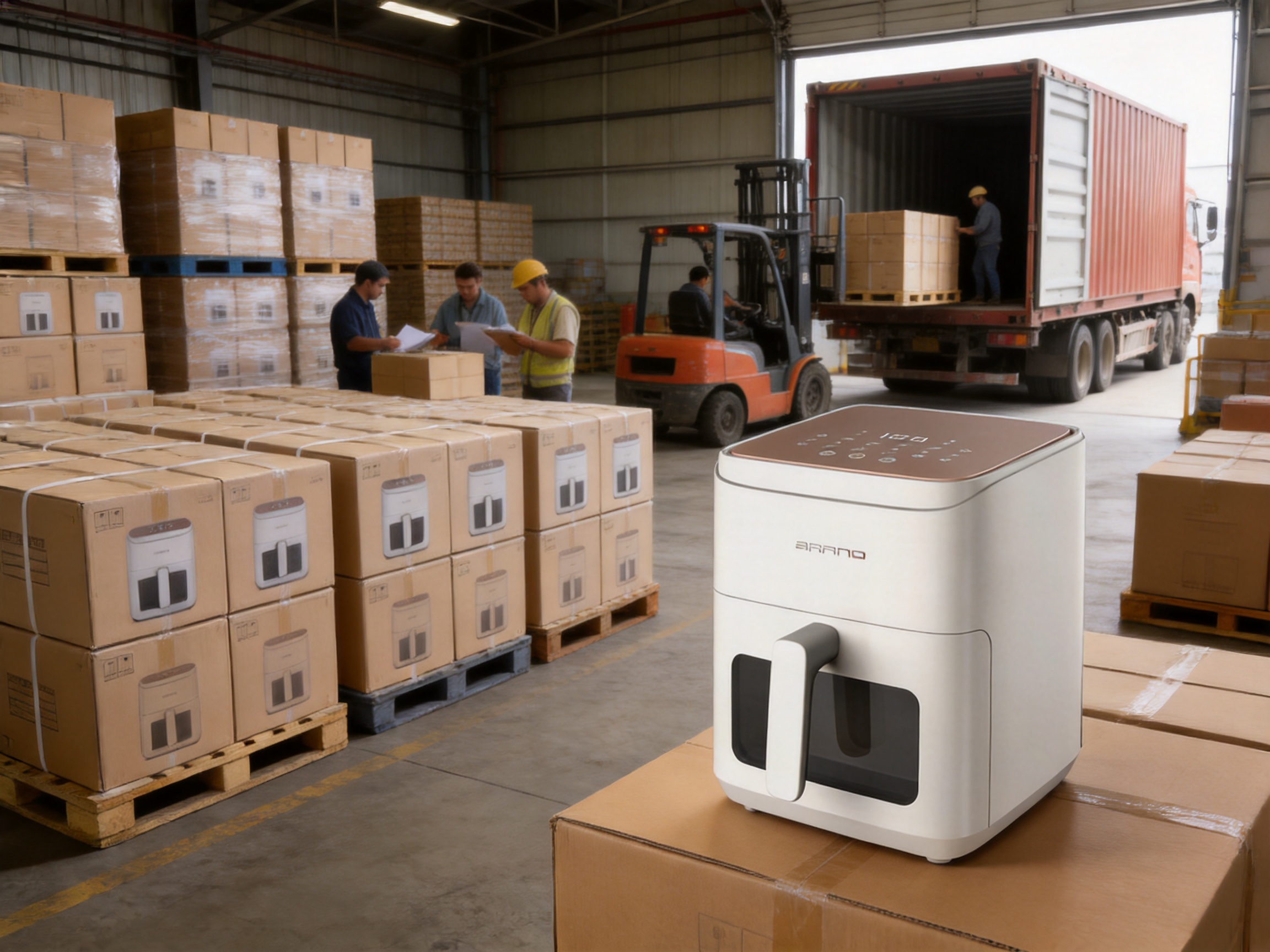
Modern households increasingly want kitchen appliances that make everyday cooking faster, simpler, and more flexible without occupying excessive counter space. The GSE030 Air Fryer is designed for this practical need. With a 4-liter capacity, 1400W power rating, compact carton dimensions, and a construction based on PP, ABS, PA, and PC materials, it is positioned as a versatile small kitchen appliance for households, retailers, distributors, and hospitality-oriented buyers.
The product belongs to the electrical home appliance and daily necessities categories. It uses hot-air cooking to prepare food with less dependence on conventional deep-frying methods, helping users cook popular foods such as potatoes, vegetables, chicken, fish, snacks, and reheated meals in a convenient countertop format. Its capacity and power combination provide a useful balance between daily household requirements and manageable product size.
Behind the appliance is CIXI GSTAR ELECTRIC APPLIANCE CO., LTD., a Chinese manufacturer with experience in small kitchen appliances, food preparation equipment, air fryers, air ovens, hot pots, smokeless grills, blenders, slicers, choppers, and food processors. The company’s development history includes product design, sourcing, engineering cooperation, production management, quality control, and international customer service. These capabilities are important for buyers who need more than a single finished product: they need stable supply, documentation, packaging support, production coordination, and a partner capable of responding to changing market demand.
1. Product Overview
The GSE030 Air Fryer is a 4-liter countertop cooking appliance powered by a 1400W heating system. Its specifications are suited to ordinary family cooking, small apartments, office kitchens, student accommodation, and retail product lines that require a practical air fryer with a moderate capacity.
A 4-liter cooking volume is large enough for common household portions while remaining more compact than many larger family or commercial-style air fryers. For consumers, this can make the appliance easier to position on a kitchen counter and easier to store after use. For retailers, the size offers a broad target market because it is neither limited to single-person use nor oversized for ordinary homes.
The 1400W power rating complements the 4-liter capacity. An air fryer must generate and circulate heated air efficiently to cook food consistently. A power level that is too low may result in extended cooking times, while excessive power can increase energy demand and create unnecessary heat management challenges. The GSE030 specification represents a practical middle range for a household appliance of this capacity, subject to the final product’s operating controls, heating design, airflow arrangement, and regional electrical requirements.
The product is identified by item number GSE030. Its product category is Air Fryer, and its product description is also listed as GSE030. This clear item identification is useful for purchase orders, sample management, production communication, packaging documentation, and repeat procurement.
| Specification | GSE030 Air Fryer |
| Item number | GSE030 |
| Product name | Air Fryer |
| Category | Air Fryer |
| Rated power | 1400W |
| Capacity | 4L |
| Main materials | PP + ABS + PA + PC |
| Carton packing | 1 piece per carton |
| Carton size | 33.5 × 33.5 × 35.5 cm |
| Net weight | 5 kg |
| Gross weight | 6 kg |
| Certification information | CE, GS, CB, ETL, RoHS, LFGB, FDA |
| Container quantity, 20-foot container | 784 pieces |
| Container quantity, 40-foot high-cube container | 1,728 pieces |
| Listed MOQ | 1,728 pieces |
2. Practical Advantages of a 4L Air Fryer
2.1 A versatile household capacity
The 4-liter capacity is one of the GSE030’s central commercial advantages. Smaller air fryers can be convenient for individual portions but may require multiple cooking cycles when preparing meals for several people. Larger units can accommodate more food but may demand additional counter space, packaging volume, and storage capacity. A 4-liter model occupies a useful position between these extremes.
For a couple or small family, the capacity can support common daily meals. Users may prepare portions of fries, roasted vegetables, chicken wings, fish fillets, pastries, or reheated food without turning on a full-size oven. The product can also be used for snacks and side dishes when a conventional cooking appliance would be inefficient.
From a merchandising perspective, the 4-liter category is easy for retailers to explain. It communicates a meaningful cooking volume without requiring consumers to understand complicated technical specifications. This can help the product appeal to first-time air fryer buyers who want an accessible appliance for everyday use.
2.2 A compact format for modern kitchens
Kitchen space is a significant purchasing consideration. Many urban homes, apartments, dormitories, and office break rooms have limited counter area. A compact air fryer allows users to add a useful cooking function without installing a large appliance or permanently dedicating substantial space.
The listed carton size of 33.5 × 33.5 × 35.5 centimeters indicates a relatively manageable shipping package for a 4-liter appliance. Packaging dimensions naturally depend on internal protection, accessories, manuals, and final retail presentation, but this information gives buyers an initial basis for warehouse planning, shelf allocation, e-commerce fulfillment, and container loading calculations.
At a gross weight of 6 kilograms per carton, the product remains practical for warehouse handling and distribution. The one-piece-per-carton packing format also simplifies inventory counting, sample dispatch, order consolidation, and individual retail shipment preparation.
2.3 Hot-air cooking as an alternative to traditional frying
Air frying uses heated air rather than immersing food in a large quantity of cooking oil. This method is attractive to consumers who want crisp textures and convenient preparation while reducing their reliance on deep-frying. The appliance can support a broad range of food preparation tasks, including roasting, reheating, baking-style cooking, and crisping, depending on the final control system and user instructions.
The health benefits of any prepared meal depend on the ingredients, portion size, cooking temperature, and amount of oil added by the user. Nevertheless, the basic air-frying format gives consumers the option to achieve browned and crisp results with little or no added oil for many foods. This flexibility is a major reason air fryers remain popular in household appliance markets.
2.4 A balanced power-to-capacity specification
The 1400W rating is appropriate for a household air fryer with a 4-liter capacity. The power system must provide sufficient heat for practical cooking while working within the electrical requirements of the target market. Product buyers should confirm voltage, frequency, plug configuration, temperature range, timer settings, control type, and heating performance for the intended destination before final order approval.
For manufacturers and importers, the combination of capacity and power is also useful for market positioning. The GSE030 can be promoted as a practical daily-use appliance rather than an oversized high-consumption device. This may make it attractive to consumers seeking a first air fryer, retailers looking for a mid-capacity model, and distributors building a range that includes compact and larger alternatives.

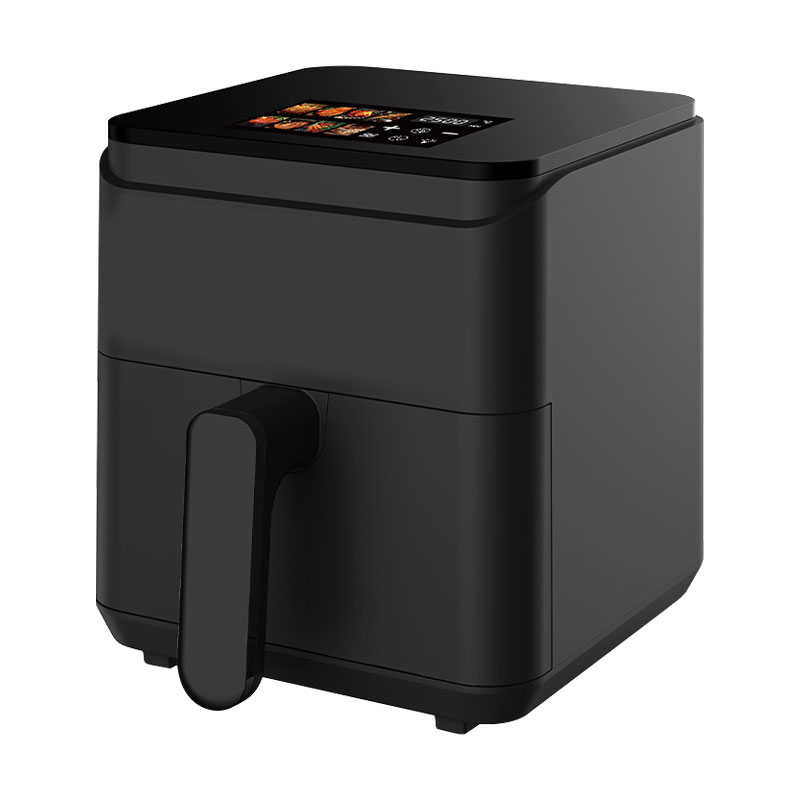
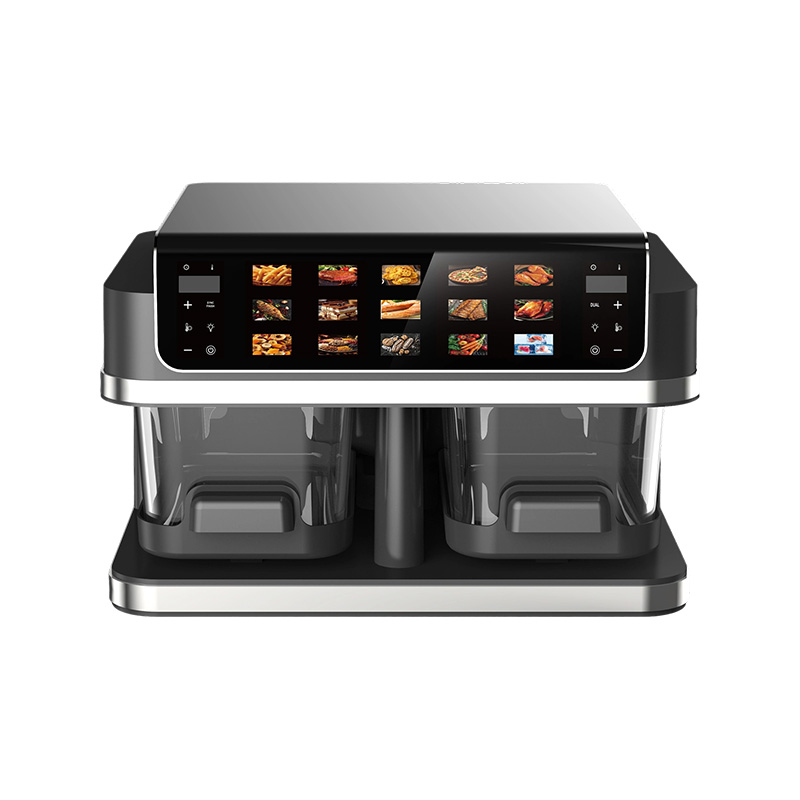
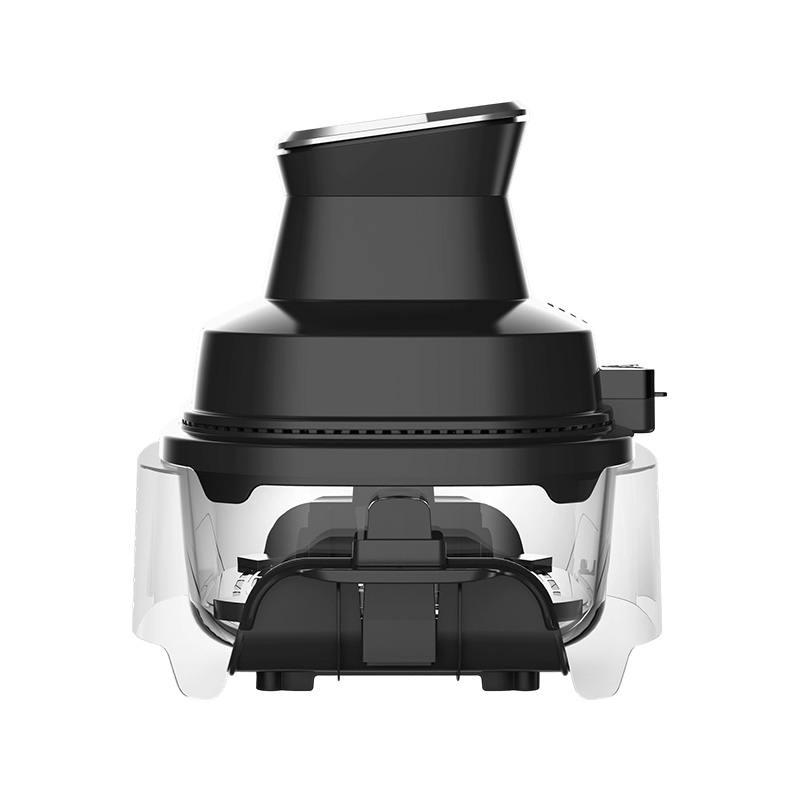
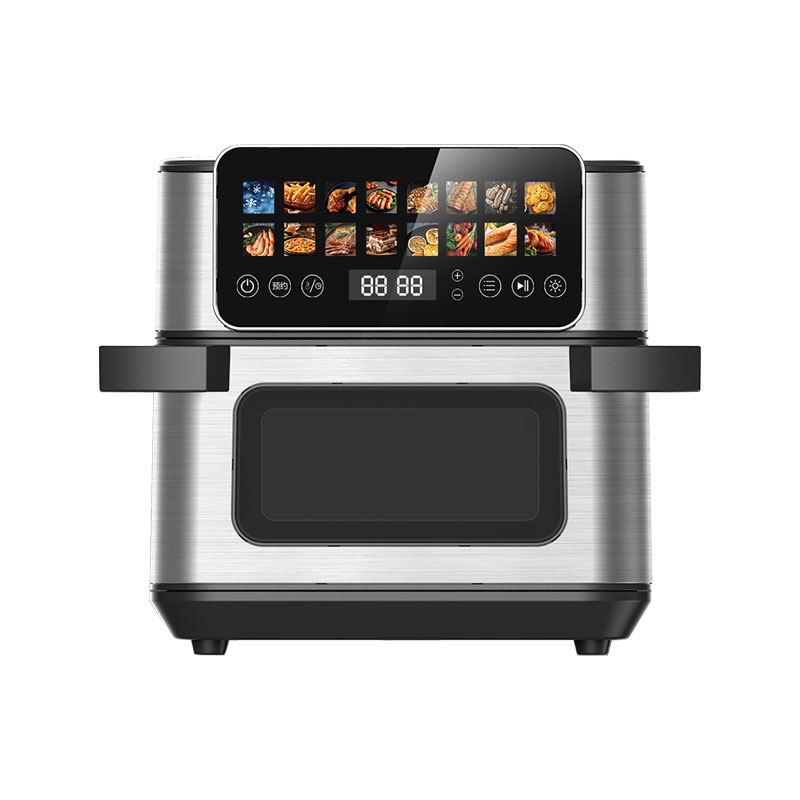
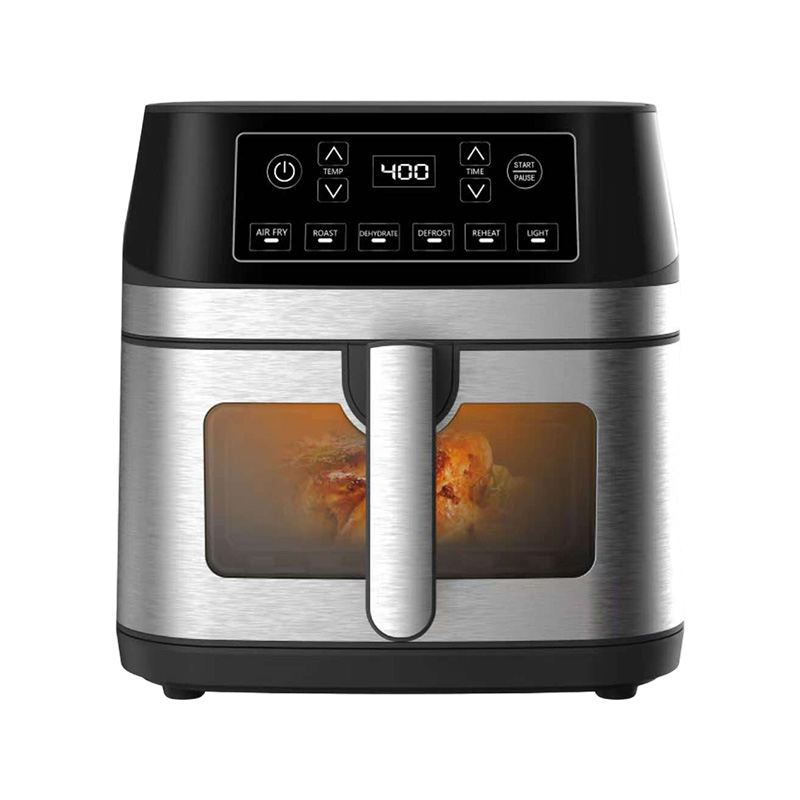
GSE030 Air Fryer
3. Materials and Product Construction
The GSE030 uses PP, ABS, PA, and PC materials. Each material family can contribute different performance characteristics to a small electrical appliance, although the exact placement and formulation should be confirmed through the final technical drawing and bill of materials.
3.1 Polypropylene
Polypropylene, commonly abbreviated as PP, is widely used in household products because of its relatively low weight, chemical resistance, and suitability for molded components. In an air fryer, PP may be considered for selected structural or internal components where the material’s thermal and mechanical properties are appropriate.
Its low density can help control overall product weight, while its moldability supports the creation of repeatable shapes. For mass production, consistent injection molding is essential because it affects fit, surface quality, assembly time, and the visual appearance of the finished appliance.
3.2 Acrylonitrile butadiene styrene
ABS is a common engineering thermoplastic used in appliance housings and external components. It can provide a useful combination of rigidity, impact resistance, and attractive surface finish. For an air fryer, the external housing must protect internal components, maintain a stable appearance during ordinary use, and provide a suitable foundation for controls, labels, handles, and other design elements.
Material selection is only one part of product quality. Mold design, processing temperature, cooling control, wall thickness, screw and snap-fit design, and post-molding inspection all influence the final performance of ABS components. A capable manufacturer can use production experience to reduce problems such as sink marks, warping, flash, inconsistent color, and poor assembly fit.
3.3 Polyamide
PA, or polyamide, is valued in many engineering applications for its strength and wear resistance. It may be used in components that require greater mechanical durability than a general-purpose plastic can provide. In a kitchen appliance, the appropriate use of PA can support reliable movement, fastening, or structural performance in selected parts.
Polyamide processing requires attention to material preparation and moisture control. If the material is not handled correctly before molding, dimensional stability and surface quality may be affected. Manufacturing discipline therefore matters as much as the specification itself.
3.4 Polycarbonate
PC, or polycarbonate, is known for its toughness and transparency options. It may be suitable for selected visual, protective, or heat-exposed components depending on the product design. Polycarbonate components require careful process control to maintain clarity, dimensional accuracy, and surface appearance.
The combination of PP, ABS, PA, and PC indicates that the product design uses different materials for different functional requirements rather than relying on one material for every component. This can support a balance between weight, cost, appearance, rigidity, durability, and manufacturing efficiency.
4. Advantages in Comparison with Competing Product Types
The GSE030 should be compared with competing products on a complete value proposition rather than on one specification alone. Capacity, power, size, packaging, certification documentation, order flexibility, manufacturing support, and supply reliability all affect the total value of an air fryer for a buyer.
4.1 More useful than very small personal models
Personal air fryers with very small baskets may suit a single user, but they can be inconvenient when preparing food for more than one person. Multiple cooking cycles can increase preparation time and reduce the convenience that attracts consumers to air fryers in the first place.
The GSE030’s 4-liter capacity provides a broader use case. It can serve individual users who want extra room as well as small households that need a more practical daily cooking volume. This wider target audience can help retailers reduce the risk of carrying a product that is limited to one narrow consumer group.
4.2 More space-conscious than oversized family units
At the other end of the market, very large air fryers may offer higher nominal capacity but require more counter space and storage room. They can also increase packaging volume and shipping costs. A 4-liter design gives buyers an opportunity to offer meaningful cooking capacity without moving into the largest and most space-demanding category.
This balance is particularly relevant for apartments, smaller homes, regional retail stores, and e-commerce sellers that must manage storage carefully. It also creates an accessible product tier between entry-level personal models and premium large-capacity appliances.
4.3 A specification suitable for broad retail positioning
The GSE030’s specification is straightforward: 1400W power, 4-liter capacity, and a compact household format. Straightforward specifications can support easier product communication across retail packaging, sales listings, catalogs, and distributor training materials.
Buyers can position the appliance around convenient cooking, household versatility, moderate capacity, and countertop practicality. These messages are easier to adapt for different markets than highly specialized features intended for only one cooking style or one consumer segment.
4.4 Certification coverage for international market planning
The supplied product information lists CE, GS, CB, ETL, RoHS, LFGB, and FDA certification or compliance references. These designations cover different aspects of electrical safety, product conformity, restricted substances, and food-contact considerations. However, certification requirements vary by destination, product configuration, voltage, plug, and applicable standards.
Importers should request current certificates, test reports, declarations, factory details, model references, and scope information before placing a commercial order. The product model appearing on a certificate should match the product being supplied. Buyers should also confirm whether a market requires additional national registration, energy labeling, packaging marks, language requirements, or importer responsibilities.
Even with those verification steps, the listed certification range is a valuable starting point for international procurement. It signals that compliance has been considered as part of the product’s commercial preparation rather than treated as an afterthought.
4.5 Container planning and supply efficiency
The listed loading quantities are 784 pieces in a 20-foot container and 1,728 pieces in a 40-foot high-cube container. These figures can assist buyers with preliminary freight planning, warehouse allocation, and landed-cost calculations.
The listed MOQ is 1,728 pieces, corresponding to the stated 40-foot high-cube quantity. A buyer should confirm whether this MOQ applies to one color, one packaging version, one electrical specification, or a mixed order. Clarifying these conditions is important for distributors that want to combine several models or customize packaging.
Efficient carton planning can reduce wasted space and simplify handling. One piece per carton gives the buyer a clear unit of inventory and may be suitable for both wholesale distribution and direct-to-consumer fulfillment. Final container quantities should always be confirmed after the approved packaging design is completed.
5. Manufacturing Capabilities and Engineering Background
The manufacturer’s history provides useful context for evaluating the GSE030. CIXI GSTAR ELECTRIC APPLIANCE CO., LTD. began with product sourcing and development experience before expanding into its own design, engineering, and manufacturing activities. The company’s product range includes both electrical and non-electrical household items, with a strong emphasis on kitchen-related products.
The company reports experience in designing and developing blenders, slicers, choppers, food processors, smokeless grills, hot pots, air fryers, air ovens, ice buckets, beverage dispensers, pitchers, graters, and related products. This breadth can benefit an air fryer buyer because manufacturing knowledge from adjacent appliances often supports better understanding of motors, heating systems, food-contact parts, plastic housings, controls, packaging, and kitchen-user expectations.
The company also reports a history of working with international customers and supplying products to major supermarket and retail channels. Experience with demanding retail customers can help develop practical systems for product approval, quality documentation, production schedules, packaging control, and shipment coordination.
5.1 Product development and engineering
According to the supplied company information, the manufacturer has an R&D department with ten engineers and a QC department with ten personnel. It also reports a workforce of more than 200 experienced workers and a production area of approximately 15,000 square meters. Earlier stages of the company’s development included a smaller factory and workforce, followed by expansion into a larger owned facility.
This progression suggests an organization that has developed from trading and sourcing activities into a more integrated manufacturing operation. For a product such as the GSE030, an integrated development process can support communication between industrial design, mechanical engineering, electronics, tooling, production, quality control, and customer service.
Engineering support is especially important when buyers request adaptations. Possible areas for discussion may include plug and voltage versions, color changes, logo application, packaging language, label layout, control-panel graphics, accessories, carton markings, and regional documentation. Any customization must be reviewed for tooling impact, certification implications, production quantity, and lead time.
5.2 Injection molding and material control
The GSE030 uses several molded plastic materials, making injection molding quality a central manufacturing consideration. A robust process begins with approved material specifications and controlled incoming inspection. Resin identification, color consistency, storage conditions, drying requirements, and batch traceability can all influence production stability.
During molding, process parameters such as temperature, pressure, injection speed, holding pressure, cooling time, and mold condition must be controlled. Operators and engineers should monitor visible defects, dimensions, part weight, surface finish, and assembly fit. Production samples can be compared with approved golden samples to maintain consistency throughout a large order.
Mold maintenance is another important factor. Clean parting surfaces, properly maintained ejector systems, stable cooling channels, and accurate cavity alignment help reduce flash, deformation, short shots, and inconsistent dimensions. Regular preventive maintenance can also support more predictable production schedules.
5.3 Electrical and heating-system assembly
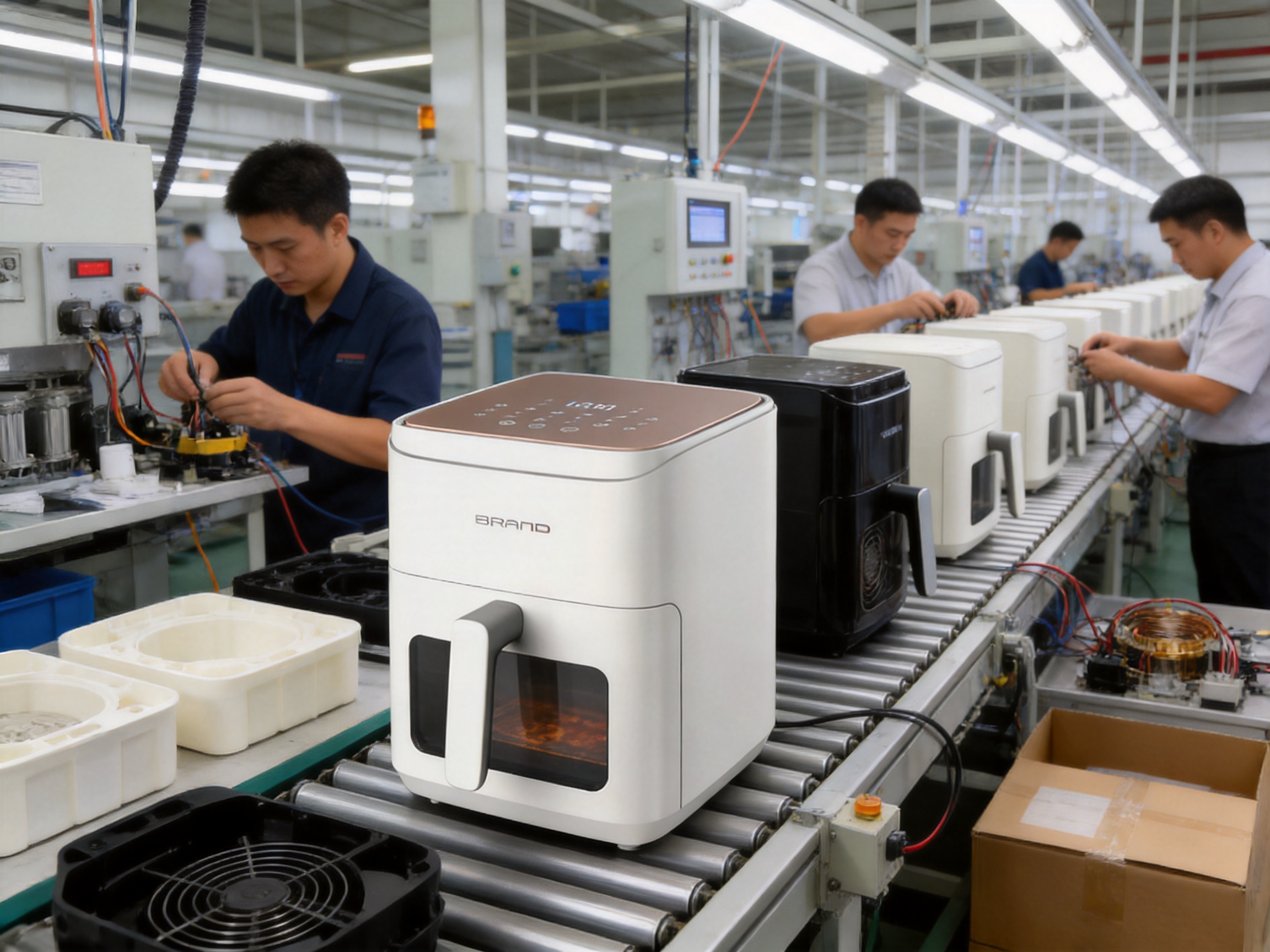
An air fryer combines a heating system, airflow path, electrical components, insulation, controls, housing parts, and user-contact surfaces. Assembly quality is therefore essential. The production process should include controlled installation of wiring, terminals, heating components, protective devices, switches or control boards, and grounding or insulation features as required by the applicable design.
Electrical safety testing may include continuity checks, insulation resistance testing, dielectric withstand testing, grounding verification, leakage-current evaluation, power measurement, and functional operation. The exact test program should be based on the approved design and applicable standards. These tests help identify wiring errors, damaged insulation, loose connections, incorrect components, and other risks before shipment.
Functional testing should confirm that the assembled appliance operates as intended. Depending on the design, this may include power-on behavior, heating response, control operation, timer performance, airflow, abnormal noise, temperature behavior, basket or drawer fit, and safety interlock performance. The final inspection standard should be documented and consistently applied.
5.4 Heat management and product safety
Air fryers operate in a warm environment, so heat management is a key aspect of engineering and production. The housing, internal supports, wiring, insulation, handles, cooking chamber, and external touch points must be considered together. Material selection and component placement should help protect users and maintain product performance during normal operation.
A manufacturer with experience in air ovens and related heating appliances can apply accumulated knowledge to airflow design, temperature distribution, component spacing, thermal protection, and assembly procedures. Actual performance still depends on the specific GSE030 design and must be verified through testing.
5.5 Quality-control checkpoints
Quality control should begin before production and continue through shipment. A comprehensive approach may include supplier approval, incoming material inspection, first-article approval, in-process inspection, assembly-line checks, finished-product testing, packaging inspection, and pre-shipment audits.
For the GSE030, relevant inspection points can include plastic appearance, color, dimensions, housing fit, basket or drawer movement, label placement, power rating, electrical safety, operating controls, heating behavior, noise, carton markings, accessories, manuals, and barcode information.
Sampling plans should be agreed with the buyer in advance. Some buyers may use an acceptance quality limit system, while others may require 100 percent testing for selected electrical or functional characteristics. Clear quality standards reduce disagreement and improve the efficiency of both production and inspection.

6. Manufacturing Process from Order to Shipment
6.1 Requirement confirmation
The process begins with confirmation of the buyer’s requirements. This includes the destination country, voltage and frequency, plug type, language requirements, packaging format, color, logo, labeling, certification scope, order quantity, delivery schedule, and payment terms.
For a standard GSE030 order, the manufacturer and buyer should confirm that the production version matches the quoted specifications: 1400W power, 4-liter capacity, PP, ABS, PA, and PC materials, one piece per carton, and the approved carton dimensions. If a buyer requires a different plug, control interface, or electrical configuration, the change must be reviewed before production.
6.2 Sample approval
A pre-production sample gives the buyer an opportunity to assess the product before mass manufacturing. Sample approval should cover appearance, color, logo, controls, packaging, labels, accessories, user documentation, and basic operation.
For private-label projects, the approved sample should be documented with photographs, drawings, specifications, and a signed approval record. This creates a reference for production inspection and helps prevent unauthorized changes.
6.3 Component and material preparation
After approval, the factory prepares plastics, electrical parts, heating components, fasteners, packaging materials, labels, manuals, and other components. The purchasing and production teams should coordinate delivery dates so that one missing component does not delay the whole order.
Incoming inspection verifies that components meet the approved requirements. Critical parts should be traceable by supplier, batch, or production date where appropriate. This information supports investigation if a quality issue arises after shipment.
6.4 Molding and finishing
Plastic housings and structural parts are molded according to approved tooling and process parameters. After molding, parts may undergo trimming, visual inspection, printing, labeling, or secondary operations. The factory should control regrind use and ensure that any recycled or mixed material is permitted by the approved specification and applicable requirements.
Appearance standards are particularly important for consumer appliances. Visible surfaces should be inspected for scratches, dents, color variation, weld lines, contamination, sink marks, deformation, and other defects. The level of acceptance should be agreed before mass production.
6.5 Electrical assembly
Workers assemble the heating system, airflow-related components, control parts, wiring, protective elements, housing, cooking chamber, basket or drawer, handle, and other components. Work instructions can help ensure that cables are routed correctly, terminals are secure, fasteners are tightened consistently, and parts are installed in the correct sequence.
Line supervisors and quality personnel should monitor critical assembly operations. Where appropriate, torque tools, fixtures, gauges, and electrical testers can help reduce variation between operators and production shifts.
6.6 Testing and final inspection
Finished units undergo functional and safety checks according to the approved inspection plan. Units that do not meet the criteria should be identified, isolated, analyzed, and corrected through a controlled rework process. Reworked products should be tested again before packing.
Final inspection also confirms that the correct product, accessories, manuals, labels, and cartons are present. A strong final inspection protects the buyer from mixed models, incorrect packaging, missing components, and shipment errors.
6.7 Packing and container loading
After approval, each unit is packed in its designated carton. Packaging should protect the appliance against vibration, compression, moisture, and ordinary handling during transport. Carton design should also support efficient palletization or container loading where applicable.
The stated packing format is one piece per carton. The gross weight is listed as 6 kilograms, while net weight is listed as 5 kilograms. These figures support logistics planning but should be rechecked after final packaging and any customization. Container loading should follow a documented loading plan to reduce movement and make unloading more efficient.
7. Commercial Value for Importers and Distributors
7.1 A practical product for multiple channels
The GSE030 can be considered for appliance stores, department stores, supermarket channels, online marketplaces, kitchenware distributors, hospitality suppliers, and promotional programs. Its broad household application allows sellers to present it as a daily-use cooking appliance rather than a niche product.
Online sellers can focus on capacity, power, cooking flexibility, countertop size, and material construction. Offline retailers can demonstrate the product’s form, basket or drawer arrangement, and compact footprint. Distributors can include it in a wider kitchen appliance range alongside food processors, blenders, hot pots, grills, and ovens.
7.2 Inventory and shipping considerations
The listed container quantities help buyers estimate inventory levels. A 20-foot container can hold approximately 784 pieces, while a 40-foot high-cube container can hold approximately 1,728 pieces according to the supplied information. These figures can be used for preliminary purchase planning, although final loading depends on carton design, stacking restrictions, pallets, and shipping requirements.
A distributor should calculate not only the product cost but also freight, insurance, customs duties, warehousing, local delivery, certification, packaging customization, and after-sales support. The moderate carton size and one-piece packing format can simplify these calculations.
7.3 Private-label and customization potential
Manufacturers with product development and engineering resources can often support branding and market adaptation. Potential requests may include a customer logo, retail color, branded carton, multilingual manual, promotional insert, barcode, carton mark, or modified product presentation.
Customization should be handled through a formal approval process. The buyer should request drawings, artwork templates, color standards, sample approval, and confirmation of any minimum order quantities. Electrical or structural changes may require additional testing and certification, so they should never be treated as simple cosmetic changes without technical review.
7.4 After-sales considerations
Reliable after-sales support begins with clear technical documentation. Buyers should receive or request a user manual, product specification sheet, troubleshooting information, spare-parts policy, warranty terms, and contact procedures. A manufacturer that works closely with customers as an engineering partner can help distributors respond more effectively to market feedback.
Common after-sales topics for air fryers may include control operation, cleaning, basket or drawer handling, abnormal heating, unusual noise, power issues, damaged accessories, and cosmetic damage in transit. A clear process for identifying serial numbers, production batches, and fault descriptions can shorten response times.
8. Responsible Use and Consumer Guidance
The GSE030 should be used according to the final user manual and applicable safety instructions. Users should place the appliance on a stable, heat-resistant surface with sufficient clearance around ventilation areas. The power cord and plug should remain undamaged, and the appliance should be connected to a suitable electrical supply.
Food should be arranged so that hot air can circulate. Overfilling may affect cooking performance and can lead to uneven results. Users should also avoid blocking vents, placing the appliance near water, or touching hot surfaces without appropriate protection.
Cleaning instructions should distinguish between removable food-contact parts and the main electrical body. The electrical housing should not be immersed in water. Grease, food residue, and debris should be removed according to the manufacturer’s instructions, especially around areas that may affect airflow or heating.
Consumers should remember that cooking times vary according to food type, quantity, starting temperature, moisture content, and desired texture. A clear manual with cooking guidance can improve user satisfaction and reduce unnecessary product returns.
9. Buyer Evaluation Checklist
Before placing an order, a professional buyer should evaluate the product from technical, commercial, regulatory, and service perspectives. The following checklist can support a structured review.
| Evaluation area | Questions to confirm |
| Electrical version | Does the voltage, frequency, plug, and rated power match the destination market? |
| Capacity | Is the 4-liter specification measured according to the buyer’s required method? |
| Controls | What control system, timer, temperature range, and operating modes are included? |
| Materials | Are PP, ABS, PA, and PC used according to the approved bill of materials? |
| Food-contact parts | Are applicable LFGB or FDA-related documents available for the relevant components? |
| Certification | Do certificates and reports cover the exact model and electrical version? |
| Packaging | Are carton size, gross weight, manuals, labels, and barcode requirements confirmed? |
| Quality control | What inspection standard, sampling plan, and testing records will be used? |
| Customization | Are logos, colors, artwork, and language versions included in the quotation? |
| Quantity | Does the order meet the listed MOQ of 1,728 pieces, and can mixed configurations be combined? |
| Delivery | What are the production lead time, shipment terms, and loading plan? |
| After-sales service | What warranty, spare-parts, technical-support, and claim procedures are available? |
10. Why Manufacturing Strength Matters
A competitive air fryer is not created by specifications alone. The quality of the final appliance depends on how effectively the manufacturer converts a design into a stable, repeatable production process. This includes tooling, material control, assembly discipline, testing, documentation, and communication with the buyer.
GSTAR’s background in both non-electric innovative products and electrical kitchen appliances is relevant to this process. The company reports that it began developing innovative household products before expanding into electrical appliances. It later added product categories such as air ovens and air fryers, which became important areas of its international business.
The company also reports experience working with customers in Europe, South America, Asia, and other markets. International supply requires attention to differing electrical standards, packaging languages, safety expectations, consumer preferences, and logistics systems. A manufacturer familiar with these differences can help buyers identify requirements earlier in the development process.
The reported engineering and QC teams provide additional support for product refinement and production management. Engineers can review component changes, tooling improvements, thermal performance, assembly methods, and customization requests. Quality personnel can establish inspection points and verify that production remains aligned with approved samples.
Factory scale is also relevant, but scale must be combined with process control. A larger production area and experienced workforce can improve capacity and scheduling, while documented procedures, trained operators, testing equipment, and responsible supervision help maintain consistency. Buyers should evaluate both the manufacturer’s claimed resources and the evidence provided during the qualification process.
11. Sustainability and Long-Term Product Value
Small appliances contribute to sustainability through durability, repairability, efficient packaging, responsible material selection, and appropriate end-of-life handling. The GSE030’s multi-material construction should be managed with attention to product longevity and compliance with restricted-substance requirements.
The supplied information lists RoHS among the certification or compliance references. Buyers should request the applicable declaration and supporting documents for the exact product configuration. They should also confirm packaging materials, inks, plastics, and electrical components according to the rules of the target market.
Long-term product value depends on how well the appliance performs over repeated use. Stable heating, secure assembly, reliable controls, durable handles, appropriate food-contact materials, and effective cleaning access can all influence service life. Manufacturing inspection and user guidance work together to protect that value.
Packaging efficiency also has an environmental and commercial dimension. A carton that provides adequate protection without excessive empty space can help reduce shipping volume and material use. Since the GSE030 is packed one piece per carton, the packaging design should be reviewed carefully to balance protection, presentation, warehouse efficiency, and transport impact.
12. Frequently Asked Questions
What is the capacity of the GSE030 Air Fryer?
The listed capacity is 4 liters. This places the product in a practical household category suitable for individual users, couples, and small families. The buyer should confirm the manufacturer’s capacity measurement method if exact usable volume is important for retail claims.
What is the rated power?
The rated power is 1400W. Voltage, frequency, plug type, and regional electrical configuration should be confirmed for the destination country before ordering.
What materials are used?
The supplied specification lists PP, ABS, PA, and PC. These materials may be assigned to different housing, structural, mechanical, or protective parts. The final material allocation should be confirmed in the approved bill of materials and technical documentation.
How is the product packed?
The listed packing format is one piece per carton. The stated carton size is 33.5 × 33.5 × 35.5 centimeters. Net weight is listed as 5 kilograms and gross weight as 6 kilograms. Final packaging details should be reconfirmed after artwork and accessory approval.
What certifications are listed?
The supplied information lists CE, GS, CB, ETL, RoHS, LFGB, and FDA. Buyers should request current certificates and test reports and verify that they apply to the exact GSE030 model, electrical version, materials, and destination-market requirements.
What is the minimum order quantity?
The listed MOQ is 1,728 pieces. This quantity corresponds to the stated loading quantity for one 40-foot high-cube container. Buyers should confirm whether the MOQ applies to one color, one electrical version, one packaging design, or a mixed order.
How many units fit in a container?
The supplied figures indicate approximately 784 pieces in a 20-foot container and 1,728 pieces in a 40-foot high-cube container. Actual quantities can change according to the final carton, pallet arrangement, loading restrictions, and shipping plan.
Can the product be customized?
Customization should be discussed with the manufacturer. Possible areas may include logo, color, packaging, labels, manuals, and electrical configuration. Any change that affects safety, structure, heating, food contact, or electrical performance may require additional engineering review and testing.
Who is the product suitable for?
The GSE030 is suitable for household appliance retailers, kitchenware distributors, e-commerce sellers, supermarket suppliers, hospitality-related purchasers, and private-label brands seeking a 4-liter air fryer. Its final suitability depends on the buyer’s market, required certifications, pricing structure, and service expectations.
What should be checked before mass production?
Buyers should approve the product sample, packaging, artwork, electrical version, certification documents, inspection standard, user manual, order quantity, delivery schedule, and quality requirements. These approvals should be recorded in writing before mass production begins.
Does a 1400W rating guarantee a specific cooking performance?
No. Power rating is an important specification, but cooking performance also depends on airflow, heating-element design, temperature control, basket loading, insulation, food quantity, and operating conditions. Buyers should evaluate performance through sample testing and documented factory test results.
How should the appliance be cleaned?
Users should follow the final instruction manual. Removable food-contact parts may be cleaned according to the stated procedure, while the main electrical housing should be kept away from immersion and excessive water. Cleaning instructions should be confirmed before the product is released for retail sale.
13. Conclusion
The GSE030 Air Fryer combines a practical 4-liter capacity with a 1400W power rating and a compact household-oriented format. Its specification gives it a broad market position: larger and more useful than many personal models, while more manageable than oversized family units. The PP, ABS, PA, and PC material combination supports a multi-part product design intended to balance appearance, strength, weight, and production efficiency.
Its commercial advantages extend beyond the appliance itself. The listed certification references, one-piece carton packing, container-loading data, and international product experience give buyers useful foundations for procurement planning. The manufacturer’s background in small kitchen appliances, product development, engineering, quality control, and international supply further supports the product’s potential as a wholesale or private-label offering.
Successful sourcing still requires careful verification. Buyers should confirm electrical versions, current certification documents, food-contact compliance, capacity measurement, packaging, final materials, quality standards, lead time, MOQ conditions, and after-sales procedures. With those points clearly managed, the GSE030 can serve as a practical addition to a modern kitchen appliance portfolio and a scalable product for distributors seeking dependable air-fryer supply.
References
1. Product specification sheet for the GSE030 Air Fryer, including capacity, power, materials, packaging, weights, container quantities, and listed certification references.
2. Manufacturer-provided company profile for CIXI GSTAR ELECTRIC APPLIANCE CO., LTD., including product categories, factory development, engineering resources, quality-control resources, and international market experience.
3. General principles of household electrical appliance safety testing, including insulation, grounding, leakage current, dielectric strength, and functional inspection.
4. General guidance on food-contact material compliance for kitchen appliances and cooking accessories.
5. General practices for injection-molded appliance housing production, material handling, mold maintenance, dimensional inspection, and surface-quality control.
6. General logistics practices for carton measurement, gross-weight verification, container loading, and wholesale inventory planning.