
 English
 中文简体
 Español
 English
 中文简体
 Español

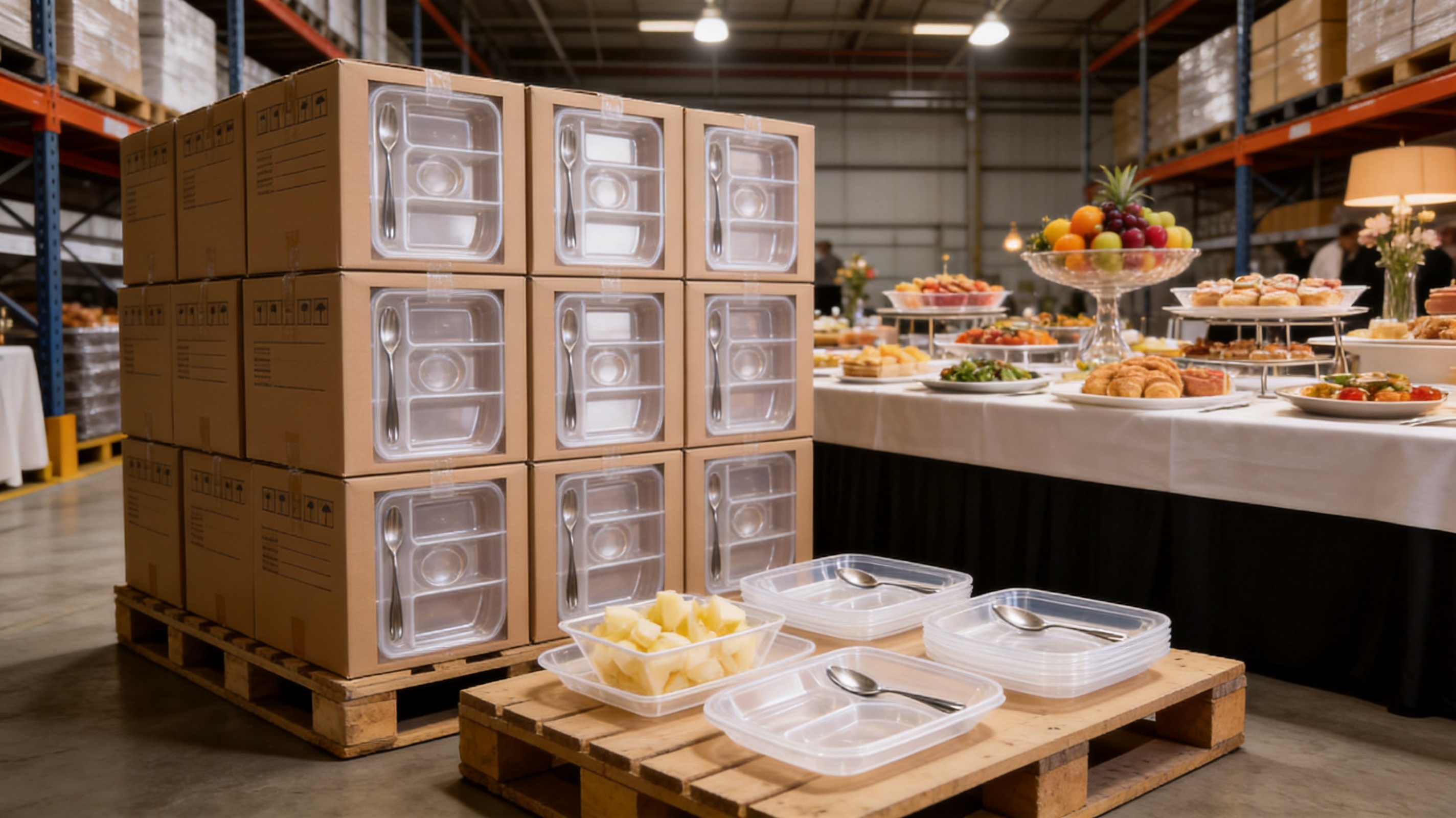
Serving tableware plays an important role in everyday dining, hospitality, catering, retail merchandising, and food presentation. A well-designed serving set does more than hold food. It helps users transfer dishes safely, organize a dining table, present snacks attractively, and maintain a consistent visual style across different occasions. The 3 Piece Serving Set, item GS055, is designed to meet these practical needs through a compact three-piece format, lightweight construction, straightforward packing, and efficient supply capability.
Made from PS material, the set offers a practical alternative to heavier ceramic, glass, or metal serving products. Its composition supports convenient handling, economical transportation, and accessible pricing for distributors, retailers, hospitality buyers, and household users. The three-piece configuration also gives the product a clear commercial advantage: it provides more functional value than a single serving item while remaining easier to merchandise and store than a large multi-piece collection.
This product is suitable for businesses looking for dependable tableware with broad consumer appeal. It can be positioned for daily meals, casual entertaining, parties, buffet service, afternoon refreshments, family gatherings, and seasonal promotions. Its simple design gives importers and retailers opportunities to include it in kitchenware, dining, household, and promotional product programs.
The product is supplied under the manufacturing capability of CIXI GSTAR ELECTRIC APPLIANCE CO., LTD., a company that has developed experience in both household products and innovative kitchen equipment. Although the company is widely associated with small electric kitchen appliances, its product development background also includes non-electric household items, food preparation accessories, serving products, beverage products, and hospitality-oriented goods. This combination of engineering experience, production management, quality control, and export service supports a professional approach to the manufacture and supply of the 3 Piece Serving Set.

3 Piece Serving Set
Product Overview and Core Positioning
The 3 Piece Serving Set is identified by item number GS055 and belongs to the tableware category. It is a compact serving solution intended to support common food presentation and serving tasks. The product name communicates its most important commercial feature: the buyer receives three coordinated pieces in one set rather than purchasing individual serving items separately.
A coordinated set is valuable because it creates consistency. When serving pieces match in material, color, finish, and general form, the dining table appears more organized. Retail customers often prefer sets because they simplify purchasing decisions. Instead of selecting several individual utensils or containers, the customer can choose one package designed for a unified purpose.
For distributors, the set format makes merchandising easier. A three-piece product can be displayed as a complete solution, grouped with other tableware, or included in a broader household collection. It can be sold through supermarkets, department stores, kitchenware shops, online retail channels, gift programs, hospitality suppliers, and promotional catalogs.
The compact nature of the product also supports practical inventory planning. The published packing information indicates eight pieces per carton, with carton measurements of 25.9 by 25 by 27.2 centimeters. The listed net weight is 3.2 kilograms, while the gross weight is 3.6 kilograms. These specifications provide buyers with a basis for warehouse planning, freight estimation, container loading, and purchasing calculations.
Because the available product information identifies the item as a three-piece serving set without describing the individual components, buyers should confirm the exact piece configuration, dimensions, color options, packaging design, and artwork requirements during the quotation and sample approval stages. This is a normal and important part of private-label and wholesale tableware procurement.
Key Specifications
| Specification | Product Information |
| Item number | GS055 |
| Product name | 3 Piece Serving Set |
| Category | Tableware |
| Material | PS |
| Pieces per carton | 8 pieces per carton |
| Carton measurement | 25.9 x 25 x 27.2 centimeters |
| Net weight | 3.2 kilograms |
| Gross weight | 3.6 kilograms |
| 20-foot container loading reference | 11,360 pieces |
| 40-foot high-cube container loading reference | 29,520 pieces |
| 40-foot container loading reference | Not specified |
| Minimum order quantity | 2,000 pieces |
| Standard delivery time | 30 days |
The specifications show that the product is intended for organized wholesale distribution rather than very small, one-off retail orders. A minimum order quantity of 2,000 pieces allows buyers to plan a meaningful market launch, promotional campaign, seasonal program, or private-label purchase. It also helps the factory organize material preparation, production scheduling, inspection, and packing more efficiently.
The container loading figures are especially useful for international buyers. A reference quantity of 11,360 pieces for a 20-foot container and 29,520 pieces for a 40-foot high-cube container helps purchasers estimate purchasing volume and logistics costs. Actual loading quantities can vary depending on packaging, palletization, carton arrangement, shipping regulations, and the final approved packing design, so these figures should be treated as planning references and confirmed before shipment.
Material Benefits of PS Construction
PS, or polystyrene, is widely used in household products, packaging, display items, and tableware-related applications. For a serving set, PS can provide a useful combination of low weight, moldability, smooth appearance, and cost efficiency. These characteristics allow manufacturers to create practical forms while keeping the final product accessible to a broad consumer market.
One of the most noticeable benefits is lightness. Compared with many ceramic, glass, or cast-metal serving products, a PS serving set is easier to lift, carry, arrange, and store. This is useful for children’s meals, outdoor gatherings, buffet service, casual dining, and households where tableware is frequently moved between rooms or locations.
Light weight also creates advantages throughout the supply chain. Products with lower individual weight can reduce handling effort in warehouses and stores. They can be easier for retail employees to unpack and place on shelves. Consumers may also appreciate a serving set that does not feel unnecessarily heavy when carrying food from the kitchen to the dining area.
PS is also suitable for molded product manufacturing. Molding allows the manufacturer to reproduce a defined form consistently across large quantities. A controlled mold can help maintain uniform edges, proportions, surface appearance, and fit between coordinated pieces. Consistency is particularly important in a set product, because the three pieces must look like they belong together.
The smooth surface associated with properly processed PS can support an attractive presentation. A clean, even surface is easier to display under retail lighting and can create a neat appearance on a dining table. Depending on the approved design and finish, the product can be developed in different colors or coordinated with a retailer’s tableware assortment.
Another important advantage is cost control. PS is commonly selected for products that need to balance appearance, function, and competitive pricing. A three-piece serving set made from a practical polymer can reach consumers who may consider ceramic or glass sets too expensive, too heavy, or too fragile for frequent use.
Material suitability must always be evaluated according to the final application. Buyers should confirm food-contact requirements, temperature limitations, cleaning instructions, dishwasher suitability, microwave suitability, and other compliance details before placing an order. These characteristics depend on the final material grade, product design, manufacturing process, and destination-market regulations.
Advantages Compared with Alternative Serving Products
Compared with Ceramic Serving Sets
Ceramic serving products are valued for their weight, traditional appearance, and premium dining image. However, they can be heavier and more vulnerable to chipping or breakage when dropped or handled roughly. The PS 3 Piece Serving Set provides a lighter option for users who prioritize easy handling and everyday practicality.
For retailers, lower weight may simplify shelf replenishment and reduce handling strain. For consumers, it may make the product easier to use during family gatherings or casual events. For distributors, a lighter product can support efficient logistics, although final freight calculations must always consider carton volume as well as product weight.
Compared with Glass Serving Products
Glass is often selected for its clarity and visual elegance, but it can require careful handling during production, transport, storage, and use. A polymer serving set can provide a more relaxed option for situations in which users want to reduce concern about shattering. This can be particularly relevant for outdoor meals, parties, children’s environments, and high-traffic hospitality settings.
The PS set can also offer more freedom in molded form and color coordination than transparent glass products. A buyer seeking a modern, colorful, seasonal, or brand-matched household assortment may find polymer construction easier to adapt to a specific retail concept.
Compared with Metal Serving Products
Metal serving items can deliver durability and a professional visual impression, but they may be heavier, more expensive, or less suitable for consumers seeking a lightweight casual product. They can also require different care depending on the metal type and surface treatment. The PS set is positioned as a practical everyday solution rather than a formal heavy-duty metal collection.
Compared with Single-Piece Purchases
A single serving item may be inexpensive, but it may not provide enough coordinated functionality for a household or foodservice user. The three-piece structure offers greater utility in one package. It can help users prepare a table more efficiently and can make the product feel more complete at the point of purchase.
From a merchandising perspective, a set also creates a stronger value message. Retailers can communicate that customers are receiving a coordinated group of serving pieces, which can be more appealing than purchasing separate items that may not match. This value perception is useful for promotional displays, gift sections, seasonal campaigns, and household starter collections.
Functional Value in Everyday Use
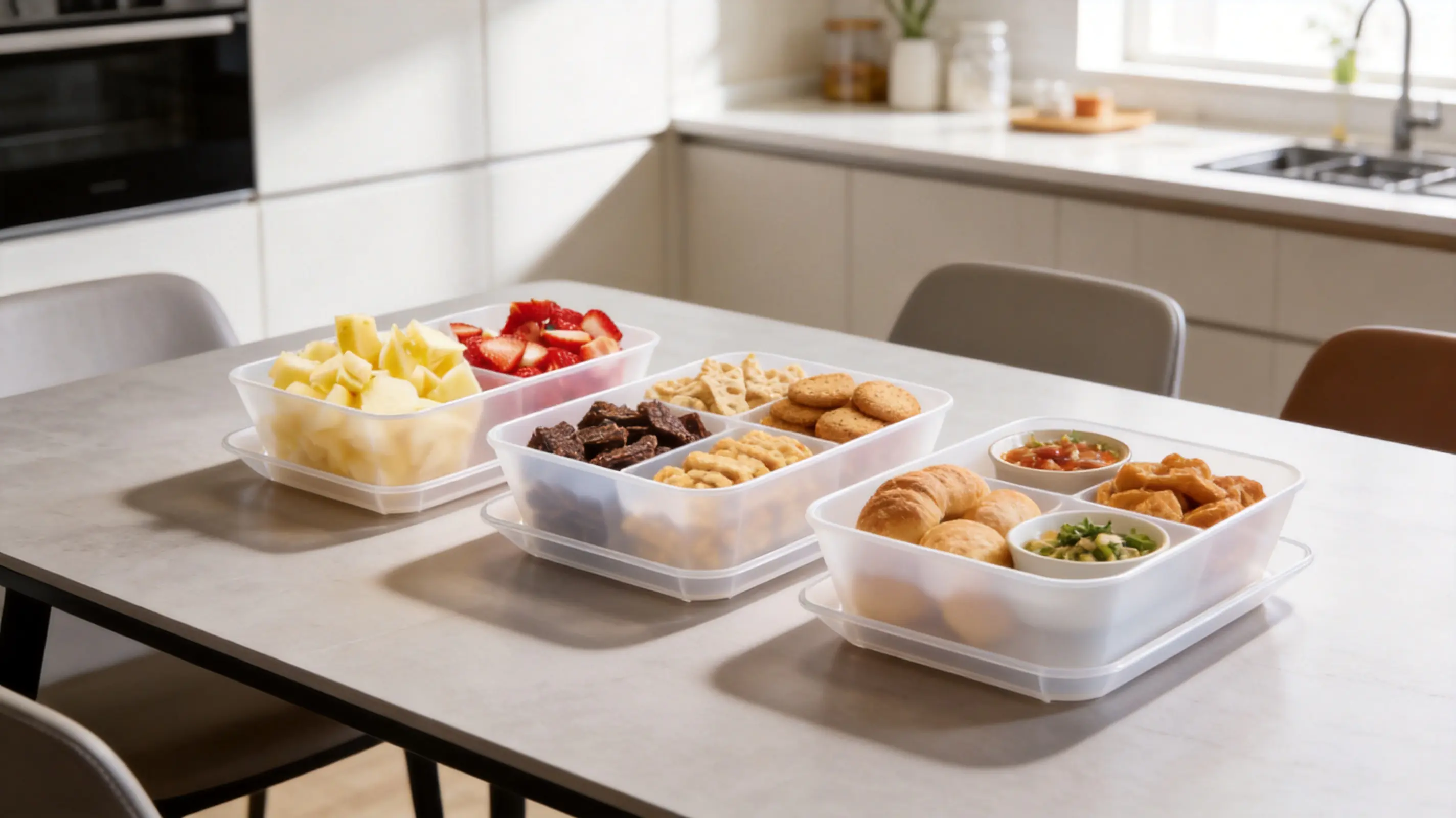
The main purpose of serving tableware is to make food presentation and transfer easier. Whether used for fruit, snacks, prepared dishes, baked goods, side dishes, or shared meals, a serving set helps separate serving functions from ordinary eating utensils. This distinction can improve table organization and encourage a more orderly dining experience.
In family homes, a three-piece serving set can support weekday meals as well as informal entertaining. The pieces can be arranged on a dining table, kitchen island, breakfast counter, or buffet surface. Their coordinated format can also help users prepare a table quickly when guests arrive unexpectedly.
For parties and social events, lightweight serving pieces are often convenient. Hosts may need to move food between the kitchen, dining area, patio, balcony, or event space. A lightweight PS product can reduce the effort required for repeated handling. It can also be a practical choice when the host wants an attractive presentation without using fragile formal tableware.
In hospitality and catering, the product can serve as part of a larger tableware program. Hotels, cafés, restaurants, canteens, event organizers, and catering companies may use coordinated serving sets for selected menu items or service areas. The final suitability depends on the buyer’s operational requirements, cleaning procedures, food-contact standards, and expected frequency of use.
The product may also be attractive to retailers serving consumers who live in apartments, dormitories, starter homes, or shared accommodations. These users often want compact, affordable, and flexible household products. A three-piece set occupies less space than a large collection while still adding useful serving capacity.
Design and Presentation Opportunities
Simple tableware designs can achieve broad market appeal because they are easy to combine with existing household products. A serving set does not need to match a complete dinnerware collection to be useful. Neutral forms can complement many kitchen styles, while carefully selected colors can support seasonal or lifestyle merchandising.
For buyers seeking private-label products, packaging is a major opportunity. The set can be presented in a retail carton, window box, sleeve, color box, or other approved format, subject to production feasibility and order requirements. Packaging can communicate the three-piece value, material information, care instructions, application ideas, and brand identity.
Retail packaging should protect the pieces from surface damage and movement during transportation. It should also make the product easy to identify on a shelf or in a warehouse. Clear product photography, a concise feature list, and accurate dimensions can help consumers understand the product before purchase.
Online retailers can emphasize the set’s lightweight construction, coordinated appearance, everyday usability, and compact packaging. Product descriptions should avoid unsupported claims and should clearly state the material, number of pieces, care instructions, and intended use. Images can show the set in a dining or serving environment, provided that the display does not suggest functions that have not been confirmed.
For supermarket and department-store buyers, the set can be grouped with kitchen storage, food preparation, picnic, party, seasonal dining, or household organization products. Cross-merchandising can help demonstrate how the product fits into a complete lifestyle rather than presenting it as an isolated tableware item.
Manufacturing Experience and Product Development Capability
The manufacturer behind the product has a background that combines household goods, non-electric kitchen innovations, and small electric appliances. This development history is relevant because successful tableware production requires more than basic molding. It requires attention to product usability, form, surface quality, packaging, supply planning, and customer-specific requirements.
CIXI GSTAR ELECTRIC APPLIANCE CO., LTD. began its business development through trading, sourcing, and customer-oriented product work before expanding its own design and manufacturing capabilities. This experience helped the company understand the needs of international buyers, including quality consistency, price competitiveness, delivery coordination, production supervision, and communication across different markets.
The company later developed non-electric innovative products such as food preparation and beverage-related items before moving more deeply into electric kitchen appliances. This combination provides useful exposure to different manufacturing technologies. Non-electric products require careful attention to molded structures, mechanical fit, ergonomic form, and finish. Electric products require additional attention to components, wiring, safety, assembly, testing, and process control.
The company reports a dedicated factory structure, experienced workers, engineering personnel, and a quality control team. Its stated facility development includes a production area of approximately 15,000 square meters and a workforce of more than 200 experienced workers. The supplied company information also references engineering and quality personnel responsible for research, development, and inspection activities.
For the 3 Piece Serving Set, this manufacturing environment can support a structured workflow from concept and sample review through mold preparation, production, inspection, packing, and shipment. The exact process used for GS055 should be confirmed in the technical file, but a professional workflow generally follows defined stages rather than treating production as an informal assembly activity.
Advanced Manufacturing Process for a Molded Serving Set
Product Concept and Engineering Review
Manufacturing begins with the product concept. Engineers and product developers review the intended use, number of pieces, overall dimensions, handling requirements, appearance, packaging arrangement, and target price. At this stage, the design should be evaluated for functionality as well as manufacturability.
A serving piece must have a stable form, practical edges, suitable proportions, and a surface that can be produced consistently. The design should also consider how the pieces are placed inside the package and how they are stacked or arranged during transportation. Early engineering decisions can influence material consumption, cycle time, packaging size, and final logistics cost.
Mold and Tooling Preparation
For a molded PS product, tooling quality has a direct effect on product quality. The mold determines the basic shape and supports repetition across production batches. Proper tooling preparation helps reduce visible defects, uneven surfaces, dimensional variation, and problems with piece alignment.
Before mass production, the mold should be evaluated through sampling. Trial samples allow the engineering team and buyer to inspect shape, surface, color, fit, edge definition, and overall presentation. If the sample reveals a design or manufacturing issue, adjustments can be made before large-scale production begins.
Material Preparation
Material preparation is an important part of consistent molding. The approved PS material should be identified and controlled according to the product specification. Where color is required, the color formulation and material mixing process should be managed so that production pieces maintain a stable appearance.
Material control helps protect against avoidable variation between batches. Buyers may request information about the selected material grade, color standard, food-contact suitability, applicable testing, and documentation requirements. These details should be agreed upon before production, particularly when the goods are intended for regulated markets.
Injection Molding and Process Control
The molding stage forms the serving pieces under controlled temperature, pressure, timing, and cooling conditions. Process parameters influence the final appearance and physical characteristics of the product. A stable process can help minimize issues such as short shots, deformation, sink marks, flash, discoloration, warping, or inconsistent wall appearance.
Production operators and engineers may monitor machine settings, material flow, mold condition, cycle performance, and product samples. The appropriate control points depend on the machine, mold design, material specification, and approved product standard. Consistent monitoring is particularly important when a set contains multiple pieces that need to maintain a coordinated appearance.
Trimming and Finishing
After molding, pieces may require gate removal, edge review, surface cleaning, or other finishing operations. These steps help ensure that the final products meet the visual and functional requirements established during sample approval.
Edges deserve special attention in tableware. They should be reviewed for excess material, sharp projections, roughness, or visible molding irregularities. A smooth, clean edge improves the user experience and contributes to the overall perception of quality.
Inspection and Assembly of Sets
Because the product is sold as a three-piece set, set assembly is an important control point. The packing team must ensure that each retail unit contains the correct number and type of pieces. Missing components, incorrect combinations, or visibly mismatched pieces can create customer dissatisfaction even when the individual components are acceptable.
Inspection may include visual checks, dimensional comparisons, color review, surface examination, quantity verification, and packaging inspection. Buyers can agree with the manufacturer on acceptable quality limits, inspection procedures, sampling levels, and pre-shipment approval requirements.
Packing and Carton Control
The published packing configuration is eight pieces per carton. Carton packing should protect the serving sets from movement, pressure, scratching, and contamination during handling. The carton should also be marked clearly with item number, product name, quantity, gross weight, net weight, carton dimensions, destination information, and any required handling marks.
Carton control is closely linked to logistics performance. A well-organized carton arrangement can improve container utilization, simplify counting, and reduce warehouse errors. The stated carton measurement of 25.9 by 25 by 27.2 centimeters provides a useful reference for shipping planning, but final measurements should be confirmed after the retail packaging and export carton are approved.
Quality Control Strengths
Quality control for a serving set should cover the entire production cycle rather than relying only on a final visual inspection. A strong system begins with approved specifications and continues through material preparation, molding, finishing, set assembly, packing, and shipment.
Incoming material control can verify that the production material matches the approved requirement. Production-line checks can identify deviations early, when corrective action is less costly. Final inspection can confirm that finished goods match the approved sample and packing instructions.
Important inspection areas may include product quantity, surface cleanliness, edge condition, color consistency, dimensional stability, deformation, molding marks, packaging condition, carton markings, and set completeness. Depending on the destination market and buyer requirements, additional tests may be needed for food-contact compliance, chemical migration, temperature performance, durability, or other regulatory characteristics.
The company’s reported quality control personnel provide a foundation for organized inspection. Buyers can further strengthen cooperation by supplying clear technical drawings, reference samples, color standards, packaging artwork, inspection checklists, and written acceptance criteria. The clearer the product standard, the easier it is for the factory and buyer to evaluate the same quality expectations.
Quality control is also connected to after-sales service. If a buyer identifies an issue, a capable supplier should be able to review production records, packing details, inspection information, and shipment data. A structured response helps identify whether the issue relates to material, molding, handling, packaging, or communication of requirements.
Supply Chain and Wholesale Advantages
The product is supported by a minimum order quantity of 2,000 pieces and a stated delivery time of 30 days. These terms can be attractive to importers and distributors that need a manageable initial volume without committing immediately to extremely large production quantities.
A 2,000-piece minimum can support several retail channels or a regional test launch. It may also be appropriate for seasonal purchasing, promotional campaigns, hospitality replenishment, and private-label programs. Buyers should confirm whether the stated delivery time begins after deposit receipt, sample approval, artwork approval, material confirmation, or another agreed milestone.
Production planning is especially important for products made for a specific customer. Color, packaging, labeling, carton artwork, and inspection requirements may affect the schedule. Early confirmation of these details helps reduce delays and allows the factory to coordinate materials, tooling, production capacity, and export documentation.
The reported container loading quantities demonstrate the manufacturer’s ability to support larger wholesale programs. A 20-foot container reference of 11,360 pieces and a 40-foot high-cube reference of 29,520 pieces provide useful starting points for logistics planning. The actual number may change according to final carton dimensions and loading methods, so buyers should request a confirmed packing list before booking transportation.
For international customers, supplier communication is another important advantage. The company provides dedicated sales contact information and has experience serving overseas markets. International purchasing requires accurate specification management, clear approvals, timely updates, and effective handling of shipping documents. These capabilities can be as important as the product itself when buyers are building a long-term supply relationship.

Applications Across Different Market Segments
Household Retail
In household retail, the 3 Piece Serving Set can be presented as an affordable everyday dining accessory. The product can appeal to consumers who want a coordinated serving solution without purchasing a large dinnerware collection. Its light weight and compact format may be particularly suitable for small households and first-time home buyers.
Supermarkets and Hypermarkets
Supermarkets and hypermarkets often require products that are easy to understand, easy to display, and suitable for broad consumer groups. The set format gives the product a straightforward value proposition. It can be placed in seasonal household displays, kitchenware aisles, party sections, or promotional endcaps.
Hospitality Supply
Hotels, restaurants, cafés, catering companies, and event operators may use serving sets for selected food presentation tasks. The product can be considered for casual service environments where lightweight tableware is useful. Buyers in this segment should evaluate expected usage frequency, cleaning procedures, food-contact requirements, and replacement needs.
Outdoor and Casual Dining
Outdoor dining creates demand for products that are easy to transport and organize. The lightweight construction of PS can make the set convenient for picnics, garden meals, parties, recreational areas, and family gatherings. The suitability of the product for outdoor or repeated use should be confirmed through the final product specification and care instructions.
Promotional and Gift Programs
A three-piece set can also be used in promotional merchandise programs, housewarming collections, seasonal gift assortments, and retail loyalty campaigns. Customized packaging may help buyers connect the product with a campaign theme, store identity, hospitality brand, or household product line.
Responsible Product Communication
Clear communication protects both the buyer and the end consumer. Product descriptions should state that the set contains three pieces and should identify the material as PS. If the exact piece types are not shown in the standard specification, they should be confirmed before advertising.
Care instructions should be based on verified testing and the approved material grade. Retailers should not describe the product as microwave-safe, dishwasher-safe, heat-resistant, shatterproof, or suitable for a specific food type unless those claims have been confirmed. Responsible communication reduces returns and helps customers use the product appropriately.
Packaging should also present accurate measurements. The listed 25.9 by 25 by 27.2 centimeter measurement is identified in the product data as the measurement associated with the packed product information. Buyers should verify whether it refers to the export carton, retail package, or another packing unit before printing consumer-facing dimensions.
Where food contact is involved, the importer remains responsible for confirming destination-market requirements. Regulations can differ by country or region. Documentation may include material declarations, migration testing, laboratory reports, labeling information, and packaging compliance records. The factory and buyer should clarify responsibility for each document during order negotiation.
Why the Product Offers Competitive Value
The strongest competitive value of the 3 Piece Serving Set comes from its balance. It combines the usefulness of a coordinated set with the cost and handling advantages of a lightweight polymer product. It is more complete than a single item, less bulky than a large tableware collection, and potentially more accessible than ceramic, glass, or metal alternatives.
The product also benefits from manufacturing support that extends beyond basic production. The supplier has experience in product development, household goods, kitchen products, international trade, engineering, quality control, and export logistics. This broader capability can help buyers manage a product program from idea through shipment.
Another advantage is the possibility of customization. Depending on order quantity and technical feasibility, buyers may discuss colors, packaging, labeling, artwork, and market-specific requirements. A standard item can therefore become part of a retailer’s own assortment rather than remaining a completely generic product.
Delivery planning is another competitive factor. A stated 30-day delivery time gives buyers a target for purchase scheduling. Faster and more predictable replenishment can help reduce out-of-stock risk, support seasonal programs, and improve inventory turnover. Delivery timing should always be confirmed in writing because production conditions, approvals, raw materials, and shipping arrangements may affect the final schedule.
Finally, the company’s product range creates opportunities for assortment development. Buyers interested in the serving set may also evaluate complementary kitchen, beverage, food preparation, or small appliance products from the same supplier. Consolidating related products with one manufacturing partner can simplify communication, sampling, quality coordination, and purchasing administration.
Recommended Buyer Evaluation Process
Before placing a wholesale order, buyers should request a product sample and compare it with the intended market positioning. The sample review should cover shape, appearance, weight, edge condition, surface quality, piece count, packaging, and general usability.
Buyers should also confirm the complete technical specification. This includes the exact contents of the three-piece set, product dimensions, material grade, color options, packaging format, carton quantity, carton size, net weight, gross weight, labeling, and available compliance documents.
If private labeling is required, the buyer should provide artwork in an approved format and request a packaging proof before mass production. Any barcode, warning text, care instruction, country-of-origin marking, recycling information, or importer details should be reviewed carefully.
A written quality standard is recommended for all wholesale orders. The standard can include acceptable color variation, surface defects, dimensional tolerance, packaging condition, set completeness, carton markings, and inspection procedures. A retained approved sample can serve as a physical reference for future production runs.
Logistics should be reviewed before the purchase order is finalized. The buyer should confirm whether the order will be palletized, the final carton dimensions, loading quantities, shipment terms, port information, documentation, and estimated production completion date. These steps help prevent avoidable problems after production is complete.
Finally, buyers should confirm the intended use and applicable regulations in the destination market. The material and product claims should be aligned with available test reports and legal requirements. A careful approval process supports a smoother launch and helps protect the long-term relationship between buyer and manufacturer.
Frequently Asked Questions
What is the product?
The product is the GS055 3 Piece Serving Set, a tableware product designed for food serving and presentation. It is supplied as a coordinated set containing three pieces.
What material is used?
The listed material is PS, or polystyrene. Buyers should confirm the exact material grade and any food-contact documentation required for their destination market.
Is the product electric?
No. The 3 Piece Serving Set is a non-electric tableware product. The manufacturer also produces small electric kitchen appliances, but this specific item does not require electrical power.
What are the product dimensions?
The supplied specification lists a measurement of 25.9 by 25 by 27.2 centimeters. Because this measurement appears in the packing information, buyers should confirm whether it refers to the carton, retail package, or another packing unit before using it in consumer advertising.
How many sets are packed in one carton?
The listed carton packing is eight pieces per carton. The buyer should confirm whether “piece” refers to one complete three-piece set or another packing unit in the final commercial packaging specification.
What are the net and gross weights?
The listed net weight is 3.2 kilograms and the listed gross weight is 3.6 kilograms. These figures should be reconfirmed against the final approved packaging configuration.
What is the minimum order quantity?
The stated minimum order quantity is 2,000 pieces. The final order unit should be clarified so that the buyer understands whether the quantity is counted by individual serving set, retail package, or another unit.
What is the standard delivery time?
The stated delivery time is 30 days. The starting point should be confirmed because production may begin after order confirmation, deposit payment, sample approval, packaging approval, or material approval.
Can the product be customized?
Potential customization may include color, packaging, labeling, artwork, and other agreed requirements. Customization depends on order quantity, tooling, material availability, technical feasibility, and destination-market needs. Buyers should discuss all custom requirements before receiving a final quotation.
Is the product suitable for food contact?
The product is categorized as tableware, but food-contact suitability and regulatory compliance should be confirmed through the final material specification and relevant testing documents. Buyers should not assume that a product is suitable for every food-contact or temperature condition without documentation.
Is it dishwasher-safe or microwave-safe?
These functions are not specified in the supplied product information. Buyers should request written confirmation and supporting test information before making dishwasher-safe, microwave-safe, or heat-resistance claims.
Why choose a three-piece set instead of individual serving items?
A set provides coordinated pieces in one purchase, which can improve convenience, table presentation, and perceived value. It can also be easier for retailers to merchandise and easier for consumers to select than several unrelated individual products.
What makes PS useful for this product?
PS can provide a lightweight, moldable, and cost-conscious material solution. It can support consistent production and practical handling. Its exact performance depends on the material grade, design, processing conditions, and approved care instructions.
How should buyers evaluate quality?
Buyers should inspect samples for appearance, dimensions, surface finish, edge condition, set completeness, packaging, and general usability. They should also establish written quality requirements and confirm any testing or documentation needed for the destination market.
Can the set be used by hotels and restaurants?
It may be considered for hospitality and foodservice applications, especially casual serving environments. The buyer should first evaluate cleaning procedures, frequency of use, food-contact rules, temperature conditions, replacement requirements, and overall durability expectations.
What logistics information is available?
The listed reference loading quantities are 11,360 pieces for a 20-foot container and 29,520 pieces for a 40-foot high-cube container. These figures should be verified after final packaging approval and before shipment booking.
Conclusion
The GS055 3 Piece Serving Set is a practical tableware solution built around coordinated functionality, lightweight PS construction, and wholesale-friendly supply specifications. It offers a useful balance for consumers and commercial buyers who want convenient serving products without the weight, handling demands, or cost associated with some traditional materials.
Its three-piece format creates a clear value proposition for retail, hospitality, catering, household, promotional, and seasonal markets. The set can support organized food presentation while remaining compact enough for efficient storage and merchandising. The listed minimum order quantity, carton configuration, container references, and 30-day delivery target provide a foundation for structured purchasing and distribution planning.
The manufacturer strengthens the product offering through experience in household goods, kitchen products, non-electric innovations, small appliances, product development, engineering, quality control, and international supply. Its manufacturing approach can support controlled molding, material management, inspection, set assembly, packaging, and export coordination.
For the best commercial result, buyers should confirm the exact three-piece configuration, final dimensions, material grade, food-contact documentation, care instructions, packaging, labeling, inspection standards, and shipment details before placing an order. With those points clearly approved, the 3 Piece Serving Set can become a reliable addition to a modern tableware assortment and a practical product for everyday food presentation.
References
1. Product Specification Sheet, GS055 3 Piece Serving Set, supplied manufacturer information.
2. Manufacturer Company Profile, CIXI GSTAR ELECTRIC APPLIANCE CO., LTD., supplied corporate information.
3. General Principles of Polymer Product Design and Injection Molding, technical manufacturing reference material.
4. General Quality Control Practices for Household Plastic Products, industrial inspection reference material.
5. General Guidelines for Food-Contact Materials and Tableware Compliance, regulatory reference material.
6. General International Packaging, Carton Marking, and Container Loading Practices, logistics reference material.