
 English
 中文简体
中文简体 Español
 English
 中文简体
中文简体 Español
In modern household care, the best products are often the ones that solve simple needs with reliable materials, consistent quality, and practical design. Pedi Feet, Item No. GS017, is a daily foot-care product developed for everyday convenience, easy handling, and dependable use in home, retail, and promotional channels. Made from PP material and supplied in carton quantities suitable for wholesale distribution, it reflects a product philosophy centered on comfort, durability, efficient production, and accessible value.
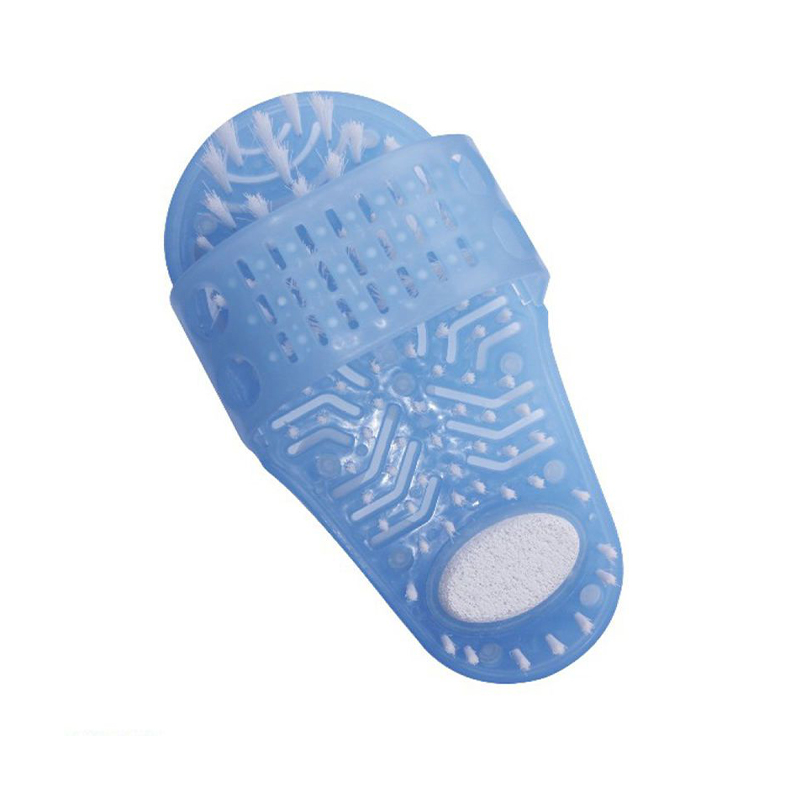
Foot care is no longer regarded as an occasional luxury. For many consumers, it is part of regular personal wellness, hygiene, and comfort. People who stand for long hours, wear formal shoes, work in kitchens, travel frequently, or simply want to maintain a neat daily appearance all benefit from practical foot-care tools. Pedi Feet is positioned to meet this routine demand by offering a simple, lightweight, and durable solution for daily necessities markets.
Unlike complicated personal-care devices that may require electricity, batteries, accessories, or technical instruction, Pedi Feet focuses on straightforward usability. Its PP construction offers an effective balance of strength, light weight, and cost control. For importers, wholesalers, chain stores, supermarkets, and household goods distributors, this creates an attractive product profile: easy to transport, easy to display, easy to explain, and suitable for large-volume sales.
Product Overview
Pedi Feet is identified by Item No. GS017 and is categorized under practical daily-use products. It is produced from PP, a material widely used in household goods because of its resistance, stability, moldability, and affordability. In a competitive market where consumers expect both low price and acceptable quality, PP provides a useful foundation for a product that must be handled frequently and distributed in large quantities.
The product is supplied at 20 pieces per carton, with carton measurements listed as 58 x 31 x 59 cm or 62 x 30 x 65 cm depending on the packing arrangement or version. The net weight is listed as 3.5 kg or 7 kg, while the gross weight is 5 kg or 9 kg. These logistics details indicate that the product has been planned not only for consumer use but also for efficient export packing, warehouse management, and container loading.
For buyers, the minimum order quantity is 2,000 pieces, and the standard delivery time is approximately 30 days. These figures are important for procurement planning because they help buyers estimate inventory cycles, promotional schedules, and seasonal purchasing windows. The product also supports high-volume container loading, with quantities listed for 20-foot and 40-foot high-cube containers, making it suitable for distributors seeking scalable supply.
Key Product Specifications
| Item No. | GS017 |
| Product Name | Pedi Feet |
| Material | PP |
| Packing Quantity | 20 pieces per carton |
| Carton Measurement | 58 x 31 x 59 cm / 62 x 30 x 65 cm |
| Net Weight | 3.5 kg / 7 kg |
| Gross Weight | 5 kg / 9 kg |
| 20-Foot Container Loading | 5,600 pieces / 9,200 pieces |
| 40-Foot High Cube Loading | 13,600 pieces / 22,400 pieces |
| MOQ | 2,000 pieces |
| Delivery Time | 30 days |
Why PP Material Matters
Material selection is one of the most important factors in daily necessities manufacturing. PP, or polypropylene, is valued in household product production because it is lightweight, reasonably strong, and suitable for injection molding. For a foot-care product that may be used repeatedly, handled by different users, or packed and shipped across long distances, PP offers dependable performance while keeping the product economical.
Compared with low-grade plastics that may become brittle or deform more easily, quality PP can provide improved resilience under normal household conditions. It helps the product maintain its shape, reduces unnecessary weight, and supports stable mass production. These advantages are especially important for wholesale customers who need consistency from one batch to the next.
PP also enables flexible design development. It can be molded into smooth surfaces, ergonomic shapes, and practical structural forms. This is beneficial for a product like Pedi Feet, where comfort, touch, grip, and general usability all affect the consumer experience. A simple product can still feel more refined when the material and molding process are carefully managed.
From a logistics standpoint, lightweight PP products help reduce shipping burden. When a product is sold in large quantities, even small differences in weight can influence freight efficiency, container loading, and storage costs. Pedi Feet benefits from this material profile by remaining suitable for high-volume export and mass retail distribution.
Designed for Everyday Foot-Care Routines
Pedi Feet is intended for practical daily foot care rather than complicated treatment. Its value lies in convenience. Consumers can keep it at home, use it as part of a self-care routine, and store it without requiring much space. In many markets, shoppers increasingly prefer products that fit easily into personal routines and do not require professional assistance.
Foot-care products also appeal to a wide demographic. They are relevant to office workers, household users, elderly consumers, travelers, fitness enthusiasts, salon customers, and retail shoppers looking for affordable personal-care goods. Because the need is universal, Pedi Feet has strong potential across different sales channels, including supermarkets, discount stores, online platforms, pharmacies, beauty sections, and home goods aisles.
The product’s straightforward positioning is also a competitive strength. Some personal-care categories are crowded with complicated electronic devices, high-priced spa tools, or disposable accessories. Pedi Feet offers a more accessible alternative: a practical item made from durable material, suitable for daily use, and easier for retailers to present to consumers. This simplicity helps reduce buyer hesitation.
For consumers, the appeal is direct. They want clean, comfortable, and presentable feet without spending excessive time or money. Pedi Feet supports this preference by delivering a household-friendly solution that can be used when needed. For retailers, the appeal is equally clear: a daily-use product with broad relevance and manageable pricing potential.
Advantages Over Common Competing Products
In the market for daily foot-care goods, many competing products fall into several categories: low-cost disposable items, heavier tools, complex electric devices, and decorative but impractical accessories. Pedi Feet stands apart by focusing on practical durability, efficient production, and broad consumer accessibility.
First, compared with disposable or fragile alternatives, a PP-based product can offer better long-term usability. Disposable items may be inexpensive at first, but they often create repeat waste and may not satisfy consumers seeking a more reliable household tool. Pedi Feet supports repeated use under normal conditions, making it more suitable for home storage and regular routines.
Second, compared with heavier products, Pedi Feet is easier to transport, display, and handle. A lightweight product improves convenience for the consumer and helps distributors manage logistics more efficiently. In retail environments, lighter products are also easier to arrange on shelves, pack in promotional bundles, or ship through e-commerce channels.
Third, compared with electric foot-care products, Pedi Feet avoids many complications. Electric devices may require motors, batteries, charging systems, replacement heads, safety certifications, and after-sales support for mechanical failure. While electric products have their place, many consumers still prefer simple tools that can be used immediately. Pedi Feet provides that convenience without depending on power supply or electronic components.
Fourth, compared with purely decorative foot-care accessories, Pedi Feet is built around usefulness. In daily necessities markets, consumers may be attracted by appearance, but they return to products that perform reliably. A well-manufactured PP item can combine clean presentation with functional value, giving it a practical advantage in long-term consumer acceptance.
Finally, Pedi Feet benefits from strong manufacturing support. A product does not compete only through its material or shape; it competes through consistency, delivery reliability, quality control, and supplier capability. The company behind the product has experience designing, developing, and manufacturing household appliances and practical home products for international customers. This production background adds confidence for wholesale buyers who require dependable supply.
Manufacturing Strength Behind the Product
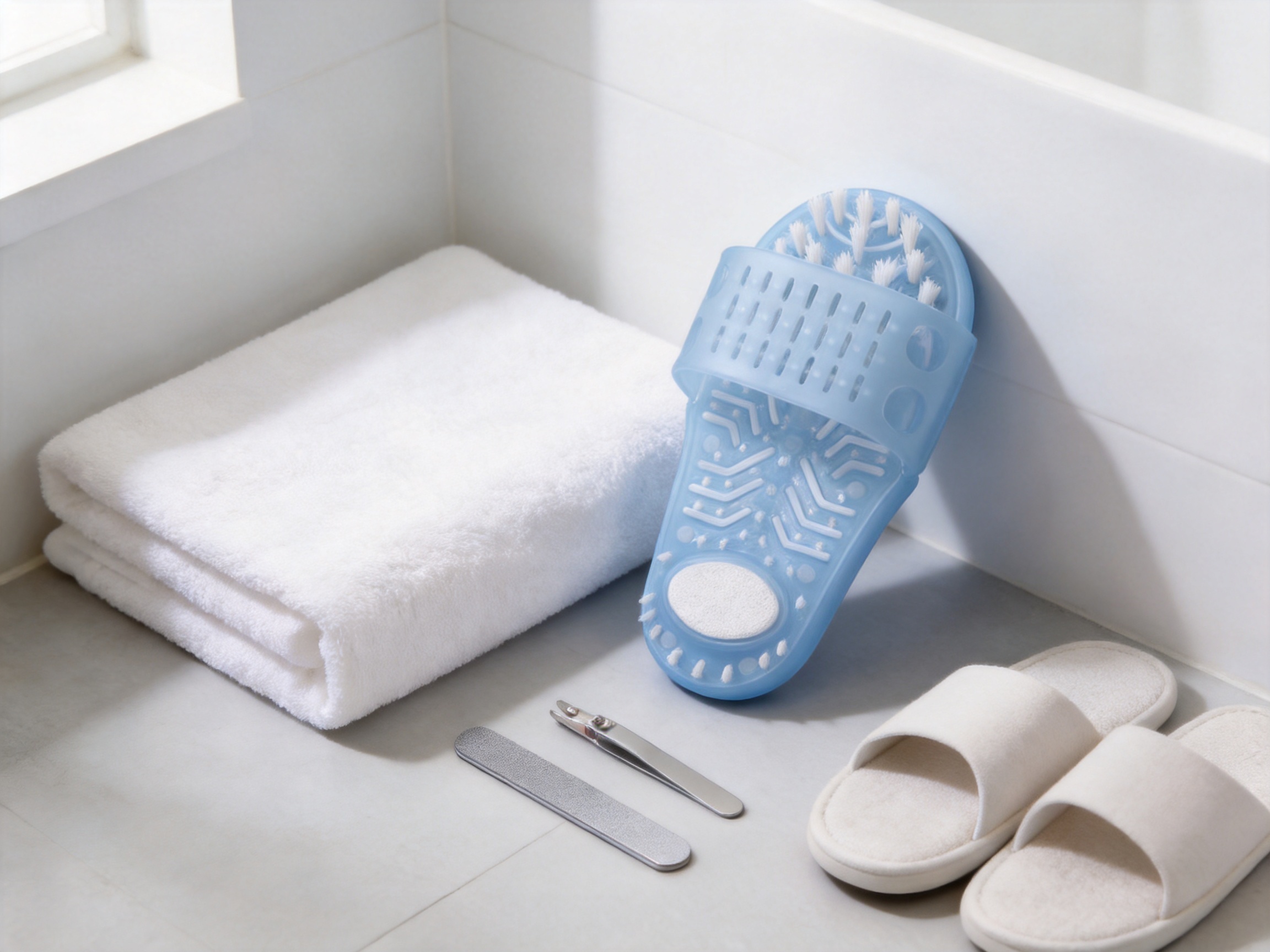
The manufacturer has developed from a product design and export-oriented background into a factory with substantial production capability. Its experience covers small household electrical appliances, kitchen appliances, restaurant and hotel supplies, and innovative daily-use products. This mixed product background is valuable because it combines consumer insight, practical engineering, mold development, production management, and export experience.
Modern buyers do not simply purchase an item; they purchase supply stability. A factory must be able to develop products, control materials, manage production lines, inspect quality, pack correctly, and deliver on time. Pedi Feet benefits from this system because it is produced within a manufacturing environment familiar with both functional design and large-volume order execution.
The company operates with a significant production area and a trained workforce. Its factory scale supports organized production planning, while its research and development team contributes to product improvement and new item development. Quality control personnel monitor production standards, helping reduce inconsistency and support international buyer expectations.
Such manufacturing strength matters in the daily necessities sector because many products may look similar at first glance. Differences become visible only after shipping, shelf display, and consumer use. Poor molding, weak material, rough finishing, unstable packing, or delayed delivery can damage a buyer’s business. A manufacturer with structured production processes can reduce these risks and deliver a more dependable product.
Advanced Production Process and Quality Management
Pedi Feet’s production depends on several essential manufacturing stages, each of which contributes to the final product quality. The first stage is product design confirmation. Before mass production, the product structure, dimensions, material choice, surface finish, packing method, and quality requirements must be reviewed. This helps prevent production errors and ensures that the final goods match buyer expectations.
The second stage is material preparation. Since the product is made from PP, material consistency is important. Proper material selection helps maintain product strength, appearance, and molding stability. In mass production, uneven material quality can lead to color variation, deformation, brittle areas, or surface defects. A controlled material process therefore supports better batch consistency.
The third stage is molding. PP products are commonly formed through injection molding, which requires well-maintained molds, controlled temperature, suitable pressure, and stable cooling. Advanced molding management helps ensure that each piece has a consistent shape and clean finish. For a product used in personal care, smoothness and structural stability are particularly important.
The fourth stage is trimming and finishing. After molding, products may require removal of excess material, checking of edges, and surface inspection. A product that is touched and handled directly by users should not have rough or uncomfortable areas. Careful finishing helps improve user experience and retail presentation.
The fifth stage is quality inspection. Inspections may include visual checks, dimensional checks, functional assessment, material appearance review, and packing verification. For export buyers, quality inspection is not merely a factory formality; it is a safeguard against costly returns, complaints, and delays. Consistent inspection supports confidence in repeat orders.
The sixth stage is packing and carton loading. Pedi Feet is packed at 20 pieces per carton, with carton measurements designed for export handling. Proper packing protects the product during storage and transportation. It also supports efficient warehouse counting, container loading, and retail distribution.
The seventh stage is delivery coordination. With a stated delivery time of 30 days, production planning must align with order confirmation, material preparation, manufacturing capacity, inspection, packing, and shipping schedules. Reliable lead time is a major advantage for distributors who plan promotions or seasonal sales events.
Export Packing and Logistics Advantages
Wholesale buyers pay close attention to logistics because freight cost can greatly influence final selling price. Pedi Feet’s carton and container loading information provides transparency for import planning. With 20 pieces per carton and listed container loading capacities, buyers can estimate shipping efficiency before placing orders.
The product’s 20-foot container loading is listed as 5,600 pieces or 9,200 pieces, while the 40-foot high-cube container loading is listed as 13,600 pieces or 22,400 pieces. These two sets of figures may reflect different packing configurations, product versions, or loading arrangements. In either case, the availability of this information helps buyers compare cost per unit, optimize order quantity, and plan warehouse capacity.
Compared with products that have uncertain packing data, Pedi Feet gives distributors more predictable import calculations. This is especially useful for chain stores and wholesalers that need to evaluate landed cost before negotiating retail price. Predictable logistics can be a competitive advantage because it reduces hidden costs.
Carton dimensions of 58 x 31 x 59 cm or 62 x 30 x 65 cm are manageable for warehouse storage and container stacking. Gross weights of 5 kg or 9 kg per carton are also suitable for standard handling. These features make the product practical for international trade, not only for domestic distribution.
For e-commerce sellers, lightweight and manageable packing can also support secondary distribution. Although final parcel packing depends on the seller’s system, products that begin with efficient bulk cartons are generally easier to separate, store, and ship. This flexibility increases the product’s potential across both traditional and online retail channels.
Retail and Wholesale Market Potential
Pedi Feet fits naturally into several market segments. In supermarkets and hypermarkets, it can be positioned in personal-care, household, wellness, or daily necessities sections. Its practical nature makes it suitable for impulse purchase, especially when displayed near bath products, grooming accessories, or seasonal wellness items.
In discount stores, the product’s material and production efficiency support value-oriented pricing. Shoppers in this channel often seek useful home products at reasonable prices. Pedi Feet can appeal to them because it offers a recognizable daily-care function without complicated features or premium pricing barriers.
In pharmacies and beauty retail outlets, Pedi Feet can be presented as part of foot-care and self-care routines. Foot comfort is connected to personal hygiene and everyday wellness, making the product relevant in health-related retail environments. Its non-electric simplicity also makes it easy for staff and consumers to understand.
In e-commerce, Pedi Feet can be sold individually, in multipacks, or as part of personal-care bundles. Online consumers often search for practical solutions, and products that are simple to explain can perform well when supported by clear images, concise descriptions, and reliable customer reviews. Its PP material and household usefulness are easy selling points.
For promotional buyers, the product may also be suitable for seasonal campaigns, wellness gift sets, household starter kits, and private label programs. Since the MOQ is 2,000 pieces, it supports buyers who need a realistic starting volume without requiring extremely high initial commitment.
Consumer Benefits
The most important consumer benefit of Pedi Feet is convenience. A daily-use foot-care product should be easy to keep at home and simple to use whenever needed. Consumers do not want a complicated routine every time they care for their feet. Pedi Feet responds to that preference by emphasizing practical household use.
Another benefit is durability. PP material provides a dependable structure for repeated handling. Consumers often judge value not only by purchase price but also by how long the product remains usable. A product that feels stable and maintains its shape can create stronger satisfaction than a cheaper item that fails quickly.
A further benefit is light weight. A lighter foot-care product is easier to store, move, and use. It can be placed in a bathroom cabinet, travel bag, drawer, or grooming area without becoming a burden. This practical convenience supports regular use.
Cleanability is also an important consideration for personal-care tools. PP surfaces are commonly used in household goods because they can be made smooth and easy to wipe or rinse, depending on the product structure. Consumers appreciate products that do not require difficult maintenance.
Affordability is another advantage. The product’s material and manufacturing method support cost-effective production, which can translate into competitive retail pricing. In personal-care categories, affordable products often reach a larger audience because they serve common needs rather than luxury-only demand.
Buyer Benefits
For importers and wholesalers, Pedi Feet offers benefits that go beyond consumer appeal. The first is clear specification. Item number, material, packing quantity, carton measurement, weight, container loading, MOQ, and delivery time are all provided. This makes procurement evaluation more efficient.
The second buyer benefit is production scalability. With carton packing and container loading information available, buyers can plan trial orders, repeat orders, and full-container shipments. A product that can grow from modest MOQ to larger distribution volumes is valuable for developing market demand.
The third benefit is supplier experience. The manufacturer has a background in household appliance and daily product development, including kitchen appliances, hotel and restaurant products, and innovative consumer goods. This broader experience helps support communication with international buyers and adaptation to different market requirements.
The fourth benefit is quality control capacity. A dedicated QC structure helps buyers reduce risk. While every order should still be confirmed with final specifications and inspection standards, working with a factory that recognizes quality management is a clear advantage.
The fifth benefit is delivery planning. A 30-day delivery time provides a workable schedule for many wholesale programs. Buyers can coordinate purchasing with marketing campaigns, store launches, or replenishment cycles.
How Pedi Feet Supports Private Label and Retail Programs
Many international buyers prefer products that can be adapted to their own retail identities. While specific customization details should be confirmed during order negotiation, Pedi Feet’s simple product format makes it suitable for private label thinking. Products made from molded PP are often compatible with variations in color, packaging, labeling, and display format, depending on order quantity and factory confirmation.
Private label buyers typically need three things: stable quality, reliable supply, and packaging that communicates clearly to consumers. Pedi Feet’s production foundation supports these needs. Its clear material and packing structure allow buyers to create retail presentations that match their market positioning.
For supermarkets, packaging can emphasize everyday foot-care convenience. For pharmacies, it can highlight hygiene and personal wellness. For online platforms, packaging and listing content can focus on ease of use, material reliability, and home self-care. The same core product can therefore serve multiple retail identities.
Promotional buyers may also appreciate a product that is not overly technical. When a product is too complex, packaging must explain many features, and consumers may hesitate. Pedi Feet is easier to communicate because its purpose is direct and practical.
In competitive retail, presentation matters. A well-packed PP foot-care product can look clean, useful, and trustworthy. Combined with consistent manufacturing, this helps buyers build consumer confidence and encourage repeat sales.
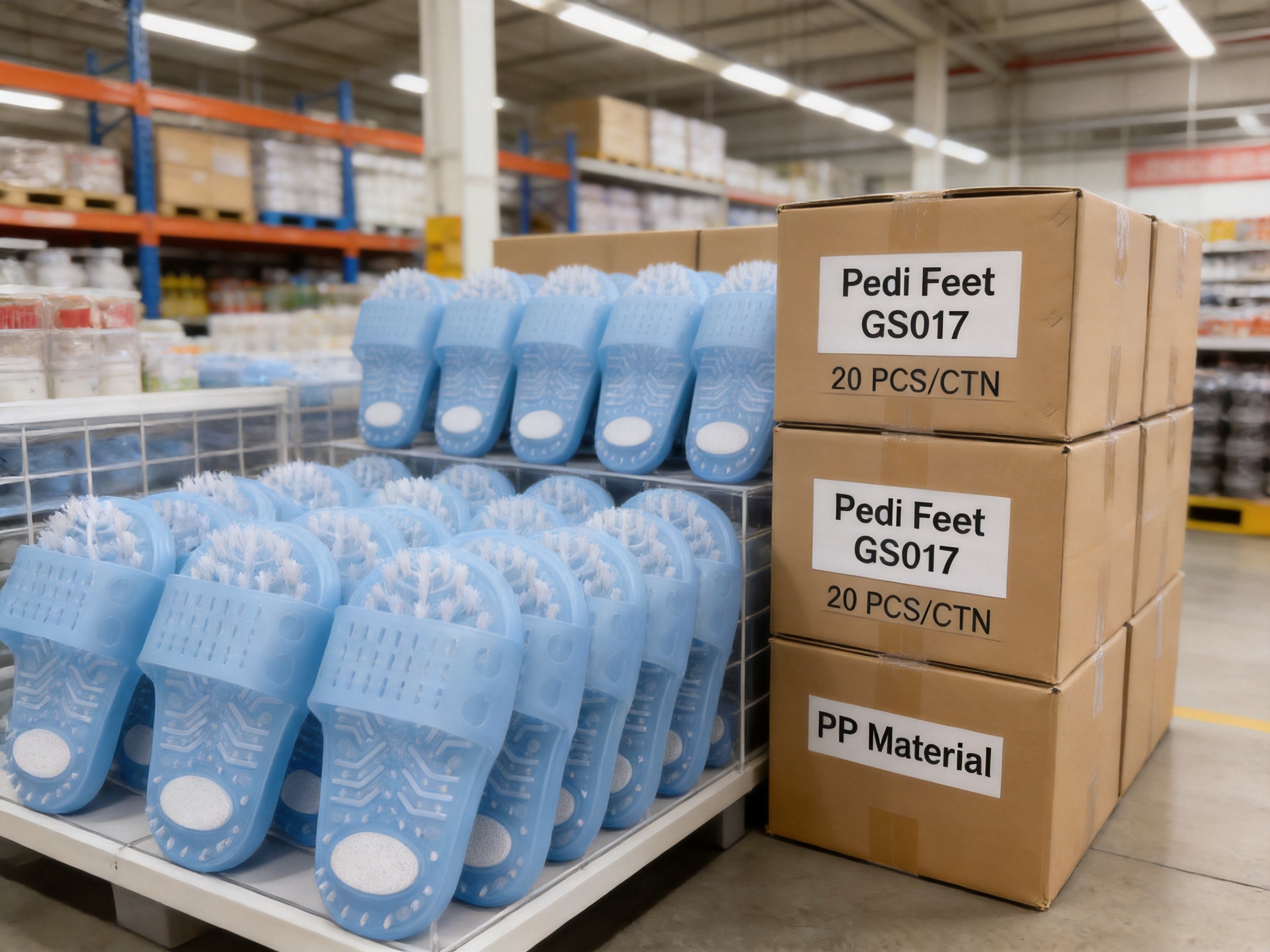
The image insertion point above may be used to support the product’s role in retail, wholesale, or home-use environments. Visual presentation is especially important for practical household goods because consumers often make quick decisions based on perceived usability and cleanliness. Strong product images can communicate more quickly than long descriptions.
Commitment to Product Development
The manufacturing company behind Pedi Feet has a history rooted in product sourcing, innovation, and direct factory development. Over time, it expanded from non-electric innovative TV-shopping style products into small household electrical appliances and practical home goods. This development history reflects a willingness to adapt to market changes and customer demands.
The company’s experience with blenders, slicers, choppers, food processors, smokeless grills, hot pots, air fryers, air ovens, beverage dispensers, pitchers, graters, and other household products demonstrates broad familiarity with consumer product requirements. Even though Pedi Feet is a daily necessity rather than a kitchen appliance, the same manufacturing discipline applies: design must be practical, material must be reliable, production must be consistent, and delivery must be on time.
Innovation is not always about making products more complicated. Sometimes innovation means simplifying daily tasks, improving production efficiency, optimizing packing, and offering buyers a product that performs reliably in real markets. Pedi Feet reflects this practical type of innovation.
The company also emphasizes working closely with customers as engineering partners. This is valuable because different markets may require different packaging languages, retail standards, inspection procedures, or shipment arrangements. A responsive manufacturing partner can help buyers solve problems before they become costly issues.
Quality Control as a Competitive Advantage
Quality control is often the difference between a product that succeeds in retail and one that creates complaints. For daily necessities, consumers may not expect luxury, but they do expect safety, usability, and consistency. If a product has rough surfaces, weak structure, unstable color, poor packing, or deformation, buyers may lose trust quickly.
Pedi Feet benefits from a manufacturing environment that includes dedicated QC personnel. Quality checks can cover raw material status, molding appearance, product dimensions, surface smoothness, packing accuracy, carton labeling, and shipment readiness. These checks help reduce defects and improve order reliability.
Quality management also supports repeat purchasing. A buyer may accept one successful trial order, but long-term cooperation depends on repeated consistency. The ability to deliver similar quality across multiple batches is a major supplier strength.
In addition, QC helps protect brand reputation for private label and retail customers. When a retailer places its name on a product, quality problems become reputation problems. A supplier that understands inspection and production control becomes more valuable than a supplier offering only the lowest price.
Competitive Pricing Through Efficient Manufacturing
Price remains a major factor in daily necessities markets. Consumers want affordability, and retailers want acceptable margins. Pedi Feet’s PP material, molded production process, and scalable packing structure help support competitive pricing. However, price competitiveness should not mean sacrificing basic quality.
The manufacturer’s factory scale helps balance cost and quality. With organized production capacity, experienced workers, R&D support, and QC oversight, the company can manage production more efficiently than small workshops with limited systems. This can reduce waste, improve output stability, and support better cost control.
Competitive pricing also comes from experience. A supplier familiar with international orders understands how to reduce avoidable expenses in packing, container loading, production scheduling, and communication. These invisible efficiencies can make a significant difference in the final landed cost.
For buyers comparing competing products, the lowest initial quotation is not always the best choice. Delays, inconsistent quality, weak packing, or poor communication can increase total cost. Pedi Feet’s advantage lies in combining value-oriented production with a stronger manufacturing foundation.
Reliability for International Buyers
International trade requires trust. Buyers need confidence that the supplier can produce according to agreed requirements, pack correctly, meet delivery dates, and respond professionally. Pedi Feet is supported by a company with experience serving global markets and working with well-known retail channels.
The manufacturer’s development history includes cooperation with supermarkets and international buyers, which suggests familiarity with the expectations of organized retail. These expectations often include documentation, quality inspection, packaging accuracy, delivery scheduling, and product consistency.
For new buyers, clear communication is essential. Product specifications such as material, MOQ, carton size, loading quantity, and lead time create a foundation for efficient discussion. Buyers can quickly assess whether Pedi Feet fits their price range, warehouse plan, and target market.
For regular buyers, the product may serve as a stable item in a daily necessities line. Because foot care is not a short-lived trend, practical products in this category can remain relevant over time. A reliable supplier can help maintain continuity and reduce the need for frequent replacement sourcing.
Practical Sustainability Considerations
In consumer goods markets, sustainability is increasingly important. While Pedi Feet is made from PP rather than being a disposable paper-based item, its durability and repeated-use potential can support more responsible consumption than single-use alternatives. A product that lasts longer may reduce the frequency of replacement.
Efficient packing and container loading also contribute to practical sustainability by reducing unnecessary shipping volume. When more products can be transported in well-planned cartons and containers, the distribution process becomes more efficient. This may help reduce waste in storage and transportation.
Manufacturing consistency further supports sustainability because fewer defective products mean less material waste, fewer returns, and fewer rejected shipments. Quality control therefore has both commercial and environmental value.
Buyers may also discuss packaging choices with the supplier to align with local retail expectations. Depending on market needs, packaging can be optimized for reduced material use, clearer recycling information, or compact display formats. These choices can improve the product’s appeal in sustainability-conscious markets.
Use Cases and Market Positioning
Pedi Feet can be positioned in several practical scenarios. At home, it supports personal grooming and regular foot-care routines. In beauty and wellness retail, it can be presented as an accessible self-care item. In supermarkets, it can be placed among daily household and personal-care necessities. In online sales, it can be marketed as a simple home foot-care solution.
For hotels, spas, or wellness gift programs, the product may also have potential depending on packaging and customer requirements. Its lightweight PP construction makes it easy to include in kits or promotional bundles. However, buyers should confirm product suitability, packaging, and hygiene requirements for such channels.
For seasonal promotions, foot-care products can perform well before summer, travel seasons, holidays, and wellness campaigns. Consumers often become more aware of foot appearance and comfort during warm weather or when purchasing sandals and open shoes. Pedi Feet can be included in these seasonal merchandising strategies.
For year-round sales, the product remains relevant because foot comfort is not limited to one season. Workers who stand for long hours, people who exercise, and consumers who care about grooming may purchase foot-care items at any time. This gives the product stable category potential.
How to Evaluate Pedi Feet for Your Market
Before placing an order, buyers should evaluate several factors. The first is target retail price. Because Pedi Feet is a practical daily-use item, it should fit the expected price range of the market. Buyers can calculate cost based on quotation, packing, freight, duties, warehousing, and retailer margin.
The second factor is packaging. Different markets require different presentation styles. Some prefer simple bulk packaging for discount sales, while others need colorful retail packaging for supermarket shelves. Packaging should clearly communicate product purpose, material, and use instructions if required.
The third factor is inspection standard. Buyers should define acceptable quality levels, surface requirements, carton labeling, and packing details before production. Clear standards help avoid misunderstandings and support smoother shipment approval.
The fourth factor is order quantity. With an MOQ of 2,000 pieces, buyers can plan initial market testing or repeat replenishment. Larger orders may improve cost efficiency, especially when container loading is optimized.
The fifth factor is delivery schedule. A 30-day delivery time is suitable for many purchasing plans, but buyers should still confirm production timing based on order season, customization requirements, and shipping arrangements.
Comparison With Alternative Foot-Care Product Types
| Product Type | Common Strength | Common Limitation | Pedi Feet Advantage |
| Disposable Foot-Care Items | Low initial price | Short use life and more waste | More suitable for repeated household use |
| Heavy Manual Tools | Strong structure | Less convenient to carry or store | Lightweight PP construction |
| Electric Foot-Care Devices | Powered operation | Higher price and more after-sales complexity | Simple, non-complicated daily use |
| Decorative Accessories | Attractive appearance | May lack practical durability | Focus on usable daily value |
| Low-Grade Plastic Products | Very cheap | Inconsistent molding and weaker quality | Supported by experienced manufacturing and QC |
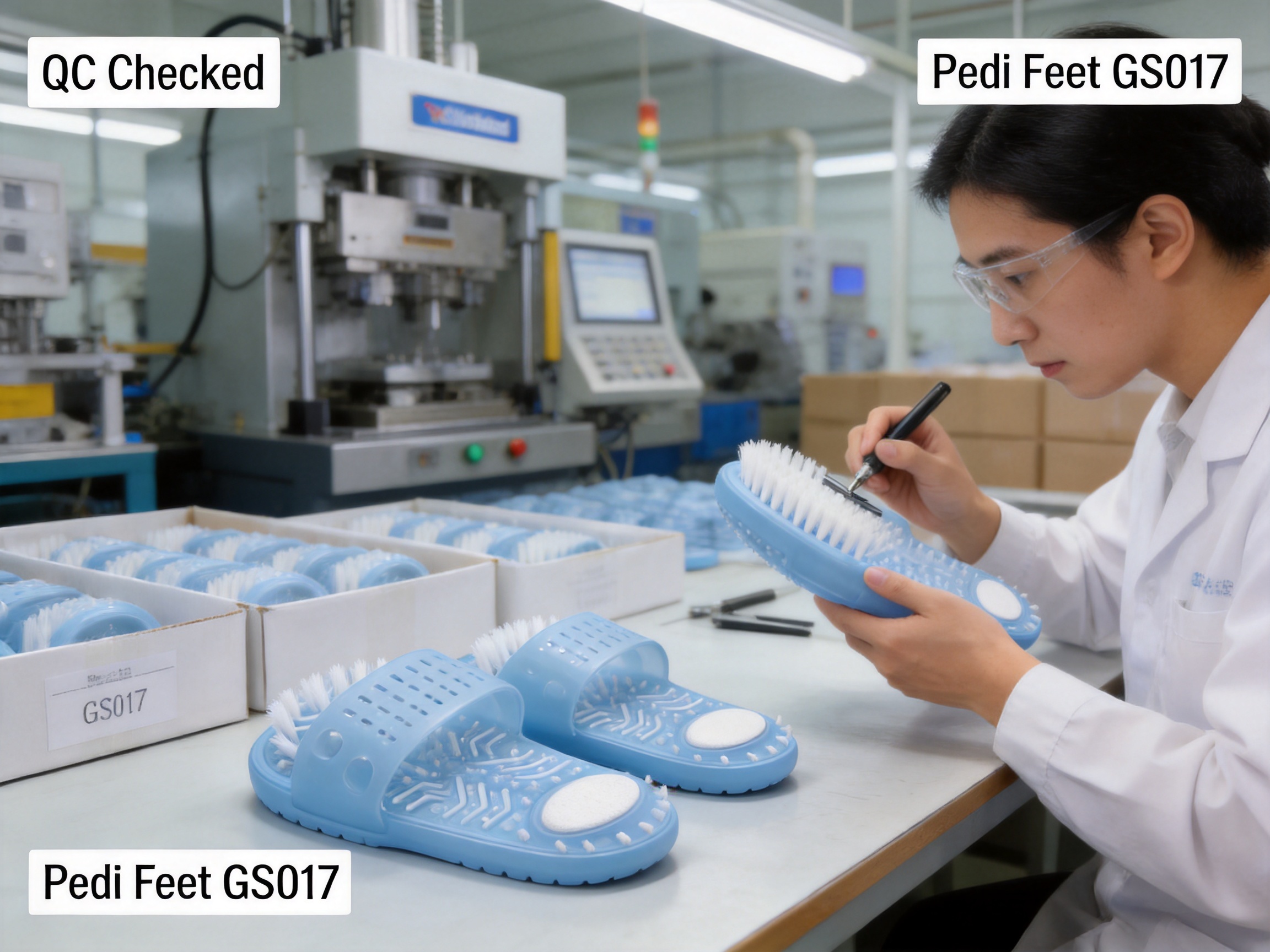
The image insertion point above can support a section related to product comparison, retail presentation, or material quality. In daily necessities, images should help buyers and consumers quickly understand product shape, size, surface finish, and practical use value.
Q&A Section
What is Pedi Feet?
Pedi Feet is a practical daily foot-care product identified as Item No. GS017. It is designed for everyday personal-care use and wholesale distribution. Its simple structure and PP material make it suitable for household, retail, and promotional markets.
What material is used for the product?
The product is made from PP, also known as polypropylene. PP is widely used in household goods because it is lightweight, moldable, durable under normal use, and cost-effective for mass production.
Why is PP a good material for this product?
PP offers a strong balance of light weight, stability, and affordability. It supports smooth molded surfaces, efficient production, and practical daily handling. These features are important for a product intended for regular household use.
How many pieces are packed in one carton?
Pedi Feet is packed at 20 pieces per carton. This packing quantity is suitable for wholesale handling, warehouse management, and export shipment planning.
What are the carton measurements?
The listed carton measurements are 58 x 31 x 59 cm or 62 x 30 x 65 cm. These measurements may correspond to different packing arrangements or product versions and should be confirmed during order discussion.
What is the minimum order quantity?
The minimum order quantity is 2,000 pieces. This MOQ is practical for importers, wholesalers, promotional buyers, and retailers testing market demand.
What is the standard delivery time?
The standard delivery time is approximately 30 days. Final delivery timing should be confirmed according to order quantity, packaging requirements, production schedule, and shipment conditions.
How does Pedi Feet compare with electric foot-care products?
Pedi Feet is simpler and does not depend on power, batteries, motors, or charging systems. This reduces complexity and makes it easy for consumers to use and store. Electric products may offer powered functions, but they usually involve higher cost and more after-sales concerns.
Is the product suitable for supermarkets and chain stores?
Yes. Its broad daily-use relevance, lightweight construction, clear packing information, and accessible product positioning make it suitable for supermarkets, discount stores, pharmacies, beauty retailers, and home goods sections.
Can buyers use it for private label programs?
The product has potential for private label programs, depending on order quantity and confirmed customization options. Buyers may discuss packaging, labeling, color, and retail presentation requirements with the manufacturer.
What makes the product competitive?
Pedi Feet is competitive because it combines practical use, PP material, efficient packing, scalable production, and manufacturing support from an experienced household goods producer. It offers value without unnecessary complexity.
Why should wholesale buyers consider this product?
Wholesale buyers should consider Pedi Feet because it addresses a common consumer need, has clear logistics data, supports large-volume shipment, and can fit multiple retail channels. It is a practical item with broad market potential.
Purchasing and Cooperation Considerations
When buyers evaluate Pedi Feet, they should prepare clear requirements before confirming an order. These requirements may include target market, packaging style, color preference, labeling details, inspection standard, shipment destination, and expected delivery date. Clear communication helps the manufacturer plan production accurately.
Buyers should also request samples when possible. Sample evaluation allows the buyer to check material feel, surface finish, structure, color, size, and packaging concept before mass production. This step is especially important for private label or retail chain orders.
For larger orders, buyers may arrange pre-production confirmation and during-production inspection. These procedures help ensure that the goods remain consistent with approved samples. They also allow issues to be corrected before shipment.
For repeat orders, buyers can work with the manufacturer to optimize packing, container loading, and sales forecasting. A stable product like Pedi Feet can become part of a long-term daily necessities line if market response is positive.
The manufacturer’s experience with international customers supports cooperation beyond one-time transactions. Long-term buyers often value suppliers who can provide reliable communication, product development assistance, quality control, and timely delivery.
Conclusion
Pedi Feet, Item No. GS017, is a practical foot-care product designed for everyday household convenience and wholesale distribution. Made from PP, it offers a strong balance of light weight, durability, moldability, and cost efficiency. Its packing data, MOQ, and delivery time make it suitable for importers, retailers, supermarkets, pharmacies, e-commerce sellers, and promotional buyers.
The product’s competitive strength lies in its simplicity. It avoids the complexity of electric devices, offers more durable value than disposable alternatives, and benefits from efficient mass production. For consumers, it provides convenient daily foot-care support. For buyers, it offers clear specifications, scalable logistics, and a dependable supply foundation.
Behind the product is a manufacturer with experience in household appliances, kitchen products, daily necessities, product development, quality control, and international trade. This manufacturing background helps Pedi Feet stand out in a crowded market where many products may appear similar but differ greatly in consistency, delivery, and support.
In a world where consumers increasingly seek useful, affordable, and easy-to-understand home-care products, Pedi Feet is well positioned as a practical addition to daily necessities lines. It is a product built not on unnecessary complication, but on everyday value, reliable material, efficient manufacturing, and broad market appeal.
References
1. Brydson, J. A. Plastics Materials. Butterworth-Heinemann.
2. Rosato, D. V., Rosato, D. V., and Rosato, M. G. Injection Molding Handbook. Springer.
3. Harper, C. A. Handbook of Plastics, Elastomers, and Composites. McGraw-Hill.
4. Ulrich, K. T., and Eppinger, S. D. Product Design and Development. McGraw-Hill Education.
5. Juran, J. M., and Godfrey, A. B. Juran’s Quality Handbook. McGraw-Hill.
6. Kotler, P., and Keller, K. L. Marketing Management. Pearson.