
 English
 中文简体
 Español
 English
 中文简体
 Español

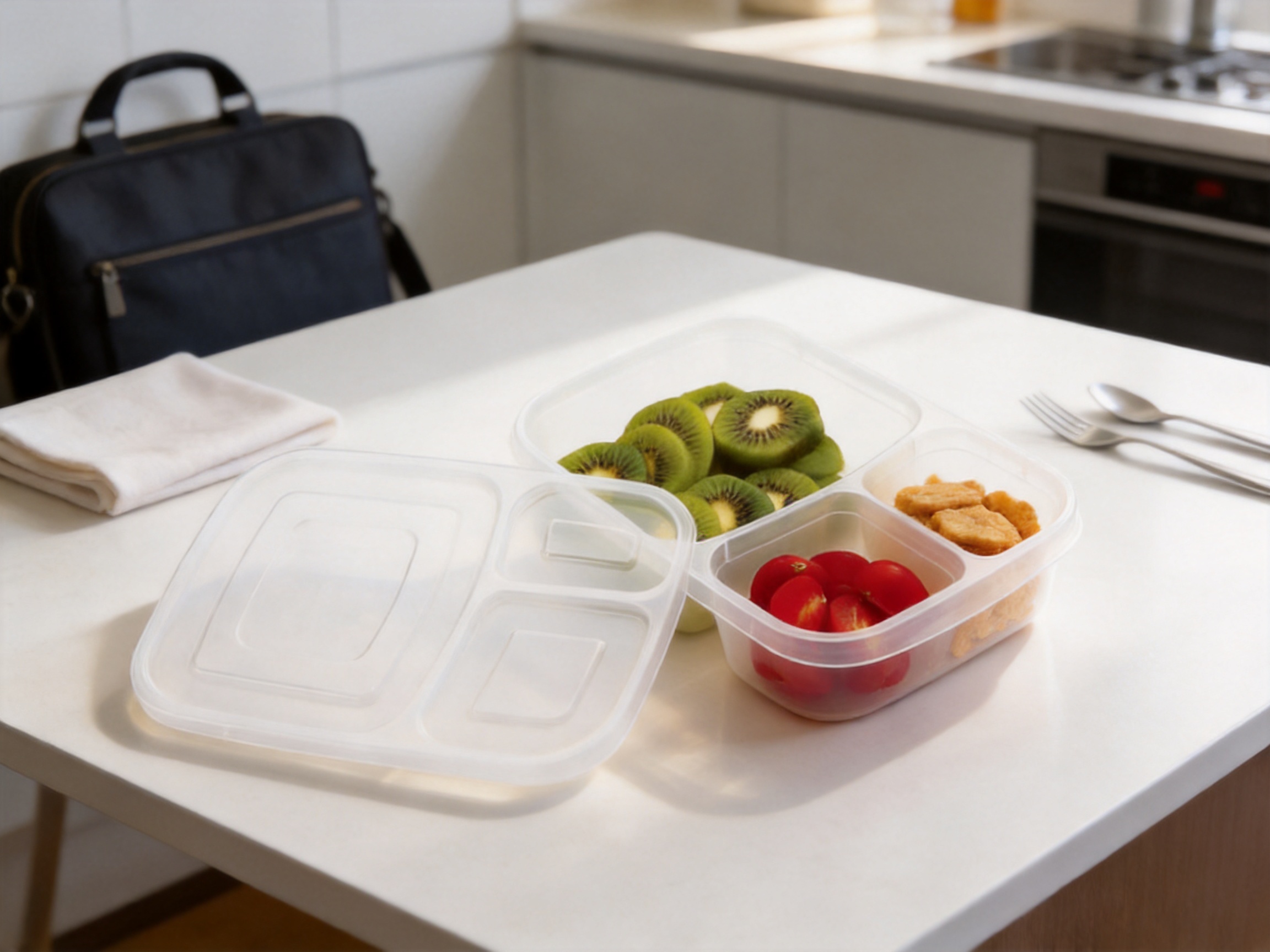
A dependable lunch box is a small household product with a major role in everyday life. It helps people carry prepared meals to work, school, travel destinations, outdoor activities, and shared dining spaces while keeping food organized and protected. The GS072 Lunch Box is designed for this practical purpose. Made from polypropylene, commonly known as PP, it combines a lightweight construction with the durability and convenience expected from modern tableware.
The product belongs to the daily necessities and tableware categories. Its straightforward design makes it suitable for consumers who need a reusable container for packed meals rather than a complicated kitchen appliance. For distributors, retailers, supermarkets, hospitality suppliers, and importers, the product offers a commercially practical format: a familiar household item, efficient carton packing, a manageable minimum order quantity, and a stated delivery time of 30 days.
Behind the product is a manufacturer with experience in product development, plastic household goods, food-related accessories, and small kitchen appliances. The company has developed from a trading and sourcing background into a production-oriented organization with engineering, research and development, quality control, and manufacturing capabilities. This combination is important because a competitive lunch box is not judged only by its appearance. It must also be consistent in size, material, finish, packaging, shipment reliability, and production repeatability.
The GS072 Lunch Box therefore represents more than a basic food container. It demonstrates how a focused product specification, suitable material selection, organized factory operations, and export-oriented logistics can create a practical item for large-volume distribution.

Lunch Box
Product Overview
The GS072 Lunch Box is made from PP, a widely used material for reusable household products. Polypropylene is valued in food-storage applications for its relatively low weight, useful toughness, and suitability for molded plastic products. Its balance of strength and affordability allows manufacturers to produce functional containers for everyday use without making them unnecessarily heavy or expensive.
The product name is simple and direct: Lunch Box. This clarity is useful in commercial catalogs and retail listings because the intended application is immediately understandable. Consumers can use the container for packed lunches, snacks, prepared ingredients, leftovers, office meals, school meals, or travel food. Retailers can position it in tableware, kitchen storage, household organization, food preparation, or daily necessities sections.
Unlike an electric food appliance, the lunch box does not depend on a motor, heating element, battery, charging system, or control panel. That gives it several practical benefits. There are no electrical components to maintain, no power compatibility concerns, and no operating instructions requiring technical knowledge. The product can be used immediately after purchase and can be distributed across markets without the electrical certification considerations associated with powered kitchen equipment.
The GS072 is also suitable for buyers who want to offer reusable alternatives to disposable food packaging. A reusable PP lunch box can support meal planning and help reduce reliance on single-use bags, wraps, and disposable containers. The product does not need to be presented as a specialized sustainability product to provide this benefit; its repeated-use format naturally supports more organized household food storage.
Core Product Information
| Item number | GS072 |
| Product name | Lunch Box |
| Category | Tableware |
| Material | PP, polypropylene |
| Pieces per carton | 32 pieces per carton |
| Carton measurement | 48.5 x 32.5 x 43 cm |
| Net weight | 4.5 kg per carton |
| Gross weight | 5.5 kg per carton |
| Minimum order quantity | 5,000 pieces |
| Stated delivery time | 30 days |
| 20-foot container loading reference | 13,234 pieces |
| 40-foot high-cube container loading reference | 32,141 pieces |
The supplied shipping figures provide buyers with an initial basis for purchase planning. Actual loading quantities can vary according to packaging configuration, pallet use, protective materials, port requirements, and the final shipping plan. Nevertheless, the stated numbers show that the item is intended for organized wholesale distribution rather than only small-scale local production.
Why Polypropylene Is a Practical Choice
Material selection is one of the most important decisions in the development of a lunch box. PP is widely used in household and food-contact products because it offers an effective compromise among weight, strength, appearance, processability, and cost. For a product that may be carried every day, low weight is particularly valuable. A container that is unnecessarily heavy adds inconvenience when it is placed in a school bag, work bag, picnic basket, or travel case.
Polypropylene also supports efficient plastic molding. The material can be processed into repeatable shapes with carefully controlled walls, edges, rims, and structural details. Consistent molding is essential for a lunch box because uneven dimensions can affect lid fit, stacking, visual quality, and the overall user experience. A well-controlled production process helps ensure that units made in different production batches remain commercially consistent.
Another advantage is the material’s practical toughness for ordinary household handling. Lunch boxes are routinely opened, closed, carried, placed on tables, and stored with other containers. PP is commonly selected for these conditions because it can provide a useful level of impact resistance while remaining economical for mass production. This does not make every PP item indestructible, and users should follow the care instructions supplied with the final product, but the material is well suited to normal reusable-container applications.
PP can also contribute to a clean and modern appearance. The surface of a molded container can be produced in different colors and can support product decoration, private labeling, or retail-oriented presentation, subject to the buyer’s project requirements. Color selection and decoration options should be confirmed during product development, but the underlying material platform is appropriate for a broad range of market styles.
Balanced Cost and Everyday Function
Some competing lunch boxes focus heavily on premium materials, complex mechanisms, or elaborate accessories. Those features can be useful for particular segments, but they may also increase production cost, shipping weight, assembly time, and retail price. The GS072 format appears to emphasize practical daily use and straightforward production. That can be an advantage for value-focused retailers, promotional programs, institutional buyers, and distributors seeking a dependable core item.
A simple product can also reduce potential points of failure. With fewer mechanical parts, there are fewer components that can loosen, break, become difficult to clean, or require replacement. For high-volume retail, this can help reduce customer confusion and after-sales concerns. The strongest product is not always the one with the greatest number of features; in many cases, it is the product that performs its main task reliably and remains easy to understand.
Design Advantages in Comparison with Competing Products
The lunch-box market includes many types of containers, including glass models, stainless-steel products, silicone collapsible containers, disposable packaging, and multi-compartment plastic designs. Each category has its own strengths. The GS072 PP Lunch Box competes by offering a practical combination of light weight, straightforward use, scalable production, and accessible wholesale positioning.
Lightweight Handling
Compared with glass food containers, a PP lunch box is generally lighter and less vulnerable to shattering during ordinary transport. This makes plastic particularly suitable for children, commuters, travelers, and outdoor users. It also helps reduce the weight of large wholesale shipments, although exact freight calculations must always be based on the final packed configuration.
Compared with many stainless-steel containers, PP can provide a lower-cost route to reusable meal storage. Stainless steel has strong durability and a premium perception, but it can be heavier and may require more material and forming operations. A PP product can therefore appeal to buyers who prioritize affordability, light carrying weight, and simple everyday handling.
Simple User Experience
A lunch box should be easy to understand at the point of sale and easy to use at home. The GS072 product description does not rely on an electronic function, special heating feature, or complex modular system. This simplicity can be valuable in markets where consumers want a conventional reusable container for prepared food.
Simple operation also supports efficient merchandising. Retail packaging can focus on the product’s practical identity, material, capacity information if confirmed by the buyer, care guidance, and intended use. Buyers do not need to educate customers about charging, programming, temperature controls, or replacement parts. This straightforward communication can help reduce barriers to purchase.
Efficient Wholesale Distribution
The specification of 32 pieces per carton provides a clear commercial unit for inventory planning. The carton measurement of 48.5 x 32.5 x 43 centimeters and the recorded net and gross weights offer initial information for warehouse organization, freight quotations, container planning, and landed-cost calculations.
The minimum order quantity of 5,000 pieces positions the product for professional sourcing and volume distribution. This quantity may suit importers, chain stores, regional wholesalers, online retailers with established demand, promotional merchandise companies, and institutional procurement programs. A buyer ordering at this level can evaluate the product as part of a planned assortment rather than treating it as an occasional sample purchase.
Potential for Market Adaptation
A basic lunch box can serve multiple market segments. In school and office channels, it can be promoted as a daily meal carrier. In supermarkets, it can be placed with food-storage containers or household tableware. In home-goods stores, it can be included in kitchen organization collections. In hospitality or catering supply, it may support takeaway, staff meal, or food-preparation applications when the final specifications and regulatory requirements are suitable.
The design may also be adapted through color, packaging, labeling, or coordinated product collections. Any customization must be discussed with the manufacturer before order confirmation, including tooling, artwork, color matching, packaging quantities, and lead-time effects. The product’s simple construction makes it a reasonable starting point for private-label or program-based purchasing, subject to the factory’s confirmation.
Manufacturing Strengths Behind the Product
The company behind the GS072 Lunch Box reports a history of product sourcing, product development, and factory manufacturing. Its experience began with trading and buying-agent activities, where the business learned to evaluate suppliers, compare quality, manage prices, and coordinate customer requirements. This background is relevant to a product such as a lunch box because successful export production requires more than injection molding alone. It requires communication between product design, purchasing, quality assurance, packaging, and logistics.
The company later established its own manufacturing operation and expanded its focus from non-electric innovative household products into electric kitchen appliances. This development created experience across both plastic household goods and small appliance categories. Although the GS072 Lunch Box is a non-electric tableware item, the broader product portfolio indicates familiarity with consumer product development, components, production scheduling, inspection, and international customer expectations.
Research and Development Capability
The supplied company information identifies a dedicated research and development department with engineers. A structured engineering team can contribute to product quality in several ways. Engineers can review the shape for efficient molding, analyze wall thickness and reinforcement areas, assess the fit of mating parts, and work with production personnel to address defects or process variation.
For a lunch box, development work may involve more than creating an attractive exterior. It can include evaluating the container’s balance, edge treatment, stacking behavior, lid interaction, ease of demolding, and compatibility with packaging. Small design decisions can have a meaningful effect on manufacturing yield and user satisfaction. Rounded edges, smooth surfaces, and appropriately designed transitions can also improve the perceived quality of the finished item.
Engineering experience gained through other household products can be useful when solving production challenges. A manufacturer accustomed to developing blenders, choppers, food processors, air fryers, air ovens, and other kitchen goods is likely familiar with structured product review, prototype evaluation, assembly control, and quality documentation. The specific process applied to GS072 should be confirmed in the buyer’s technical file, but the company’s wider engineering background is a positive manufacturing foundation.
Plastic Processing and Molded-Product Control
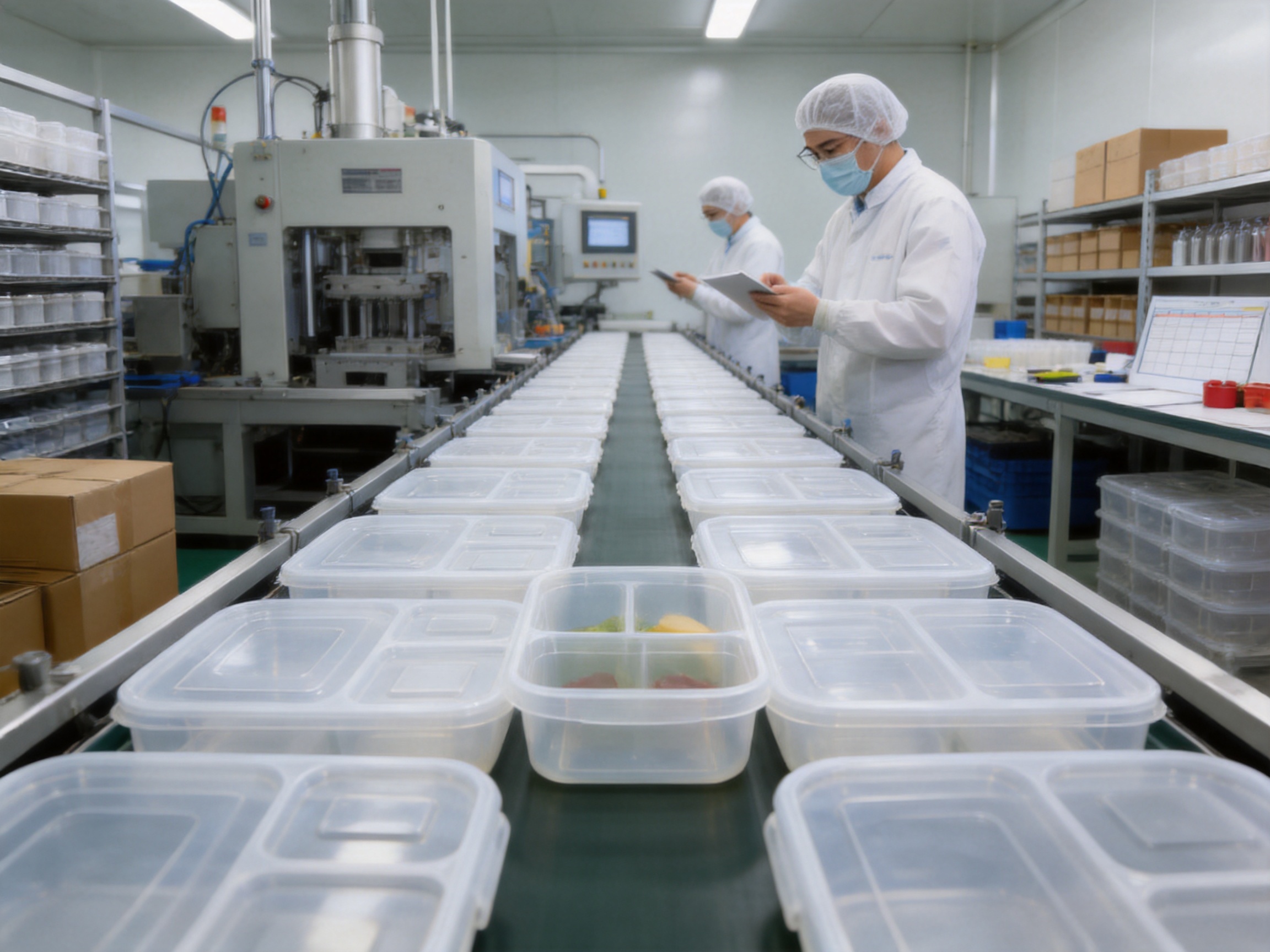
PP lunch boxes are generally produced through plastic molding operations. The process begins with controlled material preparation and proceeds through melting, injection or forming, cooling, part release, trimming where needed, inspection, and packing. Each stage can influence the final product. Material contamination, incorrect processing conditions, insufficient cooling, or inconsistent machine settings may result in warping, sink marks, flash, uneven surfaces, or dimensional variation.
A capable factory manages these variables through production standards and inspection procedures. Machine settings should be established for the selected PP grade and mold. Operators should monitor production conditions and identify abnormalities early. Finished parts should be reviewed for visual defects, incomplete filling, sharp edges, deformation, and other issues that could affect use or presentation.
Mold maintenance is also important. A clean and properly maintained mold supports consistent surfaces and dimensions. Wear in parting lines, ejector areas, or cavity surfaces can gradually affect the product. Regular maintenance helps protect production continuity and reduces the likelihood of repeated defects across a large order.
For buyers, the most important point is consistency. A product may look satisfactory in a sample but still require process control to remain consistent over thousands of pieces. The manufacturer’s reported engineering and quality departments provide a foundation for this type of control, while buyers should define their own approval standards through samples, specifications, and inspection criteria.
Quality Control Organization
The company reports a dedicated quality control team. Quality personnel can work at several stages: incoming material verification, first-piece approval, in-process inspection, finished-product inspection, carton checking, and pre-shipment review. This layered approach is more reliable than relying only on a final visual check after production is complete.
For the GS072 Lunch Box, a practical quality-control plan may include checks for material identification, color consistency, molding appearance, dimensions, weight, surface finish, edge smoothness, lid or component fit where applicable, quantity per carton, carton markings, and packing integrity. The exact inspection plan should be agreed with the customer and documented before mass production.
Quality assurance is especially important for tableware because the product comes into contact with food or food packaging in normal use. The buyer should confirm the intended market’s food-contact requirements, applicable testing, declarations, labeling rules, and usage limitations. The factory can support this process by providing relevant material and product documentation where available, but compliance responsibilities should be clearly allocated between manufacturer, importer, and brand owner.
Production Planning and Export Readiness
The stated delivery time for the GS072 Lunch Box is 30 days. This timeframe should be understood as a planning reference rather than an unconditional guarantee. Actual lead time may depend on order quantity, material availability, packaging confirmation, artwork approval, production schedules, inspection arrangements, and shipping season. For repeat orders using an established specification, planning can often be more predictable than for a first order requiring new artwork or tooling adjustments.
Professional production planning begins with a confirmed purchase order and technical specification. Important details include the exact product version, color, packaging method, quantity, carton markings, shipping marks, inspection requirements, and delivery destination. If private labeling is requested, artwork should be approved before production begins. Any changes after approval may affect both cost and schedule.
The supplied carton information helps buyers estimate how the product will move through their supply chain. At 32 pieces per carton, the product can be managed in identifiable wholesale units. The listed carton dimensions can be entered into warehouse and freight planning systems. The net weight of 4.5 kilograms and gross weight of 5.5 kilograms per carton provide an initial reference for handling and shipping calculations.
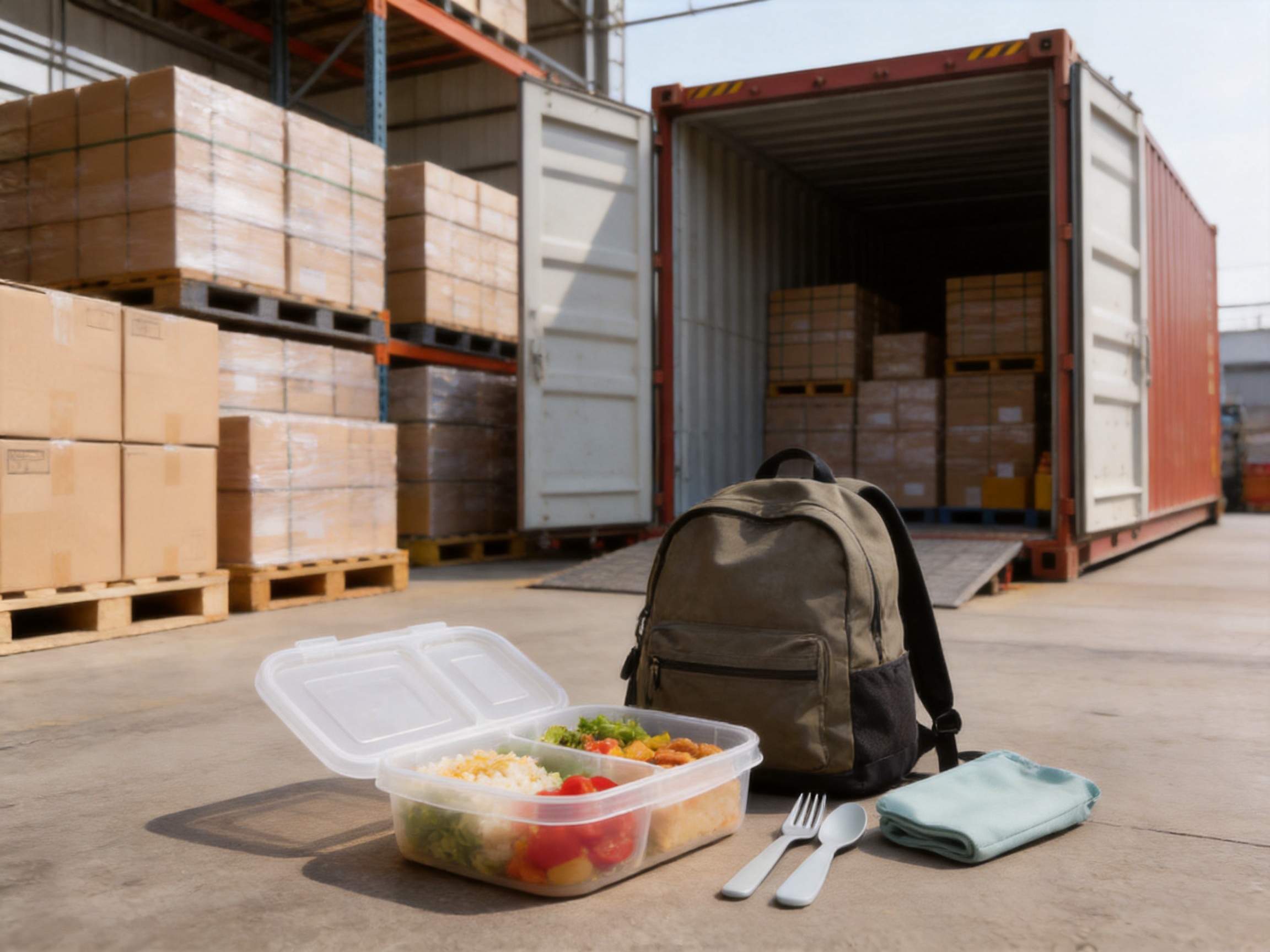
Container-loading references of 13,234 pieces for a 20-foot container and 32,141 pieces for a 40-foot high-cube container indicate the manufacturer has considered export packing and shipping utilization. These figures should be reconfirmed before shipment because packaging changes, palletization, container restrictions, and shipping-line requirements may alter the final quantity. Even so, such information is valuable during purchasing negotiations and inventory forecasting.
Commercial Value for Importers and Retailers
The GS072 Lunch Box offers several characteristics that can support a broad commercial program. It belongs to a familiar product category, uses a widely recognized material, and has a practical application that does not depend on a specific season. Although sales may increase during school-opening periods, office-return periods, travel seasons, and gift campaigns, a lunch box can remain relevant throughout the year.
For supermarkets, the product can be positioned as an accessible household essential. For specialty kitchen stores, it can be included among reusable storage products. For online sellers, its clear product identity makes it suitable for search-based shopping and bundled listings. For promotional buyers, the relatively simple product format may provide a useful base for approved branding or campaign packaging.
Retailers can also use the lunch box as an entry-level item within a wider kitchen-storage assortment. A buyer may offer several colors, related container sizes, or coordinated food-preparation products if those versions are available. The GS072 can function as a core product around which the retailer builds a practical tableware collection.
Inventory and Carton Efficiency
Wholesale buyers need to consider not only the factory price but also the total landed cost. Product weight, carton dimensions, container utilization, storage space, damage risk, handling requirements, import duties, and local distribution all influence profitability. The GS072 specification gives buyers useful starting data for these calculations.
A carton quantity of 32 units allows inventory to be counted and replenished in manageable groups. The buyer can estimate how many cartons are required for a retail launch, regional distribution cycle, or promotional campaign. Since the product is not an electrical appliance, it does not require battery management, power testing, or spare electronic components, which can simplify warehousing and after-sales processes.
Private-Label and Program Opportunities
Many importers prefer products that can be presented under their own retail identity. A lunch box is suitable for this approach because packaging, color, and graphic presentation can have a strong influence on consumer perception. The feasibility of logo printing, packaging customization, color matching, and other changes should be confirmed directly with the manufacturer.
Customization should be treated as a controlled engineering and commercial project. Buyers should confirm whether an existing mold will be used, whether new tooling is required, what minimum quantities apply to each color or package, and how customization affects lead time. Artwork should be supplied in the requested format and approved through a sample or proofing process. These steps reduce the risk of differences between the approved concept and the mass-produced goods.
User Benefits in Everyday Situations
For office workers, the lunch box can support planned meals and reduce the need to purchase food every day. Users can prepare food at home, carry it to work, and keep meal components organized. For students, a reusable lunch container can hold a packed meal or snacks in a familiar, easy-to-carry format. Parents may also value a lightweight product that is simple to understand and easy to include in a daily routine.
At home, the container can be used for leftovers, cut fruit, prepared ingredients, or portioned meals. It may help organize refrigerator contents and make meal preparation more efficient. During travel or outdoor activities, its lightweight structure can be more convenient than heavier alternatives, provided that the product is used within its intended conditions.
The product may also support batch cooking. Households that prepare meals in advance can use reusable containers to separate portions for later consumption. This can improve organization and reduce unnecessary disposable packaging. Users should follow the final care and temperature instructions supplied with the specific product, especially when considering hot food, microwave use, freezer storage, or dishwasher cleaning. These capabilities should never be assumed unless confirmed by the manufacturer and supported by testing.
Care and Responsible Use
Like all reusable food containers, the lunch box should be cleaned promptly after use. Food residue should be removed with an appropriate detergent and water, and the container should be allowed to dry thoroughly before storage. Users should avoid sharp utensils if they may scratch the interior or exterior surfaces. Strong impacts, excessive heat, or use outside the product’s tested conditions may shorten its service life.
Importers and retailers should provide accurate care information with the final product. If the lunch box is not confirmed as microwave-safe, oven-safe, freezer-safe, or dishwasher-safe, marketing materials should not make those claims. Clear instructions protect consumers and reduce unnecessary complaints. They also demonstrate responsible product communication.
Comparative Positioning Against Common Alternatives
| Product type | Typical strengths | Potential trade-offs compared with a PP lunch box |
| PP lunch box | Lightweight, practical, economical, reusable, suitable for molded mass production | Performance depends on the confirmed design, material grade, and care instructions |
| Glass container | Rigid, premium feel, often suitable for certain temperature applications | Heavier, breakable, and potentially more expensive to transport |
| Stainless-steel container | Durable appearance, strong premium positioning, resistant to many forms of wear | May be heavier and involve higher material and forming costs |
| Disposable packaging | Low upfront unit cost and convenient for one-time distribution | Designed for limited use and creates greater ongoing packaging consumption |
| Silicone container | Flexible, collapsible, and useful for selected storage applications | May have a higher unit cost and a different tactile and cleaning experience |
This comparison does not suggest that one material is suitable for every consumer. Instead, it shows the commercial space occupied by the GS072. The product’s strongest position is practical everyday storage where buyers value moderate cost, low carrying weight, reusable use, and scalable production.
Company Experience and Manufacturing Development
The manufacturer’s history reflects an evolution from product sourcing and international trade toward independent product development and factory production. Early experience as a salesperson and buying agent provided exposure to customer expectations, supplier evaluation, cost negotiation, and quality control. This type of commercial knowledge can be particularly helpful when serving overseas buyers who require clear specifications and dependable communication.
The company subsequently established its own factory and developed non-electric household products with an emphasis on innovative designs. Later, it expanded into electric kitchen products such as blenders, slicers, choppers, food processors, grills, hot pots, air fryers, and air ovens. It also developed products for bars, restaurants, and hotels, including ice buckets, beverage dispensers, pitchers, slicers, and graters.
This range demonstrates experience across several product families and customer channels. The company reports serving international markets and supplying products to major retail and commercial customers. Specific customer programs, certifications, production capacities, and current staffing should be verified during a buyer’s due-diligence process, but the reported background indicates a manufacturer accustomed to volume orders and export-oriented requirements.
The company also reports a factory with a substantial production area, experienced workers, engineers, and quality-control personnel. The supplied information describes different production-area and staffing figures across different periods, suggesting that the operation has expanded over time. Buyers should request the latest confirmed factory profile when evaluating current capacity. The broader trend is clear: the manufacturer has invested in its own production base rather than remaining solely a trading intermediary.
Cross-Category Production Knowledge
Manufacturing both non-electric household products and small electric appliances can create useful process knowledge. Plastic housings, molded components, surface finishing, assembly control, inspection, and packaging are common concerns across many product categories. A factory that manages multiple product types may also have experience with production scheduling, engineering changes, tooling coordination, and customer-specific requirements.
For the GS072 Lunch Box, this cross-category experience may help the manufacturer manage the complete product cycle from design review through mass production and shipment. The product itself remains uncomplicated, but uncomplicated products still require discipline. A small defect repeated across a large quantity can create substantial commercial cost. Engineering and quality systems help prevent such problems.
Recommended Buyer Evaluation Process
Before placing a large order, buyers should request and review a production sample. The sample should be checked for appearance, dimensions, weight, material feel, finish, component interaction where applicable, and packaging. If the item is intended for food contact, the buyer should also request the documentation needed for the destination market and confirm whether independent testing is required.
The purchase specification should state the item number, material, color, dimensions where applicable, packaging method, carton quantity, carton markings, acceptable tolerances, inspection standard, and delivery expectations. If the product will carry a private label, the specification should include approved artwork and placement instructions. Clear documents reduce misunderstandings between the buyer, factory, inspector, and logistics provider.
Buyers should also clarify the meaning of net and gross weights. The supplied figures are presented at carton level, but the buyer should confirm whether they include inner packaging, cartons, labels, or other packing materials. The same principle applies to container-loading quantities. A final packing list should be issued before shipment so that the buyer can compare planned and actual quantities.
Quality Questions to Confirm
Useful questions include whether the PP material is virgin, recycled, or blended; whether the selected material is appropriate for the intended market; what testing has been completed; how color variation is controlled; what dimensional tolerances apply; how production samples are approved; and how nonconforming goods are handled. Buyers should also confirm whether the product is intended for hot food, microwave use, freezer use, or dishwasher cleaning. These are technical claims and should be supported by the manufacturer’s documentation rather than assumed from the word “PP.”
For large orders, a pre-shipment inspection can provide an additional layer of assurance. The inspection may cover quantity, workmanship, dimensions, color, packaging, carton markings, and selected functional checks. The buyer and manufacturer should agree in advance on the inspection standard and acceptance criteria. This is especially important when the goods will be shipped to a distant market where returning or replacing inventory is costly.
Environmental and Practical Considerations
A reusable lunch box can support more organized consumption and reduce dependence on disposable food packaging over repeated use. Its environmental value depends on how long it is used, how it is cleaned, how it is eventually disposed of, and whether it replaces single-use items. Retailers should therefore use accurate, measured environmental language and avoid unsupported claims.
PP is a thermoplastic material, meaning it can be processed into products and may be recyclable in locations with appropriate collection and recycling systems. Recycling availability differs significantly by country and municipality. The product should be identified according to the applicable local labeling requirements, and consumers should be directed to follow local disposal guidance.
Durability also matters. A product that is used repeatedly can provide more value than one designed for immediate disposal, but this depends on proper care and realistic use conditions. Clear instructions, suitable packaging, and accurate product communication can help customers keep the product in service for longer.
How Retailers Can Present the Product
The product should be presented around its real strengths: reusable meal storage, lightweight handling, everyday convenience, PP construction, and suitability for organized food carrying. Retail copy should clearly identify the product as a lunch box and explain its intended use without adding unverified claims about temperature resistance, leakproof performance, capacity, or appliance compatibility.
Product photography and packaging can emphasize the container’s form, scale, opening method, and practical use. If the manufacturer confirms customization, coordinated colors and branded packaging can help retailers create a recognizable range. For online listings, the item number GS072, material, carton quantity, and available specifications can support internal inventory management and buyer communication.
Retailers may also bundle the lunch box with related products such as reusable utensils, food-storage containers, drink bottles, or meal-preparation accessories. Any bundle should preserve the product’s clear identity and provide accurate information for each item. The lunch box can serve as a practical entry point into a wider reusable tableware assortment.
Supply Chain Advantages of a Non-Electric Product
Although the manufacturer also produces electrical kitchen appliances, the GS072 Lunch Box has the logistical simplicity of a non-electric item. It does not require a power cord, plug specification, voltage selection, battery certification, software support, or electrical warranty. This can reduce the number of technical questions that must be resolved before shipment.
Non-electric goods may also be easier to distribute through multiple channels. They can be sold in general merchandise stores, home-goods departments, supermarkets, online marketplaces, school-supply programs, and promotional campaigns. The product does not need to be positioned near an electrical outlet or supported by a demonstration area.
For after-sales service, the absence of electronic components can simplify customer support. Most questions will relate to care, intended use, packaging, or replacement policy rather than malfunction diagnosis. This does not eliminate the need for quality control, but it can reduce operational complexity for importers and retailers.
Q&A
What is the GS072 product?
The GS072 is a reusable lunch box in the tableware category. It is made from PP, or polypropylene, and is intended for carrying and storing prepared meals, snacks, leftovers, or food ingredients.
Is the lunch box an electric appliance?
No. The GS072 is a non-electric tableware product. It does not require a plug, battery, motor, heating element, or control system.
What material is used?
The listed material is PP, short for polypropylene. Buyers should confirm the precise material grade and any food-contact documentation required for their destination market before placing an order.
How many pieces are packed in one carton?
The stated packing quantity is 32 pieces per carton.
What are the carton dimensions?
The listed carton measurement is 48.5 x 32.5 x 43 centimeters. Final packing details should be reconfirmed if the packaging design or labeling changes.
What are the carton weights?
The stated net weight is 4.5 kilograms per carton, while the stated gross weight is 5.5 kilograms per carton. Buyers should confirm whether these figures include all inner and outer packing materials.
What is the minimum order quantity?
The listed minimum order quantity is 5,000 pieces. The applicable quantity may vary for customized colors, packaging, printing, or special project requirements.
What is the stated delivery time?
The stated delivery time is 30 days. The final lead time should be confirmed according to order quantity, material availability, packaging approval, production scheduling, and inspection requirements.
How many pieces can fit in a shipping container?
The supplied reference lists 13,234 pieces for a 20-foot container and 32,141 pieces for a 40-foot high-cube container. These figures should be reconfirmed against the final packaging and loading plan before shipment.
Can the product be customized?
Customization possibilities such as color, packaging, or private labeling should be discussed directly with the manufacturer. Buyers should confirm minimum quantities, tooling requirements, artwork specifications, additional costs, and lead-time effects.
Is the lunch box microwave-safe or dishwasher-safe?
This information is not included in the supplied specification. Buyers should not make microwave, oven, freezer, or dishwasher claims unless the manufacturer confirms them through appropriate documentation or testing.
Why is PP suitable for a lunch box?
PP is commonly selected for reusable household containers because it can provide a practical balance of low weight, toughness, processability, and cost. Its suitability for a specific food-contact or temperature application must be confirmed for the exact material and design.
What makes this product suitable for wholesale?
The product has a clear everyday application, a defined carton quantity, stated shipping information, a 5,000-piece minimum order quantity, and a 30-day delivery reference. These features provide a useful foundation for importer, retail, and distribution planning.
What manufacturing strengths support the product?
The manufacturer reports experience in product development, household goods, small kitchen appliances, engineering, quality control, and international supply. Its factory-based operation can support product review, molded-product production, inspection, packing, and export coordination.
Who may be interested in this lunch box?
Potential buyers include household-goods distributors, supermarkets, kitchenware retailers, online sellers, school-supply programs, promotional product companies, hospitality suppliers, and private-label importers.
Conclusion
The GS072 PP Lunch Box is a practical product for everyday food storage and meal carrying. Its strengths are rooted in simplicity: a familiar use, a lightweight polypropylene construction, non-electric operation, manageable wholesale packing, and suitability for a broad range of retail and distribution channels.
Compared with heavier or more complex alternatives, the product can provide a cost-conscious solution for consumers who need a reusable container for work, school, travel, meal preparation, or home organization. Its straightforward format can also reduce product education and after-sales complexity for retailers.
The manufacturer’s development from international sourcing into factory production adds value to the product story. Reported engineering, research and development, quality-control, and manufacturing resources provide a foundation for consistent production and customer-specific projects. The company’s wider experience with household goods and kitchen products further supports its ability to manage product design, molded components, packaging, inspection, and export logistics.
For buyers, the best results will come from combining the standard GS072 specification with clear technical confirmation. Material grade, food-contact suitability, care instructions, customization, packaging, inspection criteria, and shipping quantities should all be finalized before mass production. With those details properly controlled, the lunch box can serve as a reliable and commercially flexible addition to a reusable tableware range.
References
1. Product specification supplied for GS072 Lunch Box, including material, carton packing, measurements, weights, container-loading references, minimum order quantity, and delivery-time information.
2. Manufacturer-provided company profile describing product development, factory operations, engineering resources, quality-control activities, and international market experience.
3. General technical reference information on polypropylene properties and the use of thermoplastic materials in household and food-storage products.
4. General supply-chain reference principles for carton measurement, container loading, wholesale inventory planning, and pre-shipment inspection.