
 English
 中文简体
中文简体 Español
 English
 中文简体
中文简体 Español
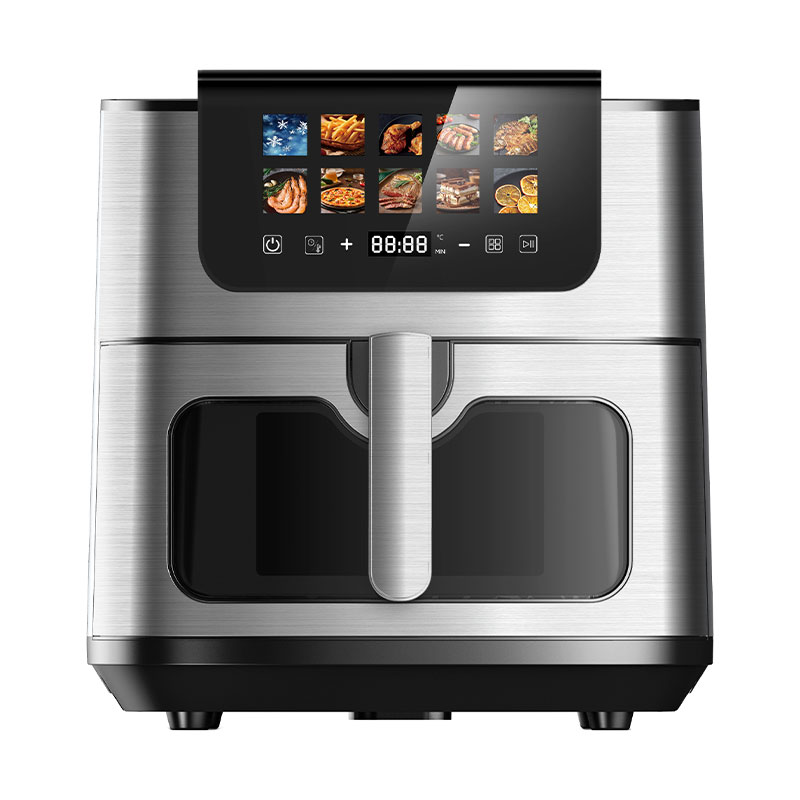
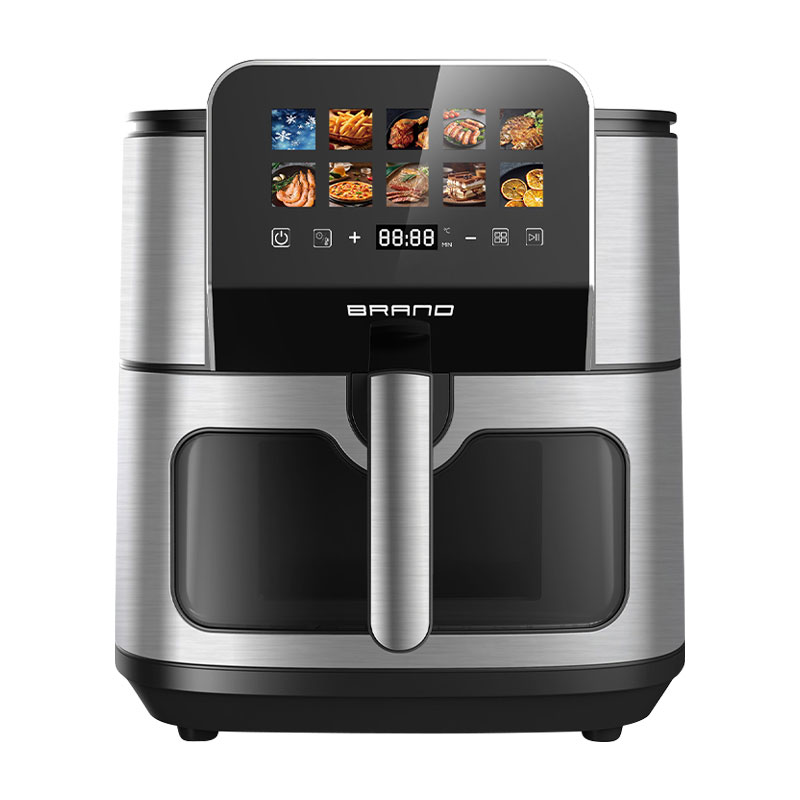
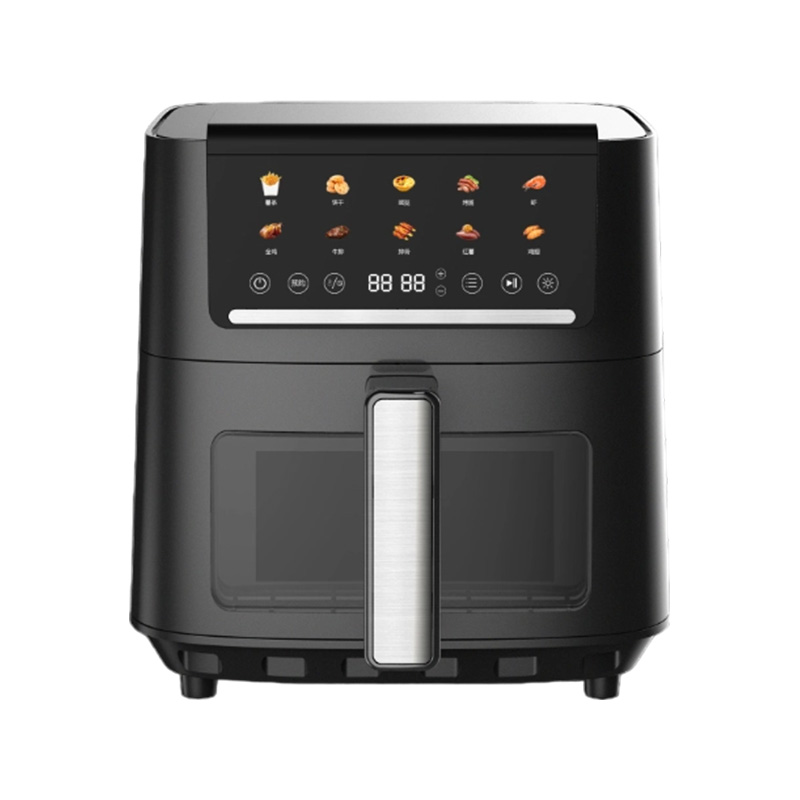
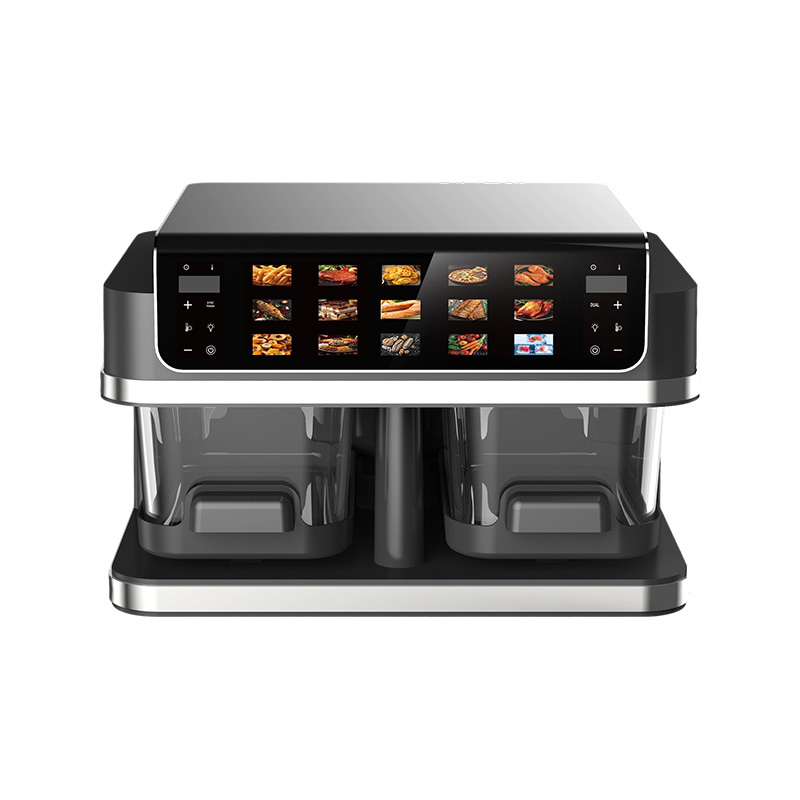
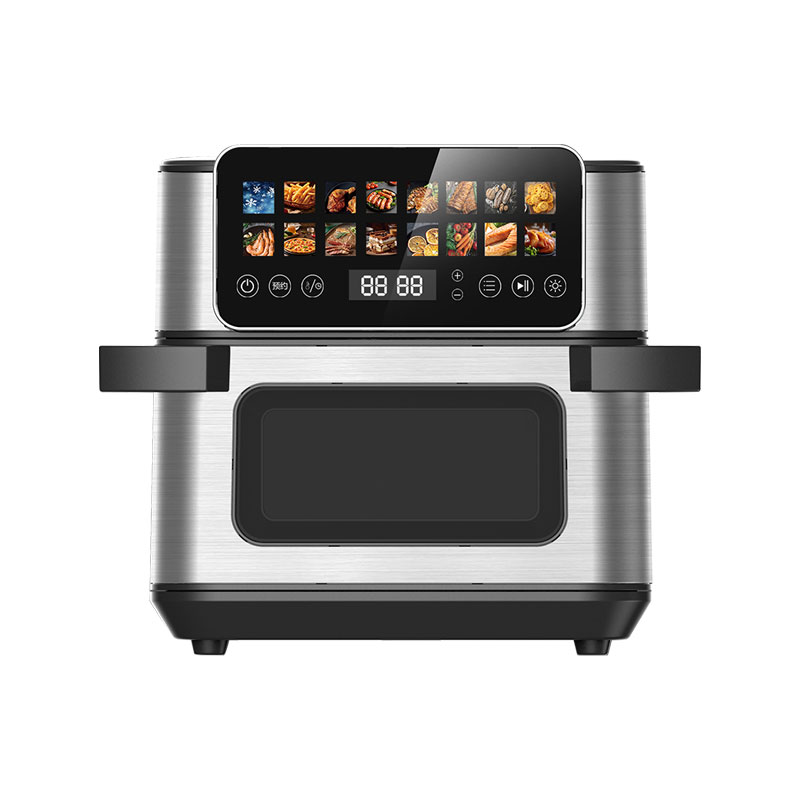
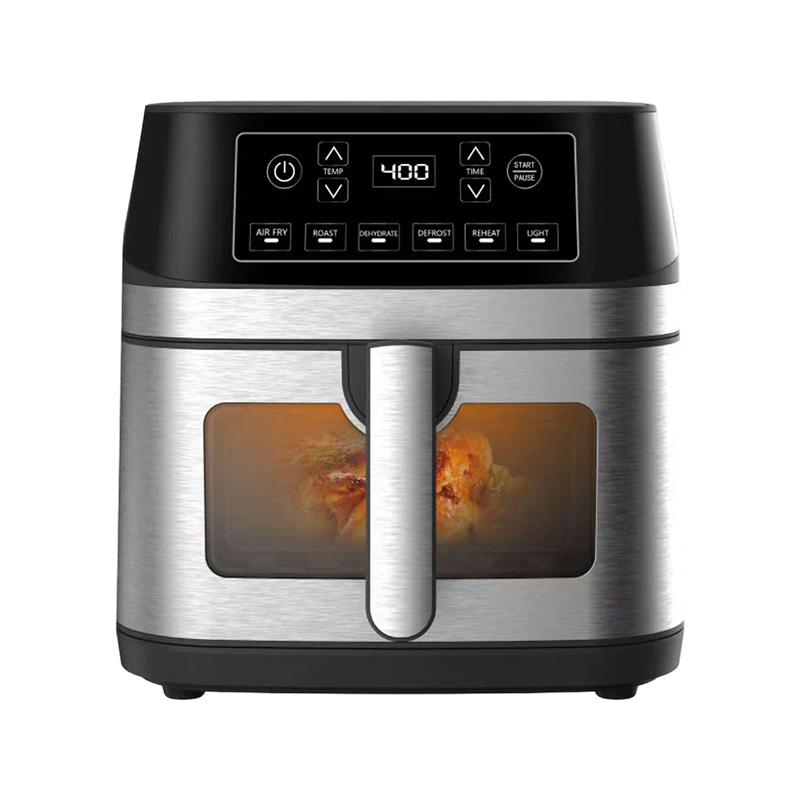
In the modern kitchen, the air fryer has moved from being a fashionable countertop appliance to becoming a practical daily cooking partner. Consumers want faster meals, cleaner cooking, better texture, reduced oil use, and a more convenient way to prepare family portions without relying on a full-size oven. The GSE045T(F/S)/GSE045D(F/S) 8-liter single-pot air fryer is designed for exactly this demand. With a generous 8-liter capacity, 1700W heating performance, broad voltage options, carefully selected materials, and international certification support, it offers a strong solution for households, retailers, distributors, and private-label buyers seeking a dependable small electric kitchen appliance.
This article examines the product’s design logic, technical specifications, market value, competitive advantages, safety considerations, and manufacturing background. It also highlights the production capabilities of CIXI GSTAR ELECTRIC APPLIANCE CO., LTD., a manufacturer focused on small electric kitchen appliances and daily household products. The company’s experience in developing air fryers, air ovens, blenders, slicers, choppers, food processors, hot pots, smokeless grills, barware, and other home and hospitality products supports the development of an appliance that balances performance, durability, usability, and commercial practicality.
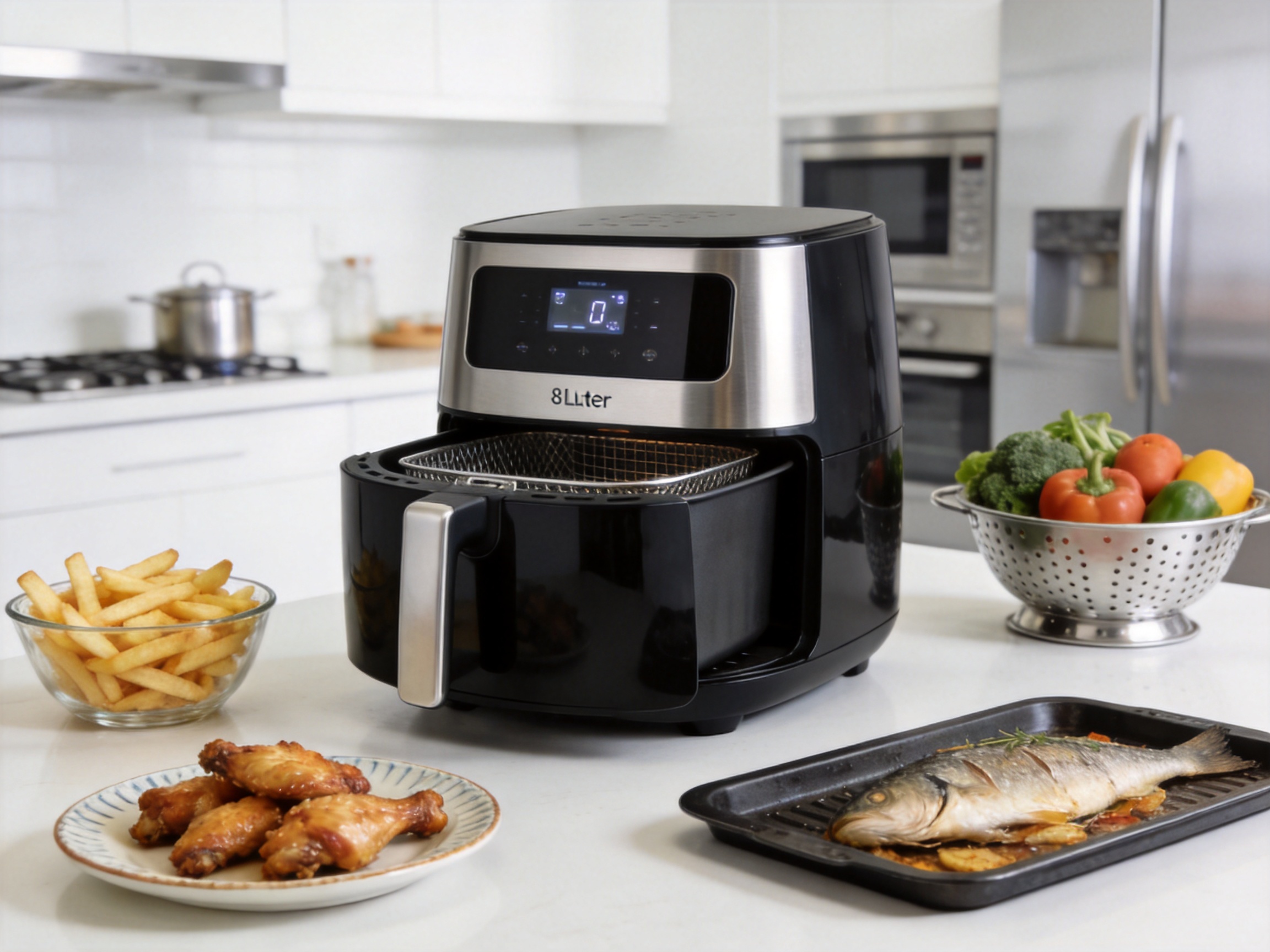
Product Overview
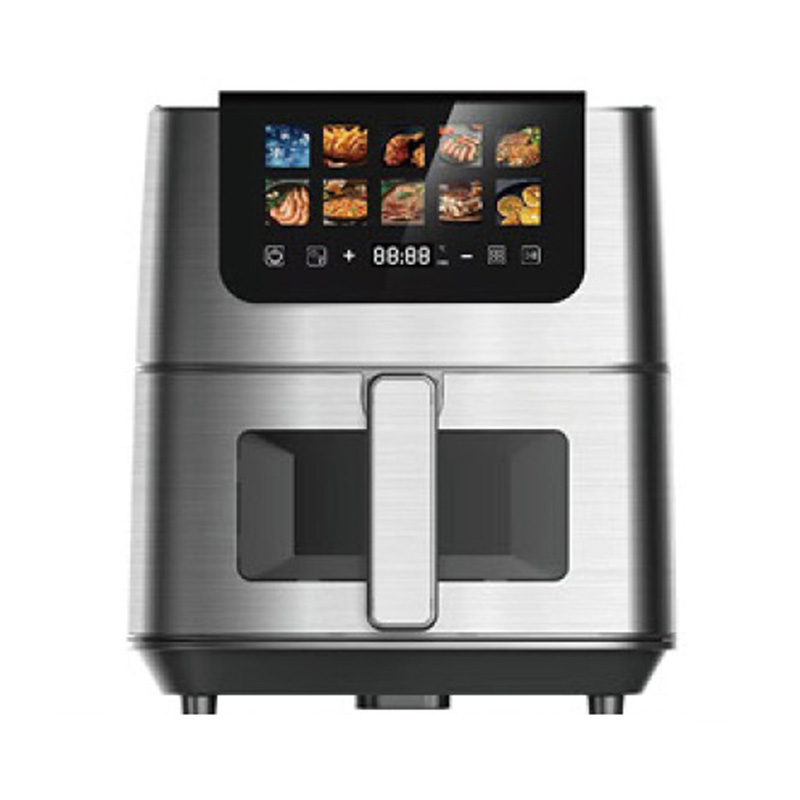
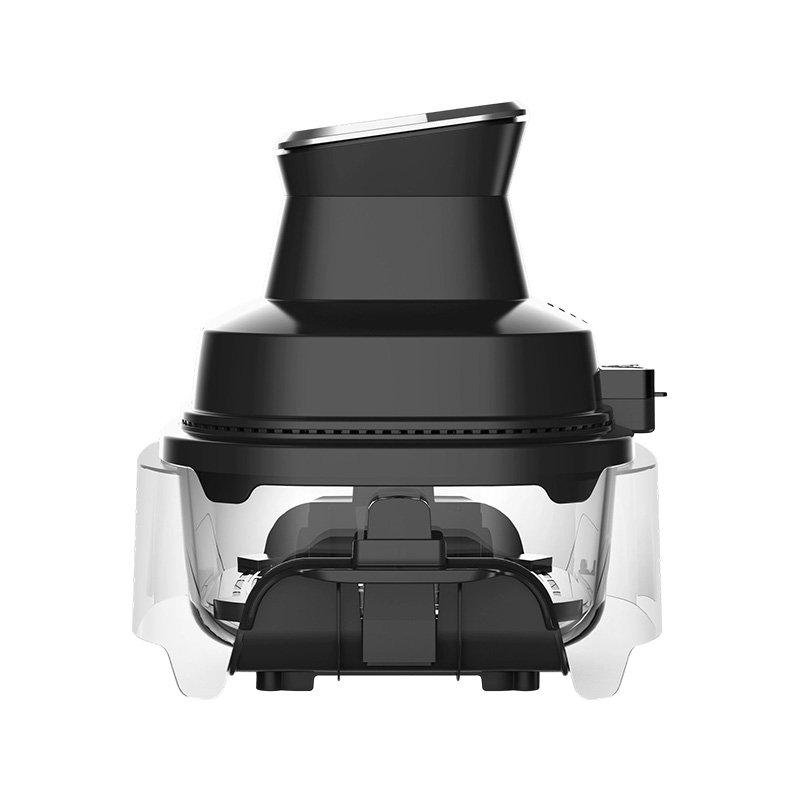
The GSE045T(F/S)/GSE045D(F/S) air fryer is an 8-liter single-pot model designed for high-capacity home cooking. The large pot is especially suitable for families, shared apartments, small gatherings, and users who prefer cooking larger portions in one cycle rather than preparing several smaller batches. In competitive air fryer markets, capacity is a significant factor. A compact appliance may save space, but it can be limiting for family meals. This 8-liter model aims to solve that limitation while remaining suitable for countertop use.
The appliance uses a combination of PP, PA, aluminum, ABS, PC, and SS430 materials. These materials are commonly selected for their balance of heat resistance, structural strength, user safety, appearance, and long-term reliability. Aluminum contributes to effective heat performance in cooking components, while SS430 stainless steel supports durability and heat resistance. Engineering plastics such as PP, PA, ABS, and PC are used in different structural and external parts according to their specific mechanical and thermal properties.
With rated power of 1700W and compatibility with 127V or 220-240V power systems, the product can be adapted for different regional markets. The 50-60Hz frequency range further supports international distribution. For importers and brand owners, these specifications are important because they reduce the complexity of building market-specific product programs. A well-developed platform with voltage flexibility can serve North America, Europe, South America, parts of Asia, and other regions when matched with the appropriate plug, packaging, labeling, and certification requirements.
The product’s size is 41.5 x 32.5 x 32.7 cm, which positions it as a large-capacity but still practical kitchen appliance. Its giftbox size is L431 x W358 x H383 mm, and carton size is L466 x W373 x H401 mm. The packing quantity is 1 piece per carton, with a gross weight and net weight of 7.5 kg and 6.5 kg respectively. The stated loading quantity is 1019 pieces per 40HQ container, which is valuable information for buyers planning wholesale orders, retail promotions, seasonal campaigns, or container-based procurement.
Key Technical Specifications
| Item | Specification |
| Item Number | GSE045T(F/S) / GSE045D(F/S) |
| Product Name | Air Fryer |
| Material | PP + PA + Aluminum + ABS + PC + SS430 |
| Power | 127V / 220-240V / 1700W |
| Frequency | 50-60Hz |
| Capacity | 8L single pot |
| Product Size | 41.5 x 32.5 x 32.7 cm |
| Giftbox Size | L431 x W358 x H383 mm |
| Carton Size | L466 x W373 x H401 mm |
| Packing Quantity | 1 piece per carton |
| Gross Weight / Net Weight | 7.5 kg / 6.5 kg |
| MOQ / Loading Reference | 1019 pieces per 40HQ |
| Certification | CE, CB, GS, RoHS, LFGB |
Why an 8-Liter Single-Pot Air Fryer Matters
Capacity is one of the most important features in the air fryer category. A small basket can cook snacks, fries, or a single portion, but it often becomes inconvenient when users need to prepare meals for three or more people. An 8-liter single-pot structure gives users more freedom. It can accommodate larger batches of frozen foods, vegetables, chicken wings, fish, meat cuts, pastries, and reheated dishes. The single-pot design keeps operation straightforward, reducing the learning curve for users who want everyday convenience rather than complicated multi-compartment programming.
Compared with many smaller 3-liter to 5-liter models, the 8-liter capacity can improve cooking workflow. Users can cook once instead of repeating several cycles. This saves time, reduces electricity consumption per meal in many scenarios, and makes meal planning easier. For busy families, this advantage is practical. For retailers, it offers a clear selling point: larger capacity for real family cooking. For distributors, it can help position the product in a higher-value category without requiring the consumer to purchase a full oven.
The single-pot format also gives the product a familiar operating style. While dual-zone models have gained attention, many consumers still prefer one large cooking chamber because it is easy to load, easy to shake or turn food, and easy to clean. A larger single pot is especially suitable for cooking larger items that may not fit comfortably in divided baskets. This makes the product versatile for daily meals, batch cooking, and entertaining.
Power and Heating Performance
The 1700W power rating is a major part of the appliance’s value. In air fryers, strong heating performance is essential for rapid preheating, stable cooking temperature, and crisp results. If the power level is too low for the capacity, cooking may become slow and inconsistent. By pairing 1700W power with an 8-liter pot, the product is designed to deliver the heat intensity needed for large-volume cooking.
Air frying depends on high-speed hot air circulation and controlled heat transfer. The purpose is not only to cook food but also to create surface browning and crispness with less oil than traditional deep frying. A well-balanced air fryer must deliver enough thermal energy while maintaining safe external surfaces, reliable electronic control, and consistent cooking over repeated use. The GSE045T(F/S)/GSE045D(F/S) is positioned to support this balance for household and commercial retail expectations.
Compared with lower-powered large-capacity competitors, a 1700W system can help reduce undercooked centers and soggy textures when cooking dense or frozen foods. This is particularly important for products such as chicken, potatoes, seafood, breaded foods, and reheated dishes. For customers who associate air fryers with convenience, cooking speed is not a minor feature; it is one of the main reasons they purchase the appliance.

Material Selection and Structural Reliability
The material combination of PP, PA, aluminum, ABS, PC, and SS430 reflects a practical engineering approach. Each material has its own role within the appliance. PP is widely used in household product parts because of its durability, chemical resistance, and suitability for molded components. PA can offer strength and heat resistance for selected internal or functional parts. ABS is often used for exterior housings because it can provide impact resistance and a quality finish. PC can be used where toughness and dimensional stability are needed. Aluminum is valuable in heat-related components due to its thermal conductivity. SS430 stainless steel provides heat resistance, corrosion resistance in appropriate applications, and structural dependability.
Material selection matters because an air fryer experiences repeated heating and cooling cycles. Components must withstand thermal stress, mechanical use, cleaning routines, transportation vibration, and normal kitchen impacts. Poor material selection can lead to deformation, discoloration, odor, cracking, or reduced service life. A reliable product platform should be designed not only for its first use but for repeated use over months and years. This is especially important in markets where customer reviews, return rates, and warranty performance strongly affect brand reputation.
The inclusion of LFGB certification support is particularly important for food-contact confidence. LFGB is commonly recognized in relation to food safety standards, especially for the European market. RoHS support also indicates attention to restricted hazardous substances, which is relevant for electrical appliance compliance. CE, CB, and GS certifications further strengthen the product’s suitability for regulated distribution channels.
Certification Value for Global Buyers
International certifications are not simply technical labels; they are commercial gateways. Retailers, importers, and brand owners need products that can pass compliance reviews, customs documentation requirements, market surveillance expectations, and internal quality audits. The product’s CE, CB, GS, RoHS, and LFGB certification support gives buyers a stronger foundation for entering multiple markets.
CE marking is essential for many products sold in the European Economic Area. CB certification can support international recognition of electrical safety testing and facilitate market access in multiple countries. GS certification is widely respected in Germany and other markets as a safety-related mark. RoHS compliance addresses restricted substances in electrical and electronic equipment. LFGB supports confidence in food-contact materials. Together, these certifications help reduce risk for professional buyers.
Compared with competitors that may only offer limited or incomplete certification documentation, a product with a broader compliance package has a clear advantage. It can shorten procurement evaluation time, support retailer listing processes, and reduce the risk of shipment delays or market rejection. For private-label programs, certification readiness can also help speed up product launch schedules.
Competitive Advantages Over Similar Air Fryers
The air fryer market is crowded, and buyers often compare products based on capacity, power, price, certification, materials, appearance, packaging, and manufacturer reliability. The GSE045T(F/S)/GSE045D(F/S) stands out in several practical ways. First, the 8-liter single-pot capacity gives it a strong family-size positioning. It is not limited to snacks or small portions. It is suitable for full meal preparation, which increases daily usefulness.
Second, the 1700W power level supports effective cooking performance. A large basket without sufficient power can frustrate users. This product’s power specification is aligned with its capacity, helping it compete against models that look large but heat slowly. Third, the voltage range supports international market flexibility. Buyers can consider the same model family for different regions, improving program consistency.
Fourth, the material structure is designed for heat resistance, durability, and food-related use. The product is not positioned merely as a low-cost appliance; it is designed as a reliable kitchen tool. Fifth, the certification package provides confidence for regulated markets. In many distribution channels, certification support can be as important as the product itself. A competitively priced air fryer without proper compliance may create hidden costs and delays.
Sixth, the manufacturer’s background in small electric kitchen appliances supports product development and production execution. Experience with blenders, choppers, slicers, food processors, air ovens, hot pots, and related products helps the engineering team understand motors, heating systems, plastics, food-contact parts, packaging, inspection, and user expectations. This accumulated knowledge can lead to better product reliability and more practical design choices.
Ease of Use for Everyday Cooking
A successful air fryer must be easy to use. Consumers do not want a device that feels complicated, fragile, or difficult to clean. They want to place food inside, set the cooking conditions, wait for reliable results, and clean the appliance without excessive effort. The 8-liter single-pot layout supports this preference. A single large cooking chamber is easy to understand, and it simplifies meal preparation for users of different ages and cooking skill levels.
For families, the large pot reduces the need to cook in batches. This is particularly useful during breakfast, dinner, children’s meals, and weekend gatherings. For users who meal prep, the appliance can cook vegetables, proteins, and frozen foods efficiently. For health-conscious consumers, it can reduce reliance on deep frying while still producing crisp textures. For busy professionals, it offers a faster alternative to conventional ovens for many dishes.
The countertop format also contributes to convenience. Full-size ovens can take longer to preheat and may use more energy for small or medium meals. A dedicated air fryer heats a smaller chamber quickly, making it suitable for daily cooking. This convenience is one of the reasons air fryers remain popular across global markets.
Cooking Applications and Menu Versatility
The 8-liter air fryer can support a wide range of dishes. Common applications include French fries, chicken wings, chicken nuggets, fish fillets, roasted vegetables, sausages, meatballs, frozen snacks, breaded seafood, reheated pizza, toast-style foods, pastries, and simple baked items. Because of its larger capacity, it can also handle larger food quantities for family-style serving.
For consumers, versatility increases perceived value. An appliance that can only prepare one or two types of food may be used briefly and then stored away. An air fryer that works for snacks, main dishes, side dishes, reheating, roasting, and simple baking is more likely to stay on the countertop. This daily visibility improves user satisfaction and brand loyalty.
For retail buyers, menu versatility supports stronger marketing. Packaging and promotional content can emphasize healthier cooking, family portions, crisp results, easy cleaning, and time savings. These messages are easy for consumers to understand and are highly relevant in both online and offline sales environments.
Packaging, Logistics, and Wholesale Practicality
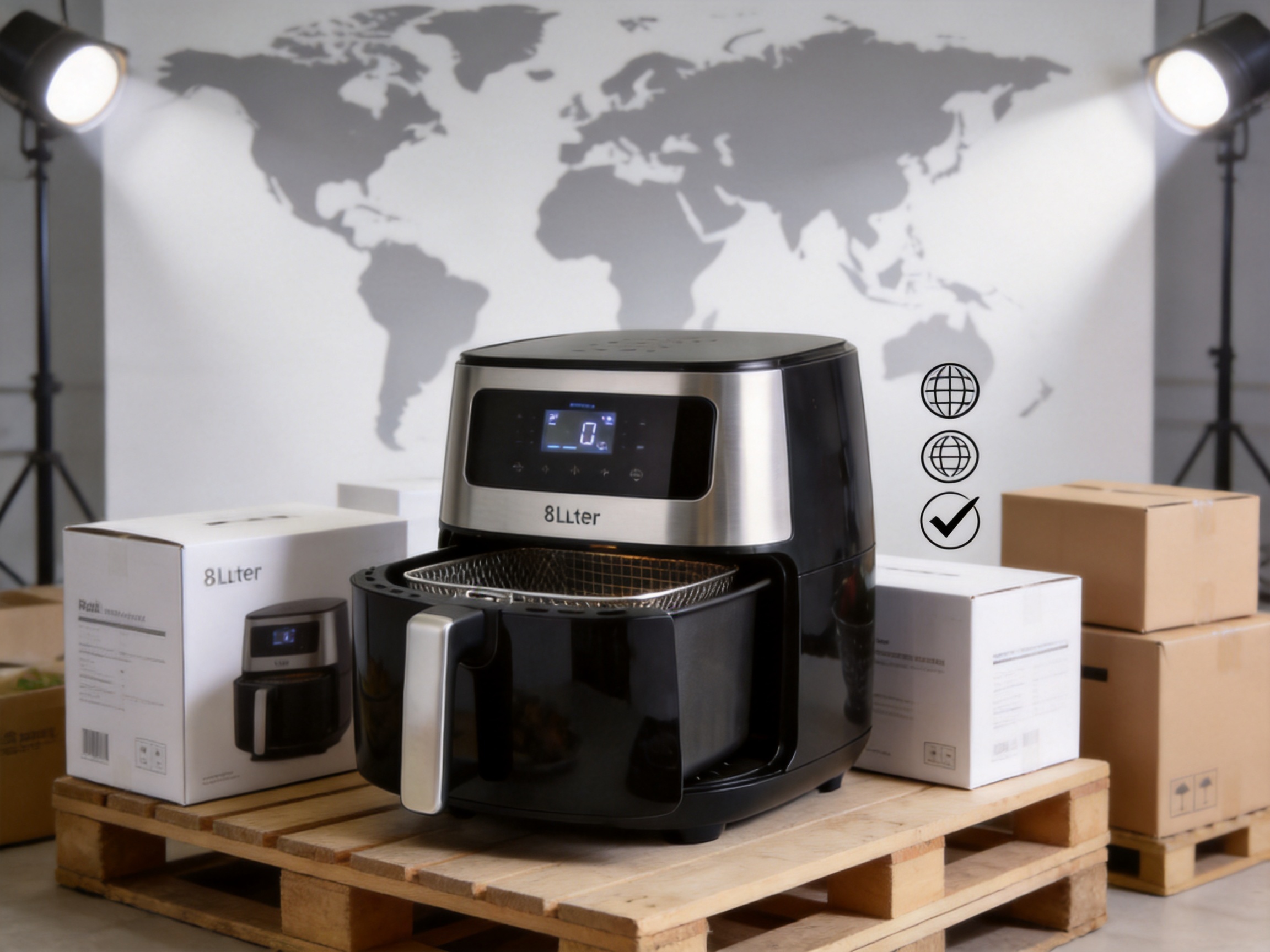
Product performance is vital, but professional buyers also need efficient packaging and logistics. The GSE045T(F/S)/GSE045D(F/S) is packed one piece per carton, with a giftbox size of L431 x W358 x H383 mm and carton size of L466 x W373 x H401 mm. The gross weight is 7.5 kg, and the net weight is 6.5 kg. These details allow importers and distributors to plan storage, container loading, warehouse handling, shipping costs, and retail display programs.
The loading reference of 1019 pieces per 40HQ container provides a useful benchmark for procurement planning. For seasonal product launches, holiday promotions, supermarket campaigns, and e-commerce inventory planning, container quantity matters. It helps buyers calculate landed cost, unit logistics cost, and forecasted inventory coverage.
Compared with products that have unclear packing data, this model provides practical information for commercial decision-making. A supplier that understands logistics details can support smoother communication with customers. In wholesale appliance business, the quality of documentation and packing accuracy often influences buyer confidence as much as the product sample.
Manufacturing Strength Behind the Product
CIXI GSTAR ELECTRIC APPLIANCE CO., LTD. designs, develops, and manufactures multiple categories of small electric kitchen appliances and daily household products. Its product range includes blenders, slicers, choppers, food processors, smokeless grills, hot pots, air fryers, air ovens, ice buckets, beverage dispensers, pitchers, graters, and other products for homes, bars, restaurants, and hotels. This broad product experience gives the company a practical understanding of consumer use, retail expectations, food-contact requirements, and appliance production.
The company’s development history shows a strong emphasis on innovation, market responsiveness, and customer-oriented manufacturing. Its founder gained experience in export sales, buying agency work, sourcing, quality control, and product development before establishing the factory. This background is important because it connects the factory’s internal engineering and production work with the real needs of international buyers. A manufacturer that understands both production and customer markets can often respond more effectively to specification changes, packaging requirements, compliance documentation, and delivery schedules.
The company has developed from non-electric innovative TV shopping products to electric kitchen appliances. This transition required growth in engineering capability, electrical safety understanding, production control, and quality inspection. The company’s experience with successful high-volume products, including food processors and hot-selling air ovens and air fryers, demonstrates its ability to support large market demand. Its factory resources include experienced workers, an R&D department, and a QC team, which are essential for stable appliance production.
Advanced Production and Process Control
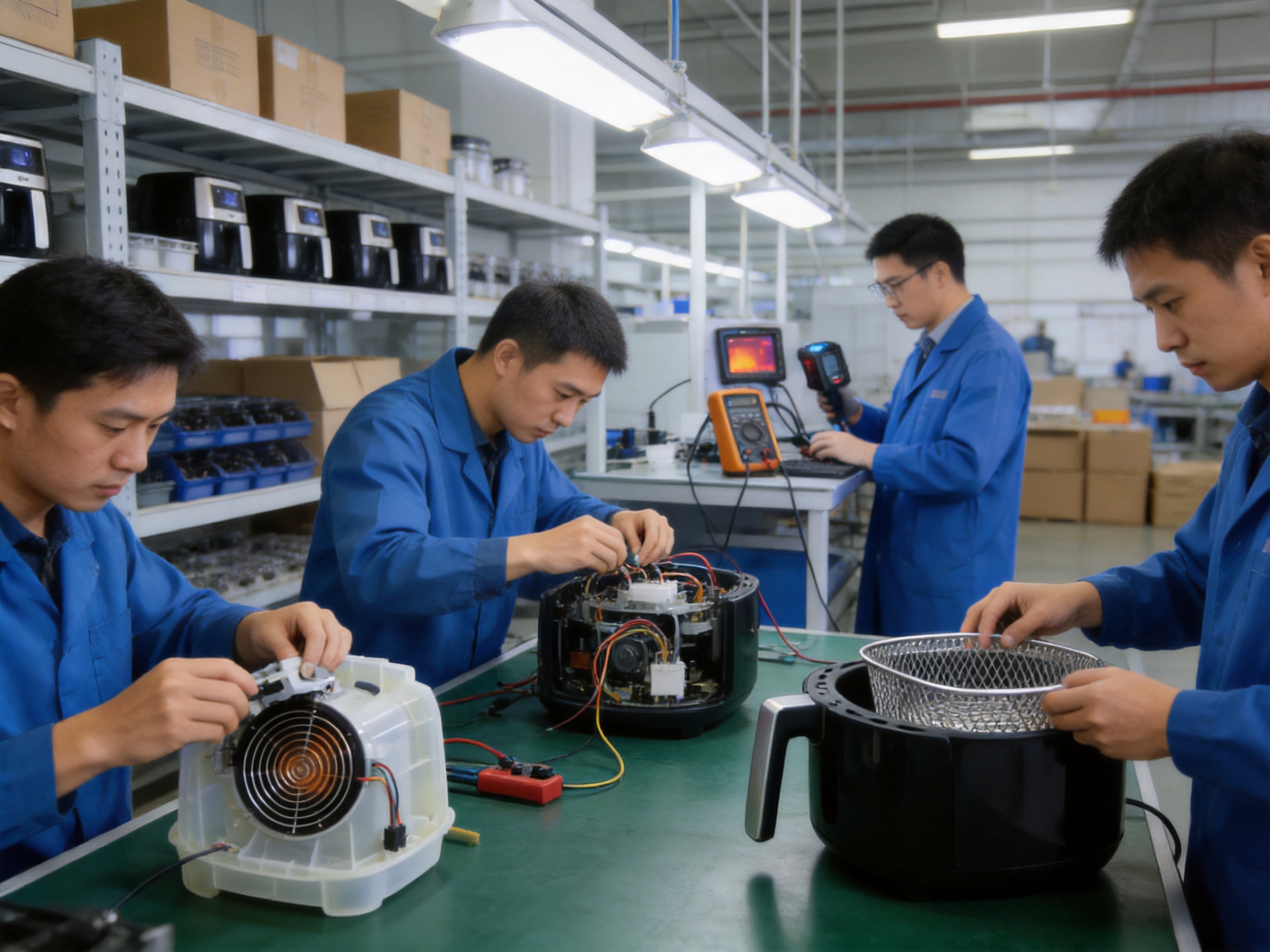
Manufacturing an air fryer is more complex than assembling a plastic shell and heating element. It requires material inspection, injection molding control, metal component processing, heating system assembly, wiring, control component installation, safety testing, functional testing, appearance inspection, packaging verification, and shipment preparation. Each stage affects final product quality.
In an advanced manufacturing environment, process control begins with incoming material inspection. Plastic materials, metal parts, electrical components, packaging materials, and food-contact parts must be checked according to defined standards. This helps prevent defects before production begins. During molding and component processing, dimensional control and surface quality must be monitored. If parts do not fit precisely, the final product may have assembly gaps, noise, vibration, or durability issues.
During assembly, workers must follow standard procedures to ensure proper wiring, secure fastening, correct placement of heat-resistant parts, and stable installation of functional components. Heating appliances require particular attention to electrical safety, insulation, grounding where applicable, thermal protection, and material separation from high-temperature areas. Quality control teams verify that each production batch meets defined performance and safety standards.
Functional testing is especially important for air fryers. The product must heat properly, operate reliably, and maintain expected performance. Safety checks can include electrical strength testing, leakage current testing, grounding continuity where applicable, power verification, and operational inspection depending on the applicable standard and market requirement. Appearance inspection ensures that the appliance meets retail expectations, while packaging inspection helps prevent damage during transportation.
Research and Development Advantages
Strong R&D capability is one of the most important advantages for an appliance manufacturer. The air fryer market changes quickly. Consumers want larger capacities, more attractive designs, better controls, improved cooking performance, easier cleaning, and safer materials. Retailers want competitive pricing, stable supply, compliant documentation, and packaging that sells. A manufacturer must be able to translate these needs into practical product designs.
CIXI GSTAR ELECTRIC APPLIANCE CO., LTD. has an R&D team that supports product development across multiple kitchen appliance categories. This matters because air fryer development involves heating, airflow, food-contact materials, ergonomics, electrical systems, exterior styling, and manufacturability. Engineers must consider both performance and mass production. A design that looks good in a prototype but is difficult to assemble or inconsistent in production will not satisfy professional buyers.
The company’s history of developing innovative products also contributes to its product mindset. Instead of relying only on imitation, the company emphasizes design and development. This is valuable in a market where many products look similar. Differentiation can come from capacity, structure, controls, user experience, materials, packaging, and reliability. For brand owners, cooperation with a manufacturer that can support product improvement is more valuable than working with a supplier that only offers fixed commodity models.
Quality Control as a Competitive Advantage
Quality control is not an optional feature in electrical appliance manufacturing. It is central to customer satisfaction and business sustainability. Air fryers operate with heat and electricity, so defects can create safety risks, return costs, customer complaints, and brand damage. A manufacturer with a dedicated QC department can reduce these risks through systematic inspection and testing.
Effective quality control includes incoming inspection, in-process inspection, final inspection, performance testing, and packaging checks. For an air fryer, QC teams may evaluate appearance, assembly fit, pot movement, control response, heating performance, rated power, odor control, stability, labeling, accessories, and packing strength. Each inspection point helps ensure that the product delivered to customers matches approved samples and agreed specifications.
Compared with competitors that focus only on low price, a supplier with disciplined QC offers better long-term value. A cheaper appliance can become expensive if it leads to high return rates, negative reviews, failed inspections, or delayed shipments. For importers and retailers, consistent quality supports repeat orders, stable customer ratings, and lower after-sales pressure. The GSE045T(F/S)/GSE045D(F/S) benefits from being produced within a company structure that recognizes the importance of quality, compliance, and customer trust.
Factory Capacity and Supply Stability
Supply stability is essential for wholesale buyers. A product may be attractive, but if the manufacturer cannot support volume production, delivery schedules, or quality consistency, the business opportunity becomes risky. The company operates its own production facilities and has expanded over time, with a production area described in company information as reaching significant scale and supported by experienced workers. This manufacturing foundation helps support large appliance orders and ongoing product programs.
The company’s workforce includes experienced production staff, engineers, and quality control personnel. This combination is important because appliance manufacturing requires coordination. Engineers develop and improve products, production teams execute assembly, QC teams verify quality, and sales and customer service teams communicate with buyers. When these functions work together, buyers receive better support from sample development through mass production and after-sales service.
The company’s experience selling products to well-known international retailers and markets also reflects its ability to meet demanding customer expectations. Supplying supermarkets, clubs, department stores, and international buyers requires attention to specifications, packaging, timelines, and inspection standards. This experience strengthens confidence in its ability to support air fryer projects for global customers.
Value for Retailers and Brand Owners
For retailers, the GSE045T(F/S)/GSE045D(F/S) offers a clear consumer proposition: large capacity, strong power, practical size, certification support, and family cooking convenience. These features are easy to communicate in product listings, packaging, sales presentations, and in-store promotions. The appliance fits well in seasonal campaigns, healthy cooking promotions, kitchen appliance aisles, online marketplaces, and household goods programs.
For brand owners, the product offers a reliable platform for private-label development. The combination of capacity, power, international voltage options, and certification readiness provides a foundation for regional adaptation. Brand owners can work with the manufacturer to discuss packaging, color, control interface, instructions, labeling, and market-specific requirements, depending on project scope and order quantity.
For distributors, the product’s container loading reference and carton specifications support cost calculation. The air fryer category has strong consumer awareness, so distributors do not need to educate the market from zero. Instead, they can focus on differentiating through capacity, price-performance ratio, compliance, and supplier reliability.
Consumer Health and Lifestyle Benefits
One of the biggest reasons consumers buy air fryers is the desire to enjoy crisp foods with less oil. While cooking results depend on recipes and ingredients, air frying generally uses hot air circulation rather than submerging food in oil. This can reduce oil use in many dishes and make cleanup easier. For families trying to prepare convenient meals at home, this is an attractive lifestyle benefit.
The air fryer also supports faster cooking routines. Consumers can prepare frozen foods, leftovers, vegetables, and proteins without turning on a large oven. This can encourage more home cooking, which may help users control ingredients and portion sizes. The large 8-liter pot allows families to prepare enough food for shared meals, making the appliance more than a snack maker.
In many households, convenience determines whether an appliance is used regularly. If the product saves time, delivers enjoyable texture, and is easy to clean, it becomes part of daily cooking. The GSE045T(F/S)/GSE045D(F/S) is designed for this kind of everyday value.
Design Balance: Size, Capacity, and Countertop Practicality
A large-capacity air fryer must be carefully balanced. If it is too bulky, consumers may not have room for it. If it is too small, it cannot meet family cooking needs. With a product size of 41.5 x 32.5 x 32.7 cm, this model provides an 8-liter pot while remaining within a practical countertop appliance footprint. This balance is important for modern kitchens where space is valuable.
The size also supports retail handling and packaging efficiency. A product that is too large may increase logistics costs and reduce shelf flexibility. A product that is too small may not satisfy family users. The GSE045T(F/S)/GSE045D(F/S) occupies a commercially attractive middle ground: large enough to be meaningful, compact enough to be manageable.
This design balance helps the product compete in both online and offline channels. Online shoppers compare capacity and dimensions carefully. Offline shoppers respond to box size, appearance, and perceived value. A well-sized 8-liter model gives retailers a product that can be presented as a family-capacity upgrade without entering the bulkier oven category.
After-Sales Thinking and Long-Term Cooperation
The company emphasizes high-quality innovative products, competitive prices, quick delivery, and high-quality after-sales service. In appliance business, after-sales thinking is important from the beginning of product design. A product that is easier to assemble correctly, easier to inspect, and built with appropriate materials is likely to create fewer after-sales problems. Good documentation, spare parts planning, and responsive communication also help professional buyers manage their markets.
Long-term cooperation depends on trust. Buyers need consistent quality, transparent specifications, reliable delivery, and support when issues arise. The company’s stated commitment to maintaining long-term business relationships with regular customers and welcoming new partners reflects a business model built around cooperation rather than one-time transactions.
For retailers and importers, this matters because successful appliance programs usually require repeat orders, updated packaging, market feedback, and continuous improvement. A manufacturer that is willing to work closely with customers as an engineering partner can help improve product competitiveness over time.
Comparison With Common Market Alternatives
Many competing air fryers fall into one of several categories. Some are small low-cost units with limited capacity. They may be suitable for one or two users but less practical for families. Some are large but underpowered, which can lead to slow cooking and inconsistent crisping. Some have attractive styling but limited certification support, creating challenges for regulated markets. Others come from suppliers with weaker manufacturing control, increasing the risk of inconsistent quality.
The GSE045T(F/S)/GSE045D(F/S) addresses these weaknesses through a balanced specification set. Its 8-liter capacity is suitable for family cooking. Its 1700W power supports stronger performance. Its material composition reflects attention to heat resistance and structural needs. Its certification package supports professional distribution. Its packing data and loading reference help commercial planning. Its manufacturing background provides additional confidence for buyers evaluating supplier capability.
No product can win only by one feature. The strongest products combine multiple advantages into a coherent solution. This air fryer’s value is not only that it is large, or only that it has 1700W power, or only that it has certifications. Its strength is the combination of cooking practicality, compliance readiness, manufacturing experience, and wholesale suitability.
Importance of Compliance for European and Global Markets
Europe is one of the most demanding markets for small electric kitchen appliances. Buyers pay close attention to safety, food-contact materials, restricted substances, user manuals, labeling, and traceability. The product’s CE, CB, GS, RoHS, and LFGB certification support makes it more suitable for buyers who must meet strict documentation and safety expectations. This is especially important for air fryers because they involve both food contact and high-temperature electrical operation.
Global markets are also becoming more quality conscious. Consumers read reviews, compare safety information, and expect appliances to perform reliably. Retailers want to avoid products that may create compliance problems. A manufacturer that provides certification support and understands export requirements can help buyers reduce market-entry risk.
For brands building long-term reputation, compliance is part of brand protection. A product that meets recognized standards can support consumer confidence and retailer trust. The GSE045T(F/S)/GSE045D(F/S) is therefore positioned not only as a cooking appliance but as a commercially responsible product for international distribution.
Manufacturing Experience Across Product Categories
The company’s wide product range gives it a useful manufacturing perspective. Producing blenders and food processors develops knowledge of motor systems, food-contact plastic parts, blade safety, and mechanical assembly. Producing slicers, choppers, graters, and kitchen tools builds understanding of ergonomics, cleaning, and material durability. Producing hot pots, air ovens, and air fryers strengthens expertise in heating systems, thermal control, and electrical safety. Producing hospitality items such as beverage dispensers and ice buckets supports knowledge of appearance quality, packaging, and practical user handling.
This cross-category experience benefits the air fryer program. A kitchen appliance does not exist in isolation. Users judge it according to comfort, cleaning, safety, durability, appearance, and result quality. A manufacturer experienced in multiple kitchen categories can better understand these expectations and integrate them into product design.
The company’s history also shows its ability to identify market opportunities. From TV shopping products to international retail programs and electric kitchen appliances, it has adapted to changing customer demand. The success of its food processor sales in Korea and Southeast Asia and the strong sales of air ovens and air fryers in Europe and South America indicate market acceptance of its products.
Private Label and OEM/ODM Potential
Many buyers in the small appliance industry seek products that can be adapted to their own brand identity. The GSE045T(F/S)/GSE045D(F/S) can serve as a strong base for private-label programs because it already has a clear specification structure and commercial value. Depending on project details, buyers may discuss exterior color, packaging artwork, instruction manuals, rating labels, plug types, control preferences, and market-specific documentation.
OEM and ODM cooperation requires communication between buyer and manufacturer. The buyer brings market knowledge, brand positioning, and retail requirements. The manufacturer brings engineering, production, quality control, and compliance experience. When both sides cooperate effectively, the final product can be tailored for specific sales channels while maintaining manufacturing stability.
The company’s R&D and QC resources support this type of cooperation. For buyers who want more than a generic product, access to engineering support can help refine the appliance and improve competitiveness. In a crowded air fryer market, details such as usability, packaging clarity, material feel, and reliable performance can make the difference between a one-time order and a successful long-term product line.
Sustainability and Responsible Material Considerations
Modern appliance buyers increasingly consider environmental and material responsibility. RoHS compliance is important because it relates to restricted hazardous substances in electrical and electronic products. Durable design also contributes to responsible consumption because longer-lasting appliances reduce waste and replacement frequency. While an air fryer is primarily purchased for cooking convenience, its material quality and compliance profile can influence environmentally aware buyers.
Energy use is another consideration. Air fryers can be efficient for many cooking tasks because they heat a smaller chamber than a full-size oven and often preheat faster. Actual energy savings depend on the recipe, cooking time, and comparison appliance, but many users appreciate the ability to cook smaller or medium meals without using a large oven. The 8-liter capacity also allows users to prepare larger portions in one cycle, which can be more practical than repeated small-batch cooking.
Packaging efficiency is relevant as well. Clear carton dimensions and container loading data help buyers optimize shipping plans. Efficient logistics can reduce cost and support better inventory planning. For professional procurement, sustainability and efficiency often overlap: better planning reduces waste, damage, and unnecessary handling.
User Experience and Cleaning Convenience
Cleaning is one of the most important user-experience factors for air fryers. Consumers are more likely to use an appliance regularly if cleanup is simple. A large single pot can be easier to manage than multiple small compartments, especially when cooking family portions. Users can remove food, clean the pot, and return the appliance to the countertop without dealing with a complex arrangement of parts.
Material and surface design affect cleaning experience. Food-contact parts must be suitable for repeated use, and the structure should avoid unnecessary dirt traps where possible. A practical air fryer should support normal kitchen cleaning routines and resist premature wear. While users must always follow the instruction manual, the product’s design philosophy should make proper care easy.
Good cleaning convenience also supports health and odor control. If food residue is left in corners or difficult-to-clean areas, odors can build up and affect future cooking. A well-designed basket or pot system helps users maintain the appliance more easily, improving satisfaction and repeat use.
Safety Considerations for Household Confidence
Air fryers combine heat, electricity, moving air, and food-contact surfaces. Safety must therefore be built into the product from design to production. Important considerations include heat-resistant material placement, stable electrical connections, proper insulation, thermal protection, secure housing, and clear user instructions. Certification support such as CE, CB, GS, RoHS, and LFGB helps demonstrate attention to these requirements.
Household users also need safe daily handling. The appliance should be stable on the countertop, clear in operation, and designed to reduce unnecessary risk during normal use. Professional manufacturing control helps ensure that safety-related parts are installed correctly and consistently. This is another reason why buyers should evaluate not only product appearance and price but also supplier capability.
Compared with poorly controlled low-cost alternatives, an appliance supported by structured manufacturing and quality inspection provides greater confidence. Safety and reliability are not visible in a product photo, but they become extremely important after the product reaches consumers.
Market Positioning and Sales Messages
The GSE045T(F/S)/GSE045D(F/S) can be positioned around several strong sales messages. The first is large family capacity. The 8-liter pot is easy for consumers to understand and compare. The second is powerful 1700W cooking performance, which supports faster and crispier cooking results. The third is healthier-style cooking with less oil than deep frying for many recipes. The fourth is certification-backed confidence for international buyers. The fifth is experienced manufacturing support from a company focused on small electric kitchen appliances.
For e-commerce listings, key selling points can include capacity, power, voltage, frequency, certification, material quality, and size. For retail packaging, messages should be simple and benefit-focused: family-size cooking, crispy results, less oil, easy everyday meals, and reliable quality. For distributor catalogs, the technical table and loading information are especially useful.
Strong market positioning should avoid overpromising. The best approach is to highlight practical advantages that the product can clearly support. This builds customer trust and reduces dissatisfaction. A successful appliance is one that meets or exceeds the expectations created by its marketing.
Q&A Section
What is the main advantage of the GSE045T(F/S)/GSE045D(F/S) air fryer?
The main advantage is its combination of 8-liter family capacity and 1700W heating power. This allows users to prepare larger portions while maintaining strong cooking performance, making it more practical than many smaller or underpowered air fryers.
Is this air fryer suitable for international markets?
Yes. The product supports 127V or 220-240V power configurations and 50-60Hz frequency, which makes it adaptable for multiple regional markets. Its CE, CB, GS, RoHS, and LFGB certification support also helps professional buyers meet compliance expectations.
Why is the 8-liter single-pot design useful?
The 8-liter single-pot design is useful because it can cook larger batches in one cycle. It is convenient for families, shared households, meal preparation, and entertaining. It also keeps operation straightforward compared with more complex multi-compartment systems.
What materials are used in the product?
The product uses PP, PA, aluminum, ABS, PC, and SS430. These materials are selected to support durability, heat resistance, structural strength, food-related use, and appliance appearance according to their roles in the product.
How does this product compare with smaller air fryers?
Smaller air fryers may be suitable for one or two people, but they often require repeated cooking cycles for family meals. This 8-liter model can prepare larger portions more efficiently, making it better suited for households that need practical daily cooking capacity.
Why are certifications important for buyers?
Certifications help demonstrate that the product is designed and tested according to relevant safety, material, and compliance standards. For importers, retailers, and brand owners, certification support reduces market-entry risk and helps with product approval processes.
What manufacturing strengths support the product?
The product is supported by a manufacturer with experience in small electric kitchen appliances, R&D capability, quality control resources, production facilities, and international market knowledge. This helps ensure better product development, stable production, and professional buyer support.
Is the product suitable for private-label programs?
Yes. The model can serve as a strong platform for private-label or customized appliance programs, subject to project requirements and order details. Buyers may discuss packaging, labeling, regional configuration, and other market-specific needs with the manufacturer.
Conclusion
The GSE045T(F/S)/GSE045D(F/S) 8-liter single-pot air fryer is a competitive product for modern household cooking and international wholesale appliance programs. Its large capacity, 1700W power, practical dimensions, material composition, and certification support make it suitable for family use and professional distribution. It addresses common market problems such as limited capacity, weak heating performance, uncertain compliance, and unreliable supplier support.
Behind the product is CIXI GSTAR ELECTRIC APPLIANCE CO., LTD., a manufacturer with broad experience in small electric kitchen appliances and daily-use products. Its R&D resources, QC department, production experience, and export-oriented business understanding support the development and supply of reliable appliances for global customers. For retailers, distributors, and brand owners seeking a family-size air fryer with strong commercial value, this model offers a practical balance of performance, compliance, and manufacturing confidence.
As consumer demand for convenient, healthier-style, and efficient home cooking continues to grow, large-capacity air fryers will remain an important category. Products that combine real cooking usefulness with stable manufacturing and international compliance are best positioned for long-term success. The GSE045T(F/S)/GSE045D(F/S) is designed to meet that opportunity with a specification set that speaks clearly to both end users and professional buyers.
References
International Electrotechnical Commission. Household and Similar Electrical Appliances Safety Standards.
European Committee for Electrotechnical Standardization. Requirements for Household Cooking and Heating Appliances.
European Union. Restriction of Hazardous Substances Directive Guidance for Electrical and Electronic Equipment.
German Food and Feed Code. LFGB Food Contact Material Compliance Principles.
Industry Research on Small Kitchen Appliances, Air Fryer Market Development, and Consumer Cooking Trends.
Manufacturer-provided product specification sheet for item GSE045T(F/S)/GSE045D(F/S).