
 English
 中文简体
中文简体 Español
 English
 中文简体
中文简体 Español
In the fast-growing market for small electric kitchen appliances, a blender is no longer viewed as a simple accessory for occasional drink preparation. It has become a core countertop tool for homes, cafés, restaurants, hotels, offices, healthy-living consumers, and retailers seeking reliable products with broad market appeal. The GSE011 1.5L Blender is designed for precisely this environment: a practical, powerful, export-ready blending appliance that combines a 1000W motor, a 1.5-liter capacity, durable food-contact materials, and multi-market certification support.
This article presents a detailed product-focused analysis of the GSE011 1.5L Blender, including its technical characteristics, market value, manufacturing strengths, quality-control advantages, competitive positioning, and suitability for wholesale, retail, private-label, and distribution channels. It also explains how the manufacturing background of CIXI GSTAR ELECTRIC APPLIANCE CO., LTD. supports stable supply, product development, and long-term business cooperation for international buyers.
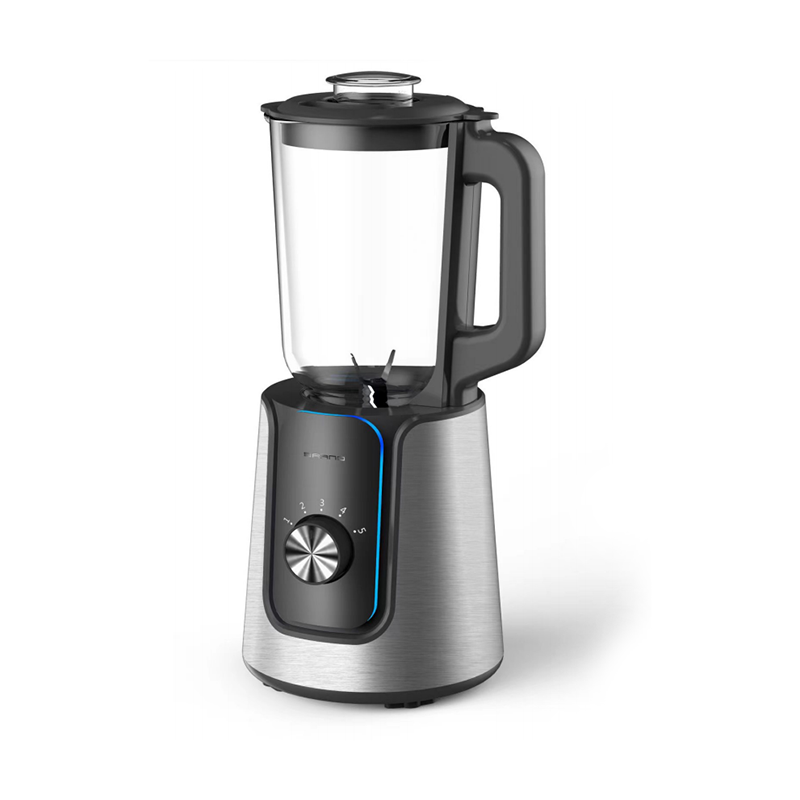
Product Overview: A Practical 1.5L Blender Built for Everyday Demand
The GSE011 1.5L Blender is positioned as a dependable kitchen appliance for daily blending needs. With a 1.5-liter jar capacity, it offers a balanced size that is large enough for family use while remaining compact enough for regular countertop placement. This capacity is particularly attractive to consumers who want to prepare smoothies, sauces, milkshakes, vegetable blends, protein drinks, soups, dips, marinades, and other kitchen mixtures without using bulky commercial equipment.
The blender is equipped with a 1000W power rating, giving it a strong performance foundation compared with many entry-level household blenders that often feature lower motor power. Higher power allows the appliance to process ingredients more efficiently, support smoother texture results, and reduce the feeling of strain during common blending tasks. For buyers and distributors, this means the product can be positioned above basic low-power models while still fitting within the broad household-appliance category.
The product uses ABS, PP, and AS materials. These materials are commonly used in kitchen appliances because they offer a practical combination of durability, processability, appearance, and suitability for food-related applications when properly selected and tested. The combination supports a strong outer body, practical structural parts, and a transparent blending container suitable for everyday visibility and use.
The GSE011 also carries a wide certification profile, including CE, GS, CB, ETL, RoHS, LFGB, and FDA. This certification range is highly valuable for global trade because different markets require different safety, environmental, and food-contact compliance references. For importers, certification readiness reduces purchasing uncertainty and helps simplify market-entry evaluation.
Key Product Specifications
| Item Number | GSE011 |
| Product Name | 1.5L Blender |
| Product Category | Blender / Small Electric Kitchen Appliance |
| Power | 1000W |
| Material | ABS + PP + AS |
| Packing Quantity | 6 pcs/carton |
| Carton Measurement | 65.5 x 26 x 53 cm |
| Net Weight | 9.6 kg/carton |
| Gross Weight | 10.6 kg/carton |
| 20 ft Container Loading | 1866 pcs |
| 40 ft Container Loading | 3866 pcs |
| 40 ft HQ Container Loading | 4533 pcs |
| Minimum Order Quantity | 1000 pcs |
| Certifications | CE, GS, CB, ETL, RoHS, LFGB, FDA |
Why the 1000W Motor Matters
Power is one of the first specifications buyers compare when selecting blender models. A 1000W motor gives the GSE011 a clear advantage over many lower-wattage competitors. In everyday use, stronger motor capacity can help users achieve faster blending, better ingredient circulation, and more consistent processing of fruit, vegetables, ice-containing beverages, and mixed recipes.
For retail positioning, the 1000W rating provides a strong selling point. Consumers often associate higher wattage with better blending strength and longer-lasting performance. While real performance also depends on blade design, jar shape, internal airflow, control structure, and assembly quality, power remains an important indicator of product capability. For importers and private-label customers, this specification makes the appliance easier to promote in catalogues, retail packaging, online listings, and in-store product comparison charts.
Compared with many basic blenders in the 300W to 700W range, the GSE011 offers a more performance-oriented profile. This allows sellers to target a wider range of consumers: health-focused users preparing thick smoothies, families making breakfast drinks, home cooks preparing sauces, and buyers who want one appliance for multiple kitchen tasks. The product can therefore serve not only as a basic blender but also as a value-added kitchen solution.
The Value of a 1.5-Liter Capacity
The 1.5-liter blending jar is another practical strength. A blender that is too small may require repeated batches, which can frustrate users when preparing drinks for several people. A blender that is too large may occupy excessive space and seem unnecessary for daily home use. The 1.5L size is a balanced middle point, suitable for many household and light hospitality applications.
For families, this capacity can prepare multiple servings in one cycle. For offices or hospitality spaces, it allows staff to prepare beverages efficiently without relying on overly large commercial machines. For retailers, the 1.5L size is easy to communicate because consumers already understand the practical value of a medium-to-large household blender jar.
From a logistics perspective, the product also benefits from efficient carton packing. With 6 pieces per carton and container loading quantities of 1866 pieces for a 20 ft container, 3866 pieces for a 40 ft container, and 4533 pieces for a 40 ft HQ container, distributors can plan shipment volume with clarity. Efficient container utilization helps reduce per-unit freight cost, a key factor in competitive wholesale and retail pricing.
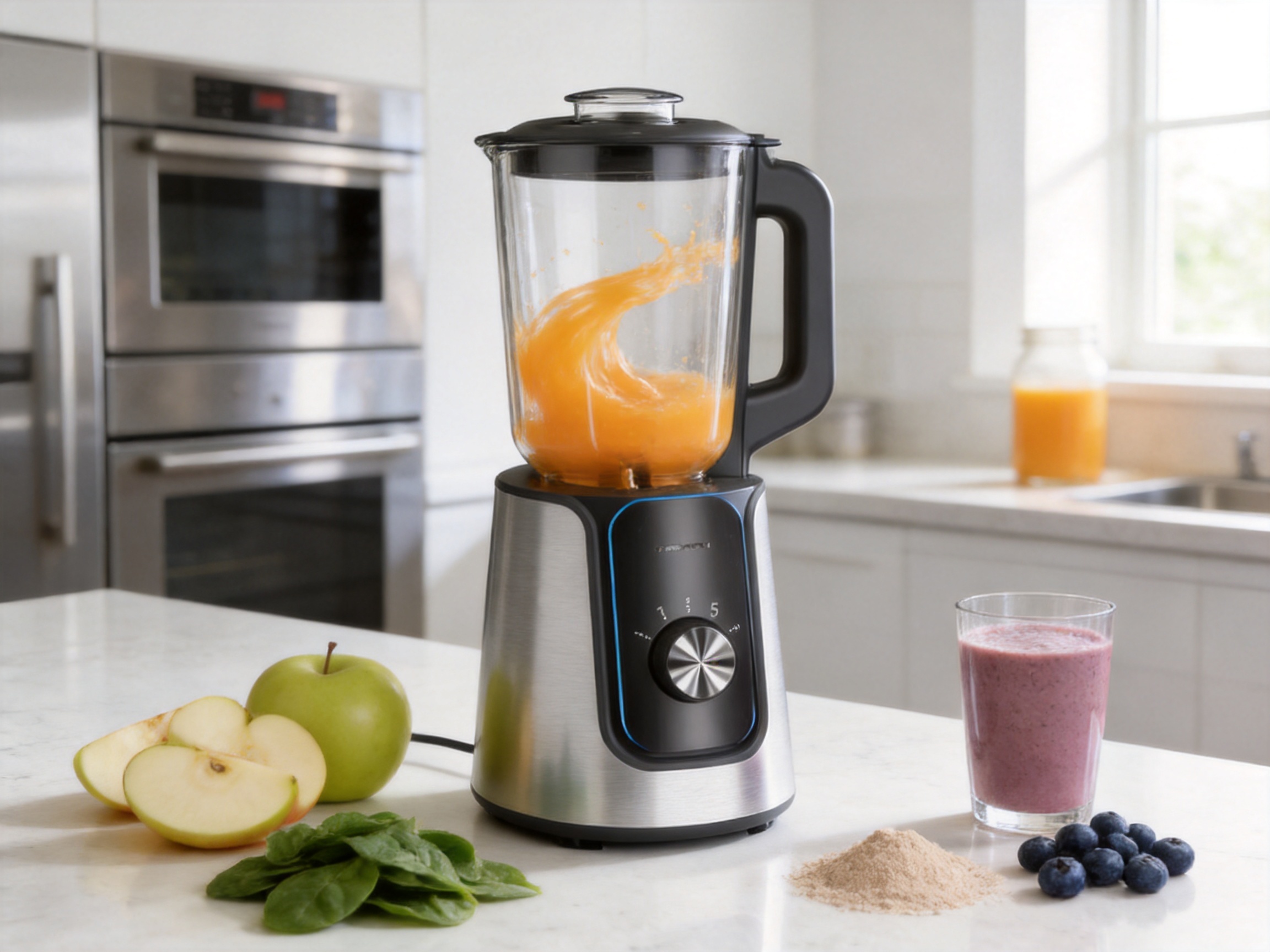
Material Advantages: ABS, PP, and AS
The GSE011 uses a combination of ABS, PP, and AS materials. Each material contributes to the product’s overall structure and user experience. ABS is widely used for appliance housings because it offers impact resistance, dimensional stability, and an attractive surface finish. PP is valued for its light weight, chemical resistance, and suitability in many food-related applications. AS is often used for transparent components where clarity and rigidity are important.
This material combination supports a blender that is practical for mass production while maintaining a clean and consumer-friendly appearance. In competitive markets, appearance and perceived durability matter. A blender may have strong specifications, but if its housing looks weak or its jar feels unreliable, consumers may hesitate. The GSE011’s material selection helps address both functionality and presentation.
For buyers, material quality is also linked to after-sales reputation. Products that feel solid and perform consistently are less likely to generate negative user feedback. When combined with proper manufacturing control, the use of ABS, PP, and AS helps create a product suitable for demanding retail channels and private-label programs.
Certification Support for Global Market Entry
One of the strongest business advantages of the GSE011 is its certification profile. The product is associated with CE, GS, CB, ETL, RoHS, LFGB, and FDA certifications or compliance references. For international buyers, these are not just technical labels; they are important signals of market readiness.
CE is important for many European-market products, while GS is a respected German safety mark. CB certification supports international electrical product recognition through a global testing framework. ETL is widely recognized in North American markets. RoHS indicates restriction of hazardous substances, which is increasingly important for electrical and electronic products. LFGB and FDA relate to food-contact safety expectations, which are essential for kitchen appliances that touch ingredients directly.
In contrast, many low-cost competitors may offer attractive pricing but limited certification coverage. Such products can create risks for importers, including customs delays, additional testing costs, retail compliance rejection, or later product recalls. A blender with broader compliance preparation gives buyers more confidence when entering regulated markets.
Designed for Wholesale and Private-Label Opportunities
The GSE011 is particularly suitable for wholesale buyers, supermarket chains, online sellers, importers, appliance distributors, and private-label brands. Its minimum order quantity of 1000 pieces supports commercial-scale procurement while still remaining practical for many regional distributors and growing brands.
Private-label customers often need products that can be adapted to their brand identity while maintaining stable quality and predictable production. A blender such as the GSE011 offers a strong foundation for such programs because it has a clear specification structure, useful certifications, efficient packing data, and broad market relevance.
Retailers can position the blender as a practical home appliance with a performance-focused 1000W motor. Online sellers can highlight the 1.5L capacity, export certifications, and versatile everyday usage. Distributors can promote the product to appliance stores, home-goods retailers, promotional channels, and kitchenware suppliers. The model’s balanced design makes it flexible across different sales channels.
Competitive Advantages Over Ordinary Blender Models
The small appliance market is highly competitive, and buyers often compare products based on price, power, appearance, packaging efficiency, certification, supplier reliability, and after-sales support. The GSE011 offers several advantages that help it stand apart from ordinary blender models.
First, the 1000W power rating gives it a stronger performance identity than many basic household blenders. This allows sellers to target consumers who want more than a low-power entry-level product. Second, the 1.5L capacity is suitable for real family use, making it more practical than compact single-serving units for many households.
Third, the certification range is more comprehensive than that of many generic models. Certifications add value because they reduce compliance concerns and strengthen buyer confidence. Fourth, the packing and container-loading information is clear, which supports professional procurement planning. Fifth, the manufacturing background behind the product includes experience in product development, quality control, and export-oriented production.
Another competitive advantage is the supplier’s product-category experience. The manufacturer does not focus on one isolated item only; it designs and manufactures a wide range of small electric kitchen appliances, including blenders, slicers, choppers, food processors, smokeless grills, hot pots, air fryers, and air ovens. This broader experience helps the factory understand motorized appliance structure, food-contact requirements, consumer expectations, and international buyer needs.
Manufacturing Strength Behind the Product
CIXI GSTAR ELECTRIC APPLIANCE CO., LTD. has developed a manufacturing foundation centered on small electric kitchen appliances and daily-use household products. The company designs, develops, and manufactures appliances for home and commercial-style usage, serving markets that require both function and reliability.
The company’s background includes product development experience beginning with innovative household and TV-shopping products, later expanding into electric appliances. This history is significant because TV-shopping and retail-driven products must be visually appealing, easy to demonstrate, practical for consumers, and capable of delivering clear value in a short time. That mindset supports the design of products such as the GSE011 Blender, where usability, presentation, and performance all matter.
The company operates with a production area reported at around 15,000 square meters and has more than 200 experienced workers. It also has engineering and quality-control teams, including R&D engineers and QC personnel. Such a structure supports product design, pilot production, process improvement, inspection, and mass-production consistency.
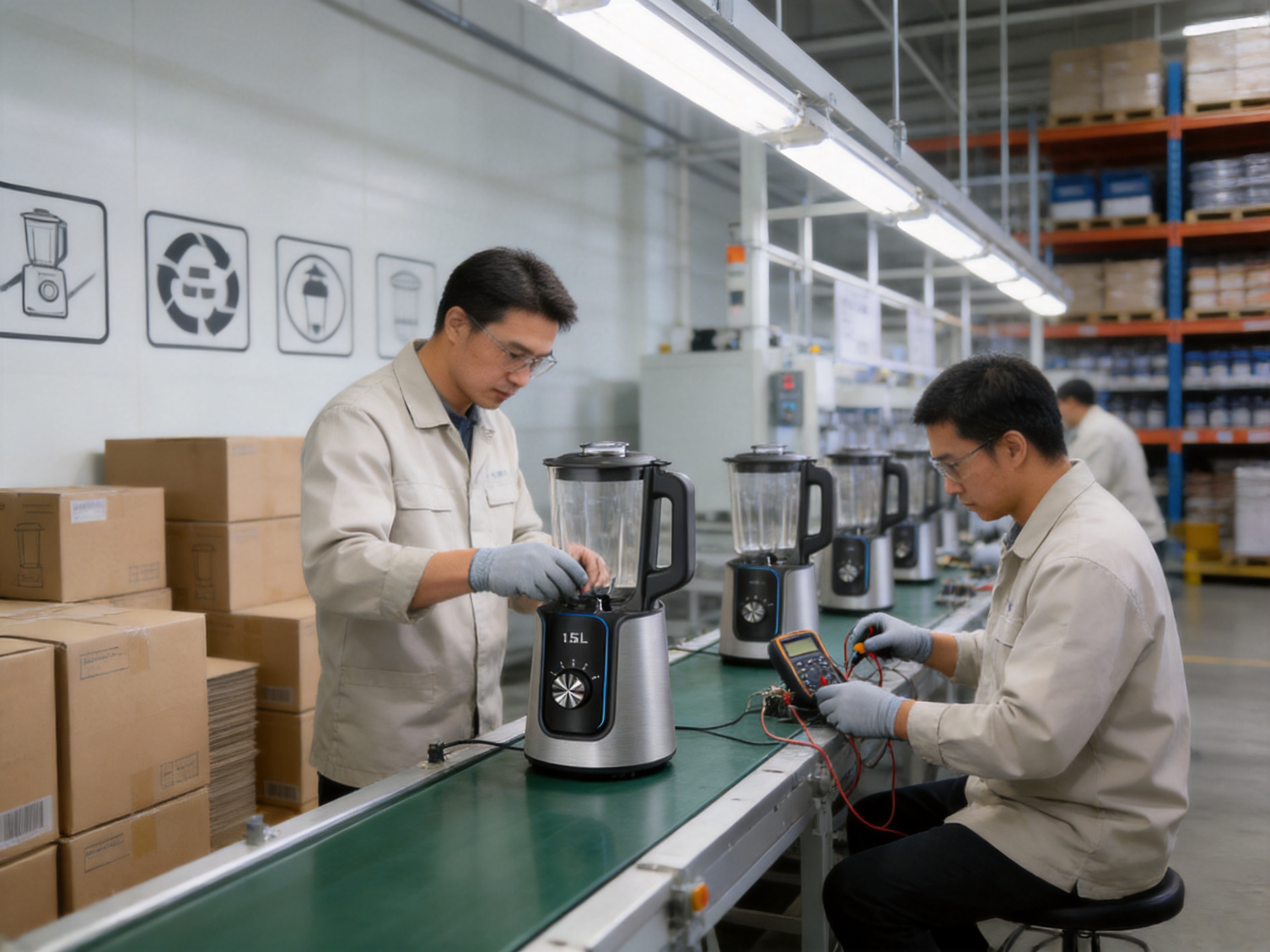
Advanced Manufacturing Processes and Production Control
A reliable blender is the result of more than a motor and a jar. It requires controlled manufacturing across multiple stages, including material selection, plastic processing, component inspection, motor assembly, blade and coupling installation, electrical safety checks, final assembly, performance testing, and packaging. A weakness in any one stage can affect the product’s user experience and long-term durability.
For a product such as the GSE011, advanced manufacturing begins with design validation. Engineers consider motor power, ventilation, material structure, user handling, jar fit, control layout, and product stability. Before mass production, critical dimensions and functional parts must be reviewed to make sure the product can be assembled consistently and operated safely.
Injection molding is a key process for ABS, PP, and AS components. The quality of plastic parts depends on mold precision, temperature control, material flow, cooling time, surface finishing, and dimensional inspection. Poor molding can lead to weak housings, fitting problems, unstable jar placement, or unattractive appearance. A factory with experience in kitchen appliance production is better positioned to control these risks.
Assembly control is equally important. Workers must correctly install electrical components, motor elements, switches, seals, base parts, jars, and packaging accessories. For blender production, the interface between the motor base and blending jar is especially important because it affects stability, vibration, safety, and user convenience.
Quality inspection should include visual checks, assembly checks, electrical safety testing, functional testing, and packaging verification. For export appliances, inspection standards must also reflect the expectations of destination markets. The presence of a dedicated QC department helps ensure that each production batch is monitored according to defined requirements.
Quality Control as a Commercial Advantage
For importers and retailers, product quality is not simply a technical concern; it is a financial concern. Poor quality can lead to returns, complaints, warranty costs, brand damage, negative online reviews, and lost shelf space. Therefore, a blender supplier must be evaluated not only by price but also by quality-control capability.
The GSE011 benefits from a manufacturing environment where QC personnel support pre-production, in-process, and final inspection activities. Pre-production checks can confirm whether components, packaging, labels, and specifications match the buyer’s order. In-process checks can identify issues before a full batch is completed. Final inspections can verify appearance, function, carton marking, weight, accessories, and packing integrity.
For a 1000W blender, electrical safety is especially important. The appliance must be able to operate under normal household conditions without overheating, instability, or user safety concerns. Although exact testing procedures depend on market requirements and customer specifications, a responsible manufacturing system normally reviews insulation, power performance, switch function, mechanical fit, and safe operation.
Consistent quality also supports long-term cooperation. Buyers prefer suppliers who can repeat successful production over multiple orders. A model like the GSE011 becomes more valuable when the factory can maintain stable specifications, packaging quality, and delivery scheduling across different batches.
R&D Capability and Product Development Culture
The company’s history shows a strong emphasis on product development and innovation. Its founder’s early experience in sales, buying agency work, and international retail sourcing helped shape a buyer-oriented approach. This background is valuable because successful products are not created only in the factory; they are created through understanding end users, retailers, compliance expectations, and market competition.
The transition from non-electric innovative products to electric appliances also demonstrates adaptability. As consumer demand shifted toward air fryers, food processors, blenders, and other electric kitchen tools, the company expanded its product range. This ability to move with market trends is important for buyers who want a supplier capable of continuous improvement rather than a one-time product source.
For the GSE011 Blender, R&D capability can support customization and improvement. Depending on buyer requirements, product discussions may involve color options, packaging design, plug types, control design, labeling, branding, instruction manuals, and market-specific compliance documentation. A supplier with engineers and export experience is better prepared to handle these details efficiently.
Packaging and Logistics Efficiency
In international appliance trade, packaging is a major part of product success. The GSE011 is packed at 6 pieces per carton, with a carton measurement of 65.5 x 26 x 53 cm. The carton net weight is 9.6 kg, and gross weight is 10.6 kg. These figures help buyers calculate warehouse space, shipping cost, loading plans, and distribution handling requirements.
Efficient container loading is another advantage. The blender can be loaded at approximately 1866 pieces in a 20 ft container, 3866 pieces in a 40 ft container, and 4533 pieces in a 40 ft HQ container. For importers, container quantity affects landed cost, promotional planning, inventory turnover, and retail launch timing.
Clear logistics data also reduces uncertainty during negotiation. Buyers can estimate order volume, cost per unit, storage needs, and sales campaign scale. This makes the GSE011 suitable for planned retail programs, supermarket orders, seasonal promotions, and e-commerce inventory preparation.
Market Applications and User Scenarios
The GSE011 1.5L Blender can be used across many everyday kitchen scenarios. At home, users can prepare fruit smoothies, vegetable drinks, milkshakes, sauces, dips, baby-food-style purees, and breakfast blends. Health-conscious consumers can use it to mix protein drinks, green smoothies, and fiber-rich beverages. Families can use its 1.5L capacity to prepare several servings at once.
In hospitality and light commercial environments, the blender can support bars, breakfast areas, small cafés, guest houses, and office pantries. While it is positioned as a household appliance rather than a heavy industrial blender, its 1000W power rating and practical capacity make it useful for frequent light-duty beverage preparation.
For retail marketing, the blender can be promoted as a versatile everyday appliance. The combination of motor power, medium-large capacity, food-contact material support, and certification readiness gives sales teams several strong talking points. It can be included in kitchen appliance promotions, healthy-lifestyle campaigns, gift programs, housewarming product ranges, and private-label appliance collections.
How the Blender Supports Modern Consumer Trends
Modern consumers are cooking more diversely and seeking convenient ways to prepare healthier food at home. Smoothies, homemade sauces, fresh juices, protein shakes, and blended soups have become common parts of daily routines. The GSE011 fits these trends by offering a strong and accessible blending solution.
The 1000W power rating appeals to consumers who want efficient preparation. The 1.5L jar supports family-sized recipes. The transparent material helps users watch ingredient texture as they blend. The overall appliance category also supports reduced reliance on pre-packaged drinks and processed sauces, aligning with consumer interest in freshness and ingredient control.
For distributors, trend alignment is important. A blender that supports healthy eating, convenience, and home cooking can remain relevant across seasons. It is not limited to one narrow recipe type. It can be marketed for breakfast, fitness, family cooking, entertaining, and daily meal preparation.
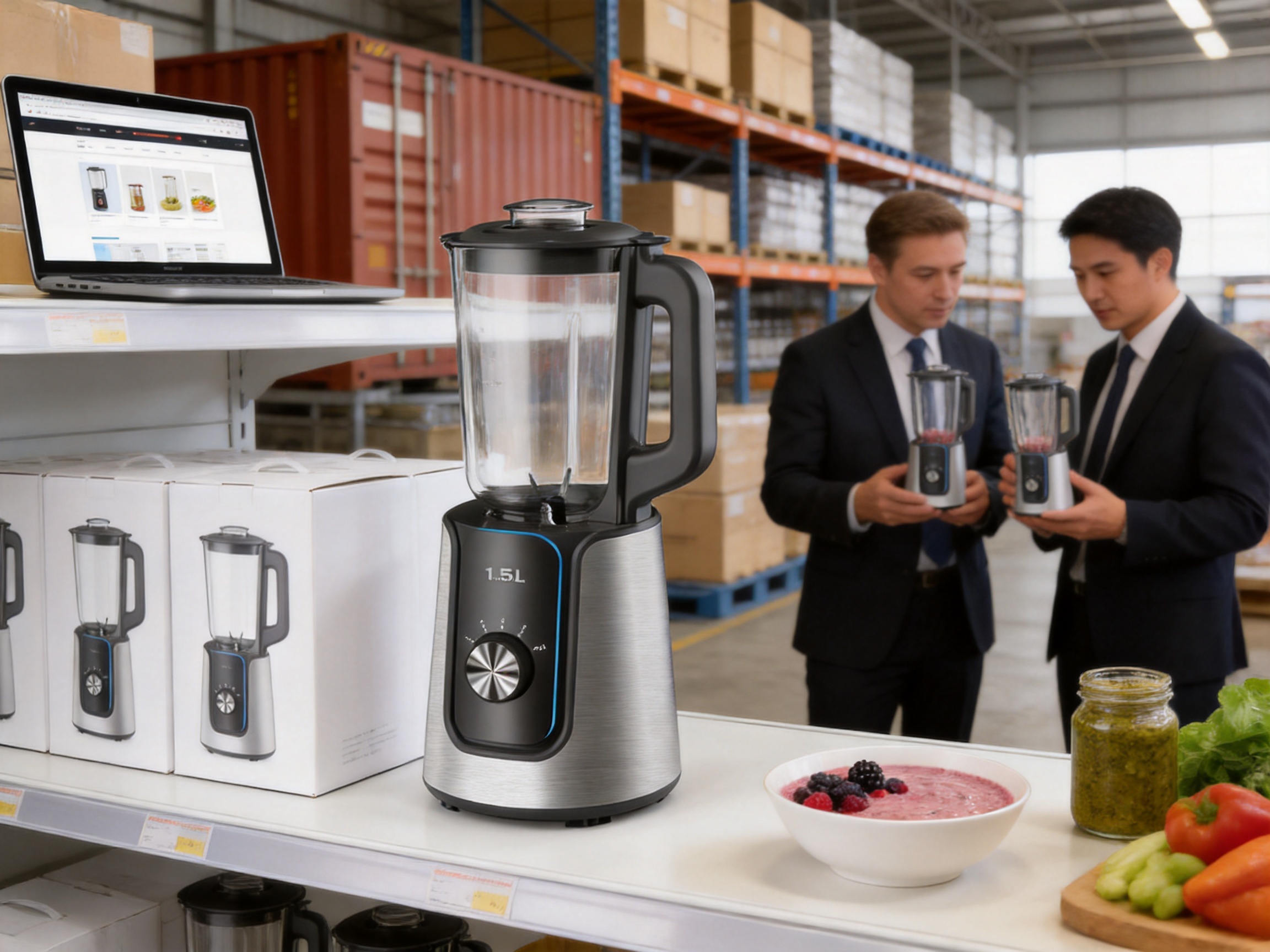
Supplier Reliability and International Business Experience
The company behind the GSE011 has experience supplying products to global markets and has worked with major retail-style channels. Its history includes products sold through famous supermarkets and wholesale retailers, including internationally recognized retail formats. This experience matters because large retail customers often require consistent quality, packaging discipline, delivery coordination, and responsive communication.
The company’s business philosophy emphasizes high-quality innovative products, competitive pricing, quick delivery, and after-sales service. These factors are especially important in the blender category because competition is strong and buyers need more than a low unit price. They need stable cooperation, predictable production, and support when market requirements change.
International buyers also benefit from a supplier that understands export documentation, certification expectations, packaging requirements, and private-label communication. The GSE011’s specification and compliance profile show that it is not an isolated local-market appliance but a model prepared for international trade.
Price-to-Value Positioning
In appliance sourcing, the lowest price is not always the best value. A cheaper blender may lack certification support, use weaker materials, have lower power, ship with inefficient packaging, or create after-sales problems. The GSE011 is best understood as a value-focused product: it combines a strong power rating, practical capacity, broad compliance references, and professional manufacturing support.
This price-to-value balance helps buyers compete in retail markets without sacrificing reliability. The product can be positioned as a strong household blender rather than an ultra-basic appliance. It gives sellers enough technical and quality advantages to justify consumer interest while still benefiting from mass-production efficiency.
For private-label customers, this balance is especially useful. A brand does not want to build its reputation on a product that only wins by being cheap. It needs reliable performance, acceptable aesthetics, compliance support, and repeatable production. The GSE011 provides a strong platform for this type of brand-building.
Comparison With Common Competitor Weaknesses
Many ordinary blender models on the market suffer from one or more weaknesses. Some have insufficient motor power, which limits blending performance and makes them less attractive to consumers seeking versatility. Some use small jars that require repeated batches. Some lack recognized certifications, creating compliance challenges. Others have inconsistent production quality, poor packaging strength, or weak supplier communication.
The GSE011 addresses these concerns through its 1000W motor, 1.5L capacity, certification support, defined packing data, and experienced manufacturing background. These strengths do not simply improve product performance; they reduce business risk for buyers. A distributor can purchase with clearer expectations, a retailer can promote with stronger product claims, and a private-label brand can build a more credible appliance line.
Another competitor weakness is limited factory development capability. Some suppliers only copy existing market designs and cannot support meaningful customization or continuous improvement. The company behind the GSE011 has a background in product design and development, supported by engineers and manufacturing facilities. This gives buyers better opportunities for cooperation beyond simple spot purchasing.
Recommended Buyer Profiles
The GSE011 1.5L Blender is suitable for several buyer groups. Appliance importers can use it as a standard blender model for regional distribution. Retail chains can add it to their kitchen appliance category as a practical mid-range product. E-commerce sellers can use its specifications to build strong online product listings. Private-label brands can customize presentation and packaging while relying on a proven product foundation.
Promotional buyers may also find the model useful because blenders are popular gift and seasonal products. The 1000W power rating gives the product a stronger promotional message than many low-power alternatives. Household goods distributors can bundle it with other small appliances or kitchenware products.
The MOQ of 1000 pieces is appropriate for buyers with serious market plans. It supports production efficiency while allowing distributors to test or expand a product line without requiring excessively high initial volume compared with some large-scale appliance programs.
Practical Selling Points for Retail and Online Listings
Retailers and online sellers can highlight the GSE011 through clear consumer benefits. The 1000W motor can be described as suitable for efficient everyday blending. The 1.5L capacity can be promoted for family drinks and multiple servings. The material combination can be presented as durable and practical for kitchen use. Certification references can be included where appropriate according to market rules and approved documentation.
Marketing language should focus on real user needs: faster preparation, smoother recipes, convenient family capacity, kitchen-friendly design, and dependable manufacturing. Strong listings should also include accurate product images, clear operating instructions, safety reminders, and cleaning guidance. Buyers should avoid exaggerated claims and instead emphasize the product’s genuine specification advantages.
For supermarket packaging, the front panel can focus on power and capacity. Side panels can explain common uses such as smoothies, shakes, sauces, and dips. Instruction manuals can include safe operation notes, recommended blending quantities, cleaning steps, and maintenance guidance.
After-Sales Considerations
After-sales performance is a key concern in the appliance category. Even a well-designed blender must be supported by clear instructions, safe packaging, reliable components, and responsive supplier communication. The manufacturer’s stated commitment to high-quality after service is important for buyers who need long-term cooperation.
Common after-sales concerns for blenders include motor issues, jar damage during transport, switch problems, user misuse, missing accessories, and unclear instructions. Many of these risks can be reduced through proper packaging, quality inspection, user manual clarity, and spare-parts planning where applicable.
Professional buyers should discuss after-sales expectations before ordering. Topics may include warranty terms, spare parts, packaging drop-test requirements, instruction manual language, plug and voltage requirements, and inspection standards. The GSE011’s established product data makes these discussions easier because the base specification is already clear.
Manufacturing Scale and Delivery Confidence
Production scale matters when buyers need consistent supply. The company’s factory area, worker base, engineering team, and QC team contribute to its ability to handle mass production. With more than 200 experienced workers and a dedicated production facility, the supplier can support larger orders and repeat cooperation.
Delivery confidence is also linked to experience. A manufacturer that has supplied international markets understands the importance of production scheduling, carton marking, container loading, inspection timing, and shipping coordination. For retail buyers, late delivery can damage seasonal sales plans. For e-commerce sellers, inventory shortages can reduce ranking and sales momentum. For distributors, inconsistent supply can weaken customer relationships.
The GSE011’s clear container-loading data and MOQ make it easier to build procurement schedules. Buyers can plan trial orders, expansion orders, and seasonal replenishment according to expected market demand.
Sustainability and Compliance Awareness
Environmental and safety expectations are increasingly important in the appliance market. RoHS compliance is particularly relevant for electrical products because it addresses restricted hazardous substances. Food-contact compliance references such as LFGB and FDA are important because the blender directly handles ingredients.
While sustainability is a broad topic that includes materials, energy use, packaging, repairability, and responsible manufacturing, compliance awareness is a necessary foundation. Buyers increasingly prefer suppliers that can provide documentation and understand regulated-market expectations. The GSE011’s certification profile strengthens its appeal in this context.
Packaging optimization also contributes to practical sustainability by improving shipping efficiency. Better carton loading can reduce wasted space and improve freight economics. Durable product construction may also reduce early replacement and product returns.
Q&A Section
What is the main capacity of the GSE011 Blender?
The GSE011 Blender has a 1.5-liter capacity. This size is suitable for family use, multiple beverage servings, sauces, smoothies, shakes, and many daily kitchen blending tasks.
How powerful is the blender?
The blender is rated at 1000W. This gives it a stronger performance profile than many basic household blenders and helps support efficient blending for common ingredients and recipes.
What materials are used in the product?
The blender uses ABS, PP, and AS materials. These materials support a practical combination of housing strength, kitchen usability, and transparent component design.
Which certifications are associated with the product?
The GSE011 is listed with CE, GS, CB, ETL, RoHS, LFGB, and FDA certifications or compliance references. These support international market readiness and buyer confidence.
Who is the product suitable for?
The product is suitable for household users, appliance distributors, supermarket buyers, online sellers, private-label brands, hospitality suppliers, and importers seeking a practical small electric kitchen appliance.
What makes it competitive compared with ordinary blenders?
Its key advantages include a 1000W motor, 1.5L capacity, practical material selection, broad certification profile, efficient carton packing, and support from an experienced small-appliance manufacturer.
What is the minimum order quantity?
The MOQ is 1000 pieces, making it suitable for wholesale procurement, private-label projects, retail programs, and regional distribution planning.
How many pieces can be loaded in containers?
Approximate loading quantities are 1866 pieces in a 20 ft container, 3866 pieces in a 40 ft container, and 4533 pieces in a 40 ft HQ container.
Why is the manufacturer’s background important?
The manufacturer’s experience in small kitchen appliances, R&D, quality control, export production, and retail-oriented product development helps support stable product quality and long-term supply cooperation.
Can the blender be used for private-label business?
Yes. The product’s specification structure, certification support, and wholesale packing data make it suitable for private-label appliance programs, subject to buyer requirements and production confirmation.
Conclusion: A Strong Blender Choice for Competitive Kitchen Appliance Programs
The GSE011 1.5L Blender is a well-positioned appliance for buyers seeking a practical, powerful, and export-ready blending product. Its 1000W motor gives it a strong performance identity, while the 1.5-liter capacity makes it suitable for everyday family and light hospitality use. The ABS, PP, and AS material combination supports a durable and kitchen-friendly structure, and the certification profile strengthens its suitability for international markets.
Beyond the product itself, the manufacturing strength behind the blender adds significant commercial value. CIXI GSTAR ELECTRIC APPLIANCE CO., LTD. brings experience in small electric kitchen appliance design, development, production, quality control, and global supply. Its engineering and QC resources, production scale, and export-oriented business philosophy help reduce risk for importers, distributors, retailers, and private-label buyers.
In a market crowded with low-power and low-certification alternatives, the GSE011 offers a balanced advantage: stronger performance, practical capacity, compliance readiness, clear logistics data, and supplier reliability. For businesses building a kitchen appliance category or expanding a blender product line, it represents a competitive option with broad market potential.
References
1. International Electrotechnical Commission. Safety Standards and Testing Principles for Household Electrical Appliances.
2. European Committee for Electrotechnical Standardization. General Safety Requirements for Domestic Kitchen Appliances.
3. U.S. Food and Drug Administration. Food-Contact Material Guidance for Consumer Products.
4. German Food and Feed Code Guidance. LFGB Principles for Food-Contact Articles.
5. Restriction of Hazardous Substances Directive. Compliance Principles for Electrical and Electronic Equipment.
6. Industry Practice Guide for Small Kitchen Appliance Manufacturing, Quality Control, and Export Packaging.
7. Product specification data supplied for item GSE011 1.5L Blender.