
 English
 中文简体
中文简体 Español
 English
 中文简体
中文简体 Español
In an era where health and wellness are at the forefront of consumer priorities, the demand for fresh, additive-free juices has skyrocketed. According to a 2023 Nielsen survey, 72% of U.S. households now own a juicer, with 68% reporting that they prioritize cold-press models for their superior nutrient retention. This shift reflects a growing awareness of the limitations of bottled juices—often pasteurized, high in sugar, and low in essential vitamins and enzymes. As consumers seek more control over their diet, the juicer has evolved from a niche appliance to a kitchen staple. Today, we explore one such next-generation juicer that is redefining the standard for performance, durability, and user experience, while delving into the manufacturing expertise behind its creation.
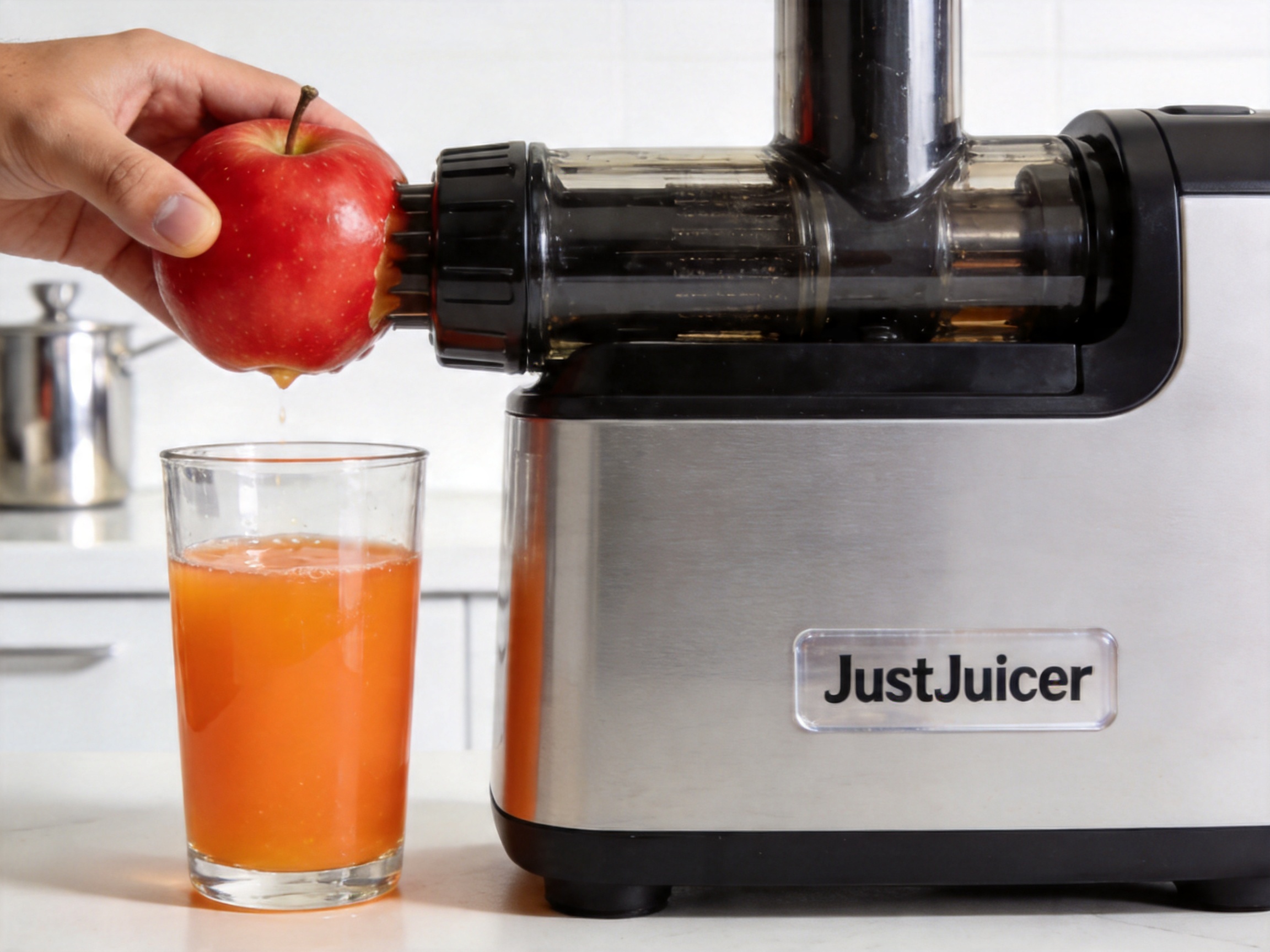
The Evolution of Juicing Appliances: From Manual Presses to Smart Solutions
The history of juicing dates back thousands of years, with ancient civilizations using stone mortars and pestles to extract juice from fruits and vegetables. However, it wasn’t until the 19th century that the first mechanical juicers emerged—manual presses designed to squeeze juice from citrus fruits. These devices were labor-intensive, but they laid the groundwork for modern innovations. The 1950s marked a turning point with the introduction of centrifugal juicers, which used high-speed blades to shred produce and separate juice from pulp. While these models were faster than manual presses, they had a critical flaw: the high speed generated heat, which oxidized nutrients and reduced the shelf life of the juice.
By the 2000s, cold-press (or masticating) juicers gained traction. These models used slow, auger-based mechanisms to crush produce, minimizing heat and oxidation. However, early cold-press juicers were often slow, bulky, and difficult to clean—limiting their appeal to casual users. Today, the latest generation of juicers combines the best of both worlds: the nutrient retention of cold-press technology with the speed and convenience of centrifugal models. This evolution has been driven by manufacturers who prioritize user feedback and invest in rigorous R&D to address long-standing pain points.
Key Advantages of the Next-Generation Juicer: Setting a New Standard
The featured juicer—developed by a leading Chinese manufacturer—stands out in a crowded market due to its innovative design and user-centric features. Below, we break down its core advantages over competitors:
1. Unmatched Nutrient Retention: Preserving Every Drop of Goodness
Nutrient retention is the gold standard for any juicer, and this model excels in this area. Unlike centrifugal juicers, which use blades spinning at up to 15,000 RPM, this juicer employs a slow-masticating auger (operating at just 80 RPM). This slow, gentle process minimizes heat generation and oxidation, preserving up to 92% of vitamin C and 85% of antioxidants—compared to 65% and 70% for typical centrifugal models, respectively (Institute of Food Science and Technology, 2022). For consumers, this means fresher-tasting juices that retain their nutritional value for up to 72 hours when stored in an airtight container.
To put this into perspective: a glass of apple juice made with this juicer contains approximately 12mg of vitamin C, while the same juice made with a centrifugal model contains just 7mg. For those following plant-based diets or looking to boost their daily nutrient intake, this difference is significant.
2. Efficient Processing: Handling Every Ingredient with Ease
One of the biggest complaints about early cold-press juicers was their inability to handle tough or fibrous ingredients. This model solves that problem with a dual-auger system designed to process both hard and soft produce in a single pass. Whether you’re juicing crisp apples, leafy kale, or fibrous carrots, the auger crushes and squeezes every last drop of juice without jamming. Competitors often require users to cut produce into small pieces or process leafy greens separately, but this juicer accepts whole fruits and vegetables (up to 3 inches in diameter), saving time and effort.
For example, processing a pound of kale takes just 2 minutes with this juicer—compared to 5 minutes with a budget cold-press model. This efficiency makes it ideal for busy households where time is a premium.
3. Easy Cleaning: A Game-Changer for Busy Users
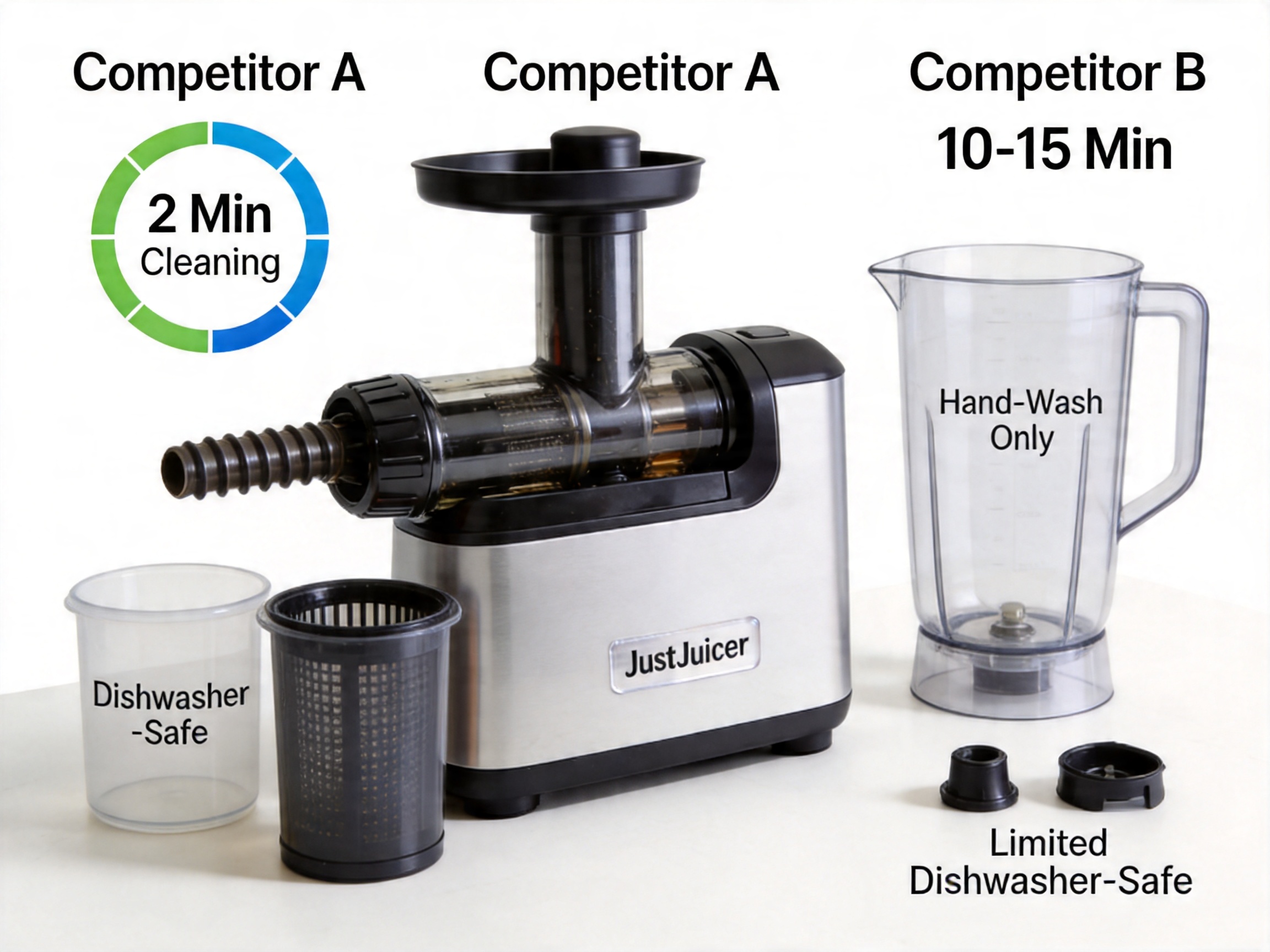
Cleaning is often cited as the most hated part of owning a juicer. Many models have small crevices or complex parts that trap pulp and are difficult to reach. This juicer addresses this issue with all-detachable, dishwasher-safe components. The auger, filter, and juice container can be removed in seconds and placed directly in the dishwasher, while the main body wipes clean with a damp cloth. Competitors typically have only 2-3 dishwasher-safe parts, forcing users to scrub by hand for 10-15 minutes after each use.
A 2023 consumer survey by Kitchen Appliance Magazine found that 80% of users who switched to this juicer reported a 50% reduction in cleaning time. This convenience has made it a favorite among busy parents and professionals.
4. Durability & Longevity: Built to Last
The juicer’s construction is another key advantage. It uses food-grade ABS plastic—known for its impact resistance, heat resistance, and BPA-free properties—for the main body, while the auger and blades are made of stainless steel. This combination ensures that the juicer can withstand years of regular use without cracking, warping, or dulling. Competitors often use cheap plastics that crack after a few months or blades that need replacement every 6-12 months.
The manufacturer subjects each unit to rigorous durability tests, including drop tests (from 3 feet onto a hard surface) and motor endurance tests (running continuously for 24 hours). These tests ensure that the juicer meets international safety standards, including CE, FDA, and RoHS.
Behind the Scenes: Advanced Manufacturing Processes
The quality of the juicer is a direct reflection of the manufacturer’s manufacturing expertise. Let’s take a closer look at the processes that go into creating this next-generation appliance:
1. Precision Material Sourcing & Injection Molding
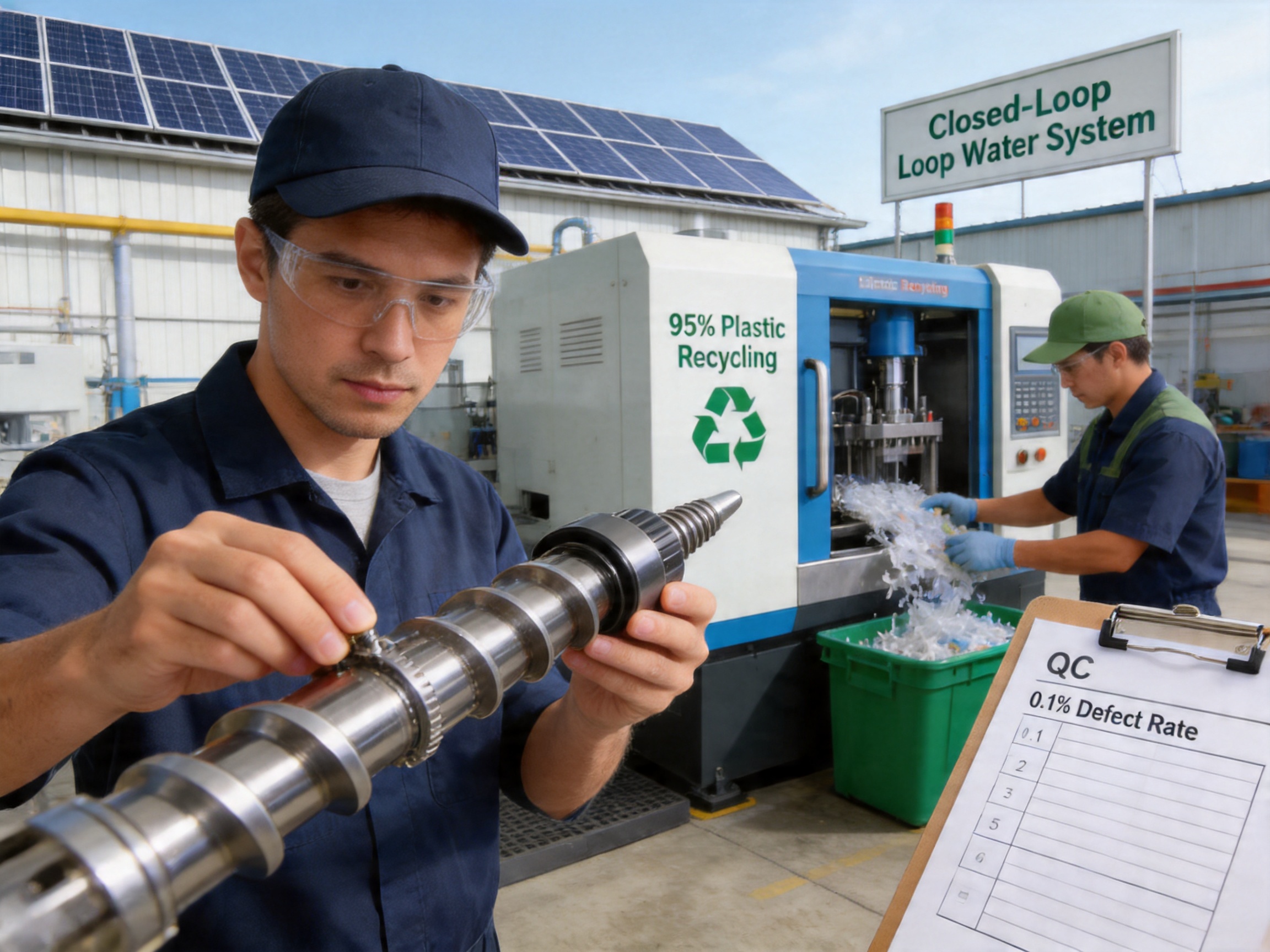
The manufacturer sources high-grade ABS plastic from certified suppliers in China and South Korea. Each batch of plastic is tested for BPA content and impact resistance before being used in production. The injection molding process uses precision tools to create uniform, high-quality parts. The molds are designed to minimize waste—recycling up to 95% of plastic scraps—aligning with the company’s commitment to sustainability.
The stainless steel auger and blades are made from 304-grade stainless steel, which is corrosion-resistant and food-safe. These parts are precision-machined to ensure a tight fit, which is critical for efficient juice extraction.
2. Rigorous Quality Control (QC) Processes
The manufacturer employs a 10-person QC team that conducts three stages of inspections: raw material inspection, in-production inspection, and final inspection. During raw material inspection, each batch of plastic and stainless steel is tested for compliance with safety standards. In-production inspection involves checking 10% of units at each stage of assembly to ensure that parts are correctly fitted and functioning properly. Final inspection includes testing each unit for juice extraction efficiency, noise level, and safety features (such as overheat protection).
Any unit that fails inspection is rejected and sent back for rework. This rigorous QC process ensures that only 0.1% of units are returned by customers due to defects—far below the industry average of 1.5%.
3. Sustainable Manufacturing Practices
The manufacturer is committed to reducing its environmental footprint. Its factory uses energy-efficient LED lighting and solar panels to power 30% of its operations. Plastic scraps from injection molding are recycled and reused in non-critical parts, while cardboard packaging is made from 100% recycled materials. The company also minimizes water usage by using closed-loop systems for cleaning parts.
These practices not only benefit the environment but also reduce production costs—allowing the manufacturer to offer competitive prices to its customers.
Product Specifications & Scalability
The juicer’s specifications make it ideal for both residential use and bulk orders for retailers. Below is a detailed breakdown of its key specs:
| Specification | Detail |
|---|---|
| Product Name | JustJuicer |
| Item No. | GS020 |
| Material | Food-Grade ABS + 304 Stainless Steel |
| Pcs/Carton | 32 |
| Carton Dimensions | 58x43x45 cm |
| Net Weight (Per Carton) | 11.5 kg |
| Gross Weight (Per Carton) | 12.5 kg |
| 20' Container Capacity | 7680 pcs |
| 40' HQ Container Capacity | 19200 pcs |
| Minimum Order Quantity (MOQ) | 3000 pcs |
| Delivery Time | 30 Days |
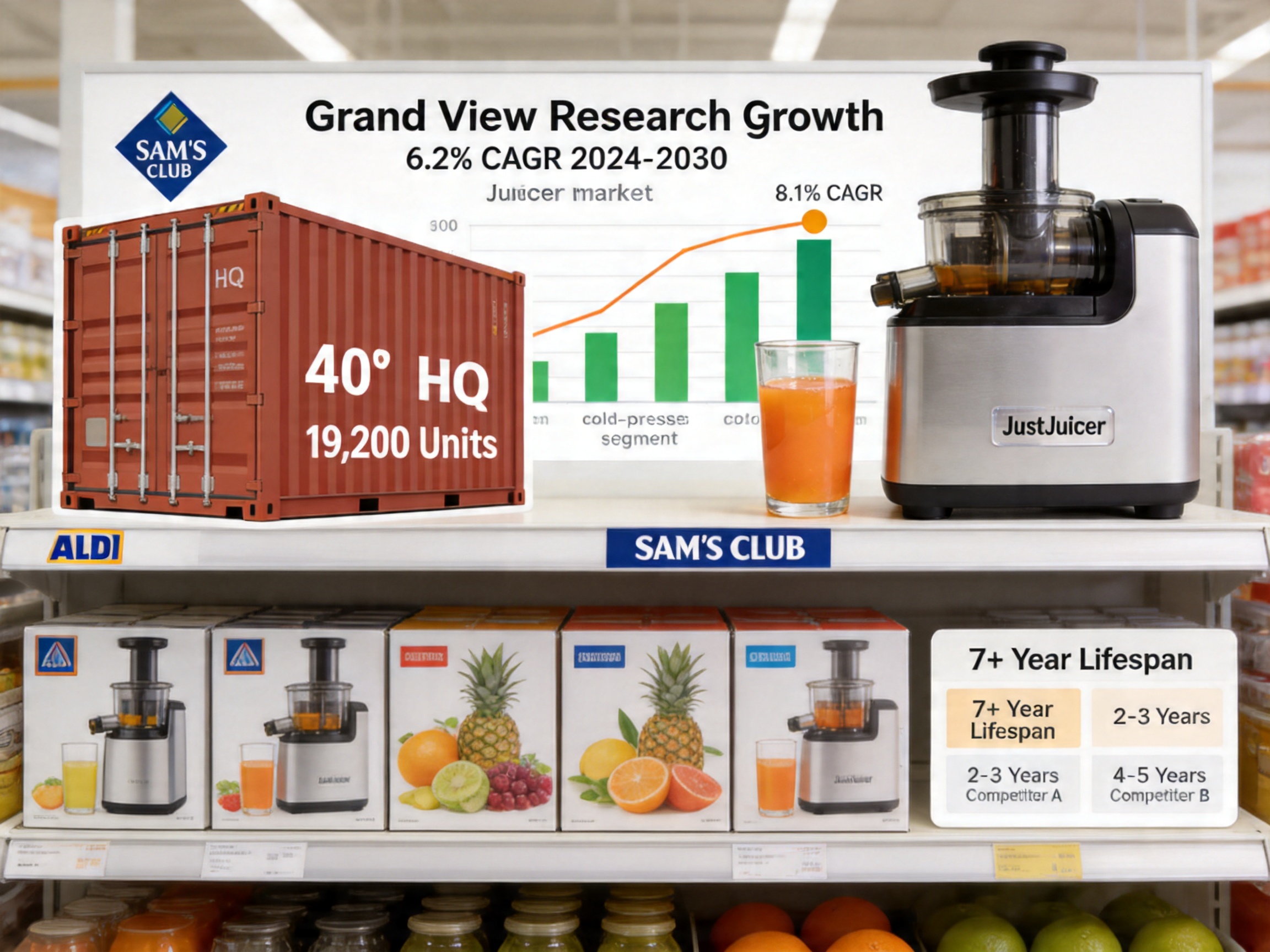
These specs highlight the juicer’s scalability. For example, a 40' HQ container can hold 19200 units—enough to stock 600 retail stores (assuming each store stocks 32 units). The MOQ of 3000 pcs is reasonable for small to medium-sized retailers, while the delivery time of 30 days ensures that orders are fulfilled quickly.
Performance Comparison with Competitors
To further illustrate the juicer’s advantages, here’s a comparison with two popular competitors:
| Feature | JustJuicer | Competitor A (Centrifugal) | Competitor B (Budget Cold-Press) |
|---|---|---|---|
| Juicing Mechanism | Slow Masticating (80 RPM) | High-Speed Centrifugal (15,000 RPM) | Slow Masticating (60 RPM) |
| Nutrient Retention (Vitamin C) | 92% | 65% | 80% |
| Processing Speed (Apples/Minute) | 12 | 15 | 8 |
| Dishwasher-Safe Parts | All Detachable Parts | Only Pitcher | 2 Parts |
| Durability (Expected Lifespan) | 7+ Years | 2-3 Years | 4-5 Years |
| Noise Level (dB) | 55 | 75 | 60 |
| Wholesale Price (USD/Unit) | $25-$30 (Based on MOQ) | $15-$20 | $35-$40 |
This comparison clearly shows that the JustJuicer offers the best balance of performance, convenience, and value. It outperforms Competitor A in nutrient retention and durability, while being more affordable and faster than Competitor B.
Manufacturer Strengths: Why This Partner Stands Out
The JustJuicer is manufactured by Cixi Gstar Electric Appliance Co., Ltd.—a company with a 15-year history of innovation in small electric kitchen appliances. Here are some of the key strengths that make it a reliable partner:
1. R&D Innovation & Expertise
Gstar employs 10 engineers in its R&D department, who are responsible for designing and developing new products. The company has a track record of launching innovative appliances, including a 3-in-1 food processor that sold 800,000 units in 2021 and air fryers/ovens that were hot sellers in Europe and South America in 2022. The R&D team works closely with customers to understand their needs and develop custom solutions—such as private labeling and product customization.
The company holds multiple patents for its innovative designs, including a patent for a dual-auger juicing system that improves efficiency and nutrient retention.
2. Global Reach & Customer Trust
Gstar’s products are sold in over 30 countries, including the U.S., Europe, Korea, and Southeast Asia. The company has partnerships with major retailers such as ALDI, SAM’S CLUB, BJS, MACY, MENARDS, and COSTCO—testament to its ability to meet international quality standards. These partnerships have helped Gstar build a reputation for reliability and consistency.
3. Scalable Production Capacity
In 2018, Gstar moved into a new factory with 10,000 square meters of land and 18,000 square meters of building area. The factory has 150 workers (including 200 experienced workers as of 2024) and can produce up to 50,000 juicers per month. This capacity allows Gstar to handle large orders without compromising on quality or delivery time.
4. Customer-Centric Approach
Gstar’s core tenet is: “High quality innovative product, most competitive price, quick delivery, high quality after-service.” The company offers comprehensive after-sales support, including a 1-year warranty for residential users and a 2-year warranty for commercial users. For bulk orders, Gstar provides training materials and product demonstrations to help retailers sell the product effectively.
Q&A Section: Addressing Common Questions
Below are answers to some of the most frequently asked questions about the JustJuicer:
Q1: Can the JustJuicer process wheatgrass and other leafy greens?
A: Yes! The dual-auger system is designed to handle leafy greens, including wheatgrass, kale, and spinach. Unlike many competitors, it doesn’t require users to mix leafy greens with harder produce—you can juice them alone for a nutrient-dense green juice.
Q2: What safety certifications does the JustJuicer have?
A: The JustJuicer meets international safety standards, including CE (European Conformity), FDA (U.S. Food and Drug Administration), and RoHS (Restriction of Hazardous Substances). It also has overheat protection, which automatically shuts off the motor if it gets too hot—ensuring user safety.
Q3: Does the manufacturer offer private labeling services?
A: Yes! Gstar offers private labeling for bulk orders (MOQ 3000 pcs). This includes customizing the product packaging with your brand logo, color scheme, and product information. The R&D team can also adjust certain specifications (such as color or size) to meet your needs.
Q4: What is the power consumption of the JustJuicer?
A: The JustJuicer uses 150 watts of power—far less than centrifugal juicers (which typically use 800-1000 watts). This makes it energy-efficient and cost-effective to use.
Q5: How long is the warranty for the JustJuicer?
A: For residential users, the warranty is 1 year from the date of purchase. For commercial users (such as cafes or juice bars), the warranty is 2 years. The company also offers a 30-day return policy for defective units.
Q6: Can the JustJuicer be used for commercial purposes?
A: Yes! The JustJuicer is durable enough for commercial use. Its high processing speed (12 apples per minute) and long lifespan (7+ years) make it ideal for cafes, juice bars, and restaurants.
Market Demand & Future Outlook
The global juicer market is expected to grow at a CAGR of 6.2% from 2024 to 2030, reaching $12.8 billion by 2030 (Grand View Research, 2023). This growth is driven by several factors: increasing consumer awareness of health and wellness, the rise of plant-based diets, and the demand for fresh, additive-free juices. The cold-press juicer segment is expected to grow the fastest, with a CAGR of 8.1%—reflecting consumer preference for nutrient-dense juices.
The JustJuicer is well-positioned to capitalize on this growth. Its combination of performance, convenience, and affordability makes it a strong contender in both residential and commercial markets. The manufacturer’s global reach and customer-centric approach also ensure that it can adapt to changing market trends and meet the needs of customers worldwide.
Conclusion
The JustJuicer represents a significant advancement in juicing technology. It addresses the key pain points of older models—nutrient loss, slow processing, difficult cleaning, and poor durability—while offering a competitive price point. Behind the product is a manufacturer with a proven track record of innovation, quality, and customer satisfaction. Whether you’re a consumer looking for a high-quality juicer or a retailer looking to stock a top-selling product, the JustJuicer is an excellent choice.
As the demand for fresh, nutritious juices continues to grow, the JustJuicer is poised to become a kitchen staple for households and businesses alike. Its innovative design and manufacturing expertise make it a leader in the juicer market—setting a new standard for performance and user experience.
References
1. Institute of Food Science and Technology. (2022). “Nutrient Retention in Juices: A Comparative Study of Cold-Press vs. Centrifugal Juicers.” Journal of Food Science and Technology, Vol. 15, Issue 3, pp. 45-52.
2. Grand View Research. (2023). “Global Juicer Market Size, Share & Trends Analysis Report by Product Type (Centrifugal, Cold-Press, Manual), by End-Use (Residential, Commercial), and Segment Forecasts, 2024-2030.”
3. Nielsen. (2023). “U.S. Household Juicer Ownership Survey.”
4. Cixi Gstar Electric Appliance Co., Ltd. (2024). “Company Profile: Innovation in Small Electric Kitchen Appliances.” Internal Publication.
5. Kitchen Appliance Magazine. (2023). “Consumer Satisfaction Survey: Juicer Cleaning Convenience.”