
 English
 中文简体
中文简体 Español
 English
 中文简体
中文简体 Español
In today’s home appliance market, the air fryer has moved from being a novelty product to becoming an essential countertop cooking solution. Consumers want healthier meals, shorter cooking times, easier cleanup, and versatile appliances that can support daily cooking without taking over the kitchen. The stainless steel opaque touch screen control square texture white air fryer answers these needs with a practical 7-liter single-pot capacity, 1500W heating power, digital operation, and a clean modern appearance suitable for contemporary homes.
This product is designed for households that want the crisp texture of fried food with less oil, while also gaining the flexibility to bake, grill, roast, and reheat with consistent results. Its opaque exterior design, square-textured styling, and touch screen control panel make it visually refined and easy to operate. With a large internal cooking space, it is particularly suitable for families, shared apartments, small gatherings, and users who prefer to prepare larger portions in one cycle rather than cook in repeated batches.
The model is available as a digital air fryer and a digital air fryer without window, identified by item numbers GSE038-D and GSE038-1D. Both variations emphasize user-friendly control, generous capacity, reliable heating performance, and practical construction using PP, PA, ABS, and PC materials. The product is also supported by a broad certification portfolio, including CE, GS, CB, ETL, RoHS, LFGB, and FDA, reflecting its readiness for multiple international markets and buyer requirements.
Beyond its product-level features, this air fryer is backed by the manufacturing experience of CIXI GSTAR ELECTRIC APPLIANCE CO., LTD., a specialist in small electric kitchen appliances. The company designs, develops, and manufactures products including air fryers, air ovens, blenders, choppers, slicers, food processors, smokeless grills, hot pots, and other household and hospitality appliances. Its development history, engineering capability, quality control team, and production scale allow it to supply wholesale buyers, importers, retailers, and private-label partners with competitive, market-ready appliances.
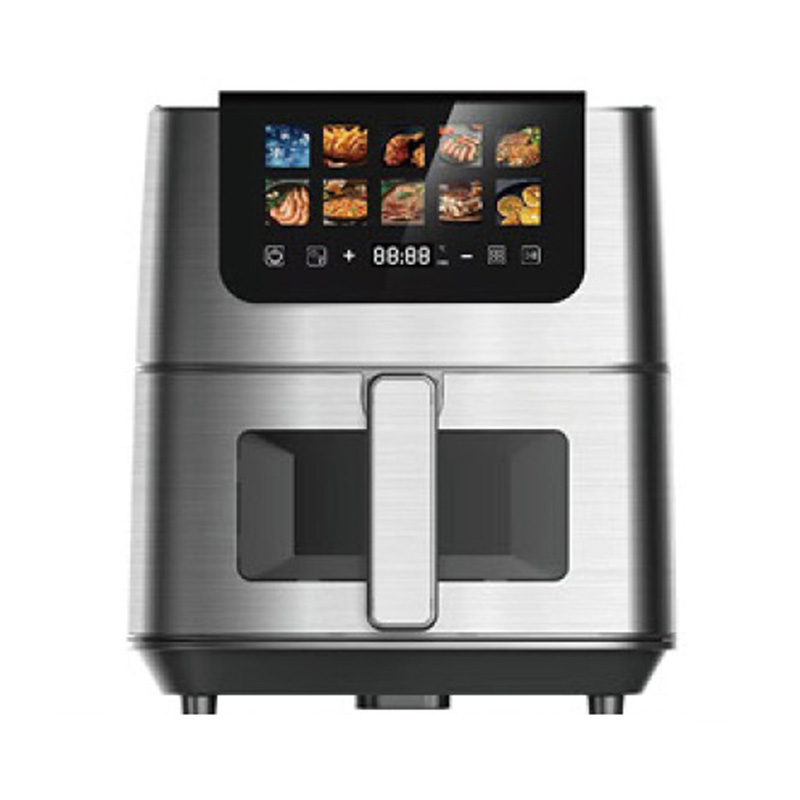
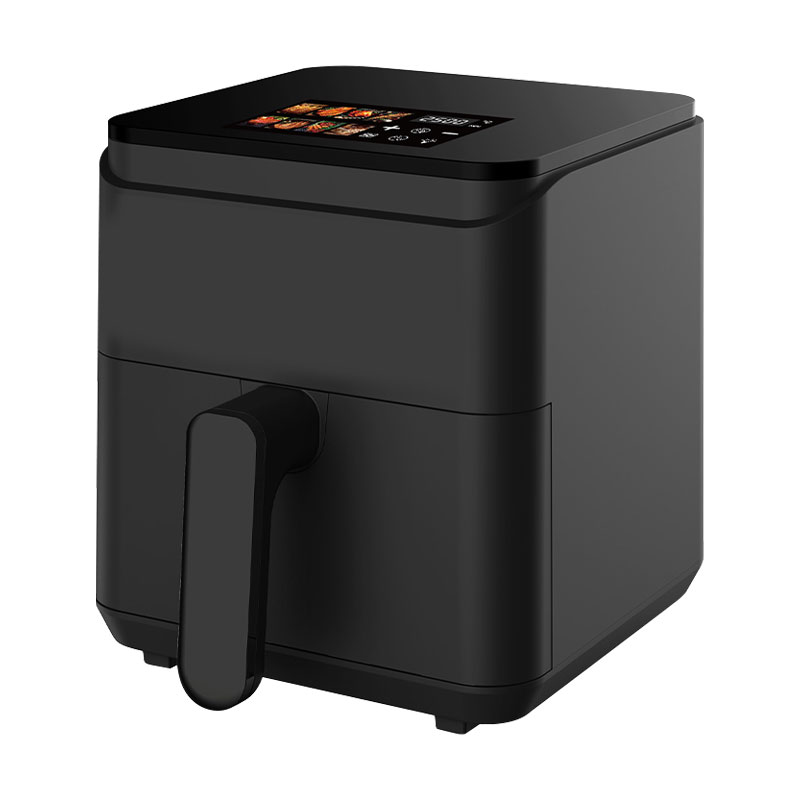
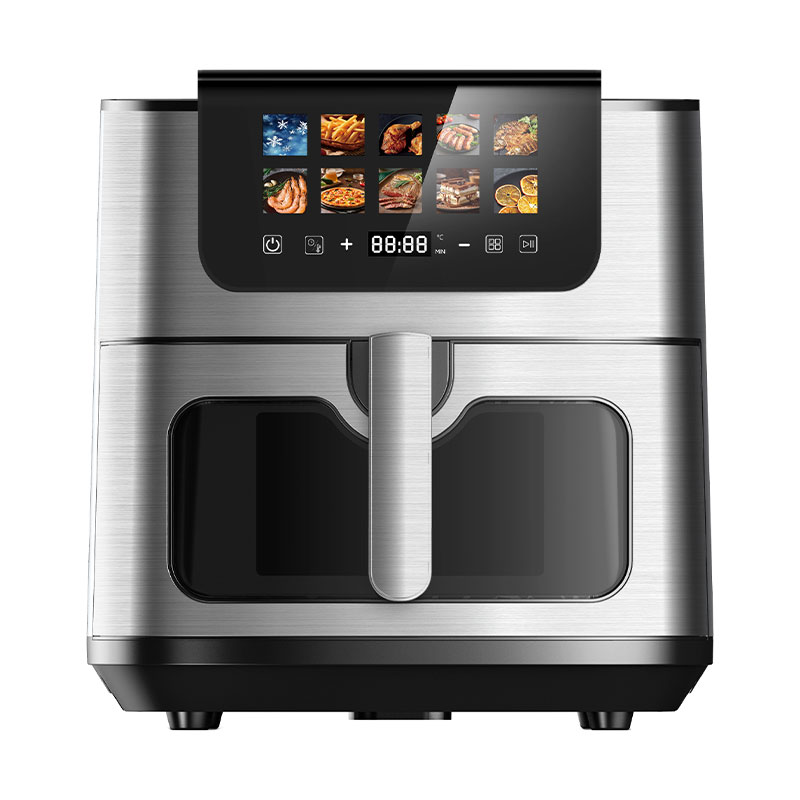
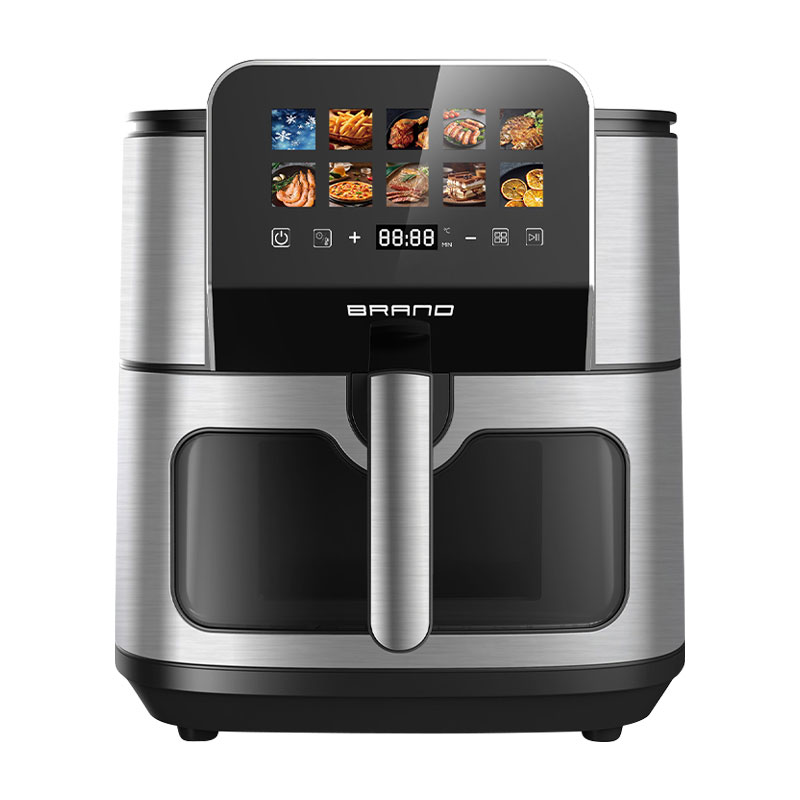
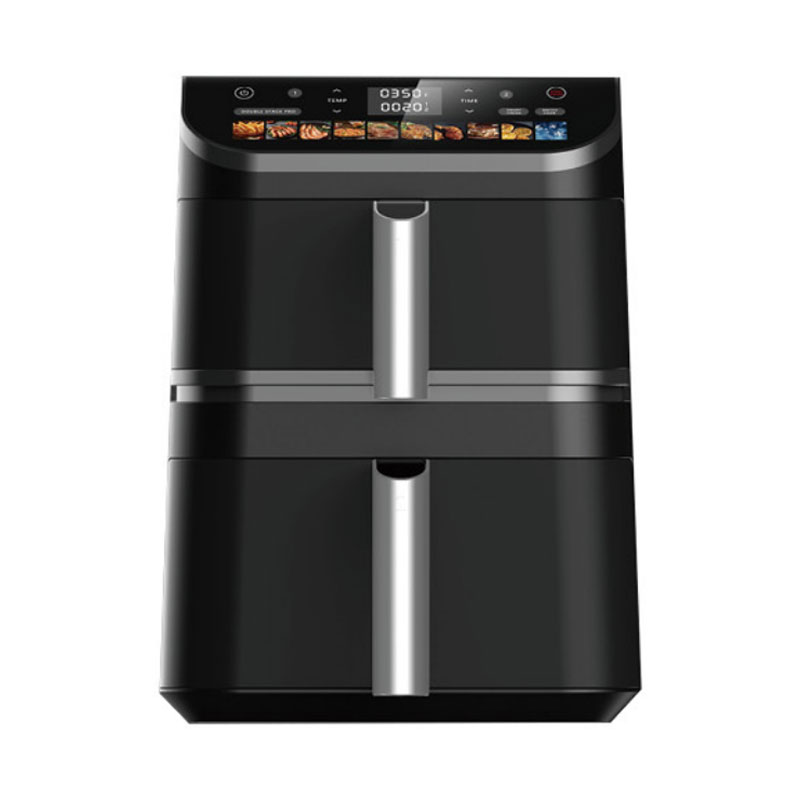
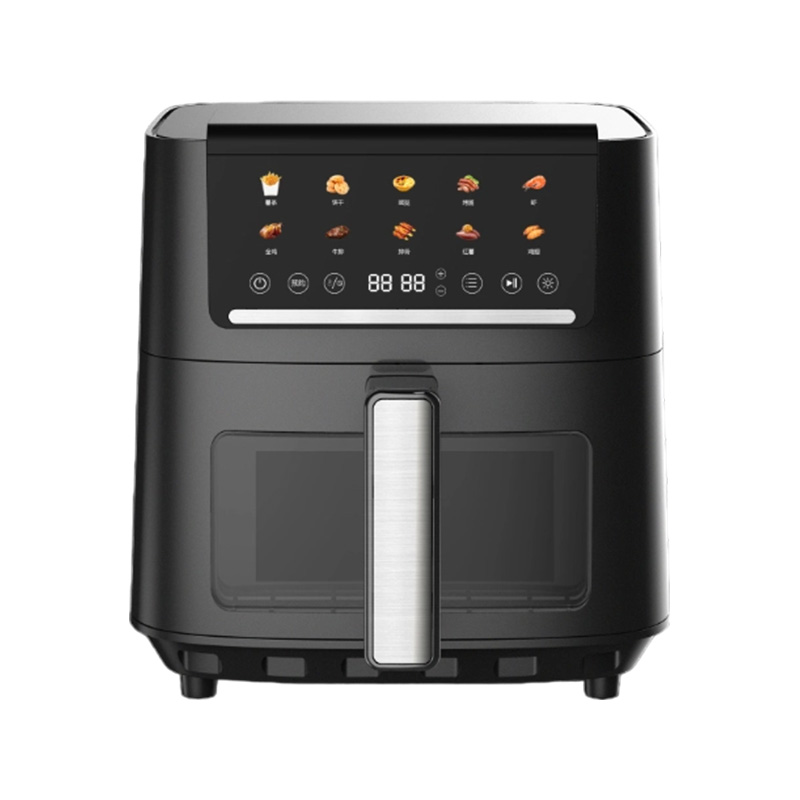
Stainless steel opaque touch screen control square texture white air fryer - (opaque)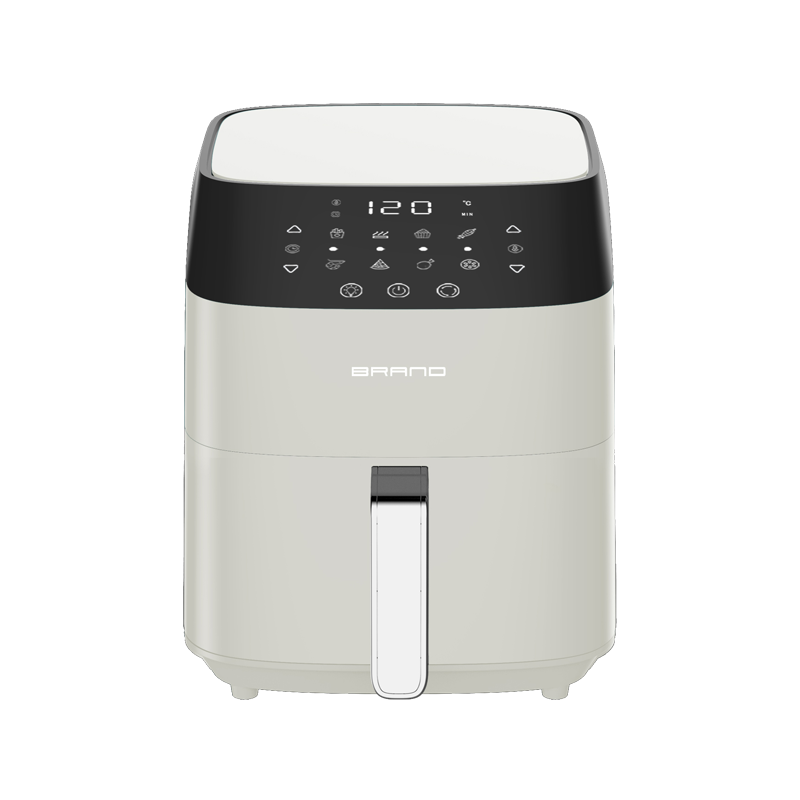
Product Overview: A Digital Air Fryer Built for Practical Everyday Cooking
The product’s core identity is simple: a large-capacity digital air fryer designed to make daily cooking healthier, easier, and more efficient. The 7-liter single-pot capacity gives the appliance a strong advantage over many compact air fryers that are limited to small servings. This size allows users to cook family portions of fries, chicken wings, vegetables, fish, meat, pastries, or frozen snacks without needing several separate cooking rounds.
Its 1500W power rating provides the heating strength required for fast air circulation and stable cooking performance. Air frying depends on high-temperature airflow moving around food quickly and evenly. A properly powered unit can reduce waiting time, improve crispness, and deliver better texture compared with weaker models that may struggle to brown food evenly. For consumers who use an air fryer several times per week, power and consistency become important indicators of real value.
The digital touch screen control is another defining feature. Compared with mechanical knob designs, touch controls offer a cleaner appearance and a more modern user experience. They are easier to wipe, less likely to collect dirt in gaps, and visually match the expectations of today’s kitchen appliance buyers. A digital interface also helps users set cooking time and temperature more precisely, which supports repeatable results for different recipes.
The opaque body design gives the product a refined and understated look. While windowed air fryers are popular with some users, an opaque model offers a more uniform exterior surface and can fit well into minimalist, modern, and clean kitchen styles. It is especially suitable for buyers who prefer a simple appliance appearance without visible internal cooking stains or condensation marks during use.
The square texture and white finish create an aesthetic that is both contemporary and approachable. White appliances are popular because they blend easily with light-colored kitchens, stainless steel fixtures, wooden countertops, and modern home environments. The stainless steel-related appearance and square texture add a sense of durability and structure, helping the appliance look more premium than basic plastic-bodied alternatives.
Key Technical Specifications
The following specification table summarizes the main technical and packaging information for the product. These details are important for distributors, retailers, e-commerce sellers, and import buyers who need to evaluate product positioning, logistics, compliance, and consumer suitability.
| Item Number | GSE038-D / GSE038-1D |
| Product Name | Air Fryer Digital / Air Fryer Digital Without Window |
| Material | PP + PA + ABS + PC |
| Rated Power | 1500W |
| Frequency | 50-60Hz |
| Capacity | 7L Single Pot |
| Product Size | L370 x W300 x H332 mm |
| Gift Box Size | L425 x W355 x H389 mm |
| Carton Size | L440 x W370 x H407 mm |
| Packing Quantity | 1 Piece per Carton |
| Gross Weight / Net Weight | 7.0 kg / 6.0 kg |
| Container Loading | 430 Pieces per 20ft Container; 1000 Pieces per 40HQ Container |
| Certifications | CE, GS, CB, ETL, RoHS, LFGB, FDA |
Large 7-Liter Capacity for Families and Gatherings
One of the strongest advantages of this air fryer is its 7-liter cooking capacity. Many entry-level air fryers are designed for one or two people and may offer only 2 to 4 liters of internal volume. While compact units save countertop space, they often limit meal planning. Users must cook food in batches, which increases total preparation time and may result in uneven meal timing. By contrast, a 7-liter single pot gives users more flexibility and efficiency.
For families, capacity is directly linked to convenience. A household preparing dinner for three to five people benefits from an appliance that can cook larger portions of protein, vegetables, or side dishes at once. For example, users can prepare a tray of chicken wings, a generous portion of fries, mixed roasted vegetables, or fish fillets without overcrowding the basket. Adequate space supports better airflow around food, helping it cook evenly and develop a crisp exterior.
Large capacity is also useful for social occasions. When guests visit, snacks and appetizers can be prepared quickly with less mess than deep frying. Frozen finger foods, roasted nuts, vegetable chips, potato wedges, and grilled meat pieces can be cooked efficiently. The appliance becomes not only a health-oriented product but also a party-support tool for casual entertaining.
The single-pot structure keeps operation simple. Some appliances with multiple baskets offer dual cooking zones, but they may require more complicated programming and cleaning. A large single pot is intuitive: users place the food inside, set the time and temperature, and allow the appliance to complete the process. This simplicity is valuable for older users, busy parents, students, and anyone who wants dependable cooking without unnecessary steps.
Multi-Function Cooking: Air Frying, Baking, Grilling, and Roasting
The modern kitchen values appliances that can perform several tasks. A countertop product must justify the space it occupies, and this air fryer does so by supporting multiple cooking functions. Its main role is air frying, but it can also be used for baking, grilling, and roasting. This versatility positions it as a compact alternative to several traditional cooking tools.
Air frying is the most recognized function. It uses rapid hot air circulation to create a crisp surface using much less oil than conventional deep frying. Users can enjoy fries, nuggets, wings, breaded fish, and other popular foods with reduced oil absorption. While results depend on ingredients and cooking method, the air fryer generally supports a healthier approach to dishes that are usually associated with heavy oil use.
Baking expands the product’s value. Small cakes, muffins, pastries, bread rolls, and reheated bakery items can be prepared or refreshed in the air fryer. Because it heats faster than a full-size oven, it is suitable for small-batch baking and everyday snacks. Users who do not want to preheat a large oven for a small portion can save time and energy by using the air fryer instead.
Grilling and roasting functions add savory possibilities. Vegetables can be roasted until tender and browned, chicken pieces can be cooked with a crisp outer layer, and meat can be prepared with less splatter than stovetop frying. The enclosed cooking chamber helps contain grease and odors more effectively than an open pan, while the removable pot supports easier cleanup after cooking.
For consumers comparing appliances, multifunctionality is a decisive factor. An air fryer that can only handle frozen snacks may be seen as limited. A model that can support daily meal preparation, reheating, baking, roasting, and quick grilling becomes a more important part of the kitchen routine. This broader usage improves perceived value and encourages repeat use after purchase.
Digital Touch Screen Control for a Modern User Experience
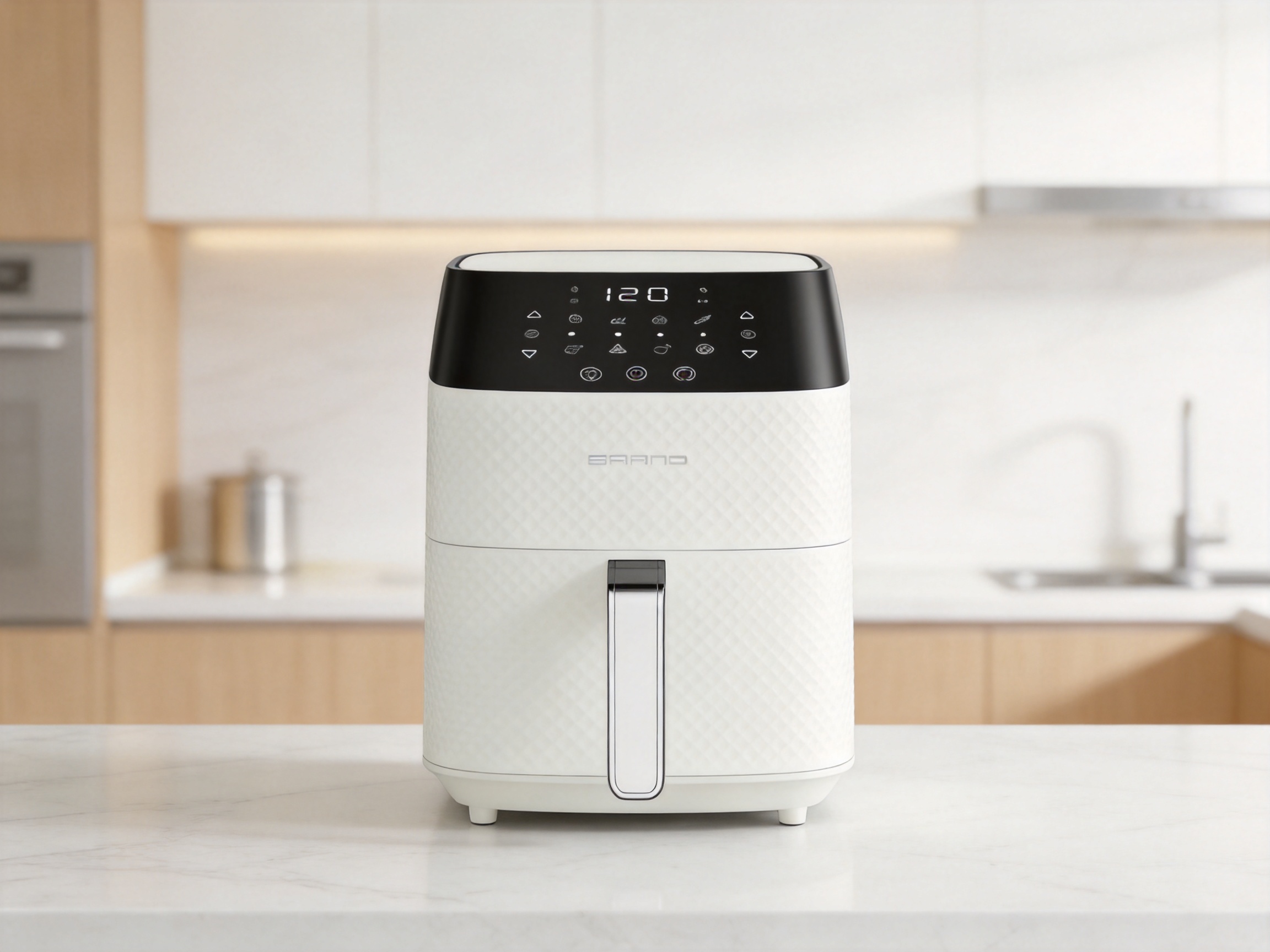
Control interface design has become an important part of appliance value. Consumers no longer judge products only by heating power and capacity; they also expect intuitive operation and easy maintenance. The touch screen control panel of this air fryer provides a clean, modern, and user-friendly interface that aligns with current market preferences.
Compared with traditional mechanical controls, a touch screen offers several practical advantages. First, it allows a flat control surface, which is easier to wipe after cooking. In kitchens, oil mist, flour, sauce, and fingerprints are common. Knobs and dial gaps can trap residue, while a smooth control area can be cleaned more quickly. Second, digital settings can provide more precise control over time and temperature, helping users repeat successful recipes.
The touch interface also improves the product’s visual appeal. Appliance buyers often make purchase decisions based on product photos, especially in e-commerce channels. A digital panel suggests modern technology and ease of use. It makes the appliance look more advanced than basic knob-operated models, supporting a higher perceived value and stronger shelf presence.
From a usability standpoint, digital control is especially helpful for households with multiple users. Once family members understand the interface, they can operate the appliance with consistent results. Parents can set clear cooking times for snacks, young adults can prepare simple meals, and experienced cooks can adjust settings for different ingredients. The product supports both convenience and control.
Opaque Design and White Square Texture: Aesthetic and Functional Appeal
The air fryer’s opaque appearance is more than a styling decision. It gives the appliance a clean, cohesive exterior that hides the visual mess sometimes seen through transparent cooking windows. During cooking, steam, condensation, oil droplets, and food residue may appear on transparent surfaces. Some users appreciate being able to see food cooking, but others prefer an appliance that looks neat throughout the cooking process. The opaque version serves that preference.
The white finish supports modern kitchen design trends. White appliances can make a countertop feel brighter and cleaner. They work well in kitchens that use marble, wood, stainless steel, ceramic tile, or minimalist cabinetry. For retailers, a white air fryer provides an alternative to the common black or dark gray models that dominate many product lines. This color differentiation can help attract consumers seeking a softer, more home-friendly appearance.
The square texture adds visual depth and a more structured feel. Texture can make an appliance appear less plain and more premium while also improving tactile impression. In a crowded market where many air fryers share similar silhouettes, surface design becomes a point of differentiation. A square-textured white body can stand out in online listings, showroom displays, and promotional materials.
The overall form factor is also practical. With product dimensions of L370 x W300 x H332 mm, the appliance offers large capacity without becoming excessively bulky. It provides a balance between internal cooking volume and countertop manageability. For families with limited kitchen space, this balance is important because an appliance that is too large may be stored away and used less often.
Material Selection for Durability and Food-Related Performance
The air fryer uses PP, PA, ABS, and PC materials, each contributing to appliance performance, structure, usability, or appearance. Material selection is a key part of product engineering because kitchen appliances must withstand heat, handling, repeated cleaning, and long-term consumer use. They must also comply with applicable safety and food-contact expectations in target markets.
PP, or polypropylene, is commonly used in household appliances because it offers good chemical resistance, manageable weight, and practical durability. In non-direct heating zones, it can provide stable structural performance. PA, or polyamide, is often valued for its mechanical strength and heat resistance in suitable applications. ABS contributes impact resistance and surface quality, helping exterior components maintain shape and appearance. PC, or polycarbonate, can support toughness and clarity where applicable in appliance components.
The combination of these materials allows the product to achieve a balance between strength, weight, cost efficiency, and manufacturability. For wholesale buyers, this balance matters because it affects product reliability, shipping practicality, and retail competitiveness. A product that is too heavy may increase logistics costs, while one that is too light or poorly structured may feel low quality. The 6.0 kg net weight and 7.0 kg gross weight indicate a solid product with appropriate packaging protection.
Good material engineering also supports user confidence. Handles, housings, panels, baskets, and internal support structures must remain reliable through repeated cooking cycles. Users expect the appliance to open and close smoothly, remain stable on the countertop, and resist normal kitchen wear. By selecting suitable materials and combining them with controlled manufacturing processes, the product can satisfy both performance and price expectations.
Performance Advantages Over Common Competing Air Fryers
The air fryer market is competitive, with products ranging from small budget models to premium multifunction ovens. This 7-liter digital air fryer occupies an attractive position by combining large capacity, digital control, modern styling, international certifications, and wholesale manufacturing support. These strengths create several advantages over common competing products.
First, the 7-liter capacity is larger than many basic air fryers. Smaller units may be adequate for single users, but they can frustrate families. Overcrowding food in a small basket reduces air circulation and produces uneven texture. This model’s larger cooking pot helps users prepare more food per cycle and improves the likelihood of consistent browning.
Second, the 1500W power rating supports strong heating performance. Some low-cost competitors reduce power to cut manufacturing cost, but lower power may slow cooking and reduce crispness. A 1500W appliance offers a practical level of energy for fast hot-air cooking while remaining suitable for household kitchens.
Third, the digital touch screen helps the appliance look and feel current. Mechanical controls are acceptable in budget categories, but modern buyers often associate digital panels with precision and premium value. This is especially important in online retail, where appearance and perceived technology influence purchase decisions.
Fourth, the opaque white textured design differentiates the product visually. Many air fryers use similar black plastic housings, making it difficult for consumers to distinguish one model from another. A white square-textured body can strengthen shelf visibility and create a more stylish home appliance identity.
Fifth, the certification portfolio supports international distribution. CE, GS, CB, ETL, RoHS, LFGB, and FDA are meaningful to different markets and product categories. Buyers who source appliances for Europe, North America, and other regions often require certification evidence before placing orders. A product with broad certification support can reduce sourcing risk and speed up market entry.
Finally, the manufacturer’s background in product design, development, and quality control adds value beyond the appliance itself. Buyers are not only purchasing a finished product; they are selecting a supply partner. A factory with engineering experience, production capacity, and quality management can provide more stable long-term cooperation than a supplier with limited technical resources.
Healthy Cooking Value: Less Oil, More Convenience
The popularity of air fryers is closely tied to health-conscious cooking. Many consumers enjoy fried foods but want to reduce oil intake and avoid the mess associated with deep frying. This air fryer helps address those concerns by cooking food through circulated hot air rather than submerging ingredients in oil.
Air frying does not mean every meal automatically becomes healthy, but it does create a practical pathway to reduce added fat in many dishes. Potato wedges, chicken pieces, vegetables, and frozen snacks can be prepared with minimal oil or a light spray. The result is often crisp on the outside and tender inside, satisfying the texture expectations associated with frying while reducing the amount of oil needed.
Convenience is equally important. Traditional deep frying requires a pot of hot oil, careful temperature control, splatter management, and disposal or storage of used oil. Cleaning can be unpleasant, and the smell may linger in the kitchen. An air fryer simplifies the process. Users place food in the pot, set the program or time and temperature, and remove the cooked food when complete. Cleanup is generally easier because there is no large volume of oil to handle.
The product also supports daily meal planning. Busy households can use it for breakfast items, lunch sides, dinner proteins, and evening snacks. Reheating leftovers in an air fryer can restore crispness better than a microwave, especially for pizza, pastries, fries, and breaded foods. This improves food enjoyment and reduces waste.
Manufacturing Strength: From Product Development to Mass Production
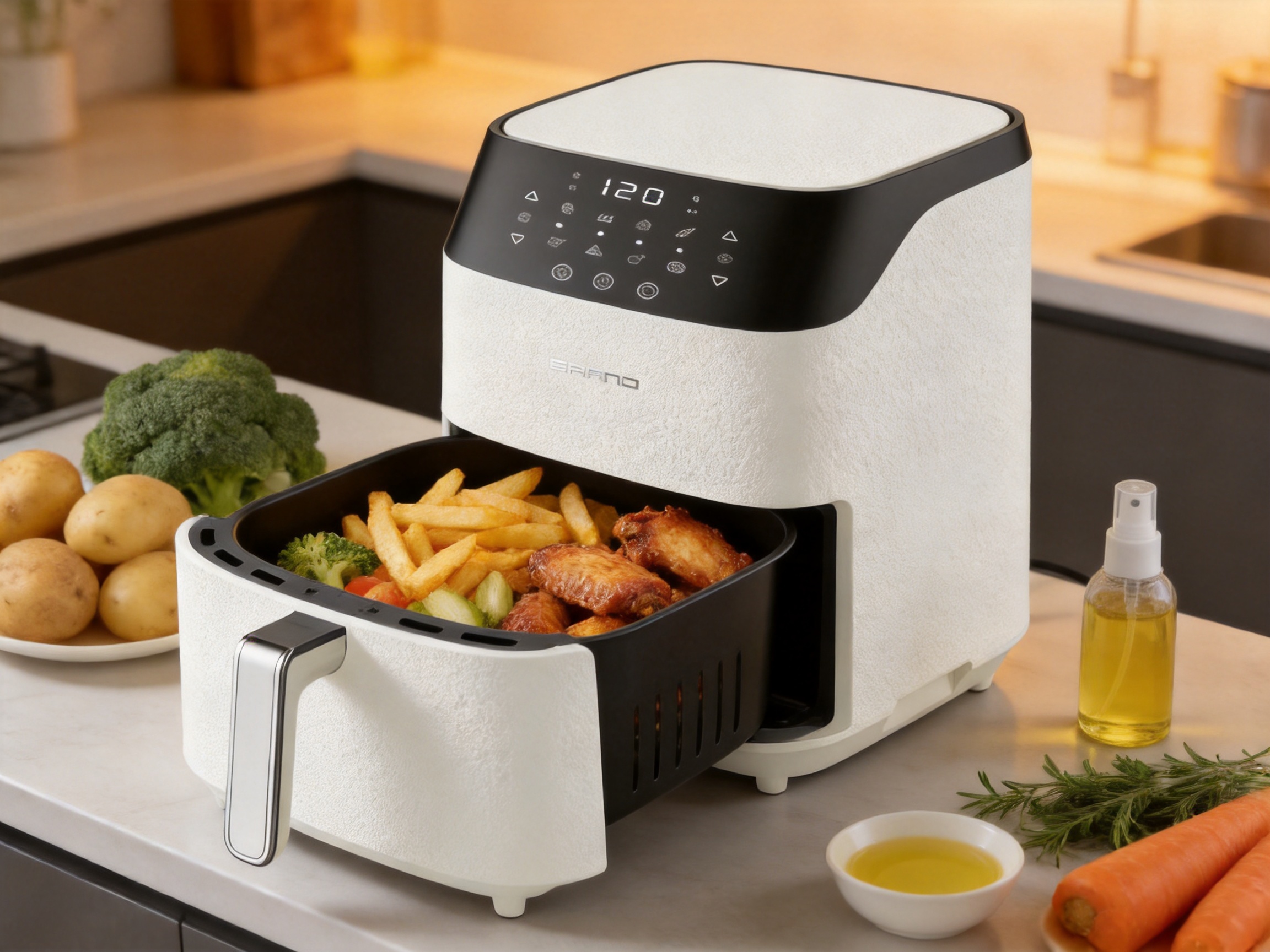
CIXI GSTAR ELECTRIC APPLIANCE CO., LTD. has developed its business around small electric kitchen appliances and household cooking solutions. The company’s experience covers product design, engineering development, manufacturing, quality control, and international customer cooperation. This background is essential for a product category like air fryers, where performance, safety, appearance, packaging, and compliance all affect commercial success.
The company’s founder gained practical market experience before establishing the factory, including work in import and export, selling household appliances, sourcing for supermarket customers, and learning from TV shopping product development. This market-facing history shaped a strong understanding of what buyers need: innovative design, competitive pricing, reliable quality, fast delivery, and responsive after-sales service. Such experience is valuable because successful appliances are not created only in the engineering room; they must match real consumer preferences and retailer expectations.
The company has manufactured and developed a wide range of products, including blenders, slicers, choppers, food processors, smokeless grills, hot pots, air fryers, air ovens, ice buckets, beverage dispensers, pitchers, graters, and hospitality-related appliances. This broad product background provides cross-category knowledge in motor systems, heating systems, plastic molding, food-contact parts, assembly methods, packaging, and quality testing.
As the company expanded, it moved into its own factory and strengthened its electric product development. The facility includes substantial production space and a workforce with experienced production employees, engineers, and quality control personnel. A specialized R&D department supports product improvement, structural design, and innovation, while QC staff help monitor production quality. For importers and private-label customers, this kind of organizational structure is a major advantage because it supports customization, troubleshooting, and consistent order fulfillment.
The company’s sole tenet can be summarized as high-quality innovative products, competitive prices, quick delivery, and strong after-sales service. These priorities align closely with the needs of wholesale appliance buyers. Retailers need attractive products at competitive landed cost; distributors need stable supply; brand owners need consistent quality; and end users need appliances that perform reliably in everyday use.
Advanced Manufacturing Processes Supporting Product Quality
Although the product appears simple to the consumer, producing a reliable air fryer requires coordinated manufacturing processes. From material selection and injection molding to heating element assembly, electronic control installation, functional testing, packaging, and shipment preparation, every step must be managed carefully. The manufacturer’s experience in small electric kitchen appliances supports these processes and helps ensure that the final product meets performance and safety expectations.
Plastic parts used in the air fryer require accurate molding. Exterior housings must fit cleanly, internal structures must align correctly, and control panel components must be positioned precisely. Good molding reduces gaps, improves appearance, supports assembly efficiency, and helps prevent rattling or deformation. Inconsistent molding can lead to poor fit, weak structural integrity, or an unattractive finish, all of which reduce perceived quality.
Heating system assembly is another critical stage. The air fryer’s cooking performance depends on stable heat generation and airflow. Components must be installed correctly to support safe and efficient operation. Wiring, insulation, and protective structures must be arranged according to applicable standards. A well-controlled assembly process reduces the risk of performance variation between units.
Digital control integration requires attention to both electronics and user interface alignment. Touch screen panels must respond properly, display clearly, and remain securely installed. Electronic boards must be protected from inappropriate heat exposure and assembled with consistent connections. The user experience depends heavily on the reliability of these components.
Functional testing is essential before shipment. A quality-focused manufacturer checks whether appliances power on correctly, heat properly, respond to controls, and meet basic safety requirements. For export products, quality control may also involve packaging inspection, labeling verification, carton drop considerations, and order-specific requirements. These steps reduce return rates and protect buyer reputation in the market.
Packaging is also part of manufacturing quality. The product uses a gift box size of L425 x W355 x H389 mm and a carton size of L440 x W370 x H407 mm, with one piece per carton. Proper packaging helps protect the appliance during container loading, international shipping, warehousing, and last-mile delivery. Since air fryers include plastic, electronic, and heating components, sufficient packaging structure is necessary to prevent damage.
Quality Control and Certification Readiness
International appliance markets are highly regulated, and buyers must consider electrical safety, material compliance, environmental standards, and food-contact requirements. This air fryer’s certifications, including CE, GS, CB, ETL, RoHS, LFGB, and FDA, help demonstrate its suitability for global sales channels. While each certification or compliance mark serves different markets and requirements, together they strengthen buyer confidence.
CE is important for European market access, while GS is recognized for safety in Germany and other regions. CB certification supports international mutual recognition of electrical safety testing. ETL is relevant to North American market acceptance. RoHS addresses restrictions on certain hazardous substances in electrical and electronic equipment. LFGB and FDA are associated with food-contact safety expectations in European and United States contexts.
For wholesalers and importers, certification readiness can reduce sourcing time. Products without proper certification may require additional testing, redesign, or documentation before market launch. Delays can be costly, especially when seasonal sales windows are involved. An air fryer with broad certification support is easier to evaluate and integrate into product lines.
Quality control is not limited to certificates. Certificates support compliance, but daily production consistency determines customer satisfaction. A strong QC department checks materials, components, assembly quality, function, appearance, packaging, and shipment condition. For appliances, small defects can create significant customer complaints. Examples include a loose handle, unresponsive button, uneven heating, poor surface finish, or damaged packaging. Consistent inspection helps prevent these problems.
Design Advantages for Wholesale and Retail Channels
This air fryer is attractive not only to end users but also to commercial buyers. Its specifications, appearance, certifications, and packaging are aligned with wholesale and retail requirements. A 7-liter capacity gives retailers a clear selling point, while the digital touch screen and white textured body provide visual differentiation. The product can be positioned as a family-size, modern, healthier-cooking appliance.
For e-commerce sellers, strong visual appeal is essential. Product thumbnails and listing images influence click-through rates. A white air fryer with a sleek digital panel can stand out among dark-colored competitors. The opaque design also presents a neat exterior in product photography, making it easier to create clean lifestyle images and marketplace listings.
For physical retail, the gift box dimensions support shelf planning, warehouse calculation, and shipping estimates. The carton size and container loading capacity are also important for purchasing teams. With 430 pieces per 20ft container and 1000 pieces per 40HQ container, buyers can estimate freight cost, inventory volume, and distribution planning.
For private-label projects, the manufacturer’s engineering and production experience can support modifications in color, packaging design, instruction manuals, control interface details, and market positioning where feasible. Private-label customers often need a supplier that can understand product requirements, communicate efficiently, and deliver stable quality over repeated production batches.
Energy and Time Efficiency in Daily Cooking
A practical advantage of air fryers is their ability to heat quickly compared with many conventional ovens. The cooking chamber is smaller than a full oven, so it can reach target temperatures faster and maintain heat around the food efficiently. This is especially valuable for small and medium meals, snacks, and reheating tasks.
The 1500W power rating provides the appliance with enough heating capability for crisp cooking while remaining within common household countertop appliance expectations. Users can prepare food faster than many oven-based methods, especially when cooking frozen items or smaller portions. Time savings matter in modern homes where work schedules, family responsibilities, and limited cooking time shape appliance use.
Energy efficiency should be considered in practical terms. While exact energy use depends on recipe, time, temperature, and usage pattern, a countertop air fryer may consume less energy than heating a large oven for small meals. It can also reduce kitchen heat compared with oven cooking, which may be appreciated in warmer climates or small apartments.
Fast cooking can also improve meal consistency. When cooking is easy and quick, users are more likely to prepare food at home instead of relying on takeout or heavily processed meals. The air fryer supports simple routines such as roasting vegetables while preparing a main dish, reheating leftovers for lunch, or cooking protein quickly after work.
Ease of Cleaning and Maintenance
Cleaning is one of the major reasons consumers adopt air fryers. Compared with deep frying, there is no large pot of oil to filter, store, or discard. Compared with stovetop frying, there is less splatter across the countertop and nearby surfaces. The enclosed design helps keep cooking residue contained, while the removable cooking pot supports easier post-meal cleanup.
The digital touch control surface is easy to wipe, which helps maintain the appliance’s appearance. The opaque exterior also helps preserve a clean look during cooking because users do not see condensation or oil marks forming inside a transparent window. The white finish may encourage regular cleaning because marks are more visible, supporting better hygiene habits in the kitchen.
Consumers should follow the instruction manual for cleaning and maintenance. In general, users should allow the appliance to cool before cleaning, remove loose food particles, wipe the exterior with a soft damp cloth, and clean the cooking pot according to product guidance. Avoiding abrasive tools can help preserve coatings and surfaces.
Long-term maintenance also depends on proper use. Users should avoid overfilling the basket, blocking airflow, using unsuitable materials inside the cooking chamber, or immersing electrical components in water. Clear instructions and responsible use help extend product life and maintain cooking performance.
Application Scenarios: From Breakfast to Dinner
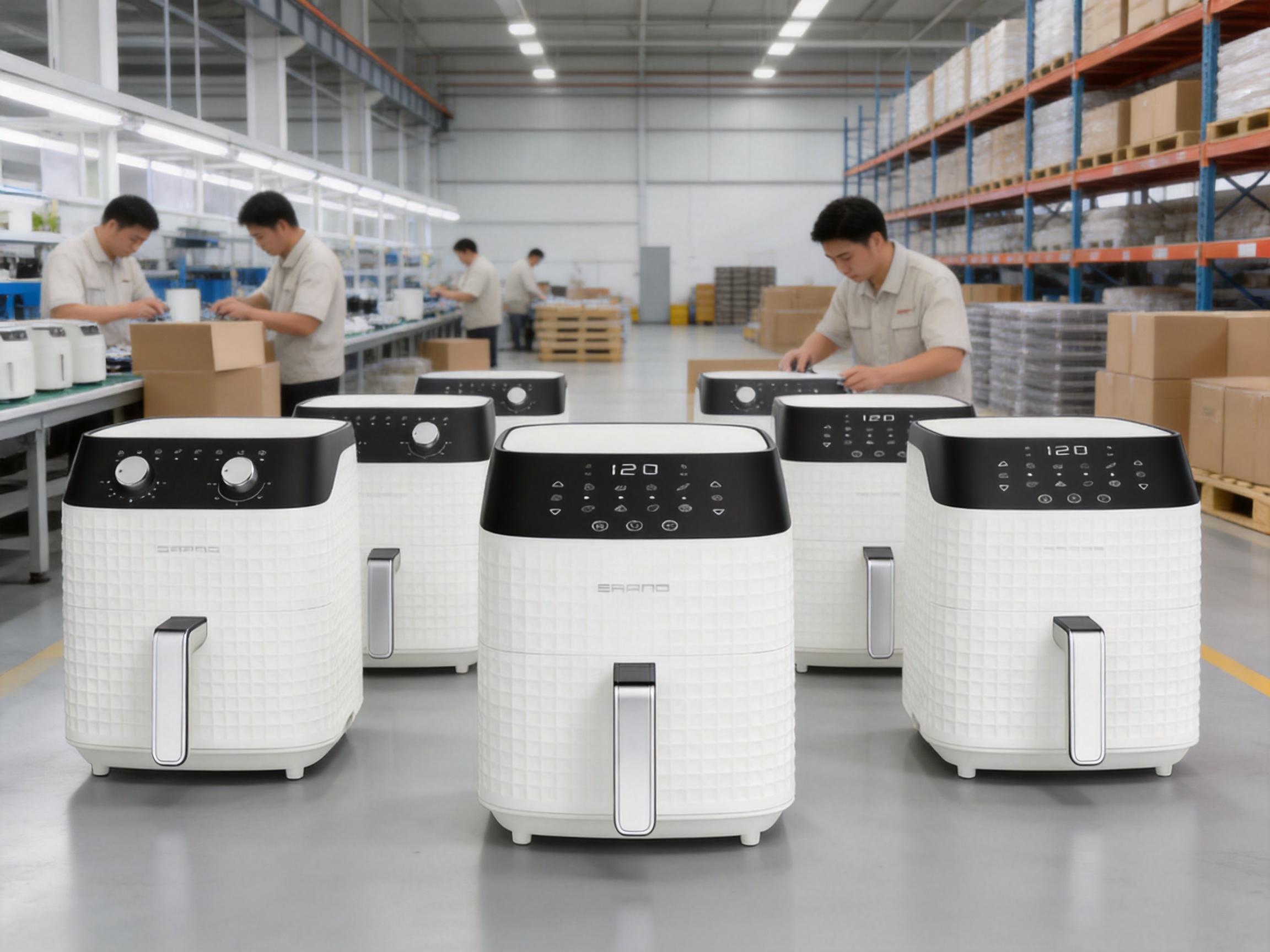
The product’s multifunction design makes it useful throughout the day. For breakfast, users can reheat bread, toast pastries, cook hash browns, warm sausages, or prepare small baked items. The fast heating time helps families manage busy mornings without waiting for a large oven.
For lunch, the air fryer can refresh leftovers and restore texture. Foods that become soft in a microwave, such as pizza, fried chicken, breaded fish, or fries, can become crisp again in the air fryer. Students and office workers who bring food home or prepare quick meals can benefit from this reheating performance.
For dinner, the 7-liter capacity allows more serious cooking. Chicken thighs, fish fillets, pork pieces, roasted vegetables, potatoes, and plant-based foods can all be prepared efficiently. Users can season ingredients, place them in the pot, and cook with less oil and less monitoring than stovetop methods.
For snacks and gatherings, the appliance is especially convenient. Frozen appetizers, spring rolls, nuggets, vegetable chips, and roasted nuts can be prepared quickly. The large capacity makes it easier to serve several people without constant batch cooking.
The product is also suitable for users with small kitchens. Apartments, dormitory-style living spaces where permitted, vacation homes, and compact urban kitchens can all benefit from a multifunction countertop cooker. It offers some oven-like functions without requiring a full built-in oven.
Why This Air Fryer Is a Strong Choice for Importers and Distributors
Importers and distributors evaluate products differently from end consumers. They consider market demand, product differentiation, certifications, supplier reliability, packaging, logistics, and after-sales risk. This digital air fryer performs well across these commercial criteria.
Market demand for air fryers remains strong because the product category combines health, convenience, and versatility. Consumers understand the basic value proposition, so retailers do not need to educate the market from zero. However, buyers still need products that stand out. The 7-liter capacity, touch screen controls, and white textured opaque design help differentiate this model from common low-end units.
Certification coverage supports entry into multiple markets. Buyers can discuss region-specific requirements with the manufacturer and review documentation as part of procurement. The presence of CE, GS, CB, ETL, RoHS, LFGB, and FDA-related certification information makes the product more attractive for international sourcing teams.
Logistics information is clearly defined. Product size, gift box size, carton size, weight, packing quantity, and container loading data allow buyers to calculate cost and inventory planning. Clear logistics data reduces uncertainty and helps purchasing departments compare models accurately.
The manufacturer’s production experience supports long-term cooperation. A supplier that has developed and manufactured multiple small appliance categories is better positioned to understand technical requirements, packaging needs, quality control procedures, and customer communication. This is especially important for repeat orders and private-label projects.
Company Capability in Small Electric Kitchen Appliances
CIXI GSTAR ELECTRIC APPLIANCE CO., LTD. focuses on small electric kitchen appliances and related daily-use products. Its product range includes air fryers, air ovens, blenders, slicers, choppers, food processors, smokeless grills, hot pots, and other innovative household items. This specialization allows the company to accumulate category knowledge and respond to changing market trends.
The company’s history shows a practical evolution from trading and sourcing experience to independent product design and manufacturing. Early exposure to international supermarkets, TV shopping channels, and customer sourcing requirements helped shape a market-oriented development philosophy. Instead of relying only on copied products, the company emphasizes design, development, and innovation.
The factory has a production area reported at approximately 15,000 square meters and more than 200 experienced workers, with engineering and quality control teams supporting manufacturing. The availability of engineers in the R&D department allows the company to improve product structures, develop new models, and respond to customer requirements. The QC team supports inspection and consistency throughout production.
The company has supplied products to international markets and has experience with large-volume sales. A notable example from its development history is a 3-in-1 food processor achieving high-volume sales in Korean and Southeast Asian markets. Air ovens and air fryers have also become strong-selling products, especially in Europe and South America. This market acceptance supports confidence in the company’s ability to produce appliances that match consumer needs.
For customers seeking household kitchen electric appliances, the company offers the advantages of manufacturing scale, category focus, product development experience, and export awareness. These strengths are particularly valuable in a competitive environment where buyers need both attractive product design and reliable supply.
How the Product Supports Modern Consumer Trends
Several consumer trends support the appeal of this air fryer. The first is healthier cooking. Consumers are increasingly interested in reducing excess oil while still enjoying familiar textures and flavors. Air frying directly addresses this preference.
The second trend is convenience. Busy lifestyles create demand for appliances that simplify cooking. A digital air fryer reduces the need for constant monitoring and can complete many tasks faster than traditional methods. This convenience appeals to families, professionals, students, and older users.
The third trend is multifunctionality. Consumers prefer appliances that perform several roles rather than single-purpose devices. This product can air fry, bake, grill, roast, and reheat, improving its usefulness and making it easier to justify countertop space.
The fourth trend is design-conscious purchasing. Kitchens are now part of home style, and appliances must look attractive. The white opaque square-textured body and touch screen panel support a modern appearance that fits contemporary interiors.
The fifth trend is trusted safety and compliance. Consumers may not always understand every certification, but retailers and importers do. Products with recognized certifications are more likely to pass procurement reviews and reach mainstream channels.
Practical Cooking Tips for Best Results
To get the best performance from a large-capacity air fryer, users should avoid overcrowding the cooking pot. Although the 7-liter volume allows generous portions, food still needs space for hot air to circulate. When ingredients are stacked too tightly, some surfaces may remain soft or cook more slowly. Shaking, turning, or rearranging food during cooking can improve results for items such as fries, vegetables, and nuggets.
A small amount of oil can improve browning for fresh ingredients. While air frying uses much less oil than deep frying, foods such as potatoes, vegetables, and lean meats may benefit from a light coating. This helps seasonings adhere and supports crisp texture. Frozen pre-fried foods often require little or no additional oil.
Preheating may improve results for some recipes. Although many air fryers heat quickly, starting with a hot chamber can help achieve better browning for certain foods. Users should follow recipe recommendations and product instructions.
Food size should be consistent. Cutting vegetables, potatoes, or meat into similar pieces helps them cook evenly. If pieces vary greatly in size, smaller items may overcook while larger ones remain underdone.
Cleaning after each use helps maintain performance. Food particles and grease buildup can affect smell, airflow, and hygiene. A regular cleaning routine preserves the product’s appearance and supports long-term satisfaction.
Q&A Section
Q1: What makes this air fryer different from smaller models?
The main difference is its 7-liter single-pot capacity. Smaller air fryers often require batch cooking for family meals, while this model can prepare larger portions in one cycle. The larger space supports better convenience for families, gatherings, and users who cook meal-prep portions.
Q2: Is the air fryer suitable for more than frying?
Yes. It supports multiple cooking functions, including air frying, baking, grilling, roasting, and reheating. This makes it useful for daily meals, snacks, leftovers, vegetables, meats, pastries, and frozen foods.
Q3: Why choose a digital touch screen control panel?
A digital touch screen gives the appliance a modern appearance and allows easy operation. It is also easier to wipe clean than traditional knobs because the surface is flatter and has fewer gaps where oil or food residue can collect.
Q4: What is the benefit of the opaque design?
The opaque design creates a clean and uniform exterior. It helps avoid the visible condensation, oil marks, or food splashes that can appear on transparent windows during cooking. It is a good choice for users who prefer a neat, minimalist look.
Q5: What kind of households is this product suitable for?
It is suitable for families, couples who cook larger portions, shared homes, small gatherings, and users who want a versatile countertop appliance. Its 7-liter capacity makes it especially useful for households that find compact air fryers too small.
Q6: What certifications are available for this product?
The product is listed with CE, GS, CB, ETL, RoHS, LFGB, and FDA certifications. These certifications support international market requirements and help importers and distributors evaluate compliance readiness.
Q7: How does the 1500W power rating help cooking performance?
The 1500W power rating supports strong heating and rapid hot air circulation. This helps food cook faster and develop a crisp texture, especially compared with lower-powered models that may heat more slowly or brown less evenly.
Q8: Is the product suitable for wholesale and private-label buyers?
Yes. The product has clear specifications, packaging data, container loading information, and international certification support. It is manufactured by an experienced small electric kitchen appliance company with R&D and quality control capabilities, making it suitable for wholesale and private-label cooperation.
Q9: What materials are used in the product?
The product uses PP, PA, ABS, and PC materials. These materials are commonly used in household appliances for structural performance, durability, surface quality, and practical manufacturing efficiency.
Q10: How should users maintain the air fryer?
Users should clean the removable cooking pot after use, wipe the exterior with a soft damp cloth, avoid abrasive cleaning tools, and follow the instruction manual. Proper use and regular cleaning help maintain performance and appearance.
Conclusion: A Competitive Family-Size Air Fryer for Global Markets
The stainless steel opaque touch screen control square texture white air fryer combines the features that modern consumers value most: large capacity, healthy cooking potential, multifunction operation, digital control, stylish appearance, and easier cleaning. Its 7-liter single pot makes it more practical for families than many compact competitors, while the 1500W power rating supports efficient cooking performance. The digital touch screen improves usability and appearance, and the opaque white textured body differentiates it in a crowded market.
For end users, the appliance offers a convenient way to prepare crisp, flavorful food with less oil and less mess. It can support breakfast, lunch, dinner, snacks, reheating, and entertaining. For buyers, it offers clear commercial advantages: strong product positioning, attractive design, international certifications, defined logistics data, and reliable manufacturing support.
Backed by the appliance development and production capabilities of CIXI GSTAR ELECTRIC APPLIANCE CO., LTD., this air fryer is more than a single countertop product. It represents a manufacturing approach focused on innovation, competitive pricing, quality control, quick delivery, and customer cooperation. In a market where air fryers continue to be popular across regions, this model provides a compelling option for retailers, importers, distributors, and private-label brands seeking a practical, stylish, and family-size cooking appliance.
References
1. CIXI GSTAR ELECTRIC APPLIANCE CO., LTD. Product Specification Sheet for GSE038-D and GSE038-1D Digital Air Fryer.
2. International Electrotechnical Commission. Household Electrical Appliance Safety Testing and CB Scheme Reference Materials.
3. European Commission. CE Marking and RoHS Compliance Guidance for Electrical and Electronic Products.
4. U.S. Food and Drug Administration. Food-Contact Material Safety Guidance for Consumer Products.
5. German Food and Feed Code Reference Materials for LFGB Food-Contact Compliance.
6. Contemporary Small Kitchen Appliance Market Studies on Air Fryer Usage, Consumer Preferences, and Healthy Cooking Trends.