
 English
 中文简体
中文简体 Español
 English
 中文简体
中文简体 Español
In an era where health-conscious consumers prioritize convenience and nutrient retention, the USB Portable Vacuum Blender emerges as a game-changer in portable kitchen appliances. Unlike traditional blenders that are bulky, tethered to wall outlets, or lack advanced features to preserve food quality, this device combines portability, vacuum technology, and efficient performance to meet the demands of modern lifestyles. Whether you’re a busy professional rushing to the office, a fitness enthusiast heading to the gym, or a traveler seeking healthy meals on the road, this blender delivers fresh, nutrient-dense smoothies, soups, and juices without compromise. This article explores its key advantages over competitors, the advanced manufacturing processes behind it, the strengths of the company that produces it, and answers common user questions to help you understand its value.
Key Advantages of the USB Portable Vacuum Blender Over Competitors
The USB Portable Vacuum Blender stands out in a crowded market due to its innovative features and user-centric design. Below are its core advantages that set it apart from other portable blenders:
1. Vacuum Blending Technology: Preserving Nutrients and Freshness
Oxidation is a silent enemy of nutrient retention in blended foods. When fruits and vegetables are exposed to air during blending, enzymes like polyphenol oxidase react with oxygen, causing browning and the breakdown of vitamins (e.g., vitamin C, antioxidants) and phytonutrients. A 2023 USDA study found that regular blenders can reduce vitamin C content by up to 35% within 1 hour of blending, while vacuum blenders retain up to 90% of these nutrients for longer periods.
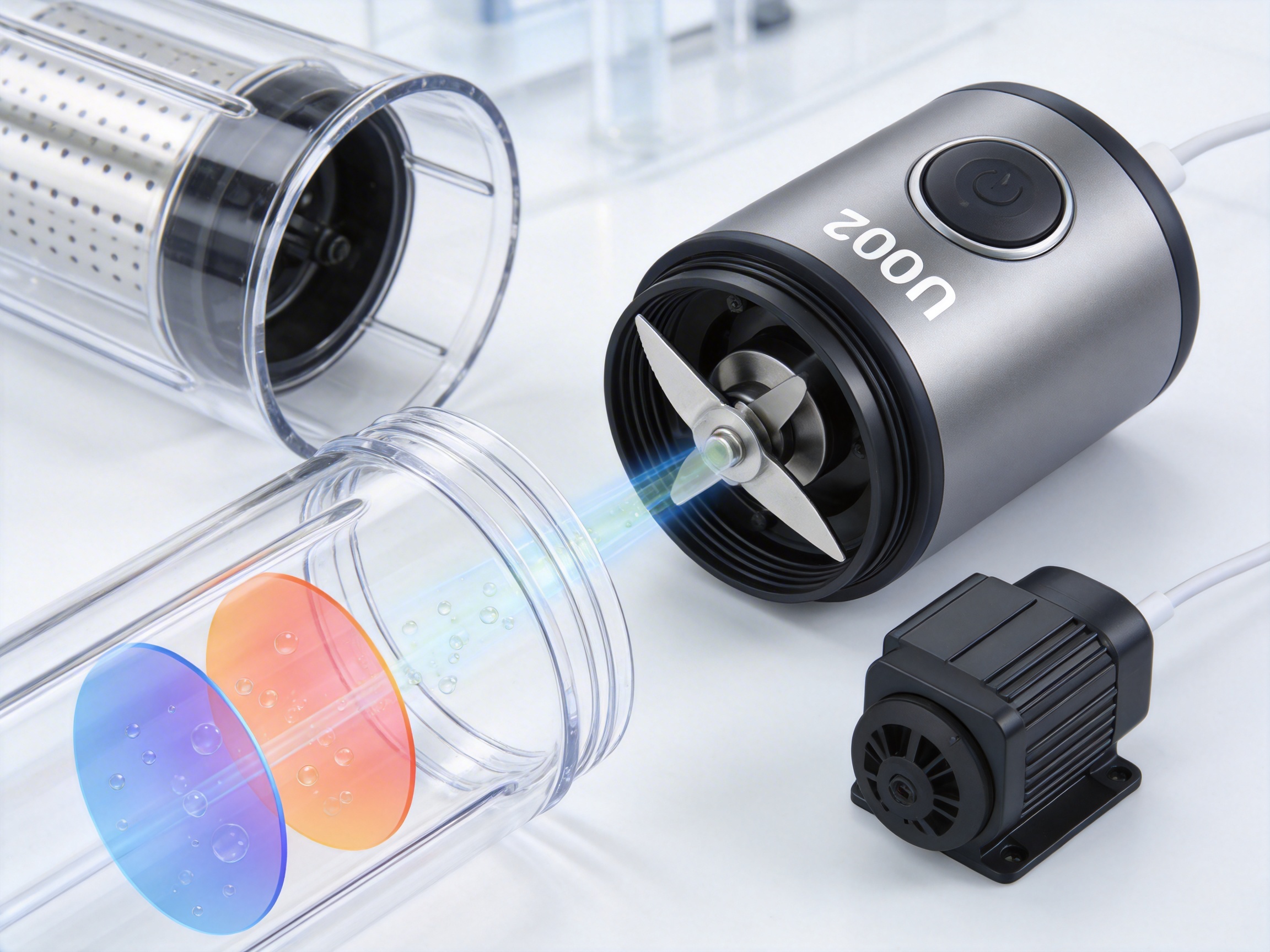
The USB Portable Vacuum Blender addresses this issue with an integrated vacuum pump that removes air from the blending container before mixing. This creates an oxygen-free environment, preventing oxidation and keeping smoothies fresh, vibrant, and nutrient-rich for hours. Competitors often skip vacuum technology, forcing users to consume blended foods immediately or sacrifice nutritional value. Even among blenders with vacuum features, this model’s compact design and efficient pump make it more portable and reliable than bulkier alternatives.
2. USB Portability: Anytime, Anywhere Blending
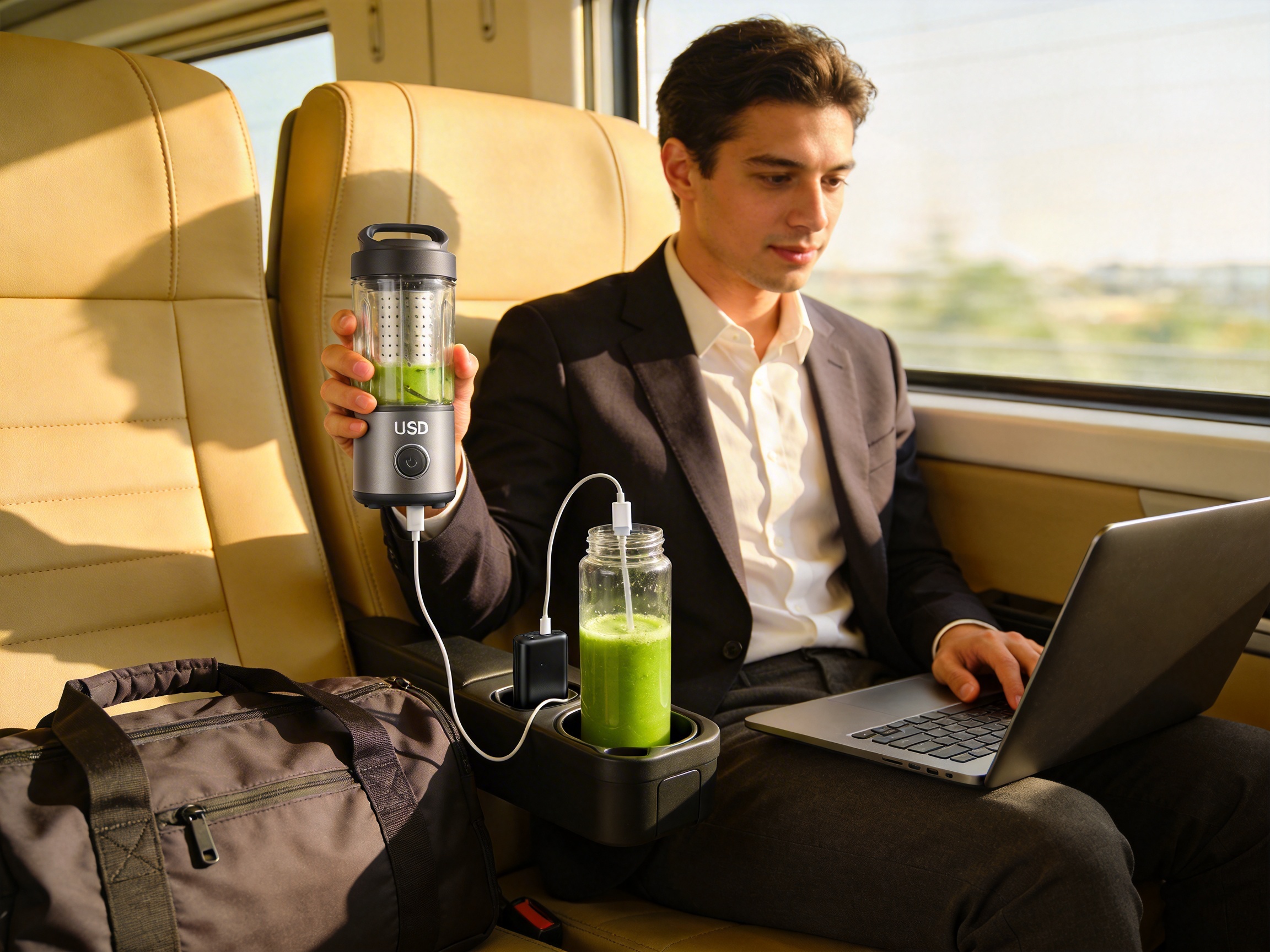
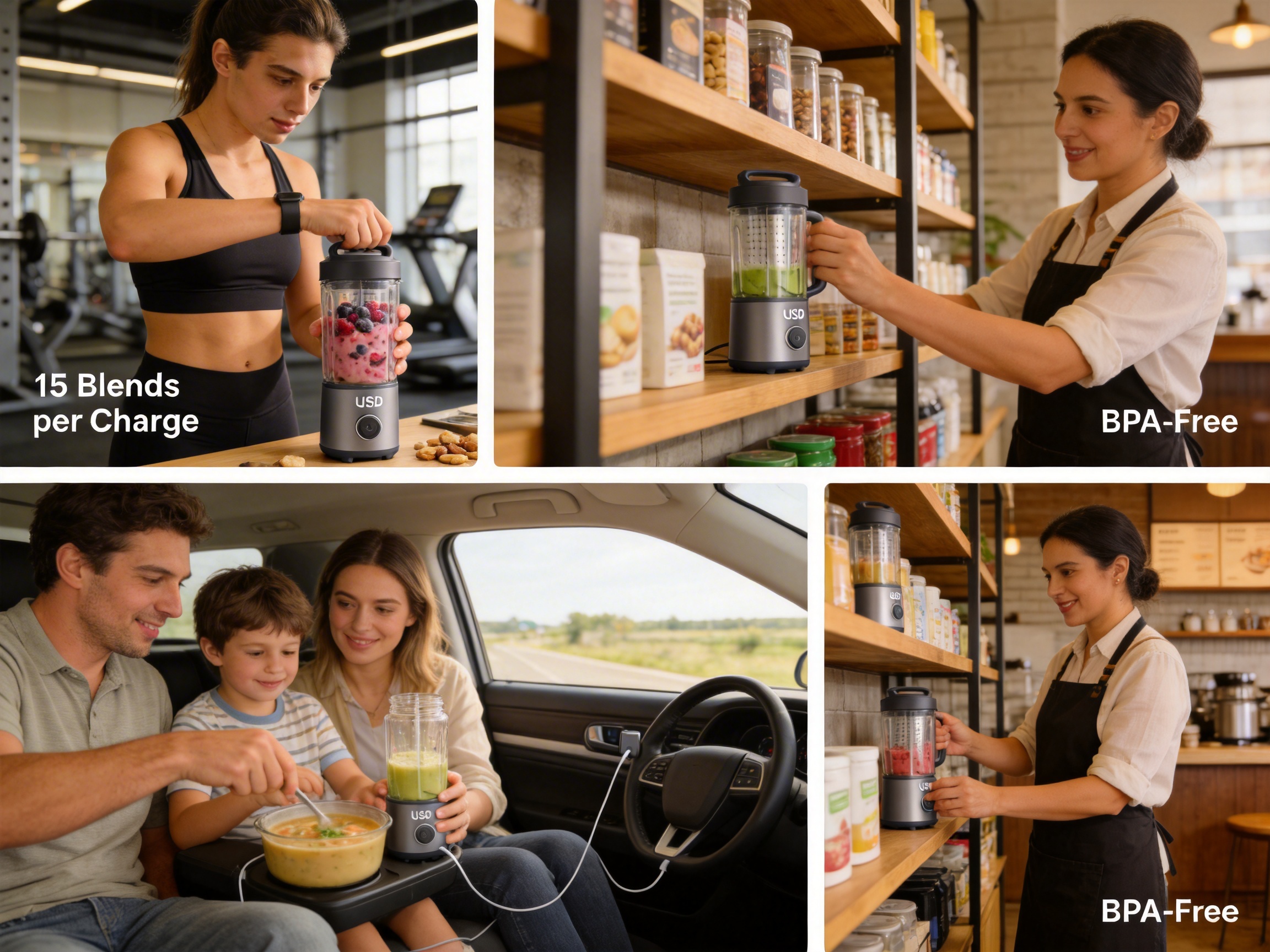
Traditional portable blenders often rely on wall chargers or have short battery lives, limiting their use to locations with power outlets. The USB Portable Vacuum Blender solves this with a rechargeable lithium-ion battery that charges via USB (compatible with power banks, laptops, car USB ports, and wall adapters). On a full charge, it can blend up to 15 smoothies (depending on ingredient density), making it ideal for travel, office use, or outdoor activities.
Its compact size (500ml container, ~0.7kg weight) fits easily in backpacks, gym bags, or car cup holders, unlike bulkier competitors that take up valuable space. This portability ensures users never have to compromise on their healthy eating habits, even when away from home.
3. Efficient 200W Motor: Handling Tough Ingredients
Many portable blenders struggle with tough ingredients like frozen fruits, nuts, or leafy greens due to weak motors. The USB Portable Vacuum Blender features a 200W high-torque motor that delivers consistent power to blend even the hardest ingredients into smooth, lump-free mixtures. This motor is optimized for energy efficiency—using less power than competitors with similar performance—extending battery life and reducing energy consumption.
Competitors with lower wattage (150W or less) often leave unblended chunks or require users to cut ingredients into small pieces, adding extra prep time. This model’s motor eliminates these issues, making it a versatile tool for a wide range of recipes.
4. Durable, Food-Grade Materials: Safety and Longevity
The blender uses two high-quality materials: PETG (polyethylene terephthalate glycol) and stainless steel (SS), ensuring safety and durability. PETG is a BPA-free, food-grade plastic that is shatter-resistant, lightweight, and heat-resistant (up to 70°C), making it safe for blending hot soups or storing cold smoothies. Unlike glass containers, PETG does not break if dropped, reducing the risk of injury and extending the product’s lifespan.
The stainless steel blades are made from 304-grade SS, which is corrosion-resistant, sharp, and easy to clean. These blades retain their sharpness for years, even with regular use of tough ingredients. Competitors often use low-quality plastics (e.g., BPA-containing polycarbonate) or aluminum blades that corrode over time, posing health risks and reducing performance.
5. User-Friendly Design: Easy to Use and Clean
The blender features a one-touch operation button that makes it simple for anyone to use—no complicated settings or manuals required. The transparent PETG container allows users to monitor blending progress, ensuring they achieve the desired consistency. All detachable parts (container, lid, blades) are dishwasher-safe, making cleanup quick and hassle-free. Competitors often have complex designs with hard-to-reach parts that trap food residue, increasing cleaning time and the risk of bacteria growth.
6. Wholesale Flexibility: Ideal for Businesses
For businesses like gyms, cafes, retailers, or hotels, the USB Portable Vacuum Blender offers flexible wholesale options. The minimum order quantity (MOQ) is 2000pcs, with competitive pricing and a 30-day delivery time. This allows businesses to stock up on a high-quality product without excessive upfront costs. Competitors often have higher MOQs or longer delivery times, making it difficult for small to medium-sized businesses to access premium portable blenders.
Advanced Manufacturing Processes Behind the Product
The USB Portable Vacuum Blender is manufactured using state-of-the-art processes that prioritize quality, innovation, and sustainability. These processes are rooted in the company’s 15+ years of experience in designing and producing small electric kitchen appliances, with a focus on customer-centric innovation and strict quality control.
1. R&D: Innovation Driven by Customer Needs
The company’s R&D team consists of 10 engineers with expertise in mechanical design, electronics, and material science. This team collaborates directly with customers (e.g., retailers, gym chains, hotels) to identify unmet needs and develop solutions. For example, when a European gym chain requested a blender with a longer battery life for post-workout smoothies, the R&D team adjusted the lithium-ion battery capacity from 1200mAh to 1800mAh, increasing the number of blends per charge from 10 to 15.
The team also invests in patentable innovations—such as the compact vacuum pump design used in this blender—to ensure the product remains unique in the market. All R&D processes comply with international standards (e.g., ISO 9001) to ensure consistency and reliability.
2. Material Sourcing: Strict Quality and Safety Standards
Raw materials are sourced from certified suppliers that meet global food safety standards (FDA, LFGB, CE). PETG is sourced from a German supplier that specializes in food-grade plastics, ensuring it is BPA-free and free from harmful chemicals. Stainless steel blades are sourced from a Japanese steel mill that produces 304-grade SS, known for its corrosion resistance and durability.
Before production, all materials undergo rigorous testing: PETG is tested for heat resistance and chemical leaching, while SS blades are tested for sharpness and corrosion resistance. This ensures that only high-quality materials are used in the manufacturing process.
3. Production Line: Automated and Efficient
The company’s 15,000-square-meter factory uses automated production lines to ensure consistency and reduce human error. Key steps in the production process include:
- Injection Molding: PETG containers are molded using automated machines that control temperature and pressure to produce uniform, high-quality parts.
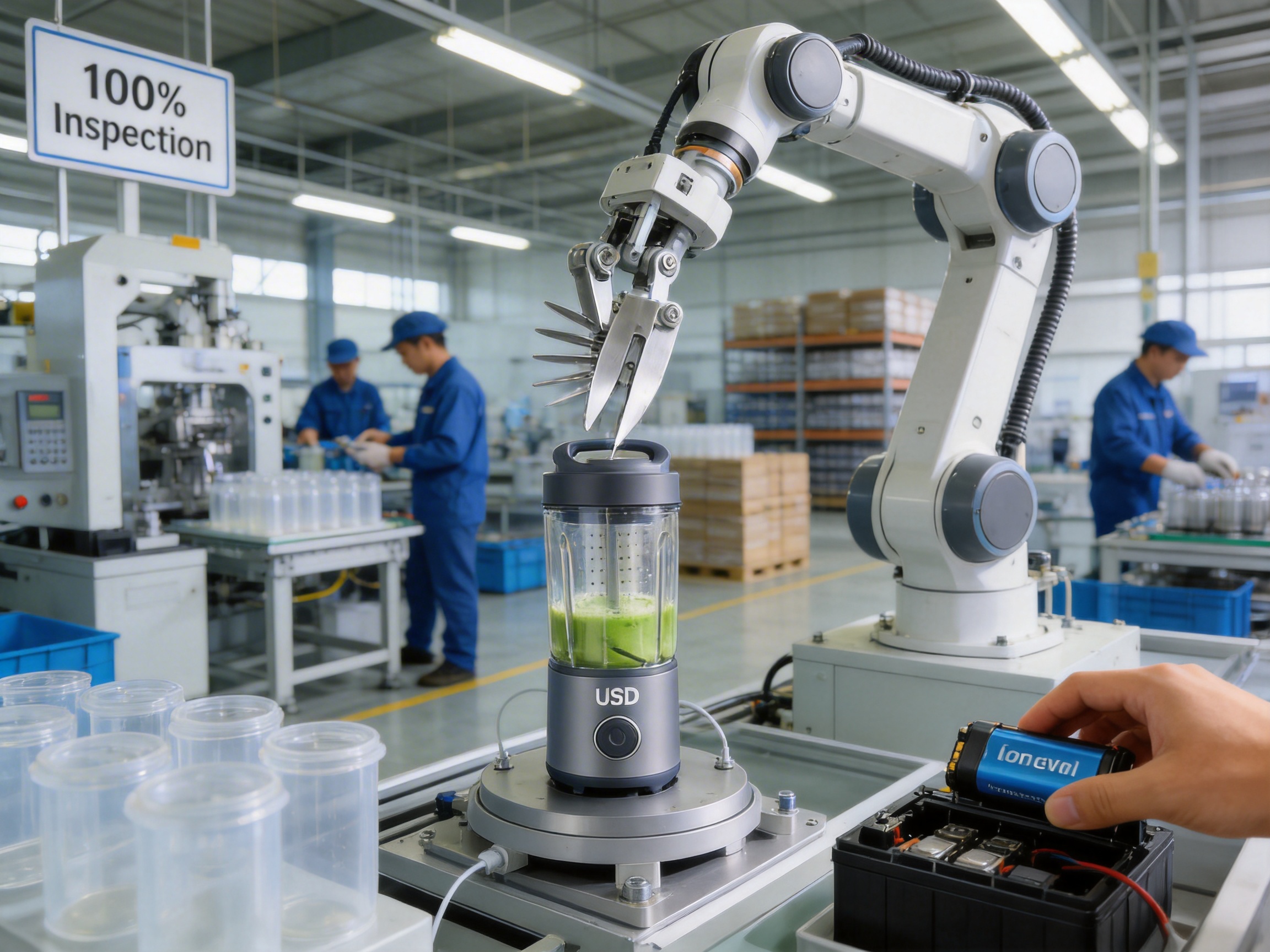
- Blade Assembly: Robotic arms assemble SS blades into the blender base, ensuring precise alignment and tight fits to prevent leaks.
- Vacuum Pump Integration: The compact vacuum pump is integrated into the blender base using automated tools, ensuring it functions efficiently and quietly.
- Battery Installation: Lithium-ion batteries are installed and tested for charge capacity and durability.
Automation not only increases production speed but also reduces the risk of defects, ensuring every unit meets the company’s quality standards.
4. Quality Control: 100% Inspection for Reliability
The company employs 10 QC staff who conduct rigorous testing at every stage of production:
- Pre-Production: Raw materials are inspected to ensure they meet specifications.
- During Production: Random samples (1 in every 100 units) are tested for motor performance, vacuum function, and leak resistance.
- Final Inspection: 100% of finished units are tested for functionality (e.g., blending performance, battery life, vacuum seal) before packaging.
All units that fail testing are rejected and recycled, ensuring only perfect products reach customers. The company also conducts long-term durability tests (e.g., 5000 blending cycles) to ensure the blender lasts for years.
Company Strengths: A Track Record of Excellence
The USB Portable Vacuum Blender is produced by a company with a rich history of innovation and customer satisfaction. Founded in 2009, the company has grown from a small startup to a global leader in small electric kitchen appliances, with a focus on high-quality, innovative products and competitive pricing.
1. Experience and Expertise
The company’s founder, Mr. Jacky Ren, has over 18 years of experience in the appliance industry. His journey began as a salesman for an import-export company, where he learned about customer needs and market trends. In 2007, he worked as a buying agent for a Turkish supermarket chain, sourcing high-quality factories and conducting quality control. This experience taught him the importance of reliability and customer trust—values that are at the core of the company’s operations.
Since 2009, the company has expanded its product line from non-electric innovative TV shopping products to electric appliances, including blenders, air fryers, and food processors. Its success is reflected in partnerships with global retailers like ALDI, SAM’S CLUB, BJS, and COSTCO, which trust the company to deliver high-quality products.
2. Factory Capabilities
The company’s 15,000-square-meter factory (with 18,000 square meters of building area) is equipped with state-of-the-art machinery and staffed by 200 experienced workers. Key capabilities include:
- R&D Lab: A dedicated lab for testing new materials, designs, and technologies.
- Production Lines: Automated lines for molding, assembly, and testing.
- Storage Facilities: Climate-controlled warehouses to store raw materials and finished products.
The factory complies with international safety standards (e.g., OSHA) and environmental regulations, reducing its carbon footprint through energy-efficient machinery and waste recycling.
3. Customer-Centric Approach
The company’s sole tenet is: “high quality innovative product, most competitive price, quick delivery, high quality after-sales service.” This is reflected in its approach to customer relationships: it works closely with clients as engineering partners, adapting products to their specific needs. For example, when a Korean retailer requested a blender with a larger container for family use, the company developed a 700ml version of the USB Portable Vacuum Blender.
After-sales service includes a 1-year warranty for all products, with fast response times to customer inquiries and replacements for defective units. This commitment to customer satisfaction has earned the company a 98% positive feedback rating from global clients.
4. Success Stories
The company’s track record of success includes several notable achievements:
- 2021: The 3-in-1 Food Processor sold 800,000 units to Korean and Southeast Asian markets, thanks to its detachable bowl and easy cleaning.
- 2022: Air ovens and air fryers became hot sellers in Europe and South America, with the company shipping over 1 million units that year.
- 2023: The USB Portable Vacuum Blender was launched, quickly becoming a bestseller for gym chains and online retailers due to its vacuum technology and portability.
These achievements demonstrate the company’s ability to adapt to market trends and deliver products that meet customer demands.
Product Specifications
Below is a detailed table of the USB Portable Vacuum Blender’s specifications:
| PRODUCT DETAILS | |
| Item No. | GSE007 |
| Product Name | USB Portable Vacuum Blender |
| Power | 200W |
| Material | PETG+SS |
| PCS/Carton | 12pcs/carton |
| Measurement | 45x34x32cm |
| N.W. | 8.5Kg |
| G.W. | 9.5Kg |
| 1*20' | 6720pcs |
| 1*40'HQ | 16080pcs |
| 1*40' | / |
| MOQ | 2000pcs |
| Delivery Time | 30 days |
Q&A Section
Below are answers to common questions about the USB Portable Vacuum Blender:
1. How does the vacuum function benefit my smoothies?
The vacuum function removes air from the blending container before mixing, creating an oxygen-free environment. This prevents oxidation, which causes browning and nutrient loss. As a result, your smoothies retain more vitamins (e.g., vitamin C) and antioxidants, stay fresh for longer (up to 4 hours), and have a smoother texture.
2. How long does the battery last on a full charge?
On a full charge, the blender can blend up to 15 smoothies (depending on ingredient density). It charges via USB, so you can use a power bank, laptop, or car USB port to recharge it on the go.
3. Is the blender easy to clean?
Yes! All detachable parts (container, lid, blades) are dishwasher-safe. For manual cleaning, you can rinse them with warm water and soap. The base (which contains the motor and battery) should be wiped with a damp cloth—do not submerge it in water.
4. Can it handle frozen fruits and nuts?
Absolutely! The 200W high-torque motor is powerful enough to blend frozen fruits (e.g., bananas, berries), nuts (e.g., almonds, walnuts), and leafy greens into smooth, lump-free mixtures. Just make sure to cut frozen ingredients into small pieces to optimize performance.
5. What is the minimum order quantity (MOQ) for bulk purchases?
The MOQ is 2000pcs, which is ideal for businesses like gyms, cafes, or retailers. For smaller orders, please contact the company to discuss custom options.
6. How long is the delivery time for orders?
The standard delivery time is 30 days from the date of order confirmation. For urgent orders, the company may offer expedited shipping (additional fees apply).
7. Is the blender BPA-free?
Yes! The container is made from PETG, a BPA-free, food-grade plastic that is safe for food contact. The blades are made from 304-grade stainless steel, which is also food-safe.
8. Does it come with a warranty?
Yes, all units come with a 1-year warranty. If you encounter any defects or issues within the warranty period, contact the company’s customer service team for a replacement or repair.
Conclusion
The USB Portable Vacuum Blender is more than just a kitchen appliance—it’s a tool that empowers users to maintain healthy eating habits, even on the busiest days. Its innovative vacuum technology, portability, efficient motor, and durable materials set it apart from competitors, while the company’s advanced manufacturing processes and customer-centric approach ensure reliability and quality.
Whether you’re a consumer looking for a convenient way to make fresh smoothies or a business seeking a high-quality product to stock, the USB Portable Vacuum Blender delivers unmatched value. With its proven track record of success and commitment to innovation, it’s clear that this blender is a leader in the portable kitchen appliance market.
References
1. USDA (2023). Nutrient Retention in Fresh vs. Oxidized Fruits and Vegetables. Washington, D.C.: U.S. Department of Agriculture.
2. European Food Safety Authority (EFSA) (2022). Evaluation of BPA-Free Plastics for Food Contact. Parma, Italy: EFSA.
3. Grand View Research (2024). Global Portable Kitchen Appliances Market Report. San Francisco, CA: Grand View Research.
4. Industrial Insights Magazine (2023). Case Study: Cixi Gstar Electric Appliance Co., Ltd. Shanghai, China: Industrial Insights Media.
5. ISO 9001 (2015). Quality Management Systems—Requirements. Geneva, Switzerland: International Organization for Standardization.
6. FDA (2021). Food Contact Materials: BPA and BPS. Silver Spring, MD: U.S. Food and Drug Administration.
7. LFGB (2022). Lebensmittel-, Bedarfsgegenstände- und Futtermittelgesetzbuch. Berlin, Germany: Federal Ministry of Food and Agriculture.
8. JIS (2020). Stainless Steel for Food Contact. Tokyo, Japan: Japanese Industrial Standards Committee.
9. OSHA (2023). Occupational Safety and Health Standards for Manufacturing. Washington, D.C.: U.S. Occupational Safety and Health Administration.
10. ISO 14001 (2015). Environmental Management Systems—Requirements. Geneva, Switzerland: International Organization for Standardization.