
 English
 中文简体
中文简体 Español
 English
 中文简体
中文简体 Español
In the fast-growing market for small electric kitchen appliances, the modern air fryer has become one of the most important products for households, supermarkets, online retailers, hospitality suppliers, and private-label kitchenware brands. Consumers want a cooking appliance that is easy to use, large enough for family meals, energy-efficient, simple to clean, and capable of producing crisp, appetizing food with less oil. The 8L mechanical air fryer model GSE042-1/GSE042-1D answers these needs with a practical high-capacity design, powerful 1700W performance, durable material construction, international certifications, and manufacturing support from an experienced electric appliance producer.
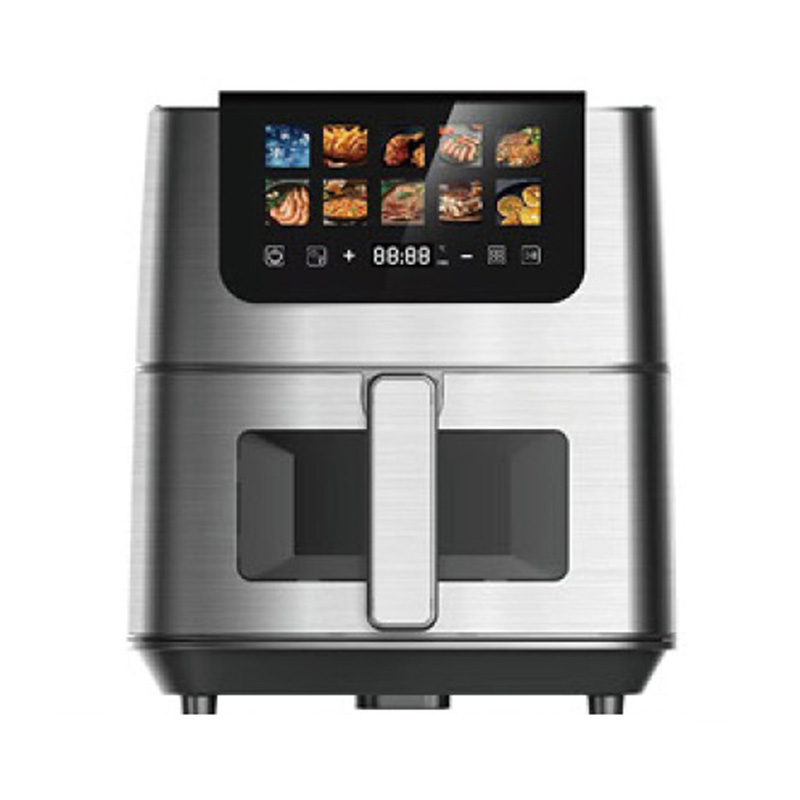
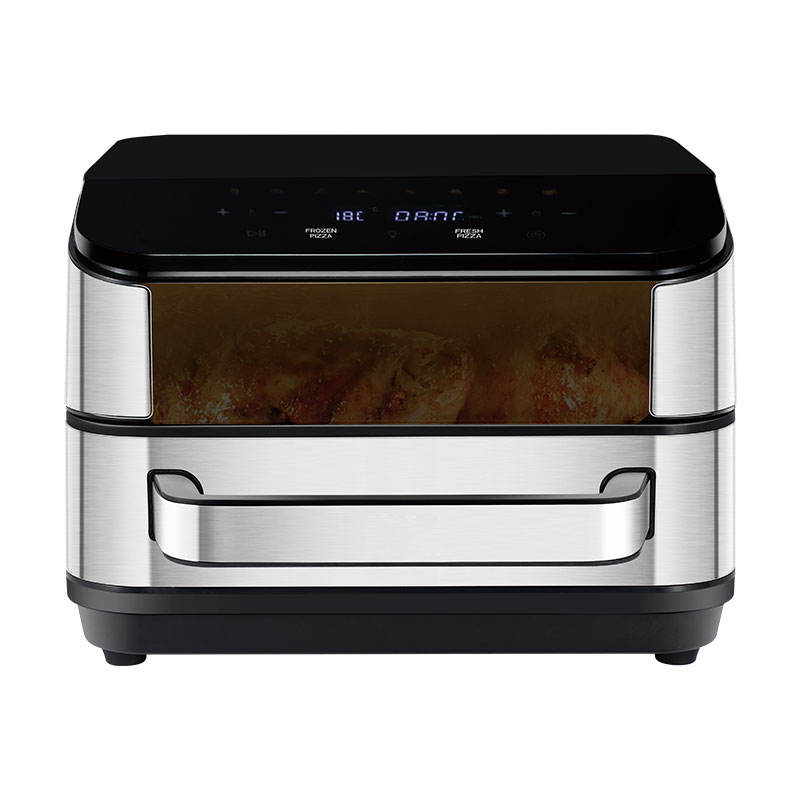
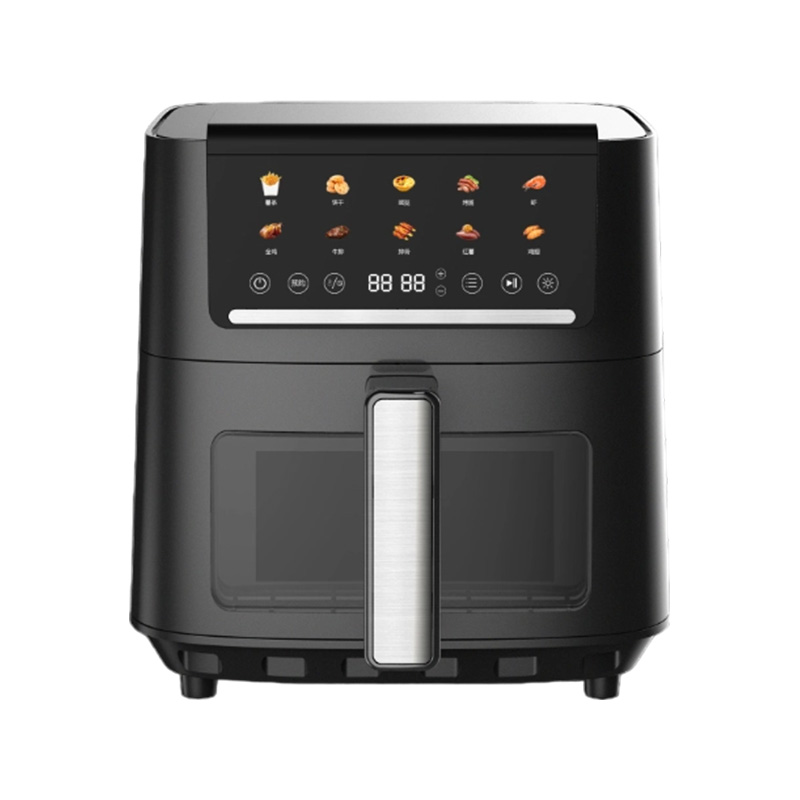
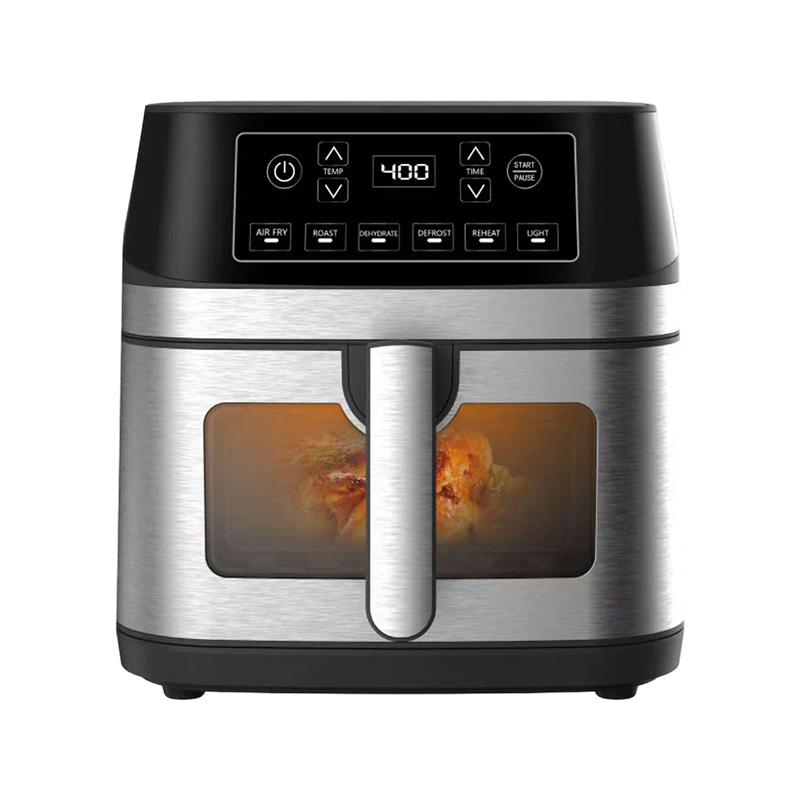
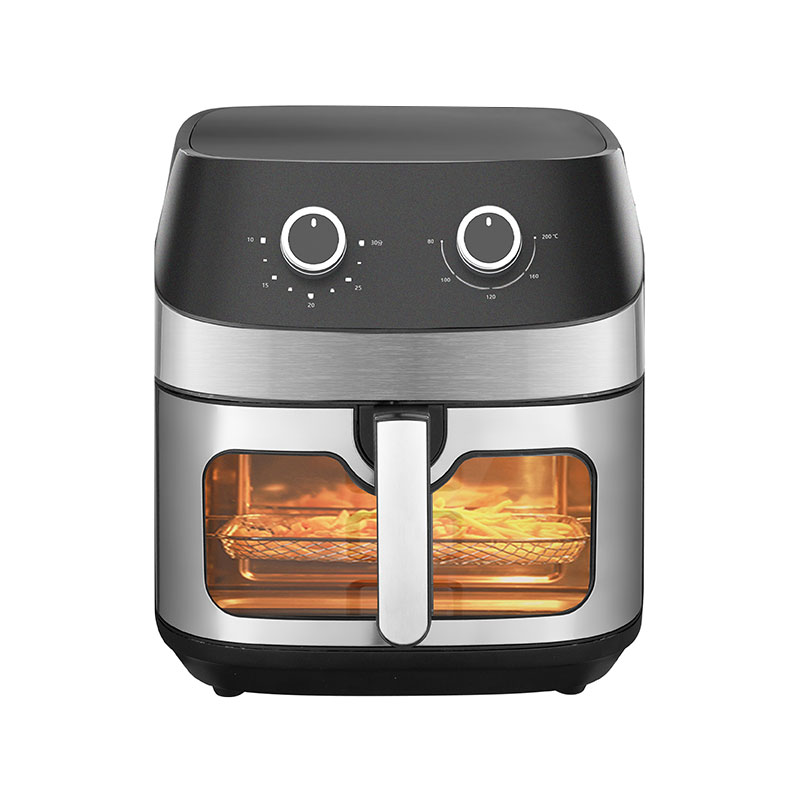
The product is designed as an 8L single-pot air fryer, available in two mechanical versions: one with a viewing window and one without a viewing window. This gives importers, wholesalers, supermarket buyers, and brand owners the flexibility to target different retail price points and customer preferences while maintaining a common core structure and specification platform. The version with a window allows users to monitor cooking progress without pulling out the basket, while the window-free version offers a clean, traditional appearance suitable for buyers who prefer a simpler configuration.
For commercial purchasing teams, the value of an air fryer is not defined only by its appearance. It depends on a combination of functional performance, quality consistency, certification readiness, production capacity, packaging efficiency, and after-sales reliability. This air fryer is engineered around those realities. With an 8L capacity, 1700W power, 50-60Hz compatibility, practical mechanical controls, and material composition of PP, PA, ABS, and PC, it is positioned as a dependable household kitchen appliance for a wide range of international markets.
Product Overview
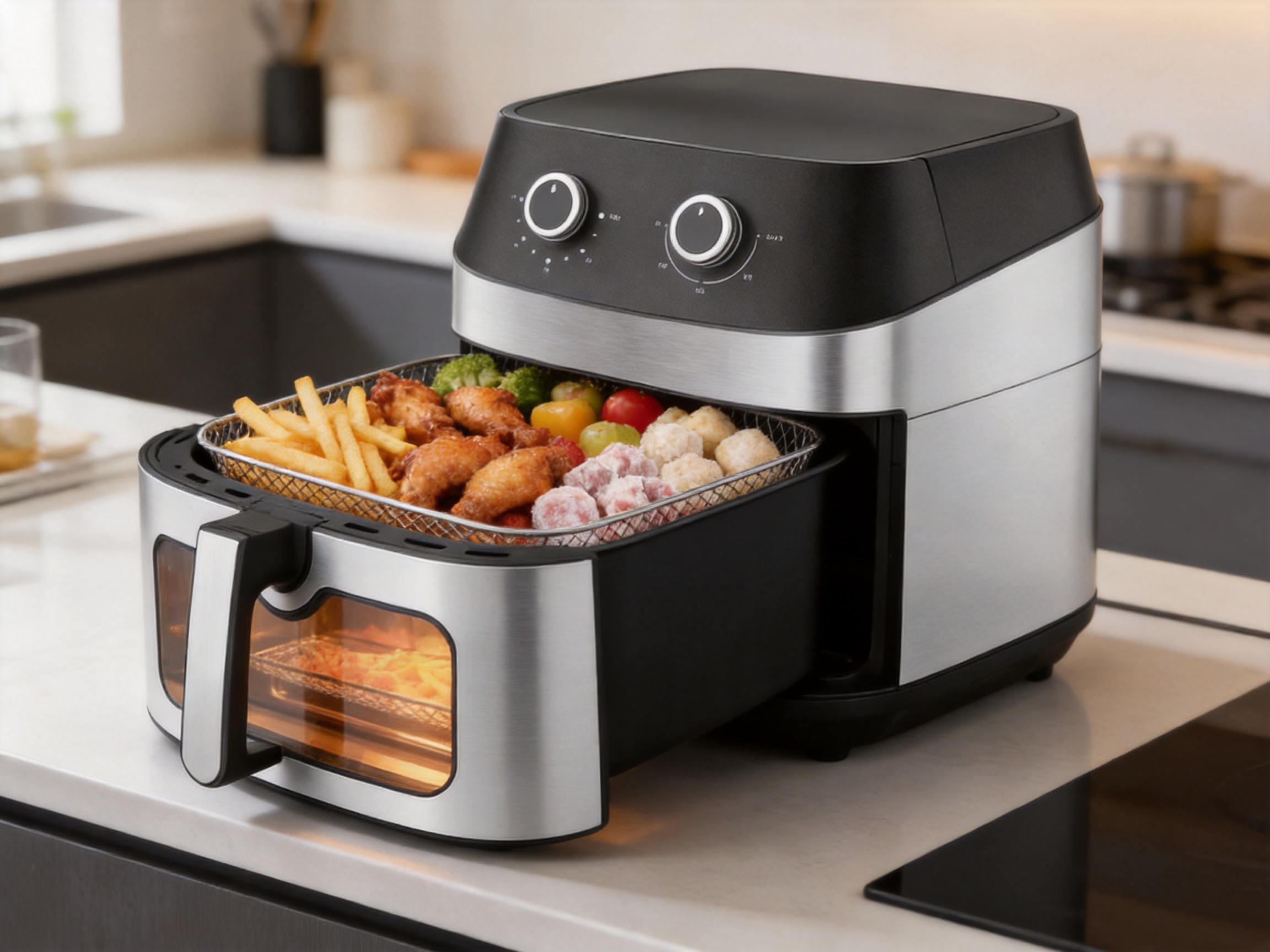
The GSE042-1/GSE042-1D air fryer is a high-capacity mechanical model developed for everyday household cooking. It is suitable for preparing fries, chicken wings, fish, vegetables, breaded foods, frozen snacks, reheated meals, and other common dishes. The air fryer cooking method circulates hot air rapidly around the food, helping create a crisp exterior while reducing the need for deep frying in oil. For families looking for convenient cooking, this type of appliance supports healthier meal preparation without requiring complicated operation.
Unlike many small-capacity air fryers that are best suited only for one or two people, the 8L single pot gives users more practical space for family portions. A larger basket helps reduce the need for multiple cooking rounds, which saves time during busy evenings. This capacity is especially attractive for markets where consumers prepare meals for families, gatherings, or larger household portions. It also gives retailers a strong selling point because the product feels more substantial and more versatile than entry-level compact fryers.
The mechanical design is another key feature. While digital panels are popular in some segments, mechanical controls remain highly valued because they are simple, intuitive, and cost-effective. Mechanical knobs are easy for users of different ages to understand. They are also suitable for buyers who want a durable appliance with straightforward operation and fewer electronic interface complications. For many markets, especially price-sensitive but quality-focused retail channels, a mechanical 8L air fryer offers an excellent balance of performance and value.
The product size is L405 x W305 x H360 mm, giving it a strong and stable countertop presence. The gift box size is L460 x W360 x H417 mm, and the carton size is L475 x W375 x H435 mm, with one piece packed per carton. This packaging configuration protects the appliance during shipping and allows buyers to plan container loading, warehouse storage, and retail distribution more effectively. With a gross weight of 7.5 kg and net weight of 6.5 kg, the product is substantial enough to communicate quality while remaining manageable for household handling and logistics.
Key Specifications
| Item Number | GSE042-1/GSE042-1D |
| Product Name | Air Fryer, mechanical version with window or mechanical version without window |
| Material | PP + PA + ABS + PC |
| Power | 1700W |
| Frequency | 50-60Hz |
| Capacity | 8L single pot |
| Product Size | L405 x W305 x H360 mm |
| Gift Box Size | L460 x W360 x H417 mm |
| Carton Size | L475 x W375 x H435 mm |
| Packing Quantity | 1 piece per carton |
| Gross Weight / Net Weight | 7.5 kg / 6.5 kg |
| 40HQ Loading Quantity | Approximately 1050 pieces |
| MOQ | 1050 pieces |
| Certifications | CE, GS, CB, ETL, RoHS, LFGB, FDA |
Why an 8L Capacity Matters
Capacity is one of the first factors consumers consider when purchasing an air fryer. A compact 2L to 4L air fryer may be convenient for a single user, but it often becomes limiting for families. Users may need to cook food in several batches, and the first batch can cool down before the last batch is finished. An 8L single-pot design reduces this inconvenience by allowing larger portions to be prepared at one time.
For family meals, the difference is meaningful. A larger basket can handle more chicken pieces, more fries, more vegetables, or a larger mix of frozen snacks. This makes the appliance more practical for daily cooking rather than occasional use. The more often a consumer can use the appliance, the higher the satisfaction and perceived value. Retailers benefit from this because satisfied customers are more likely to recommend the product and less likely to return it due to insufficient capacity.
Compared with many competing models in the entry-level air fryer category, an 8L capacity creates a stronger shelf advantage. It helps the product stand out in retail displays and online listings. When consumers compare specifications, a larger capacity at a competitive price point can become a deciding factor. For private-label customers, this capacity also offers strong marketing value, allowing the product to be positioned as a family-size air fryer or large-capacity kitchen solution.
The single-pot structure is also important. Some multi-compartment appliances divide capacity into smaller cooking zones, which may be useful for certain recipes but can limit cooking space for larger items. A single 8L pot provides flexible space for different foods and allows users to arrange ingredients more freely. This makes the appliance suitable for simple family cooking, party snacks, and meal preparation.
Powerful 1700W Cooking Performance
The 1700W power rating gives the air fryer the heating strength needed for an 8L cooking chamber. Large-capacity appliances require sufficient power to heat quickly and maintain cooking performance. If the wattage is too low, preheating may take longer, food texture may be less crisp, and cooking results may be inconsistent. The 1700W configuration helps support efficient hot air circulation and reliable cooking output.
For users, this means faster meal preparation and better cooking confidence. Frozen fries can become crisp, chicken skin can brown attractively, and vegetables can roast with good texture. The air fryer supports the everyday purpose consumers expect: convenient cooking with less oil and less mess than traditional frying. The result is a product that can satisfy both health-conscious buyers and users who simply want quick, delicious meals.
Compared with lower-powered large air fryers, the 1700W specification is a competitive advantage. Some large-basket products may advertise capacity but lack the heating power to match that capacity. This can lead to uneven results or longer cooking times. By combining large capacity with suitable power, the GSE042-1/GSE042-1D offers a more balanced configuration.
The 50-60Hz frequency compatibility also supports wider market adaptability. Different countries and regions may use different electrical frequency standards, so a product platform compatible with 50-60Hz is more flexible for international distribution. This is valuable for importers and distributors that serve multiple markets or plan to expand into new territories.
Mechanical Controls for Simplicity and Durability
In the current appliance market, digital interfaces often receive attention, but mechanical controls continue to hold strong practical value. Many consumers prefer a knob-based air fryer because it is easy to operate without reading a long instruction manual. A mechanical timer and temperature system can make the cooking process direct and understandable. Turn the knob, set the time, select the temperature, and begin cooking.
This simplicity is especially important in households with different age groups. Older users may prefer physical controls, while younger users may appreciate the quick operation. Mechanical controls are also useful in markets where consumers prioritize durability and easy maintenance over advanced display features. For wholesale and private-label buyers, a mechanical model can reduce cost complexity while preserving the main cooking function that consumers expect.
Compared with overly complicated digital models, a mechanical air fryer can reduce user confusion. It can also avoid problems related to touch panel sensitivity, display visibility, or electronic interface learning curves. This does not mean mechanical products are less advanced; rather, they are designed around practical usability. A well-made mechanical air fryer can provide dependable daily service and a strong value proposition.
The availability of both window and non-window versions further increases market flexibility. The window version gives consumers a premium feature because they can view food during cooking. This can help prevent overcooking and reduce the need to pull out the basket repeatedly. The non-window version may be preferred by customers seeking a simpler, more economical configuration. Having both options enables distributors to build product lines for different retail channels using one reliable product family.
Material Selection and Structural Reliability
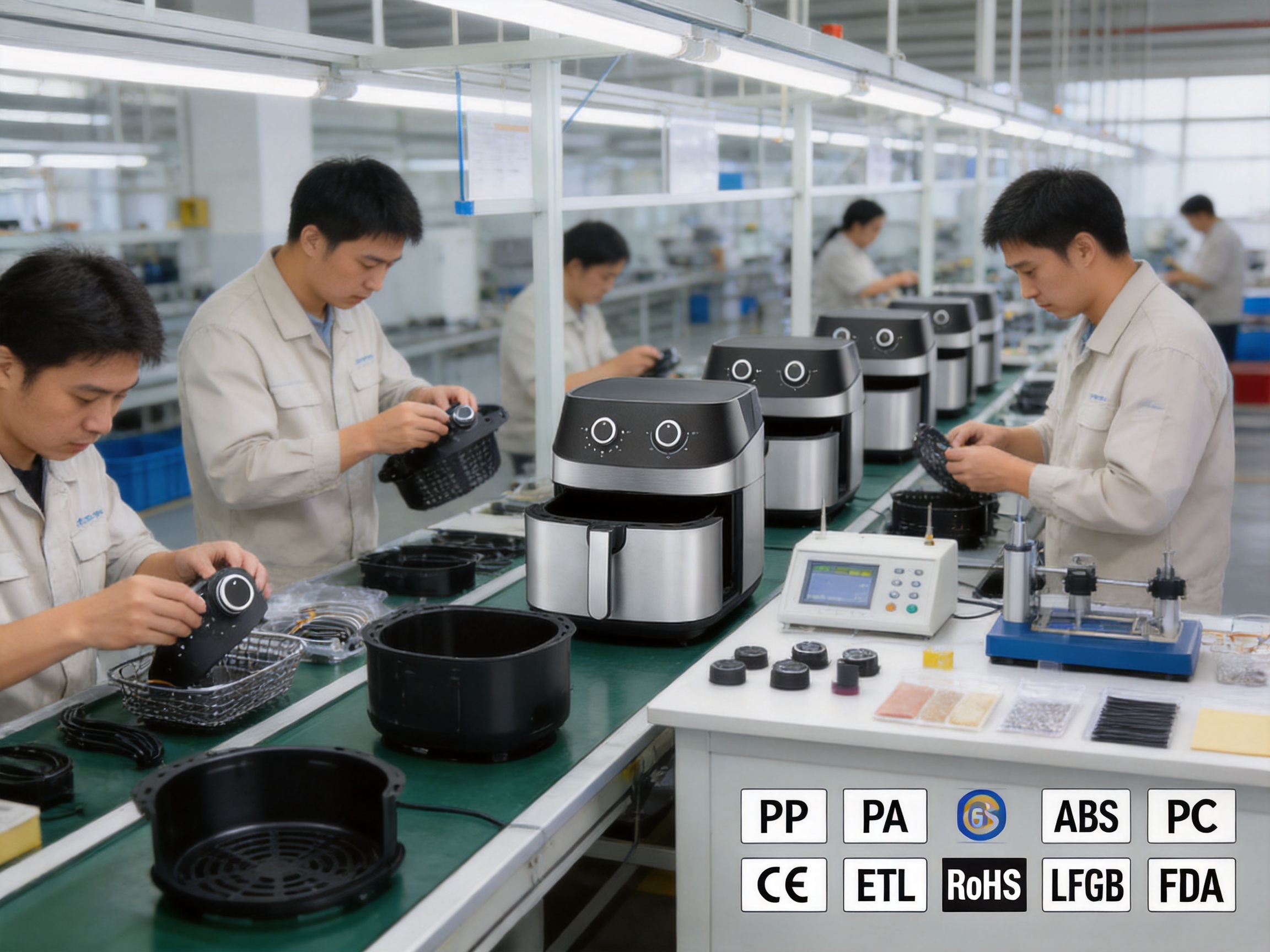
The product uses PP, PA, ABS, and PC materials. Each material type contributes to the structure and usability of the appliance. In household kitchen appliances, material selection must consider heat resistance, strength, appearance, safety, and long-term performance. The correct combination of plastics and engineered materials helps ensure that the exterior housing, functional components, and viewing parts can perform appropriately in a heated cooking environment.
PP is widely used in appliance components due to its practical balance of toughness and processability. PA is valued for mechanical strength and heat-related performance in suitable applications. ABS supports good surface quality and structural integrity, helping create a durable and attractive appliance body. PC can be used where clarity, toughness, or heat-related performance is required, making it relevant for components such as window structures when properly engineered.
Material consistency is an important advantage for mass production. When an appliance is produced in large quantities for international buyers, the quality of raw materials and molded parts must remain stable from batch to batch. This is where manufacturing discipline becomes essential. Careful material selection, incoming material inspection, controlled injection molding, accurate assembly, and final quality checks all contribute to a finished product that meets buyer expectations.
Compared with low-grade products that may use inconsistent or thin materials, this air fryer is designed to feel stable and reliable. The net weight of 6.5 kg reflects a product with substantial construction. A durable housing and basket assembly help improve consumer confidence. For retailers, perceived quality matters because consumers judge appliances not only by specifications but also by touch, stability, knob movement, basket sliding, and overall finish.
Certification Support for Global Markets
International certifications are essential for electric kitchen appliances. The GSE042-1/GSE042-1D is associated with CE, GS, CB, ETL, RoHS, LFGB, and FDA certifications. These certifications and compliance references are valuable because they support access to major international markets and provide buyers with confidence in electrical safety, material compliance, and food-contact suitability.
CE compliance is important for European market access. GS certification is recognized for tested safety and quality assurance in relevant markets. CB certification supports international recognition of electrical product testing. ETL is highly relevant for North American market acceptance. RoHS addresses restrictions on hazardous substances, while LFGB and FDA are important for food-contact materials and consumer safety expectations.
For distributors and importers, certification readiness can reduce time to market. Products without appropriate certification may face customs delays, retail listing barriers, or additional testing costs. A certified product platform allows buyers to focus more on branding, sales strategy, packaging, and channel development. This is especially important for supermarket programs, seasonal promotions, and private-label projects with strict launch schedules.
Compared with competitors that offer attractive prices but weak compliance support, a product with broad certification coverage provides a safer purchasing choice. In international appliance sourcing, the lowest price is not always the best value. If a product lacks certification, fails inspection, or creates customer complaints, the total cost becomes much higher. A properly certified air fryer gives buyers better long-term security.
Advantages Over Competing Air Fryers
The 8L mechanical air fryer offers several advantages that help it compete effectively in the household appliance market. First, the large 8L single pot gives it a family-size identity. Many competing models in similar price categories have smaller capacities, which limits their practical use. This model gives consumers more space and gives sellers a stronger promotional message.
Second, the 1700W power rating supports effective cooking performance for a large chamber. Capacity alone is not enough; heating strength must match the basket size. This product offers a balanced capacity-to-power relationship, improving its competitiveness against underpowered large models.
Third, the mechanical design supports user-friendly operation. While some competitors rely heavily on digital functions, not all consumers need complicated presets. A mechanical air fryer can be more intuitive and dependable for everyday use. It also supports a more competitive manufacturing cost structure, allowing buyers to offer strong retail value.
Fourth, the choice between window and non-window versions gives buyers product-line flexibility. Competitors may offer only one appearance or one configuration, forcing buyers to accept a fixed market position. With this product family, buyers can choose a more premium-looking version with a viewing window or a simpler standard version for value channels.
Fifth, the product has broad certification support. This is a major difference from low-cost competitors that may not be ready for regulated markets. Certifications help professional buyers reduce risk and improve confidence.
Sixth, the manufacturer behind the product has experience in designing, developing, and producing small electric kitchen appliances, including blenders, slicers, choppers, food processors, smokeless grills, hot pots, air fryers, and air ovens. This product is not developed in isolation; it is part of a broader appliance manufacturing capability. That experience contributes to better understanding of heating systems, plastic structures, assembly methods, quality control, packaging, and export requirements.
Manufacturing Strength Behind the Product
A high-quality air fryer requires more than a product idea. It depends on manufacturing systems that can transform a design into consistent mass production. CIXI GSTAR ELECTRIC APPLIANCE CO., LTD. has developed extensive experience in small electric kitchen appliances and daily-use household products. The company designs, develops, and manufactures products for domestic kitchens as well as bars, restaurants, and hotels. This range of experience gives the manufacturer a broad understanding of practical use scenarios and customer expectations.
The company’s background includes product development for global retail and supermarket customers. Its products have been supplied to well-known retail channels in different markets, and the company has built knowledge in quality control, pricing competitiveness, quick delivery, and after-sales service. These are important strengths for buyers who need more than a factory; they need a manufacturing partner capable of supporting long-term business.
The company operates its own factory facilities, with a production area that has expanded significantly over time. The factory includes dedicated teams for research and development, quality control, and manufacturing operations. The presence of engineers and QC personnel supports product improvement, process control, and inspection. This is especially important for electric appliances, where small variations in materials, assembly, or heating components can influence performance and safety.
The company’s manufacturing philosophy emphasizes high-quality innovative products, competitive prices, quick delivery, and high-quality after-sales service. These principles align with the needs of international buyers. A buyer sourcing air fryers may need private-label packaging, stable production scheduling, reliable inspection results, and timely shipment. A manufacturer with experience in export programs is better positioned to meet these requirements.
From Product Design to Mass Production
The development of an air fryer begins with market research and product planning. Engineers and product managers consider capacity, appearance, heating performance, materials, control type, safety requirements, packaging size, and target price. For the GSE042-1/GSE042-1D, the choice of an 8L capacity and mechanical controls reflects practical market demand: consumers want a large, reliable, easy-to-use appliance at an accessible value level.
After the product concept is defined, structural design is developed. This includes the outer housing, basket system, airflow path, heating area, control layout, handle design, internal supports, and ventilation. The air fryer must manage heat safely while allowing hot air to circulate efficiently. The mechanical components must feel secure and operate smoothly. The body must remain stable on the countertop, and the basket must insert and remove with user-friendly movement.
Tooling and plastic molding are critical steps. The quality of molded parts affects appearance, fit, strength, and assembly efficiency. Well-controlled injection molding reduces defects such as warping, sink marks, weak edges, uneven surfaces, and poor fit between parts. Material selection and processing conditions must be controlled carefully so that the final housing and components meet the required quality level.
Assembly then brings together the heating system, fan system, mechanical controls, basket, housing, handle, viewing window if applicable, power components, and safety structures. Skilled workers and standardized assembly procedures help maintain consistency. Each station must perform its task correctly because appliance reliability depends on the combined quality of many parts.
Quality control is integrated before, during, and after production. Incoming materials can be inspected to confirm they meet requirements. During production, process checks help identify problems early. Final inspection verifies appearance, function, electrical safety, packaging, and other important points. This layered quality system is one of the most important differences between professional appliance manufacturing and low-control production.
Quality Control and Inspection Priorities
For an electric kitchen appliance, quality control must address safety, performance, appearance, and packaging. Safety checks are especially important because the product uses electrical heating. Proper assembly, insulation, wiring, component placement, and structural protection must be confirmed according to relevant standards. Performance checks help ensure the air fryer heats properly, controls respond correctly, and cooking functions operate as intended.
Appearance inspection is also important. Consumers expect the product to look clean and well-made. Scratches, color differences, poor-fitting panels, loose knobs, uneven gaps, or basket misalignment can reduce perceived value. A professional manufacturing process controls these details so that the product meets retail standards.
Mechanical controls require specific attention. Knobs should rotate smoothly and align properly with markings. The timer and temperature settings should respond consistently. A poorly made control system can lead to customer dissatisfaction even if the heating function works. By focusing on control feel and reliability, the product can provide a better user experience.
Packaging inspection is another priority for export products. The gift box and carton must protect the air fryer during transportation. Carton dimensions and strength affect container loading and warehouse handling. For this product, one piece is packed per carton, with defined gift box and carton sizes. This supports safer shipment and more predictable logistics.
Packaging, Loading, and Wholesale Planning
Wholesale buyers need accurate packaging information to calculate container loads, shipping costs, storage space, and distribution plans. The air fryer has a gift box size of L460 x W360 x H417 mm and a carton size of L475 x W375 x H435 mm. With one piece per carton, the packaging provides individual protection and is convenient for retail or e-commerce distribution.
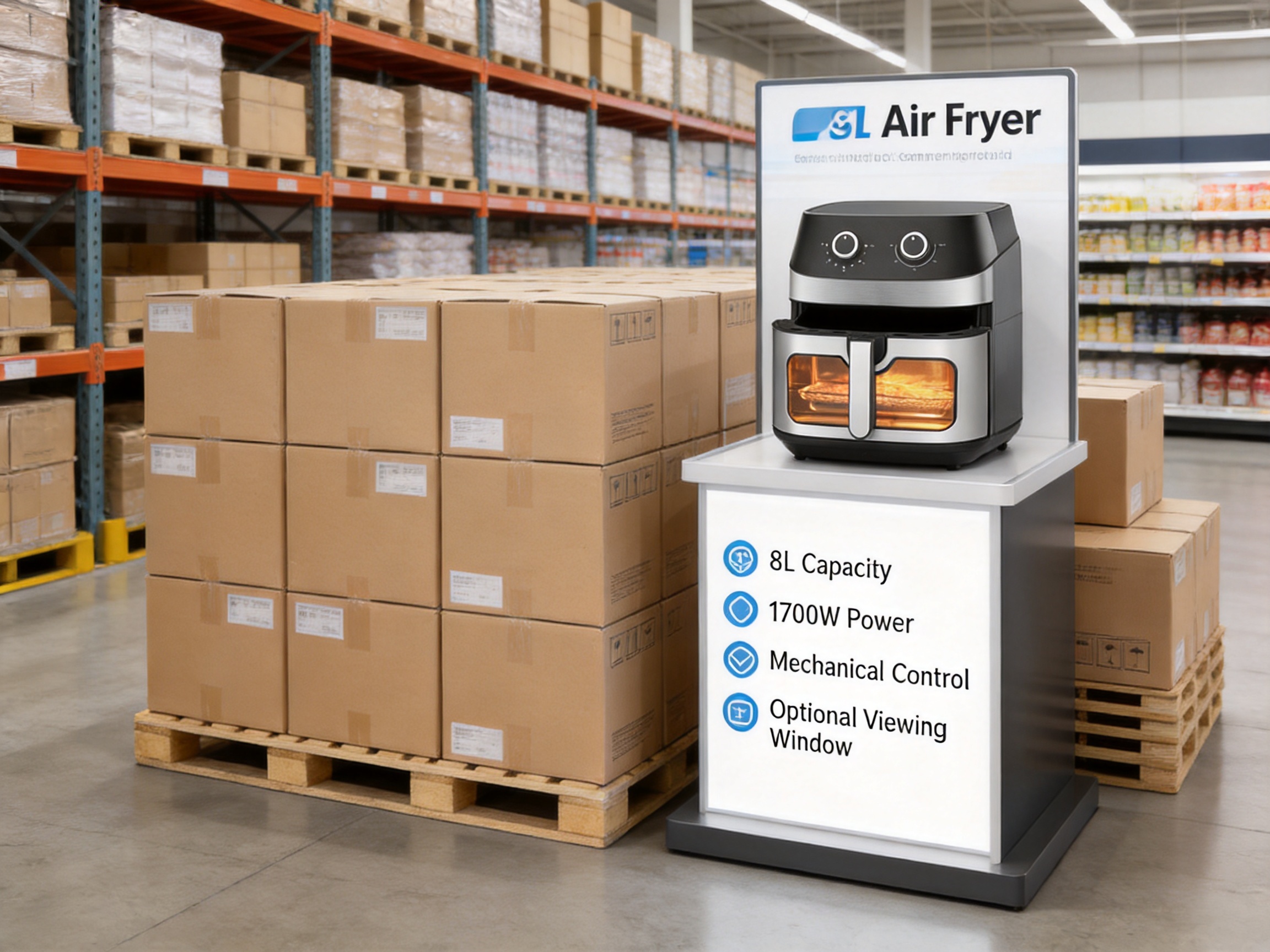
The 40HQ loading quantity is approximately 1050 pieces, and the MOQ is 1050 pieces. This alignment is useful because it allows buyers to plan full-container orders efficiently. Full-container purchasing can reduce unit shipping costs and simplify logistics. For importers building seasonal programs or supermarket promotions, the ability to match MOQ with container loading is a practical advantage.
The gross weight of 7.5 kg and net weight of 6.5 kg are also useful for freight planning. Buyers can estimate total shipment weight and warehouse handling requirements. These details may seem simple, but they are essential for professional purchasing departments. Accurate data helps avoid unexpected logistics issues and supports smooth communication between manufacturer, forwarder, importer, and retailer.
Packaging also influences consumer experience. A properly designed gift box can communicate product value, show key selling points, and protect the appliance until it reaches the end user. For private-label programs, packaging can be customized according to buyer requirements, subject to production planning and order details. A manufacturer experienced in export appliance packaging can help buyers create packaging suitable for retail shelves, online sales, or promotional channels.
Applications in Household Kitchens
The 8L mechanical air fryer is suitable for a wide range of household cooking tasks. Consumers can use it for crisping fries, roasting vegetables, heating frozen snacks, cooking chicken, preparing fish, baking simple items, and reheating leftovers. The appliance can reduce the need for deep frying and help users prepare meals with less oil. This makes it attractive to health-conscious families as well as users who want convenient cooking.
The large capacity makes the appliance especially practical for family dinners. Instead of cooking multiple small batches, users can prepare more food at once. This saves time and makes the product more likely to become a regular part of the kitchen routine. A product that is used frequently provides greater consumer value and strengthens brand loyalty for the seller.
The mechanical design also makes the air fryer easy to introduce to new users. Some consumers may be purchasing an air fryer for the first time and may feel uncertain about advanced settings. A mechanical control system reduces that barrier. The user can quickly understand how to set time and temperature, making the product approachable and practical.
The viewing window version adds an extra layer of convenience. Users can observe browning progress without interrupting cooking. This is helpful for foods that can overcook quickly, such as breaded snacks, pastries, or thin vegetables. It also adds a sense of interaction and confidence, especially for users learning how to adjust cooking times.
Retail and Private-Label Market Potential
For retailers and private-label brands, the air fryer category remains highly attractive. It combines health-oriented messaging, convenience, modern kitchen appeal, and broad consumer awareness. An 8L mechanical air fryer can be positioned in several ways: as a family-size air fryer, a value-focused large appliance, a simple mechanical model, or a high-capacity alternative to smaller units.
The product’s specifications support strong retail messaging. Key claims can include 8L capacity, 1700W power, mechanical operation, optional viewing window, international certifications, and family cooking convenience. These features are easy for consumers to understand, which is important in retail environments where purchase decisions may be made quickly.
Private-label buyers can benefit from the product platform because it offers flexibility. The same core product family can support different appearances, packaging designs, and market positions. A supermarket may choose the window-free version for a promotional value line, while another retailer may select the window version for a more premium shelf position. This flexibility can help buyers build a complete category strategy.
Compared with sourcing from suppliers that offer only generic small-capacity models, working with a manufacturer capable of producing a high-capacity certified air fryer gives buyers a stronger opportunity to differentiate. The product can compete not only on price but also on capacity, usability, and certification confidence.
Energy Efficiency and Modern Cooking Habits
Although cooking energy use depends on recipe, temperature, and cooking time, air fryers are often valued because they can cook many foods faster than traditional ovens and require less oil than deep frying. The 1700W heating system is designed to provide strong cooking performance in a compact countertop appliance. For everyday meals, users may appreciate the ability to prepare food without heating a large oven cavity.
Modern households increasingly want appliances that save time. Busy families, young professionals, and small households all need convenient cooking tools. Even though this product has a large 8L capacity, it remains a countertop appliance with direct operation. Users can place food in the basket, set the mechanical controls, and continue with other tasks while cooking proceeds.
The air fryer also supports changing health preferences. Many consumers want to reduce oil consumption but still enjoy crispy foods. Air frying does not eliminate all dietary concerns, but it gives users an alternative to deep frying. This practical health benefit is one of the main reasons the air fryer category has grown worldwide.
For distributors, this broad consumer appeal reduces market education costs. Most consumers already understand what an air fryer is. The challenge is to convince them to choose a specific model. The 8L capacity, powerful heating, easy mechanical controls, and optional viewing window provide clear reasons to select this product over smaller or less practical competitors.
Design Balance: Appearance, Function, and Cost
A successful household appliance must balance appearance, function, and cost. If a product looks attractive but performs poorly, it will not generate repeat trust. If it performs well but is too expensive, it may fail in competitive retail channels. If it is low-cost but unreliable, it can damage the seller’s reputation. The GSE042-1/GSE042-1D is designed around a balanced approach.
The exterior size gives the air fryer a strong presence without becoming excessively bulky. The 8L basket provides meaningful capacity, while the mechanical control system helps maintain simplicity and value. The optional window allows product differentiation without forcing all buyers into the same specification. This modular market approach is useful for international sales because different countries and channels may have different preferences.
From a manufacturing point of view, mechanical controls can simplify certain aspects of production compared with more complex digital interfaces. This can support stable output and competitive pricing. At the same time, mechanical does not mean basic in quality. The appliance still requires careful engineering, heat management, material control, and certification compliance.
The result is a product that can serve both consumers and commercial buyers effectively. Consumers receive a large, easy-to-use kitchen appliance. Buyers receive a certified, export-ready product with strong retail potential and practical logistics data.
Company Experience in Kitchen Appliance Development
CIXI GSTAR ELECTRIC APPLIANCE CO., LTD. has built its business around the design, development, and manufacturing of small electric kitchen appliances and daily-use products. Its product range includes blenders, slicers, choppers, food processors, smokeless grills, hot pots, air fryers, air ovens, ice buckets, beverage dispensers, pitchers, slicers, and graters. This wide range gives the company experience with different materials, mechanical structures, food-contact requirements, and consumer usage habits.
The company’s history also shows a transition from trading and sourcing experience into independent design and manufacturing. This background is important because it means the manufacturer understands both sides of the business: what customers need from factories and what factories must do to deliver consistent products. Experience with supermarket and international retail programs strengthens this understanding.
The company has invested in its own factory and production facilities. It has developed R&D capability, quality control capability, and production teams. Such internal resources help support product innovation, production management, and customer service. For buyers, this can mean faster communication, better technical support, and stronger control over production schedules.
The manufacturer’s experience in air ovens and air fryers is especially relevant. These products require knowledge of heating performance, airflow, temperature control, material safety, and user convenience. A company that has already developed and sold these categories in international markets is better positioned to supply an 8L air fryer that meets real market expectations.
Advanced Manufacturing Processes
The strength of the product is closely connected to the manufacturing processes behind it. Advanced manufacturing does not only mean automated equipment; it also means disciplined procedures, trained workers, engineering review, quality checkpoints, and continuous improvement. In appliance production, process stability is one of the biggest contributors to final product quality.
The first process advantage is product engineering. Engineers consider how the air fryer will be assembled, how heat will move, how the user will operate controls, and how parts will fit together. Good engineering reduces production problems and improves user experience. It also helps ensure that the appliance can meet certification requirements and buyer specifications.
The second advantage is controlled material processing. Plastic parts must be molded accurately, with stable dimensions and good surface quality. Material selection must match the intended function of each part. The combination of PP, PA, ABS, and PC reflects a structured approach to using different materials where they are most appropriate.
The third advantage is standardized assembly. In mass production, each worker and station must follow defined procedures. This reduces variation and improves efficiency. Standardized assembly also makes training easier and helps quality control teams identify problems quickly.
The fourth advantage is inspection throughout production. Rather than waiting until the final stage, a professional factory checks materials and processes at multiple points. This helps prevent defective products from moving forward. Early detection reduces waste, improves delivery reliability, and protects buyers from quality problems.
The fifth advantage is export packaging and loading planning. Appliances must survive long-distance shipping, warehouse movement, and retail distribution. Proper carton structure, internal protection, and labeling support smooth logistics. The defined carton size and loading quantity for this air fryer make wholesale planning easier and more reliable.
Why Buyers Should Consider This Model
Buyers should consider the GSE042-1/GSE042-1D because it offers a strong combination of capacity, performance, simplicity, compliance, and manufacturing support. It is not just another air fryer in a crowded category. It is a family-size mechanical model with practical features that match real consumer needs.
The 8L capacity gives it a clear advantage over smaller models. The 1700W power supports effective cooking performance. The mechanical control system offers easy operation and value. The optional viewing window allows buyers to build differentiated product lines. The broad certification support helps reduce international market risk. The packaging and loading information supports professional wholesale planning.
The manufacturer’s broader appliance experience adds another layer of confidence. Buyers sourcing from overseas manufacturers often worry about consistency, communication, delivery, and after-sales response. A company with experience in appliance development, supermarket supply, quality control, and export production is better prepared to support long-term cooperation.
This model is especially suitable for importers, supermarket chains, household appliance distributors, e-commerce sellers, promotional product buyers, and private-label brands. It can be positioned as a reliable family air fryer, a high-capacity value product, or a practical mechanical alternative to expensive digital models.
Practical Selling Points for Retail Channels
Retailers can communicate the product’s benefits in clear and consumer-friendly language. The most important selling point is the 8L family-size capacity. This immediately tells consumers that the appliance can handle larger meals. The second selling point is the 1700W power, which supports fast and efficient cooking. The third is simple mechanical operation, which makes the product easy for anyone to use.
The optional viewing window can be highlighted as a convenience feature. Consumers enjoy being able to watch food cook without opening the basket. It makes the appliance feel more modern and interactive. For the non-window version, retailers can emphasize simplicity, value, and classic operation.
Certification references can also support consumer confidence, especially in markets where safety and material compliance are important. Retailers may not list every certification on consumer-facing packaging, but having them available for compliance documentation and buyer review is highly valuable.
For online sales, the product’s specifications can be used to build strong product pages. Clear images, capacity information, dimensions, power rating, and usage scenarios can help consumers make purchase decisions. Because air fryers are widely searched online, a large-capacity model with straightforward features can attract strong attention.
Q&A Section
What is the capacity of this air fryer?
The air fryer has an 8L single-pot capacity. This makes it suitable for family cooking, larger portions, and users who want to reduce the need for multiple cooking batches.
What is the difference between GSE042-1 and GSE042-1D?
The product family includes a mechanical version with a viewing window and a mechanical version without a viewing window. Buyers can choose the version that best matches their target market, retail price, and consumer preference.
Why choose mechanical controls instead of digital controls?
Mechanical controls are simple, intuitive, and practical. They are easy for users of different ages to understand and can offer a durable, cost-effective solution for everyday cooking.
Is 1700W suitable for an 8L air fryer?
Yes. The 1700W power rating provides strong heating performance for the large 8L cooking chamber, helping support efficient cooking and crisp results.
What materials are used in the product?
The air fryer uses PP, PA, ABS, and PC materials. These materials are selected for practical appliance construction, appearance, strength, and suitability for the designed components.
Which certifications are available?
The product is associated with CE, GS, CB, ETL, RoHS, LFGB, and FDA certifications, supporting international market requirements and buyer confidence.
How many pieces can fit in a 40HQ container?
Approximately 1050 pieces can be loaded in a 40HQ container. The MOQ is also 1050 pieces, which supports efficient full-container order planning.
Who is this air fryer suitable for?
It is suitable for household users, families, retailers, importers, e-commerce sellers, supermarket programs, and private-label appliance brands seeking a large-capacity mechanical air fryer.
What are the key advantages over many competing models?
The key advantages include 8L capacity, 1700W power, simple mechanical control, optional viewing window, broad certification support, practical packaging data, and manufacturing support from an experienced small electric kitchen appliance producer.
Conclusion
The 8L mechanical air fryer GSE042-1/GSE042-1D is a practical and competitive product for today’s household kitchen appliance market. It combines large capacity, strong 1700W heating power, easy mechanical operation, optional window design, durable material construction, and broad certification support. These features make it attractive to consumers and valuable for professional buyers.
In a crowded air fryer category, the product stands out because it focuses on real-world cooking needs. Families want more capacity. Users want simple controls. Retailers want clear selling points. Importers want compliance confidence. Private-label brands want stable manufacturing and flexible product positioning. This air fryer addresses all of these priorities.
The manufacturing strength behind the product further increases its value. With experience in small electric kitchen appliances, product development, quality control, export production, and international customer cooperation, CIXI GSTAR ELECTRIC APPLIANCE CO., LTD. provides more than a product; it provides manufacturing partnership. For buyers seeking a dependable large-capacity air fryer for wholesale, retail, or private-label programs, this model represents a strong choice built around performance, practicality, and market readiness.
References
1. International Electrotechnical Commission, Household and Similar Electrical Appliances Safety Standards.
2. European Committee for Standardization, Food Contact Materials and Kitchen Appliance Compliance Guidance.
3. Underwriters Laboratories and Intertek Testing Principles for Household Electrical Appliances.
4. Market Research Reports on Global Small Kitchen Appliance Trends and Air Fryer Category Growth.
5. Materials Engineering Handbooks on PP, PA, ABS, and PC Applications in Consumer Appliances.
6. Quality Control Methods for Mass Production of Household Electric Kitchen Appliances.