
 English
 中文简体
 Español
 English
 中文简体
 Español

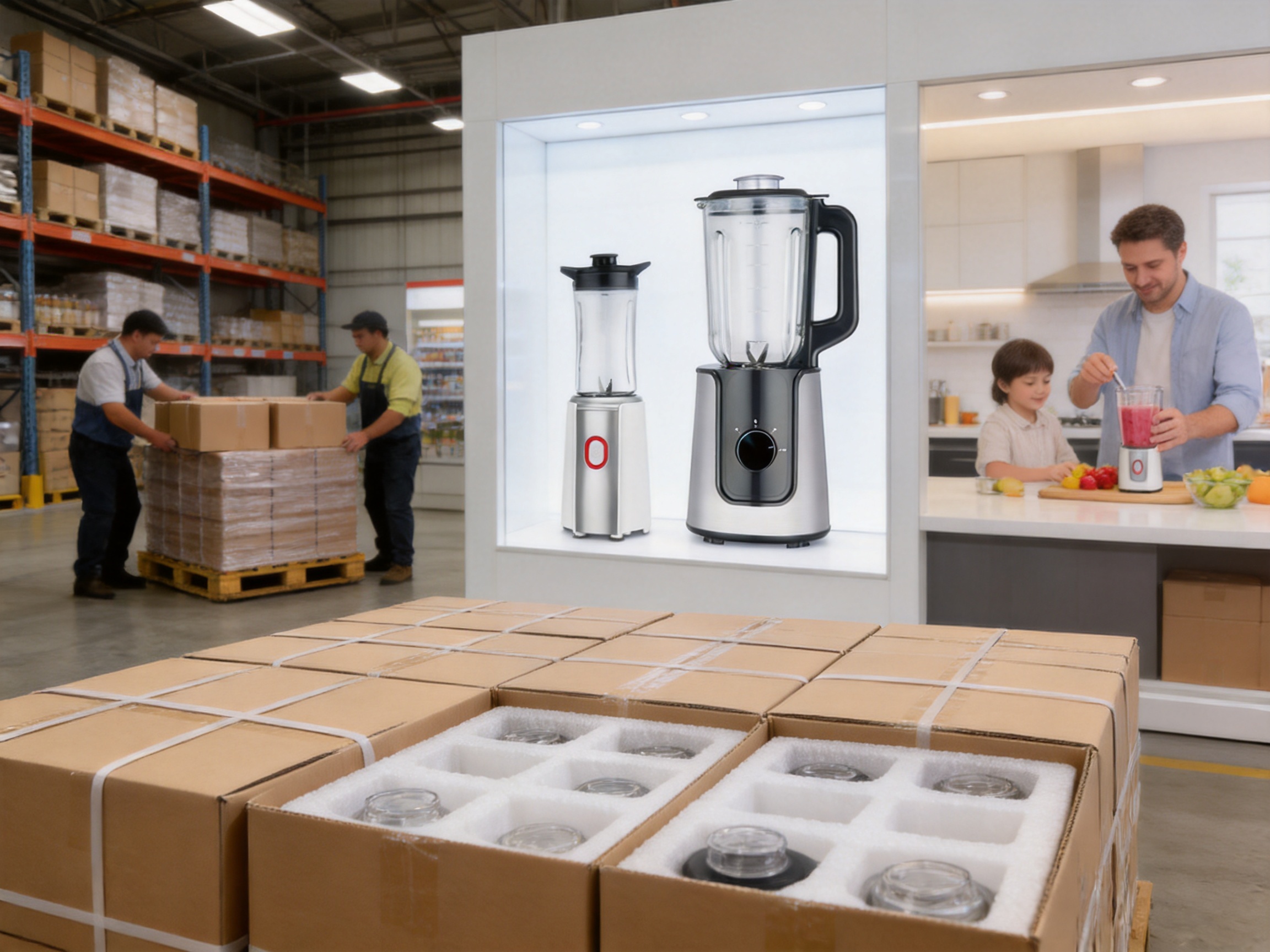
Blending has become an essential part of modern household food preparation. From smoothies and sauces to soups, dressings, baby food, and mixed beverages, a dependable blender can reduce preparation time while helping users achieve consistent results. The GSE010 and GSE011 blender models are designed for this practical role, combining food-contact materials, compact construction, transparent mixing visibility, and different power and capacity configurations for varied household requirements.
These two models form part of a broader small kitchen appliance range manufactured by CIXI GSTAR ELECTRIC APPLIANCE CO., LTD. The company develops and produces compact electric kitchen appliances for household, hospitality, retail, and food-service applications. Its product categories include blenders, slicers, choppers, food processors, hot pots, smokeless grills, air fryers, air ovens, beverage dispensers, ice buckets, pitchers, graters, and related products.
The GSE010 is positioned as a compact everyday mixer for users who value a smaller footprint and convenient handling. The GSE011 is a higher-capacity configuration with a stated 1.5-liter container and a more powerful motor specification. Together, they give importers, distributors, retailers, and project buyers an opportunity to select a configuration suited to different market segments instead of relying on one universal specification.
Both models are intended to support efficient food and beverage preparation while maintaining a practical balance between performance, appearance, packaging efficiency, and manufacturing scalability. The black plastic housing, aluminium exterior elements, transparent mixing container, and stainless-steel food-contact components create a product appearance that can fit contemporary kitchens and commercial-style preparation environments.

GSE010 Blender/GSE011 1.5L Blender
Product Overview and Positioning
The GSE010 and GSE011 are countertop blender products developed for regular food and beverage preparation. Their main value comes from the combination of motor power, food-grade construction, visible blending, and a compact appliance format. These features address several common concerns of blender buyers: whether the product is safe for food contact, whether the motor can handle routine household tasks, whether the container is easy to monitor, and whether the appliance can be stored without occupying excessive counter space.
The GSE010 is described as a 600-milliliter mixer with a powerful motor intended to handle most household mixing requirements. The technical table supplied for this model lists a 500-watt power rating, while the product description refers to a 300-watt motor. Because these two figures are different, buyers should confirm the final rated input power, motor configuration, and market-specific label before placing a production order. This clarification is particularly important for packaging, energy labeling, product registration, and electrical compliance.
The GSE011 is identified as a 1.5-liter blender. Its technical information lists a 1,200-watt power rating and a 50–60 Hz frequency range. This higher-capacity and higher-power configuration is suitable for buyers seeking a larger preparation volume or a product with a stronger performance positioning in retail and wholesale channels.
The two-model structure can support market segmentation. A smaller blender can be offered to single users, couples, students, compact-apartment residents, and consumers preparing limited quantities. A 1.5-liter model can target families, frequent smoothie makers, meal-preparation users, cafés, small food-service operators, and retailers seeking a larger countertop appliance.
| Feature | GSE010 | GSE011 |
| Product type | Household mixer or blender | Household blender |
| Stated capacity | Product description refers to 600 ml; technical table lists “/” | 1.5 L |
| Power in technical table | 500 W | 1,200 W |
| Power in product description | 300 W | Not separately stated |
| Frequency | 50–60 Hz | 50–60 Hz |
| Product size | 110 × 110 × 342 mm | To be confirmed |
| Carton size | 655 × 260 × 530 mm | 655 × 260 × 530 mm |
| Carton quantity | 6 pieces per carton | 6 pieces per carton |
| Gross/net weight | 9.0/7.72 kg | 10.6/9.6 kg |
| Listed certification | CB, GS, CE | CE, CB, GS |
The table illustrates the main commercial distinction between the models. GSE010 emphasizes a smaller, more compact format, while GSE011 offers larger capacity and a higher listed power rating. Before publication of final sales materials, the capacity, product size, and power information for GSE010 should be harmonized across the carton, nameplate, instruction manual, website, and purchase documentation.
Food-Grade Construction and Material Selection
Material selection is one of the most important considerations in a blender because several components may come into contact with food or beverages. The supplied product information describes the GSE010 as being made from ABS, PCIG, and SS304, with food-grade materials used in the product construction. Stainless steel grade SS304 is widely used in kitchen equipment because it offers a durable, hygienic, and corrosion-resistant surface when properly processed and maintained.
The use of stainless steel in food-contact or blade-related components can provide a more robust alternative to lower-grade metal materials. For an appliance exposed to water, fruit acids, vegetables, sauces, and repeated cleaning, material stability is an important part of long-term user confidence. SS304 also has a familiar specification in the kitchen-appliance and food-service sectors, which can make the product easier for professional buyers to evaluate.
ABS is commonly used for appliance housings because it can provide a good balance of rigidity, impact resistance, processability, and appearance. A carefully designed ABS housing can help protect internal electrical components while giving the appliance a smooth and practical exterior. The GSE010 description also refers to a black plastic housing with aluminium casing or aluminium exterior elements. This combination can create a more refined appearance than a basic all-plastic housing.
The transparent mixing container adds another practical material benefit. Users can observe the contents while the appliance is operating, allowing them to judge texture, ingredient distribution, and progress. This visibility is especially useful when preparing mixtures that require occasional checking, such as smoothies, sauces, dressings, blended vegetables, and crushed or emulsified ingredients.
Material selection alone does not guarantee safety. Food-contact suitability depends on the specific grade, formulation, manufacturing conditions, surface finish, cleaning instructions, and applicable market regulations. Buyers should therefore request the appropriate declarations, test reports, and certification documents for their destination market. Nevertheless, the stated use of ABS, PC-related material, and SS304 demonstrates an effort to combine practical durability with food-preparation requirements.
Advantages of a Transparent Mixing Container
A transparent container is useful because it provides direct visual feedback. Users can see whether ingredients are circulating, whether larger pieces remain near the top or bottom, and whether the mixture has reached the desired consistency. This can reduce the need to stop the blender repeatedly to inspect the contents.
Visual access can also support better recipe control. A user preparing a sauce may stop blending when the texture becomes smooth enough. Someone making a smoothie can quickly identify whether frozen fruit or leafy vegetables require additional blending. For new users, a visible container also makes the appliance easier to understand because the blending process is not hidden.
For retailers, transparency is an attractive demonstration feature. A product displayed in a showroom, department store, supermarket, or online product video can communicate its function quickly. Customers can see the container shape, approximate fill volume, and blending action without needing a lengthy technical explanation.
Motor Power and Everyday Performance
Motor power is one of the primary specifications used by consumers when comparing blenders. A higher wattage can indicate greater electrical input capacity, but actual blending performance also depends on blade design, motor efficiency, transmission structure, container geometry, ingredient quantity, operating time, and user technique. For this reason, wattage should be considered together with the intended application rather than treated as the only performance indicator.
The GSE010 technical table lists 500 watts, while its product description refers to a 300-watt motor. This difference should be resolved by the manufacturer and buyer before the product is commercialized. If the two figures represent different measurement conventions, such as rated power and maximum or marketing power, the distinction should be clearly explained. Accurate information protects the buyer, supports regulatory compliance, and reduces confusion at the retail level.
The GSE011 technical table lists 1,200 watts. This gives the model a strong performance position within the household blender segment. The higher listed power can be useful for users who prepare larger quantities or work with ingredients that require more vigorous processing. It also helps distributors offer a clear upgrade path from a compact entry-level model to a higher-capacity configuration.
For daily household applications, a blender may be used to process fruit, soft vegetables, cooked ingredients, dairy or plant-based liquids, sauces, dressings, and beverage mixtures. The suitability of each recipe depends on ingredient hardness, quantity, liquid content, and operating instructions. Users should follow the supplied manual, avoid overfilling, and observe any recommended operating intervals.
In a competitive market, product performance is not only about maximum motor power. Buyers also evaluate stability, noise perception, ease of cleaning, control design, container handling, appearance, warranty support, and replacement-part availability. A well-balanced product that is easy to use every day can compete effectively even when competing models advertise similar or higher wattage.
Compact Performance for Different Users
The compact GSE010 format can be attractive for households where countertop space is limited. Small kitchens, dormitories, serviced apartments, offices, and compact retail displays often benefit from products that provide useful preparation capacity without a large footprint. The listed product dimensions of 110 × 110 × 342 millimeters indicate a narrow vertical format, although buyers should confirm whether these dimensions include the container, lid, base, and any removable accessories.
A narrow body can simplify storage and display. It may fit into a kitchen cabinet, under a shelf, or within a small appliance zone. It can also help retailers place more products on a display shelf. However, practical clearance above the appliance should be checked before installation because a tall blender may require enough space to remove the container or lid.
The GSE011 is positioned for larger-volume use. Its 1.5-liter capacity can reduce the need to blend several small batches when preparing drinks or food for multiple people. Larger volume may be useful for family breakfasts, meal preparation, party beverages, and small hospitality environments. Capacity should always be interpreted as the stated container volume, and users should follow the recommended maximum working level in the operating manual.
Design, Appearance, and User Experience
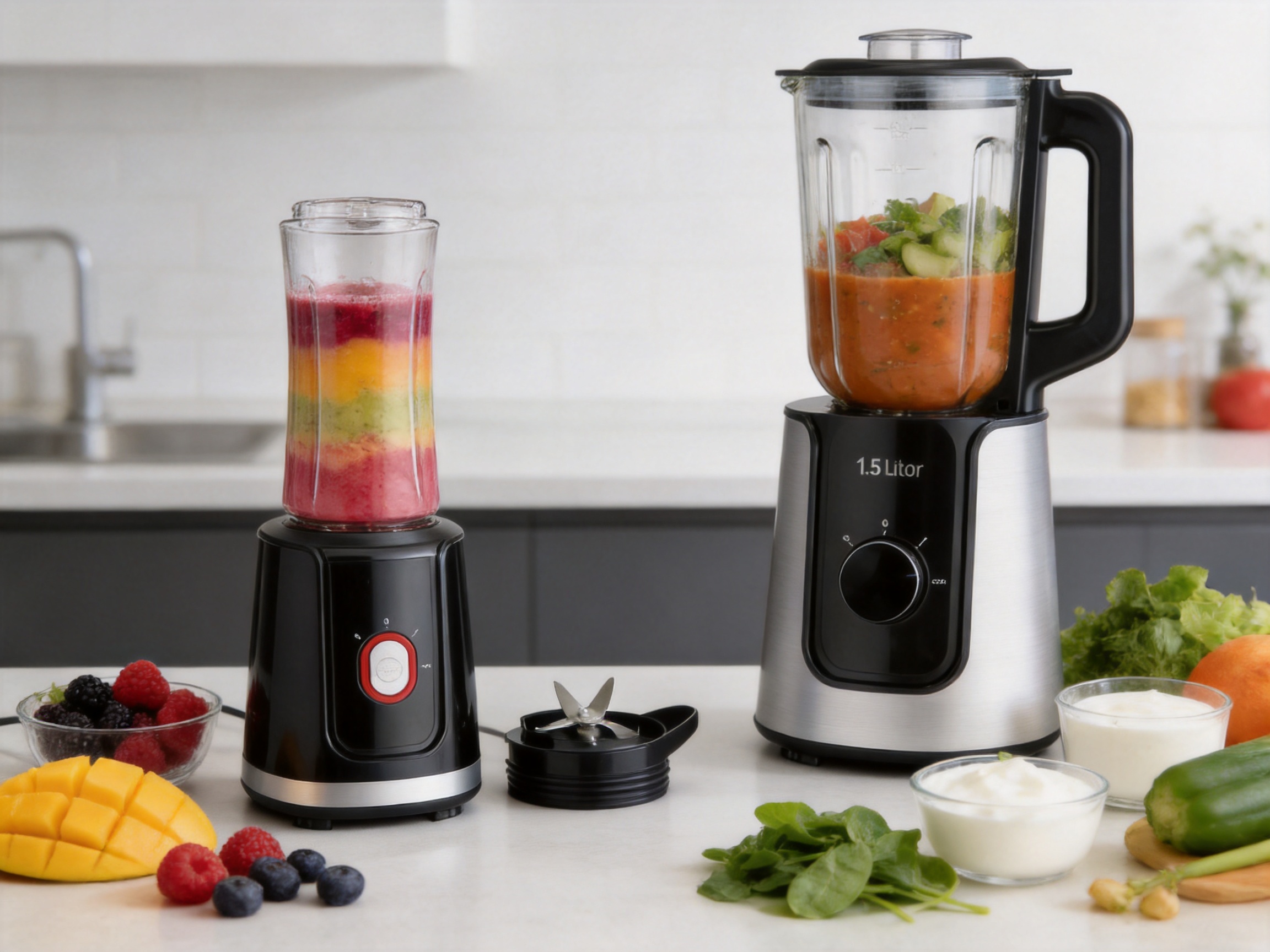
Small kitchen appliances are increasingly purchased not only for function but also for their appearance. A blender that remains on the countertop becomes part of the visible kitchen environment. The black plastic housing and aluminium exterior elements described for the GSE010 create a modern, understated appearance that can coordinate with other kitchen appliances.
Black is commercially versatile because it can suit traditional, contemporary, industrial, and minimalist interiors. It also provides a strong contrast with a transparent container, making the product structure easy to identify. Aluminium-colored details can add visual distinction and may help position the product above basic entry-level appliances.
The design should also support practical handling. Users need to place the blender on a stable surface, add ingredients, secure the container and lid, operate the controls, and remove the container after use. Clear instructions and an intuitive assembly process are important because incorrect installation can affect safety and performance.
Transparent components can help users manage fill levels. They can see whether the mixture is within the recommended range and whether ingredients have been evenly distributed. This visual feedback can be especially valuable for less experienced users and for retail demonstrations.
A product designed for everyday use should be easy to wipe, rinse, and maintain. The specific cleaning method should be stated in the instruction manual, especially for the motor base, blade assembly, seals, lid, and container. Electrical components should not be immersed unless the product documentation explicitly permits it. Clear maintenance instructions can reduce misuse and improve the customer experience after purchase.
Practical Advantages Compared with Basic Competitor Products
Compared with very basic blender products, the GSE010 and GSE011 offer several potential advantages based on the supplied information. First, the use of stated food-grade materials gives buyers a clearer material story. Second, the transparent container allows direct observation of blending progress. Third, the two-model range supports different capacity and power requirements. Fourth, the black-and-aluminium appearance can provide a more premium retail presentation.
The GSE011’s 1.5-liter capacity and 1,200-watt listed power rating can help it compete with larger household blender models. It offers a clear value proposition for consumers who want to prepare more at one time. The GSE010, by contrast, can compete in the compact appliance segment where portability, limited storage requirements, and lower-volume preparation are more important.
Another advantage is manufacturing flexibility. The same general product category can be offered through different sales channels, including supermarket retail, online marketplaces, appliance distributors, promotional programs, hospitality suppliers, and private-label projects. A supplier with experience across several kitchen appliance categories may also be able to coordinate related products for a complete small-appliance range.
Competitive advantage must be supported by verified specifications. Claims about power, capacity, food-contact safety, certification, noise, speed, blade performance, and durability should be made only when supported by testing or official documentation. This approach helps the product compete on credible value instead of exaggerated marketing language.
Manufacturing Background and Industrial Capability
CIXI GSTAR ELECTRIC APPLIANCE CO., LTD. is located in Cixi, Ningbo, China, at No. 111 Jing Qi Road, Chongshou Town. The company specializes in the design, development, and manufacture of small electric kitchen appliances and related food-preparation products.
The company’s development history reflects a progression from trading and sourcing experience toward product design and manufacturing. Its background includes work with household appliances, television-shopping products, buying-agent services, non-electric kitchen innovations, and later electric appliances. This experience can be valuable because successful appliance production requires more than assembly. It requires understanding customer requirements, packaging, quality control, cost management, market positioning, and after-sales expectations.
The company states that it moved into its own new factory in 2018. The supplied company information describes a facility of approximately 10,000 square meters with a building area of 18,000 square meters at that stage. It also states that the company has a wholly owned plant with a production area of approximately 15,000 square meters and more than 200 experienced workers. Since the supplied descriptions use different figures and dates, buyers should request the latest official factory profile when conducting an audit or qualification review.
The company also reports a technical and quality structure that includes engineers in research and development and personnel in quality control. One description refers to 10 engineers in the R&D department and 10 people in QC, together with approximately 150 workers at one point in the company’s development. A later description refers to more than 200 experienced workers. These figures indicate an expanding organization, but they should be confirmed against the current staffing structure during supplier evaluation.
Research, Development, and Product Engineering
Product engineering is central to the production of reliable blenders. The development process may include defining the intended capacity, selecting materials, designing the motor base, determining container geometry, integrating the blade system, planning electrical protection, and preparing the product for assembly and testing.
A supplier with experience in blenders, food processors, choppers, slicers, air fryers, and ovens can draw on knowledge from several adjacent product categories. For example, experience with food-contact materials can support component selection. Experience with heating products can strengthen electrical safety and thermal management practices. Experience with high-volume supermarket programs can improve packaging consistency and delivery planning.
Engineering work should also address the relationship between the container, blade, motor, and control system. These components must work together under expected loads. A product designed only around a high wattage number may not deliver a satisfactory user experience if the container shape, blade configuration, or coupling system is not properly matched.
Development should include prototype evaluation, design verification, safety testing, endurance testing, packaging assessment, and production validation. For export products, the design may need to accommodate different plug types, voltage requirements, labeling rules, language requirements, and certification systems.
Production Process Considerations
Manufacturing a blender typically involves multiple controlled operations. Plastic parts may be produced through injection molding. Metal components may be stamped, machined, polished, or formed. Electrical components must be assembled with correct wiring, insulation, and mechanical protection. The motor base, container, blade assembly, seals, switches, and decorative elements must then be brought together in a controlled assembly sequence.
Injection-molded housing parts require attention to material consistency, mold condition, dimensional accuracy, surface quality, color stability, and assembly fit. A properly maintained mold can help reduce visible defects and improve consistency across production batches. Operators and inspectors may check for flash, sink marks, scratches, deformation, and incorrect color.
Food-contact components require special attention to cleanliness and handling. The production area should prevent contamination, foreign particles, and improper substitution of materials. Incoming material inspection can verify dimensions, appearance, supplier documentation, and, where necessary, material identification.
Motor and electrical assembly require process discipline. Wire routing, terminal connections, insulation placement, screw tightening, grounding arrangements, and strain relief should be controlled. A production line may use work instructions, fixtures, torque tools, electrical testers, and visual inspection points to reduce assembly variation.
Final assembly should confirm that the container, lid, seal, blade unit, and motor base fit correctly. The completed unit may then undergo appearance inspection, electrical safety testing, functional operation, and packing verification. Testing requirements should reflect the destination market and the relevant certification program.
Quality Control and Traceability
Quality control should begin before production rather than waiting until finished products are packed. Incoming quality control can examine motors, plastic housings, containers, stainless-steel parts, cords, switches, seals, labels, packaging, and other components. In-process control can verify critical assembly operations, while final inspection can assess performance and appearance.
For blender products, useful inspection points may include container leakage, lid fit, blade rotation, motor operation, abnormal sound, electrical insulation, grounding, power consumption, switch function, product dimensions, label accuracy, and carton quantity. The exact tests should be defined according to the final product design and the requirements of the customer’s destination market.
Traceability is also valuable. Production dates, batch codes, component lots, inspection records, and carton markings can help identify products if a quality question arises. Clear records support corrective action and make communication between the factory, importer, retailer, and service provider more efficient.
A supplier’s quality system should be evaluated through documentation and practical observation. Buyers may review inspection standards, test equipment calibration, production records, nonconforming-product procedures, corrective-action reports, and sample retention practices. Factory audits can help confirm whether stated procedures are followed consistently.
Certifications and Compliance Considerations
The supplied technical information lists CB, GS, and CE certifications for the GSE010, and CE, CB, and GS certifications for the GSE011. These markings indicate that certification and market compliance are important parts of the product offering. However, buyers should request copies of the certificates and confirm that they apply to the exact model, voltage, frequency, plug configuration, and production version being purchased.
Certification requirements vary by country and region. Electrical appliances may be subject to requirements for electrical safety, electromagnetic compatibility, energy information, materials, labeling, documentation, packaging, and waste management. A certificate issued for one configuration may not automatically cover another configuration. Changes to the motor, power rating, control system, plug, container, or other critical components may require review.
The model information should be consistent across the nameplate, user manual, carton, product listing, certificate, and customs documents. This is particularly important for GSE010 because the supplied description mentions 300 watts and 600 milliliters, while the technical table lists 500 watts and does not state a capacity. Harmonized documentation will help prevent buyer confusion and reduce the risk of incorrect retail claims.
Importers should also consider local language requirements. Instructions may need to explain assembly, maximum fill level, safe operating time, cleaning, storage, troubleshooting, and disposal. Warning labels should be durable, legible, and positioned where users can see them before operation.
Packaging, Logistics, and Wholesale Supply
The supplied carton size for both models is 655 × 260 × 530 millimeters, with six pieces per carton. The listed gross and net weights are 9.0 and 7.72 kilograms for GSE010, and 10.6 and 9.6 kilograms for GSE011. These figures provide a starting point for logistics planning, but buyers should confirm whether they refer to the complete export carton and whether the packaging configuration is identical for all markets.
Packaging must protect the transparent container, housing, controls, cable, and decorative surfaces during factory handling, domestic transportation, port movement, loading, unloading, and retail distribution. A transparent container can be particularly vulnerable to scratches, impact, and pressure if it is not adequately secured. Internal cushioning, separators, protective bags, and correct carton orientation can help reduce damage.
The six-piece carton quantity can support manageable wholesale handling. Distributors can calculate pallet configuration, warehouse space, container loading, and order quantities using the stated carton information. The supplied container-loading figures are 1,866 pieces per 20-foot container and 3,866 pieces per 40HQ container for both models. These figures should be verified against the final carton dimensions, loading method, pallet use, and shipping restrictions before a purchase order is finalized.
Efficient packaging can reduce transportation cost per unit, but protection should not be sacrificed for volume efficiency. A lower-cost carton that allows movement or impact damage may create higher total costs through claims, returns, replacement shipments, and customer dissatisfaction. Packaging validation should include drop testing, vibration assessment, compression evaluation, and review of the finished retail presentation where appropriate.
For private-label and promotional orders, the packaging process may also include customized color boxes, instruction manuals, barcode labels, carton marks, inserts, stickers, and product identification. These changes should be approved through artwork confirmation and a pre-production sample process.

Applications in Household and Food-Service Environments
The GSE010 can be suitable for routine household tasks that involve modest quantities. Its compact size may appeal to users preparing individual drinks, small portions of sauces, breakfast mixtures, and light meal-preparation ingredients. It can also be considered for offices, guest rooms, student accommodation, and other locations where users need a small appliance rather than a large food-processing system.
The GSE011’s larger 1.5-liter capacity gives it broader potential for family use and higher-volume preparation. Users may value the ability to prepare several servings in one batch. The higher listed power rating can also create a stronger performance message for retailers selling to consumers who frequently process dense or larger-volume mixtures.
Small cafés, bars, restaurants, hotels, and catering operations may also evaluate blender products for beverage and ingredient preparation. Commercial users typically place greater emphasis on operating frequency, cleaning procedures, service support, replacement parts, noise, durability, and compliance. The models should therefore be marketed for professional use only where the manufacturer’s instructions, testing, and warranty conditions support that application.
The company’s broader product experience in beverage dispensers, ice buckets, pitchers, slicers, graters, food processors, air fryers, and air ovens may be useful for hospitality buyers seeking coordinated product sourcing. A supplier capable of offering multiple related categories can simplify communication, sampling, packaging coordination, and shipment planning.
Private-Label and OEM/ODM Opportunities
Many importers and retailers require products that match a specific brand identity, price level, market channel, or promotional theme. The blender models can potentially serve as platforms for customized programs, subject to the manufacturer’s available engineering and production arrangements. Possible areas for discussion include color, logo application, packaging artwork, user manuals, labels, plug type, electrical specifications, accessory configuration, and order quantity.
Customization should not be treated as a purely cosmetic process. Any change to the motor, container material, blade system, electrical input, control method, or safety component may affect testing and certification. Even changes to a housing or label can influence the technical file if they affect ventilation, insulation, mechanical protection, or required markings.
An effective OEM or ODM process normally begins with a written product brief. The brief should identify the target market, voltage and frequency, capacity, rated power, desired materials, colors, packaging requirements, certification expectations, annual demand, order quantity, delivery schedule, and warranty terms. Samples should be evaluated against the approved specification before mass production.
Pre-production approval is especially important for a blender because the appearance of transparent parts, the fit of the lid, the behavior of seals, and the sound of the motor can all influence customer perception. Approval should cover both the product and the packaging. A signed specification and approved sample can provide a reference for future quality inspections.
Commercial Benefits for Distributors and Retailers
For distributors, the two-model range can make inventory planning more flexible. The GSE010 can serve as a compact or entry-level option, while the GSE011 can be presented as the larger and more powerful alternative. This structure supports price laddering and gives sales staff a simple way to explain the differences between products.
For retailers, visual appeal and clear specifications are important. The transparent container can be shown effectively in product photography, store displays, and online content. The black housing and aluminium details can support a contemporary product image. Retail copy can focus on food preparation convenience, visible mixing, capacity choice, and the intended household applications.
For wholesale buyers, carton quantity, gross weight, net weight, carton dimensions, and container-loading information help with supply planning. The manufacturer’s experience with international customers and supermarket-oriented products may also support larger retail programs. Buyers should nevertheless complete normal supplier verification, sample testing, factory auditing, and contract review before confirming a major order.
After-sales service is another key differentiator. A blender is a moving electrical appliance with wear-sensitive components such as seals, couplings, blades, switches, and motors. Buyers should discuss warranty duration, spare-part availability, service instructions, claim procedures, and response times. A competitive purchase price is more valuable when supported by dependable service and consistent replacement support.
Recommended Product Communication
Marketing materials should present the product benefits accurately and in a way that is easy for consumers to understand. Suitable messages may emphasize food-grade construction, transparent blending visibility, compact household design, choice of capacity, and the high listed power of the larger model. Claims should match approved technical documents.
For GSE010, the power and capacity discrepancy should be resolved before final marketing copy is prepared. If the final specification is 500 watts and 600 milliliters, all documents should use those figures. If the final specification is 300 watts, the technical table, carton, label, and certification documents should be updated accordingly. If both values have a technical explanation, that explanation should be written clearly.
For GSE011, the 1.5-liter capacity and 1,200-watt listed power can form the basis of a clear product position. The final user manual should specify the recommended maximum working volume and appropriate ingredient types. Retail claims should avoid suggesting that the blender can process every ingredient or operate continuously without limits.
Product photography and demonstration videos should show correct assembly and safe use. They should not depict overfilled containers, hands near moving blades, or operation without the lid and required components. Responsible product communication builds trust and helps reduce misuse-related complaints.
Purchasing and Evaluation Checklist
Before purchasing either model, buyers should confirm the final product specification. The review should include motor power, container capacity, product dimensions, container material, blade material, plug type, voltage, frequency, controls, operating time, maximum fill line, carton details, and included accessories.
Samples should be tested with representative ingredients and realistic household recipes. Evaluation may include blending consistency, container leakage, ease of assembly, lid security, cleaning convenience, noise perception, vibration, motor temperature, cord length, stability, and storage requirements. The testing should be documented using a clear sample-evaluation form.
Quality and compliance documents should be reviewed before the order is placed. These may include CB, GS, and CE documents where applicable, material declarations, test reports, user manuals, drawings, packing specifications, and inspection procedures. The buyer should verify whether the documents cover the exact model and destination market.
Commercial terms should cover minimum order quantity, sample charges, tooling or artwork costs, payment terms, lead time, inspection rights, shipping terms, warranty, spare parts, claim handling, intellectual property, confidentiality, and procedures for specification changes. Written agreements reduce uncertainty for both parties.
| Evaluation area | Recommended confirmation |
| Electrical specification | Rated voltage, frequency, plug type, input power, fuse or protection details |
| Capacity | Nominal container volume and maximum recommended working volume |
| Materials | Food-contact material declarations and component specifications |
| Performance | Blending test, operating time, temperature behavior, vibration, and noise |
| Safety | Interlock or lid requirements, insulation, grounding, and relevant test reports |
| Packaging | Retail box, export carton, cushioning, carton marks, and barcode requirements |
| Compliance | Applicability and validity of CB, GS, CE, and destination-market requirements |
| Service | Warranty, spare parts, repair instructions, and claim procedure |
| Production | Factory capacity, quality system, inspection plan, and delivery schedule |
Q&A
What are the main differences between the GSE010 and GSE011?
The GSE010 is the more compact model and is described as having a 600-milliliter capacity. Its supplied product size is 110 × 110 × 342 millimeters. The GSE011 has a stated 1.5-liter capacity and a 1,200-watt power rating in the technical table. The GSE010 power information requires confirmation because the description refers to 300 watts while the table lists 500 watts.
Are the materials suitable for food preparation?
The supplied information states that the GSE010 uses food-grade materials, including ABS, PC-related material, and SS304. Buyers should request the relevant material declarations and test documents for the final product configuration and destination market.
Why is a transparent mixing container useful?
It allows users to observe the ingredients while blending. This helps them monitor texture, ingredient circulation, fill level, and blending progress without repeatedly opening the container.
Which model is better for a family?
The GSE011 may be more suitable for families because its stated capacity is 1.5 liters. It can prepare a larger quantity in one batch than the compact GSE010. The appropriate choice still depends on the recipe, household size, available counter space, and operating requirements.
Is the GSE010 suitable for small kitchens?
The listed dimensions indicate a narrow and relatively compact format. It may be suitable for small kitchens, apartments, offices, dormitories, and other locations with limited storage space. Buyers should confirm the complete assembled dimensions and required clearance before installation.
What certifications are listed for these models?
The GSE010 information lists CB, GS, and CE. The GSE011 information lists CE, CB, and GS. Buyers should obtain the actual certificates and verify that they apply to the exact model, electrical configuration, and destination market.
Can these products be customized for private-label sales?
Private-label possibilities should be discussed directly with the manufacturer. Potential areas may include packaging, labels, colors, logos, manuals, plugs, and electrical configurations. Any changes affecting safety or performance may require additional testing or certification review.
What should buyers verify before placing an order?
Buyers should verify power, capacity, dimensions, materials, electrical configuration, certifications, packaging, carton quantity, loading information, sample performance, quality procedures, warranty, spare parts, and final artwork. Resolving the GSE010 power and capacity information is particularly important.
What makes the manufacturer suitable for larger sourcing programs?
The company reports experience in product development, manufacturing, quality control, international sales, supermarket-oriented programs, and multiple small-appliance categories. It also reports its own production facilities, engineering resources, and an experienced workforce. Buyers should confirm current factory capacity and quality systems through documentation and audit.
Conclusion
The GSE010 and GSE011 provide two practical approaches to household blending. The compact GSE010 is designed for smaller-volume preparation and space-conscious users, while the GSE011 offers a 1.5-liter container and a higher listed power rating for larger household requirements. Food-grade material information, SS304 components, transparent mixing visibility, black-and-aluminium styling, and a choice of configurations give the range several useful competitive advantages.
The products also benefit from the manufacturer’s broader experience in small kitchen appliances, product development, international sourcing, quality control, and factory production. The company’s reported engineering and manufacturing resources can support the development of retail, wholesale, hospitality, and private-label programs.
For the strongest commercial result, technical information should be finalized before launch. In particular, the GSE010 power and capacity details should be reconciled across all documents. Buyers should also confirm certifications, materials, destination-market requirements, product testing, packaging performance, service support, and current factory capabilities.
When supported by accurate documentation and consistent quality control, these blender models can serve as flexible products for everyday household food preparation. Their combination of visible mixing, food-oriented materials, capacity choice, modern appearance, and scalable manufacturing makes them suitable for distributors and retailers seeking dependable small electric kitchen appliances.
References
1. Product specification and description supplied for the GSE010 and GSE011 blender models.
2. Manufacturer-provided company information concerning product categories, factory development, research and development, quality control, production experience, and international customer support.
3. Manufacturer-provided carton dimensions, packing quantities, gross and net weights, container-loading information, and listed certification details.
4. General principles of household electrical-appliance product development, food-contact material selection, production quality control, packaging validation, and destination-market compliance.